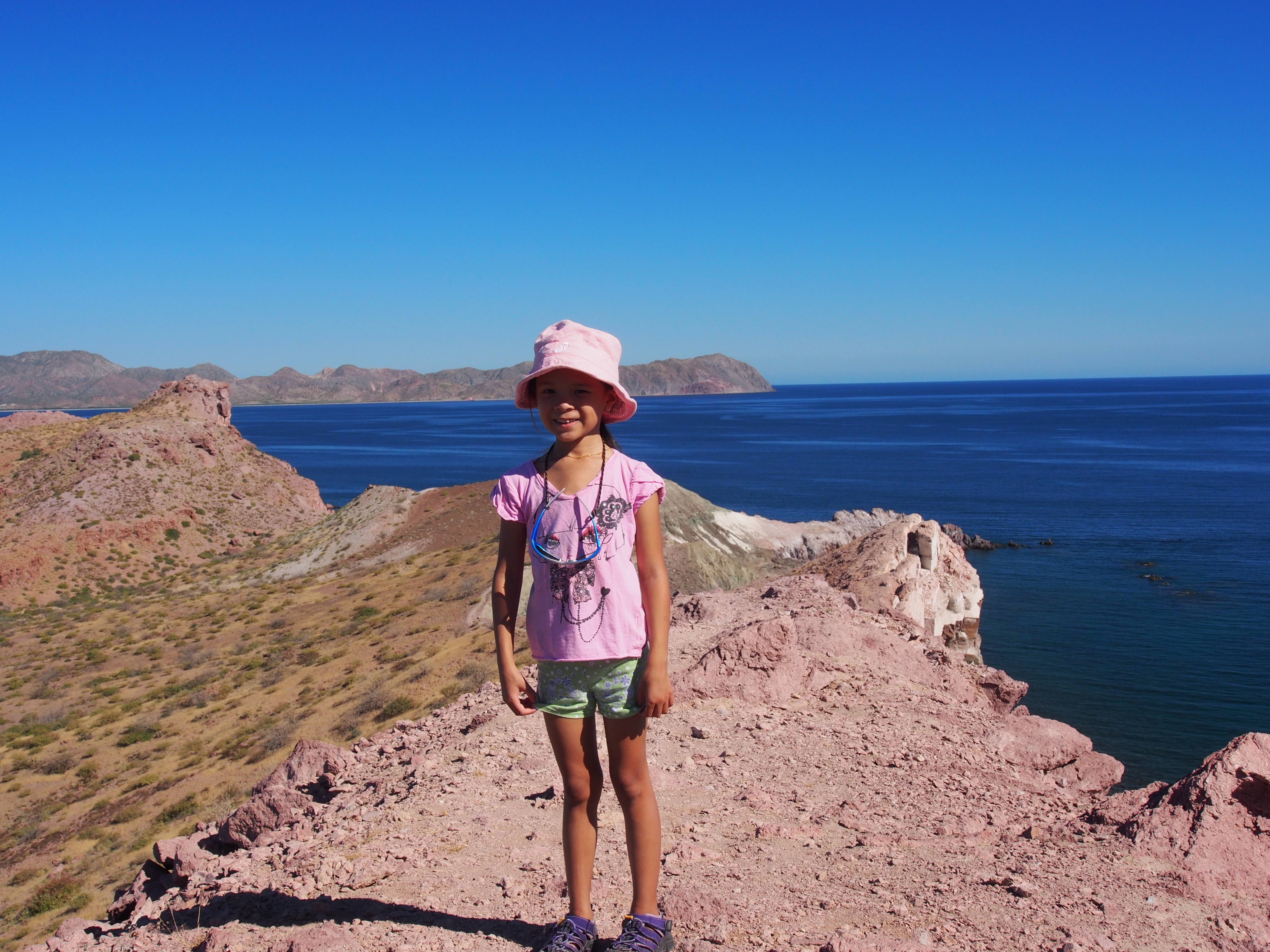
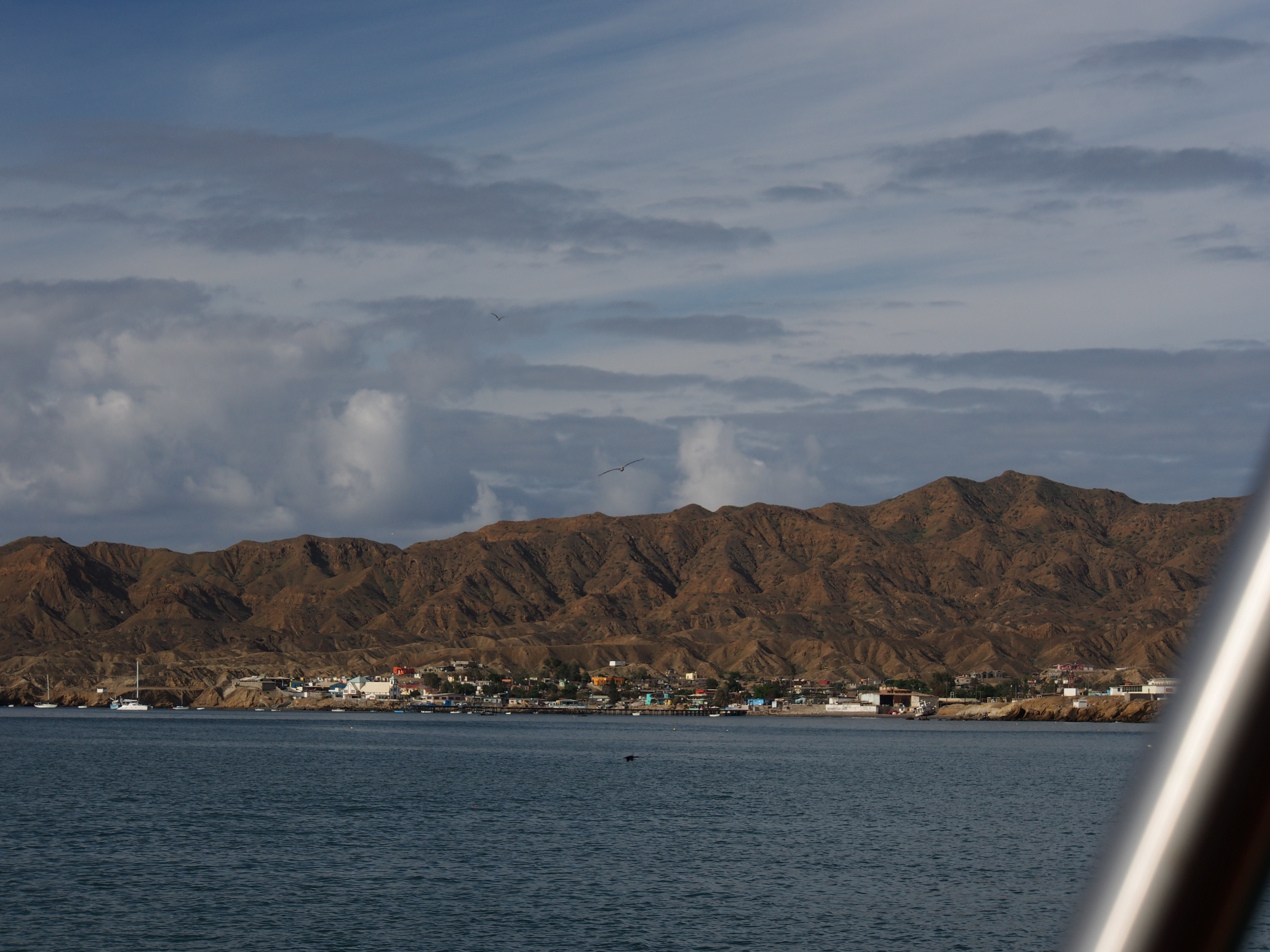
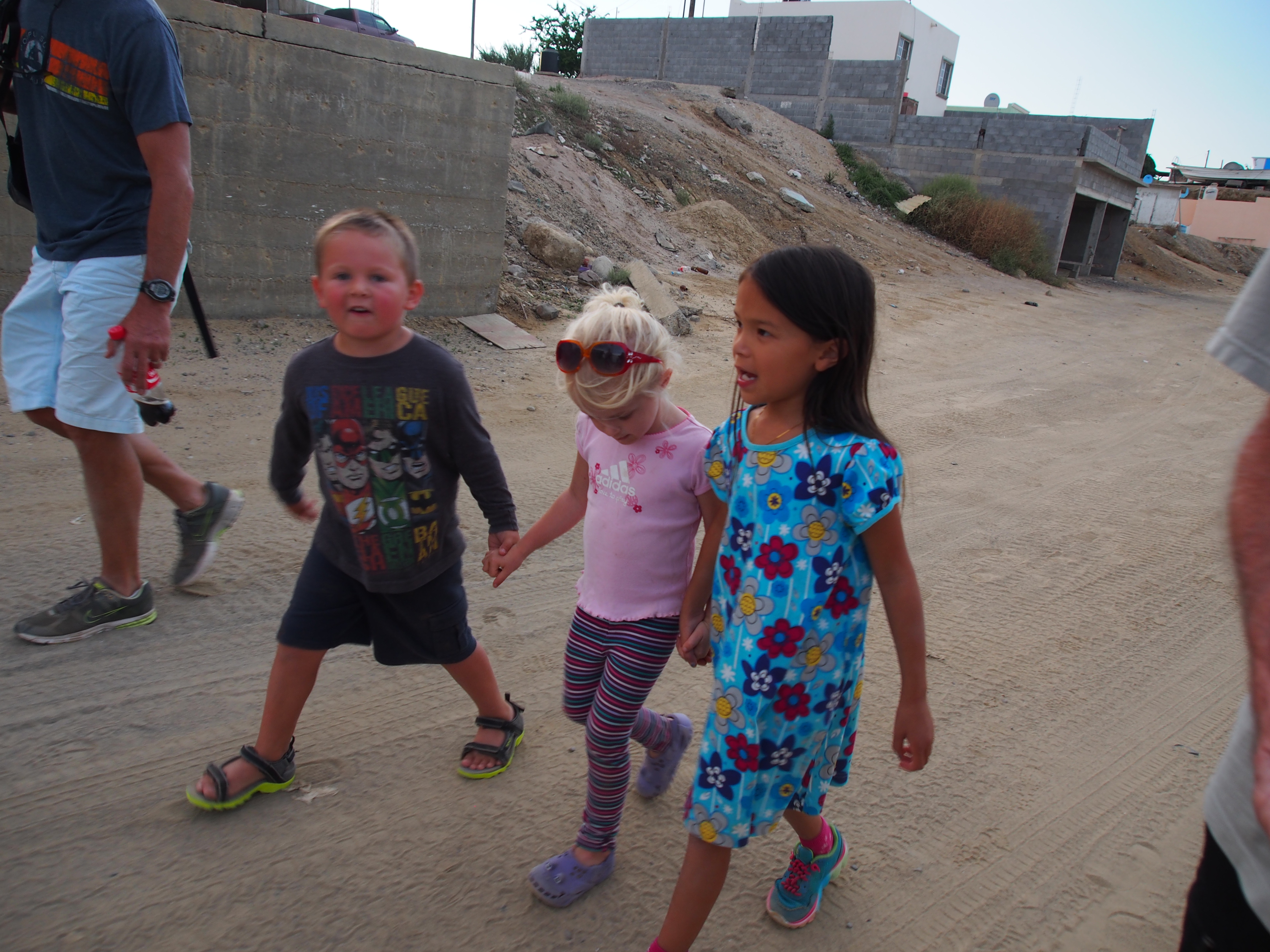
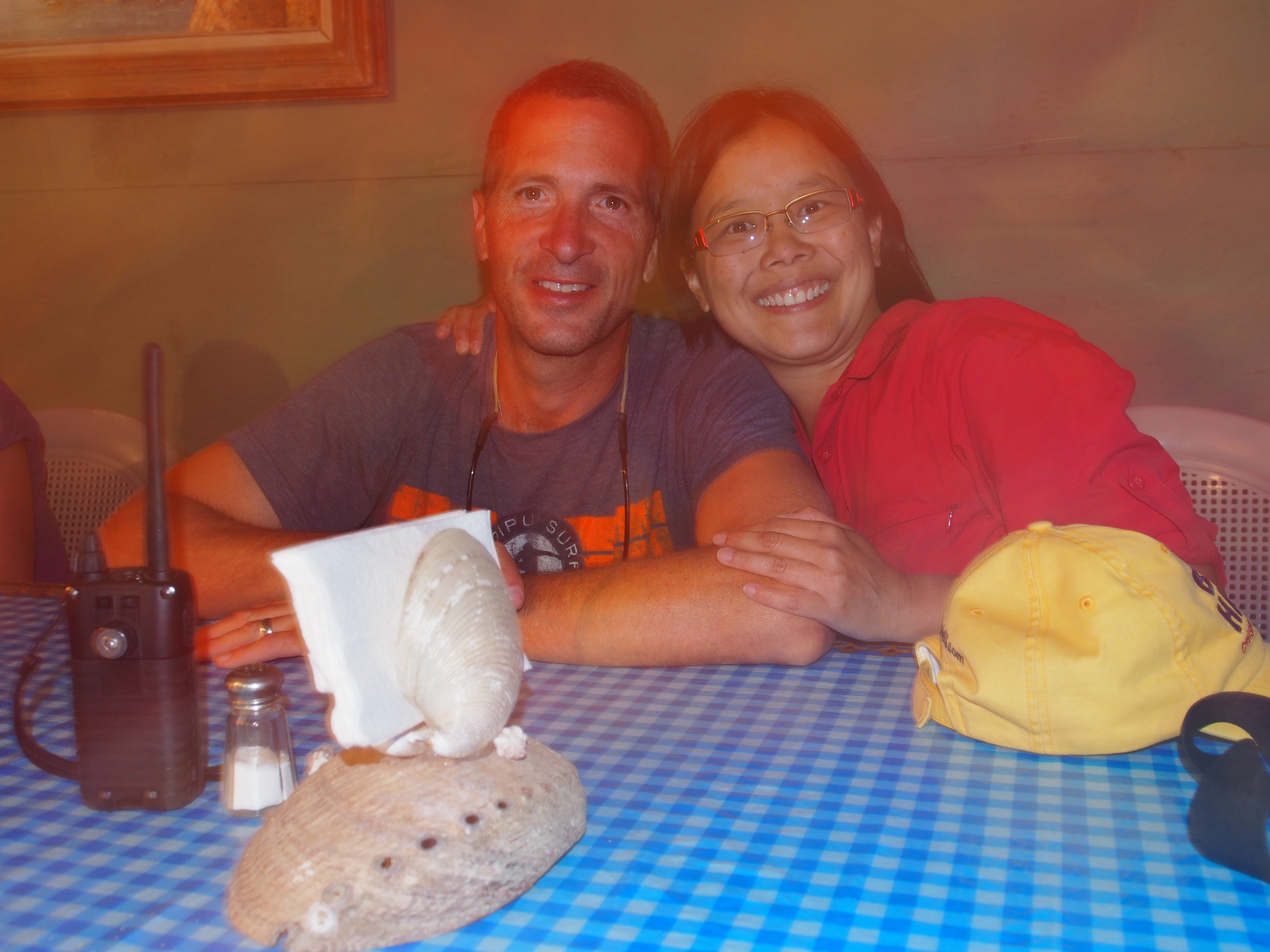
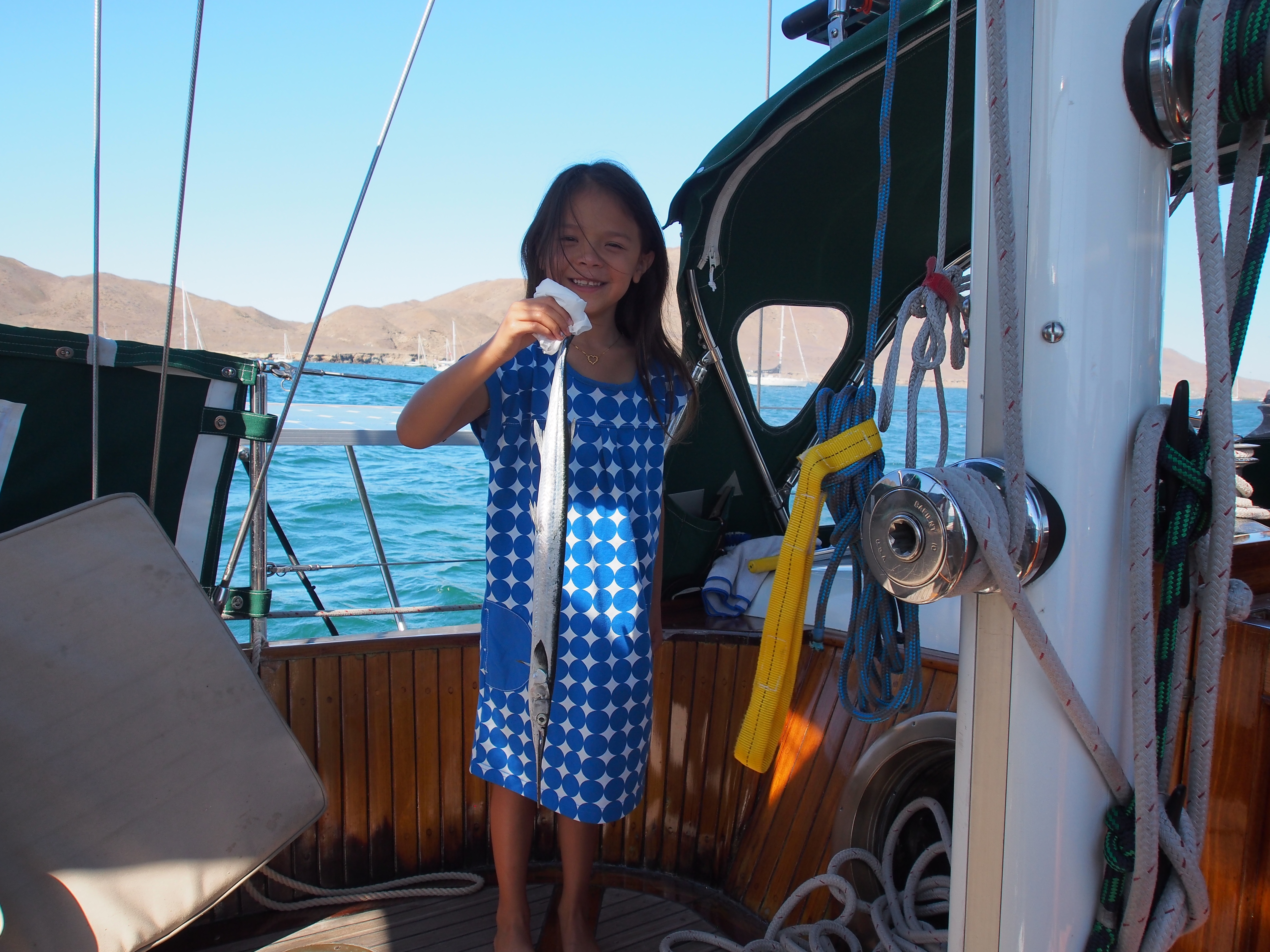
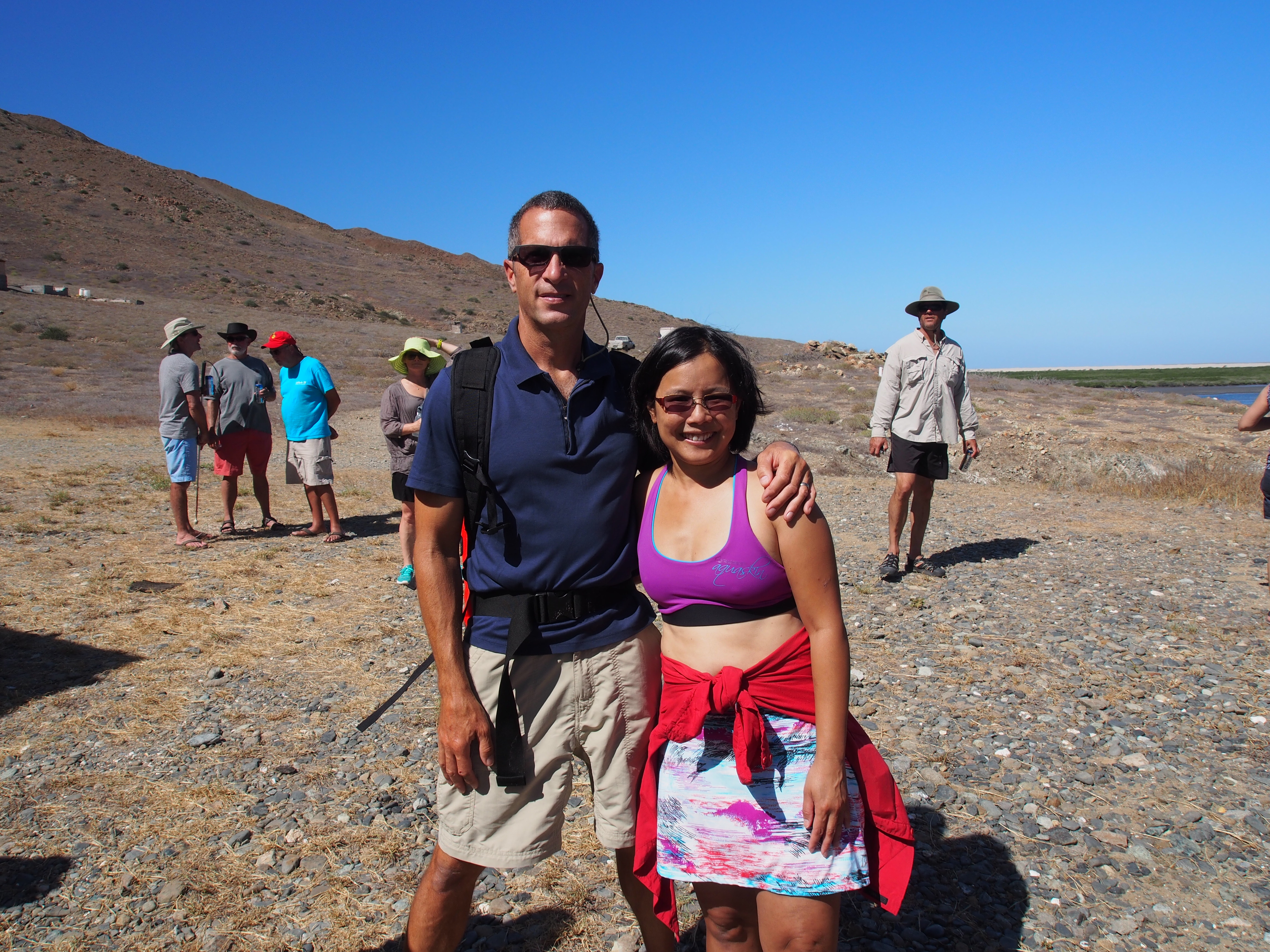
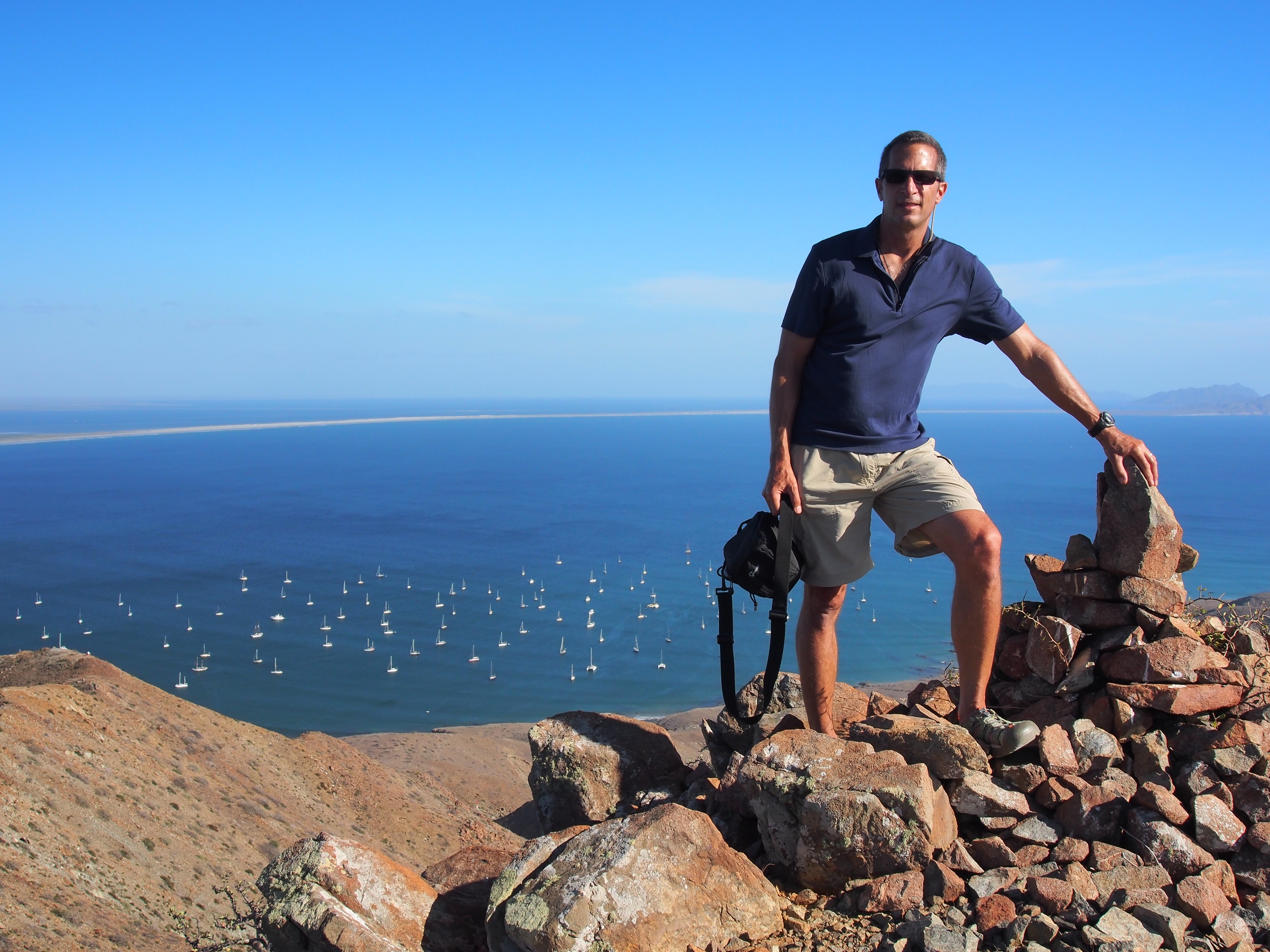
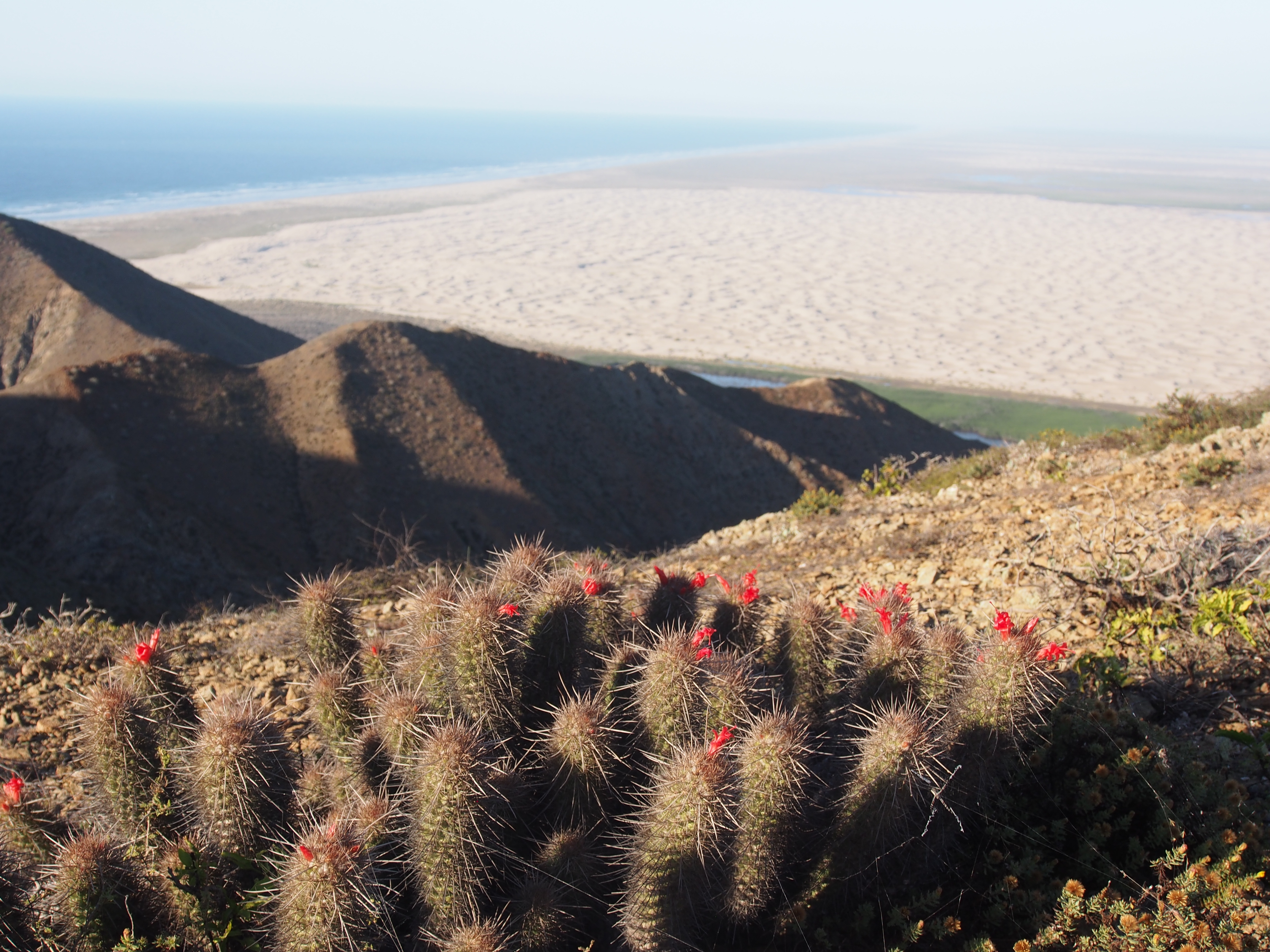
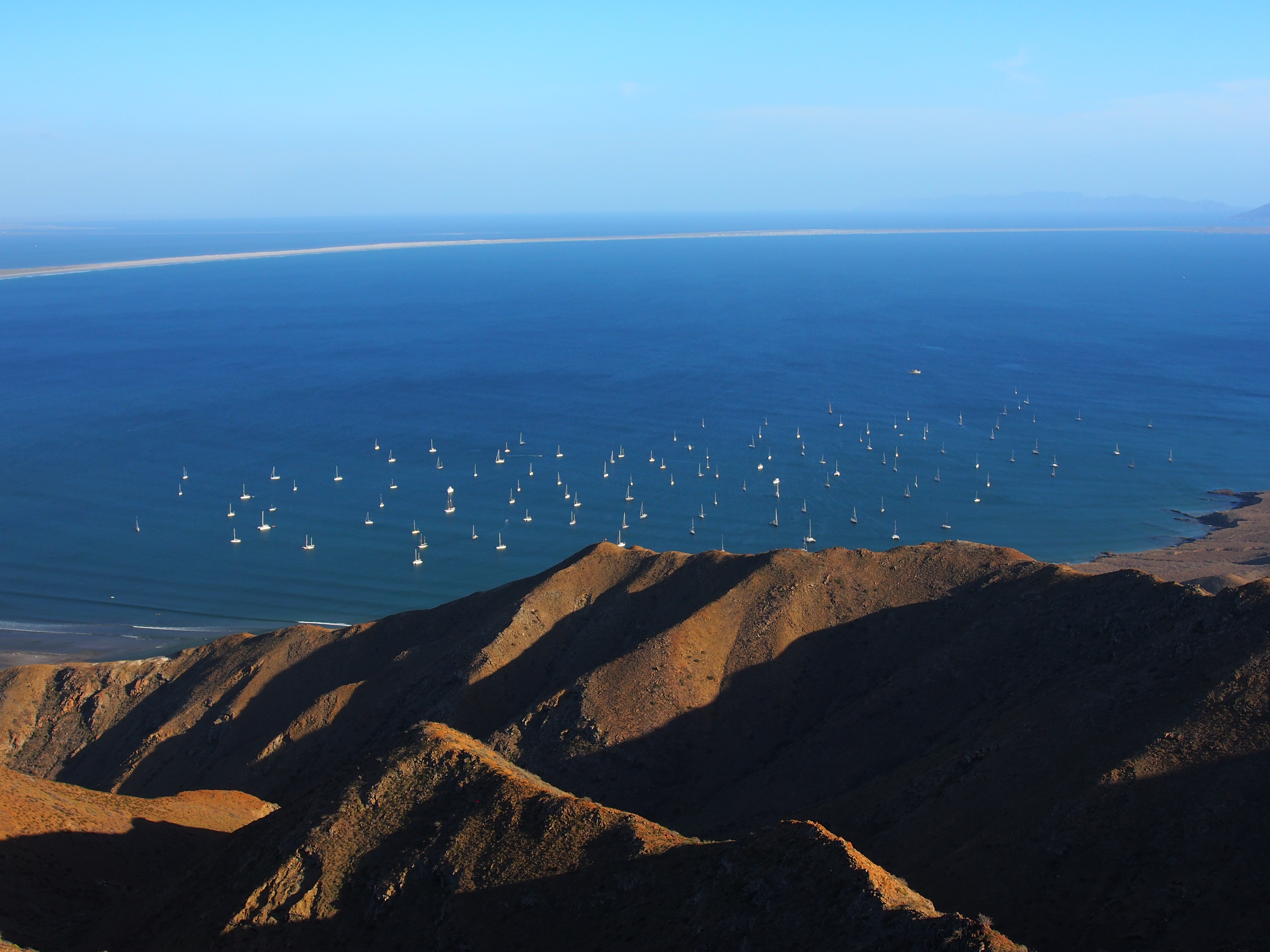
Seven days turned into nine days at Marina Cortez in La Paz, but it was nice staying at a marina for a change. We didn’t have to load up the dinghy every time we wanted to go ashore, we could use the dock to work on canvas projects (hammering in rivets), we could use land showers, and Jacintha had lots of friends on the same dock. She and her friend from Family Circus (a family with 5 siblings aboard) exchanged sleepovers on the two boats.
Swimming with Sea Lions
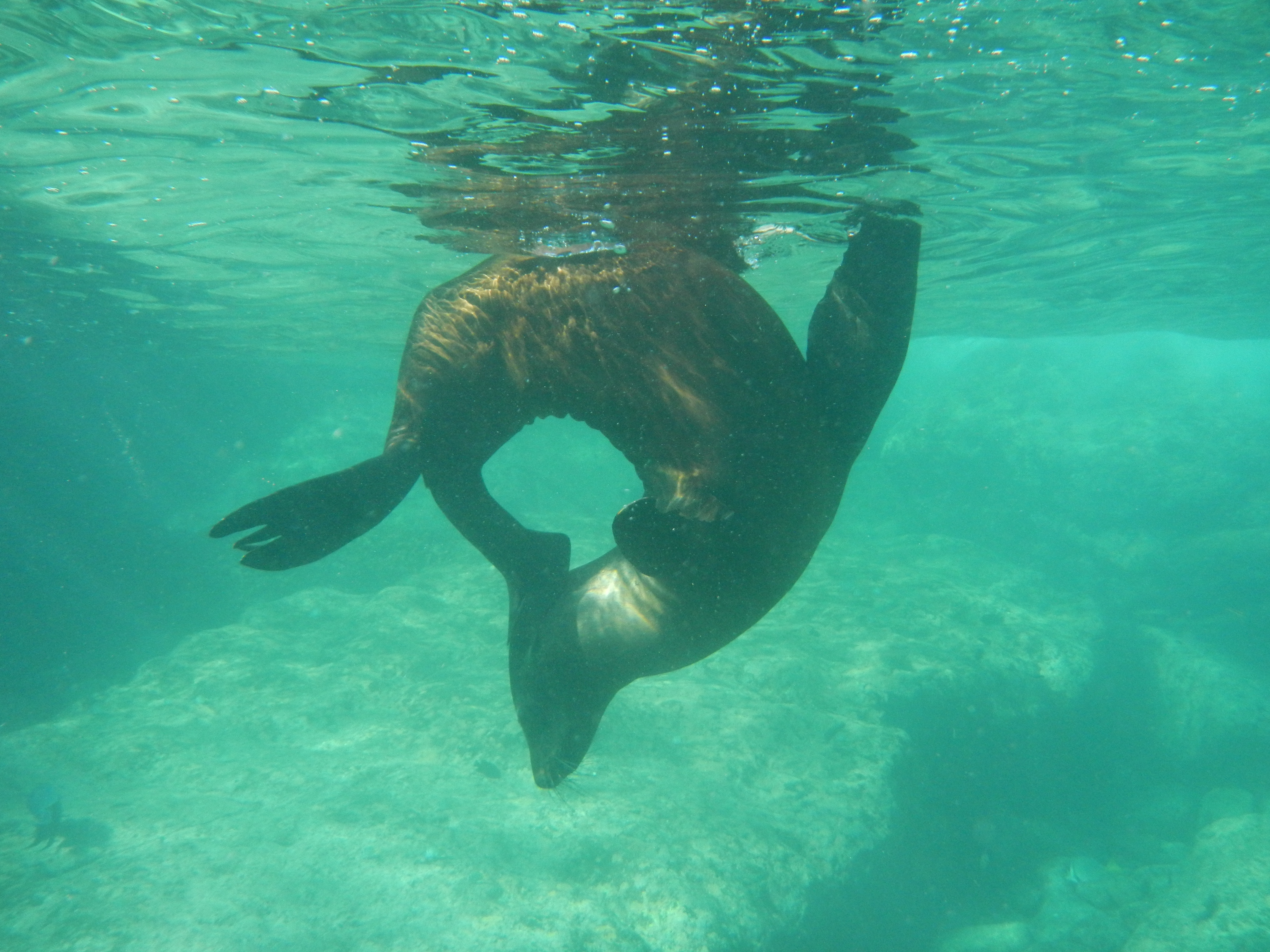
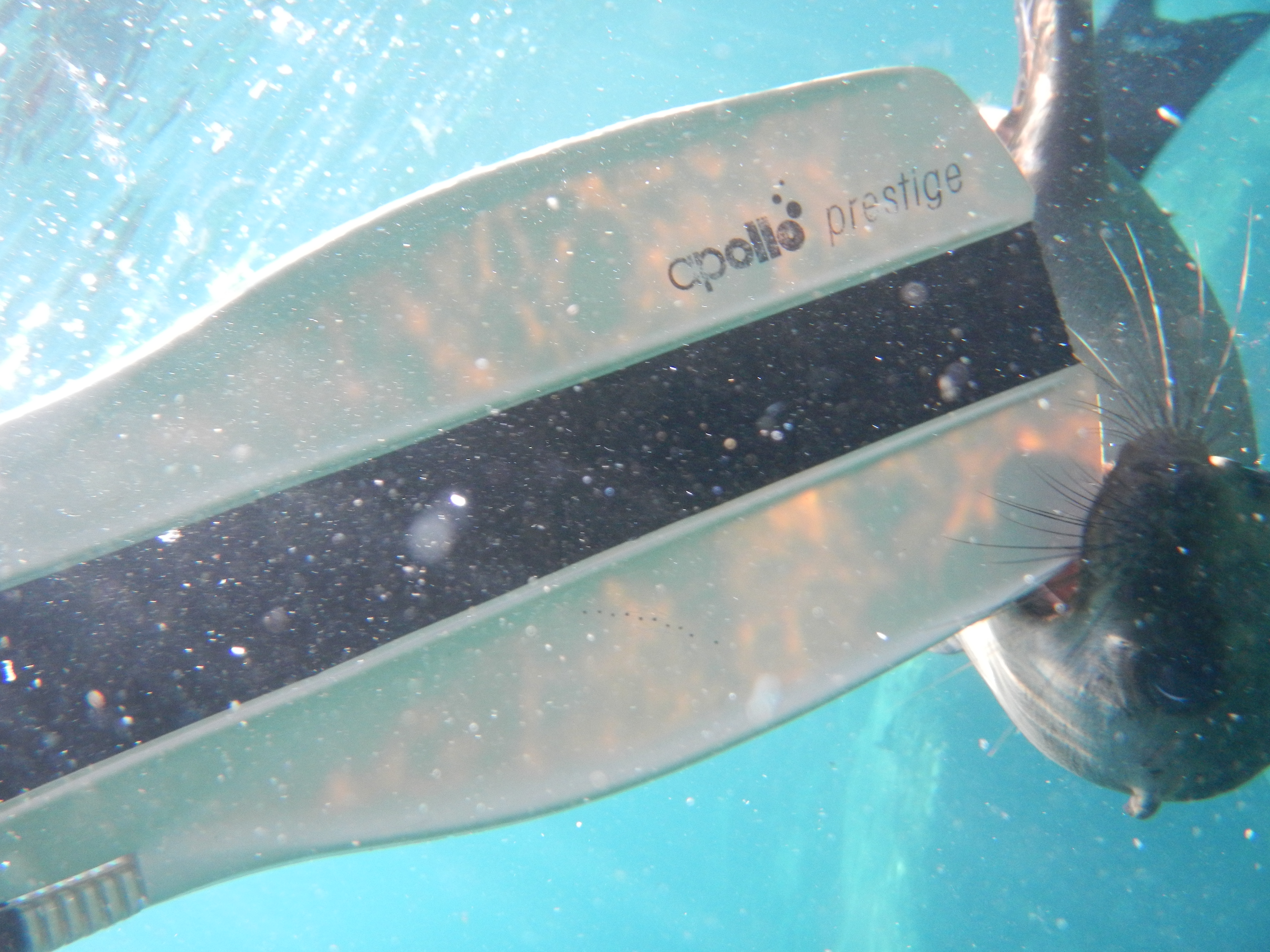
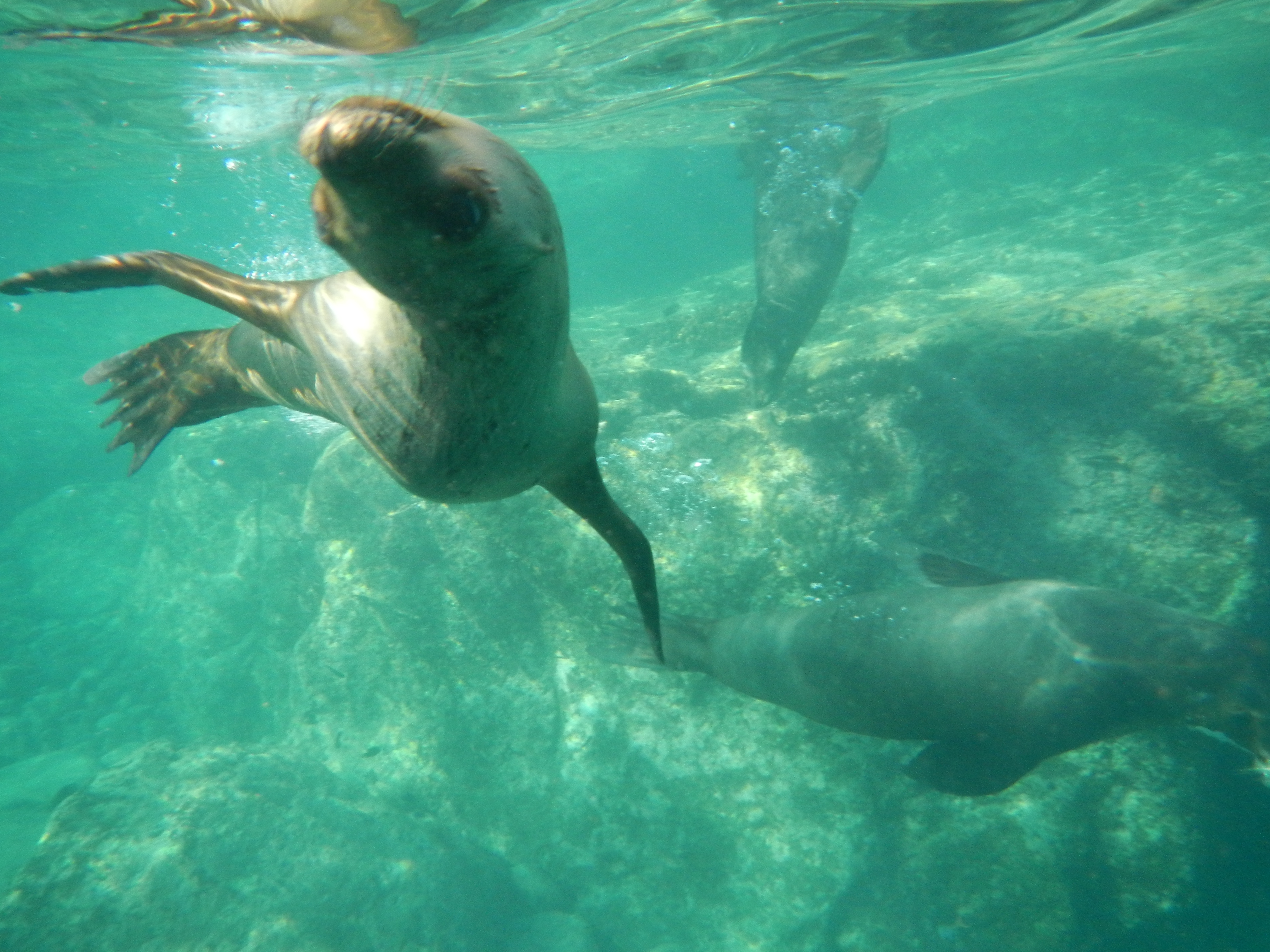
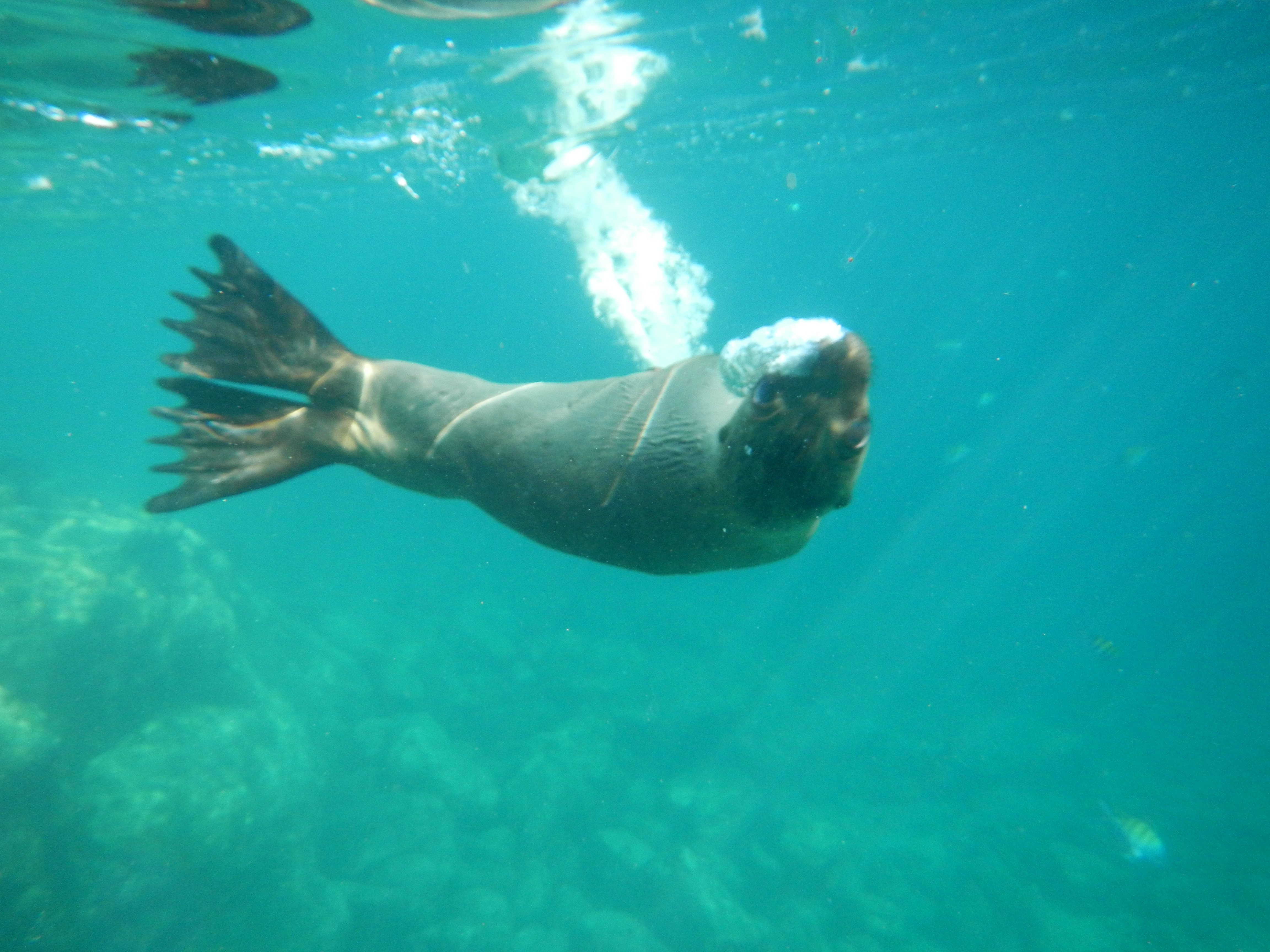
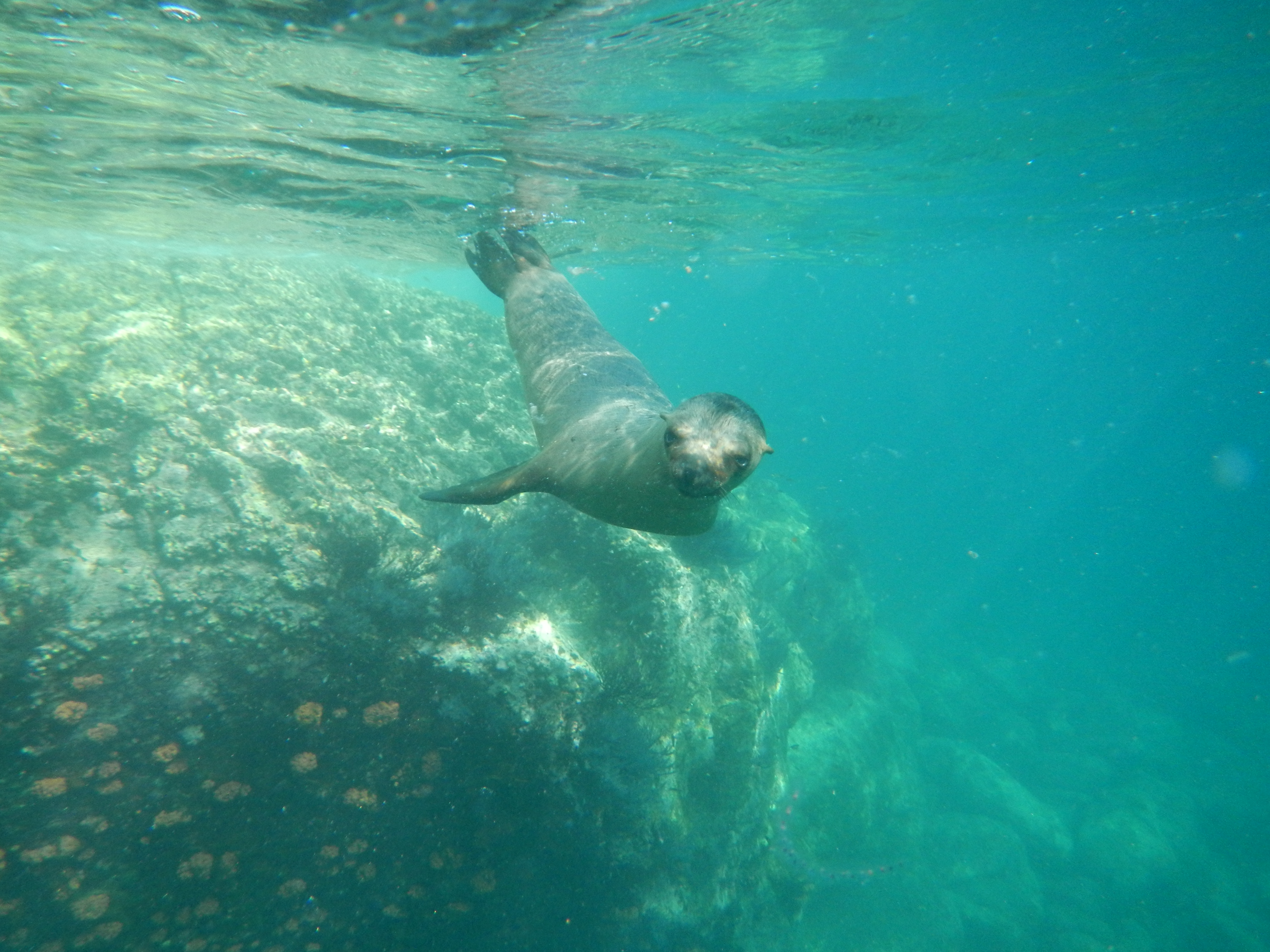
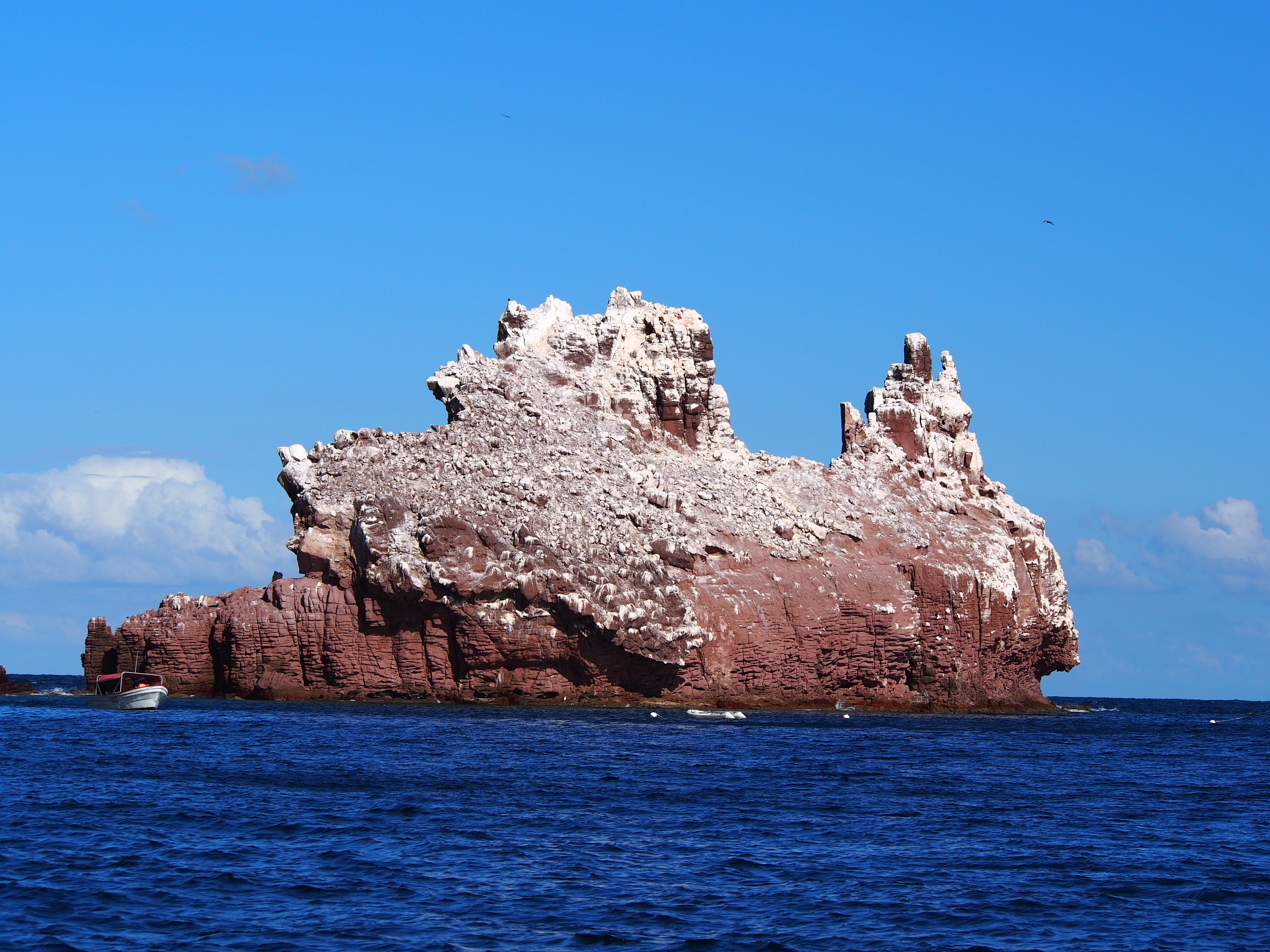
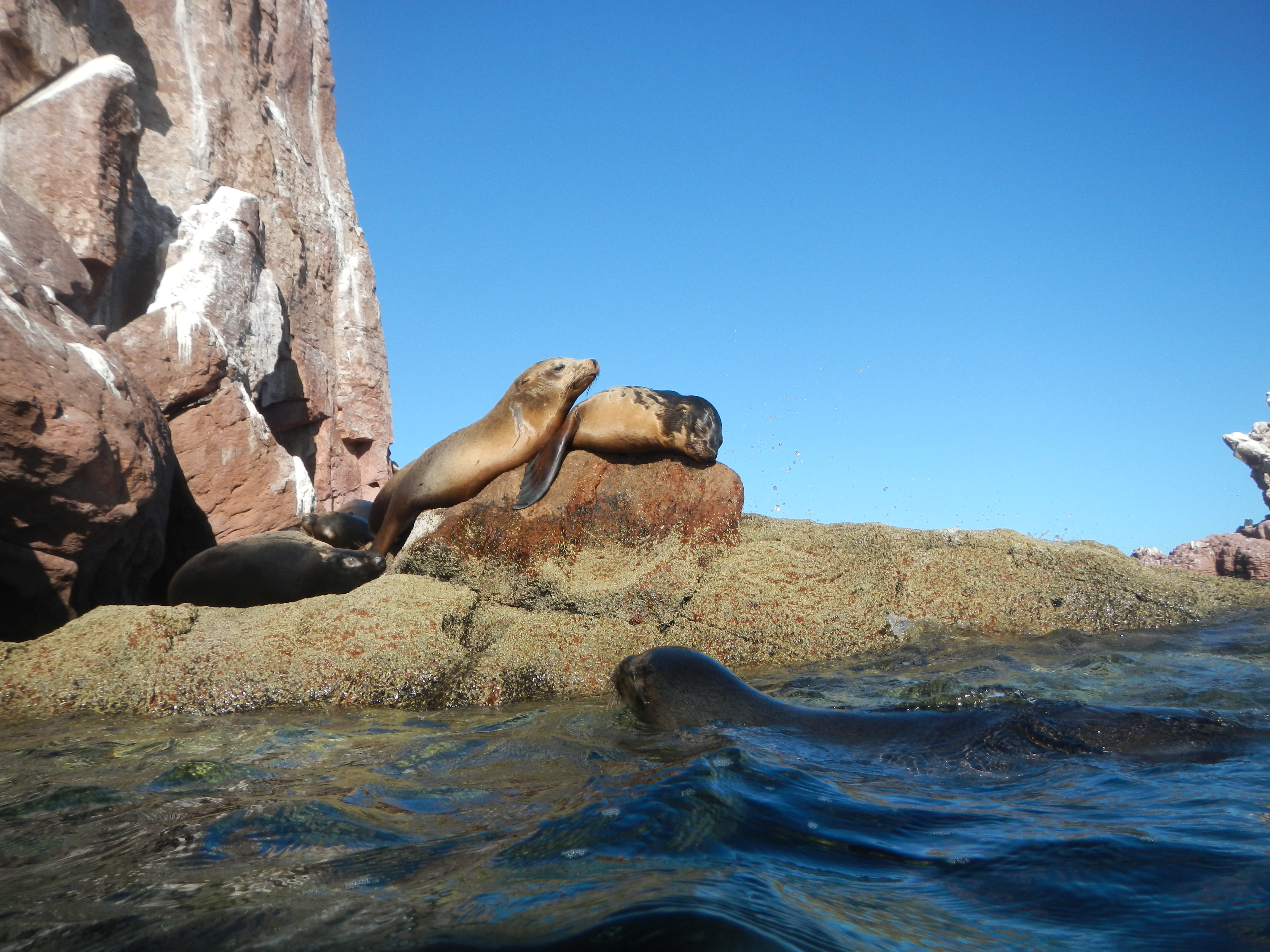
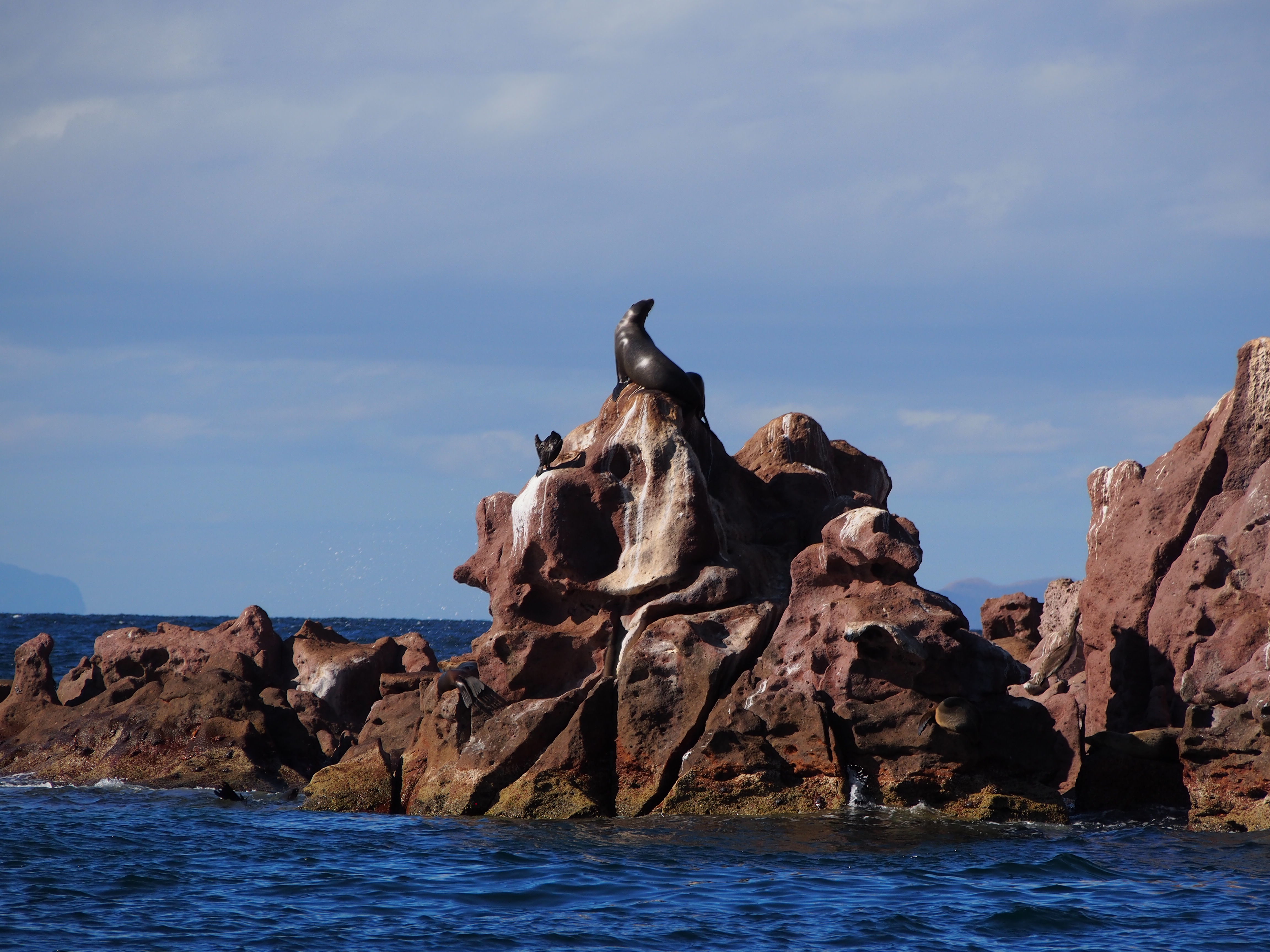
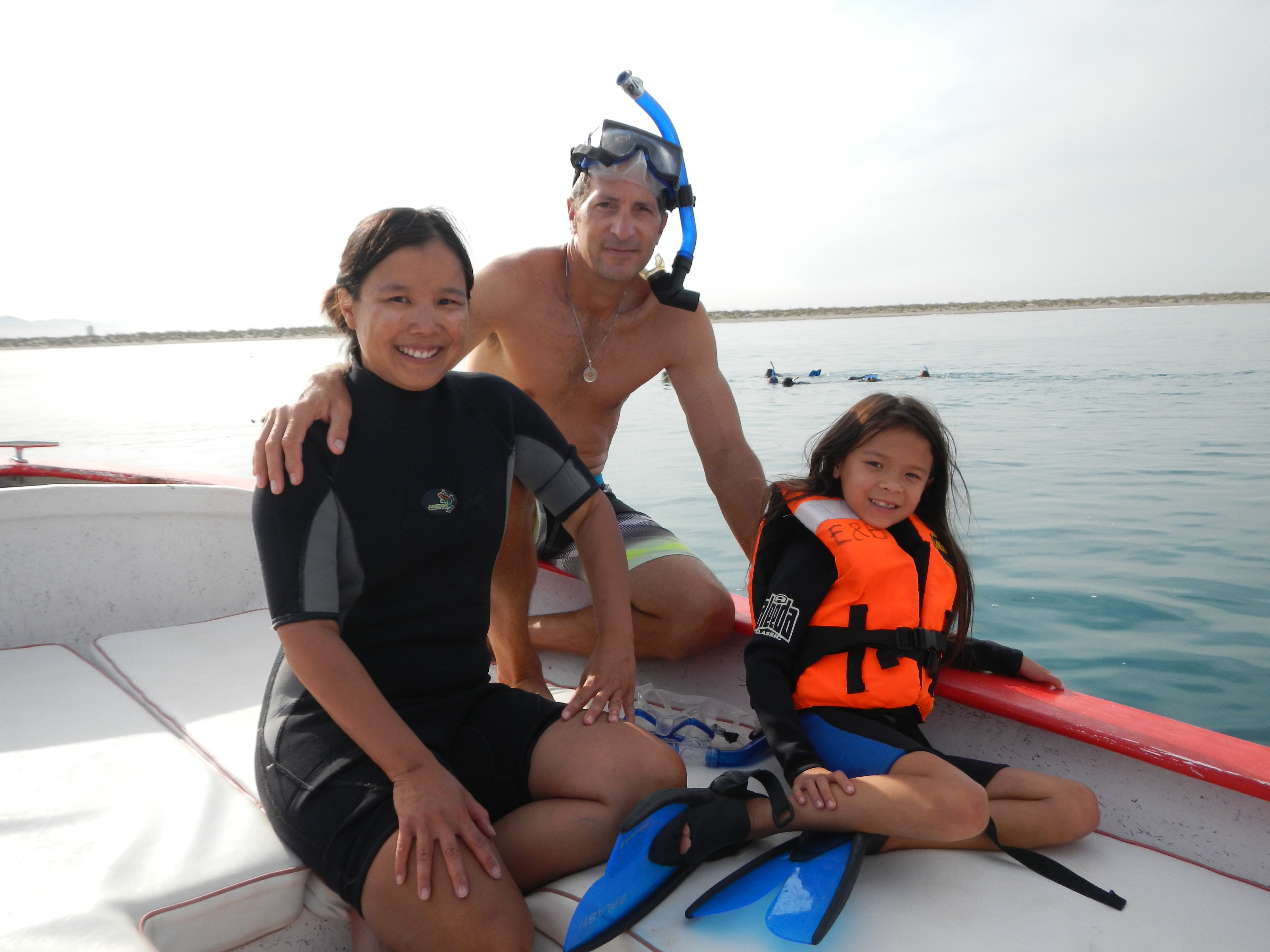
We felt like we were growing roots, so we shoved off and headed back to the Islands for 4 days. The highlight of this trip was swimming with the Sea Lions. Our guidebook mentioned a place known for curious California Sea Lions near the northern end of Isla Partida just behind 2 large rocks called Los Islotes. The rocks have been painted white from birds hanging out there feeding on the Sea Lion’s leftover fish. We anchored in 60’ of water with just 100’ of chain on a rock bottom so we decided to keep 1 person aboard while the others rowed the dinghy to a mooring buoy next to the rock. I went with Jacintha and we snorkeled in 10’ of water with lots of Sea Lions swimming around us. The larger ones mostly sunned themselves on the rock ledges watching their pups and juveniles play in the water. When we were done, Karen went in and got some great photos and video. A small Sea Lion darted toward her then swam away and posed in a graceful arc, then swam back to her and nipped at her fins. Another medium sized one came up to her and playfully nipped her in the side. It was amazing how curious, fun, and unafraid of humans these creatures were (I don’t think the Sea Lions around Seattle are quite as friendly).
We spent the last 2 days at Caleta Partida, a nice anchorage at the southern end of Isla Partida. There we combed the beach and added 6 more hermit crabs to Jacintha’s collection. We also joined 2 other boats for a fantastic potluck dinner aboard sv Scoots (Eric and Vanda, home port San Fransisco).
Posing for the CameraNipping at Karen’s FinA Playful PupGracefully Gliding AlongCurious PupLos IslotesRelaxing on the RocksKing of the RockSailing to Caleta Partida
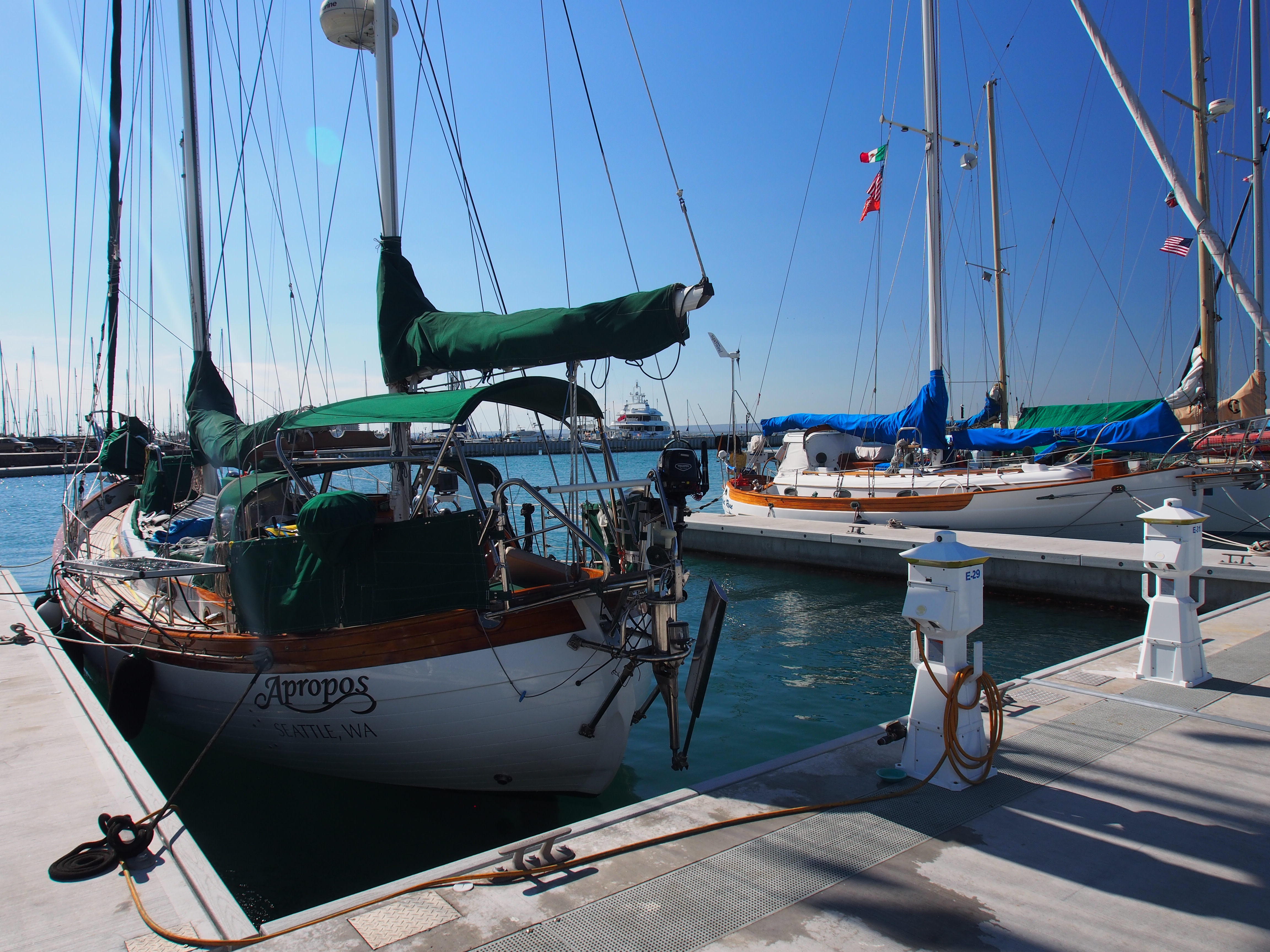
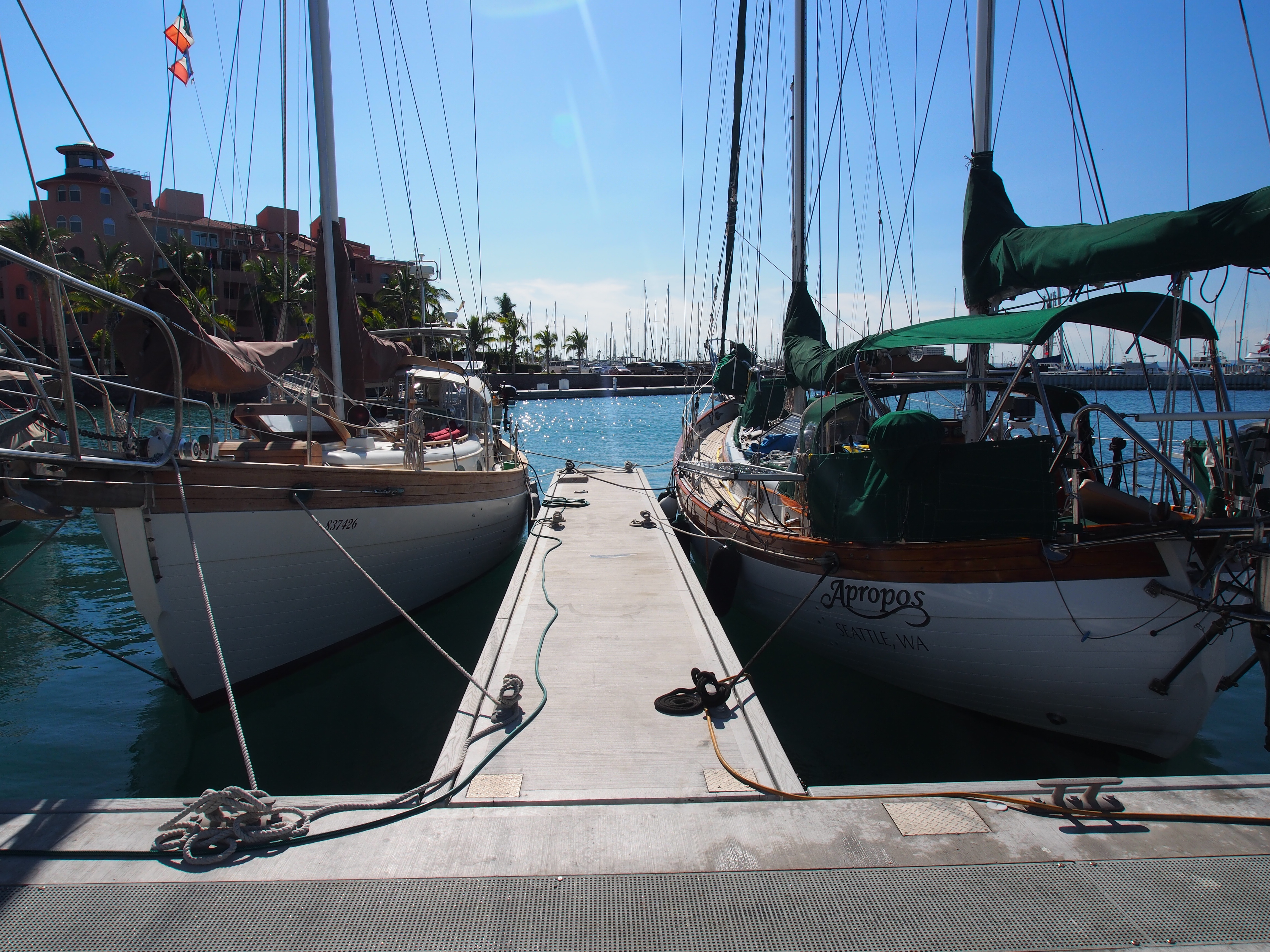
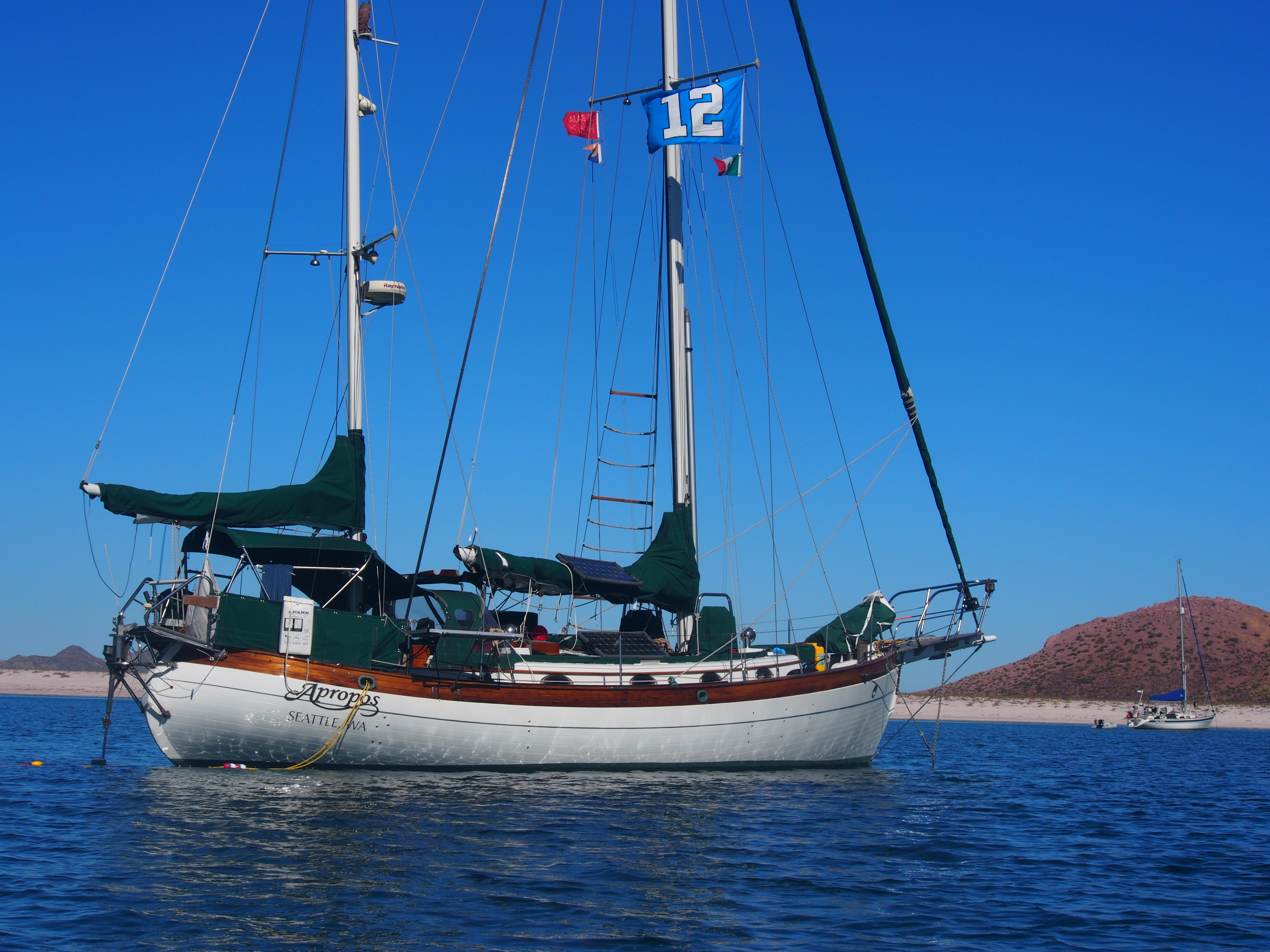
We decided to splurge a little and stay in a marina for a week. Marina Cortez is a partially completed new marina located a short walk from the main part of town. We were assigned a slip right next to another Hans Christian boat (38’ sv Wahkuna 1), and two slips away from yet another Hans Christian (33’ sv Korbett Rose). Earlier today the owners of a sister ship to Apropos, a cutter/ketch (43’ sv Calypso) came aboard our boat and invited us to theirs, which is moored at nearby Marina La Paz. The owner, who is from Bremerton, WA, knew about Apropos when it was for sale in 2004. He thinks his boat has the teak propane box that was once on Apropos (when Lake Union Yacht restored Apropos, they built a new teak propane box to replace the worn one and the previous owners of Calypso bought a used one at around the same time).
It was nice being in a marina and we washed the boat, re-provisioned, did some boat work, and got together with friends who were staying on the same dock. We had some repair work done on the inflatable paddle board, Karen finished sewing the stays’l bag, I fixed the minor leak in one of the Racor fuel filters. I also polished off the rust marks that were forming on the stainless steel tubing (stanchions, bowsprit, pushpit) due to the salt, which wasn’t ever a problem in fresh-water Lake Union. We hosted a movie night on our boat with crew from Flying Squirrel where we placed the TV in the cockpit and the kids watched the animated Howls Moving Castle.
Apropos (HC43) and Korbett Rose (HC33)Wahkuna1 (HC38) and Apropos (HC43)
Swimming with Whale Sharks
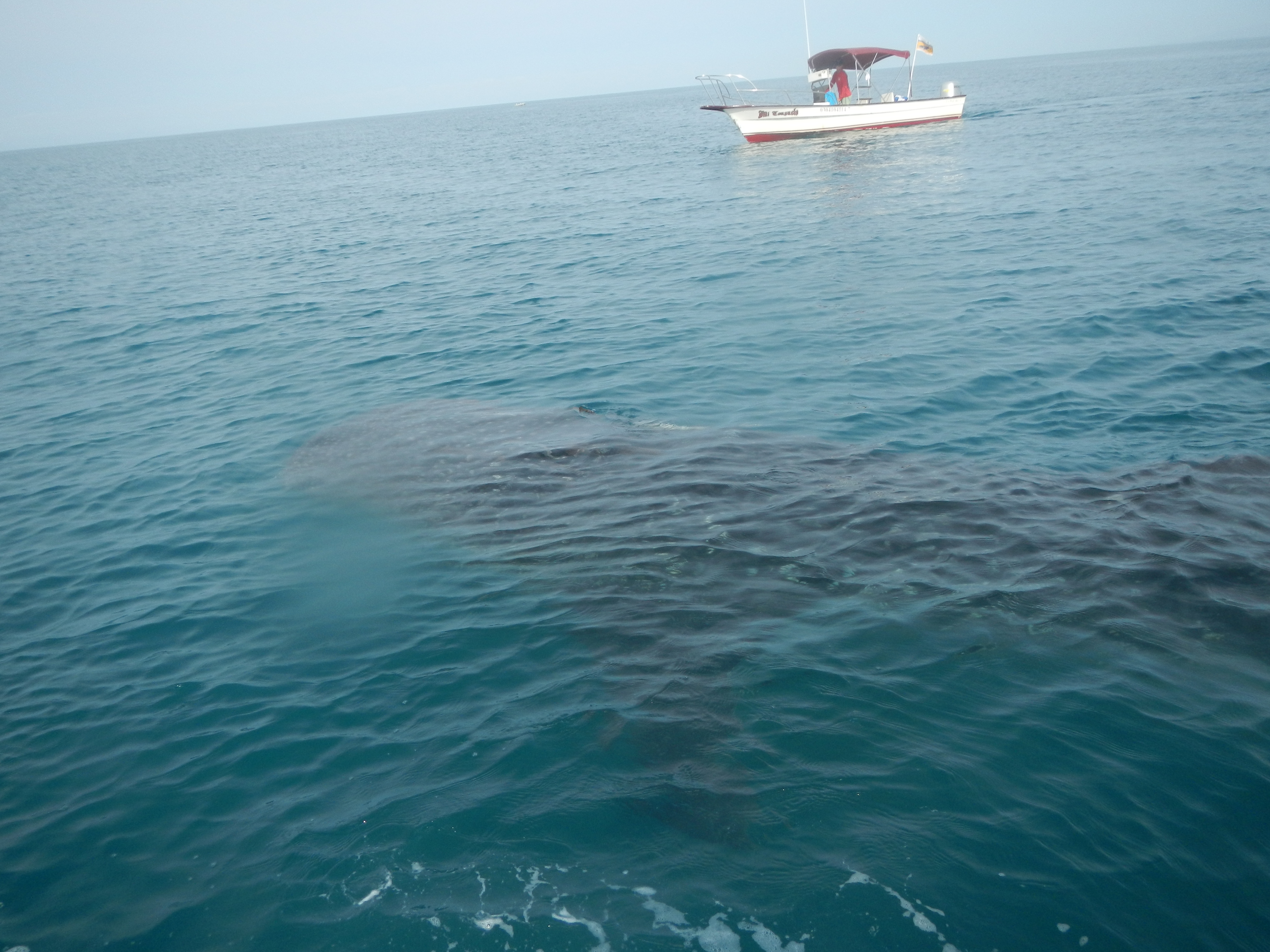
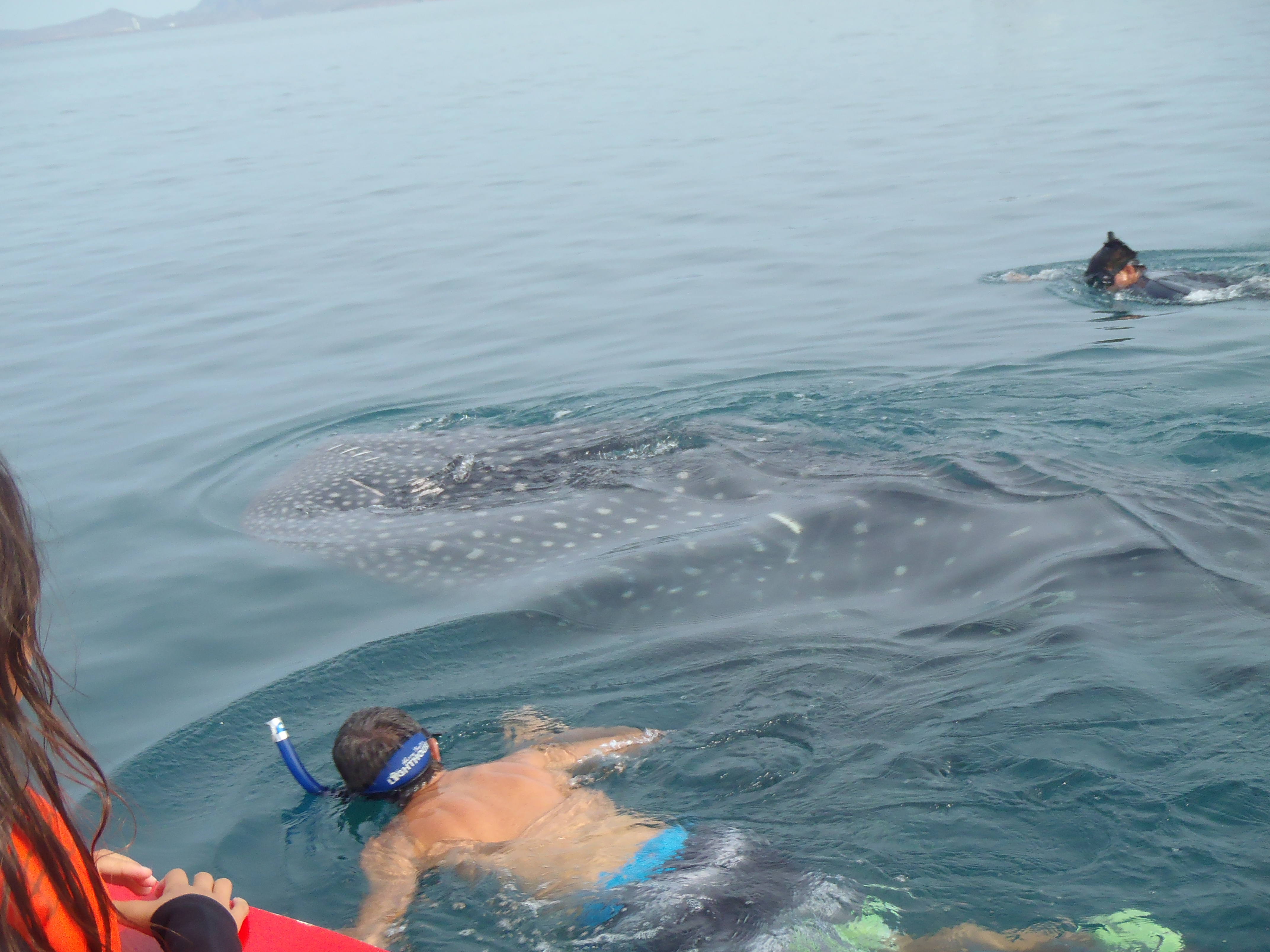
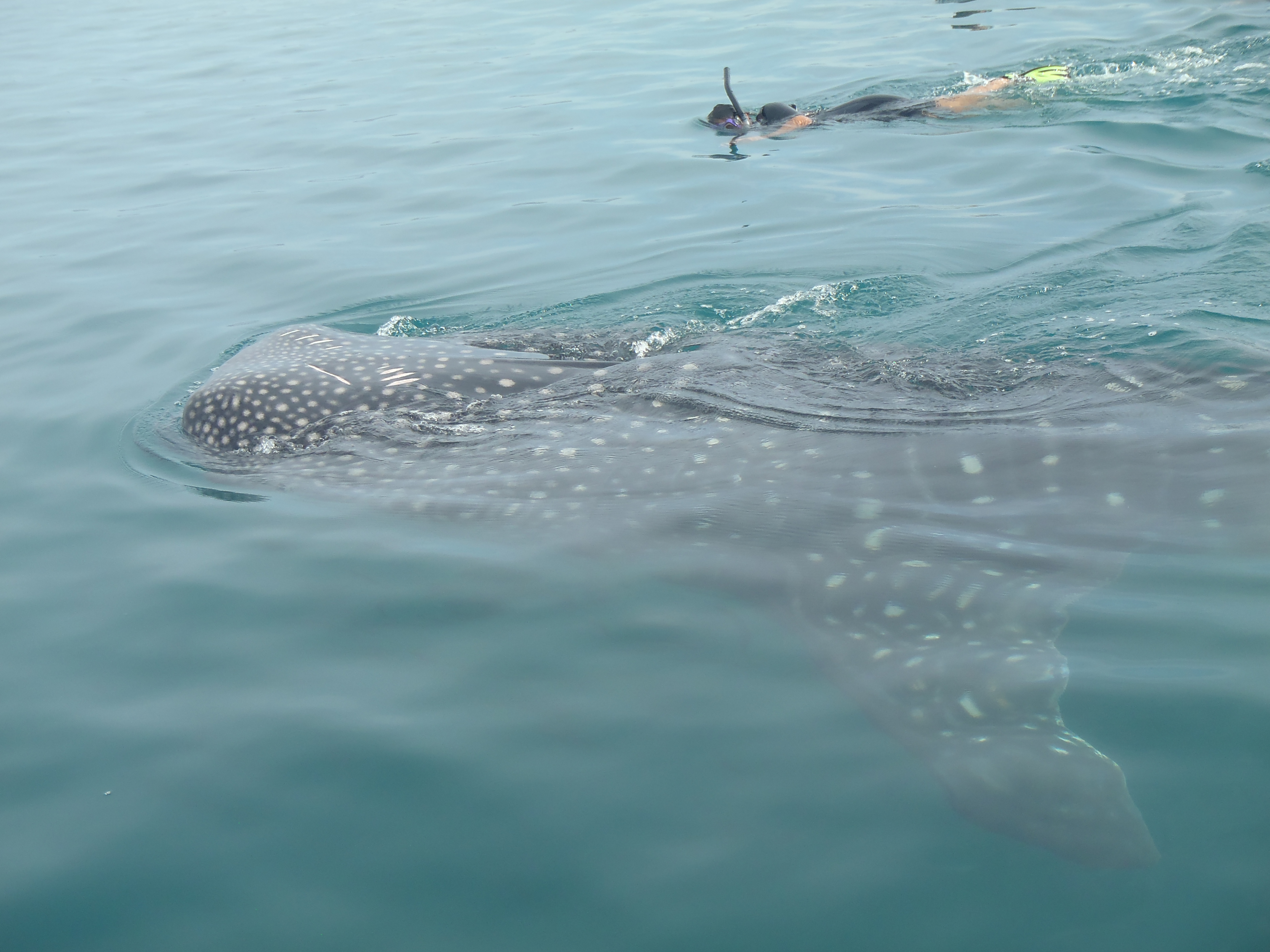
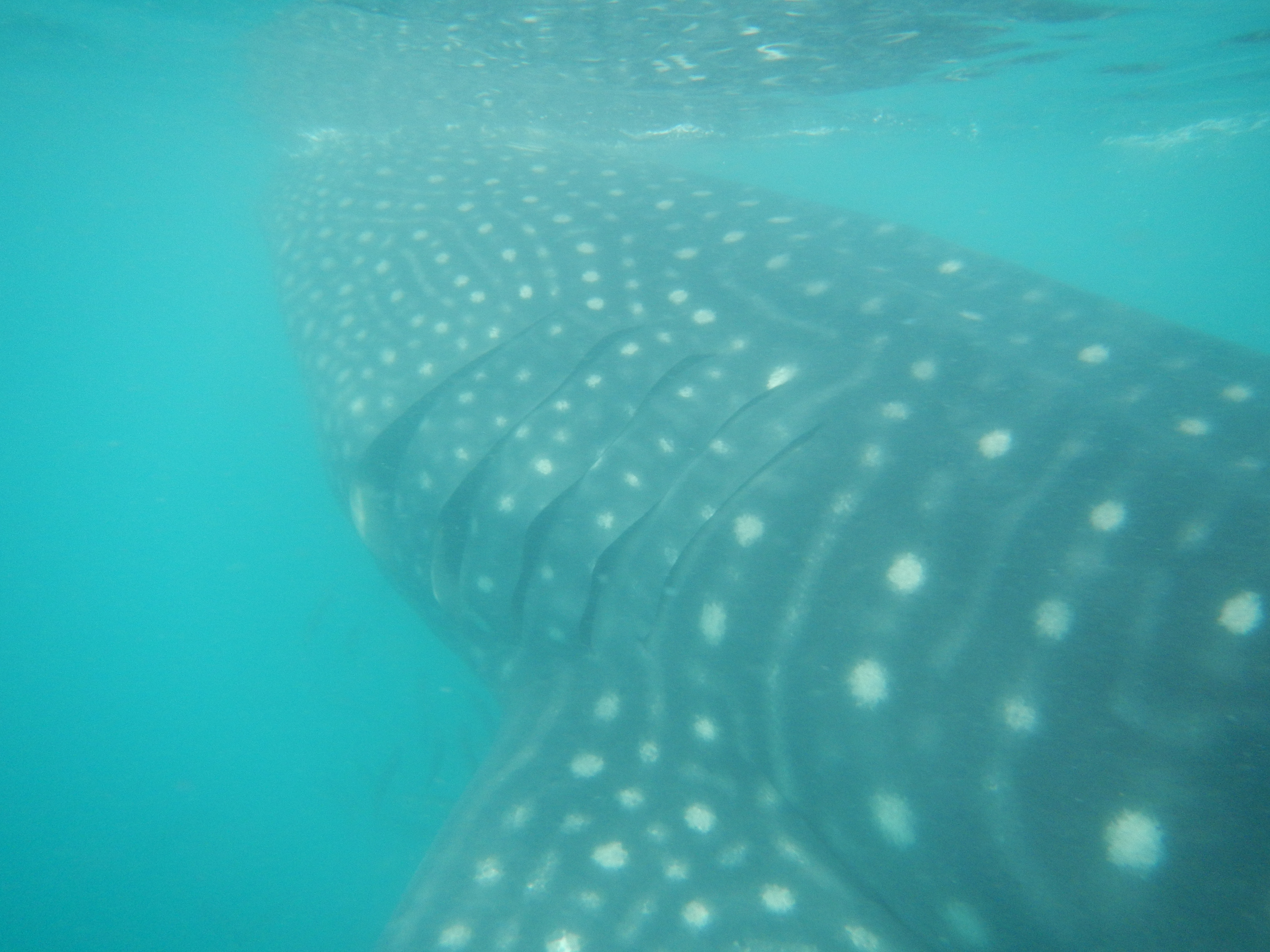
We went on a tour that takes you to an area known for Whale Sharks and lets you snorkel around them. At up to 50’ long, Whale Sharks are the largest fish on earth. They are filter-feeding fish and their main food is plankton such as crustaceans and fish eggs. These gentle giant sharks can live as long as 75 years. Whale Sharks are protected in Mexico and are considered an endangered species worldwide.
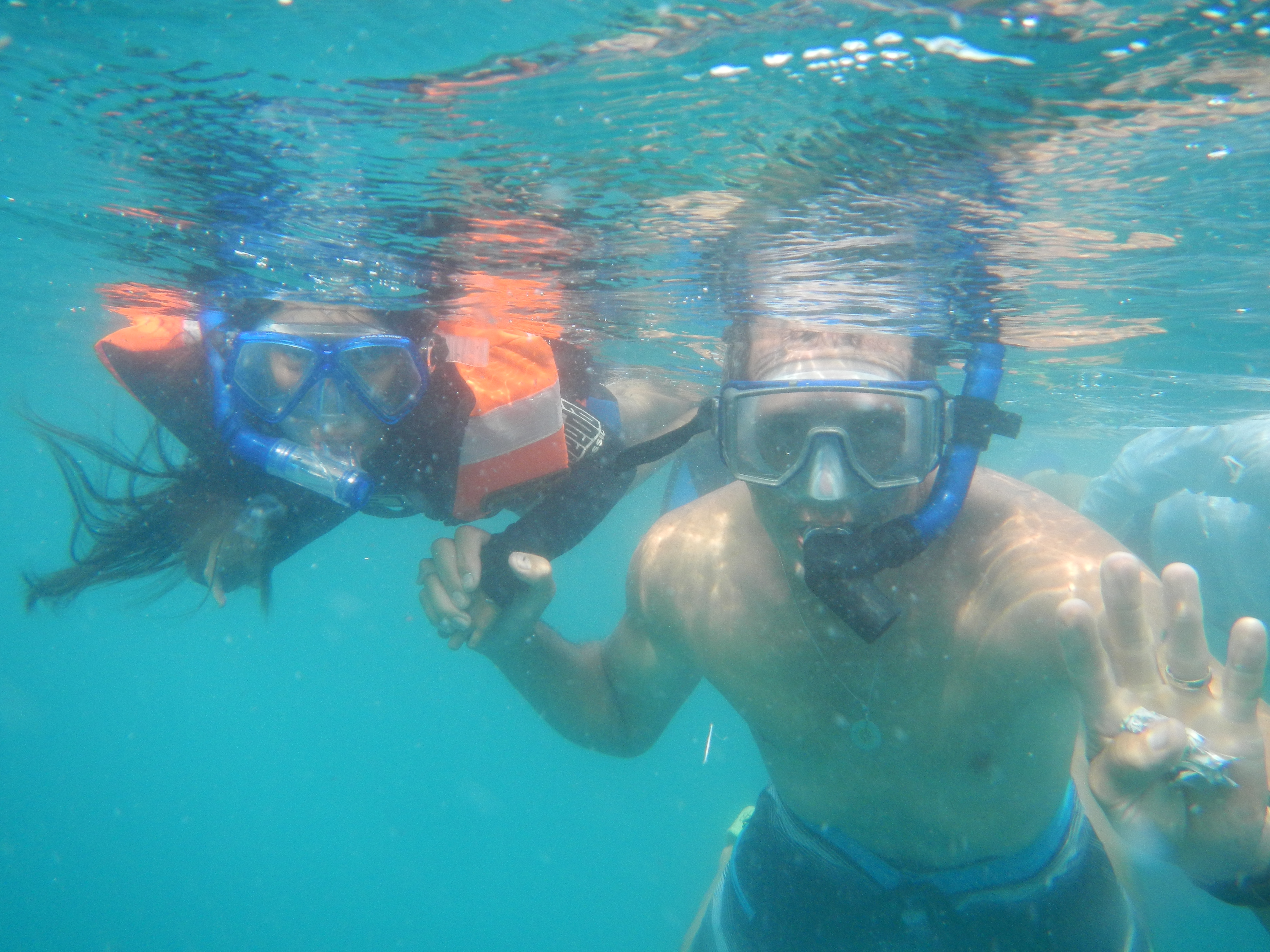
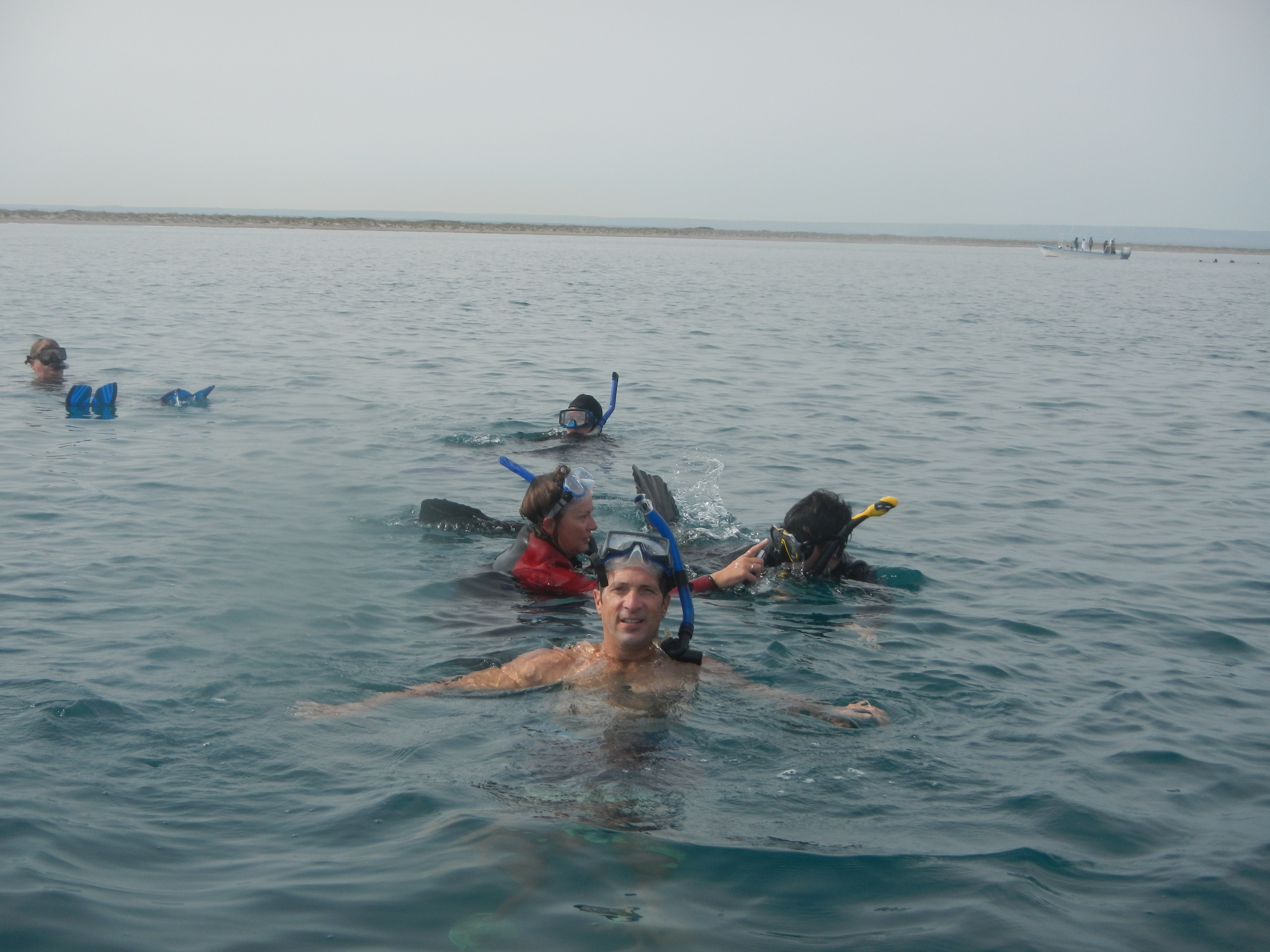
The boat ride to where the Whale Sharks are took 20 minutes. When we arrived we could see huge dorsal fins moving slowly around. We went in the water with masks, snorkels, and fins and swam alongside several whale sharks for a couple of hours. We saw some juveniles and some larger adults. Some were in a horizontal position and lazily swimming while taking in many gallons of water with each gulp. It took some effort to keep up with them, but it was possible to swim alongside them for a minute or two. Others were floating at a 45 degree angle with their mouths just below the surface staying relatively stationary. They offered great close-up views of their set of 5 gills per side, their relatively small eyes, and their huge mouths. You could also see the turbulence of the water as it entered their mouth, and the outrush of water through their gills. Small fish called Remora were attached on the backs of the whale sharks getting a free ride and feeding on leftovers (Wiki says the host also benefits from the Remora’s cleaning of its sloughing epidermal tissue). Floating alongside the stationary ones, you would sometimes find yourself 3 feet in front of their huge open mouth when they pivoted around. I held Jacintha’s hand and pulled her along to help keep up with the faster whale sharks. She had no fear and I could hear her giggling underwater. We’ve done enough snorkeling now that she’s very comfortable breathing with a snorkel. The water was a comfortable 78 degrees so I didn’t wear a wetsuit and ended up getting stung on the arm by a Jellyfish.
Getting readyIn the water with JacinthaOne of the Larger Whale SharksSwimming Next to a Whale SharkKaren Taking Pics of the Whale SharkTaking a breakWhale Shark
After 5 days in La Paz, we headed north for 10 days to explore the rugged coast. Our goal was to see as much as possible but not go too fast that we wouldn’t have time to relax and enjoy the sights. I charted a course that included short day-sails of only a few hours. Our guidebook (Sea of Cortez, A Cruiser’s Guidebook by Shawn Breeding and Heather Bansmer) was amazingly helpful in choosing where to stop and anchor. Most of the places that we visited were because they sounded interesting from the descriptions in the guidebook. We wanted to meet local people from the small villages that dot the coastline along the Sea of Cortez. We also wanted to do some hiking, snorkeling, paddle boarding, exploring, and relaxing.
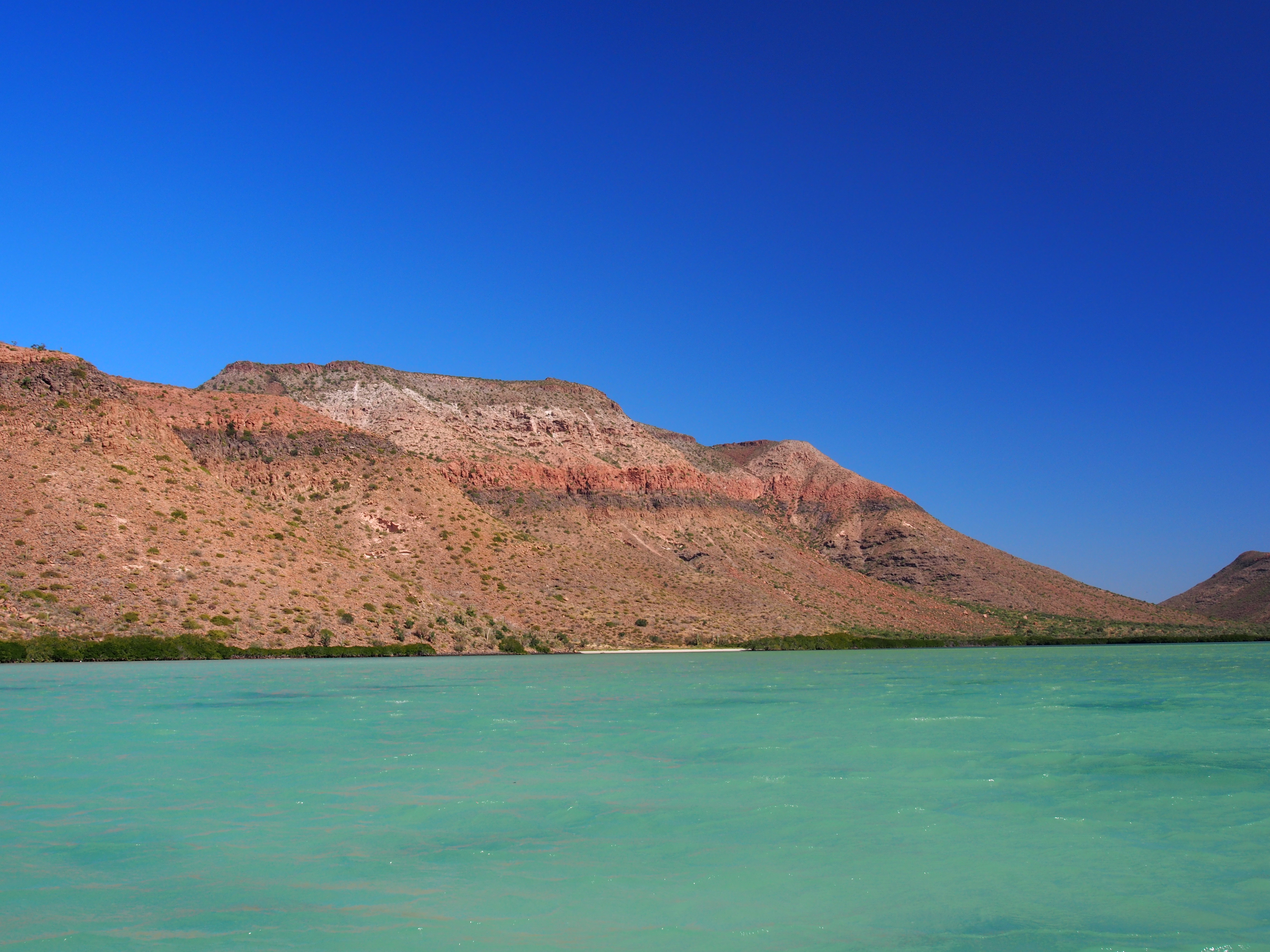
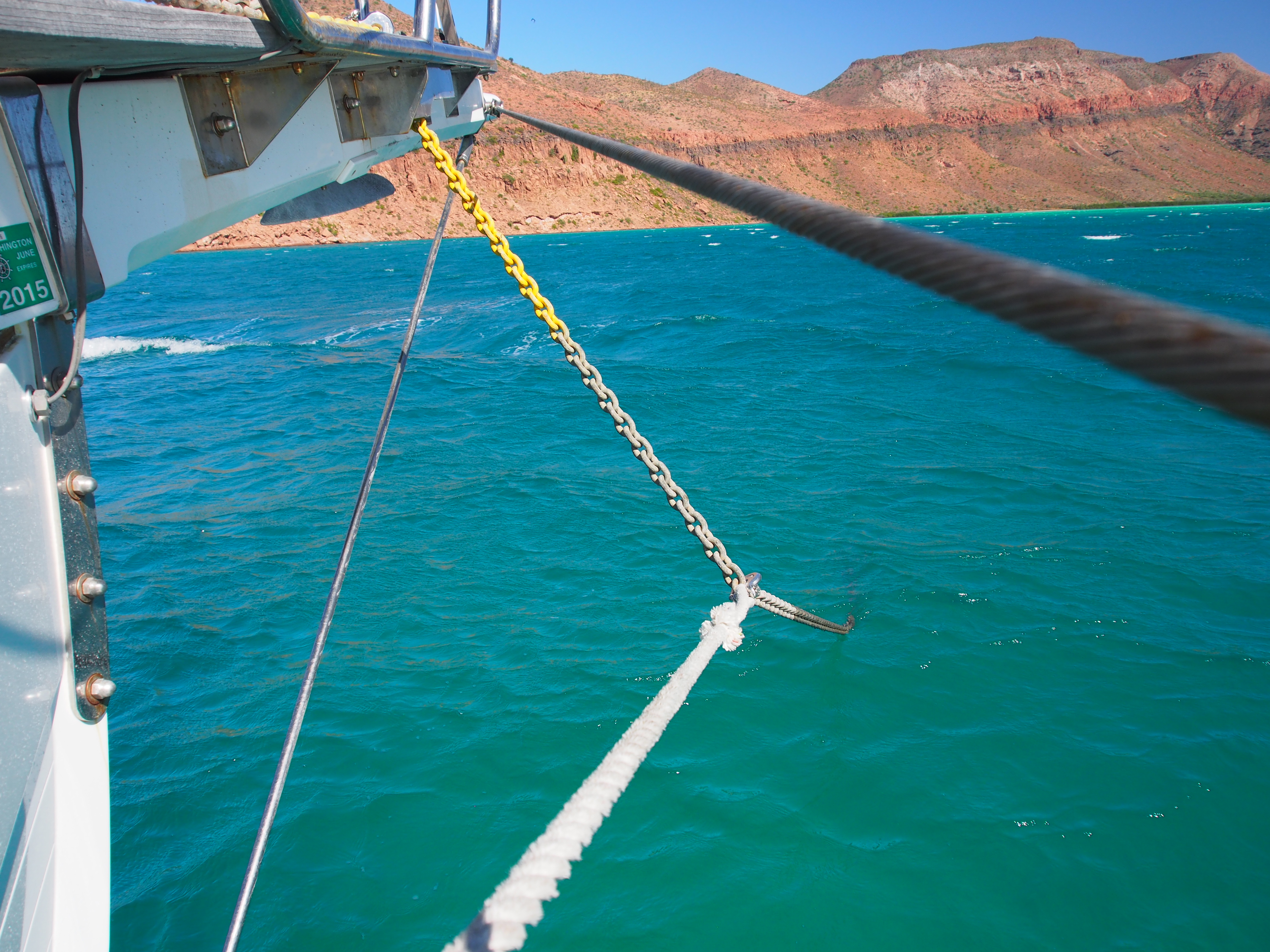
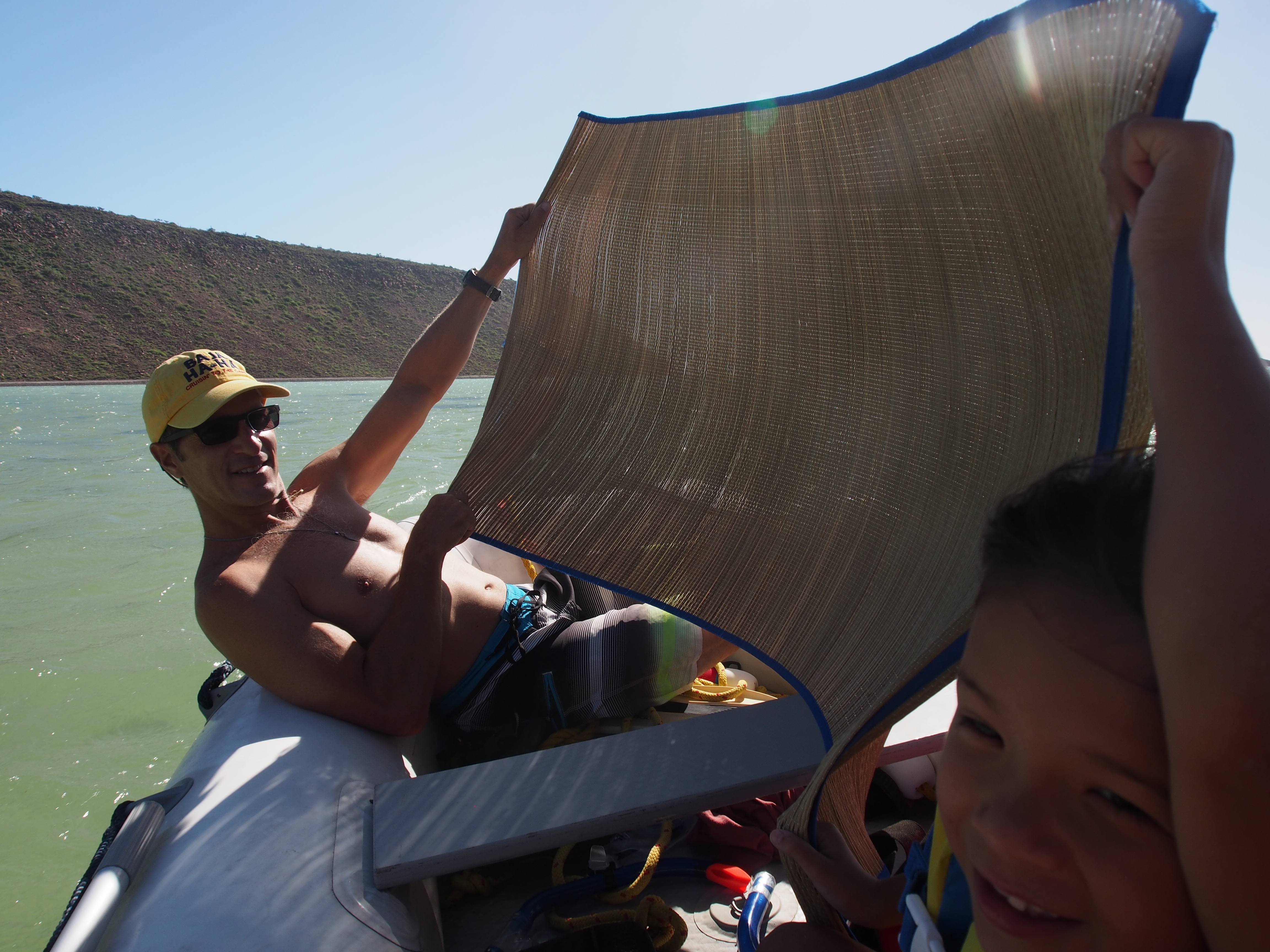
Winter Northerlies—The Sea of Cortez normally has light northerlies in the summer, but can get heavy northerlies during winter. We use the SSB radio to plot GRIB files to get weather data (both current weather and predicted weather). When we left La Paz to head north for 10 days, a cell (high wind area) was moving in a southerly direction towards us down the sea. We decided to find a cove to duck into until the cell passed. Our guidebook said Ensenada de la Roza on Isla Espiritu Santo was good for northerly protection. Espiritu Santo is a national park island 20 miles north of La Paz. When we pulled in there were 2 other boats anchored in the cove, so there was plenty of room. We put out 100’ of chain in 20’ of water for a 5:1 scope since we knew we’d be here during the blow, which would begin the following evening and last for 36 hours. We swam around the boat in warm turquoise water and relaxed. The next day we took the dinghy ashore to look around and have lunch. By then the other 2 boats had left so we had the whole cove to ourselves. With the wind starting to pick up, we sailed the dinghy back to the boat by holding up a beach mat (good thing it was directly downwind)! Back at the boat we prepared for high winds by making sure everything was lashed down or stored down below. By evening the wind picked up to a steady 20 knots with higher gusts. For the next 24 hours the wind blew steadily with 30+ knot gusts, but Apropos held well to the sandy bottom. Aside for the howling wind-noise, we were comfortable since the cove was protected from wind-generated waves. Karen baked bread, Jacintha did lots of schoolwork, and I did some misc. boat work. We all read a lot on our 3 Kindles—Karen with “Game of Thrones”, Jacintha with “Judy Rudy”, and me with “Steve Jobs”.
When the wind died down the following day, we decided to leave the sheltered bay and head north. Karen was a little bit concerned by the whitecaps we saw outside the bay but I said don’t worry, we sail in this stuff all the time in Puget Sound, so lets just stick our nose out and see what it’s like. So we left the cove and as soon as we got beyond the wind shadowing small islet just outside the cove, everything changed. The wind wasn’t that bad, maybe 15 knots, but the chop was extremely steep with a period of about 2 seconds and hitting us head-on. In the 10 years that I’ve been behind the wheel on Apropos, including coming down the Washington/Oregon coast, I’ve never seen waves that square. When they began breaking around us, we decided to head back into the cove. Even turning the boat around was worrisome because that would put us abeam to the breaking waves until we turned through 180 degrees. Fifteen minutes later we were back in the relatively calm cove where we would stay for another day.
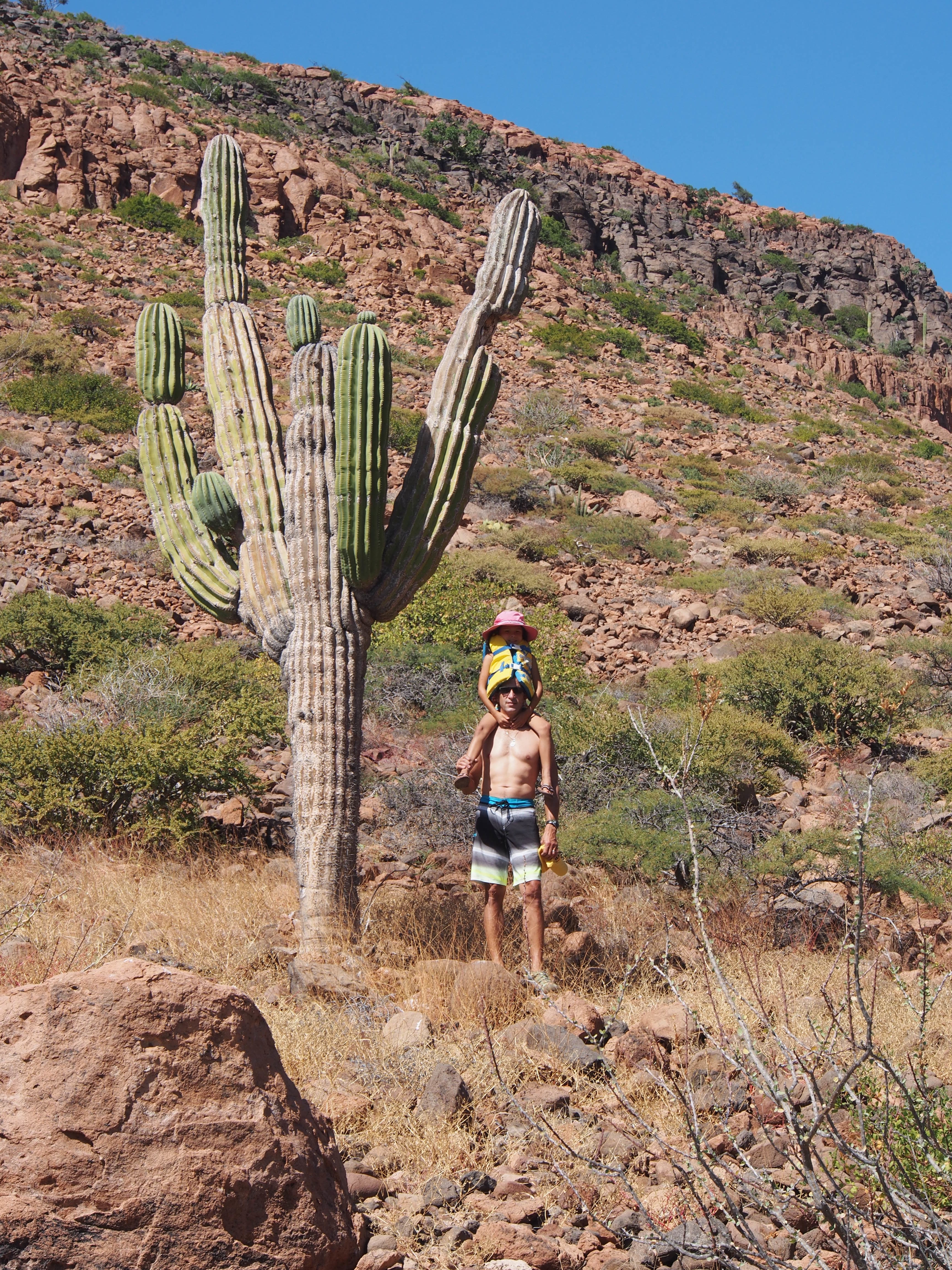
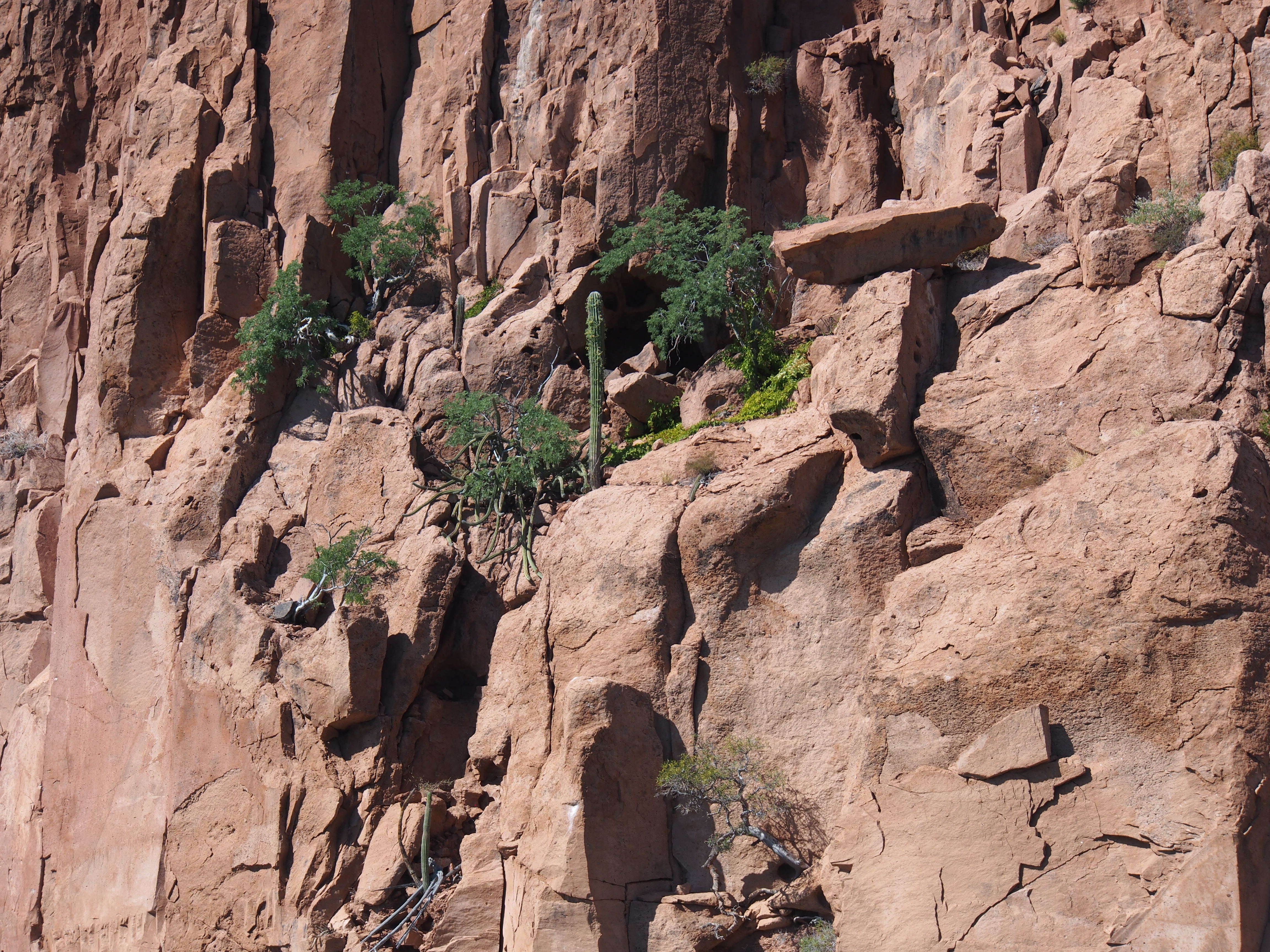
Ginormous Cactus on Isla EspirituHiking on Isla Espiritu SantoAnchorage on Isla Espiritu SantoPreparing for the high wind with an anchor snubberSailing the Dinghy with a Beach MatVertical Cliffs inside Encenada de la Roza
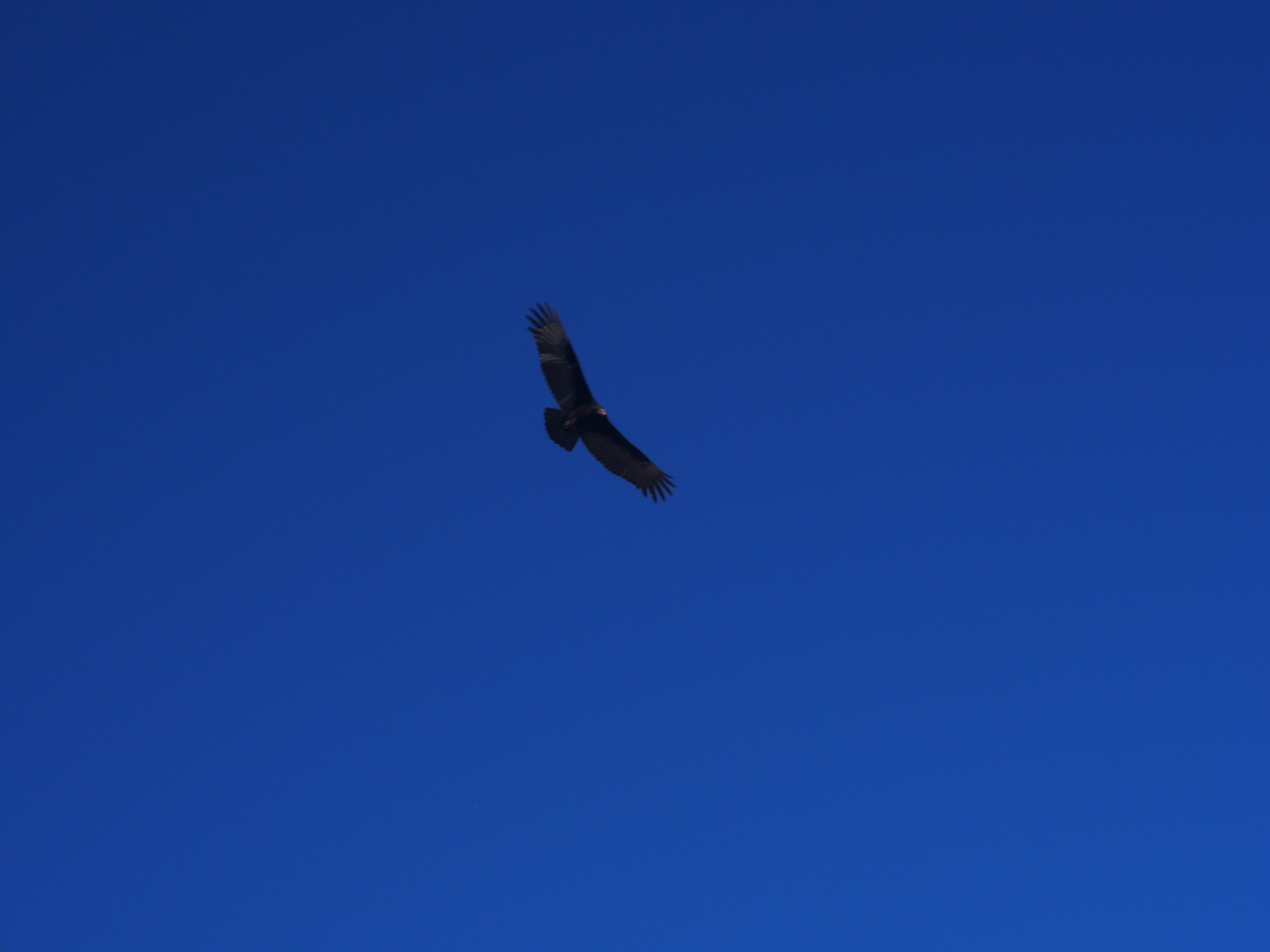
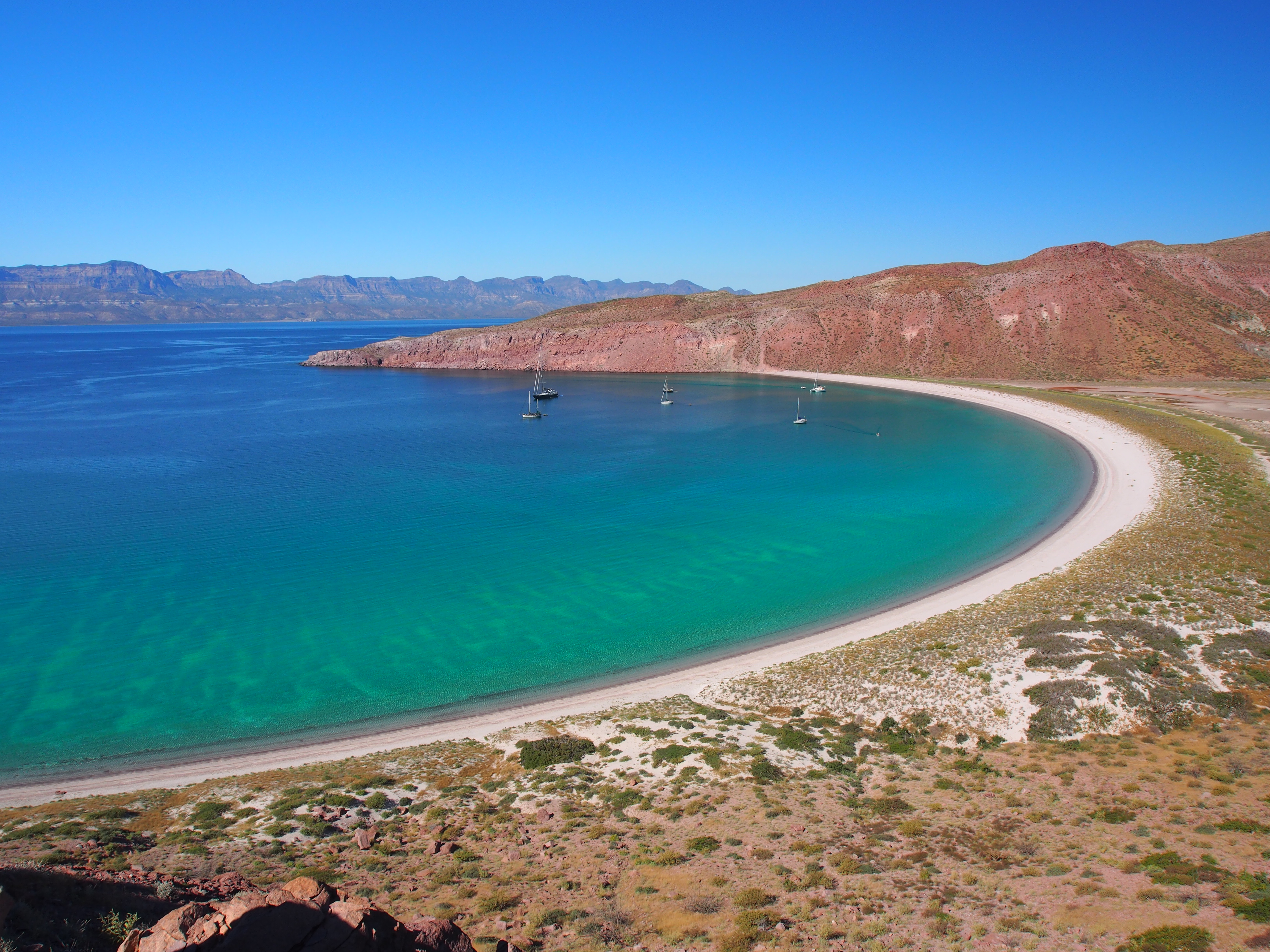
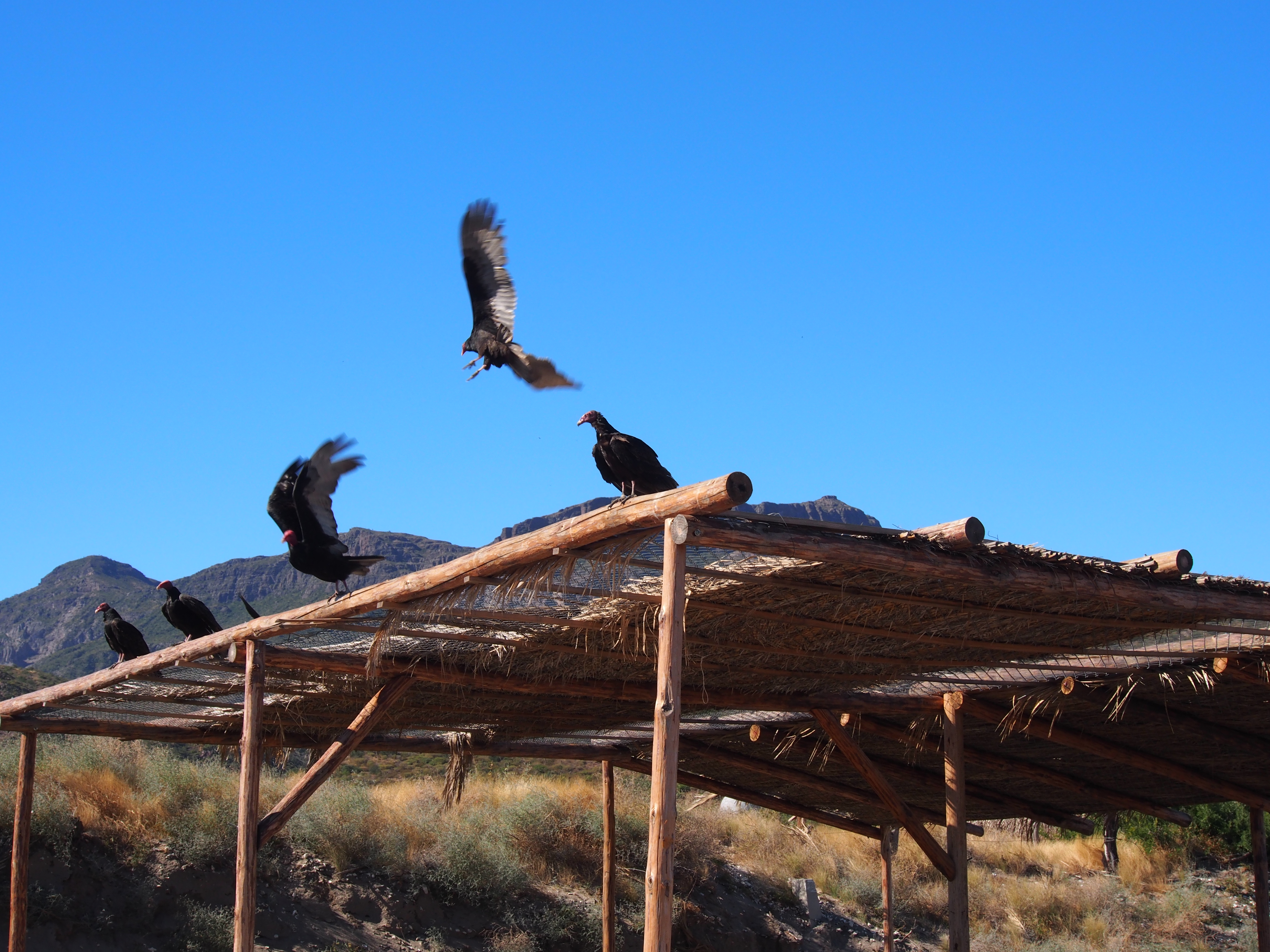
Isla San Francisco—A hard 5 hour upwind sail in medium chop was rewarded with a postcard perfect, crescent-shaped beach surrounded by warm, turquoise water. On our 2nd day there, Jacintha and I paddle-boarded to shore then hiked along a ridge overlooking the bay. Along the way we watched Turkey Vultures soar overhead. At around 1000’ we ate our snacks (skittles and peanut butter cups) and enjoyed the view. After descending back to sea level we cooled off in the water before paddle boarding back to the boat. While we were gone, Karen sewed 2 mesh bags that will be used for our diving gear.
Hiking along the Ridge Line on Isla San FranciscoTaking a Break Near the SummitBreak Near the SummitTurkey Vulture Soaring OverheadView of Anchorage from Ridge Summit…and when I found out the Seahawks beat the 49ers!
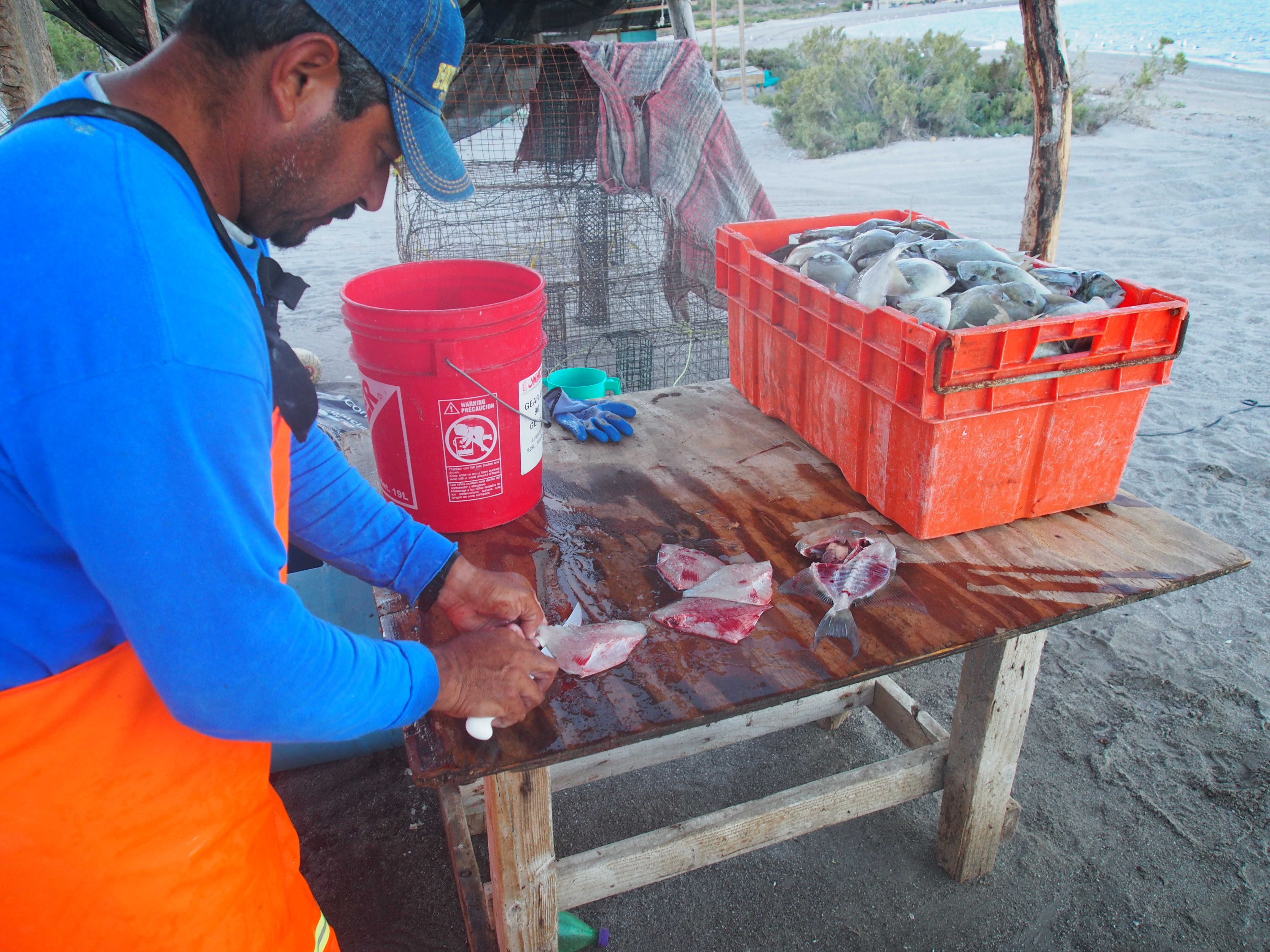
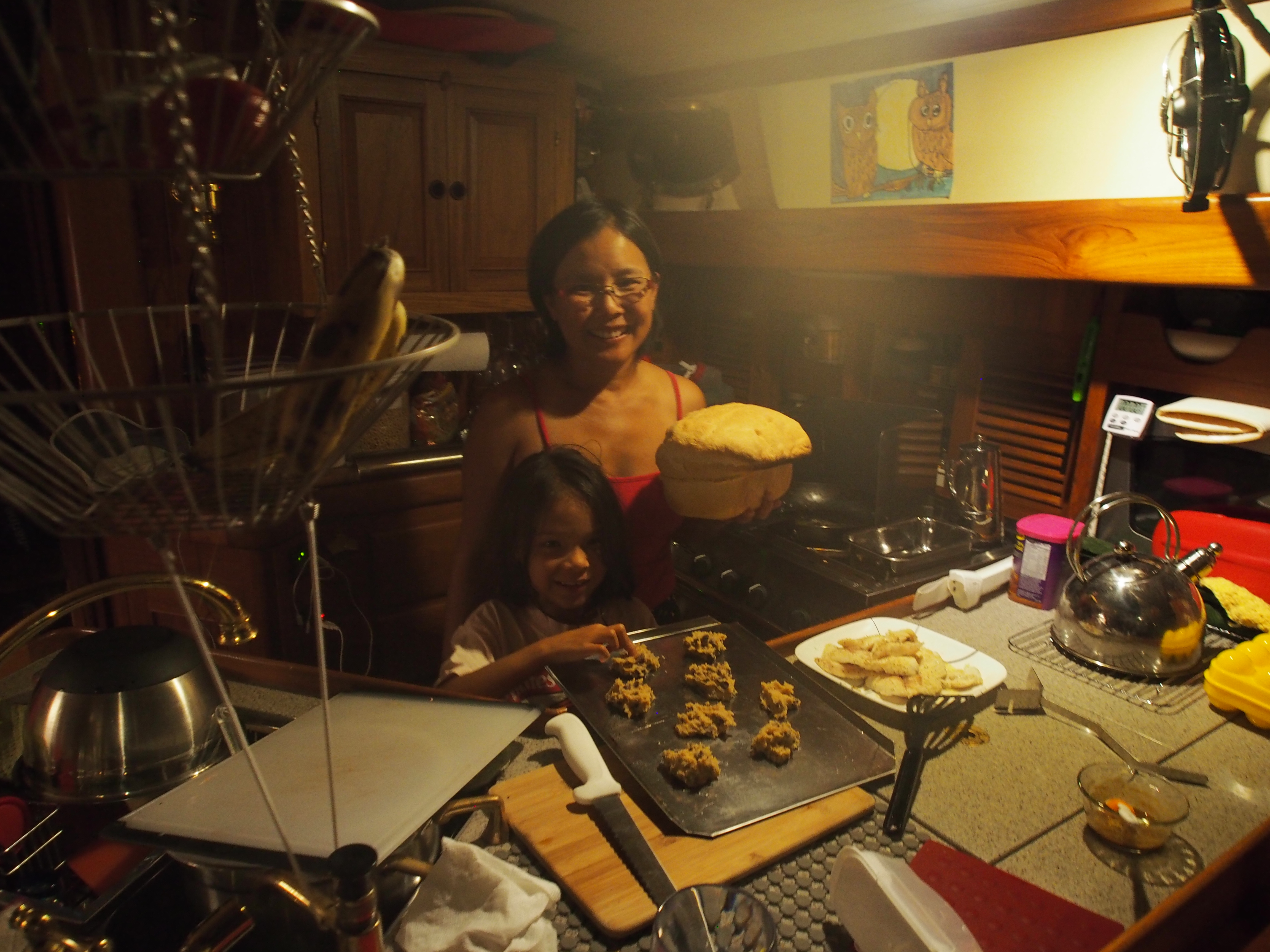
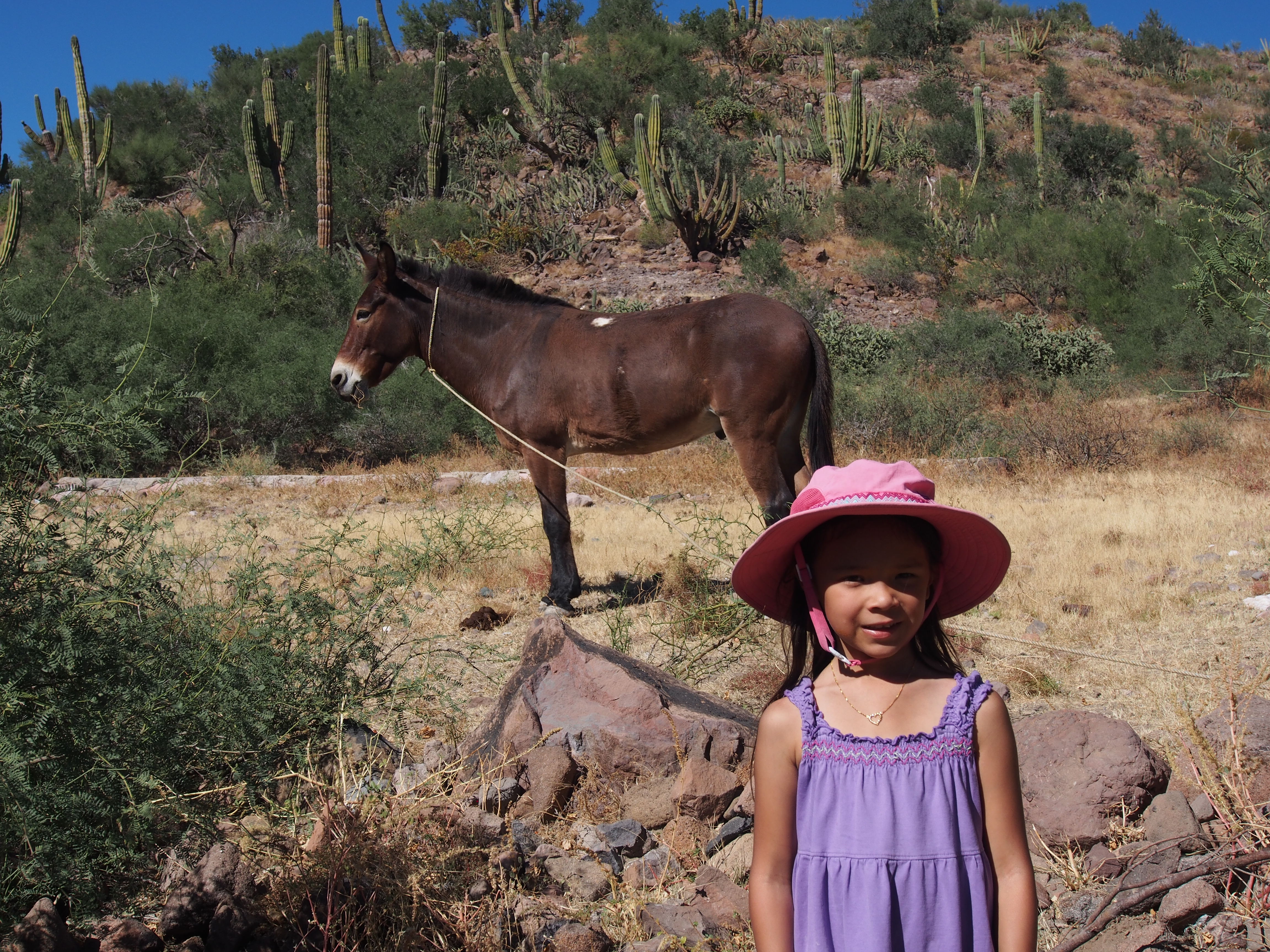
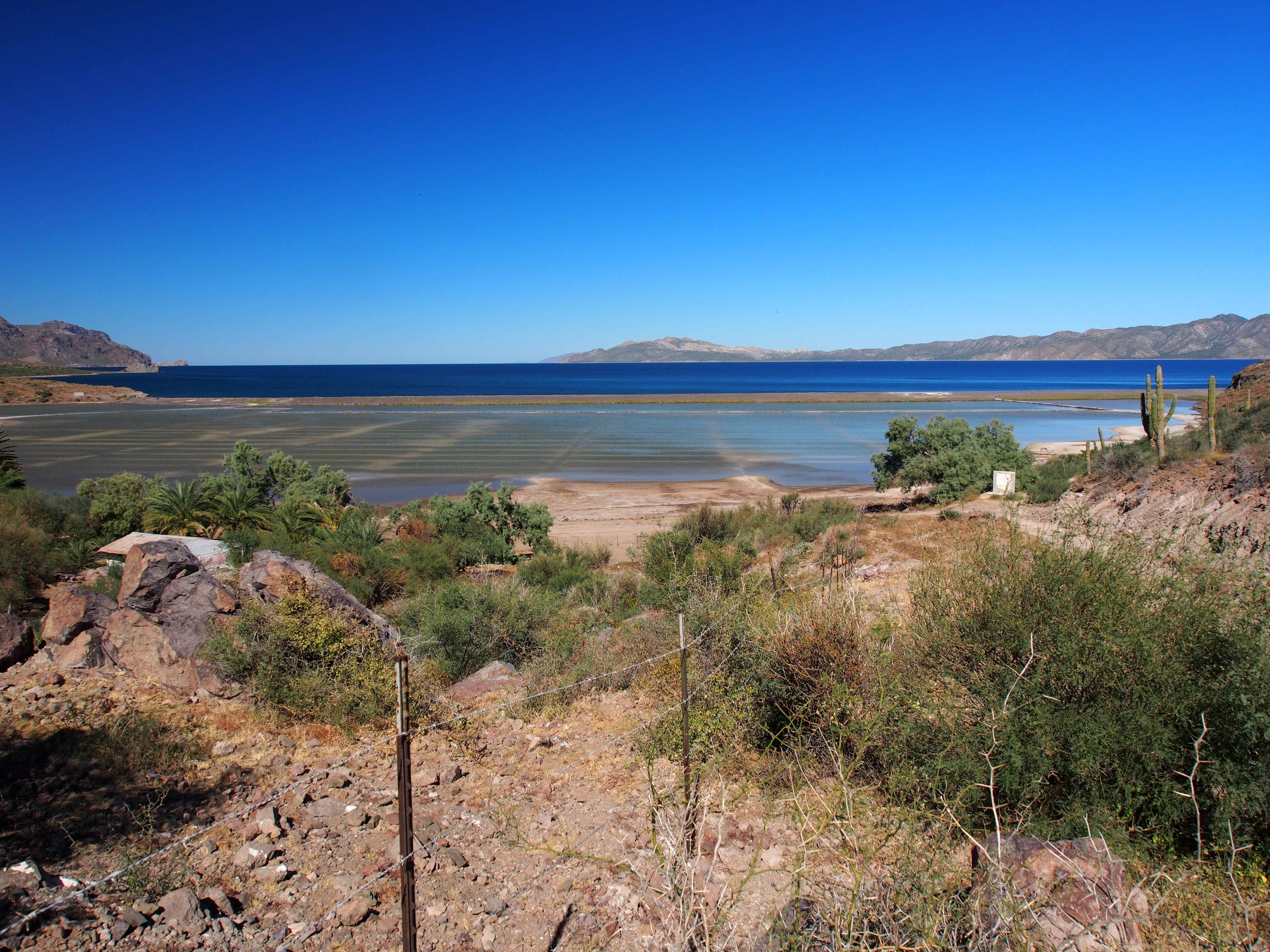
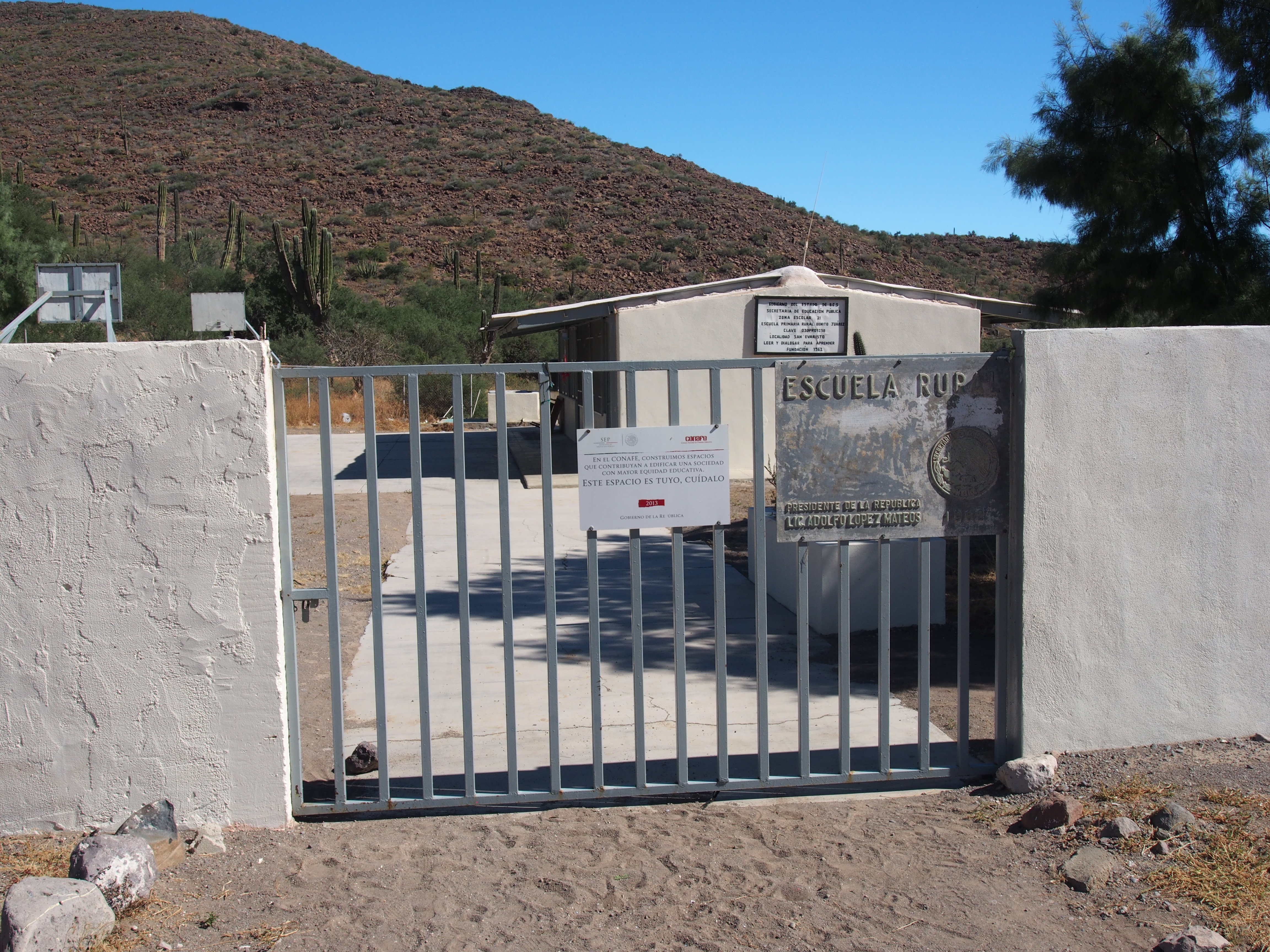
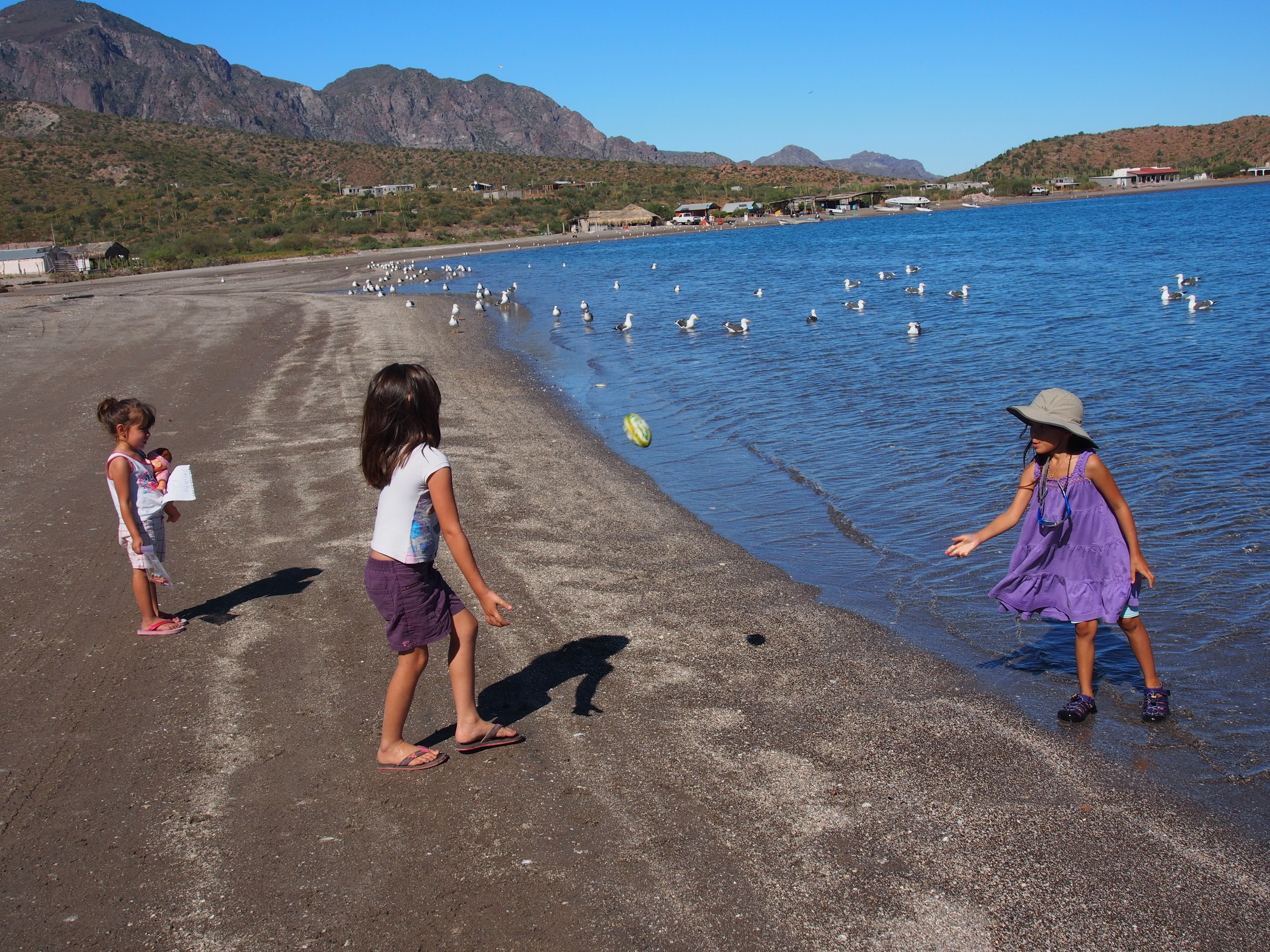
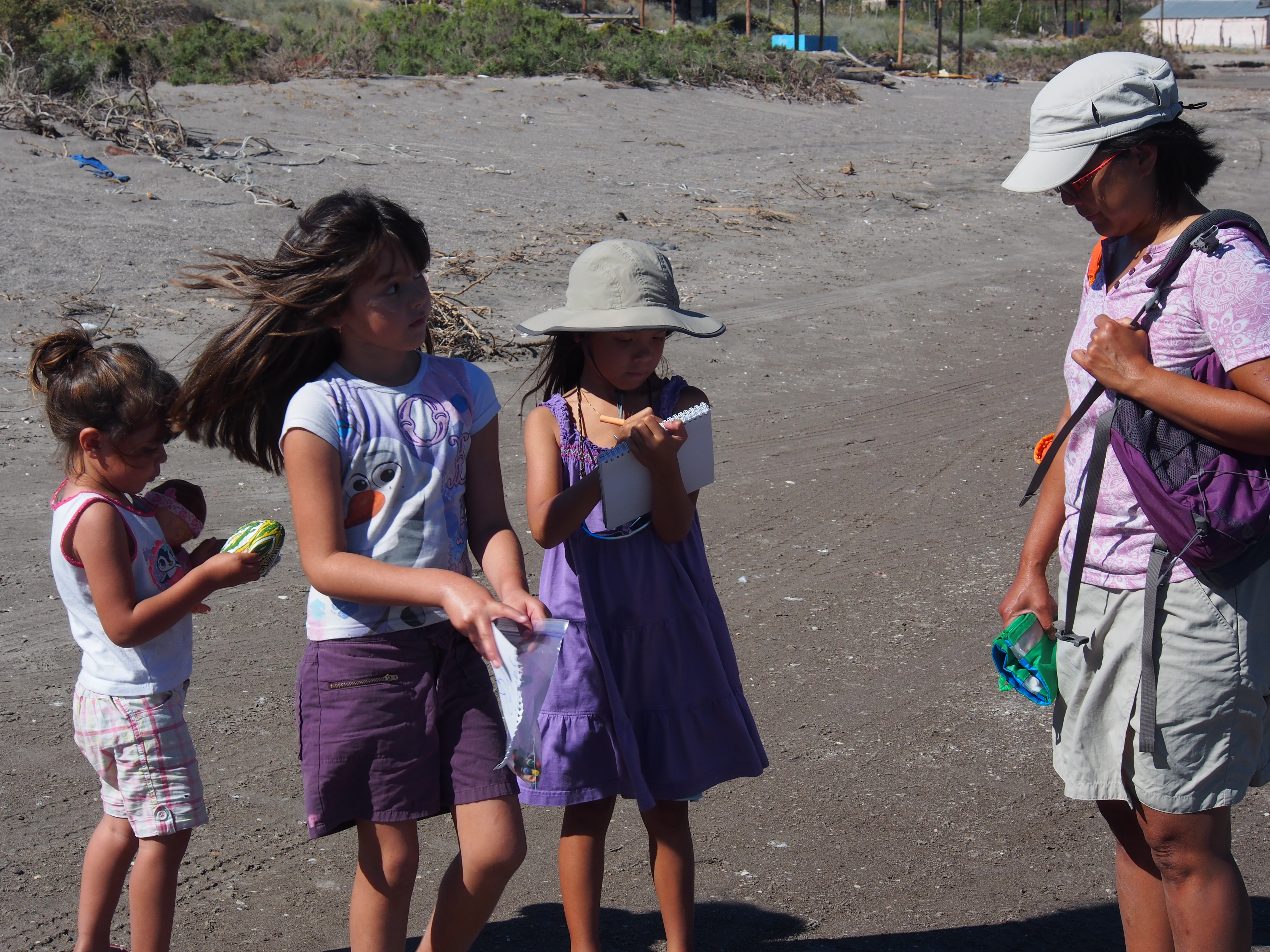
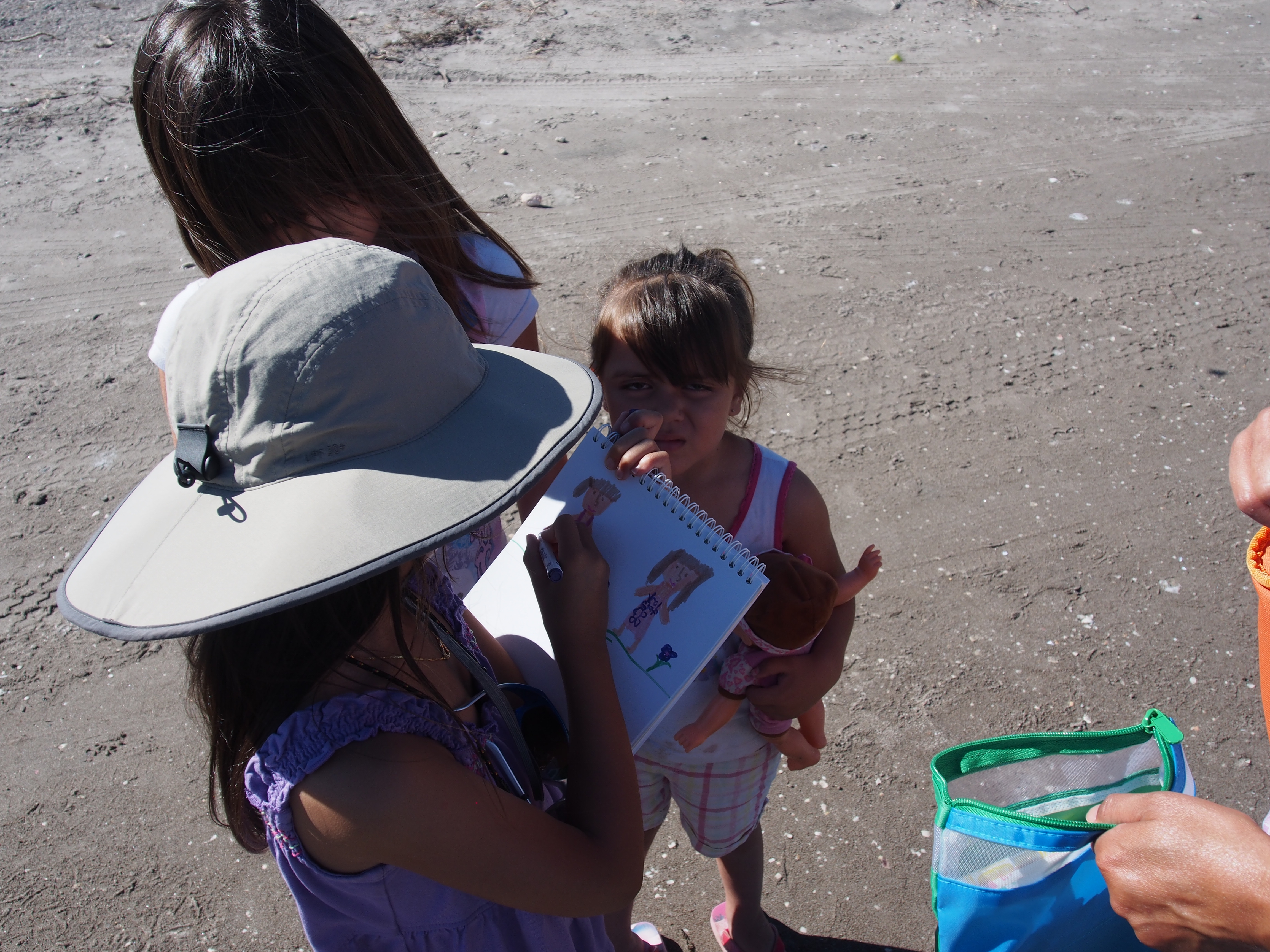
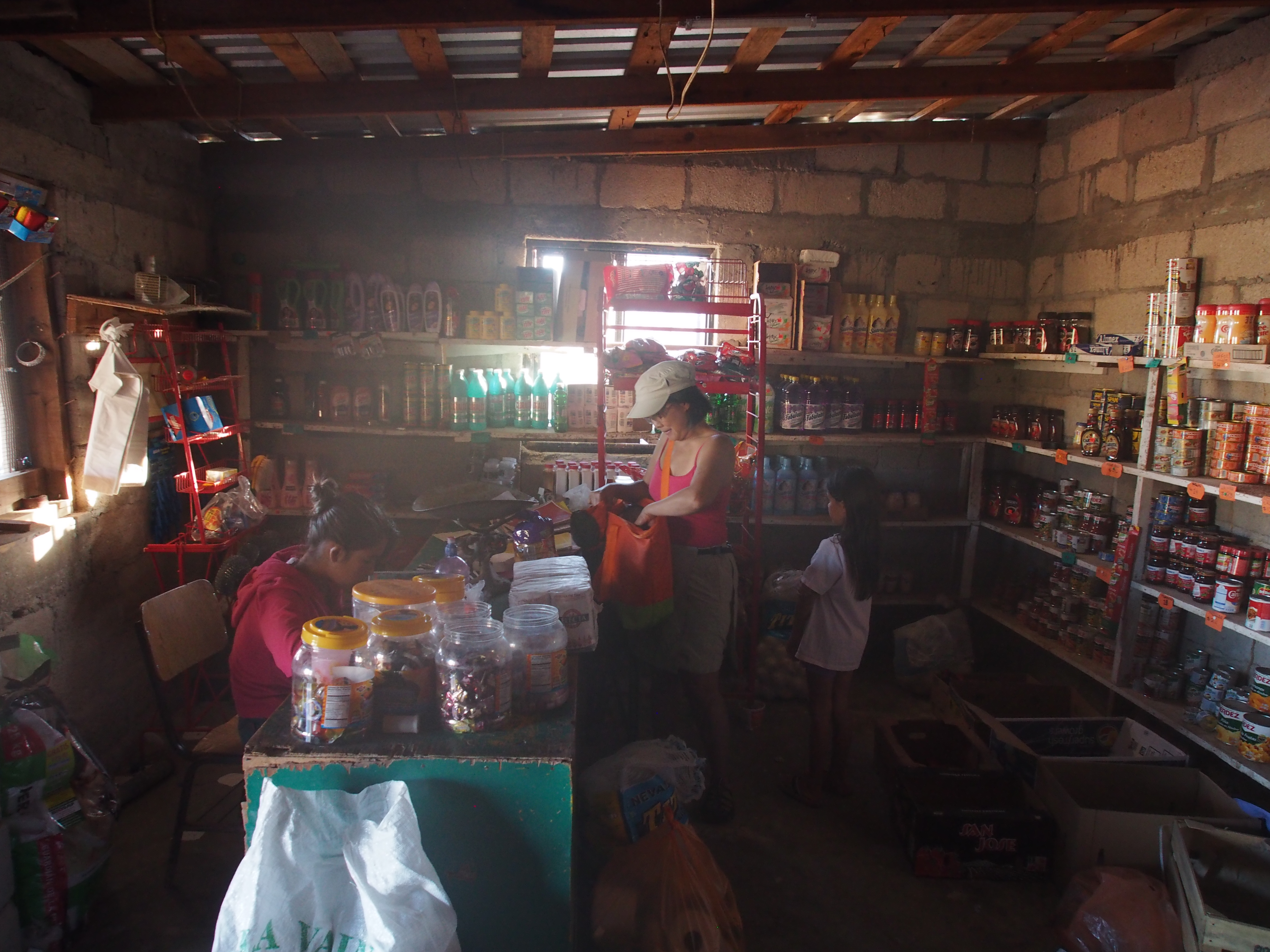
Punta San Evaristo—San Evaristo, about 2 hours north from Isla San Francisco, is a quiet little fishing village with about 20 families living there. A 70-mile road to La Paz is mostly dirt and ends here. We anchored and went ashore to buy some fish from fishermen who had just arrived in their panga with their catch of Trigger Fish. We also stopped at the Tienda for a few snacks, eggs, and produce. Back at the boat, Karen and Jacintha made cookies and bread, so the boat was smelling wonderful! We fried the Trigger Fish in garlic, pepper, and olive oil and dipped it in a wasabi sauce. The next day we went ashore and Jacintha met 2 little girls, ages 3 and 5, who live in the village. They communicated with few words but soon were playing catch with a nerf ball and singing songs from the movie Frozen in 2 different languages (the older sister wore a shirt with Olaf printed on it). When it was time for the girls to join their family to drive their fish catch to La Paz, Jacintha gave them the colored drawing of the 2 girls and their dog that she was working on, plus the crayons and ball. I thought about about the huge difference in the girls’ lives in terms of how and where they lived, their schools, and what they did for entertainment. Next we hiked to the salt evaporation pools a mile north of San Evaristo, passing a small escuela (school) and a couple of burros along the way. The pools were still full of water from when Hurricane Odile went through a few months ago. Later that day we up-anchored and motor-sailed 5 miles north to an anchorage on the north-west side on Isla San Jose.
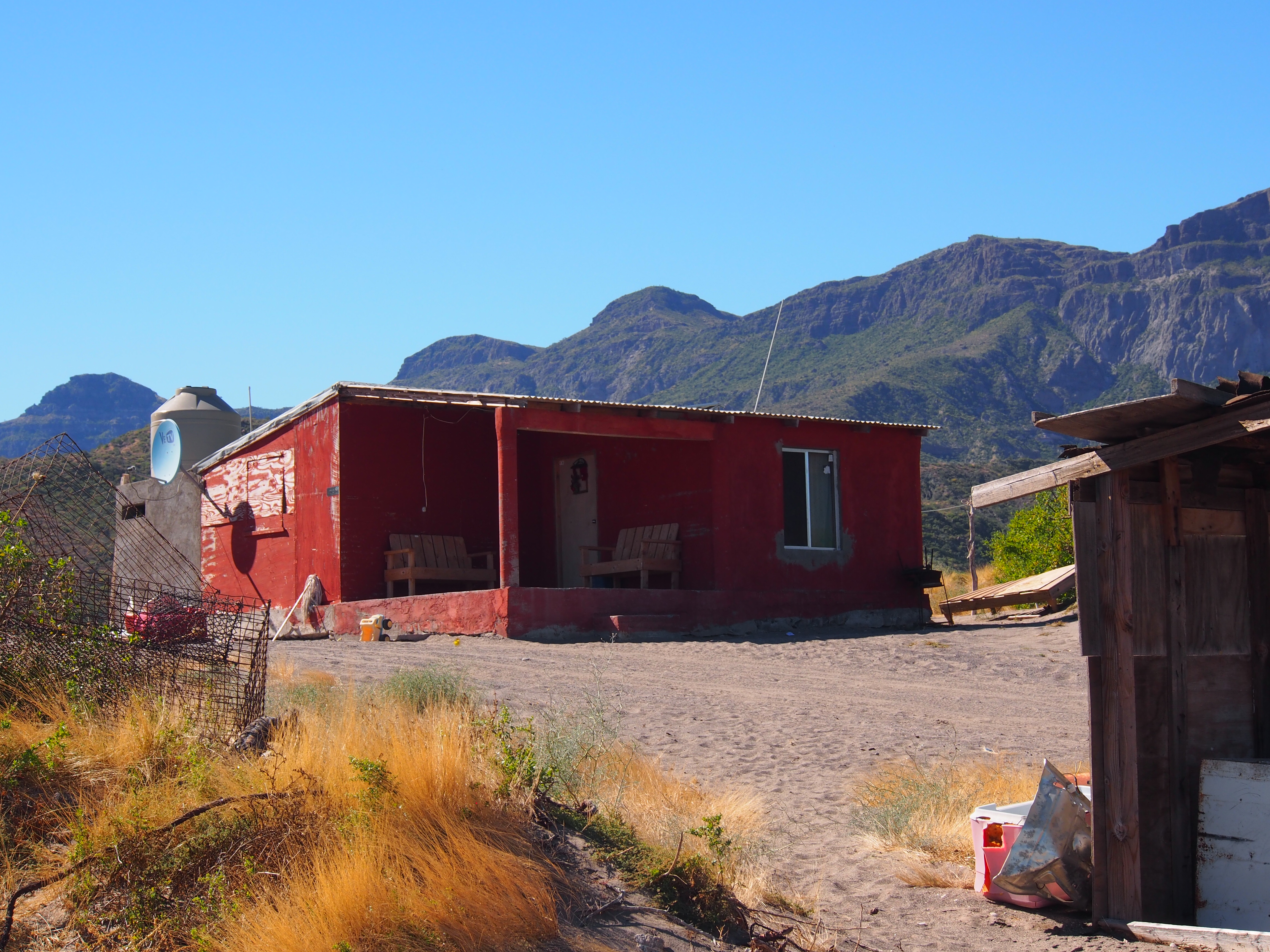
Buying Trigger FishHomemade Bread and CookiesSpotted this Burro along the hikeSalt FlatsEscuela (school) for VillagePlaying with Nerf BallSketching and Coloring (and trying to communicate)Jacintha Sketching a Picture for her FriendsThe Girls’ HouseSmall TiendaTurkey Vultures
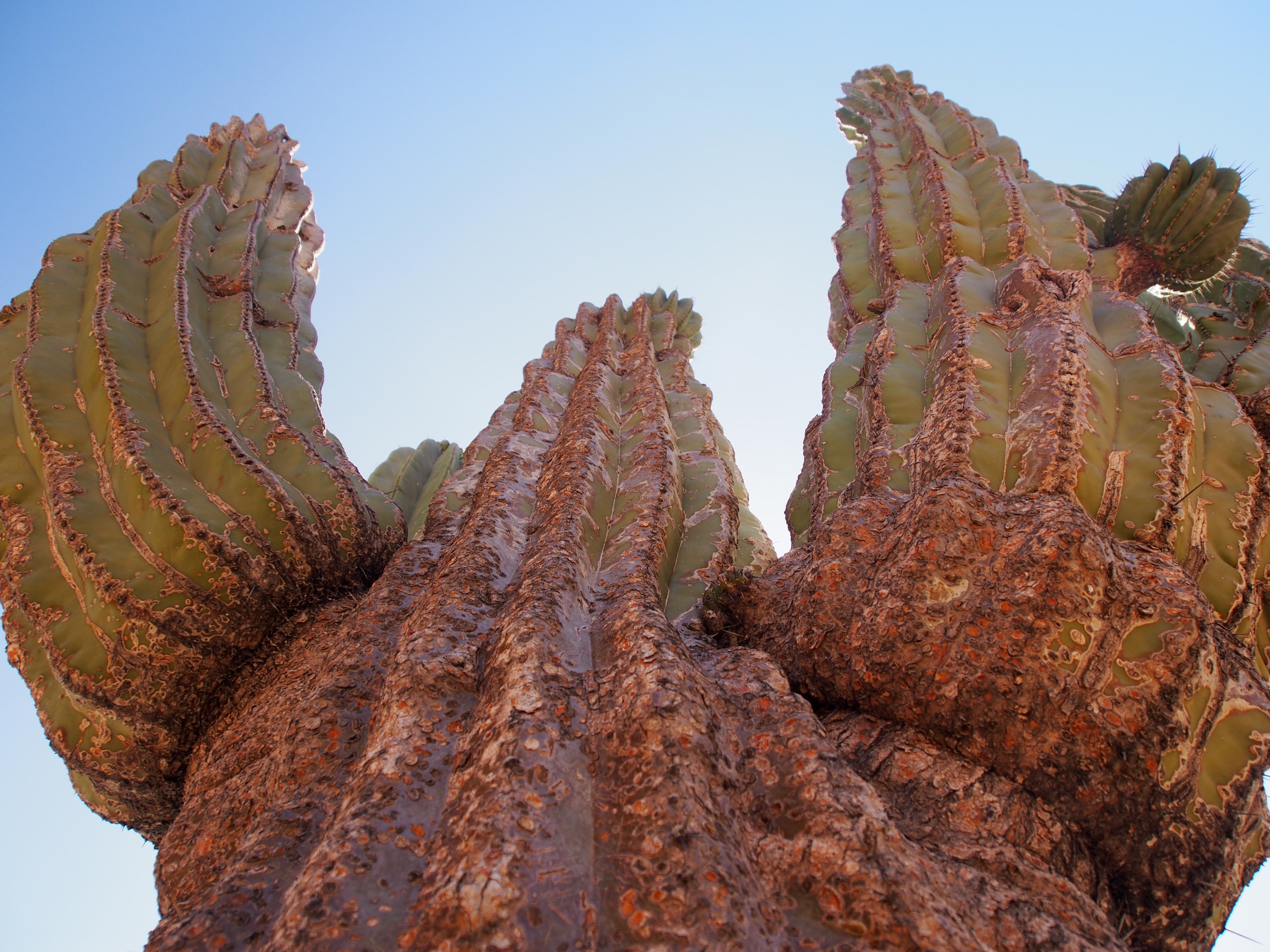
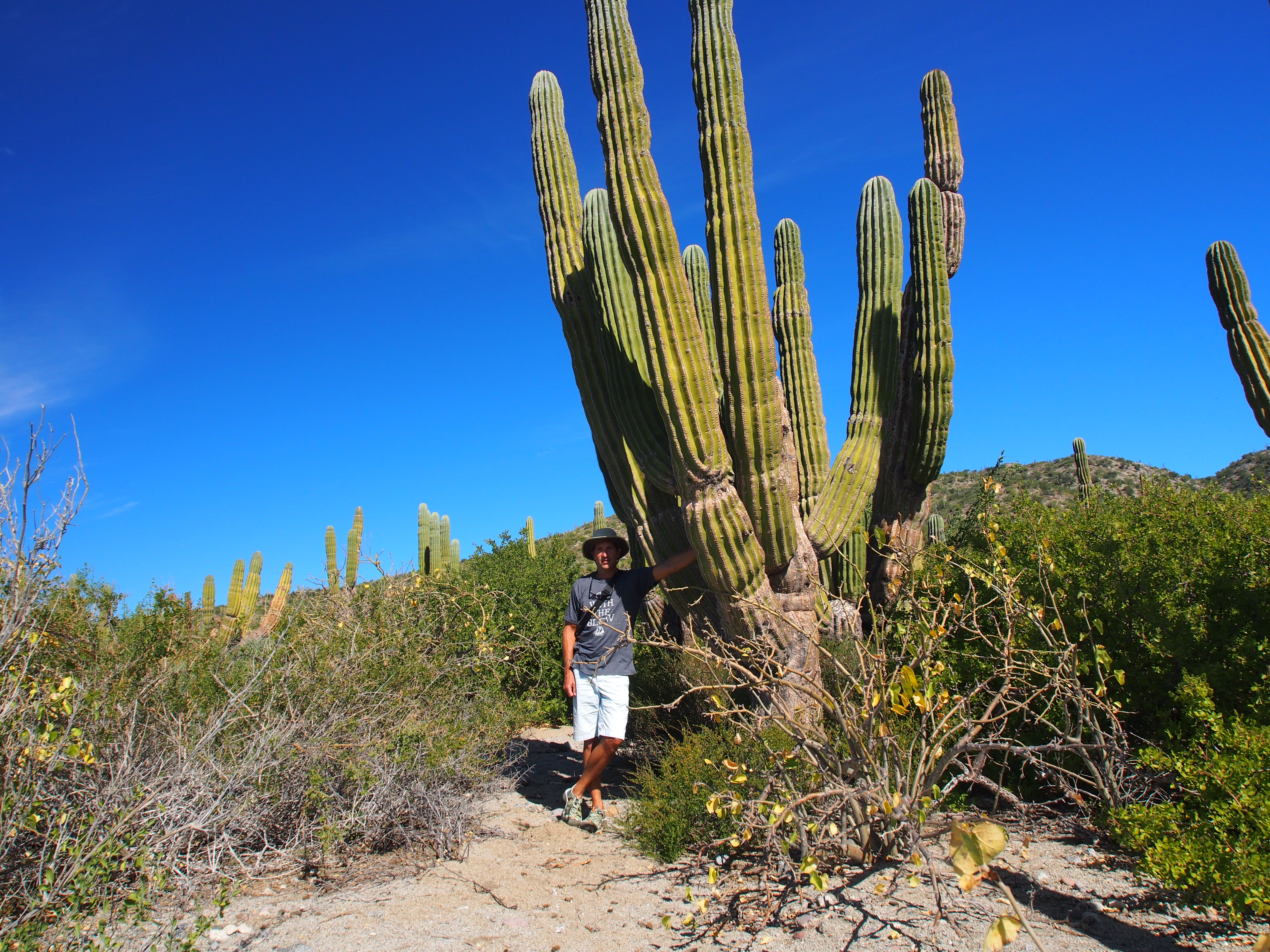
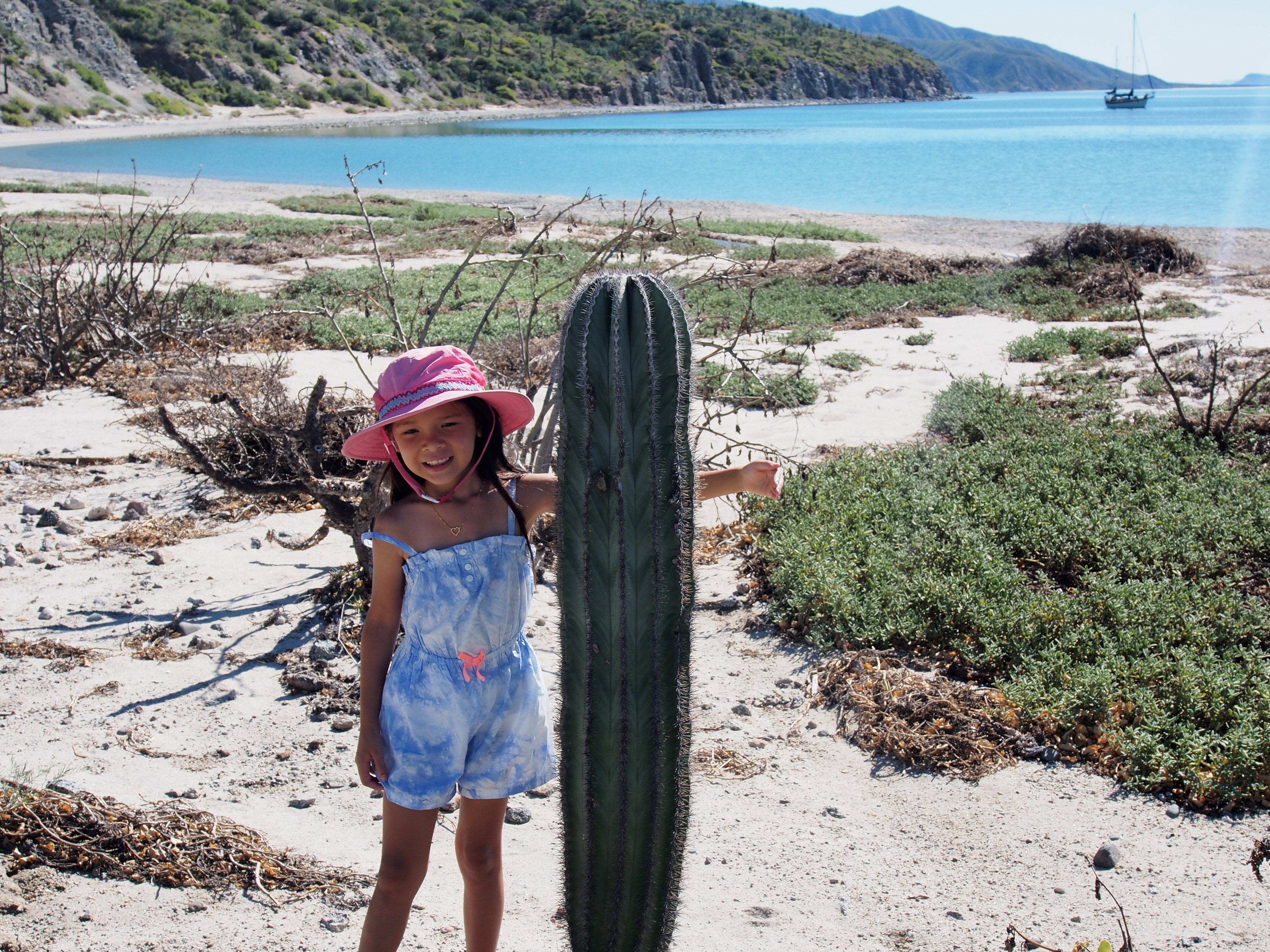
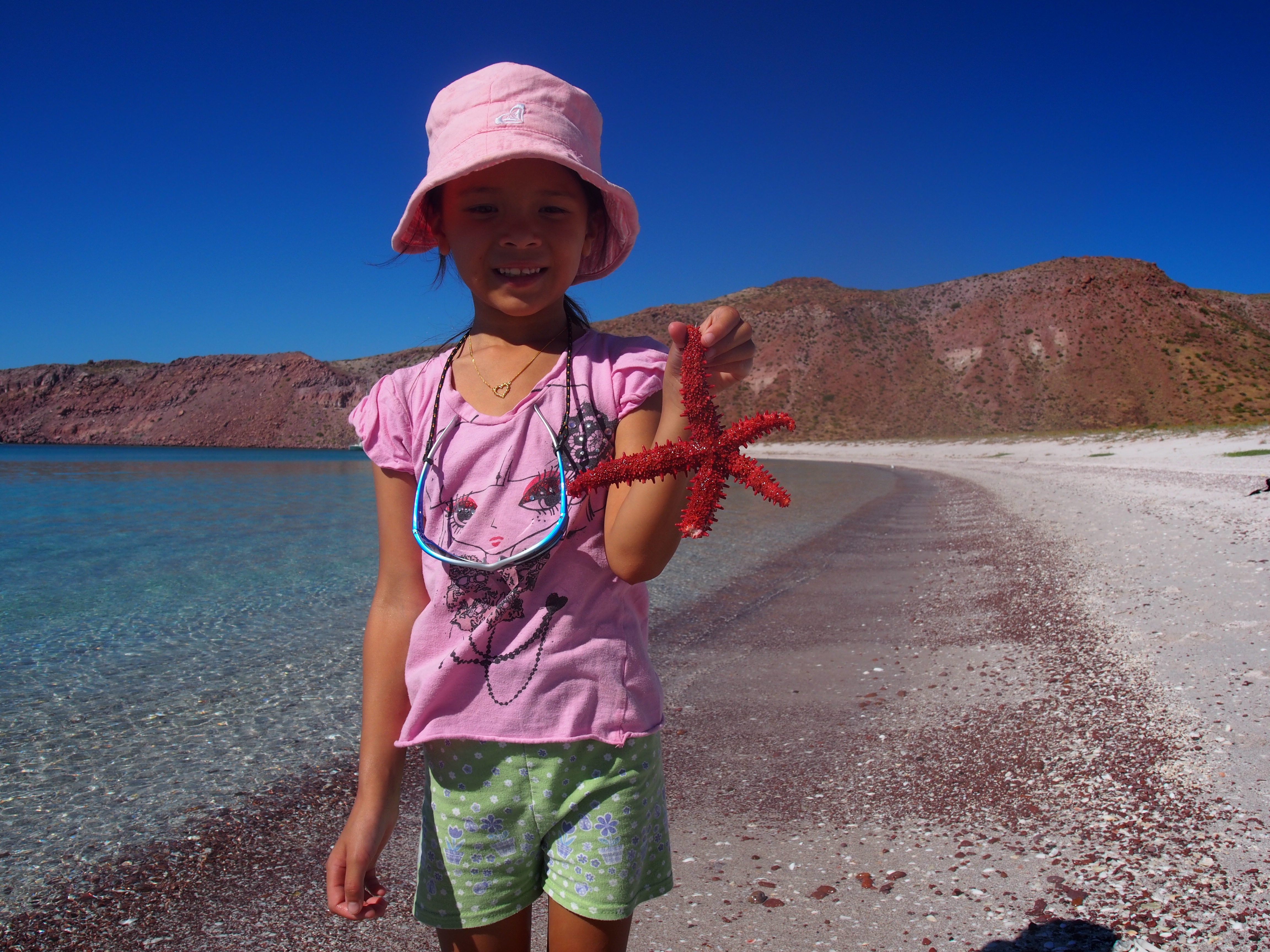
Isla San Jose—Another hour north from Punta San Evaristo is an anchorage on Isla San Jose called Mangle Solo. A highlight of this anchorage is the large carson cactus forest. These cacti can grow to 70’ tall and 4’ wide. Natives use the flesh of the cactus for its healing properties and the long straight ribs for fences and beams for housing. I did some snorkeling around the boat and removed some barnacles that had accumulated in the thru-hulls and bow thruster. We spent the night, then up-anchored after breakfast and motor-sailed to Isla Coyote.
Giant Carson Cacti on Isla San JoseJacintha and her “Friend”Starfish
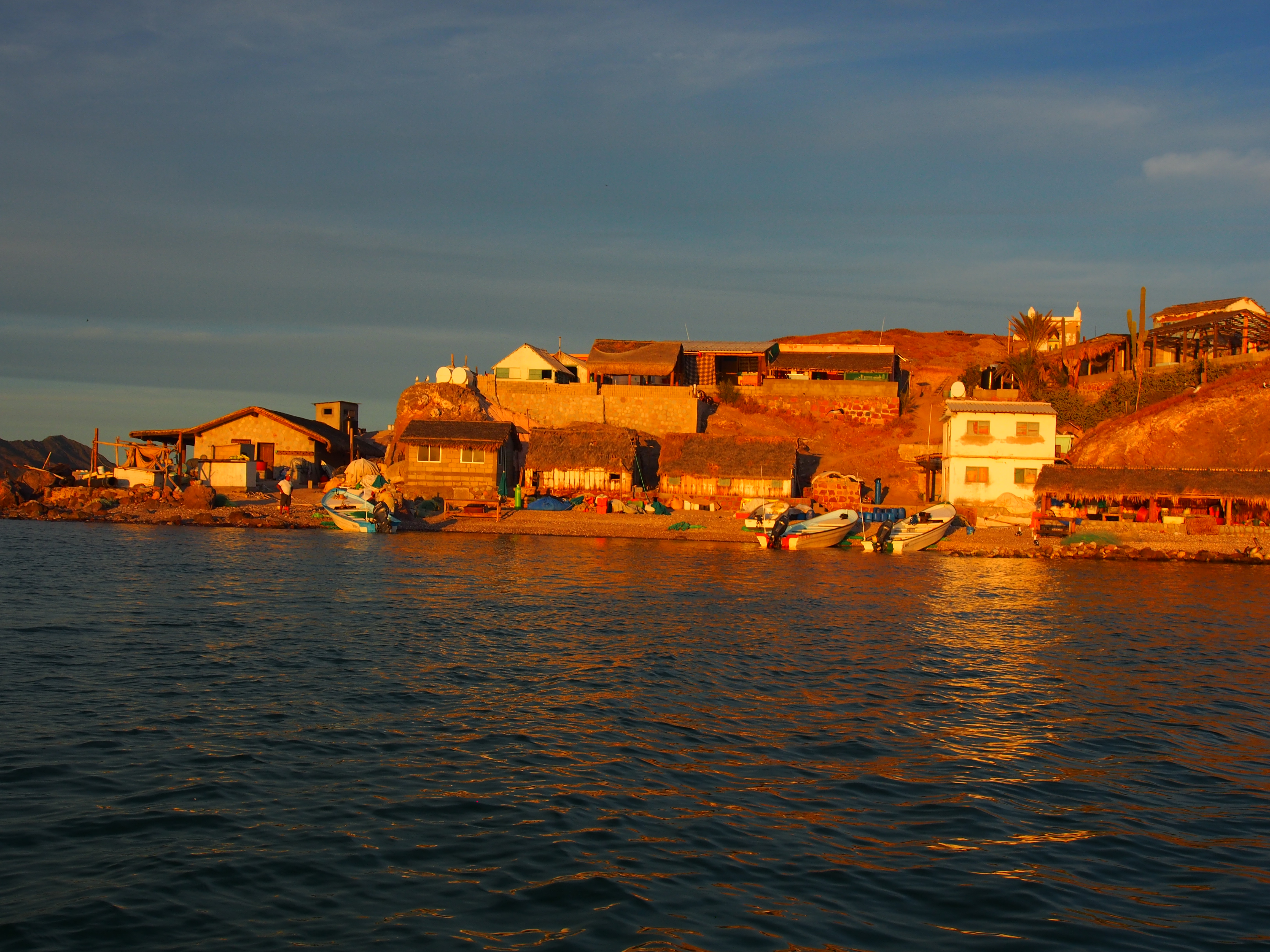
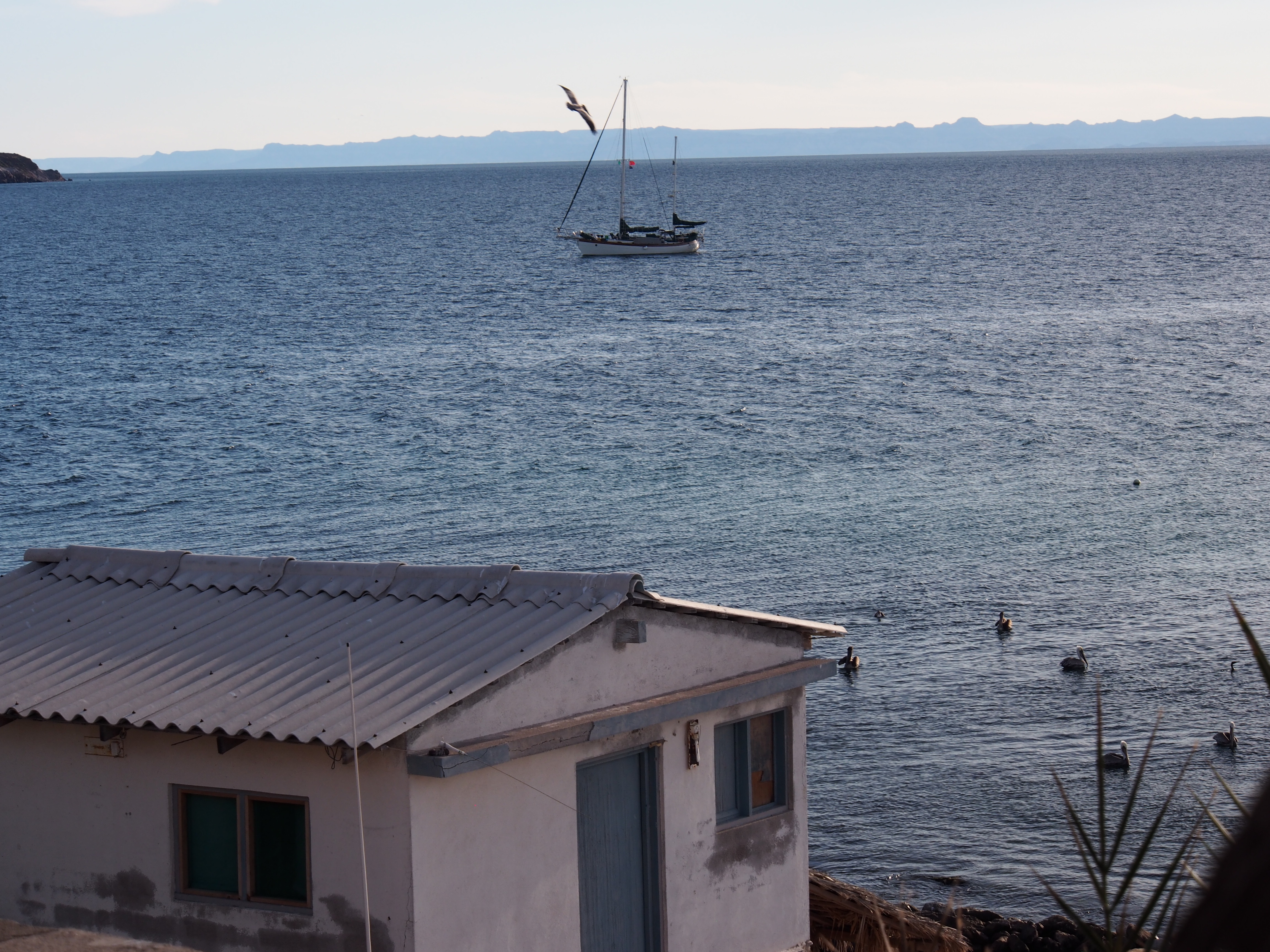
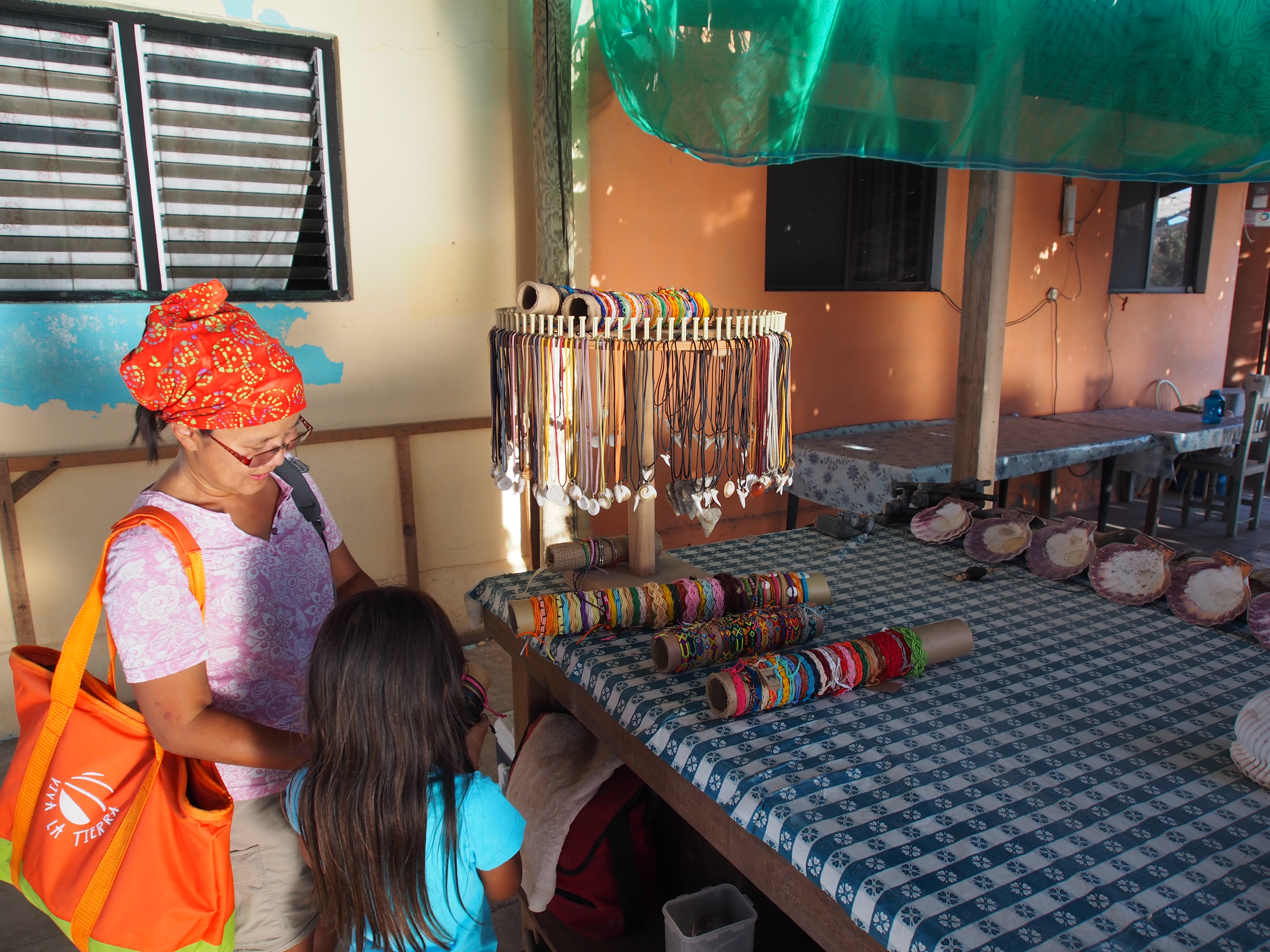
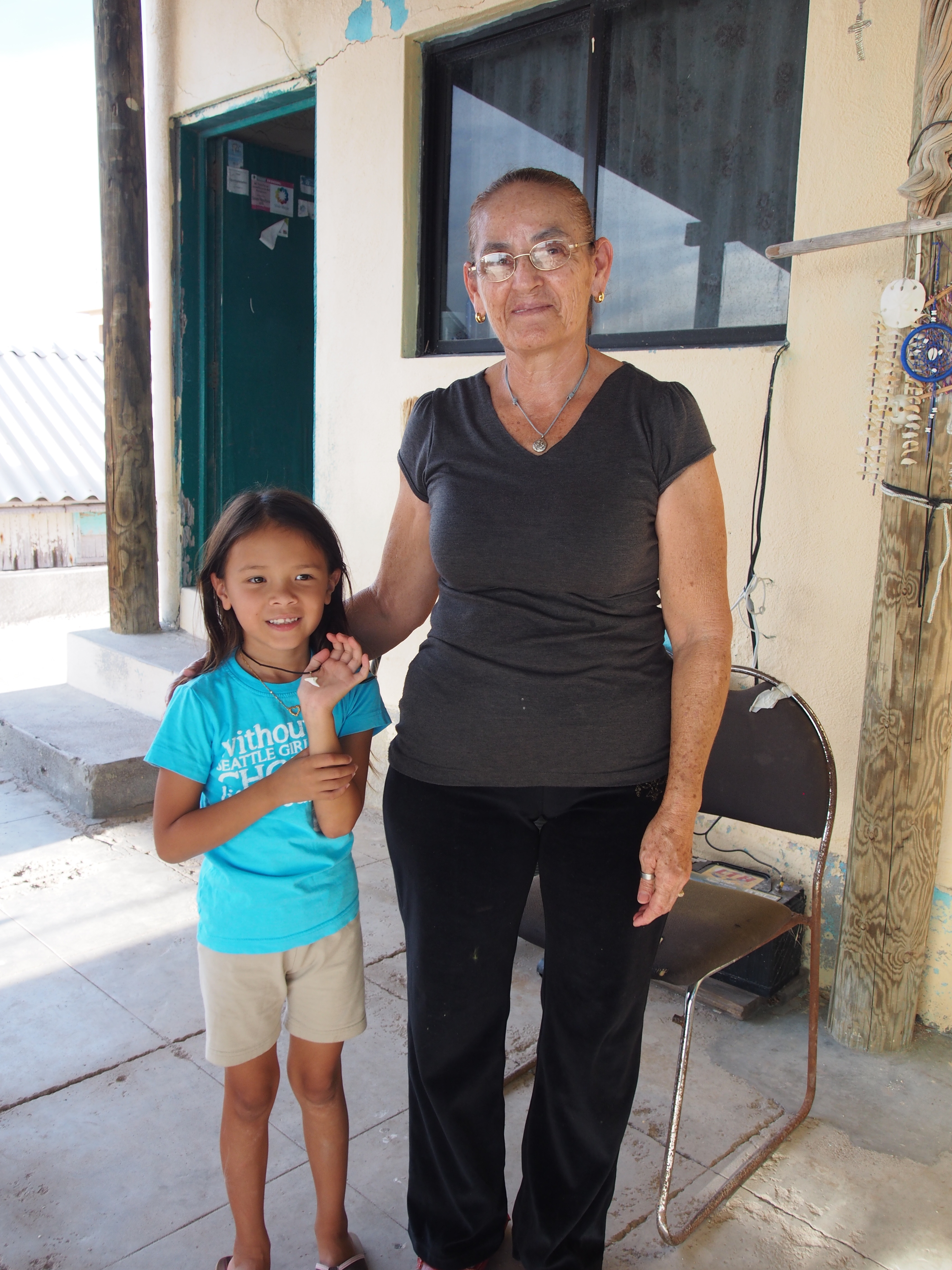
Isla Coyote—Half way between Isla San Jose and Isla San Francisco is a tiny rock island with a few houses. We anchored in 30’ of clear water and took the dinghy ashore. We were greeted by a friendly fisherman who gestured for us to go up the steep path where houses were built into the rock. At the very top was a small building that looked like a chapel. Jacintha picked out a shark-took necklace from a woman who was selling hand crafted jewelry from her porch. Her friendly husband came out and we attempted to have a conversation. We pulled out our spanish phrasebook and he got an atlas so we could show him where we are from and where we are going. The men on the island fish for a living so we bought another large Trigger Fish for 50 pesos ($4). Back at the boat, Karen found a Greek stye fish recipe using tomato, herbs, onions, goat cheese, and lemon and served it with a Greek salad and rice.
Houses on Isla CoyoteView from Isla Coyote overlooking the bayHand-Crafted JewelryJacintha’s Shark-Tooth Necklace and its creator
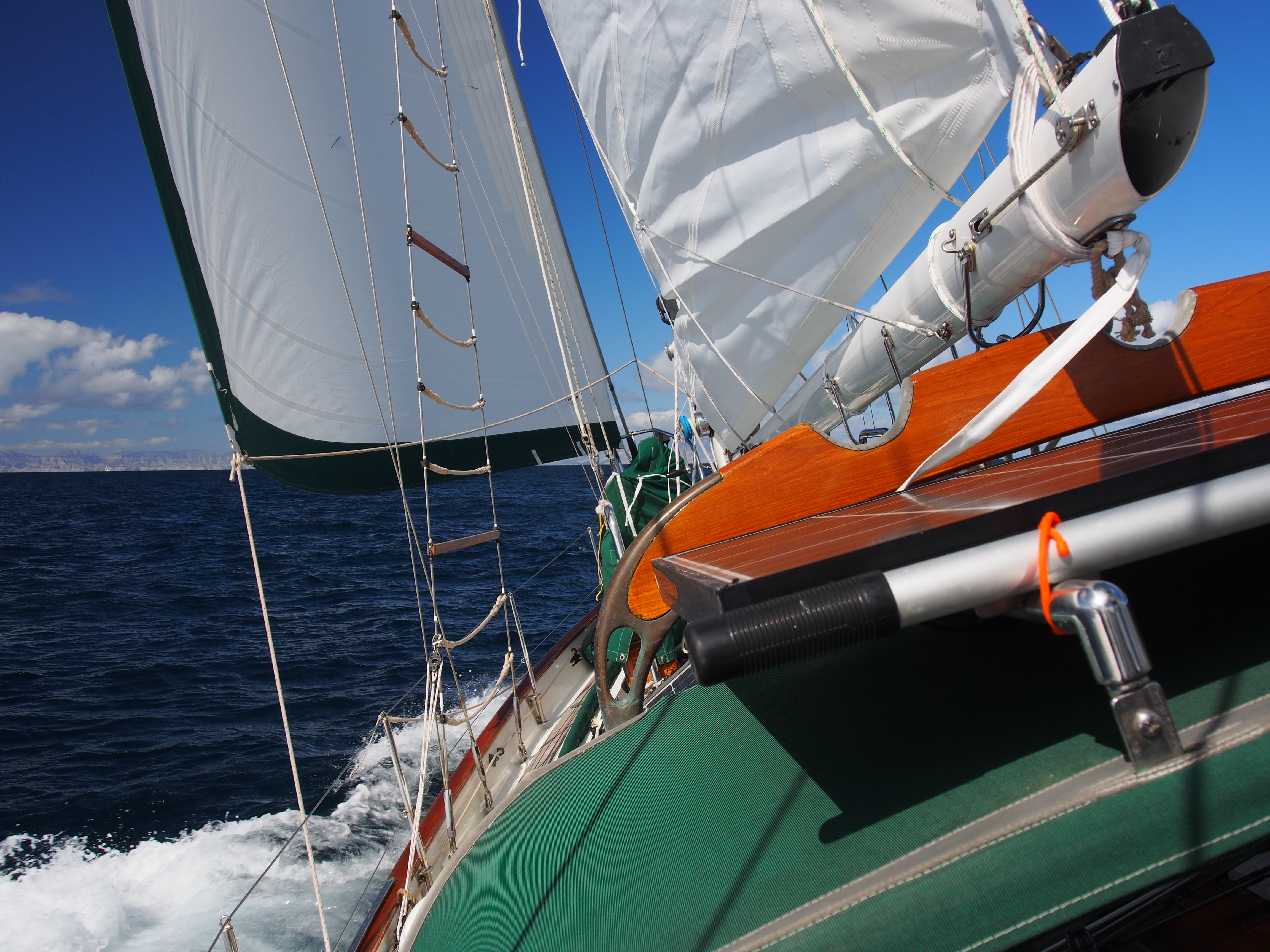
Back to La Paz—We were planning on a 2-day sail from Isla Coyote to La Paz, but woke up to a strong northerly and ended up sailing the entire 50 miles, getting in just before dark. Almost the entire sail was in 20 knot winds and steep, lumpy seas. The genoa was enough to keep up moving at 7 knots most of the way. As we neared La Paz and the wind decreased, we pulled up the mizzen sail and sailed all the way through the La Paz channel.
The past 10 days of cruising in the Sea of Cortez were very enjoyable. It felt great to be self-sufficient in a number of ways:
Meals—There were no restaurants! We provisioned in La Paz before departing, and found just one small tienda along the way. We didn’t have any luck fishing (aside from a small puffer fish I caught while jigging at anchor), but were able to buy some great tasting Trigger Fish from local fishermen.
Energy—We only used the Honda generator once when anchored in Ensenada de la Roza on Isla Espiritu Santo for 2-1/2 days. The rest of the time, the solar panels would do their job during the day, and the engine driven generator would make up for the evening’s lost Amp-Hours when we motored the next day.
Water—The Spectra watermaker has been working great. Whenever we motor, we make water. We start by filling up a 5 gallon plastic container that we use for drinking. This lasts around 3 days and we use it for making coffee and tea and to fill up drinking bottles that we keep in the refrigerator. Then we switch the watermaker output to the water tanks in the bilge. This water is used for cleaning dishes, brushing teeth, filling solar shower bags, and doing laundry. The only salt water that comes into the boat is for the head. We’ve been running the watermaker every other day for 2 to 3 hours, which makes 32 to 48 gallons. So far the only maintenance has been to replace the paper filter once, and I brought a dozen along on the trip.
Laundry—A lot of our clothes are quick-dry type (my years of running races got me a locker full of tech shirts!). We have 2 8-gallon buckets we use to launder our clothes—one for washing and one for rinsing. Plenty of lifelines and good clothespins (some old fashion wooden ones and some stainless steel ones where you go Oh shit! when one falls overboard). A laundry plunger is used for the wash cycle. We get by by washing just the lightweight, quick-dry things and leave the cotton shirts and towels for when we find laundry service. We use the leftover water to rinse the salt off the cap rails, gunwales, and coach top.
We also kept life pretty simple—no cell phones, no internet, no media (an occasional email via SSB was our only contact with friends/family). When we weren’t out exploring, we read a lot, played games, and did a few boat chores.
Jacintha’s Blog:
Make New Friends–Rrrrrrrrrrr! went the dinghy engine. Me, mommy, and daddy were going to San Everisto in our dinghy. We brought crayons, paper and a water football for kids we found at Everisto. Once we got there, we parked at the beach. Then a five and a two year old caught up with us. We tried to talk but too bad they spoke Spanish. Luckily we had a Spanish book. After a little bit of talking, we gave them the crayons and ball. The next thing I knew I was playing catch with the five year old girl. Then mommy and daddy left us to play. We found a trigger fish and a puffer fish. After that we did a little bit of coloring, then my new friends had to go to La Paz to sell fish. So I looked for my mom. When I found her I found a dog who caught rocks you throw in the water. The end.
[pin 4320] We find ourselves sometimes doing stupid things and decided to poke fun at ourselves by including some in the blog. So far, they haven?t resulted in anything too bad and are only slightly funny when looking back. Near-Darwin Act #1?The other day after we departed from La Paz, I noticed the knot log was reading 0. The knot log is a mechanical paddle device located on the outside of the hull below the water line. It spins as the boat moves and gets converted to a digital signal that?s displayed on a Simrad gauge. Earlier on the trip when the log was reading 0, I dove under the boat and cleaned some barnacles off the paddle to fix it. After talking with another cruiser, I learned it can be done from inside the boat by removing the device, which is located in the bilge. So while we were underway, I decided to remove and clean it. After I removed a pin, I unscrewed a cap ring that I shouldn?t have, and pulled out the paddle device. A joker valve (one-way valve) protects water from coming in when the paddle is removed, but since I unscrewed the cap ring, the joker valve popped out. At that point I could see bright light and a 2-foot geyser of water was coming into the boat (Jacintha thought it to be quite funny). No problem I thought, I can cover the 2-inch diameter hole with my palm and put things back together. Unfortunately, the joker valve got washed away somewhere inside the bilge. I at least stopped the water from coming in, but couldn?t move around to look for the part, so I called Karen who was at the helm. After we found the part, inserting it back into the hole with a heavy stream of water shooting up was a challenge. The bilge pumps did their thing and we finally got everything put back together. Once the joker valve was back in place with the screw cap holding it, I was able to clean the paddle and when all was put back together, the knot log worked again. In hindsight, I should have practiced this last summer when the boat was hauled out, then I would have seen how all the parts work and would not have unscrewed the cap ring. But then I wouldn?t get Near-Darwin Award #1. Near-Darwin Act #2?We were at a boat store in La Paz looking for a gas can spout to replace the one that came with the can. The spout has a special spring-loaded mechanism that is activated when pouring the gas by pushing the spout against a tank or whatever it?s being poured into. So at the boat store I was trying to figure out how the mechanism worked by blowing air into it without pushing the spring-loaded mechanism, then by pushing it. Unfortunately for my lips, I let go of the mechanism while blowing into it and my lips were now caught in a trap-like device. Five days later and I?m still reminded of this near-Darwin act every time I drink a Margarita with a salted rim!
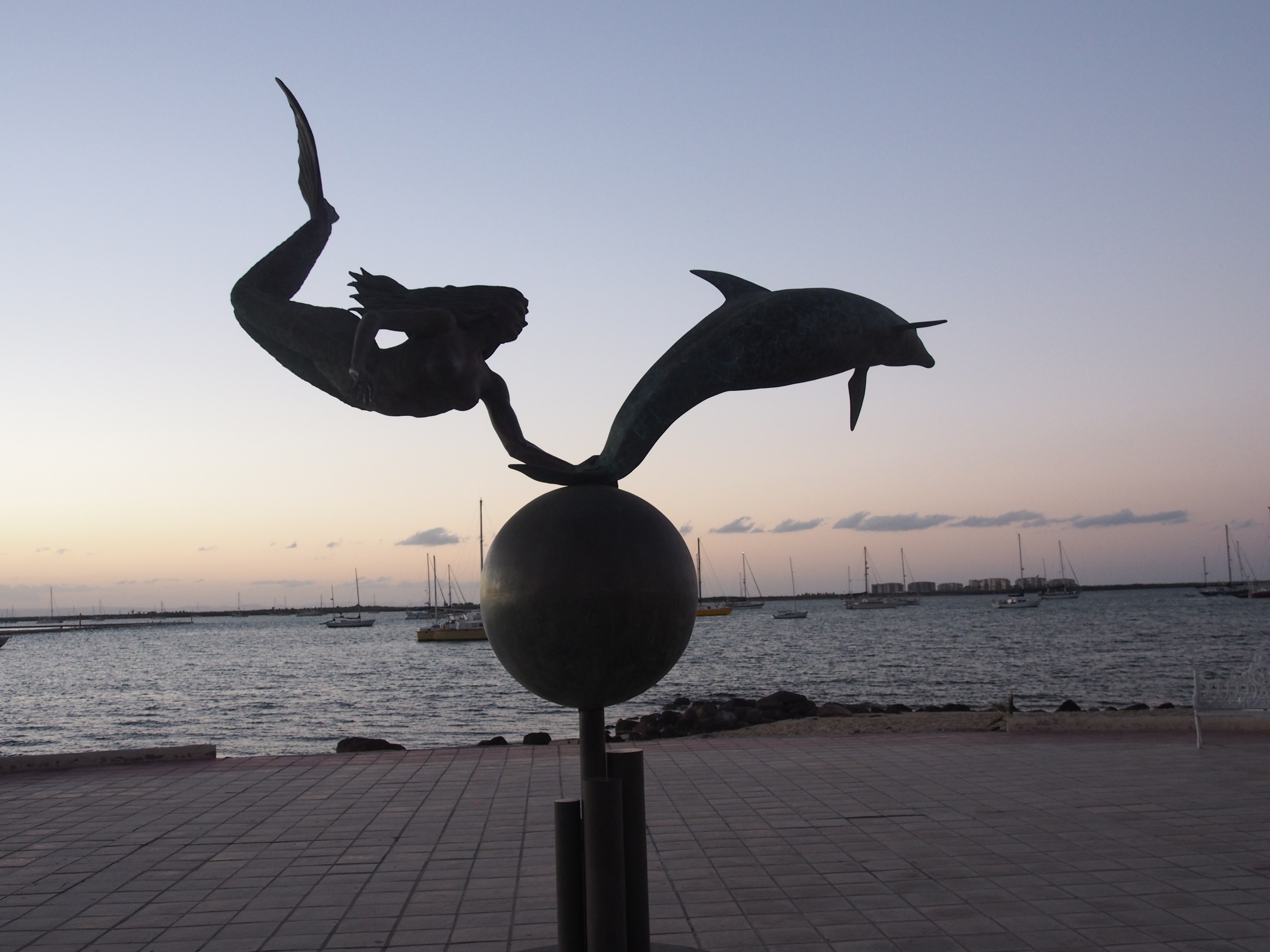
La Paz (which translates to “The Peace”) is a town know for its casual, easy-paced and peaceful lifestyle. Within a 30-mile radius, there are lots of anchorages in warm turquoise water. There are also national park islands of Isla Espiritu Santo and Isla Partida, both a short day-sail north of La Paz.
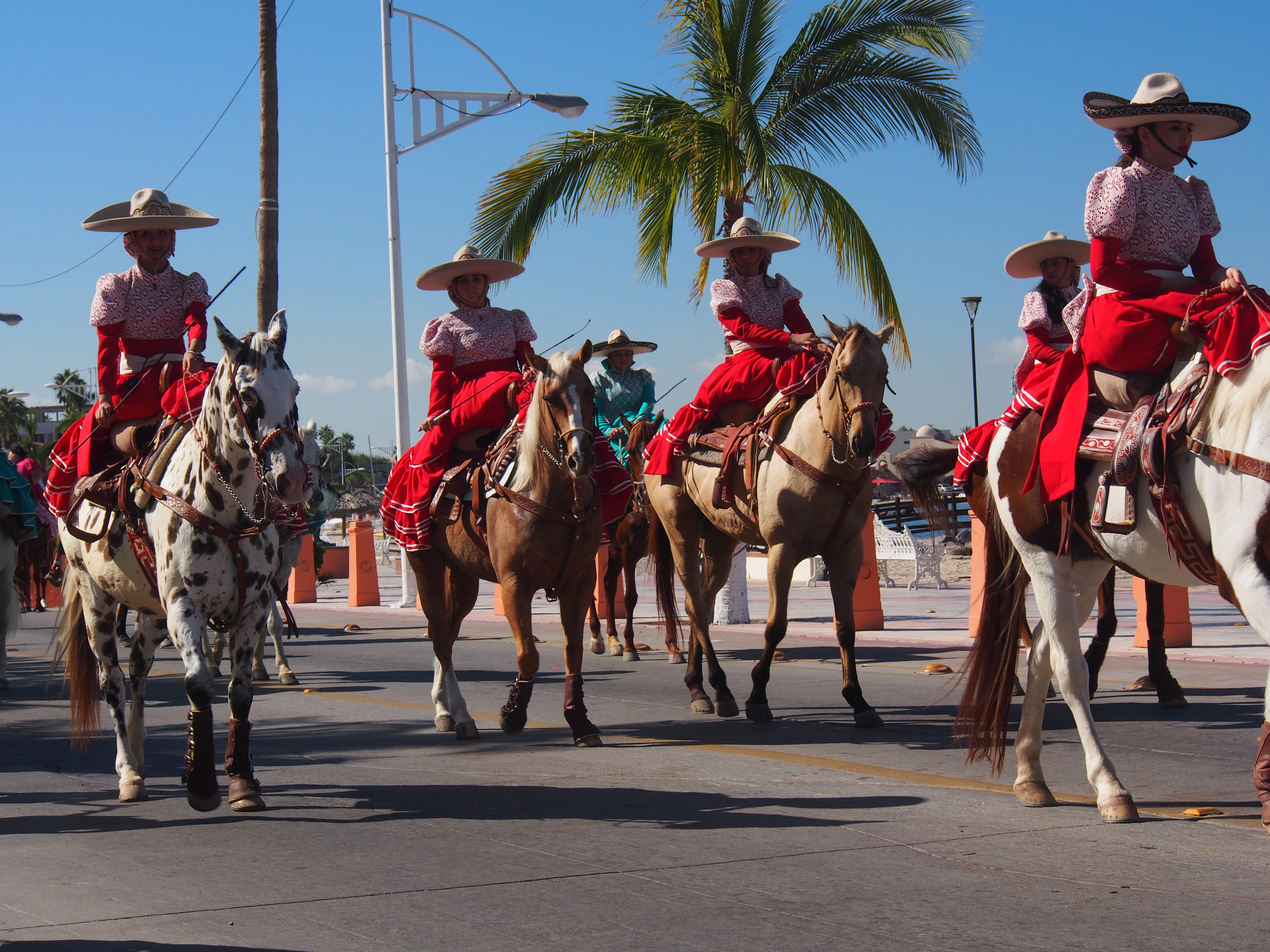
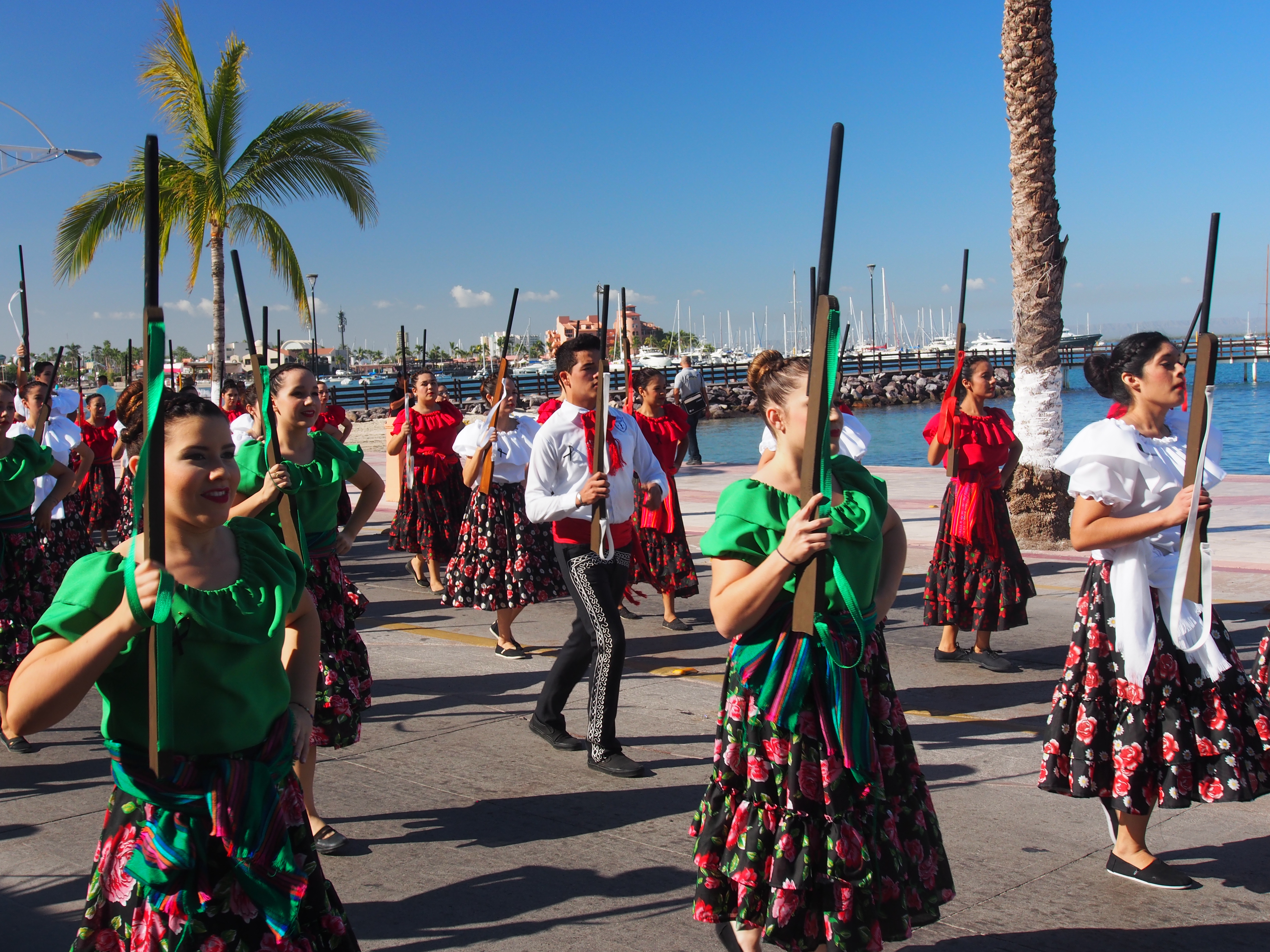
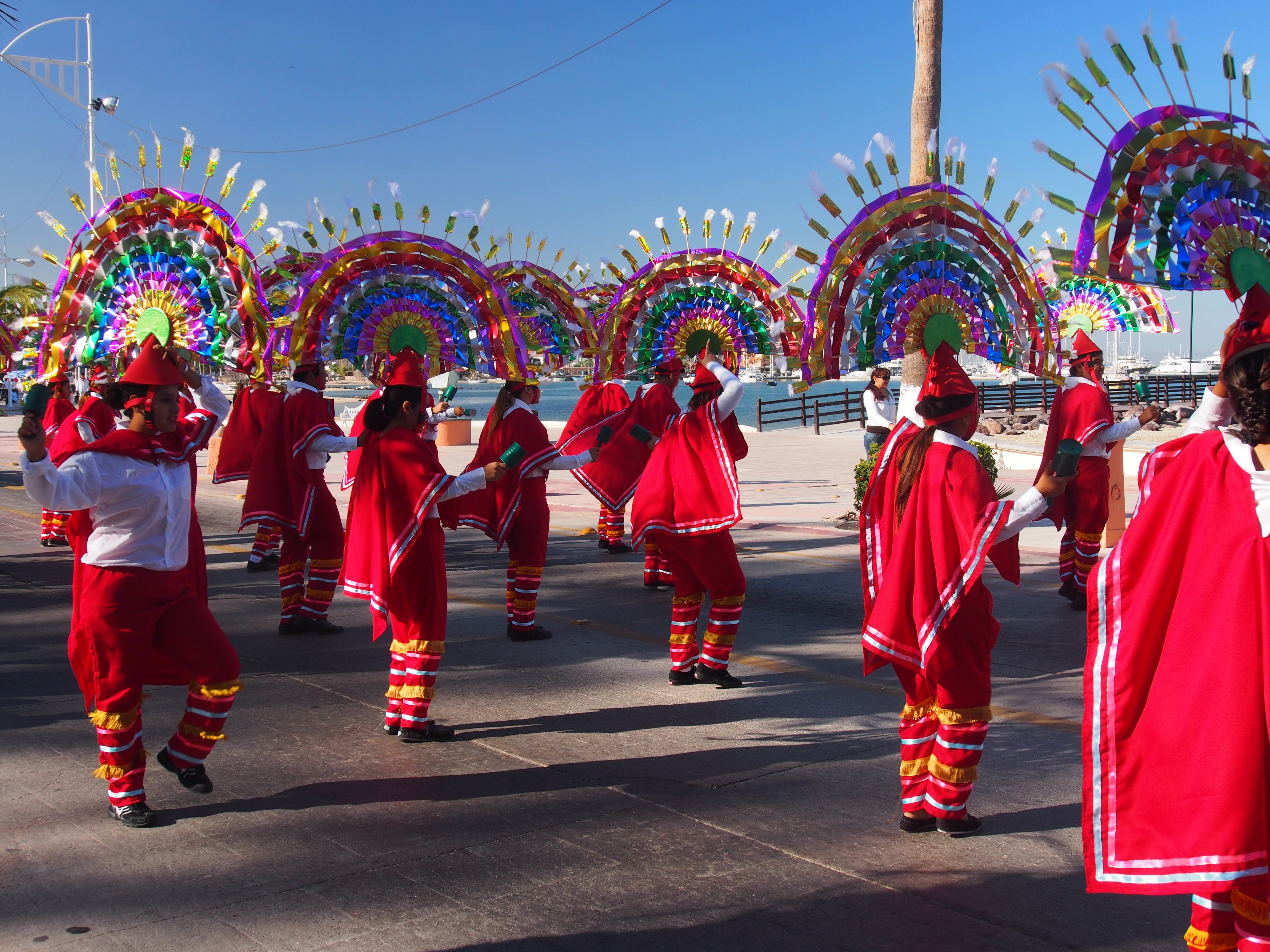
We anchored in the large bay and used the dinghy every day to get to marinas or shoreline beaches. Some land-based activities we accomplished include re-provisioning at the Mega store, watching a colorful parade celebrating Mexico’s Independence, attending a cruiser’s dinner party with other Baja Ha Ha boaters, exploring the town’s coffee houses, restaurants, farmer’s markets, and finding a place to fix my iPhone (bad battery). Most places had good wifi that allowed us to update the blog with photos. We’re learning as we go and getting better with money exchanging and communicating with locals, who we find to be very pleasant.
Highlights in La Paz—the mariachi band performance at the cruiser’s party, the colorful parade celebrating Mexico’s independence, dinners with friends, coffee houses, sleep-overs and playdates for Jacintha, warm sunny days.
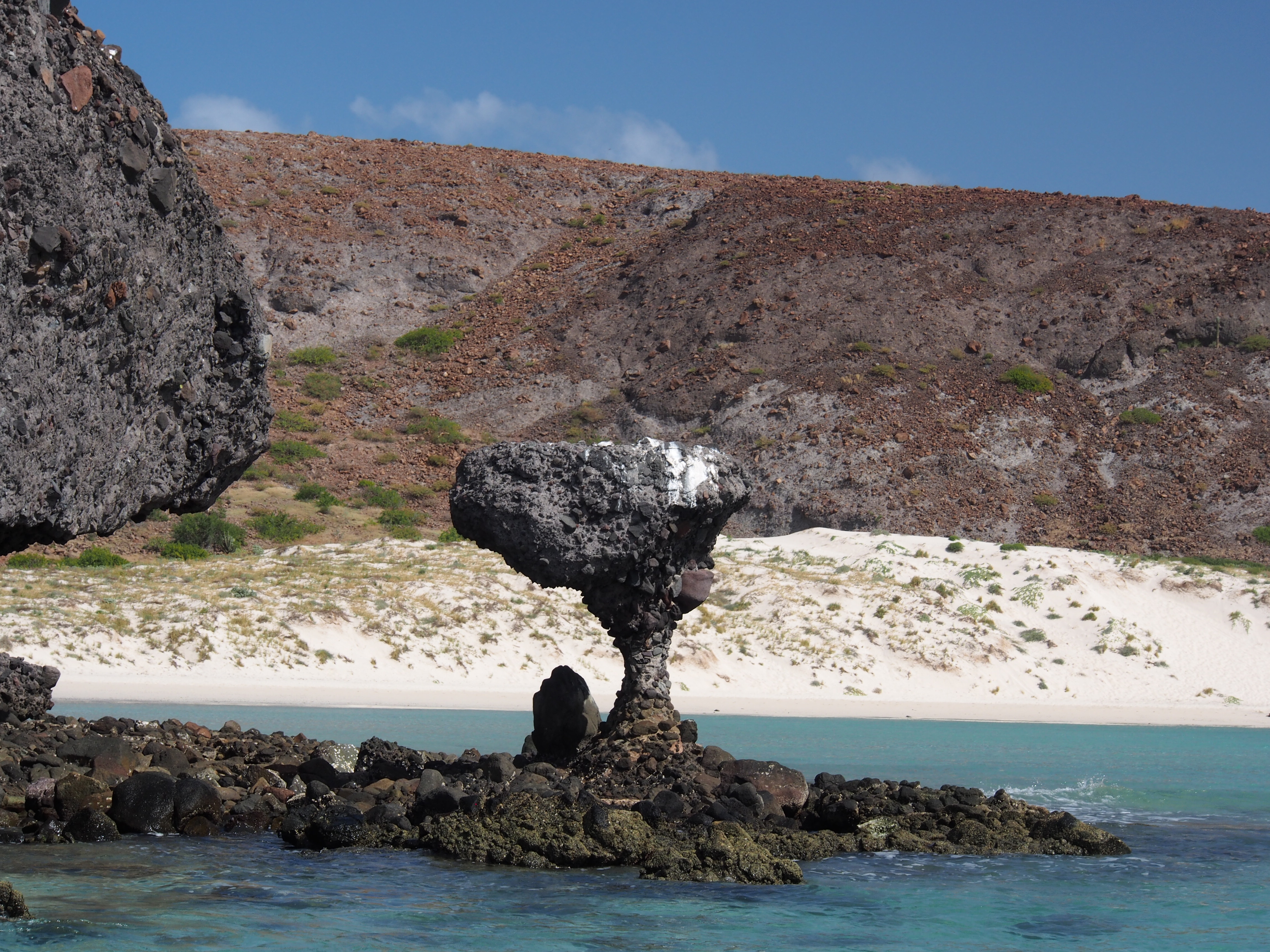
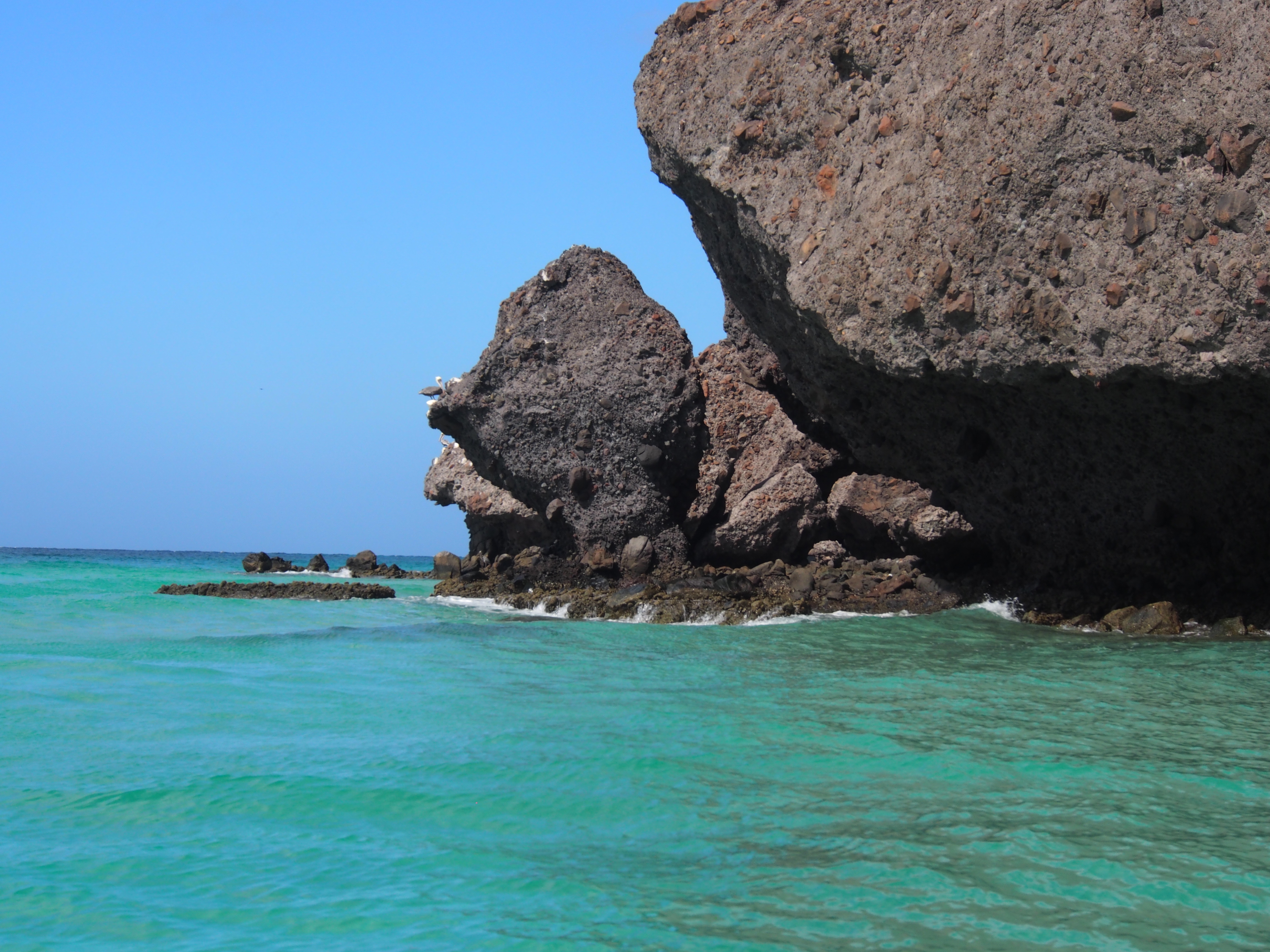
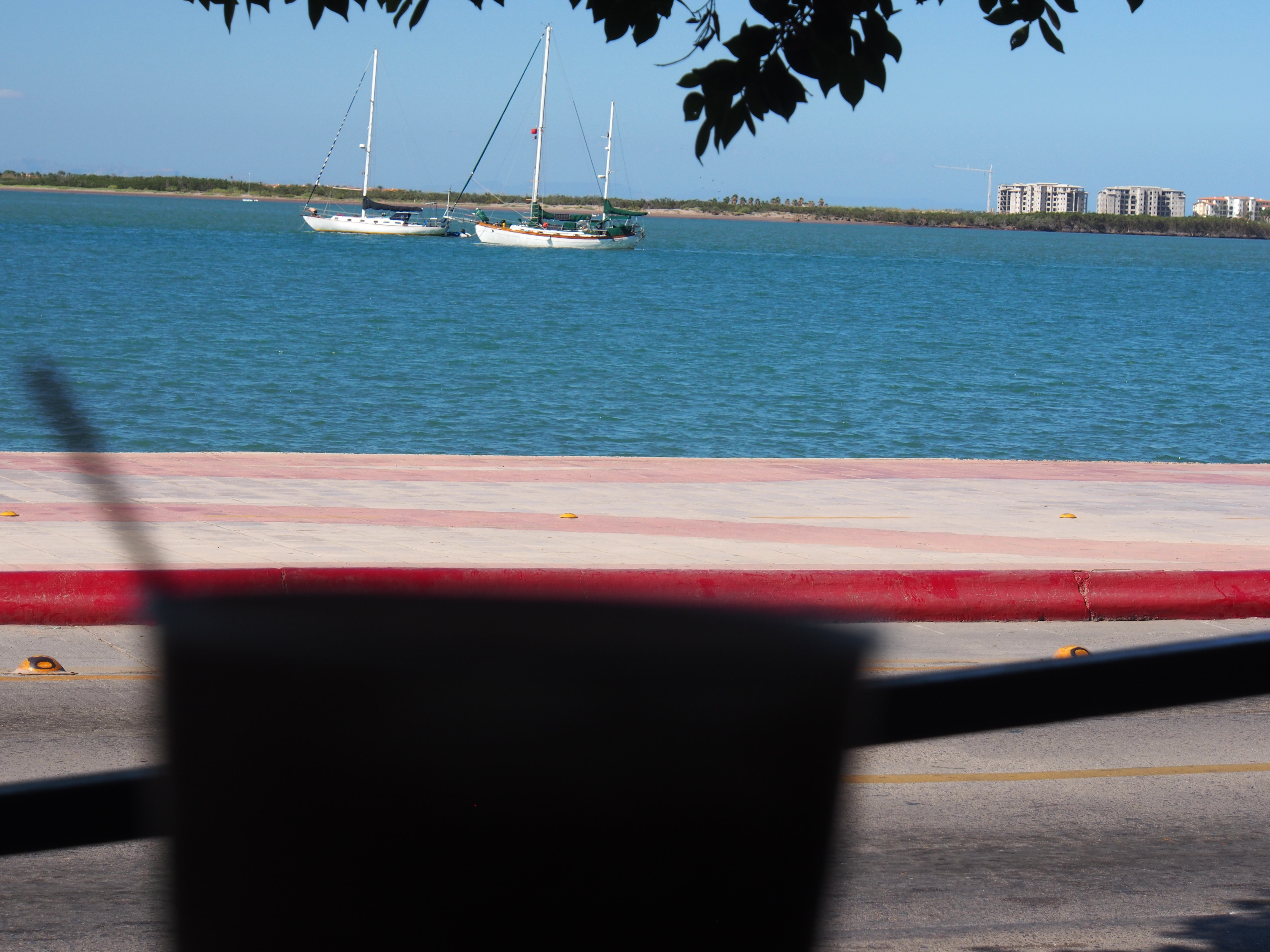
Mushroom RockRock formations in bay near La PazUpdating blog in cafe in front of AproposMexico Independence ParadeArtwork on malaconParadeParade
Boat-related things:
Energy—since departing San Diego almost a month ago, we have been plugged into shore power for just 2 days (both in Cabo). There are 3 ways to charge the battery bank when not plugged in—the engine driven alternator, a gas powered generator, and solar panels. Even though we have 500 watts of solar panels and every day is sunny, we have been having trouble keeping the batteries fully charged while at anchor. Our biggest power hog is the refrigeration system—mainly the freezer. Sometimes the freezer cycles for over 90 minutes, drawing 36 amps, resulting in a 54 Ahr (amp-hour) deficit. With the freezer cycling 5 times per day, this removes over 250 Ahrs from the house bank per day. In contrast, the refrigerator runs for only 20 minutes and cycles about 4 times per day. Our house battery bank is 670 Ahrs and it’s recommended to not go below 50% discharge, or -335Ahrs. With the solar panels sourcing around 100-150 Ahrs per day, it’s obviously a losing battle keeping the bank above 50% without running the engine or generator (we borrowed a Honda 2000 generator from Kevin on Andante). Since our goal is to be as green as possible, running the generator for long periods of time to keep the batteries charged is not our ideal solution. So I decided to run the freezer in a manual mode and cycle it 2 or 3 times per day for only 30-45 minutes per cycle. This has been working well so far and keeps things in the bottom 2/3 of the freezer frozen solid and the top 1/3 is perfect for keeping a few bottles of beer frosty-cold. The second biggest power user is the watermaker, but we only run it when we are under motor so it doesn’t subtract Ahrs from the house battery bank.
Auto Pilot—during a 2-day passage from Turtle Bay to Bahia Santa Maria, our electric auto pilot, which we named Otto, failed to keep us on course with the heavy swell and high wind. The result was 45 hours of hand steering, which gets very tiring for 2 people on overnight passages. When leaving Bahia Santa Maria, I re-calibrated the system. This takes the boat through a series of “S” turns and adjusts some settings that take into account the full keel and the weight of the boat. After the calibration finished, I noticed the settings were different and Otto has been working flawlessly ever since! I believe what happened was just before leaving Seattle, I reset the auto pilot settings to a default state while I was calibrating the auto pilot electronic compass.
Wind Vane—our mechanical wind vane, an older Fleming model we named Ian, has proven to be a challenging crew member. His purpose is to steer the boat on a course that is constant with respect to the wind. He will be critical on the long crossing from Mexico to French Polynesia to give the human crew a break from the helm, and also to keep from using Otto, who consumes amp-hours. We tried Ian a few times on the trip from Seattle to San Francisco, but heavy weather and crew fatigue made it difficult. The key to making a wind vane work is to have a well-balanced boat (ie sail trim) before engaging it. Karen’s persistence in taming Ian is starting to pay off as we’ve had some success. Crossing the Sea of Cortez in a few weeks should provide us with a good opportunity to see how well Ian does.
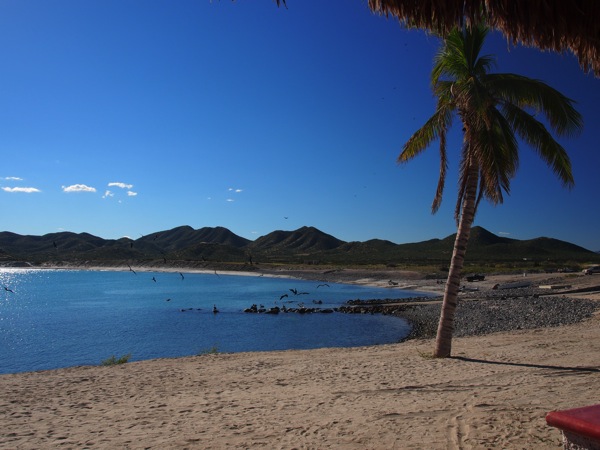
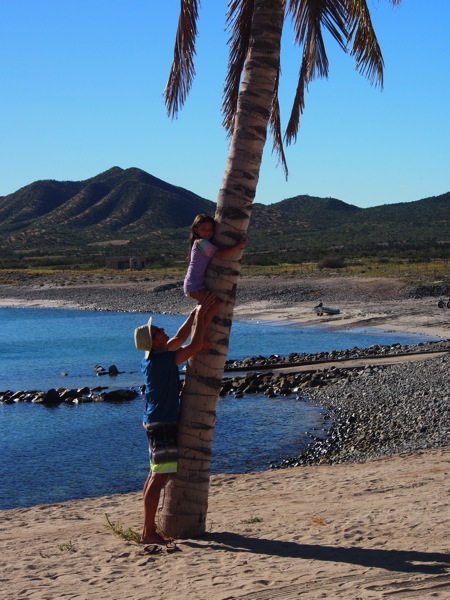
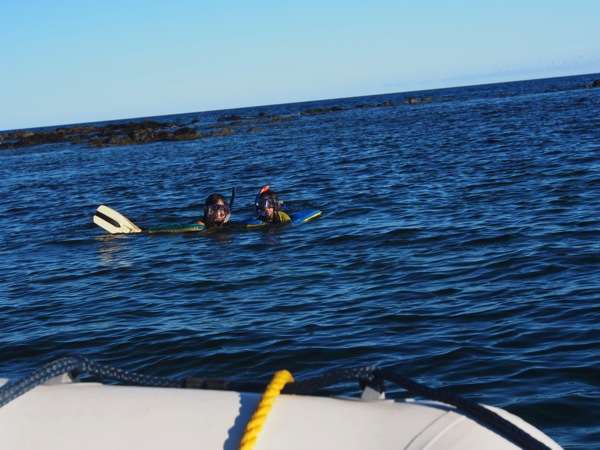
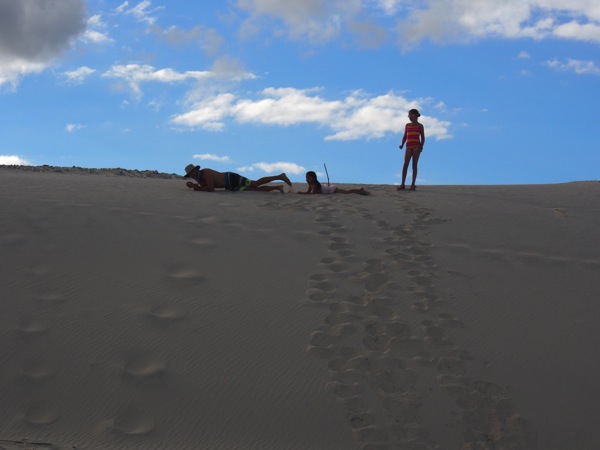
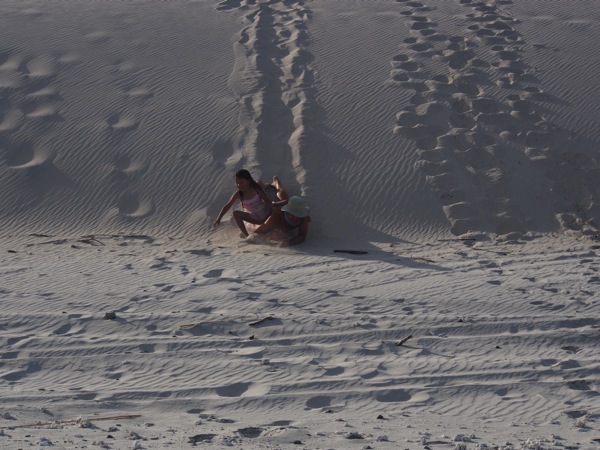
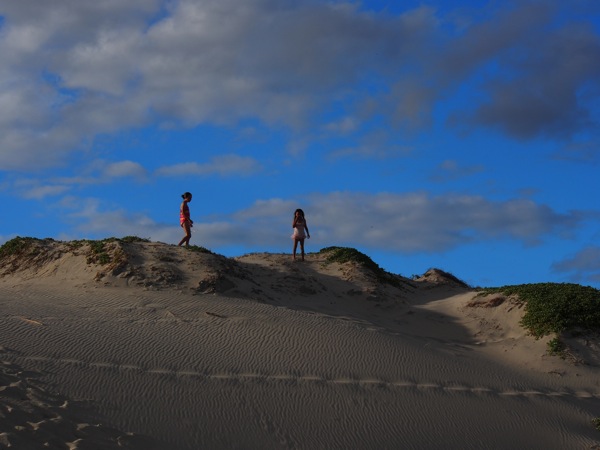
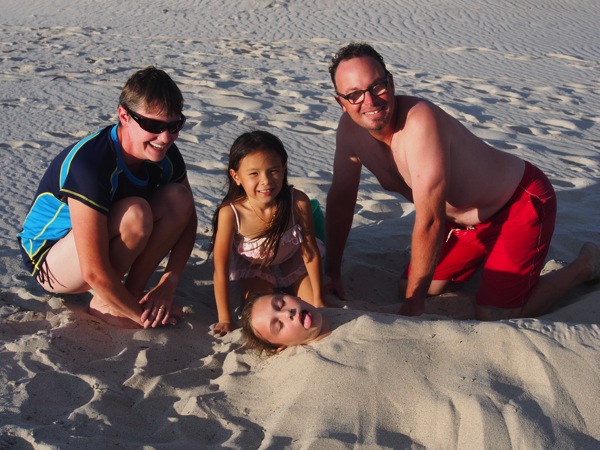
Just 2 day-sails from Cabo, we found a little bit of paradise in Bahia de las Muertos. We anchored with around 10 other boats in warm, crystal clear water where you can watch your anchor drop to the sandy bottom 30’ below. This is a fairly remote area of the Baha peninsula and has just 1 restaurant and a small resort. The snorkeling was great, the food fantastic, and we were among friends from the Baja Ha Ha rally (“kid” boats as well as boats from Seattle), so we decided to spend some extra days since we were in no hurry to go anywhere. The white-sand beach with big dunes provided an afternoon of relaxation and fun for the kids.
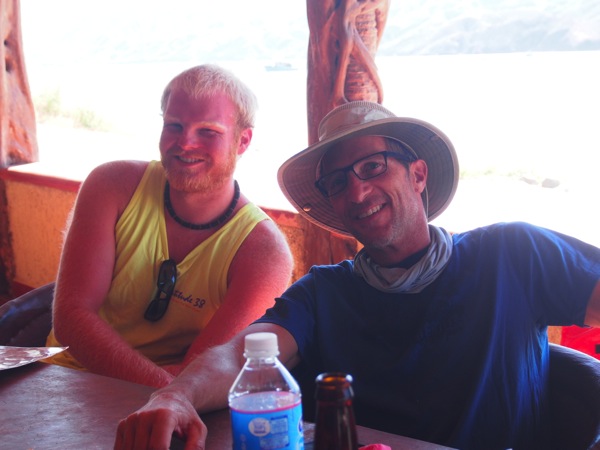
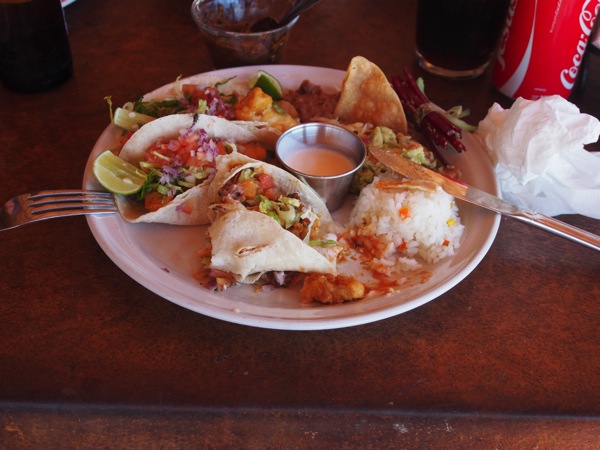
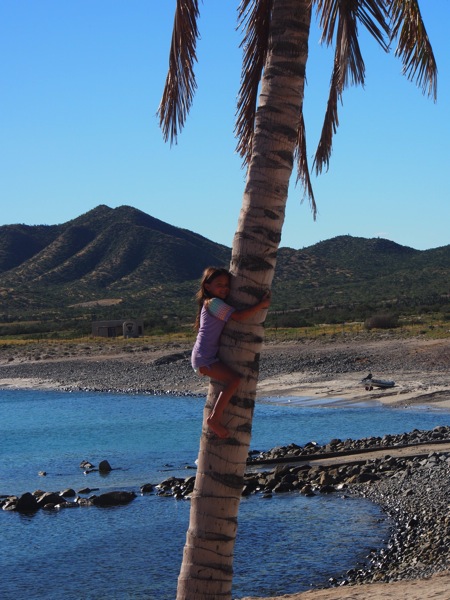
At restaurant with Roy (sv Mabrouka) and Kevin (mv Andante), both from SeattleZach from mv AndanteFish Tacos and CevicheView from the restaurantJacintha climbing a coconut palm….…with a little help from dad!Snorkeling at Bahia de las MuertosRolling down the sand dunesSledding on the sand dunesJacintha and Sophie exploringJacintha with crew from sv Stochastic
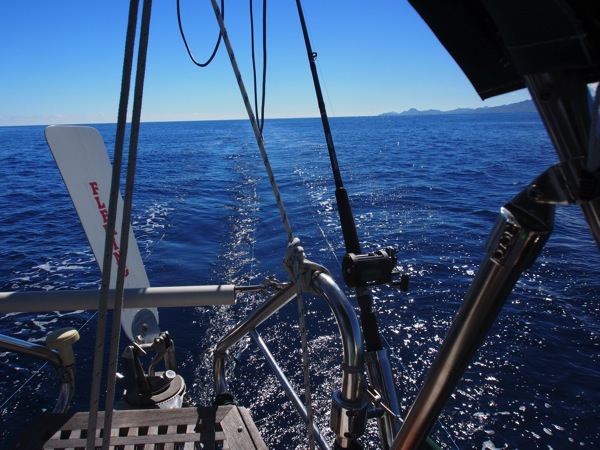
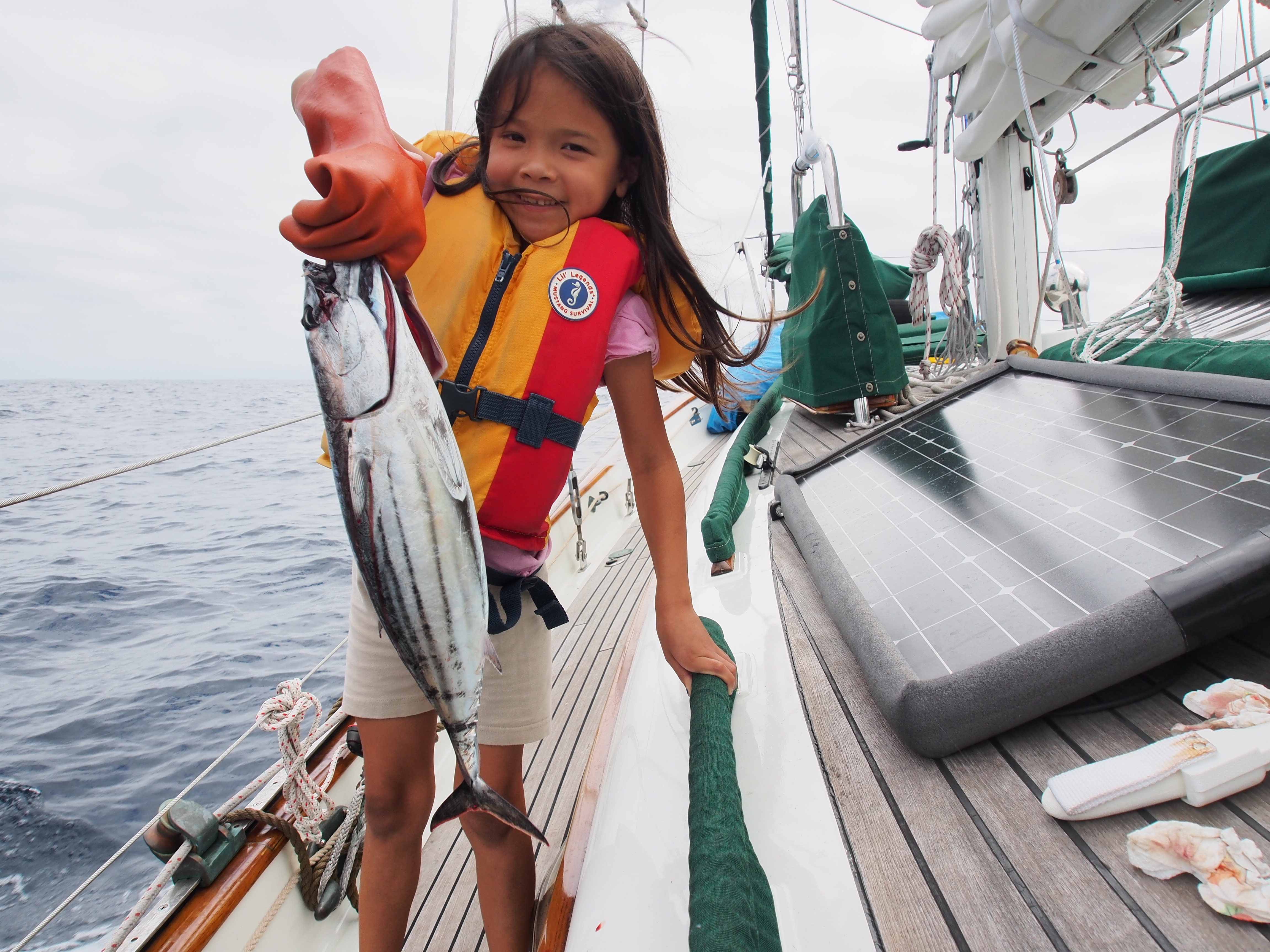
Fishing—So far we haven’t had too much luck fishing. Aside from an Albacore Tuna off Oregon, a Striped Bass off Catalina Island, a Skipjack Tuna in Mexico, and a Needle Fish that happened to land on deck, fishing has been a challenging experience. Determined to change our luck, I rigged up 2 more hand lines so that I towed 3 lines–2 with squid lures and 1 with a cedar plug, and then even brought out a rod and reel with another lure. We trolled with this setup from Cabo to Bahia Friars, a 45 mile sail. When we pulled into the small bay at night, it was very dark and was already packed full of boats. Our minds were occupied with figuring out where to anchor, a big challenge at night, and we forgot to bring in the fishing lines. As I was backing down on the anchor with 100’ chain out, one of the fishing hand lines got fouled in the propeller! Since we were pretty sure we would hold for the night, I waited for morning to dive down and cut the line away from the shaft. I used the Hooka diving gear so it was actually fun (plus the water was 80 degrees)!
Trailing 3 hand lines and rod & reelTrying to stay cool sailing in 90 deg heat
Compared to our last 2 ports coming down the Baja peninsula, Cabo seems like a big city with lots of tourists arriving by cruise ships. It’s also a big sports fishing town. We spent the first few days anchored out in the bay and used the dinghy to get to shore for the Baja Ha Ha beach party. We also snorkeled around the boat in 30’ of crystal clear water. I noticed some of the zincs were gone so I used the Hooka system (tankless diving) to dive down and replace them. It was only 5 months since I last replaced them but being in quite a few marinas and salt water shortens their life.
Formalities—Cabo is the first port of entry for immigration check-in. We spent about 4 hours walking from place to place—first the immigration office to hand in paperwork, then to a bank to exchange dollars for pesos, then to the port captain office for importing the boat, then to a bank to pay the fee, then back to the port captain to finalize the paperwork and show the receipt. Aside from finding the various offices and the long walks, everything went well. We could have paid an agent 750 pesos to do it but we figured we better get used to it since we’ll be checking into lots of countries over the next year. We celebrated the accomplishment with a nice lunch along the marina.
Hurricane Odile, which went through Cabo in September, was a powerful Category 3 hurricane–the largest ever to hit Cabo. The damage was evident everywhere we went, from the marina with quite a few damaged docks and boats, to hotels with missing windows and roof tiles, to banged up cars on the streets and damage to houses.
Highlights: Getting our first real shower in 2 weeks (we used our solar showers after salt water rinses). Finding some great Mexican restaurants. Enjoying 2-for-1 Margaritas. The Baja Ha Ha beach party. Finishing in 3rd place for the 750-mile Baja Ha Ha rally (all boats that finished were awarded 3rd place except for the 1st and 2nd place boats!!). Watching the Seahawks stomp on the Giants from a Cabo bar. Relaxing for a few days without any sailing.
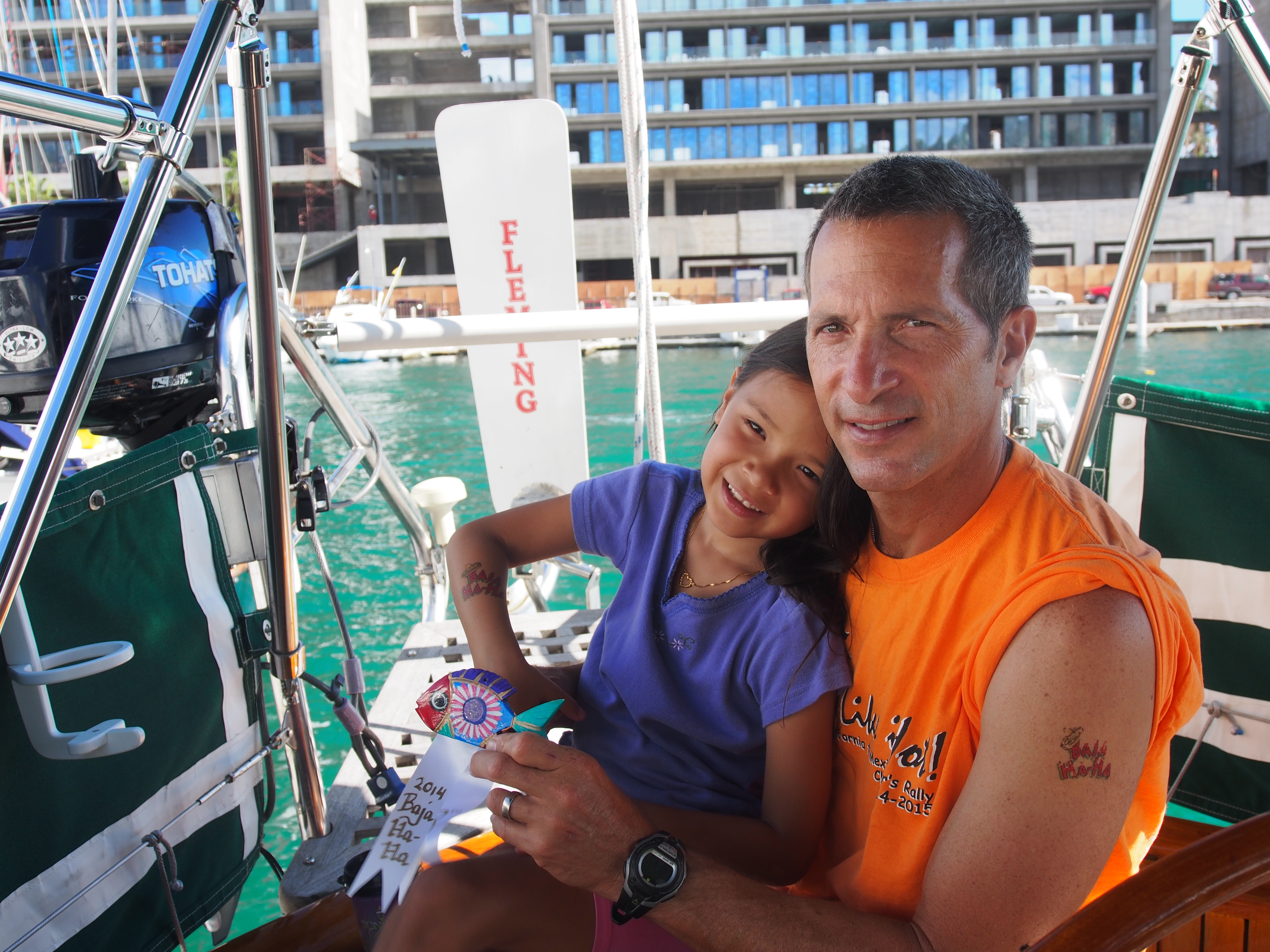
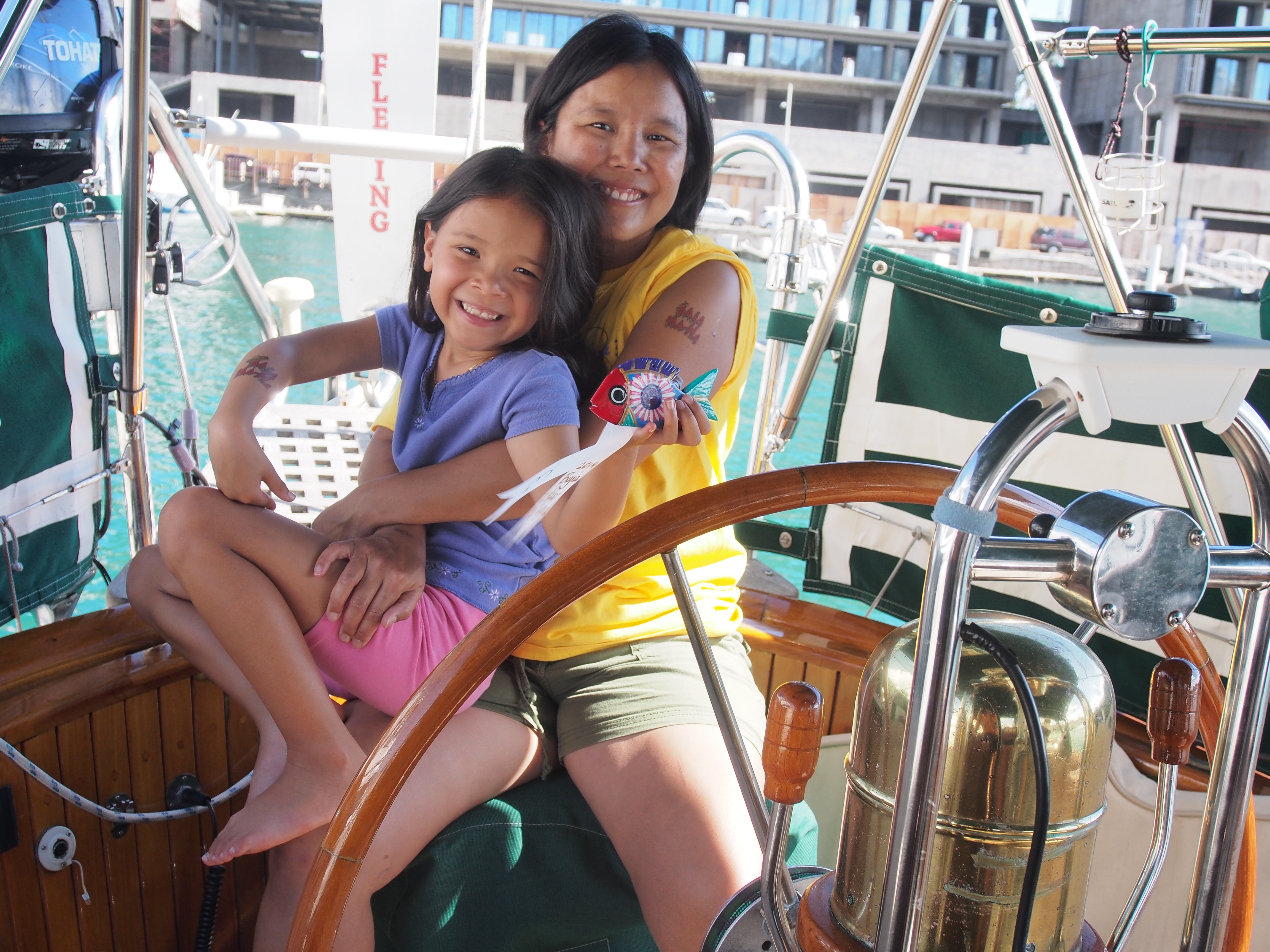
Tattoos and AwardsTattoos and AwardsMexican Dinner with Roy from Seattle (sv Mabrouka)
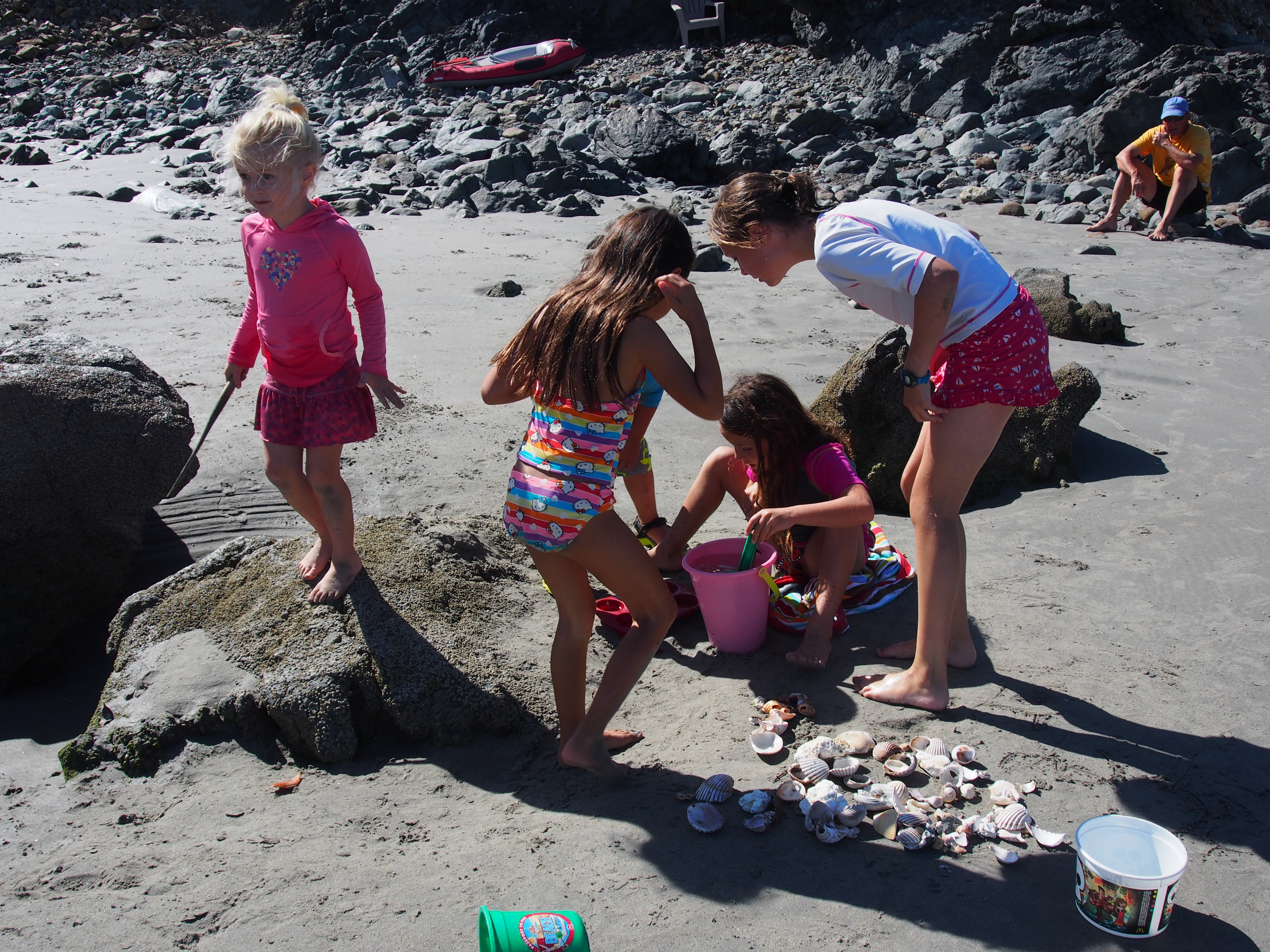
Jacintha’s Blog: Beach Party at Bahia Santa Maria!!!!! I was going to a beach party in a dinghy. When we got there I found my friend and we jumped in small puddles along the beach, then we jumped in a puddle that had a crab in it! After that we found shells, pointy ones flat ones bumpy ones and even colorful ones! Then it was lunch time. I had some prawns, then my mom found a hermit crab and we found three more crabs! Then we let them go and found sand dollars and then we made a (crab sized ) maze and put a crab in it . It just ran into a dead end so we trapped it and we put water in it. Then we put a dead fish in it but it just pushed it away! Then it was time to go home. THE END!
The Baja Ha Ha is a 10 day rally from San Diego to Cabo San Lucas. There were about 140 boats that completed the 750 mile ‘course’ to the Cape. The rally is sponsored by Latitude 38 magazine and this was the 21st year. While out at sea, boats keep in contact through twice-a-day nets on VHF and SSB radio to report positions. VHF was also used to report fish catch, wind and sea state, or just to say hello to a nearby boat at 3am. There were 2 stops along the way–a remote village in Bahia des Tortugas (Turtle Bay), and a quiet bay in Bahia Santa Maria. A fun beach party potluck was held at Turtle Bay with lots of fresh fish caught along the way adobe cc master collection for macpouvez trouver sur cette page. At Bahia Santa Maria, they brought in a small band that played rock and roll during the party. Some cruisers relaxed on the beach while others hiked in the rocky hills. The comraderie of the fleet was amazing and we got to know the crew from other boats, especially “kid” boats. We also kept in contact with other Seattle boats including Mabrouka, Andante, Friday, Abby Normal (the same boats that left with the Cojo Ho Ho with us from Anacortes).
Here are some pictures we took along the way….
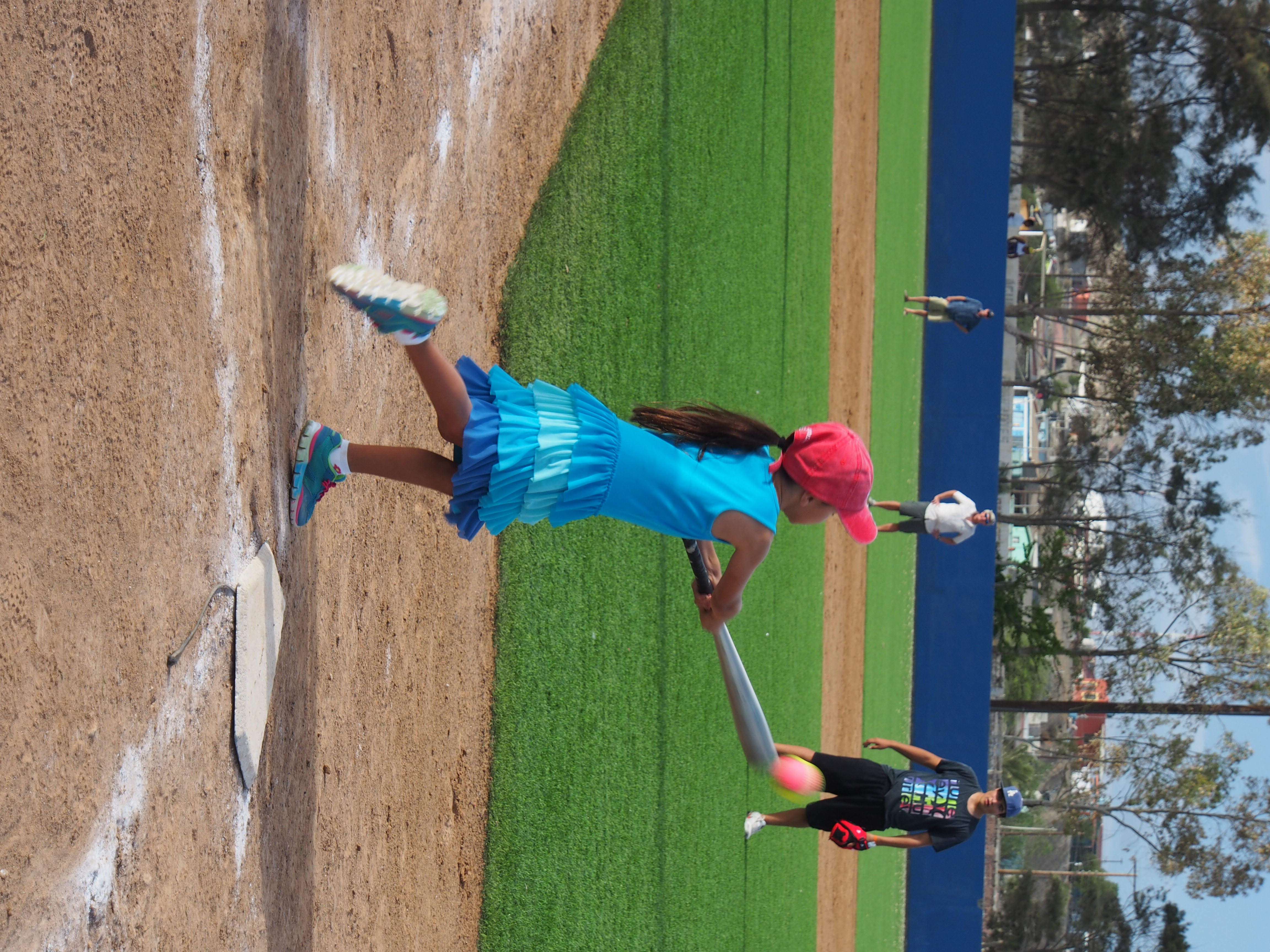
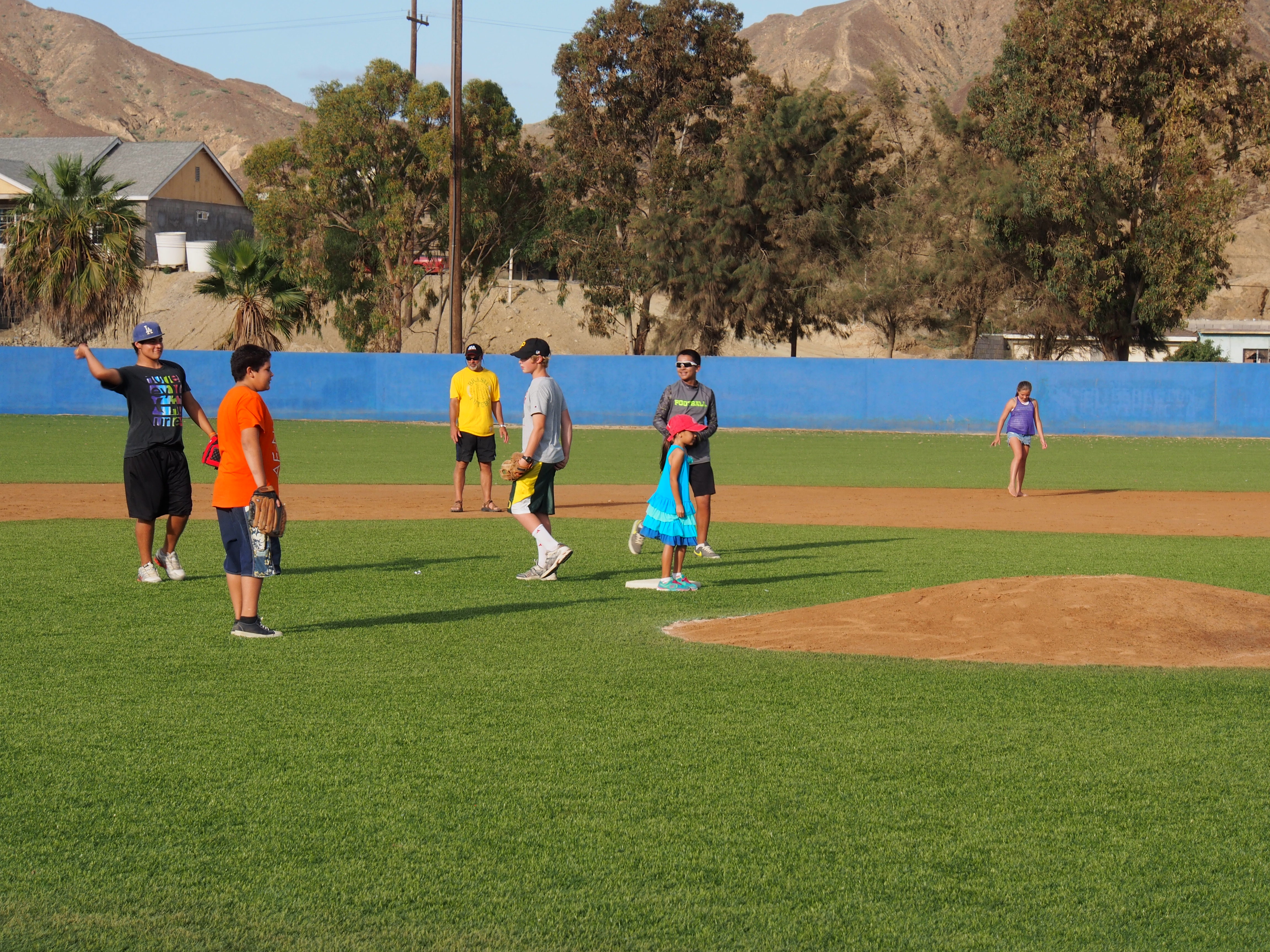
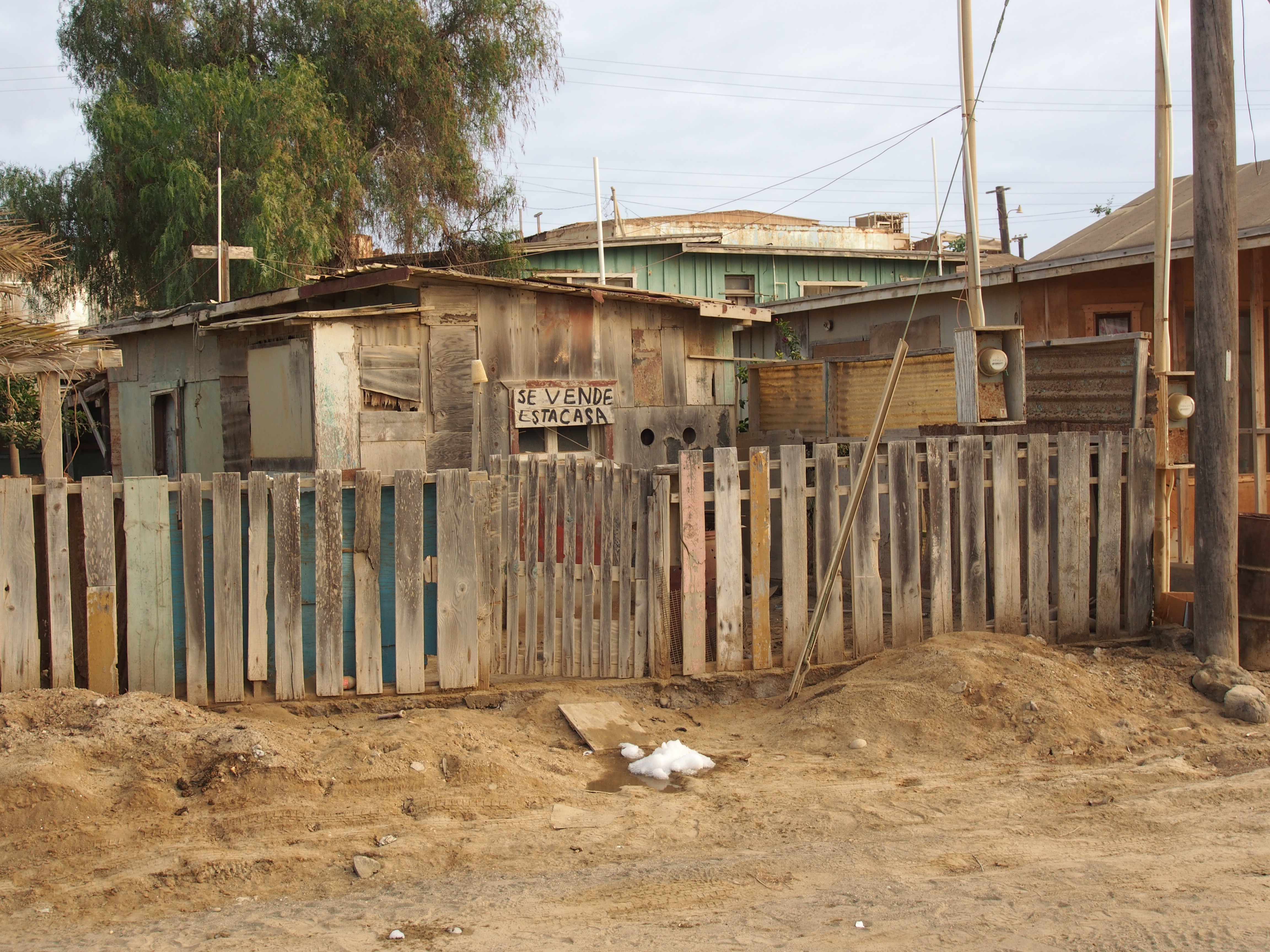
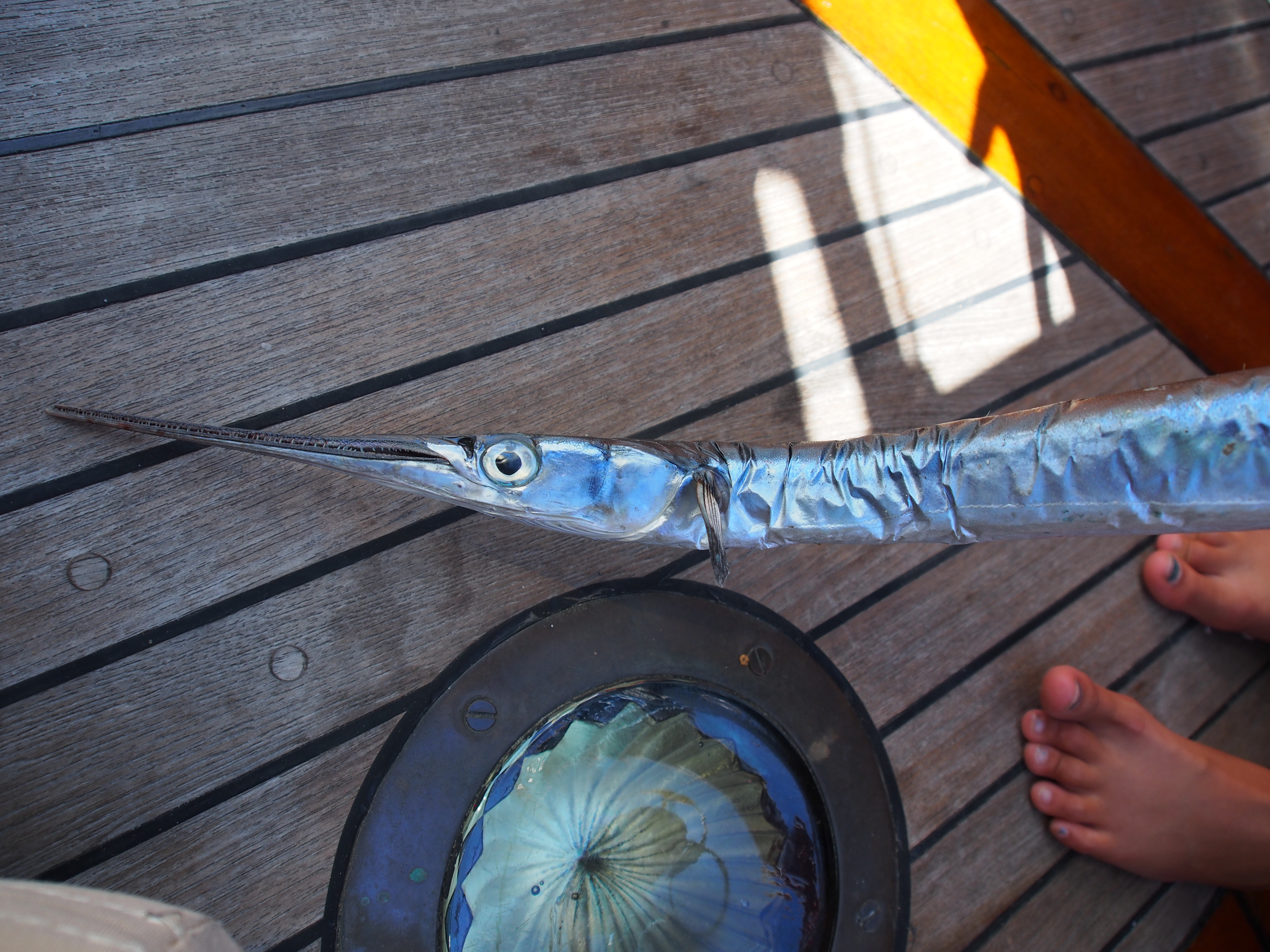
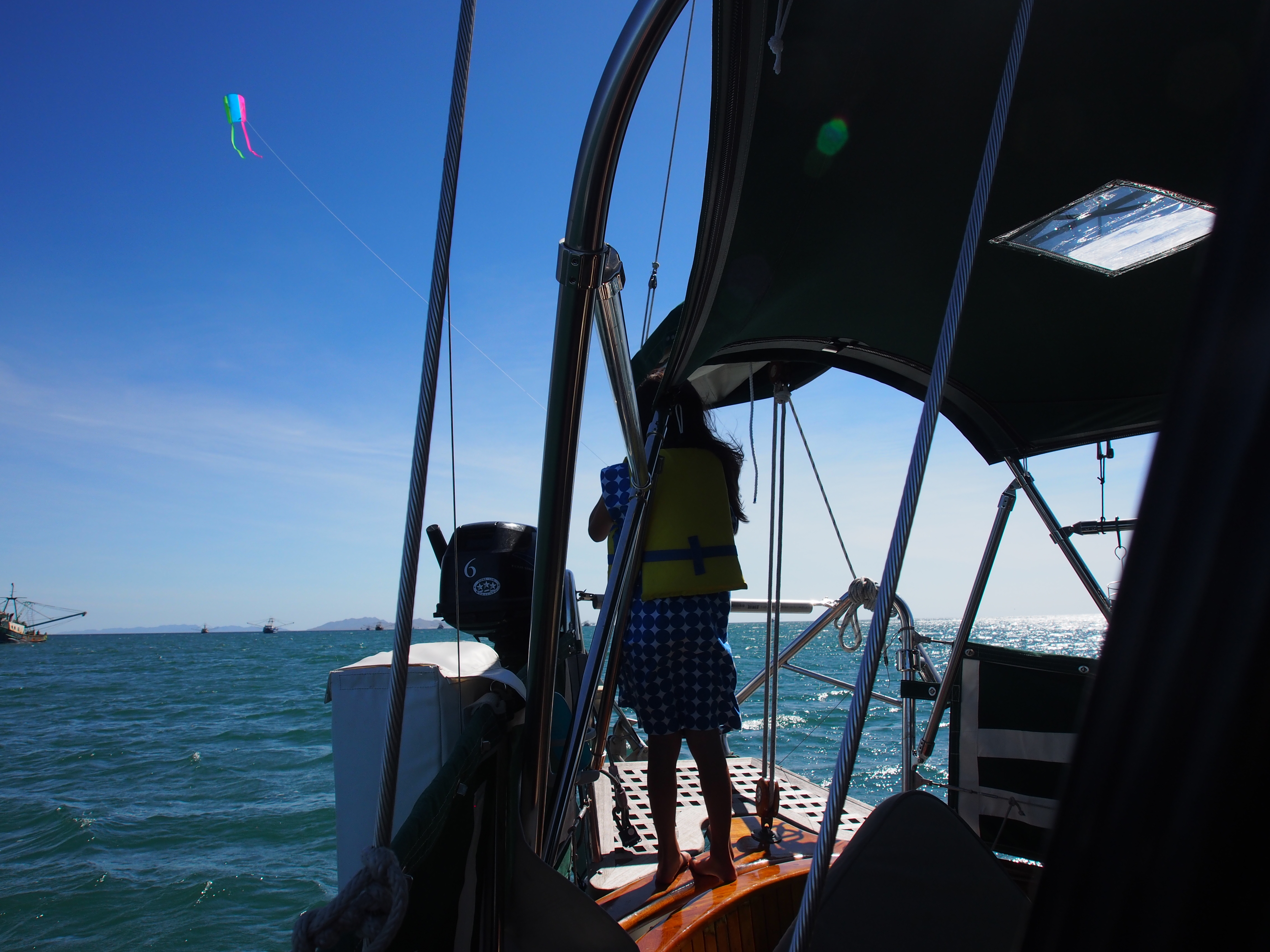
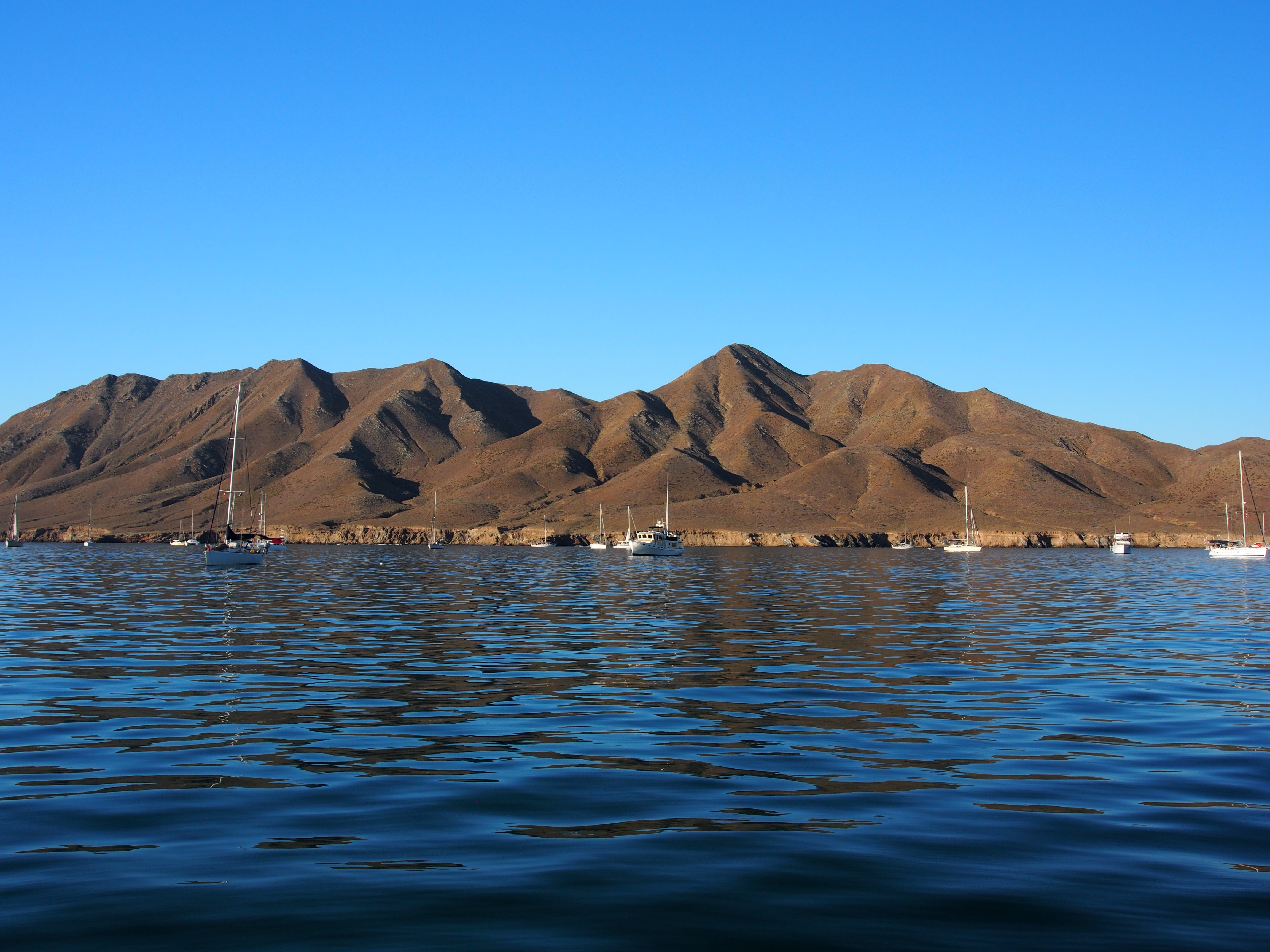
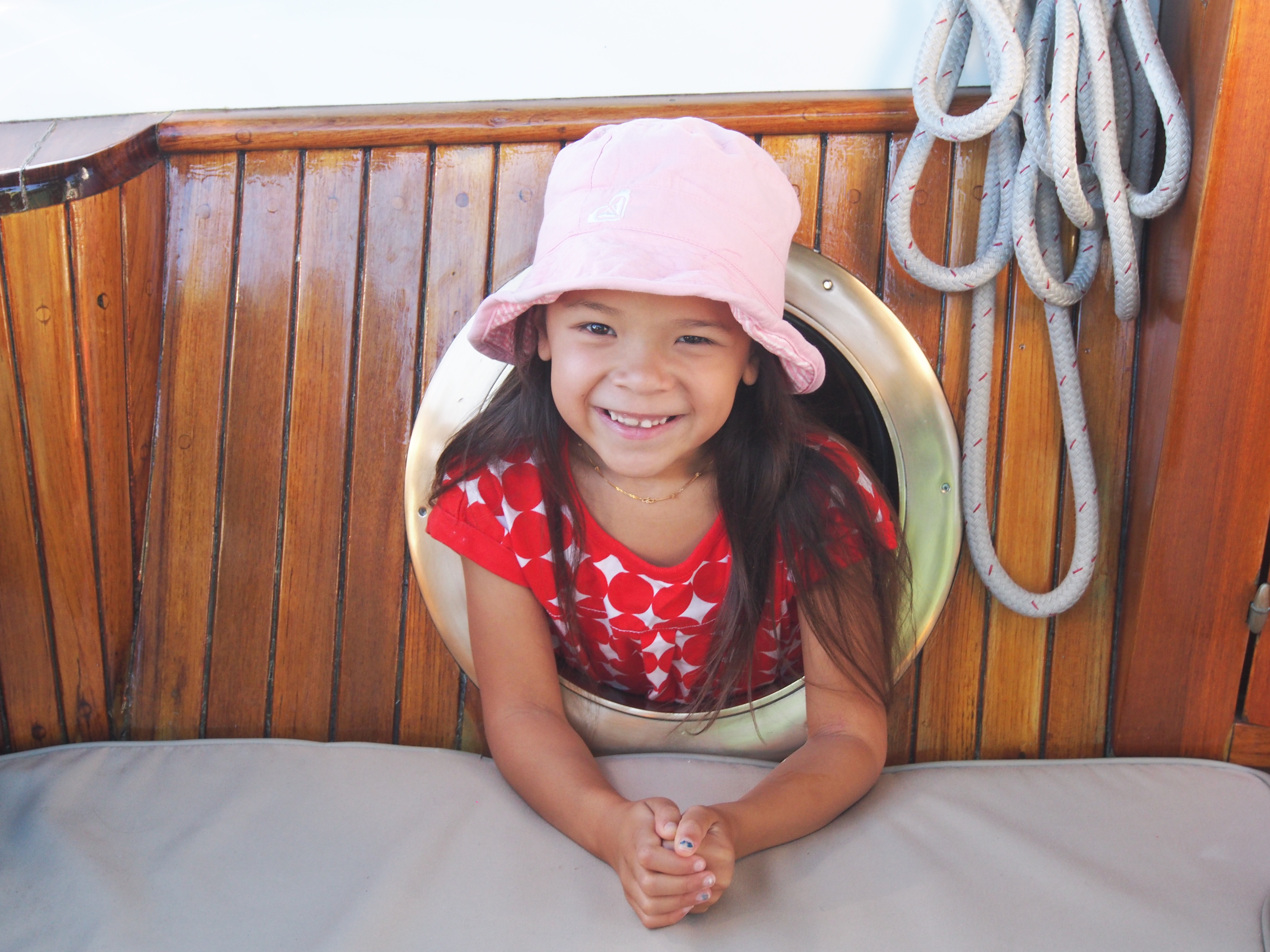
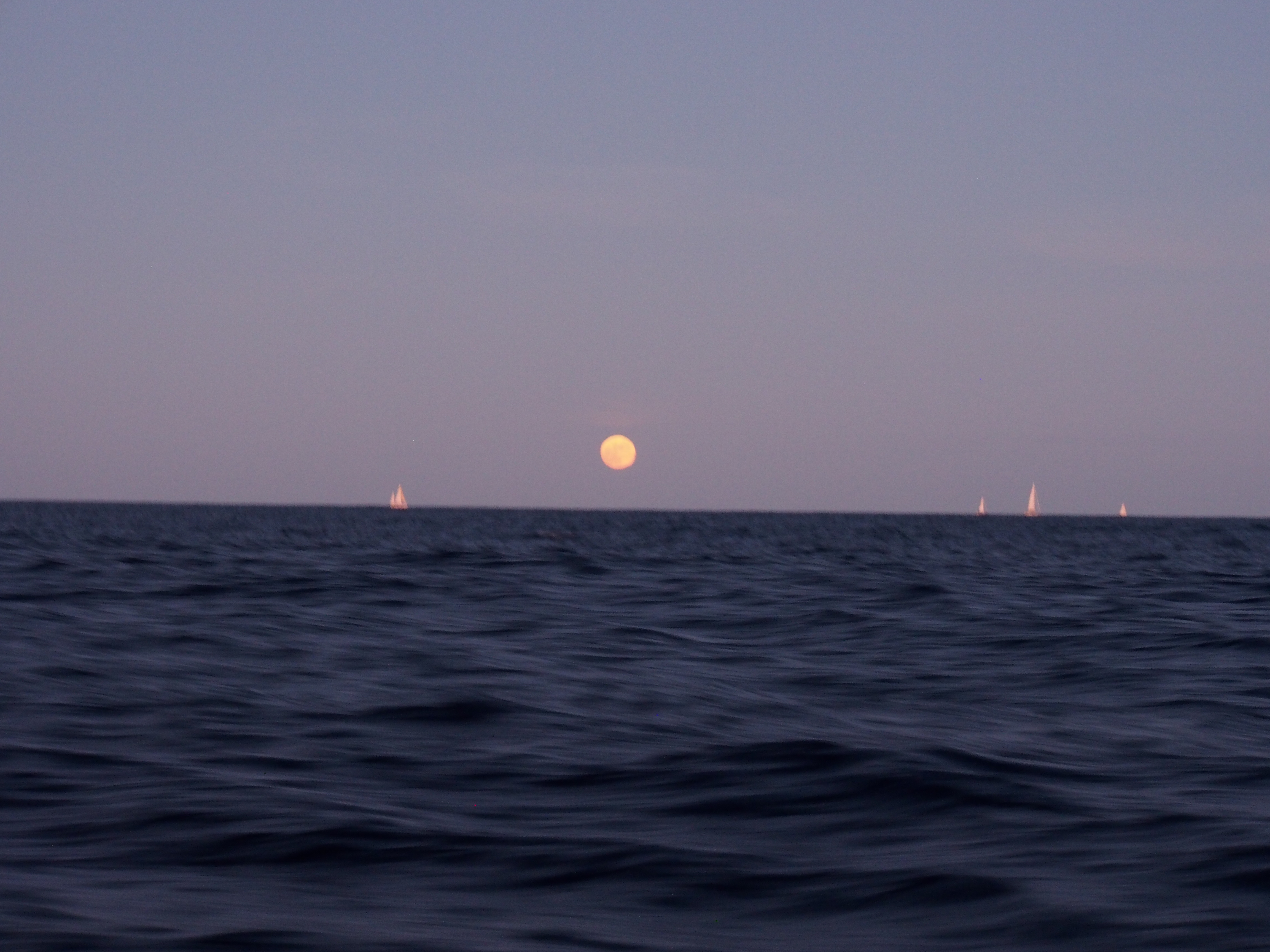
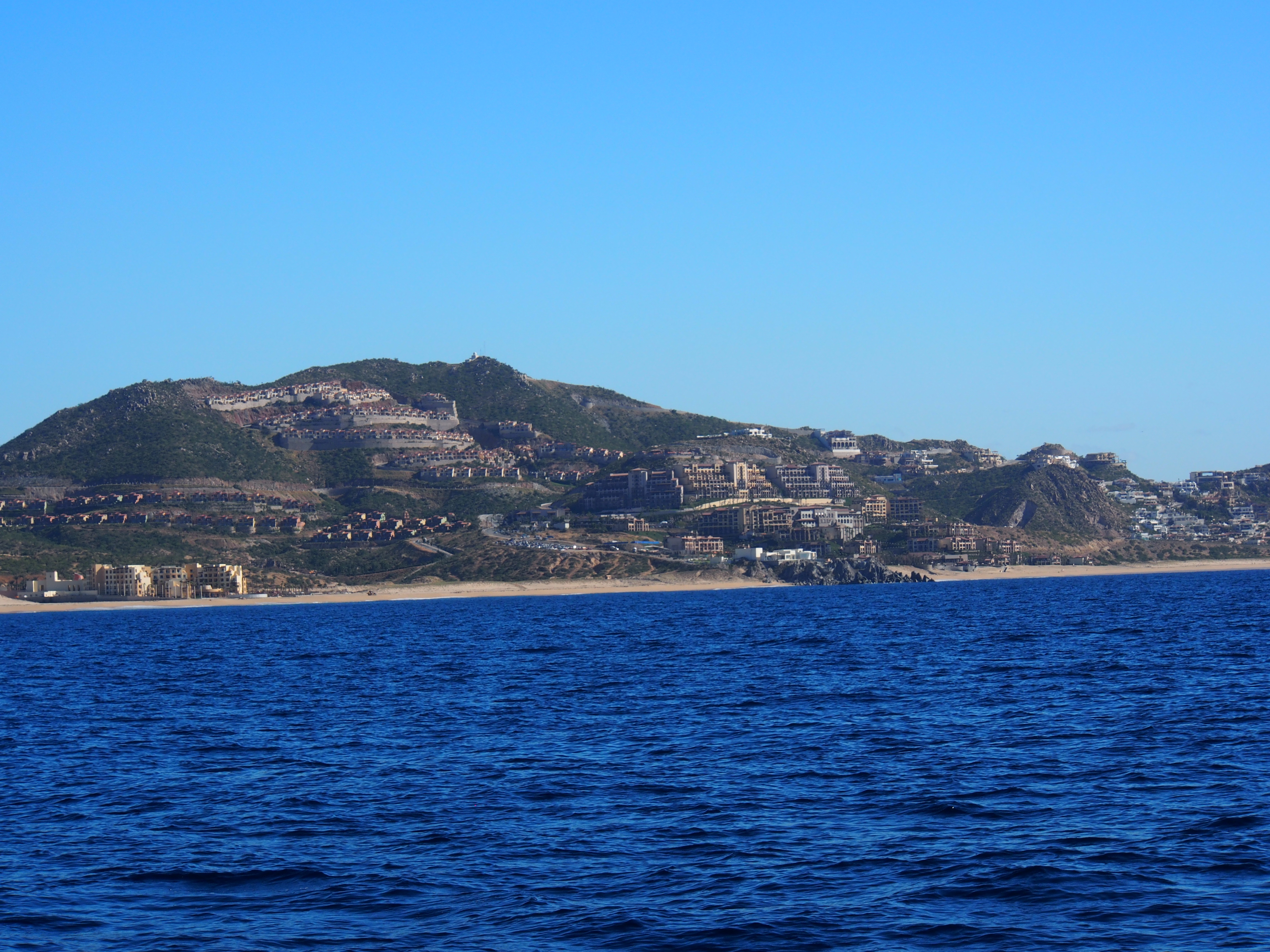
Skipjack Tuna caught near Bahia des Tortugas (made great-tasting ceviche)Jacintha in baseball game against the locals in Turtle BayTheir new baseball field with artificial turfTypical house in village of Turtle BayWater balloon attack of Richard (Grand Poobah and founder of the Baja Ha Ha)Small village in Turtle Bay (the Baja Ha Ha fleet is the most boats they see all year)Jacintha made friends with Bucket and Anna at the baseball game in Turtle BayEating at one of a handful of restaurants in Turtle BayOur only “catch” on 2nd leg of Baja Ha Ha–a huge Needle Fish that landed on deck in the middle of the night!Needle FishJacintha flying a kite off stern at anchor in Bahia Santa MariaBahia Santa Maria (large sheltered bay along the Baja peninsula) where we spent 2 days.Jacintha in portholeBahia Santa MariaHiking up to peak in Bahia Santa Maria–the Baha Ha Ha fleet at anchorCacti , ridges, sand dunes, and Pacific OceanView from top of peak (we hiked along the ridges)Moonrise at sea on way to Cabo San LucasRounding the point to Cabo San Lucas
We arrived in San Diego about a month and a half after departing Seattle with 1550 nautical miles behind us. We got a taste of heavy weather sailing off Cape Blanco and between Points Arguello and Conception, had some nice sails south of Santa Barbara, and did a fair amount of motoring between LA and San Diego.
This completes the US West Coast chapter of our year-long voyage, and after 4 weeks in San Diego, begins the next chapter–5 months cruising in Mexico!
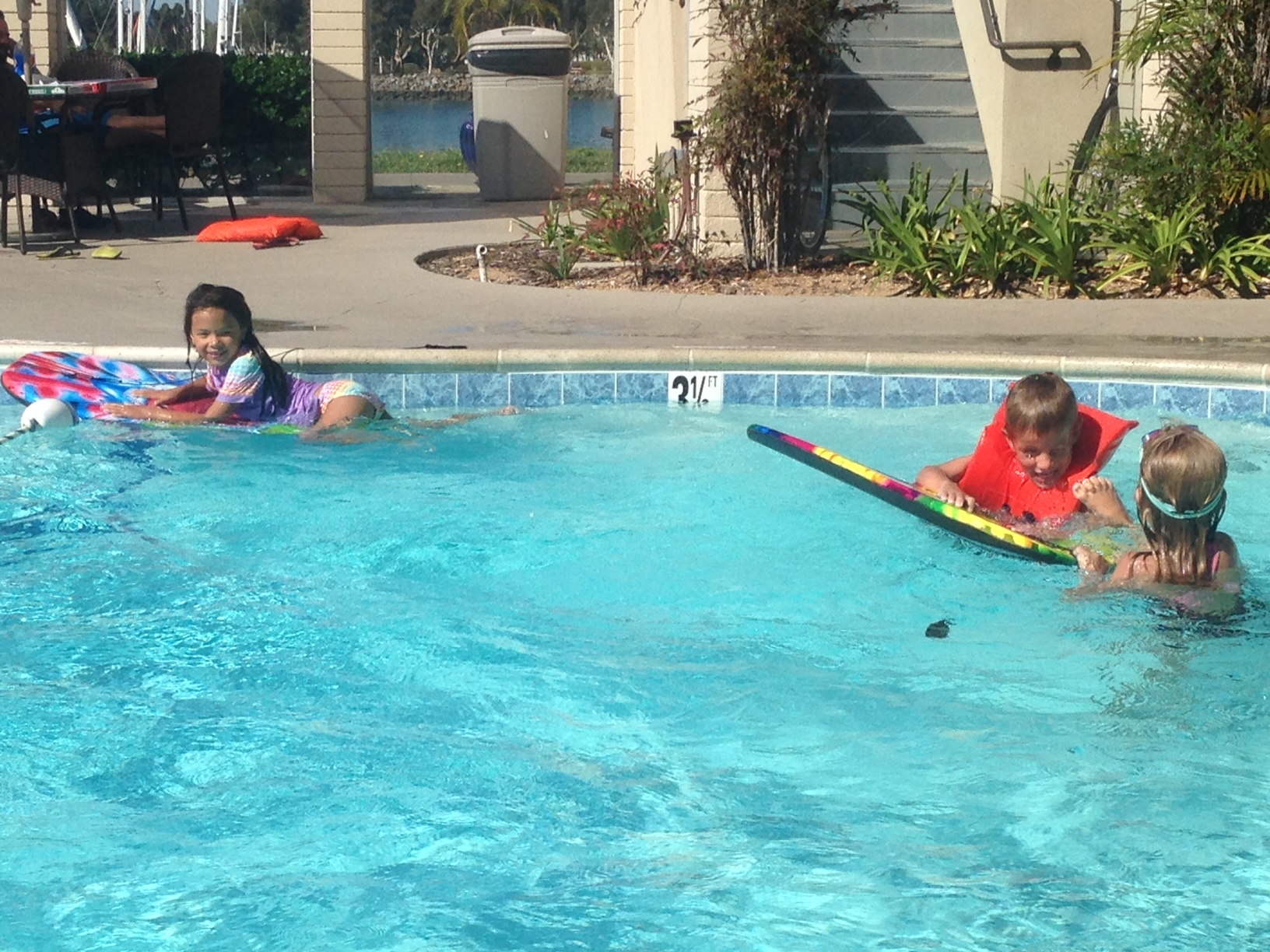
In San Diego, we found a marina with a pool next to the Point Loma Yacht Club. Jacintha enjoyed swimming and Dad and I mostly relaxed.
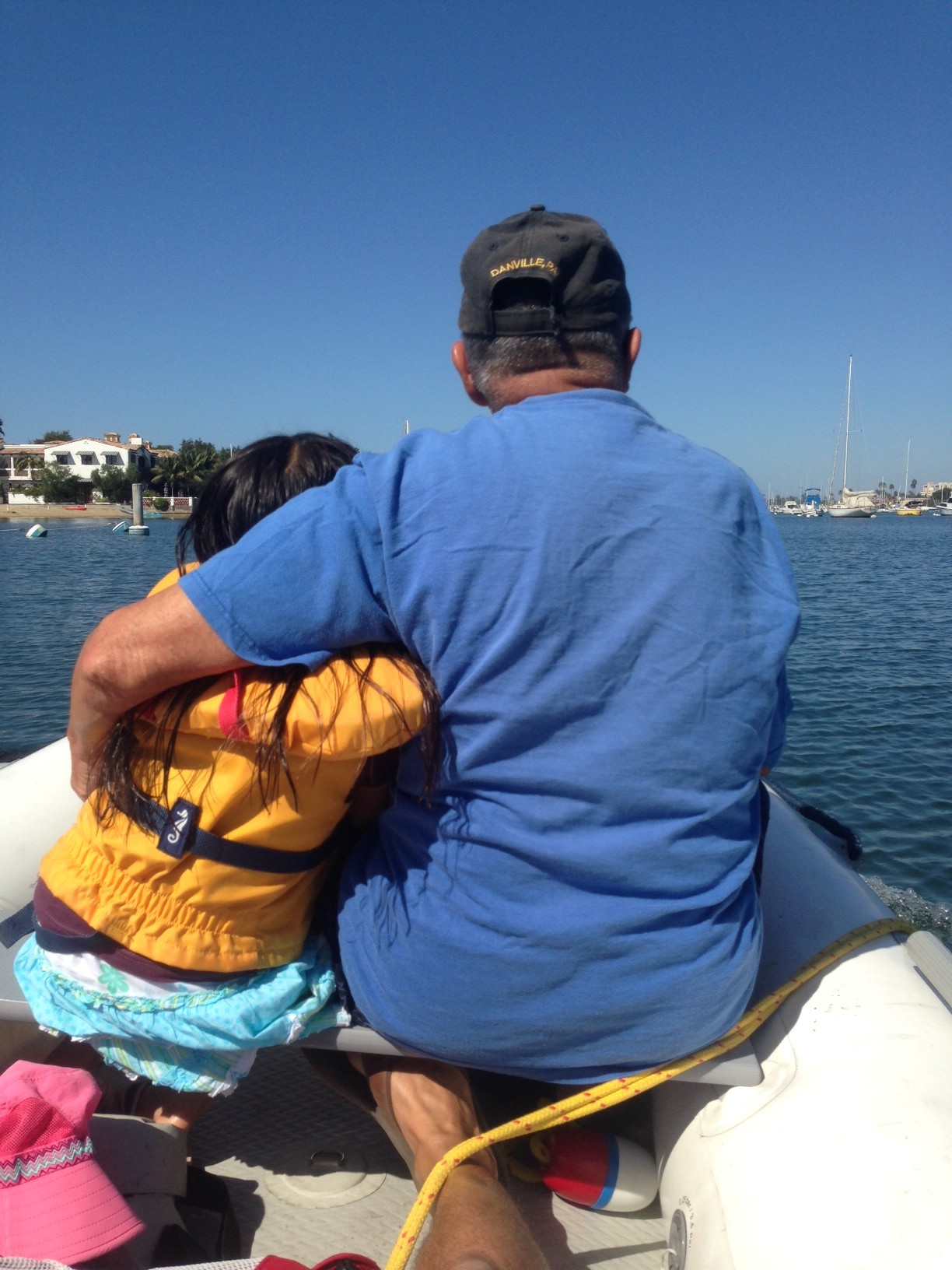
We reprovisioned, did some boat chores, and had some fantastic fish sandwiches at Point Loma Seafood, which was recommended by a cruiser we met in Santa Barbara. After a few days, we moved to Southwestern Yacht Club for 3 days, where my dad took off to fly back to Pennsylvania. It’s been a blessing to spend a month cruising with him. We harbor-hopped between Santa Barbara and San Diego, visiting 6 ports and 1 island, and covered 250 miles together. Life on a sailboat can be physically challenging, much more so than on a motor yacht–climbing into cave-like bunks, getting on/off the boat into the dinghy (especially when my lifeline gates are blocked by solar panels), and maintaining balance while underway with the ocean swell. To be doing that at 80 years of age is a great accomplishment! It was also nice to see Jacintha get to spend so much time with him. I think he really enjoyed cruising and meeting people along the way. We hope to see dad and mom in Puerto Vallarta, Mexico for a visit early next year.
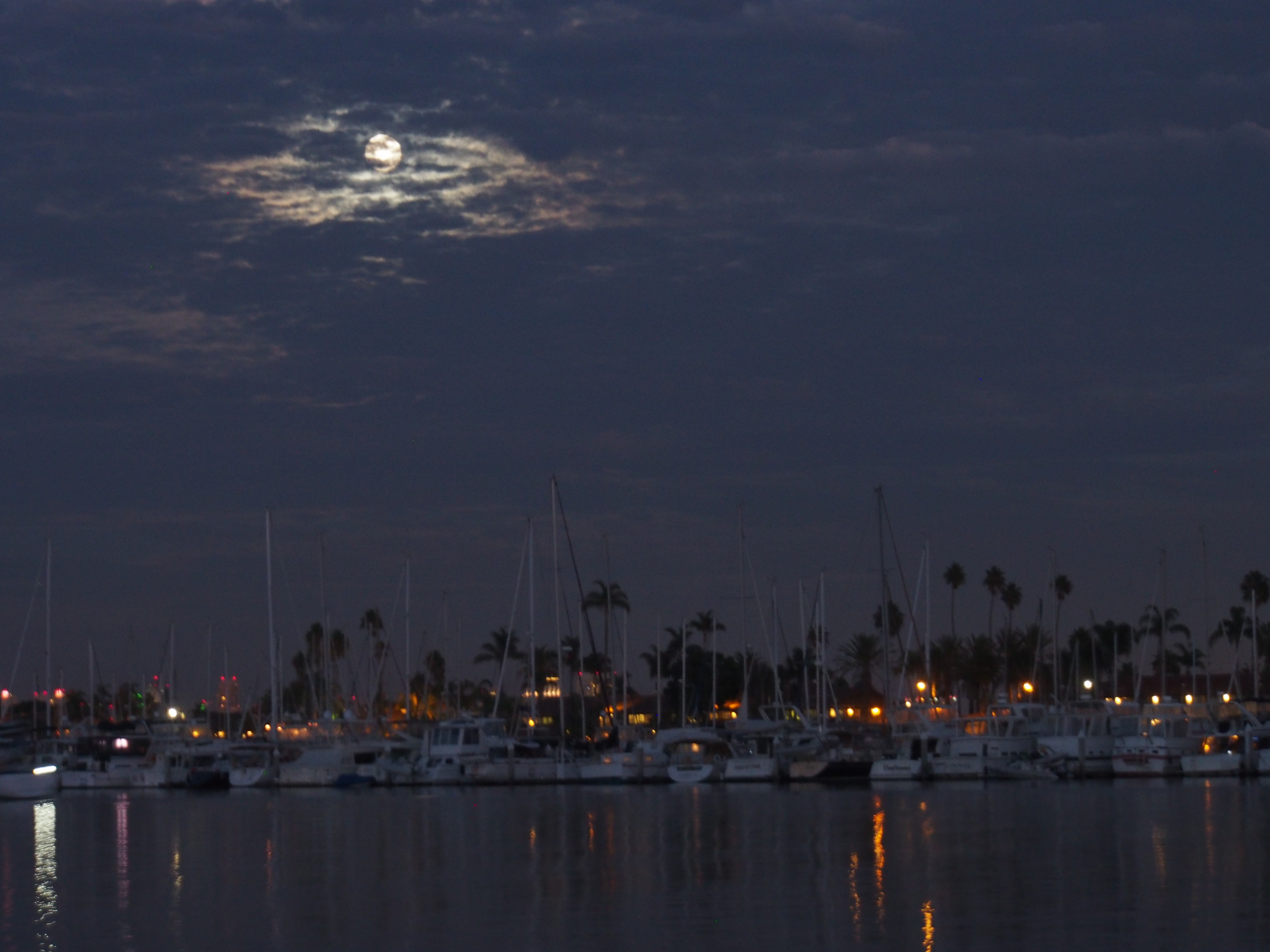
Dinghy ride to shoreFull Moon over San Diego
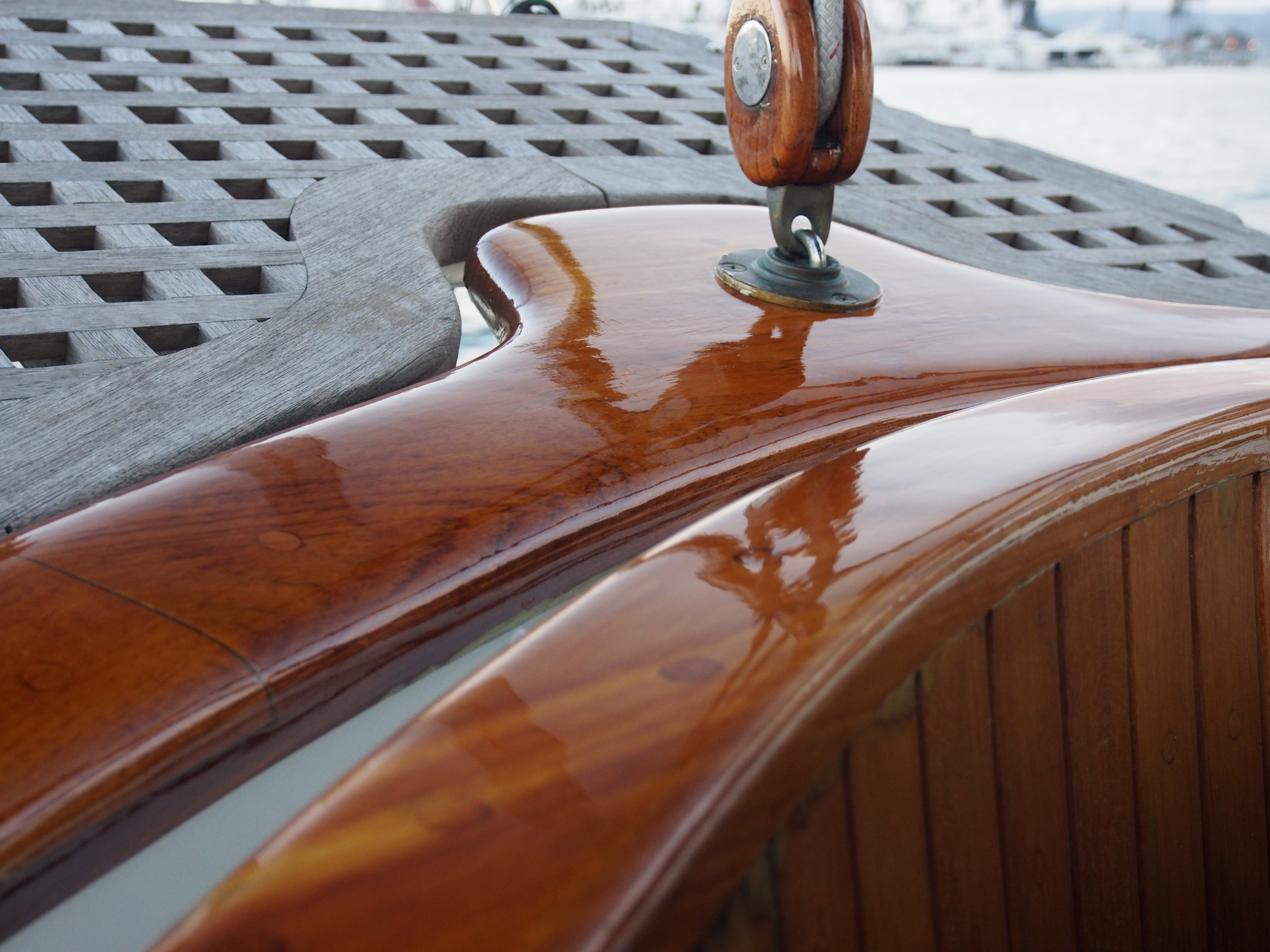
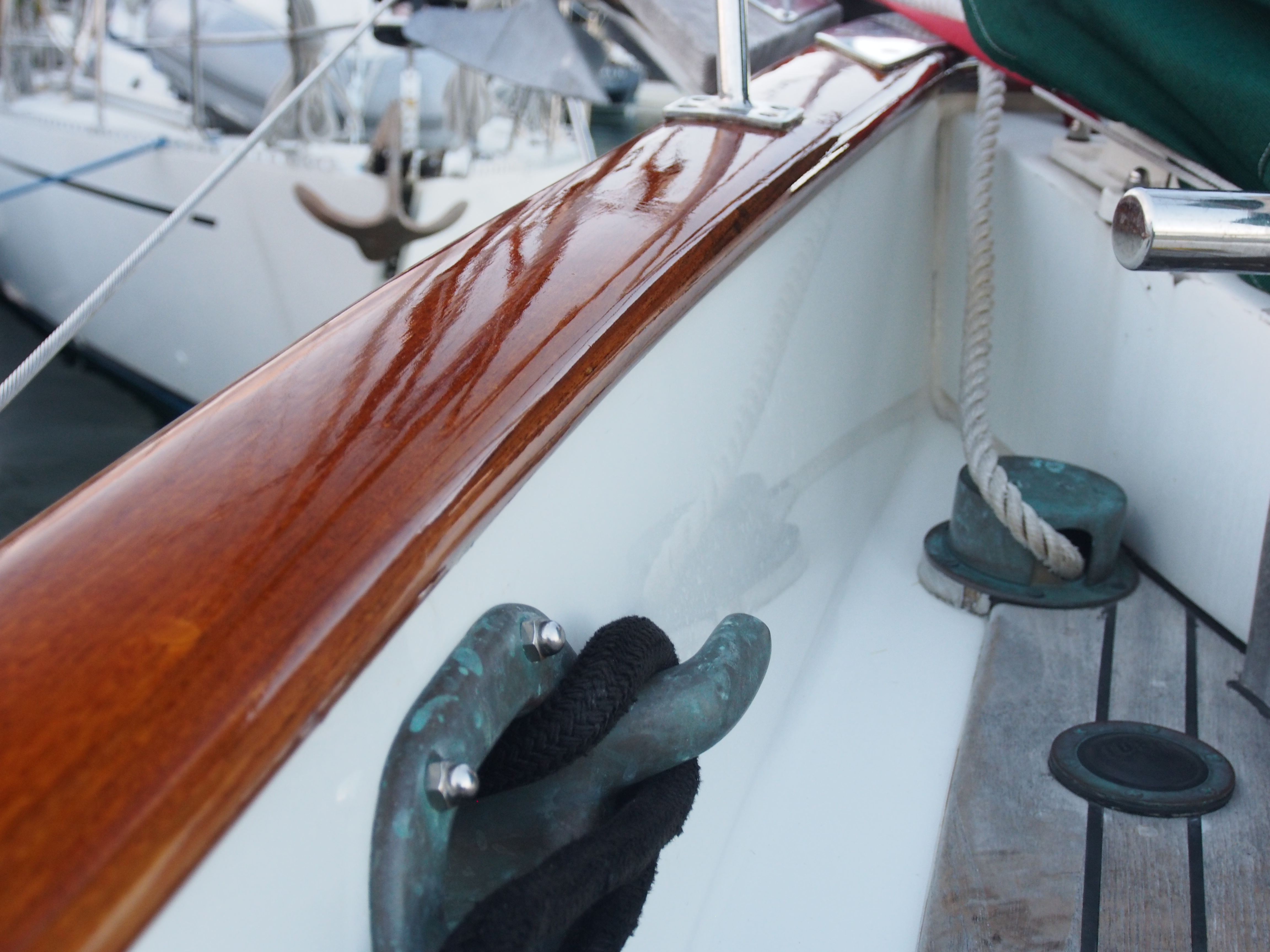
Varnishing–I brought some varnish along that was left over from last summer and since we have 3 weeks before the Baja Ha Ha rally starts, I decided to use some of it. I started with the outer cap rail and top cockpit combing since they are always in full sun. And with all the work being done preparing the boat for the trip, most of the varnish around the cockpit was looking bad. As usual, I’m applying 2 coats of Pettit Flagship varnish to get a mirror-like result… Will see how it holds up in the tropics!
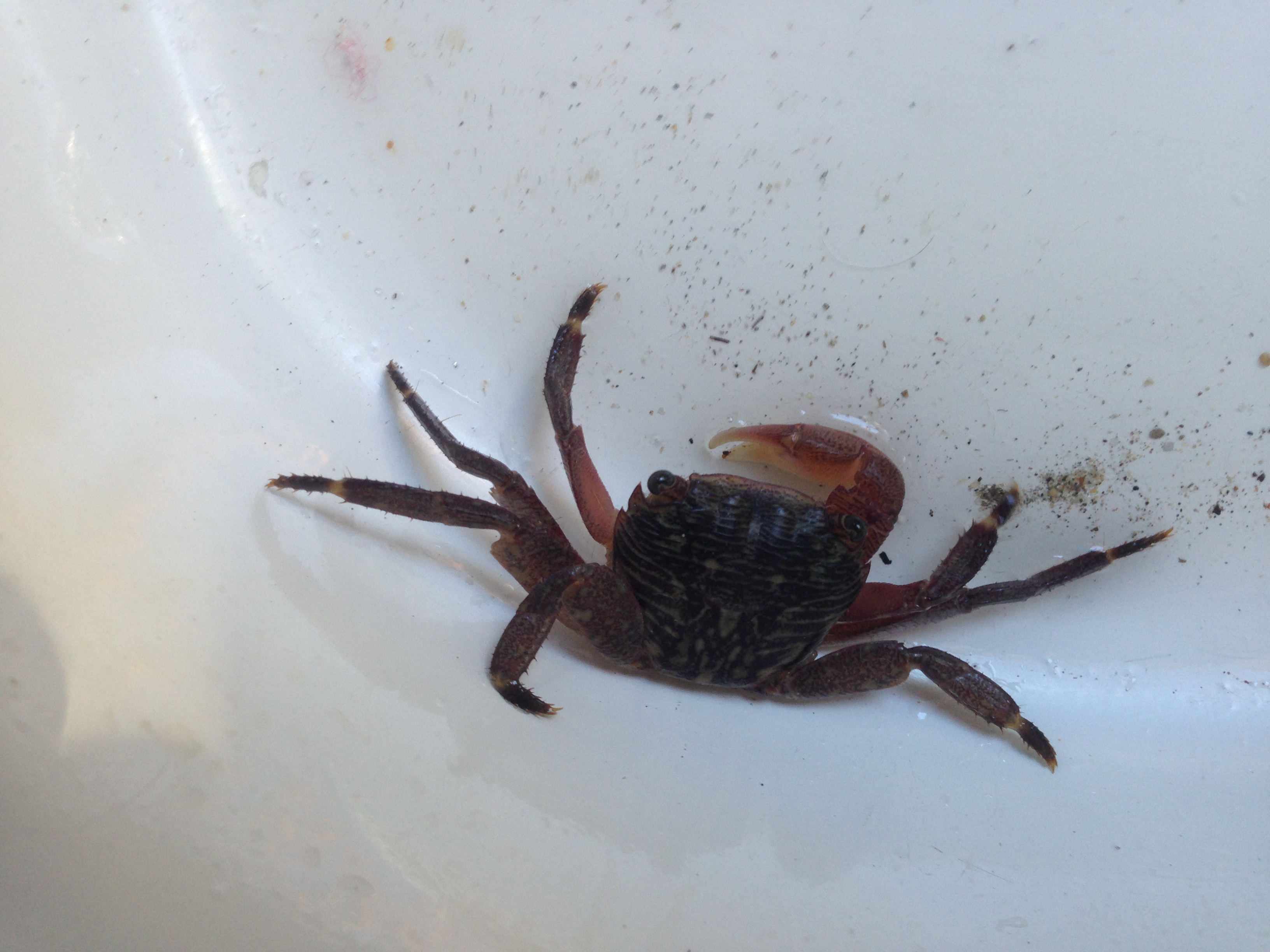
Jacintha’s Blog—Snap, Click, Splash, Ouch. We were sailing and I was down in the cabin. Poppy and daddy were up in the cockpit. Then I saw something that looked like a giant spider in the cabin. So I ran up to the cockpit to get daddy. At first he did not believe me so I made him come down to see, then he saw it too. It was not a giant spider, it was a cute crab! Daddy brought it up with a glove and showed poppy! Then daddy took off the glove and dropped the crab, it did not hurt him, but it surprised him. Then we saw him breath bubbles. At last we threw him out the boat and saw dolphins. The end…