I put together this diagram showing how things are connected aboard Apropos.
DC System (.ppt file)
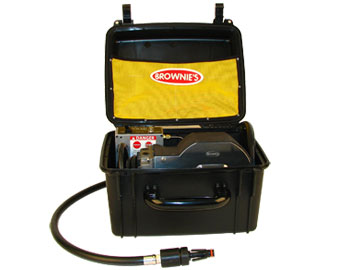
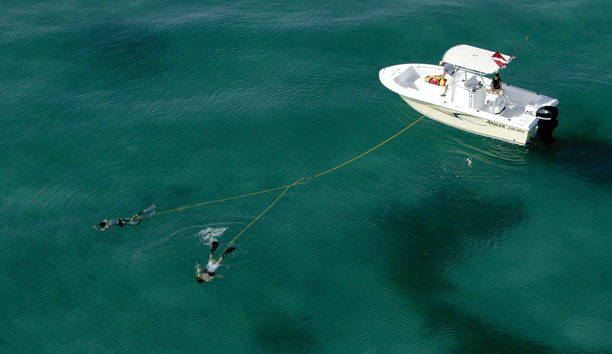
We tried out our new Brownies Hookah diving system at the dock. A Hookah system is a surface supplied air or “tankless” diving system. Our Hookah system consists of a .75HP variable speed sealed DC motor driving an oilless compressor. The system runs off 12VDC so we can use the boat house battery bank. It comes with a 40′ downline and another 20′ extension with the 2nd stage regulator attached. It supports 2 divers by putting a Y valve at the end of the downline and using two extensions with regulators. We want this for our cruise to the south pacific for recreational diving, so figured it would be good to buy it now to get used to it. Also, about a year ago we got a line wrapped around the prop and I had to free dive (sans mask, fins, weights) to cut it, which took many dives to accomplish.
Our immediate use will be for hull cleaning and maintenance. It’s been 3 years since the boat was hauled out for bottom paint and zincs. Since the boat is moored in fresh water, the bottom paint has held up well but we noticed when we were in the San Juans recently that the prop zinc was missing. For my first Hookah dive, I wore a wetsuit and used the dive gear I had from when I was doing SCUBA diving about 15 years ago. The Hookah worked great and I was able to replace all 6 zincs and clean the algae off the bottom in about an hour.
Here are some images from the Brownies website:
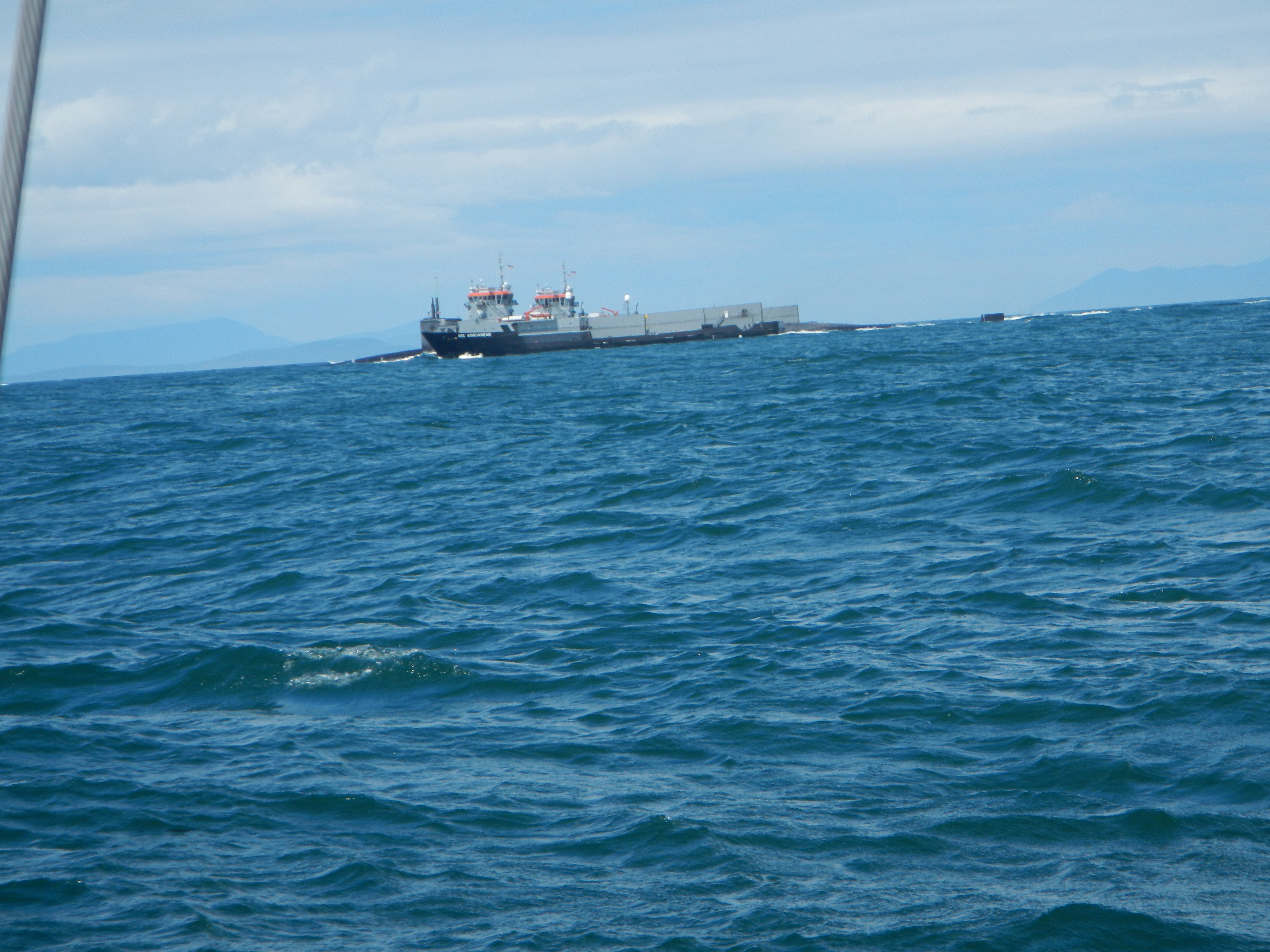
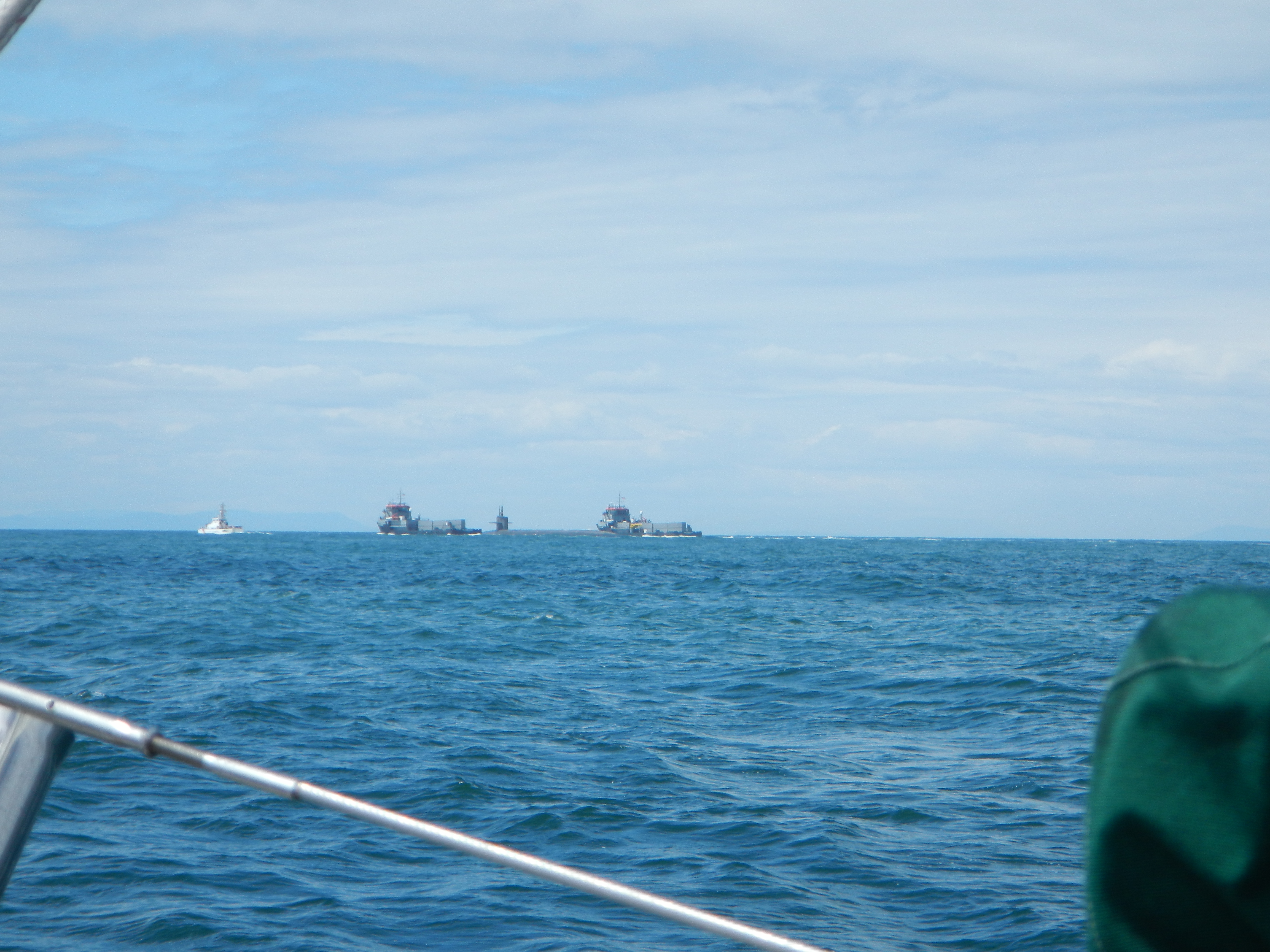
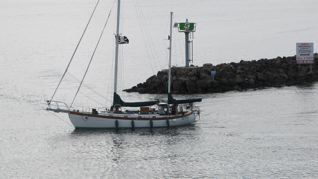
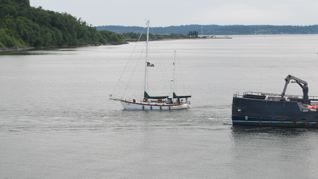
During a recent crossing of the Strait of Juan de Fuca, we noticed something heading towards us from about a mile away. From that distance we could see 2 large vessels with something smaller between them. There also was a medium size vessel in front of and behind them. None of these 5 vessels showed up on our AIS system. As we got closer, we realized it was a US Navy Submarine flanked by Navy ships and a coast guard vessel in front. The sub’s tower and only about 10′ of the hull were visible. They were headed west and we passed at a distance of about 1/2 mile going east. The picture on the left was taken as they passed us and you can see the sub tower just in front of nearest flank vessel. The one on the right was taken about a half mile after they passed us, but still within torpedo range!
June 1: Due to vacation time and a planned trip to Australia later this summer, we decided to take a short 5-day trip to the San Juan Islands. To maximize our time in the islands, we departed Lake Union late afternoon on Friday June 1. Two drawbridges and a set of locks later, we were out in Puget Sound with a favorable tide for going north. We were motor-sailing in light wind and about half way to Port Townsend began to smell something a bit off in the cabin (I thought it smelled like rotten eggs). It took another hour with the smell getting worse until Karen discovered the source, which she pinpointed to something under the aft-starboard berth. Our huge 8D starter battery was boiling hot and out-gassing hydrogen sulphide through the safety vents! After shutting down the engine and analyzing the situation, we decided to disable the alternator so we could still run the engine without charging the battery, then motored the remaining 2 hours to Port Townsend. We arrived after dark and anchored near the ferry terminal. The starter batter was still hot but was no longer out-gassing and the battery monitor showed it’s voltage was 12.8V. We decided to spend the next day in Port Townsend to fix the problem. On the positive side of things….there probably wasn’t a better place for boat repairs than Port Townsend with all of its marine shops and knowledgeable people working there.
June 2: Port Townsend–fixing the problem
We narrowed the starter battery problem to either the battery itself, the alternator, the smart regulator, or some connection in-between. Since the battery still worked (it was able to start the engine) and the high-output alternator and smart regulator were only 2 years old, it seemed like maybe a “system” problem. We decided to motor to the marina and get some advice from a marine technician. West Marine provided some names and phone numbers so we were able to find an electrical tech who could meet us at the marina. The problem was traced to an undersized wire between the high output alternator and the starter that had become highly resistive from getting so hot. This wire carries all the current that charges the battery and was sized for the original alternator which put out only 60Amps (the new Balmar alternator put out 110Amps). After paying the tech for his diagnosis, we were able to walk to West Marine to buy the new wire (only 1 foot) with lug connectors, and installed it in less than an hour. It was early afternoon, so we decided to stay in Port Townsend the rest of the day and leave early on Sunday for the crossing of the Strait of Juan de Fuca. Since the cabin still smelled like rotten eggs from the battery hydrogen sulphide, we walked to a grocery store to buy some baking soda and gave the battery compartment and entire berth a washdown.
June 3: Onwards to Jones Island
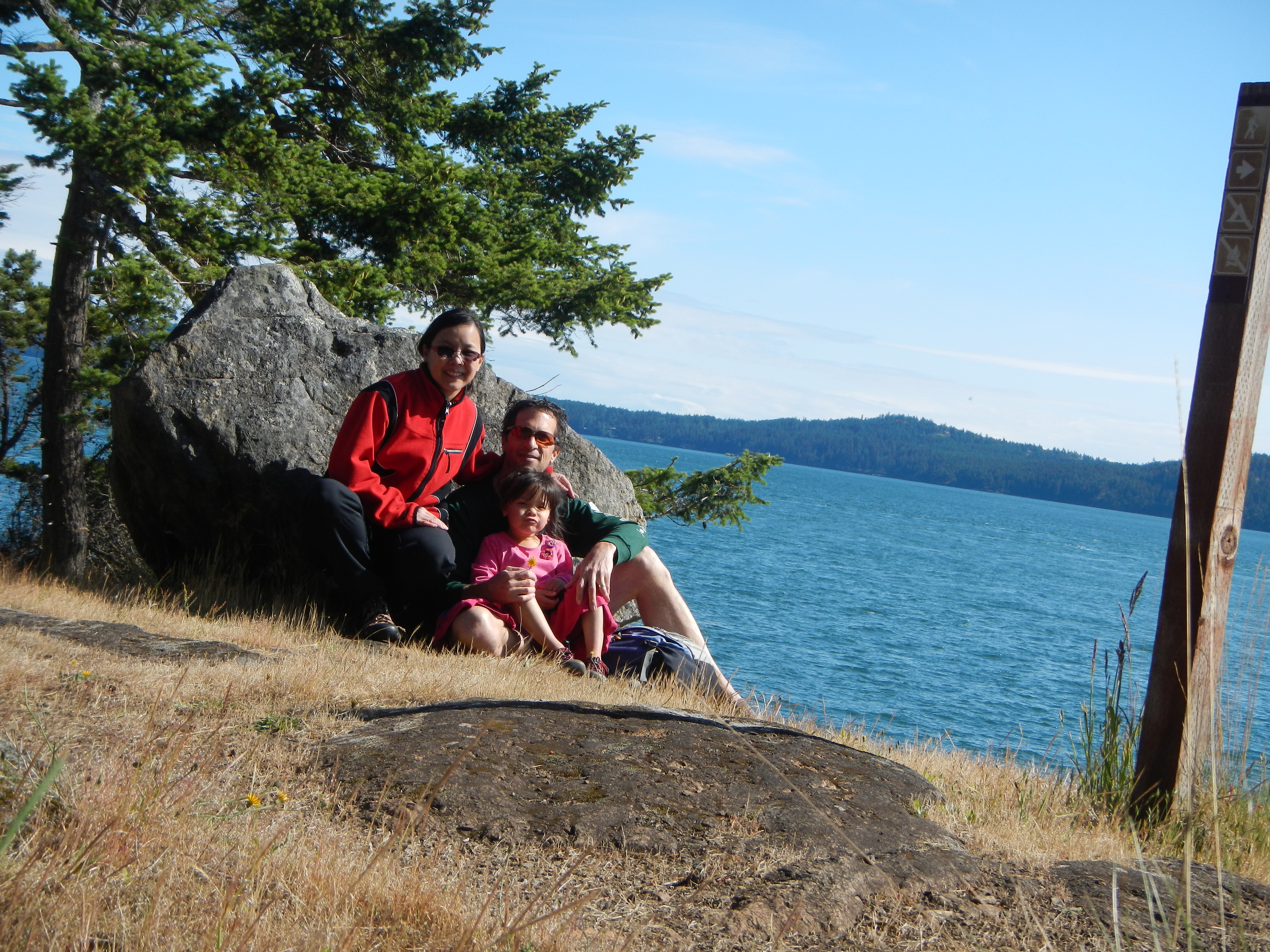
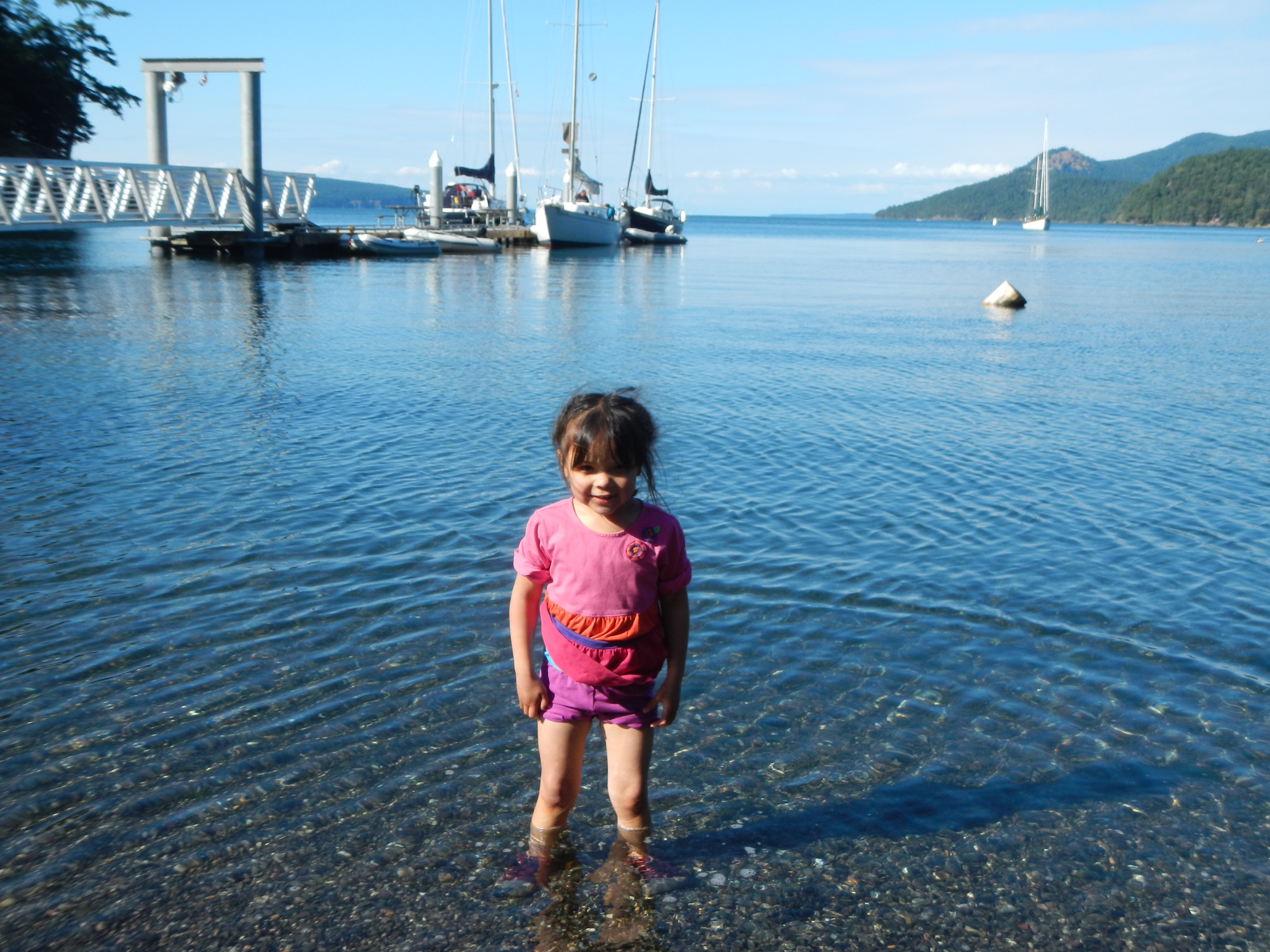
An early morning departure with a maximum ebb tide gave us terrific speed out of Admiralty Inlet. We motored for a few hours while keeping an eye on the starter battery to make sure it wasn’t getting hot again. Everything was working fine, and as the wind picked up, we sailed from the middle of the strait all the way to Jones Island. We reached Cattle Pass right near max flood with a 10knot wind behind us. With all sails out, we were cruising at 10knots (SOG) and reached Jones Island by mid-afternoon. We anchored in 50′ of water and rowed the dinghy to shore for a fun hike around the island and Jacintha braved the cold water along the shore. We returned to the boat and strung the hammock between the masts, relaxed, BBQ’d, etc.
June 4: Sailing and Roche Harbor
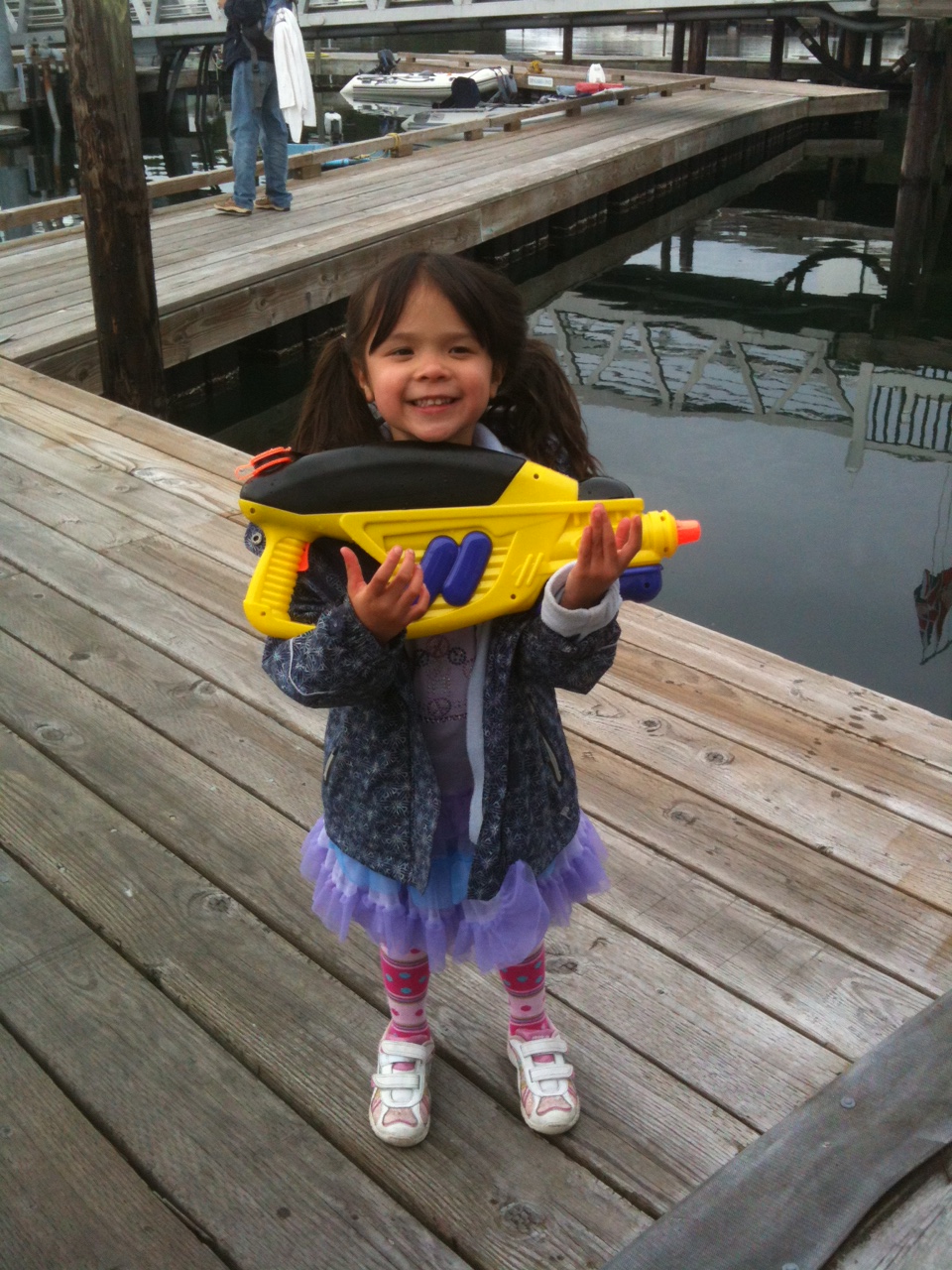
Woke up to cloudy skies and light winds, and enjoyed a lazy morning. The Cap’n turned cook made bacon and eggs while Jacintha decorated the boat cabin with pictures and drawings. Since Roche Harbor was only a few miles away, we decided to sail along the west coast of Stuart Island to see if we could spot any whales. Although we didn’t see any whales this time, we made it up to the lighthouse before turning around and heading to Roche Harbor. We anchored out in the bay, then took the dinghy to shore. While Karen was enjoying a hot shower at the marina, Jacintha and the Cap’n went into the general store for a few supplies. Somewhere between the food aisle and the fishing aisle, Jacintha spotted a water gun…..
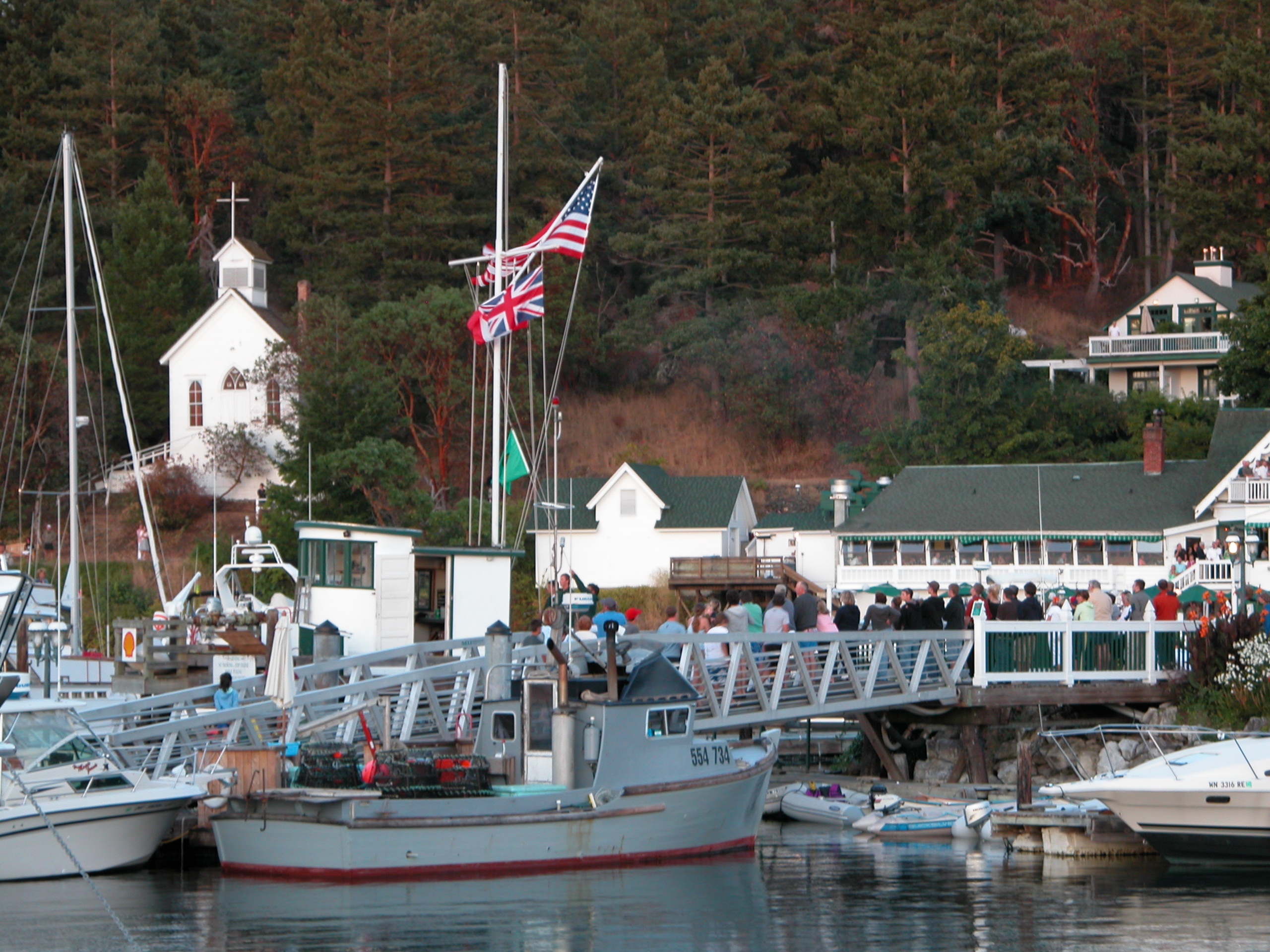
We had no problem getting outside deck seating at the Madrona Grill this early in the season. Had our usual Firecracker Bloody Mary and French Dip while sitting under the overhead heaters to keep warm. After dinner we took a stroll to the white chapel overlooking the harbor where we got married 4 years ago.
June 5: Rough passage across the strait
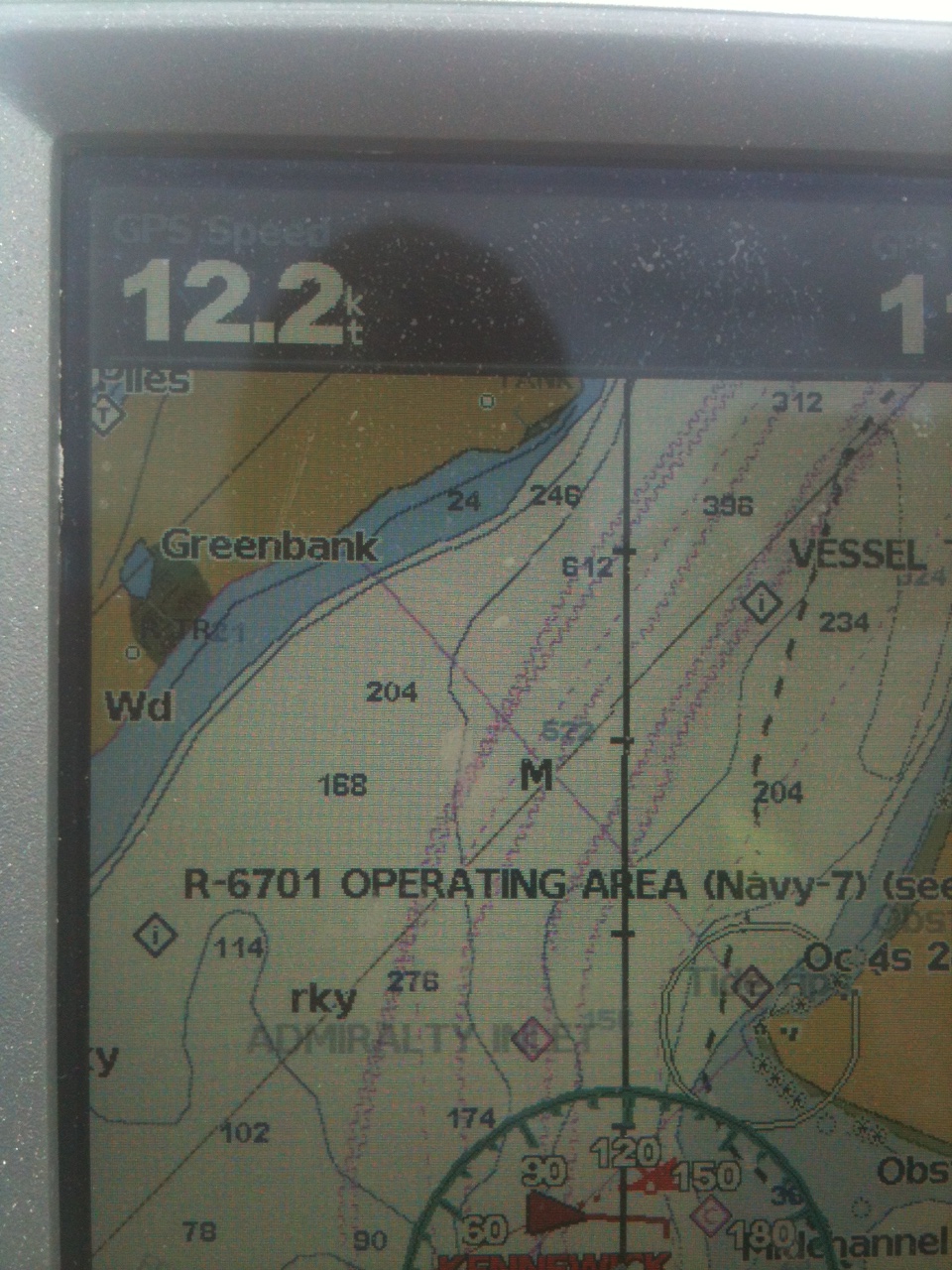
The marine forecast called for gale force winds in Juan de Fuca strait. We up-anchored early and motored away from the protected harbor. Hoisted the jib, main, and mizzen sails in Haro Strait with an ebb tide carrying us south and 15 knot wind. The conditions changed in the strait with a 20-30knot westerly going against the ebbing tide. This spells LARGE chop and uncomfortable conditions down below for Jacintha and Karen. Angle of heel was 20 deg and lots of weather helm with occasional waves breaking on deck and occasional gusts putting the side-rail in the sea. After 3 hours of this, Cap’n bought in the jib and sailed under main and mizzen to decrease the heeling and allow and more comfortable run downwind. With increasing winds and gusts, we had to pay close attention at the helm to not allow the boat to turn broadside into the wind. The wind waves were building and we surfed in an eastward direction towards Admiralty Inlet. We reached the inlet at max flood with a calmer 15 knot tailwind with a boatspeed of 12.2 knots (SOG), the fastest we’d ever seen Apropos go! Sailed another 3 hours southward in Puget Sound and reached Kingston near dark. Anchored near the ferry terminal and had a great sleep.
June 6: Back home
Had a relaxing morning and up-anchored around 1pm for the 15 mile sail back to Seattle. Combined sailing and motoring in light winds, sunny skies, and smooth water. The locks were busy and since the train trestle was also down, we decided to go into Shilshole marina and get together with a friend who lives in the condos on the south end of the marina. Kit joined us aboard Apropos for some food and drinks, then we motored back to the locks as she took some photos from her balcony. We were able to get right in the small locks and motored the remaining 2 miles to Lake Union.
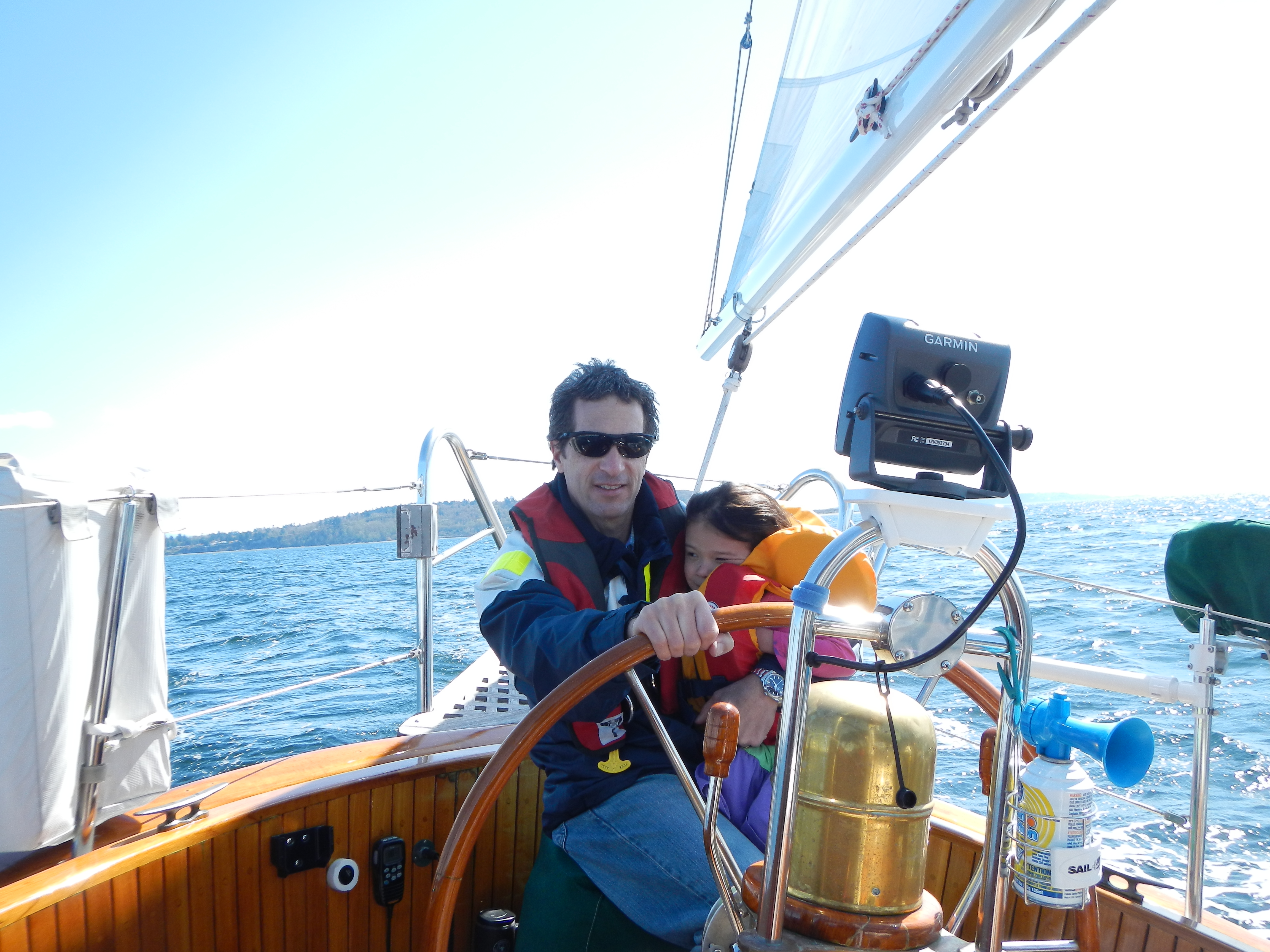
With a good weather forecast for Easter weekend, we decided to sail to Poulsbo, one of our favorite Puget Sound destinations. The sail over on Saturday was spectacular with sunny skies and a steady 15 knot northerly which meant a beam reach across the sound. Sailed through Agate Pass with the wind on our stern and a positive 4 knot current. Sailed all the way to Liberty Bay then docked at the Poulsbo marina. Jacintha had fun coloring and decorating Easter eggs and Cap’n Easter Bunny hid them all over the boat after she went to sleep. She had fun the next morning finding them all. Walked to a church in town for Easter service, then went out for a nice brunch at Mor Mor Bistro. Visited our favorite chandlery and our favorite ice-cream shop (Mora Creamery) before pushing off around mid-afternoon. Motored most of the way back except towards the end whe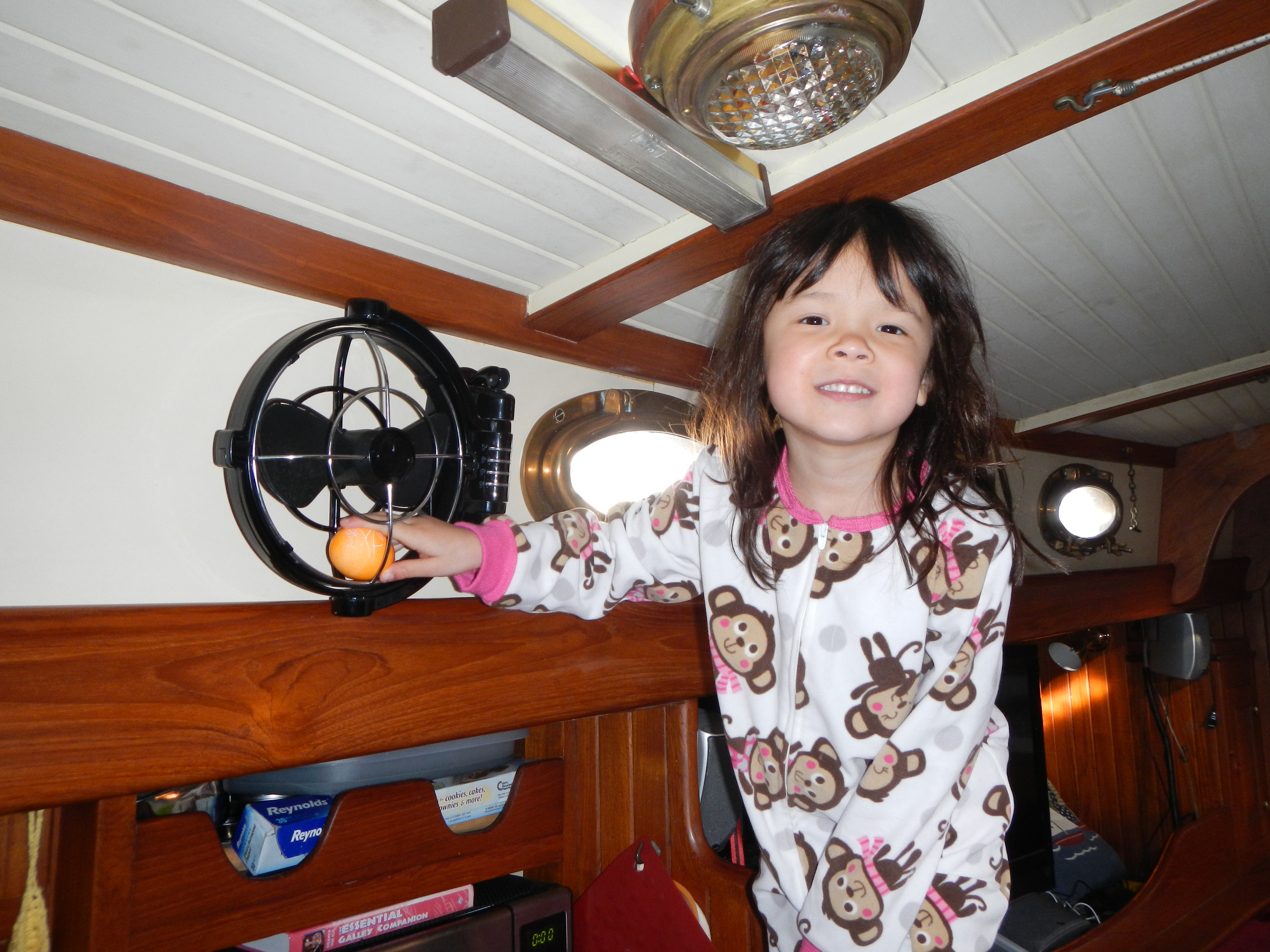 n the wind picked up half way across the sound, than had about an hour wait at the locks. Pulled into our home dock just as it was getting dark.
Will try to make more frequent updates to this blog!
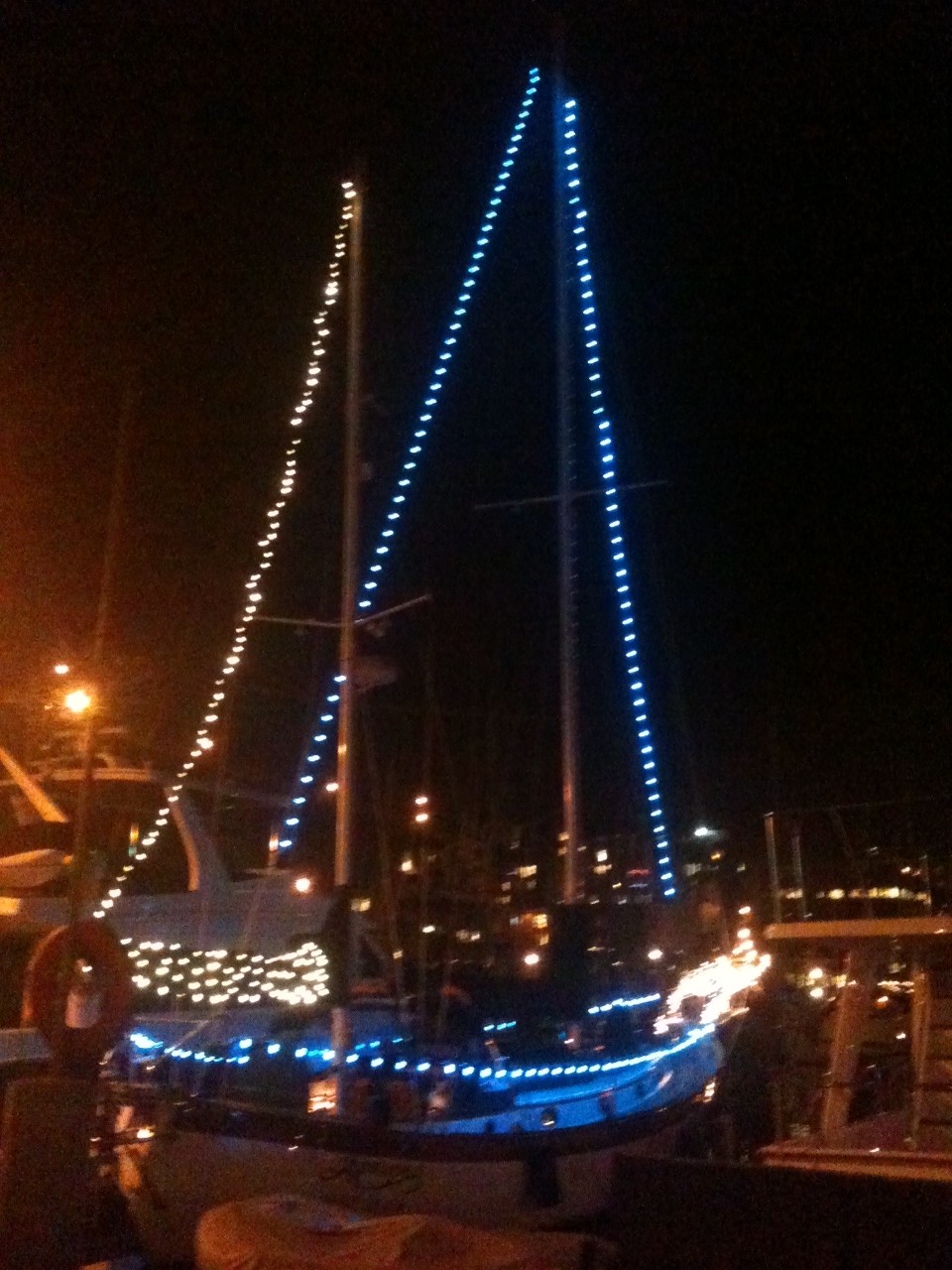
We haven’t done much sailing since October, but did take Apropos out for the Argosy Christmas Ship Parade. I bought 5 strands of programmable LED lights and modified them so I could control them with a PSoC chip (the thing I’ve spent the past 13 years working on at Cypress Semiconductor). I ran 2 strands from bow to stern along the port and starboard lifelines, and 2 strands from the mast-top–1 fore and 1 aft. I also had normal white LED strands on the mizzen mast, booms, bowsprit, and a star at the end of the bowsprit. The Argosy Parade was a huge success–not too cold, good friends (18 aboard), plenty of food & drinks, and no rain! A video of the lighting display put to music and a short ‘technical’ slide show is here:
http://www.youtube.com/watch?v=IG_57D05q2k
We finally got a couple of nice sunny days after a cold and rainy start to Spring. On Friday, I cleaned the full boat cover and let it dry on the boat, then removed it and packed it away until next November. Gave the boat a quick wash, then finished installing the helm compass that I had taken apart to repair some wiring and re-fill with Ritchie compass fluid. Now there is no longer a half dollar size air bubble, and the red LED lights work for night-time sailing. I also finished mounting the GPS antenna for the AIS (automatic identification system).
Saturday was the first day this year that the temperature has gone above 60F in Seattle. We (Karen, Jacintha, Amanda, and the newest crew member Taffy–ruff ruff) took the boat out on Lake Union and motored around, grilled some hot dogs and enjoyed the sunshine!
To make it easier to inspect and work on the main masthead, I installed two folding steps about 4 feet below the top of the mast. I’m building a 3:1 system from Harken hexaratchet blocks to be able to pull myself up. Once up there I will be able to stand on the steps, tie off, and work at chest level to inspect, change anchor bulbs, VHF antenna, windvane, etc. Trying to do this from a bosun chair is difficult because you’re working above your head and can’t see the very top. First project will be to change the anchor bulb to LED.
An Automatic Identification System (AIS) is an electronic device that allows you to see other vessels (who also have AIS) on a chartplotter. Ships and ferries are required to have AIS, and it’s becoming more common for smaller vessels. AIS for smaller vessels comes in two types–receive only that allows you to see others, and transmit/receive that allows you to see other and for them to see you. AIS uses a combination of GPS and VHF to transmit and receive information. A chartplotter will display a triangular mark for each vessel it is receiving a signal from. Selecting a mark then brings up a screen showing information such as vessel name, home port, vessel speed and for ships, it shows what cargo it’s carrying.
The main reasons for having AIS aboard is for safety. It’s kinda like an modern form of radar since it allows you to see other vessels electronically. Radar of course also allows you to see land and rain squalls. We’ve been in thick fog where we relied on our radar to locate ships that were blasting foghorns. Having a more accurate system at the helm will add redundancy and safety. Also, on ocean passages the AIS can be used as a warning to sound an alarm when a vessel broadcasting AIS gets within a certain distance.
I decided on a class B AIS from West Marine that transmits and receives information. It has a “silent” button on the case that allows you to silence the transmit function. The installation involved lots of wiring–coaxial wire to a VHF antenna (fortunately my boat had a spare VHF antenna installed on the main mast with the wire coiled and labeled in the bilge–shows somebody was thinking ahead!), a cable to a GPS antenna (not sure where I will mount this antenna yet), PWR/GND wires to the electrical panel, and 2 strands on NMEA cable to the chartplotter. I decided to tie the AIS into the Garmin chartplotter at the helm. When I installed the cable for this chartplotter, I ran the data cables near the electrical panel so they will be easy to get to.
Finished installing the new Dickinson 3-burner Mediterranean propane stove. This replaced an older HilleRange model that now sits at Second Wave Marine, a consignment boating store. The new Dickinson is 100% stainless steel, has dual 7000 BTU burners and 1-11000 BTU stove burner. The oven is larger than our old one and has a7000 BTU burner plus a 4500 BTU broiler. Other features: electronic ignition (no more matches!), gimbaled mount kit, safety flame-out protection, removable cutting-board on top, and pot-holders. The hardest part of the installation was fitting it through the companionway since it was both heavy and bulky. There was about 1″ of clearance!
For photos, see “Latest Pics from my iPhone”
