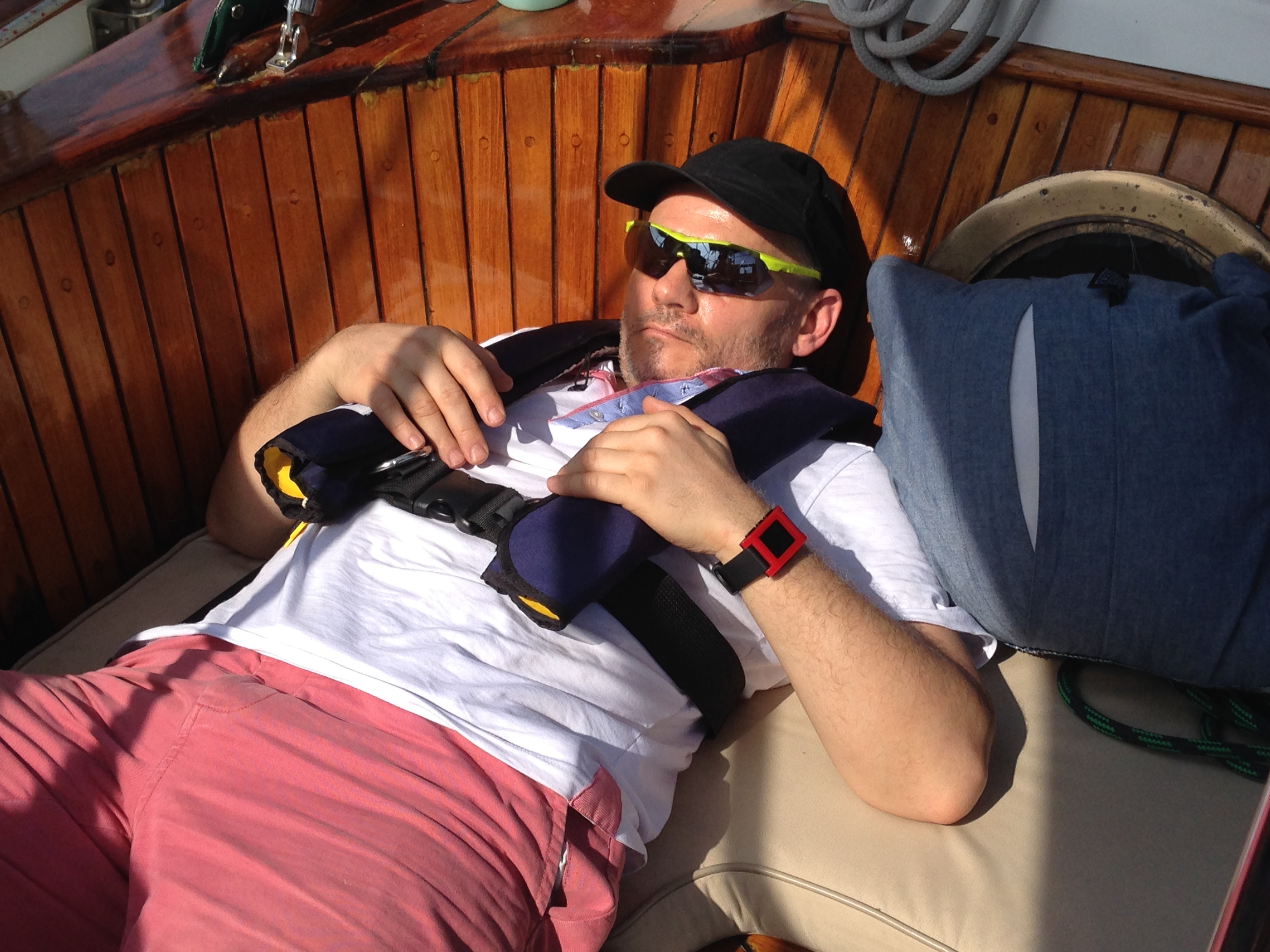
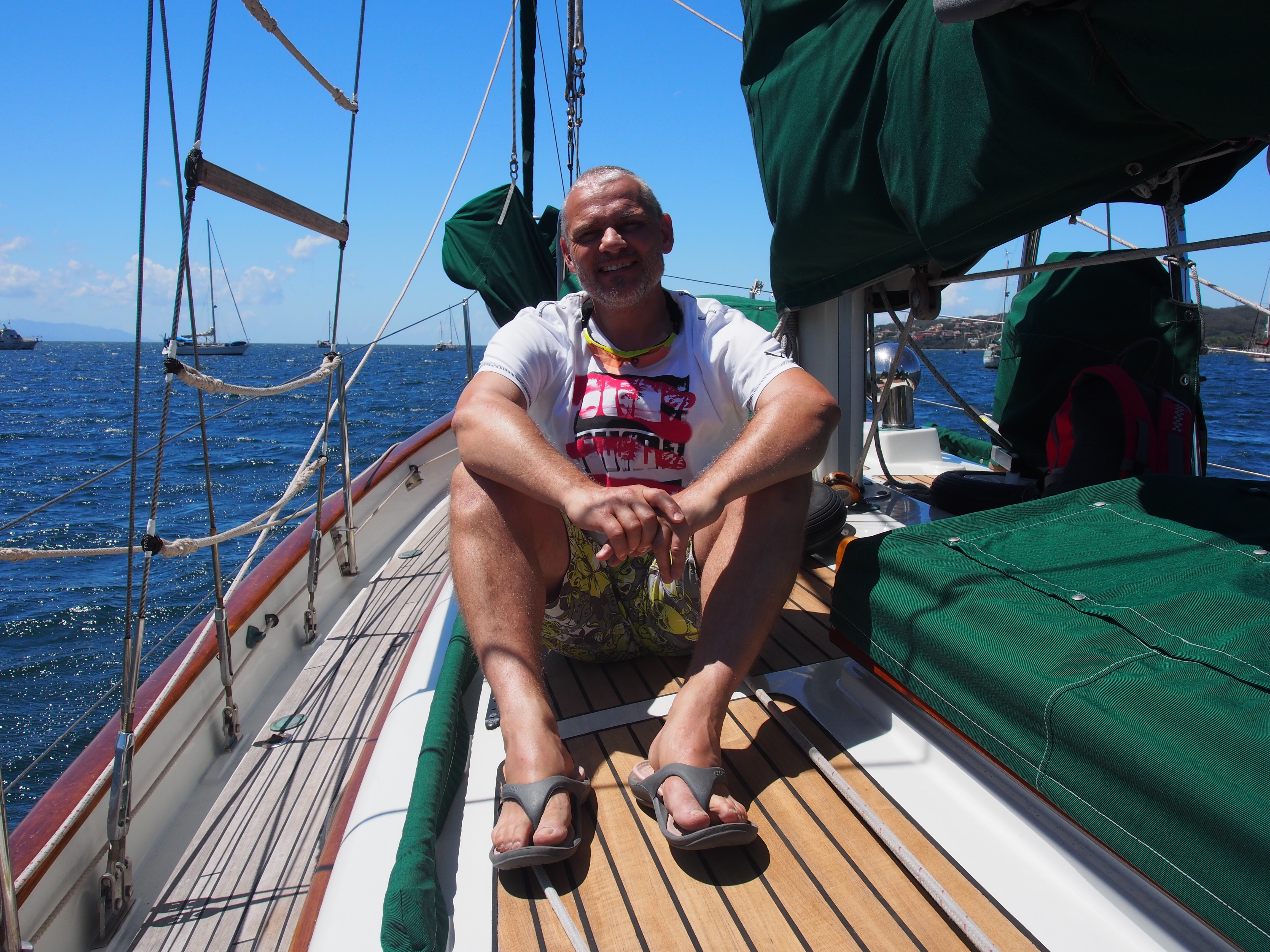
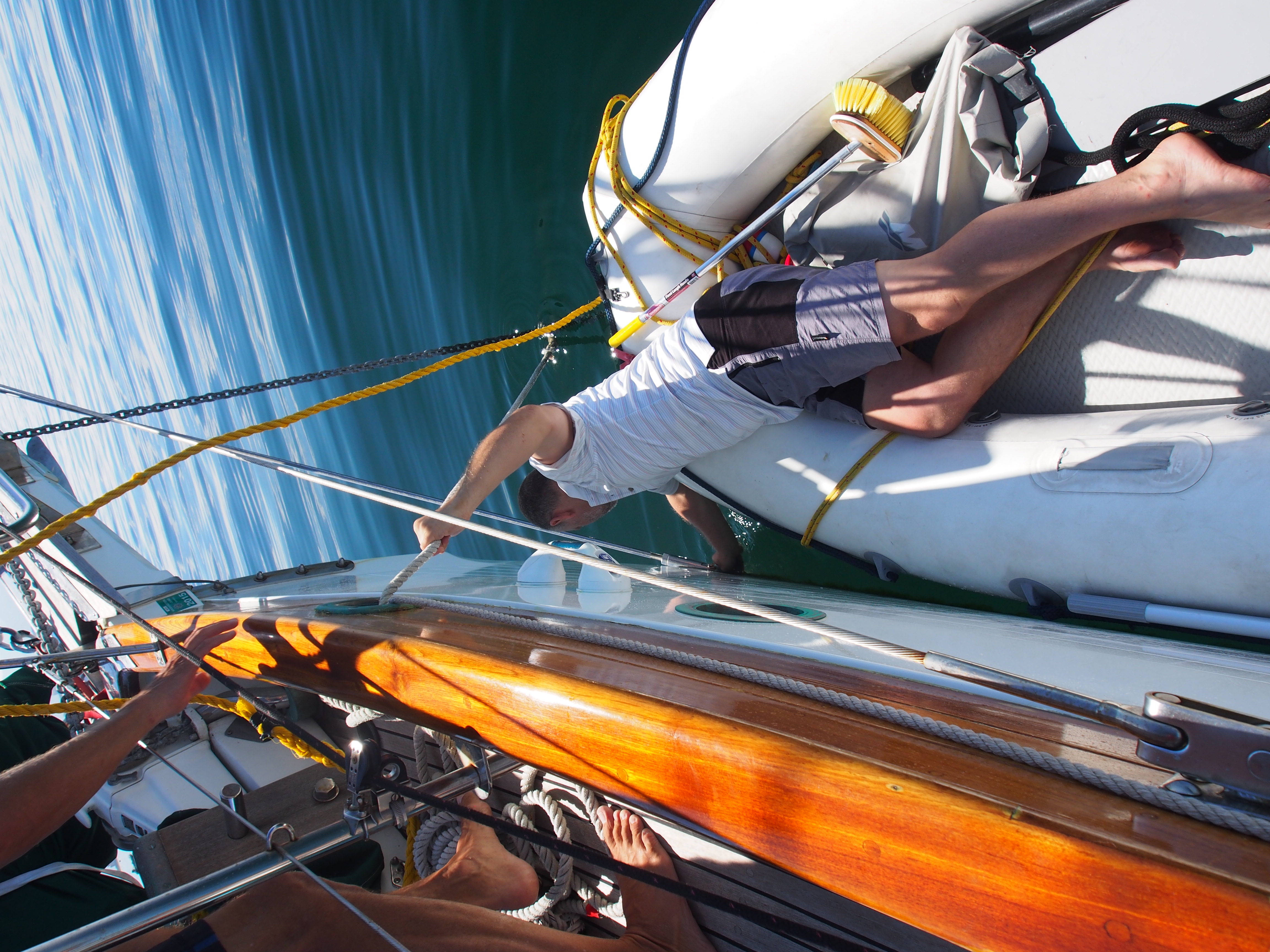
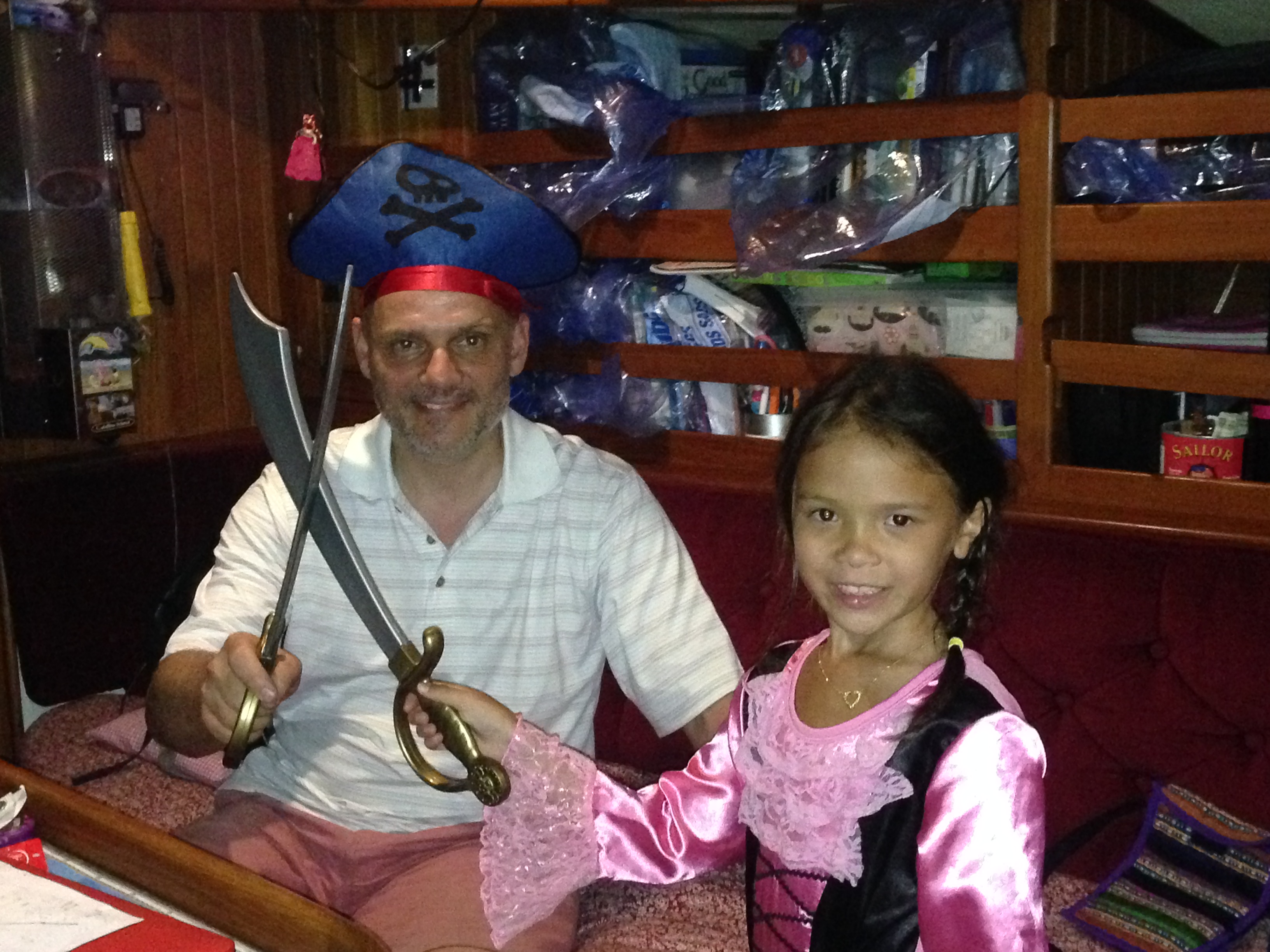
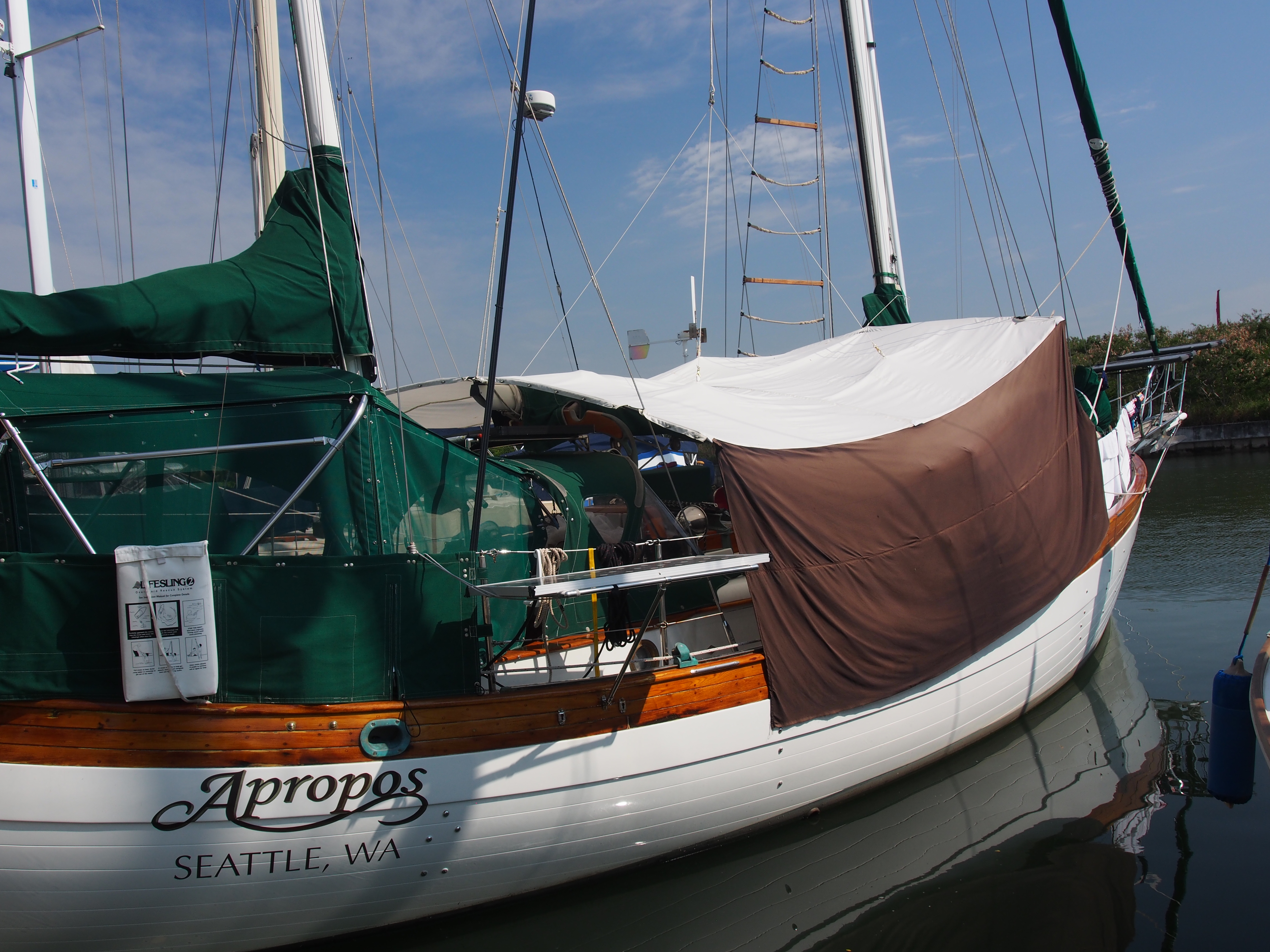
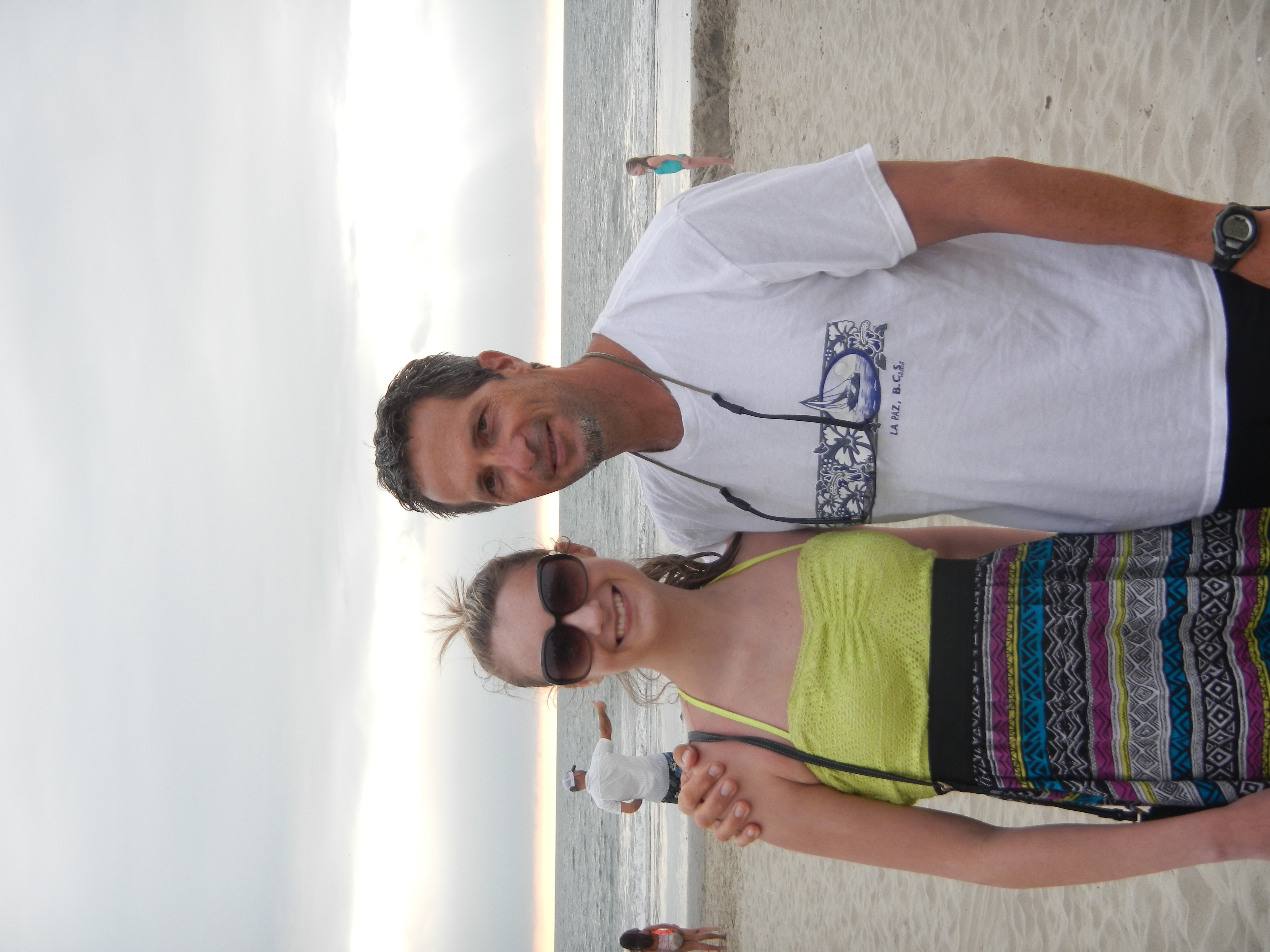
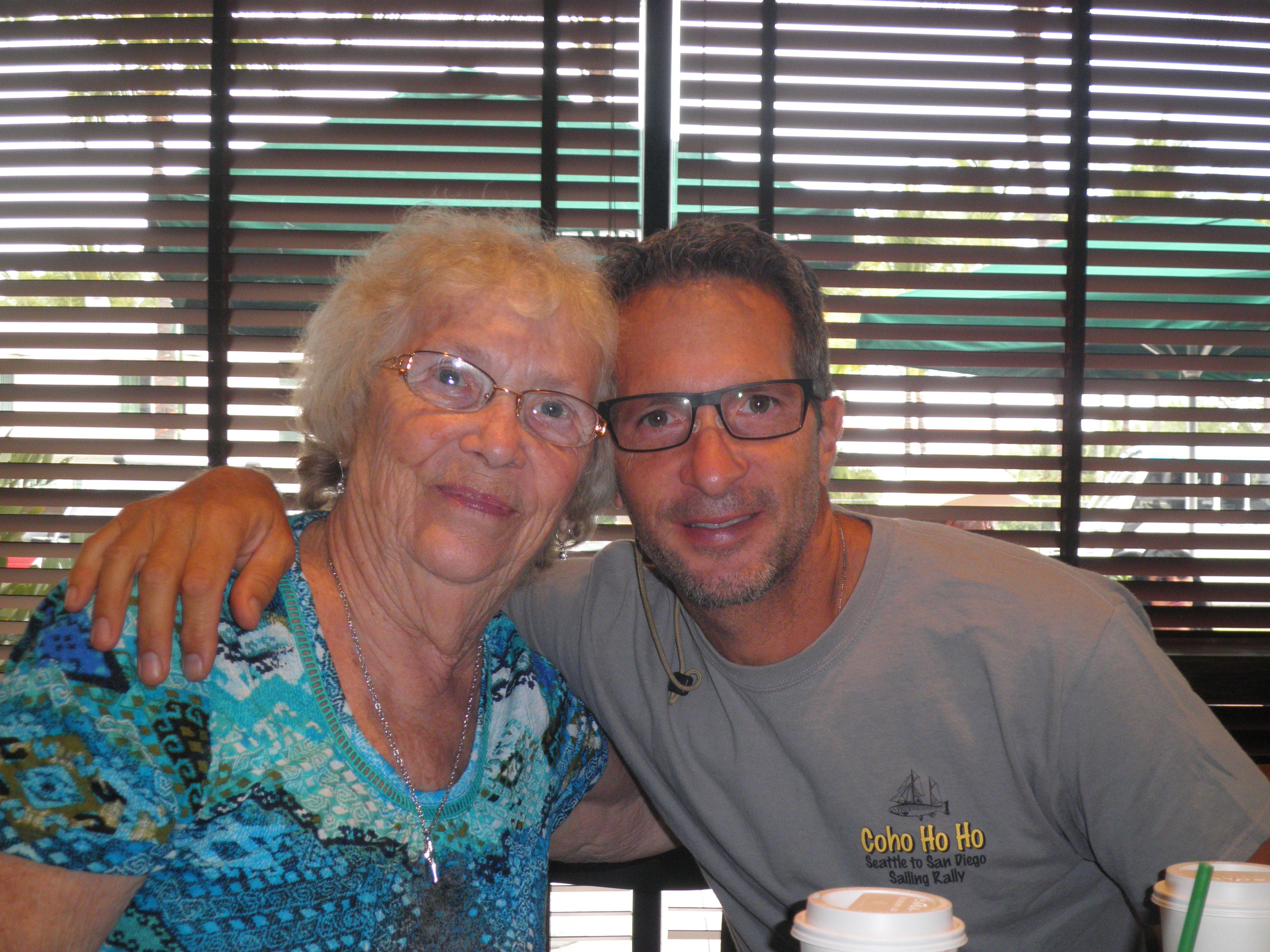
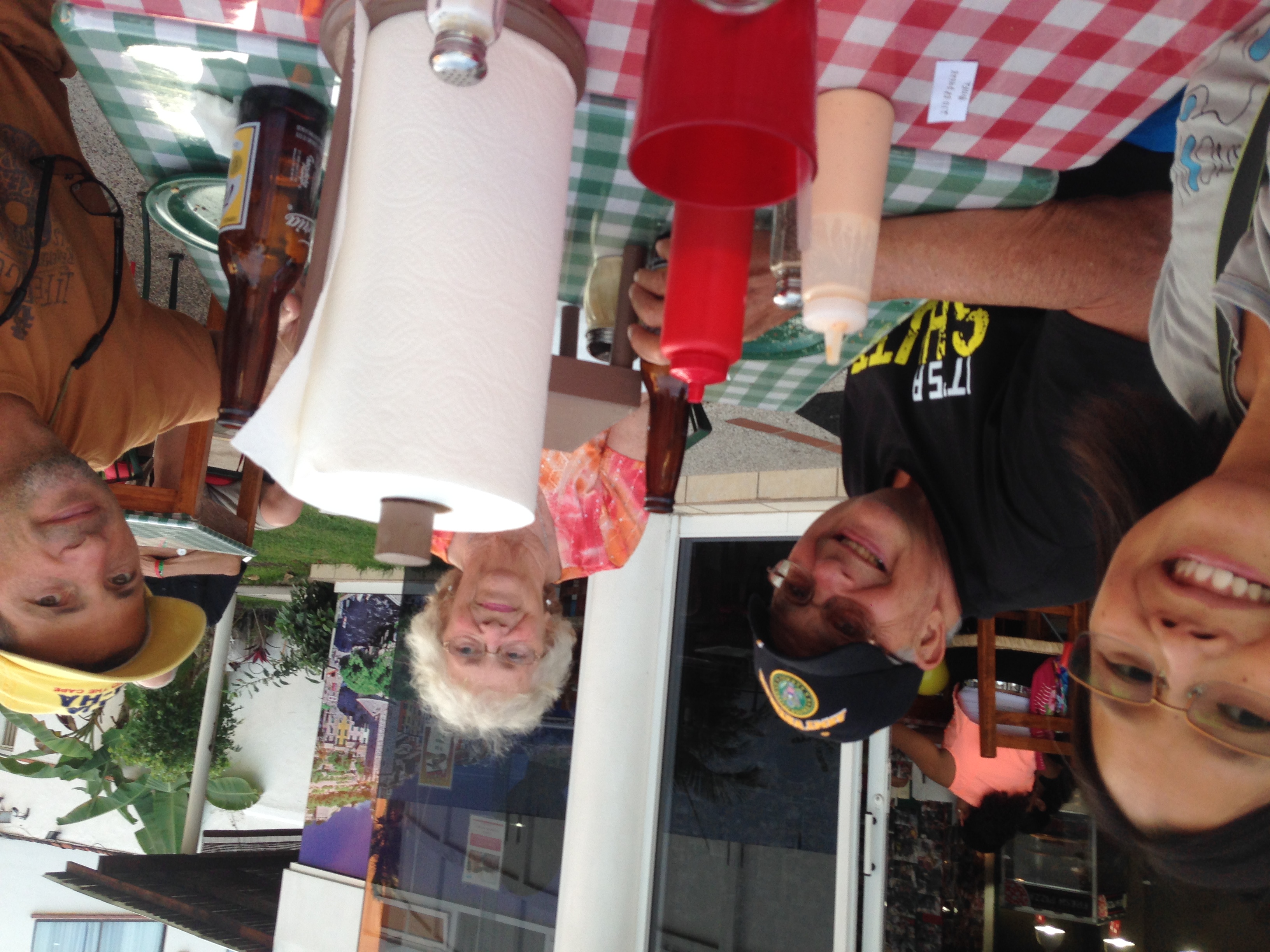
For our jump to the Marquesas, we decided that having 3 adults on board would be much better than 2. A 2-person watch can be exhausting especially in heavy weather, and since this crossing will take 3-4 weeks, it just made sense to have another crew member aboard. So, a few years ago we mentioned our cruising plan to Nick, who lives in England, and he was all for it. In fact, he was so gung ho that he contacted us in February 2014 to let us know he was all ready and was going purchase his airline ticket to meet us in Mexico. After we let him know he was a year early, he then had an entire year to really prepare!
So Nick flew from England to Mexico via California and arrived on March 7. He will be with us until April 26, when he flies out of Tahiti bound for New Zealand, then back to England.
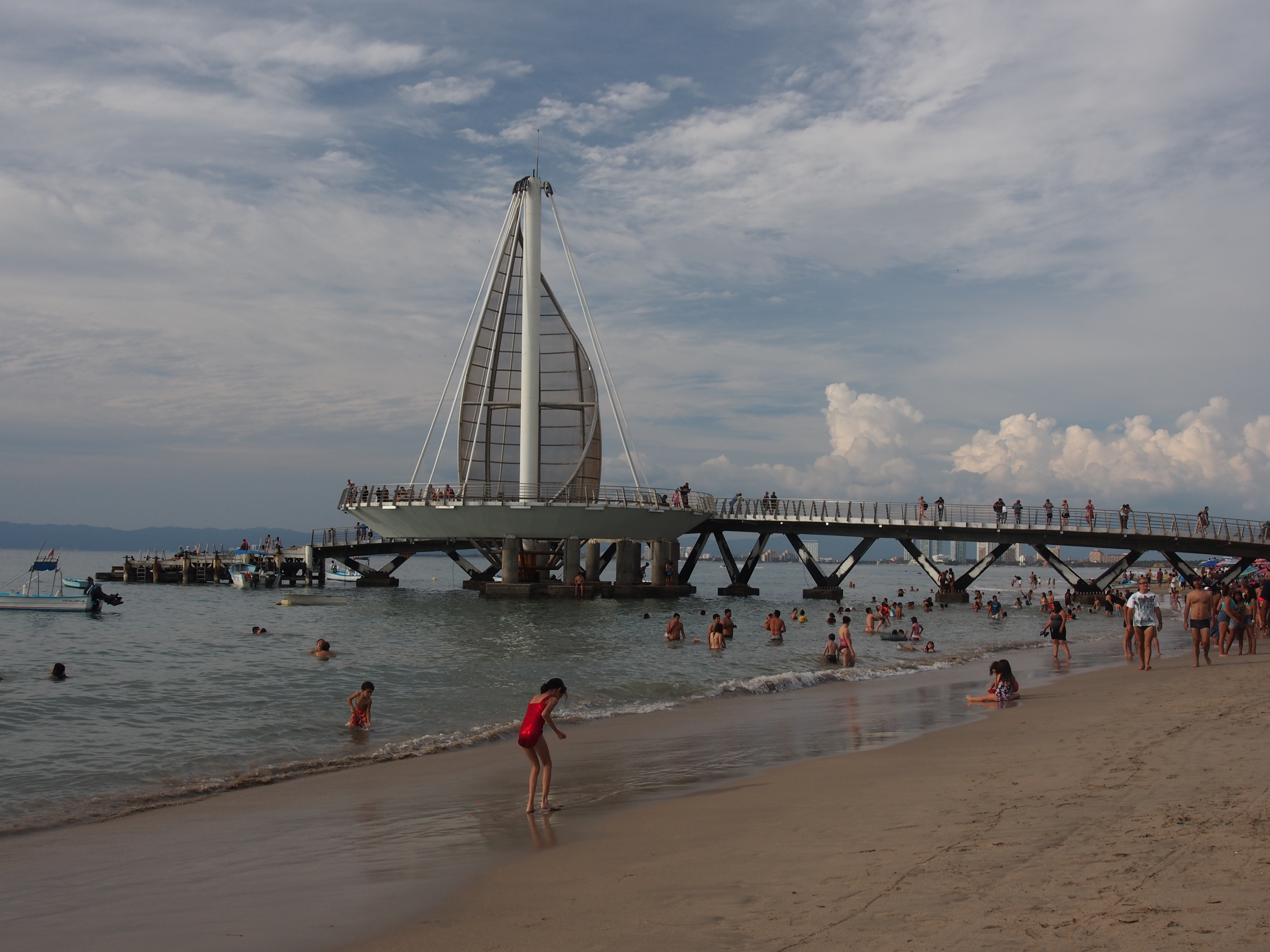
While anchored in the bay near La Cruz, we’ve been tackling some final boat tasks during the day and going to live music in La Cruz at night. The local bands have some pretty amazing musicians playing 70’s, 80’s and 90’s music. One venue called Anna Banana’s had about a dozen leather Crown Royal whiskey pouches hanging from the ceiling that contained the ashes of former cruisers who hung out there. Another favorite was Gecko Rojo, so named when they were painting the walls red and a gecko happened to be on the wall and got painted. We watched a 2-person band at Ballena Blanco called The Traveling Band, who played amazing electric guitar to the beat of a mesmerizing bongo drum. Here’s an 8-minute video of her bongo solo: http://youtu.be/KZOu1qV-v2c
We’ve also been attending some of the cruising seminars that are put on at various marinas around Banderas Bay. Topics such as Medical, Electrical, Fishing, and Weather have all contained useful information as we prepare for the jump to the South Pacific.
Nick keeping watch!Nick relaxing on the deckPutting Nick to work scrubbing the waterline.Nick and Jacintha, Arrrrrrrr
Baby Turtle Release II
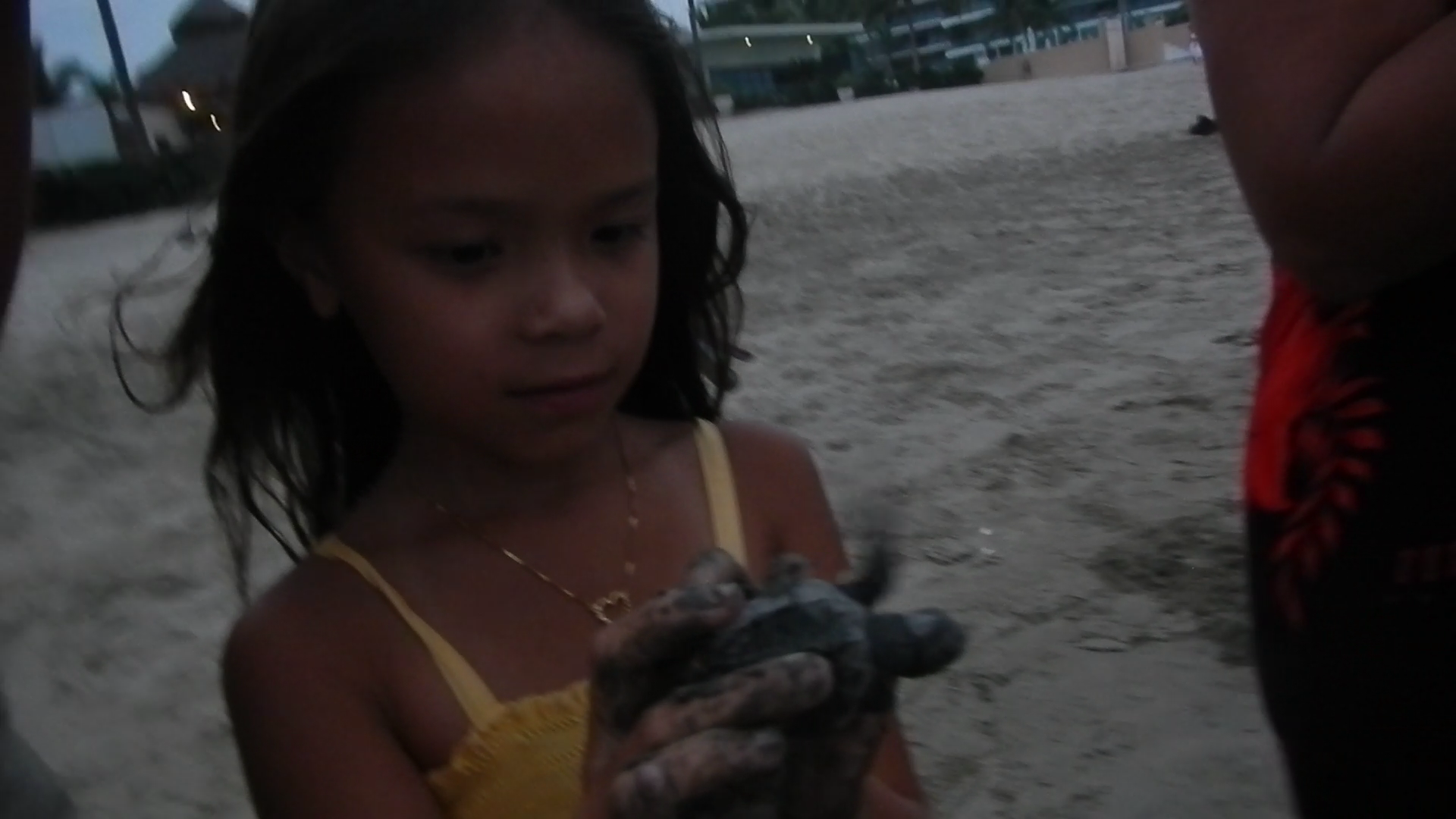
We went to another turtle release that was held along the beach about a mile from Paradise Village. This one was a bit more relaxed compared to the one we went to in Zihuatanejo. After a brief and very informative talk by the volunteer coordinator, everyone in the group scrubbed all scent off their hands using the sand, then were handed a baby turtle. We got to hold it and give it a name, then place it in the wet sand 15 feet from the surf. It’s important that they make their own way to the surf, especially the females. While they are on land, they are using their senses to “map” the exact location using the earth’s magnetic fields, and the females will return to the same exact beach in about 7 years to deposit her eggs, just as her mother had done. It’s an amazing process and is why sea turtles have survived for millions of years, where many other creatures have become extinct.
We’re still in Puerto Vallarta waiting for the right weather window to open up for the jump to the Marquesas. I attended a Puddle Jump weather seminar put on by Mike from PV Sailing and learned a lot. It’s looking like this year the jump window (prime time to depart from Mexico) will open up later than normal–around the 3rd week of March. We’ve been experiencing El Nino trends since 2012 where a band of warm sea surface temperatures develops in the central and east-central equatorial Pacific. This affects surface pressure in the southern hemisphere and sometimes means lighter trade winds in the south pacific.
We had hoped to leave around March 15, but will stick around until the weather gods give the go-ahead. It all has to do with the Pacific high stabilizing and moving into place so we can sail along the 1015 millibar barometric pressure line. When this happens, then you wait for a cold front to come down the outside of the Baja peninsula that will give you the push needed to reach the trades, which typically takes 4 good running days. If you leave at the wrong time, there will be too little wind and, unless you motor, you’ll be going nowhere fast.
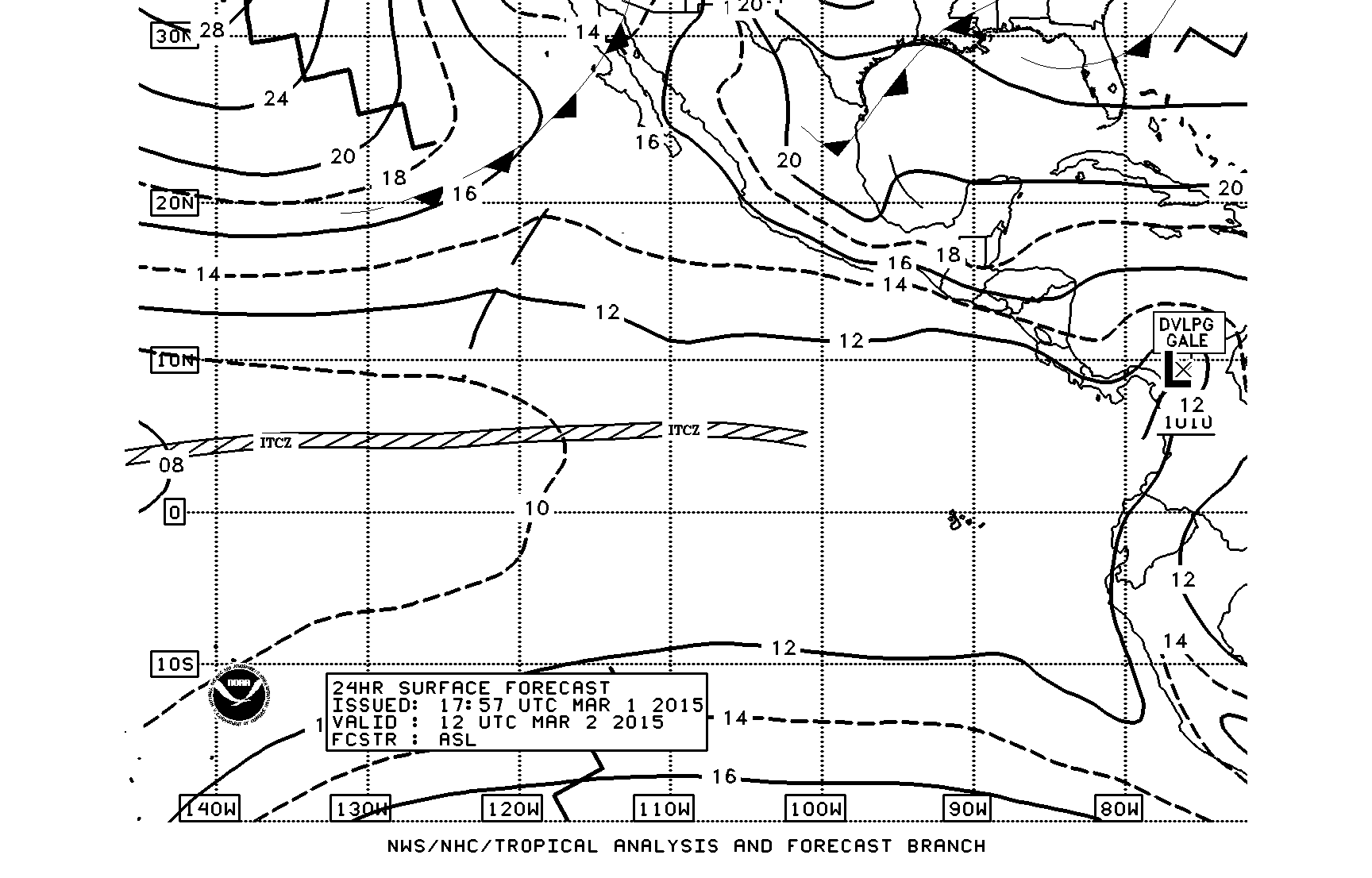
So we’re keeping a close eye on the weather trends. The images shown below are part of what we look at. These are NOAA charts for a region of the Eastern Pacific and can be downloaded from the internet when land based, or from single sideband when at sea. The top one shows barometric pressure lines and the ITCZ (inter-tropical convergence zone ie doldrums) for today, March 1, 2015. Puerto Vallarta is at 20.7N, 105.3W, and we want to cross the equator near the 125 degree longitude line. The diagram shows a large part of the pacific sitting at a pressure of 12 (1012 millibar), meaning there would be very light winds.
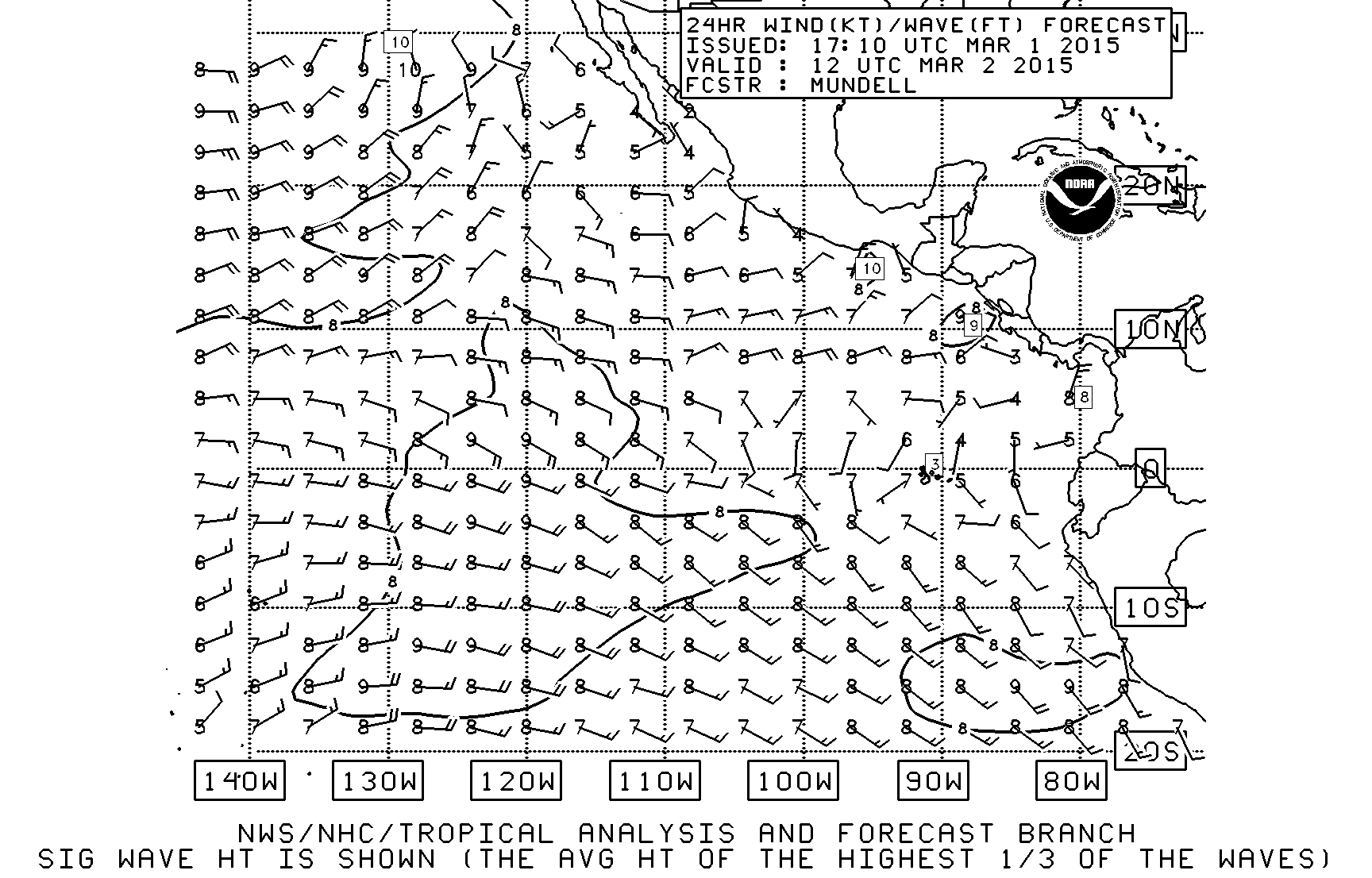
The next diagram shows wind and wave height for the same region. The wind barbs point in the direction of the wind, and show the wind strength (each full barb represents 10 knots of wind, and half barbs are 5 knots, so the one in the top left is 20 knots, and the 3rd one down is 25 knots). The numbers next to the wind barbs represent average wave height (mostly 7-8 feet in the diagram). If you compare the 2 diagrams, you will notice that the higher wind occurs near the higher pressure gradients–in the upper left.
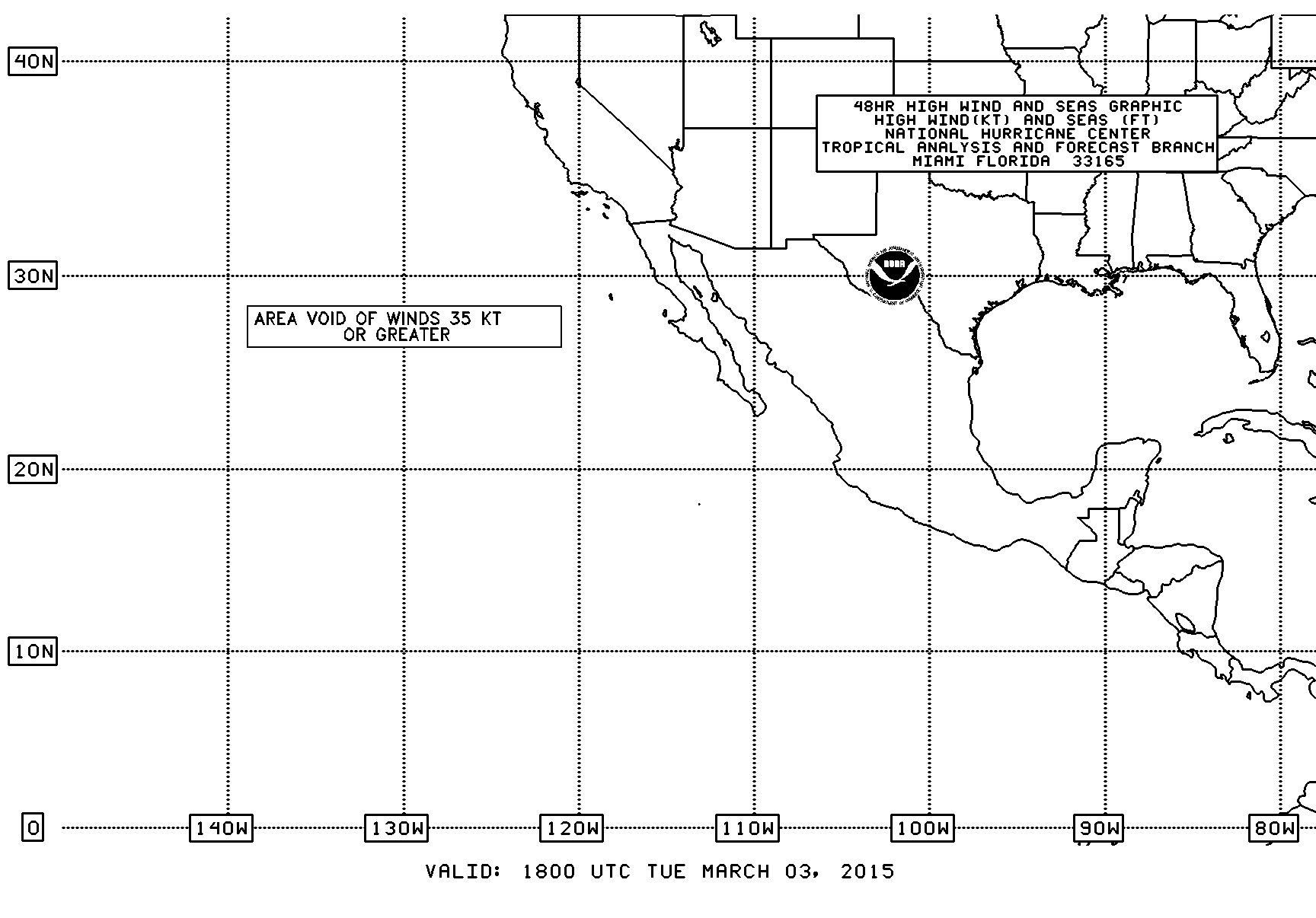
The diagram below indicates areas that are predicted to exceed 35 kt winds. It’s something we will look at every day during the crossing and we want it to look exactly like below–area void of high winds!
Carol and Lance are friends of ours from Victoria, BC and fellow Hans Christian boat owners. They have a 38′ MkII and are liveaboards, so they felt right at home staying aboard Apropos for a week at Paradise Village marina. What started out as a request for them to bring us a few boat parts turned into a suite case ++ full of boat parts, special food requests, and some mail. They even made a trip to Seattle and picked up a huge order I put in at Fisheries Supply. Being in Mexico for 4 months makes you appreciate the selection (and price) of boating supplies in the US. It will get even more difficult in the South Pacific, which is why I stocked up on more spare parts….. Karen and I sorta went crazy with our requests though–peanut butter, cans of ravioli (for Jacintha), Cheerios, Snoqualmie Falls pancake mix, sewing machine needles, brackets for the SUP, more iPhone cables, an electric pump, spreader light bulbs, caulking, zincs, filters, tools, and more.
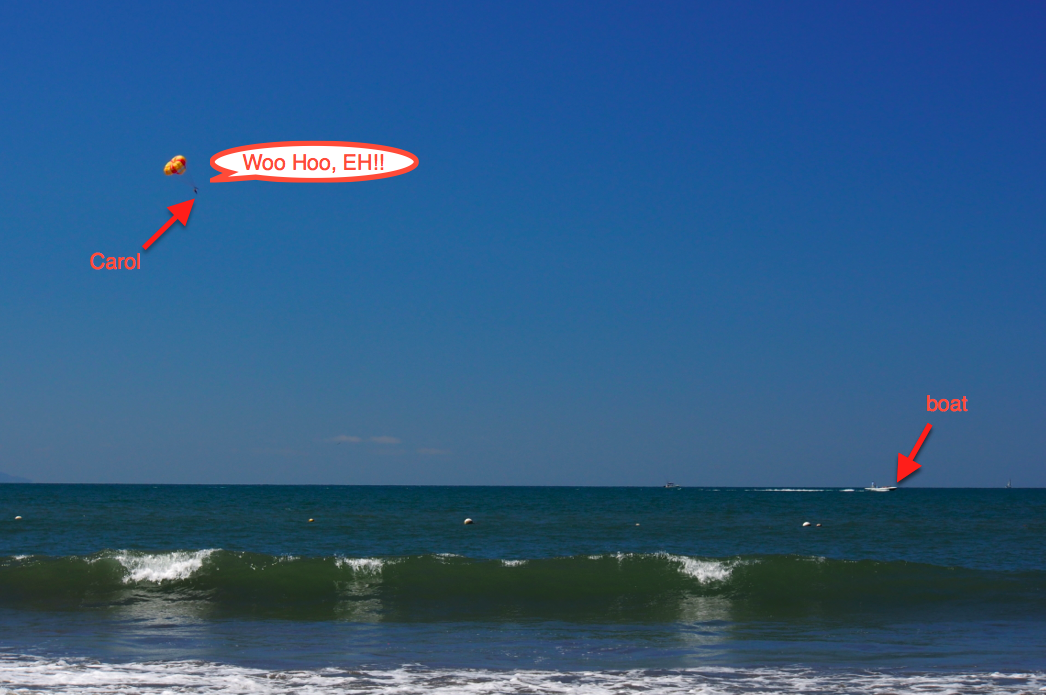
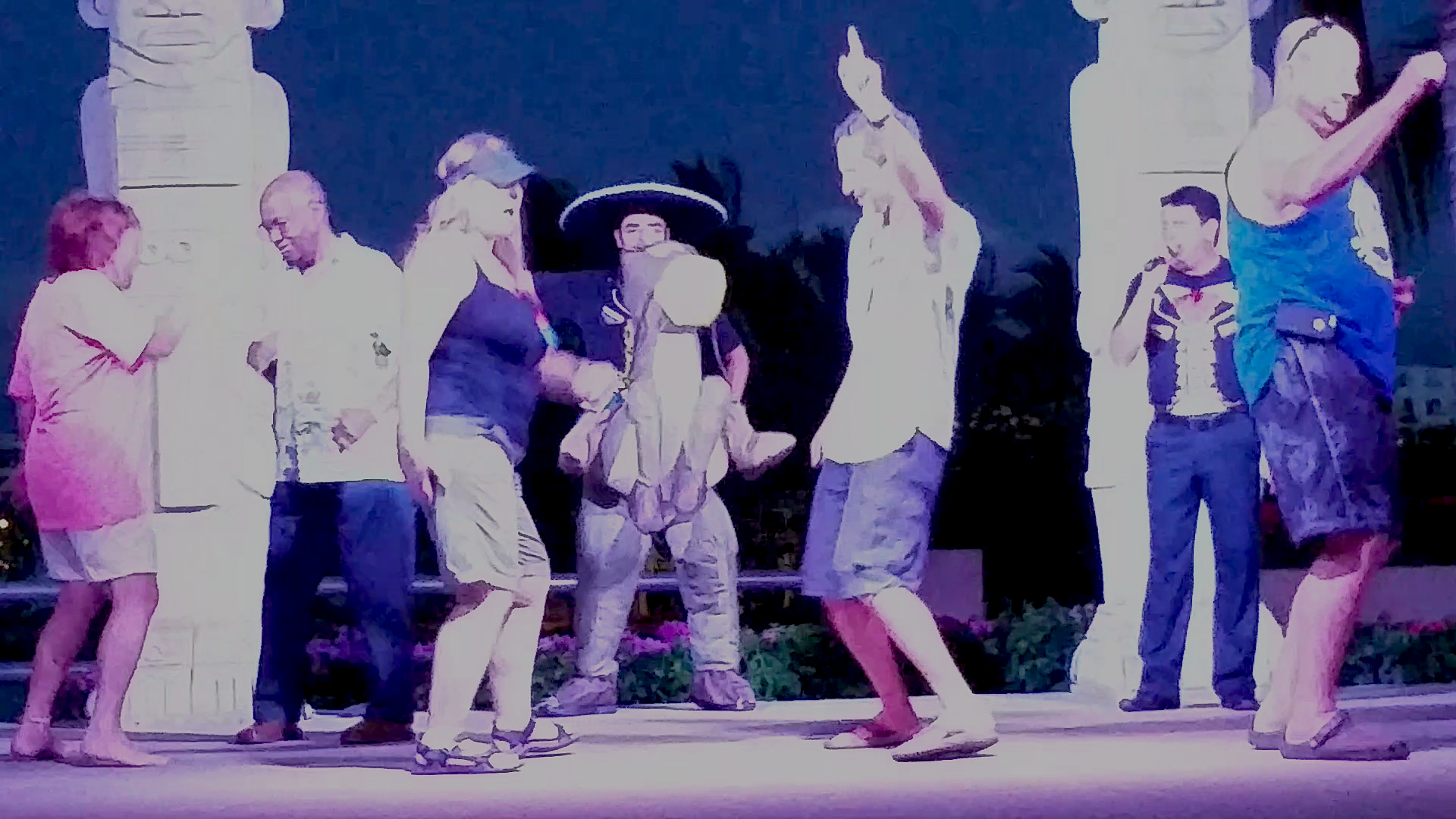
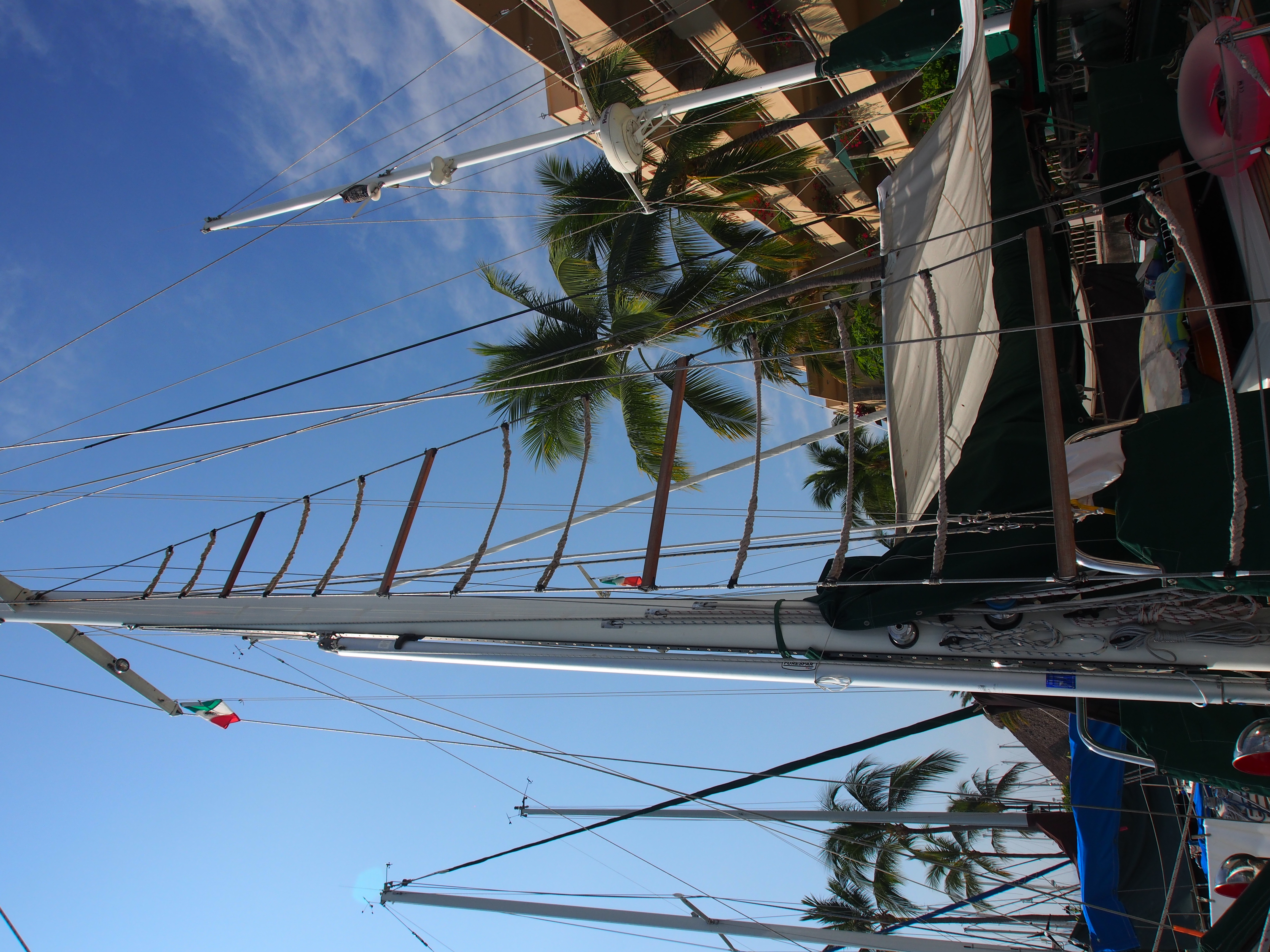
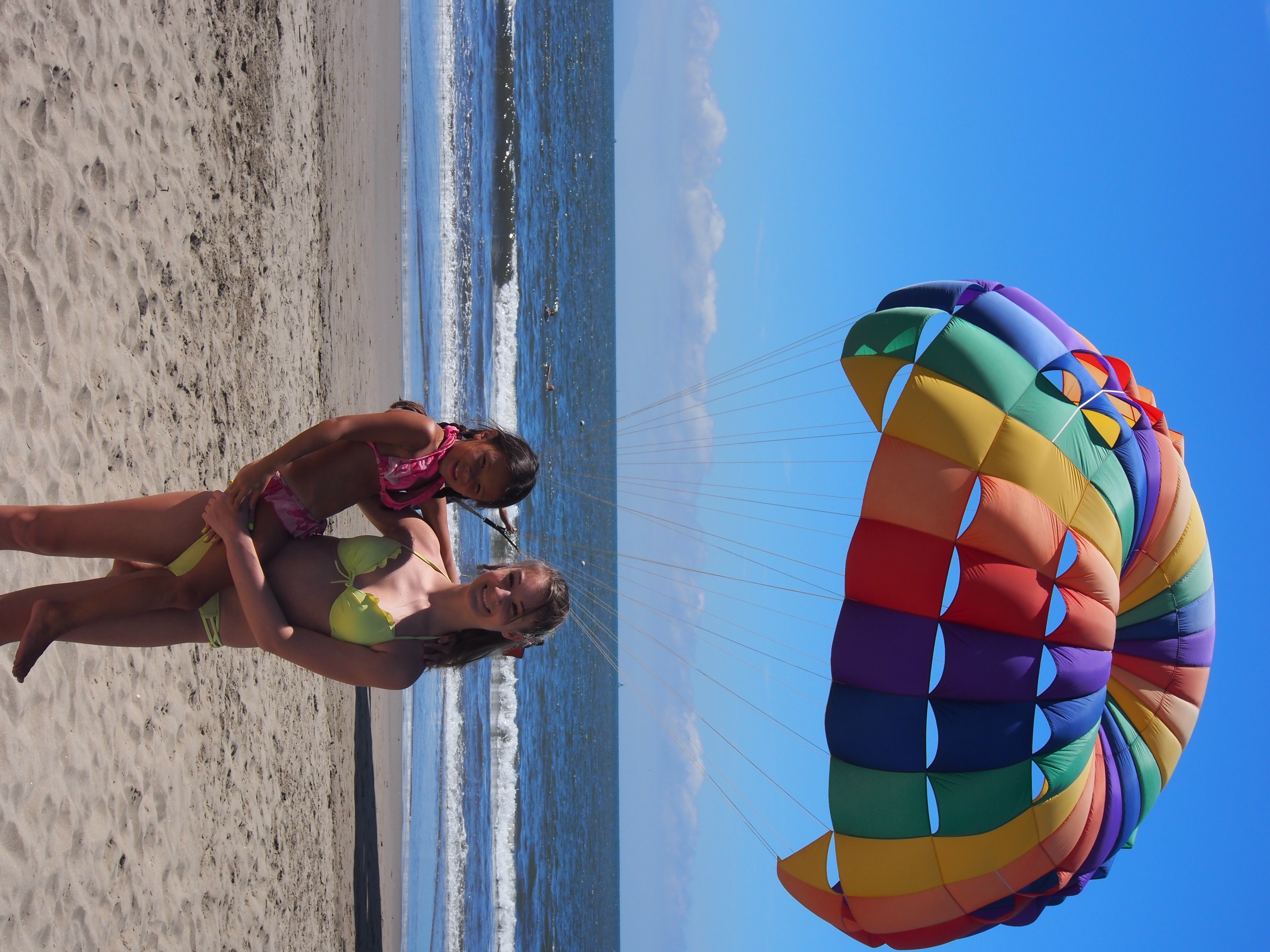
We spent the week enjoying the resort facilities–pools, yacht club & restaurants–and also accomplished a bunch of boat projects like finishing up some deck re-caulking, some work on Ian (Fleming wind vane), replacing spreader light bulbs, fixing a few leaks, canvas work, ratlines, etc. We attended a “Paradise Village Welcoming Party” that had free food, drinks, and entertainment–part of which Carol and I were participants. Carol volunteered herself and then me in some sort of dance contest where we made complete fools of ourselves dancing to 4 short songs of different genres (including disco and the song “What Does the Fox Say”)! But we were well rewarded with the winning prizes of Para-sailing (for Carol), a bottle of Tequila (for me), and a Mexican blanket (note–the audience was the judge and we had some friends in the audience)!!
During the week Karen, Jacintha, and I also went to the South Pacific Puddle Jump kickoff party that was held at the Puerto Vallarta yacht club. Andy from Latitude 38 Magazine (organizer of the Puddle Jump) presented a slide show and talked about what we can look forward to in French Polynesia. We also participated in some fun games with other fellow “jumpers” and Jacintha won a prize for getting up in front of everybody and telling a story–something about fishing in Australia. Each boat’s crew was interviewed for the Latitude 38 Magazine and a group photo was taken. It was a fun evening spent with around 40 other cruisers, most of whom we will meet up with in French Polynesia and beyond.
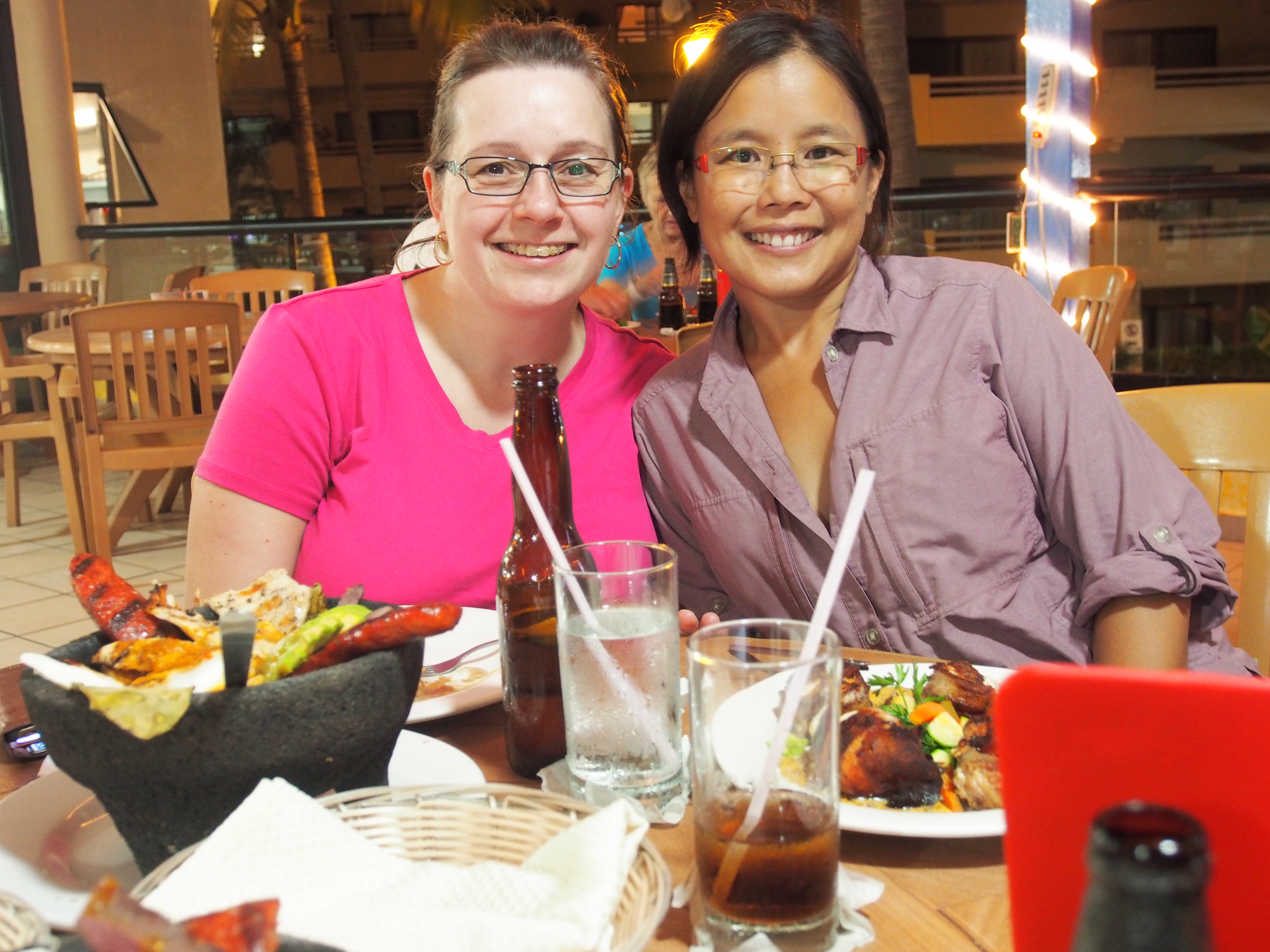
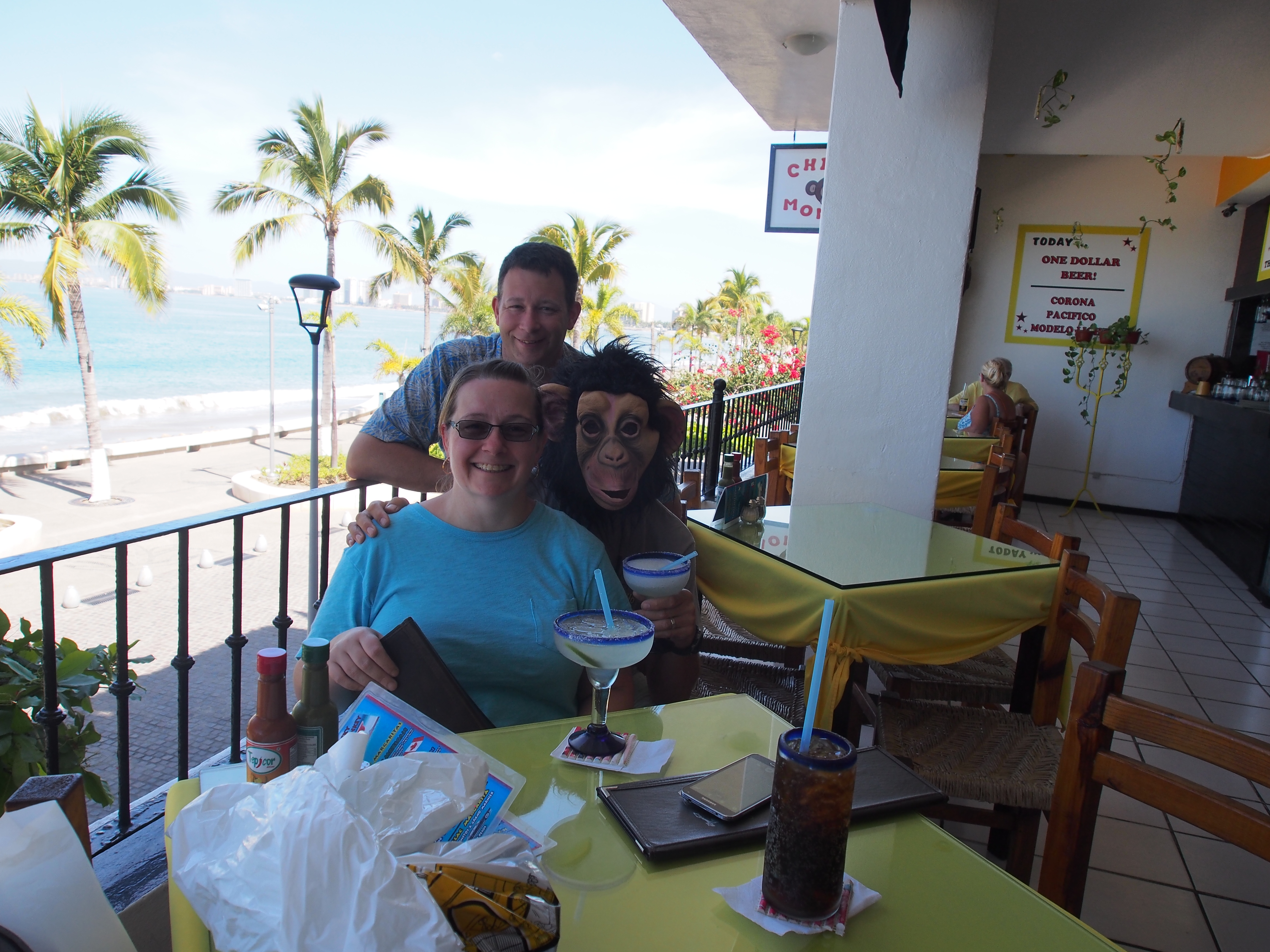
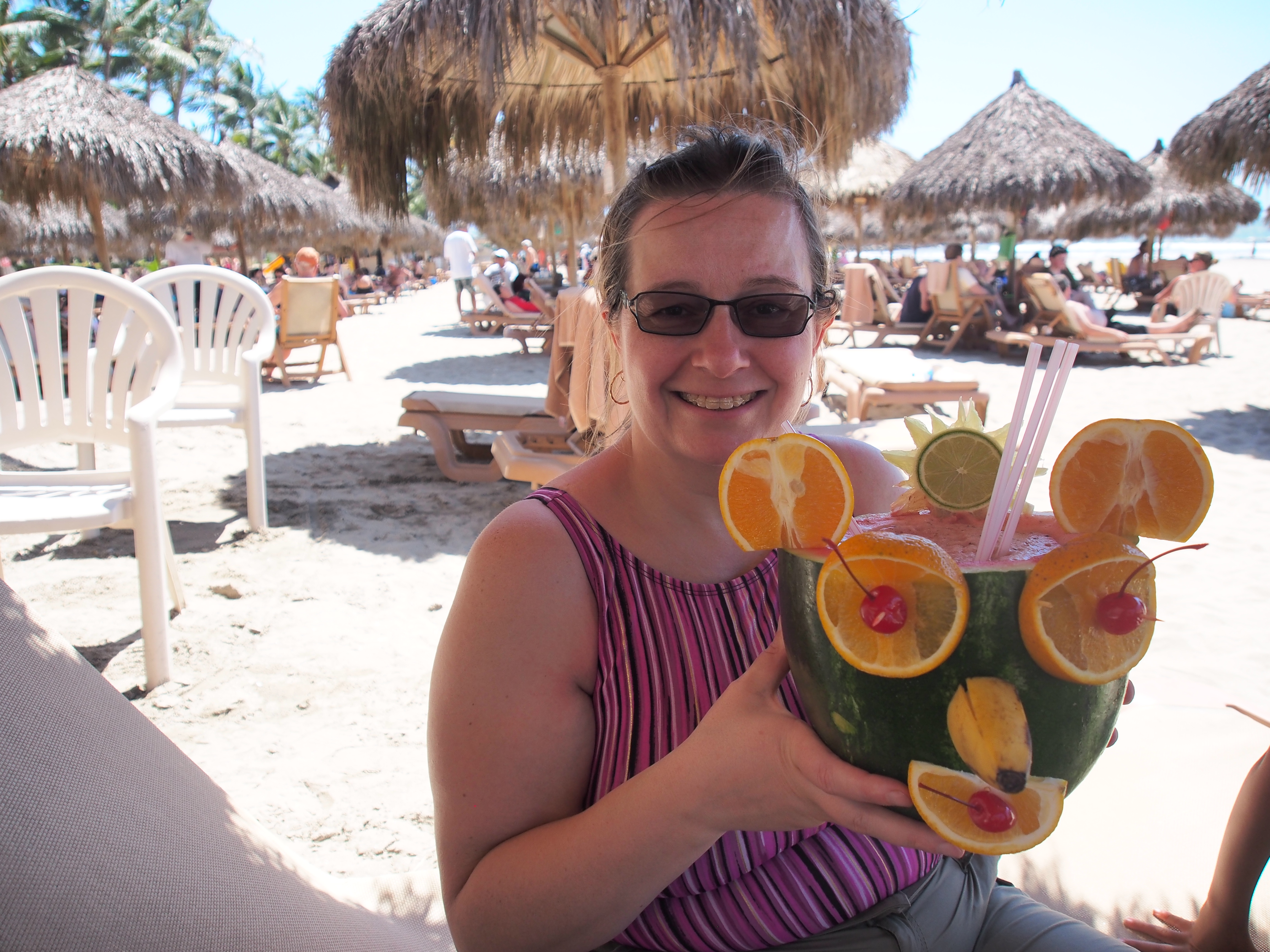
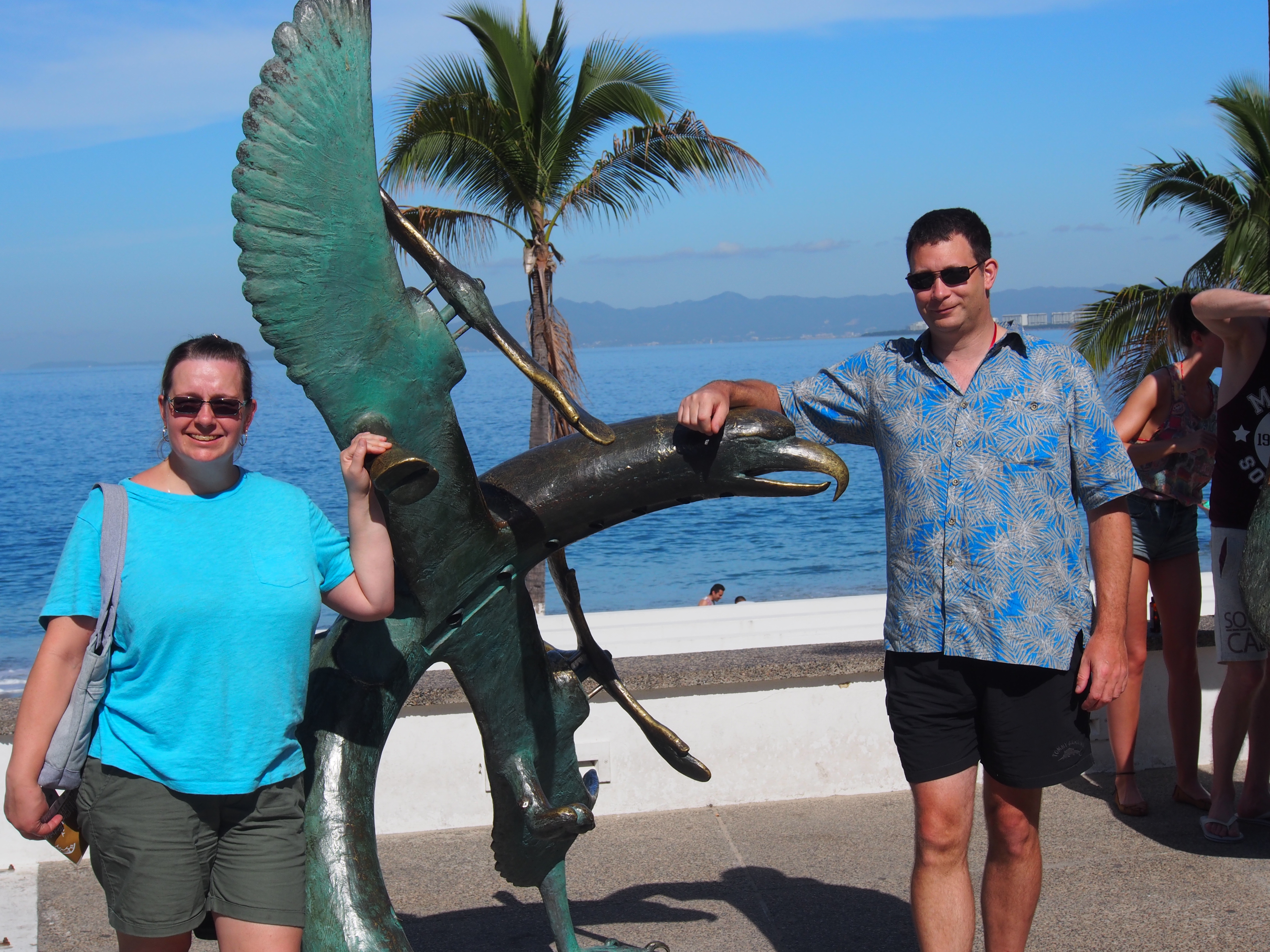
Carol Para-SailingKaren and Carol, dinner at the Vallarta Yacht ClubThe Winning Form at Dance Contest!Carol, Lance, and Jim at the Cheeky MonkeyWatermelon Paradise on the beachMalecon de Puerto VallartaShade Cloth for Sun Protection (we recently added the black cloth)Ratlines Completed (15 steps on port side)
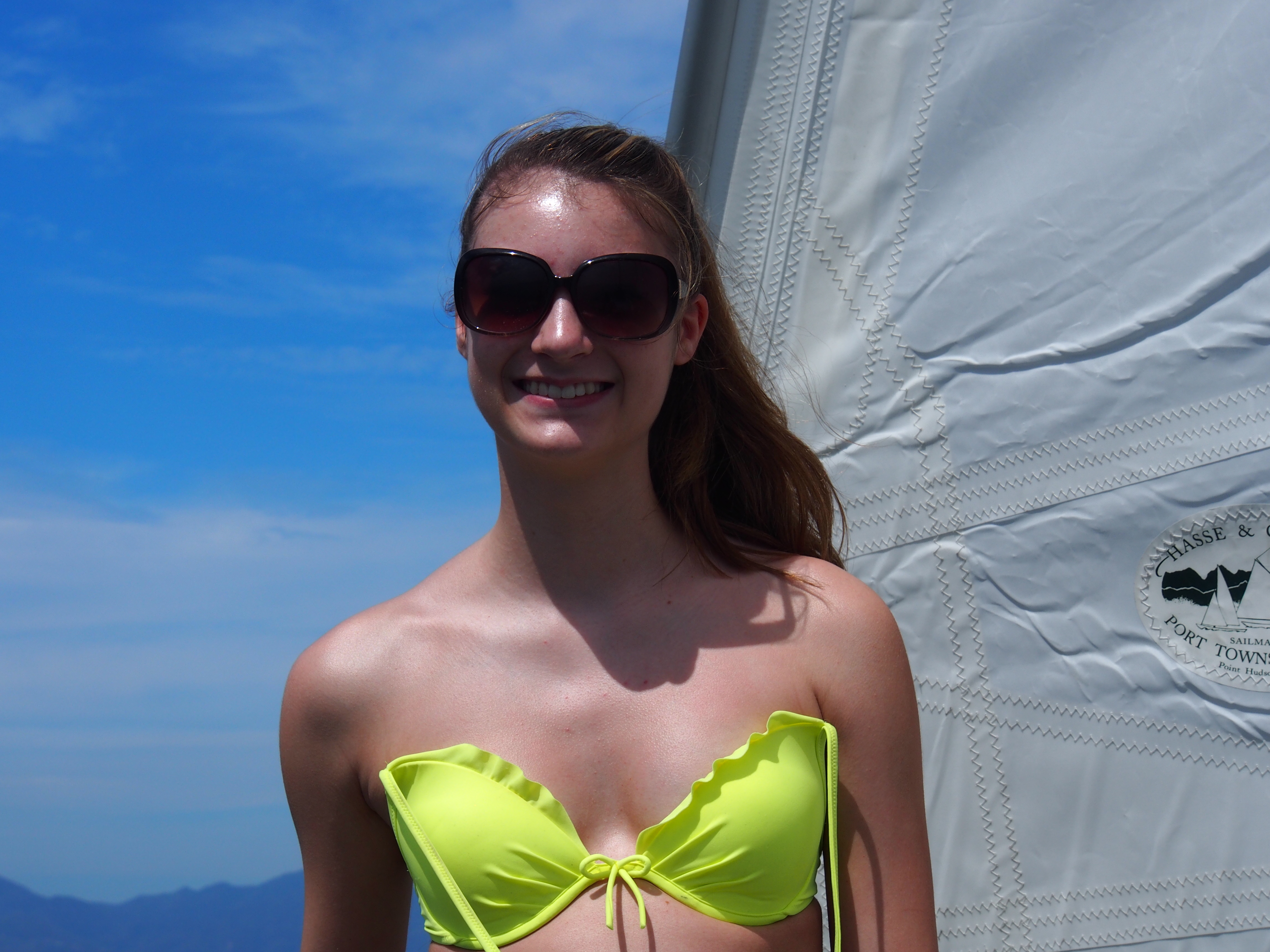
My 16 year-old daughter Amanda came for a visit during her mid-winter break from school, happy to leave the wet Pacific Northwest behind for a week. We hadn’t seen her for 6 months so it was great spending time with her.
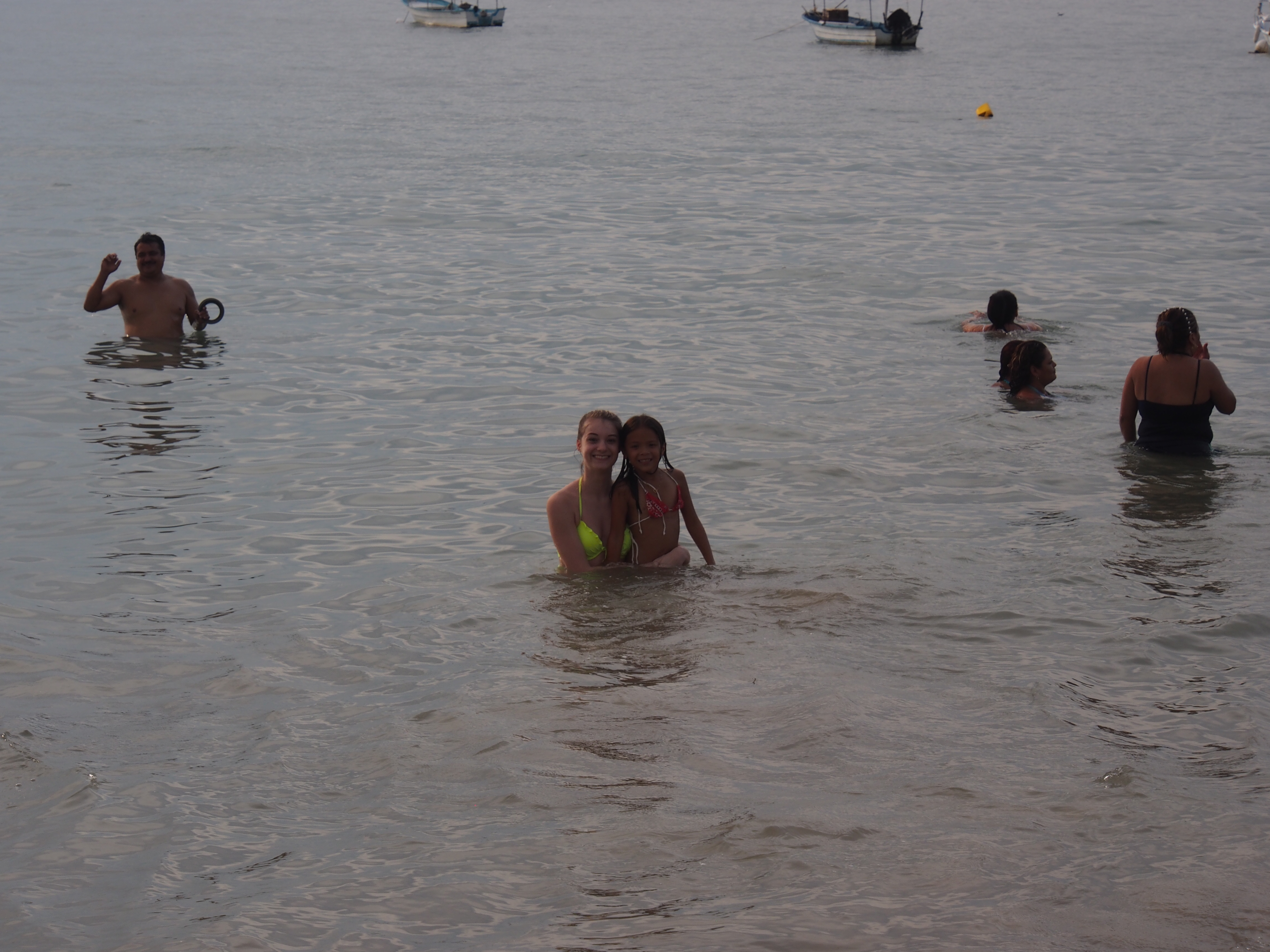
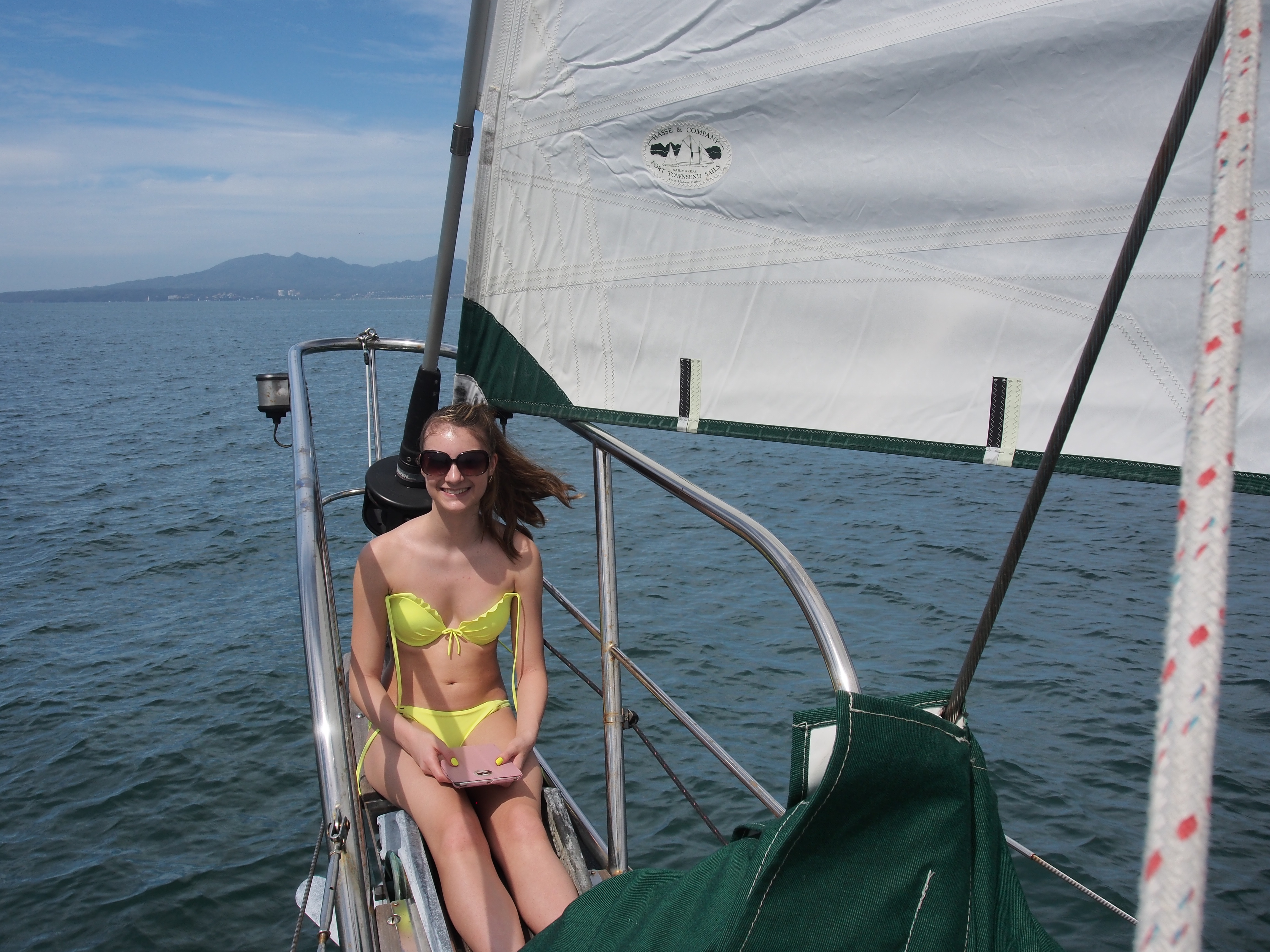
During her stay, we visited old town Puerto Vallarta, hung out in the pools at Paradise Village, tried boogie boarding and stand-up paddle boarding in the ocean surf, and did a bit of sailing. Jacintha really enjoyed having her big sister around. As connectivity via wifi is paramount to a 16 year old, we also hung out at Starbucks in Paradise Village ALOT!
Beach in front of Paradise VillageLos Muertos Beach in Puerto VallartaAmanda and Jacintha at Los Muertos BeachSailing north to Paradise Village near Puerto VallartaAmanda getting some sunJacintha Para-Sailing (not really)
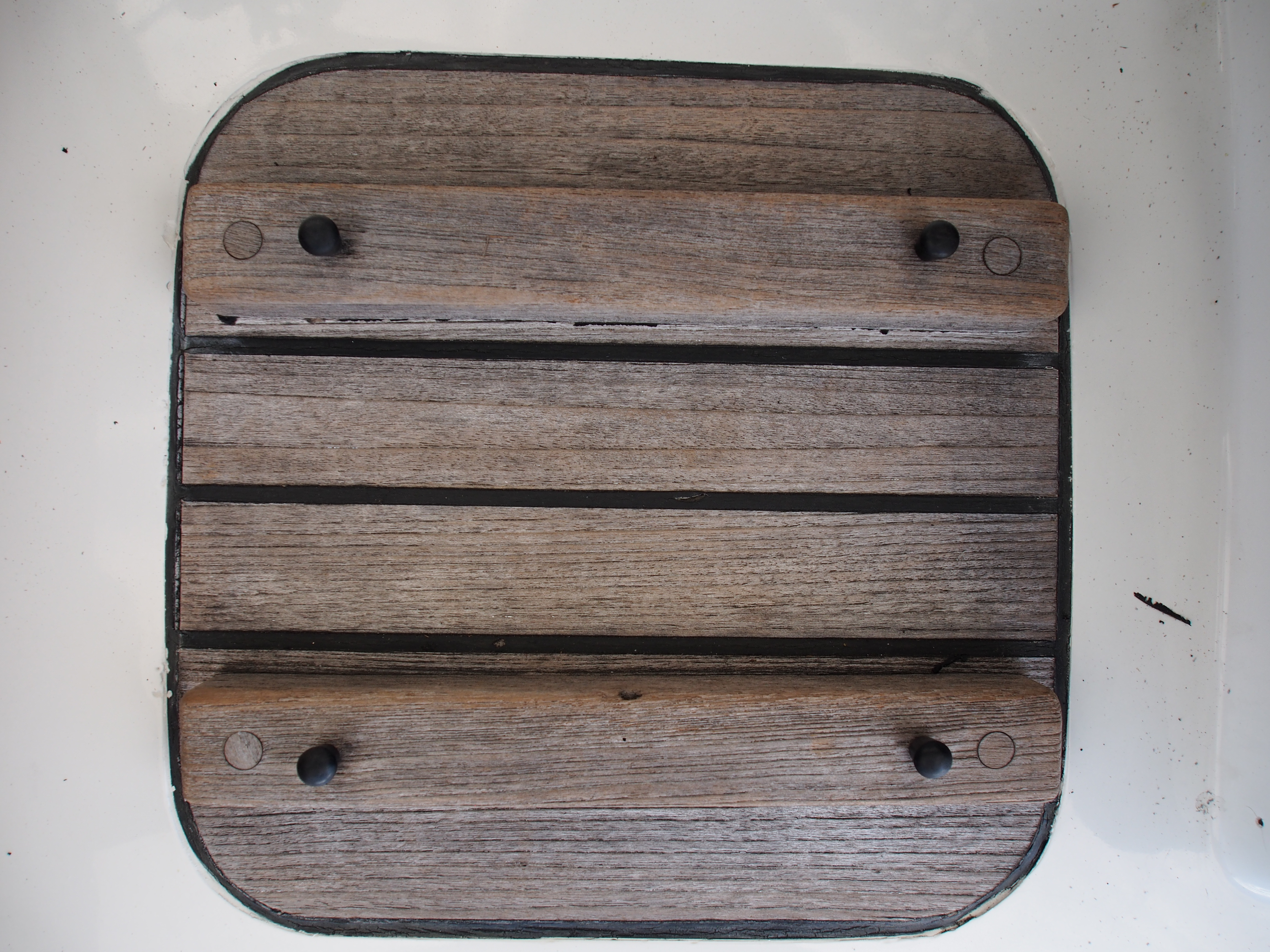
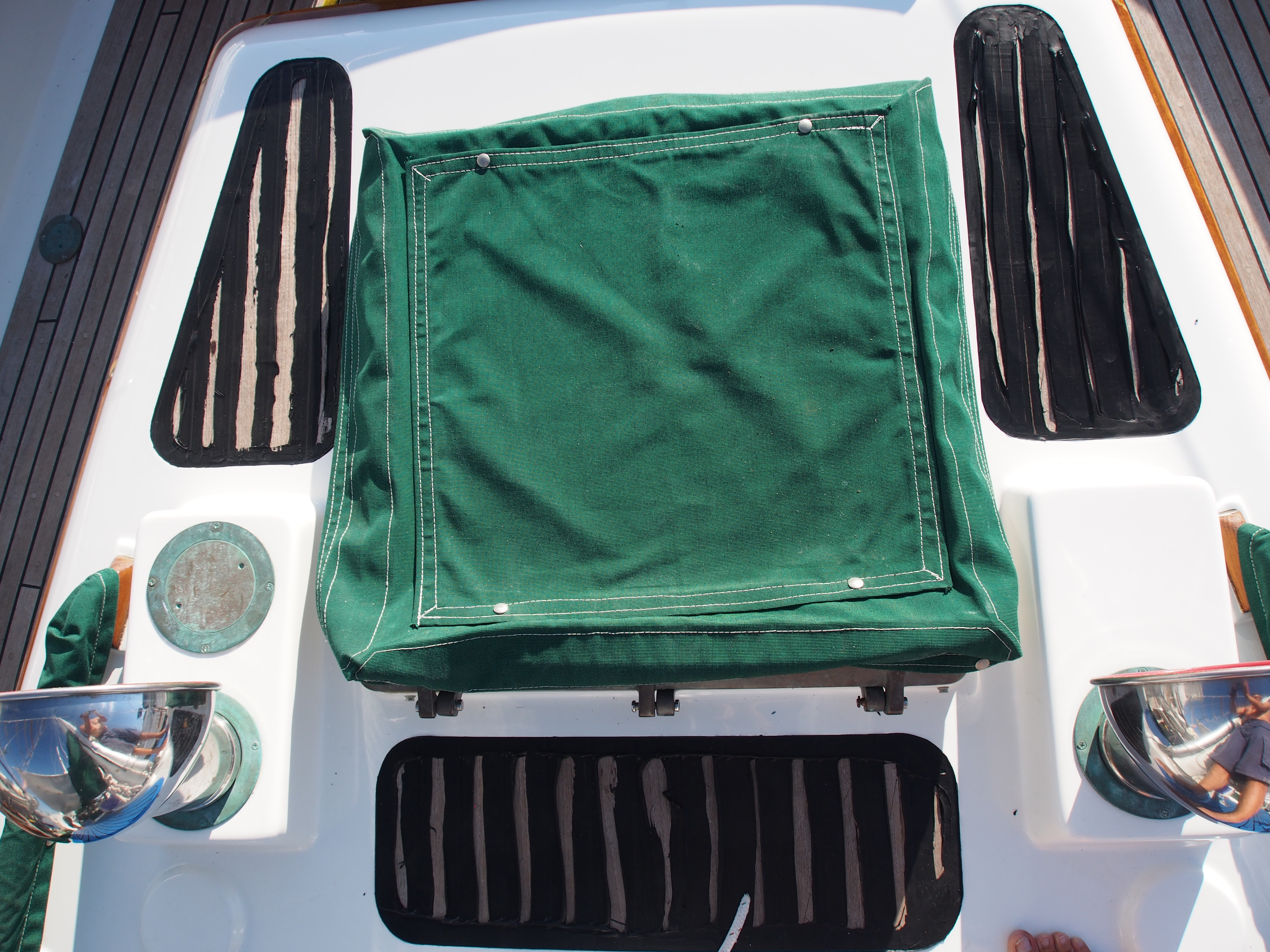
While at Marina Vallarta, we saw a lot of boat work being done to other boats on our dock, so I asked around and found someone who does teak deck work. Apropos has all-teak decks and most of it is in good shape for a 33 year-old boat. Built in Taiwan in 1982 when quality teak was in good supply and relatively inexpensive, the teak decks on Apropos still have plenty of thickness, thanks in part to not using a course bristle brush to scrub them. Much of the teak caulking had been re-done during the refit in 2004 and is still in good condition, but all the panels on the coach-top still had the original caulk and showed signs of cracking with age.
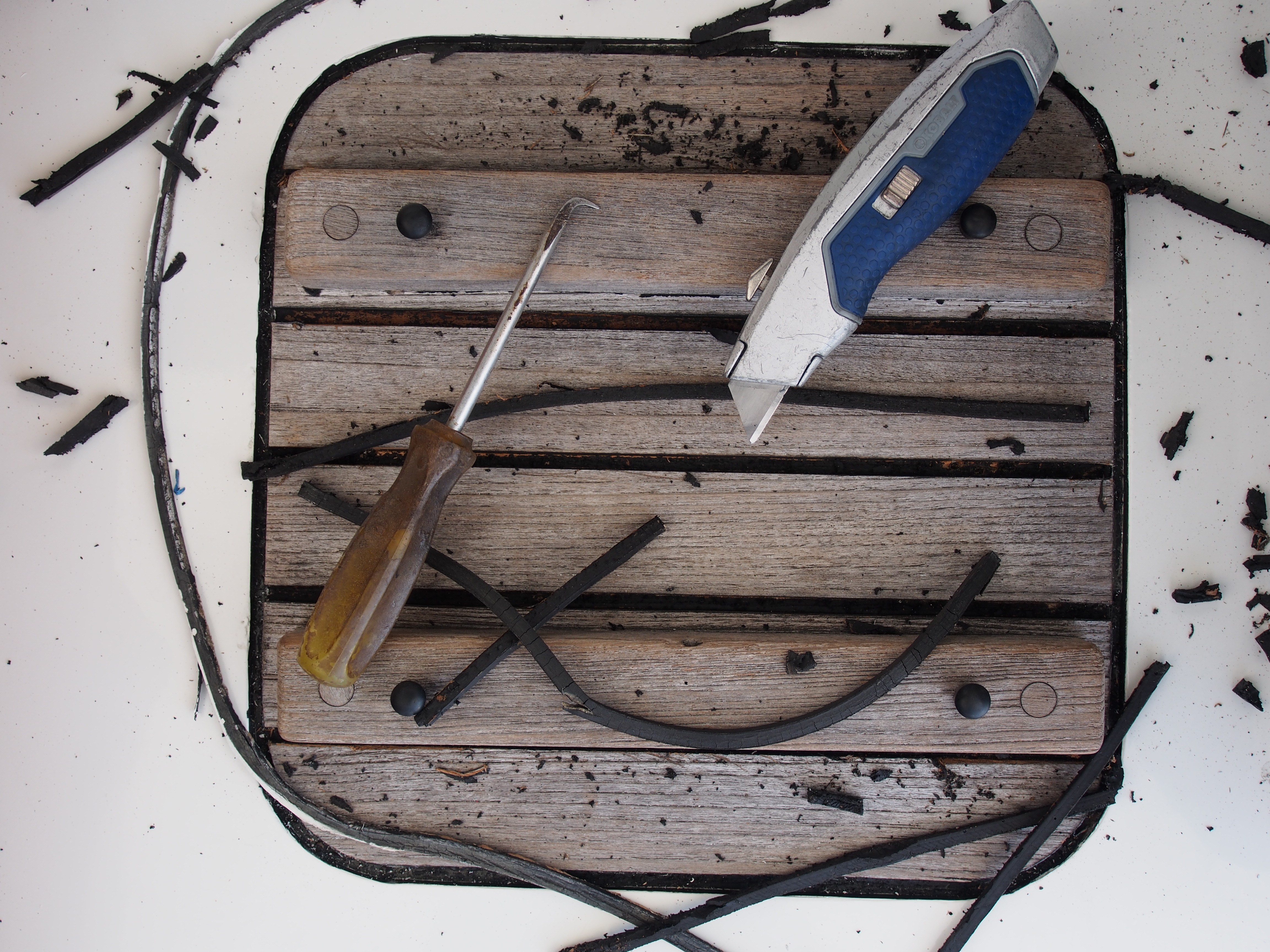
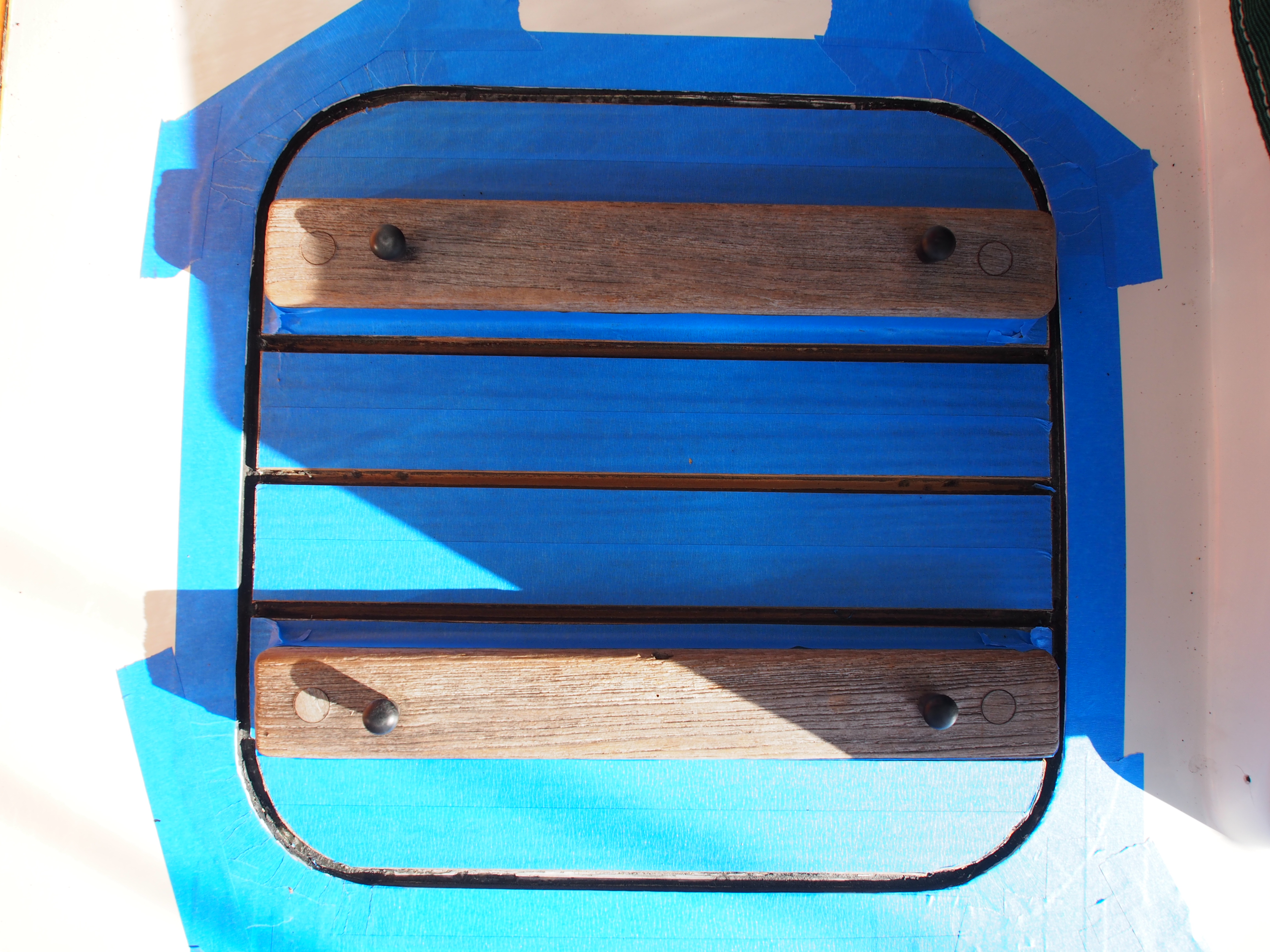
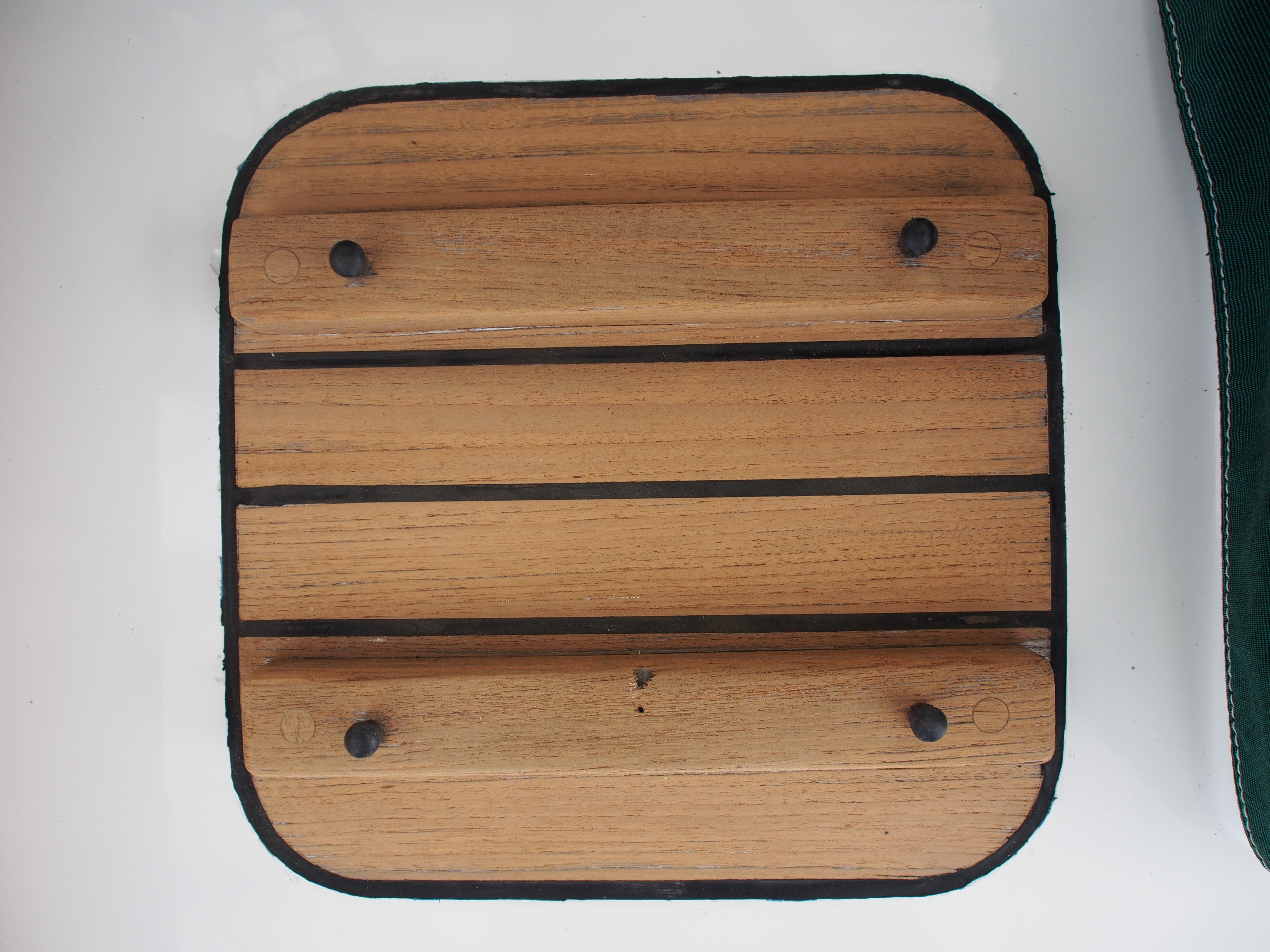
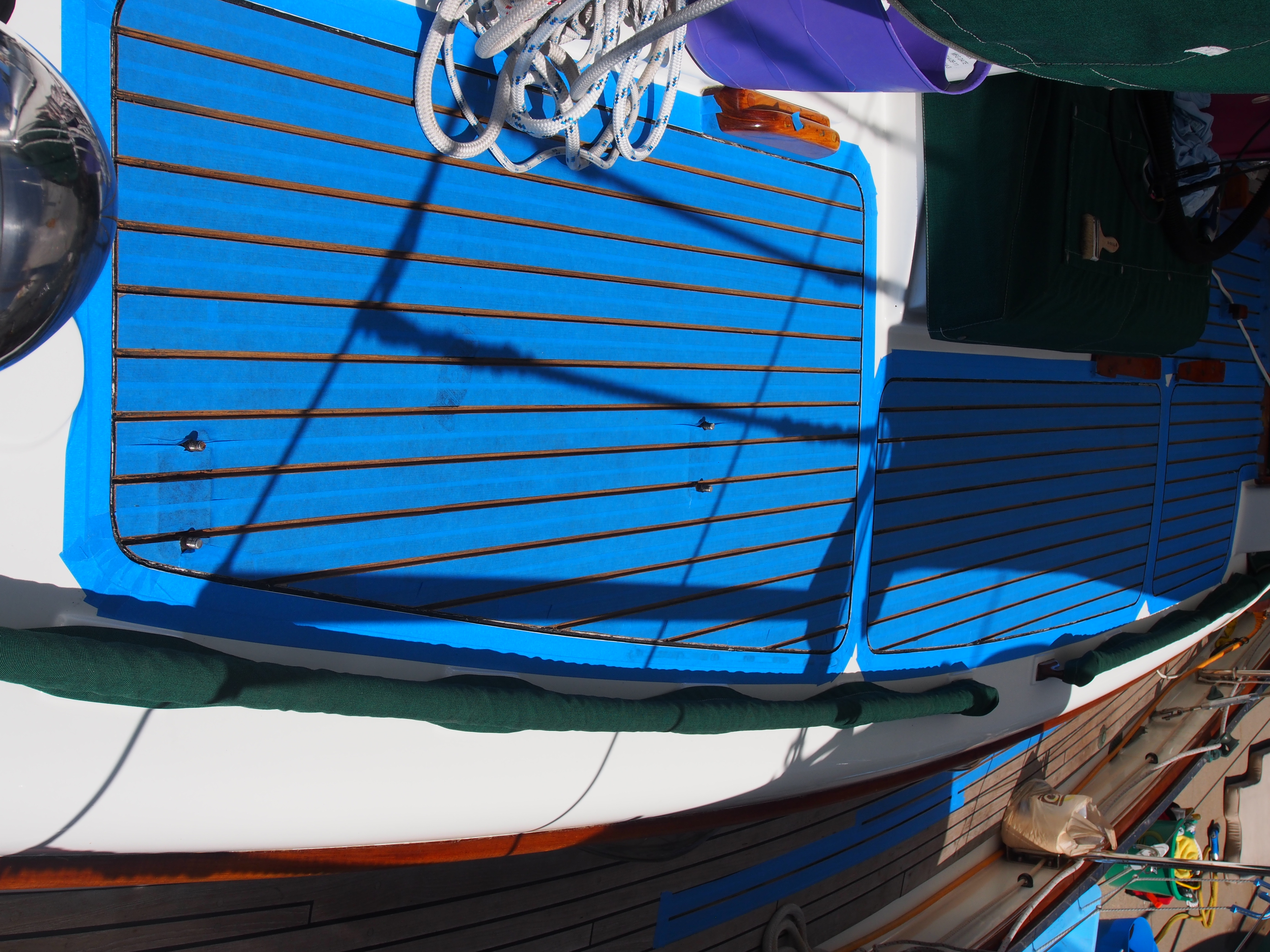
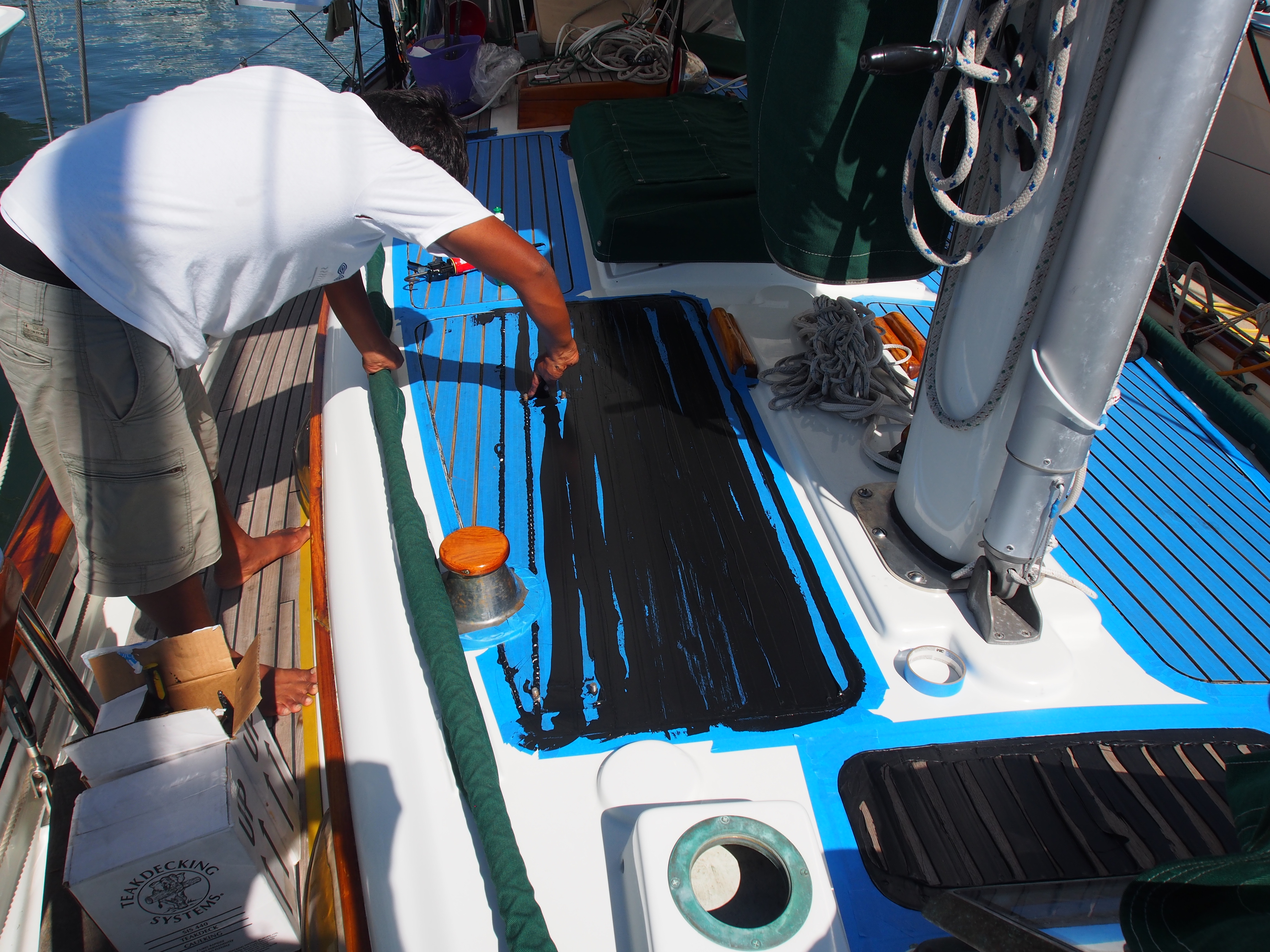
I hired Misha, who makes a living taking care of large yachts for their owners, to re-caulk all the deck panels on the coach-top. We agreed on an hourly rate (about 1/4th what it would cost back in Seattle) and he said he could start immediately. He didn’t mind if I helped and I soon became an apprentice working alongside him for 3-1/2 days. After removing deck hardware, deck boxes, the traveler, and anything else in the way, we began by removing the old caulk. This is very labor intensive and involves using a utility knife to score both sides of the channel of caulk along the teak. The channel is U-shaped and about 1/4″ deep, so a small amount of pressure is applied. The caulking can then be removed using a handmade tool to help pull out the caulk. Long strips can be removed by gently pulling on the caulk while using the tool to scape along the bottom of the channel. The tool, similar to a reefing hook, was made from a flat screwdriver that was heated, bent, then shaped to a tapered point. I ended up doing the majority of the caulk removal job while Misha followed with hand-sanding the channel to remove any leftover caulk for better adhesion of the new caulk, and masking the seams with blue 3M tape. As I got more efficient, I would have another panel ready by the time Misha finished masking a panel http://blogs.asburyseminary.edu/blog/cialis-online.html.
There are 2 methods for re-caulking. One is to mask only around the outside edge of the panel (where the fiberglass gel coat is), then apply the caulking (Teak Decking System SIS 440) to the channel and smooth it out with a putty knife. After the caulking dries and cures in 48 hours, some of the excess caulking is cut away with a razor knife and then the entire panel is sanded until only the caulk in the channel remains. The disadvantage of this method is that some of the teak gets sanded away. The advantage is, as long as the teak is thick enough, it removes the ridges in old teak and leaves it nice and flat. I decided to test this method on 3 of the small panels towards the bow.
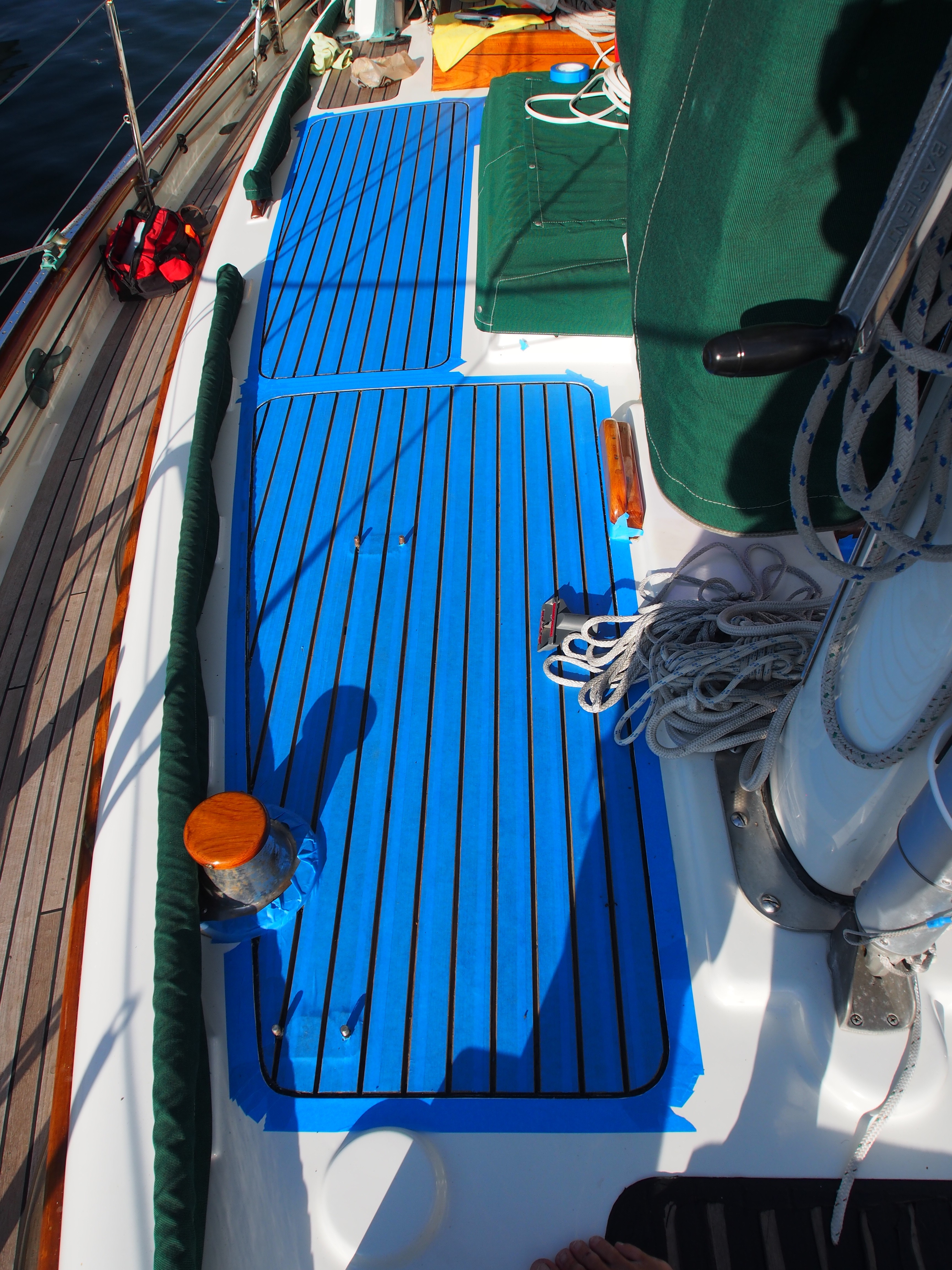
The second method is what we ended up using on the majority of the teak panels. It involves masking every seam so that only the channel is exposed, then applying the caulking and smoothing it with a putty knife. After the caulking cures, the tape is carefully removed and the panel is sanded. I did the masking of a few of the panels and realized how painstakingly a job it was, especially going around curves! The extra time spent masking the teak in this method is about equal to the amount of time spent removing all the excess caulking in the other method. But in the end, I believe masking every seam is the better approach http://enligneviagr...
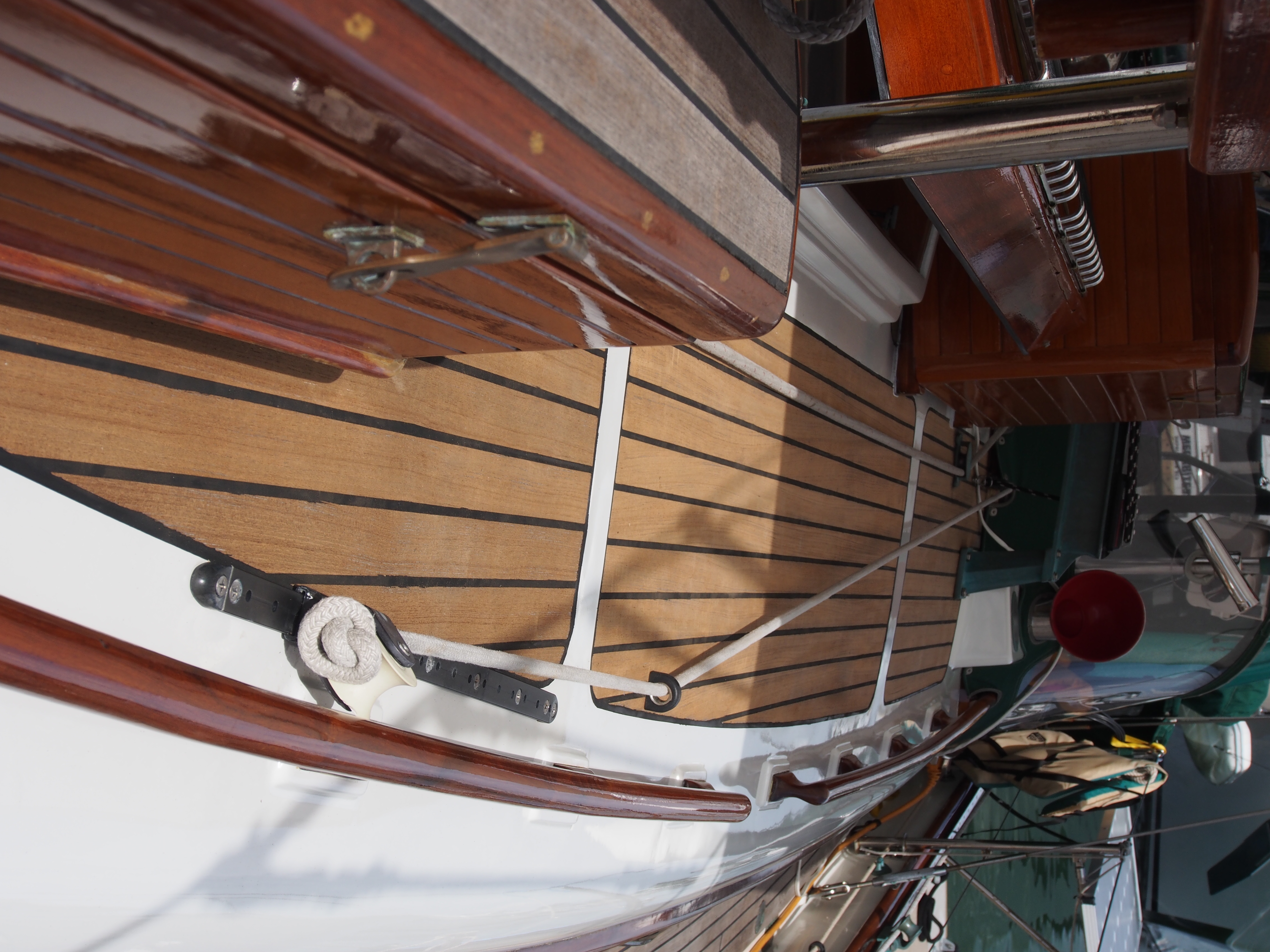
After 3-1/2 days of hard labor and 22 tubes of caulk, the job was completed. The coach-top panels are much smoother and the caulking came out great. The final step was to re-bed all the hardware, deck boxes, and traveler back in place.
Deck panel with old worn/cracked caulkingStep 1: remove old caulking with knife and home-made tool (bent hook made from a screwdriver)Step 2: clean channels by sanding, then mask the teak around channels where the new caulk goesAfter re-caulking and sandingAlternate Method Step 2: apply caulk without masking the teakStarboard-Side MaskingPort-SideMisha applying SIS 440 CaulkingStarboard side deck re-caulking finished
It’s been awhile since our last blog update, but we’ve been keeping busy in Puerto Vallarta for the past 2 weeks.
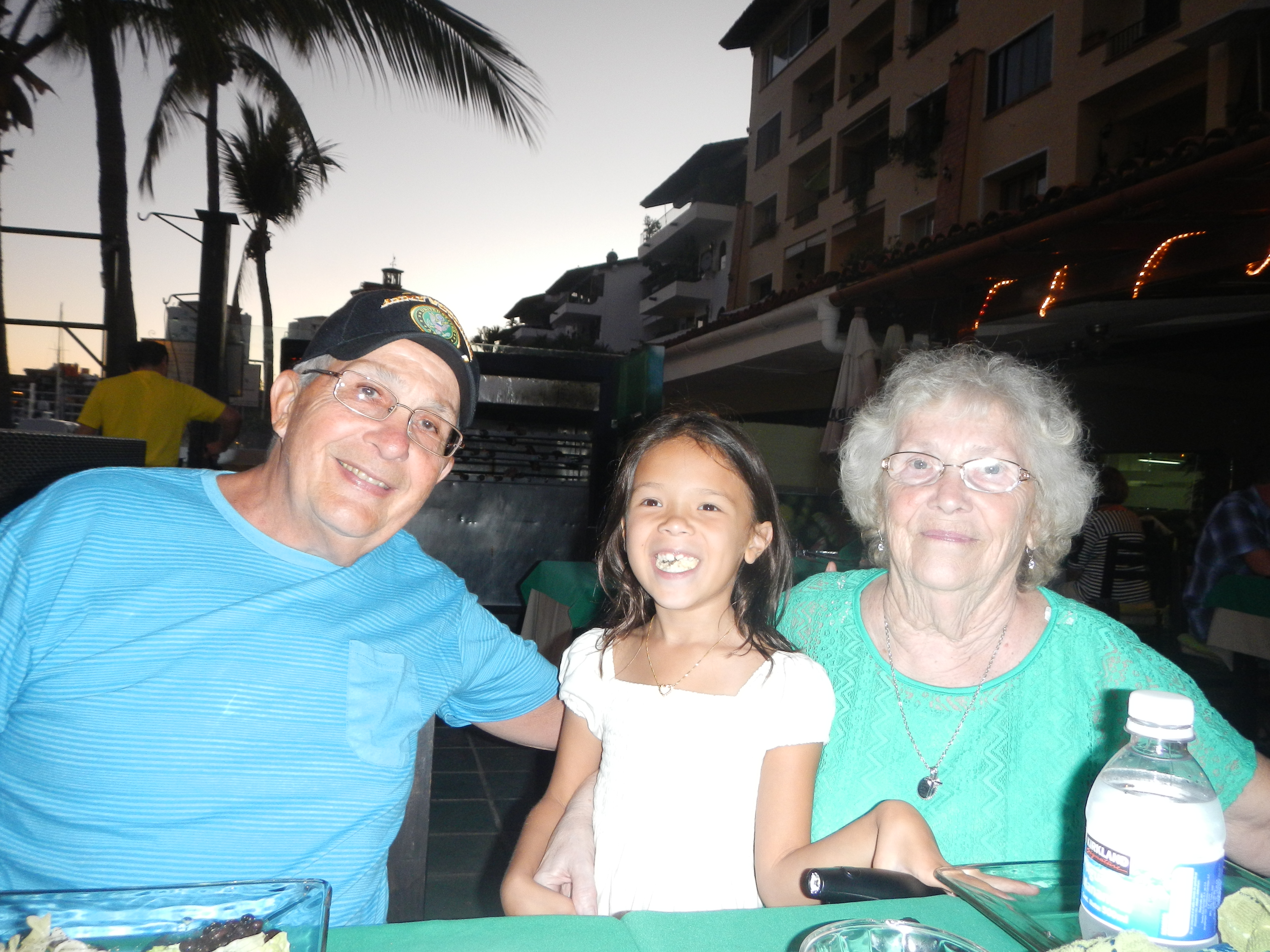
My parents flew in for a 5-day visit, staying at the Westin resort which was a 15 minute walk from where we kept the boat at Marina Vallarta. We spent most days relaxing at the Westin pool and most evenings at different restaurants along the marina. It was their first visit to Mexico, but they didn’t really come to see the sights, just to relax and spend time with us before we leave for the South Pacific why not try this out. Besides a bag full of boat parts, they brought with them some things from Pennsylvania–deer bologna/pepperoni thanks to my sister & brother-in-law, and my dad’s home-made sauer kraut.
We also completed some boat tasks during the past 2 weeks. The biggest project was having the teak decks on the coach-top re-caulked (more details will be provided in a separate post). I also did some work on the windvane and Karen finished some sewing projects.
Dinner at Marina VallartaCoffee at StarbucksDrinks and Dinner at Mama Rita’s
We departed Ixtapa for the 240 mile trip back to Banderas Bay, making stops at some of our favorite places as well as some new ones.
Manzanillo
After a very long 36 hour motor-sail up the coast to Manzanillo, we anchored in the bay next to the Las Hadas resort, where we relaxed around the pool for 2 more days. This was our favorite stop on our southbound run between Banderas Bay and Zihuatanejo so we were looking forward to spending a few more days there. The beach and resort were set locations for the movie “10” with Bo Derek and Dudley Moore.
Melaque and Barra de Navidad
Since we bypassed this bay on the way down to Zihuataneo, we decided to stop for a few days. The two small towns are at opposite ends of a large bay surrounded by sandy beaches and palapas. An added bonus was that SV Family Circus and SV Pelagic were both going to be there. After dropping the hook, we immediately took the dinghy ashore and met them at a beach-side palapa for drinks. Some highlights of our 3-day stay included a potluck aboard Family Circus, a visit to the French Bakery in Barra, a sleepover for Jacintha aboard Family Circus, roasting and drinking coffee aboard Pelagic, and exploring the small, quaint towns that seem to be like what small US towns were like in the 1970’s. Jacintha was sad to say goodbye to Amaia and Alina but we hope to meet up with them again in the South Pacific.
The next morning SV Ohana pulled into Melaque bay and we met them for a late lunch and a walk through town. Jacintha had a fabulous playdate with Hannah making music videos on the ipad whilst we had drinks and nibblys with Jake and Danielle.
La Manzanilla
Manzanilla (not to be confused with Manzanillo, which is further south), is in the same bay as Tenacatita. It’s at the south-eastern part of the bay and therefore doesn’t offer good protection from the typical winter north-westerlies. Since the wind was coming from the south, plus SV Seahorse V and SV Velvet Sky—both kid boats—were there, so that’s where we ended up! We had a fantastic potluck aboard Seahorse V and Jacintha got to play with Billy, Gracie, and Bucket. Captain Steve had just caught a Dorado that was great tasting along with a bacon-potato dish, fresh guacamole, red wine, and a chocolate cake.
As we are getting closer to our departure date for the South Pacific, we are having to say goodbye to boat friends we have made who are headed in a different direction. This is the case for Seahorse V, Velvet Sky, Ohana, and Pelagic, who are all headed south to Central America and beyond, or for some, spending another season in Mexico. It’s been especially hard for Jacintha to say goodbye to the friends she has made.
Chamela
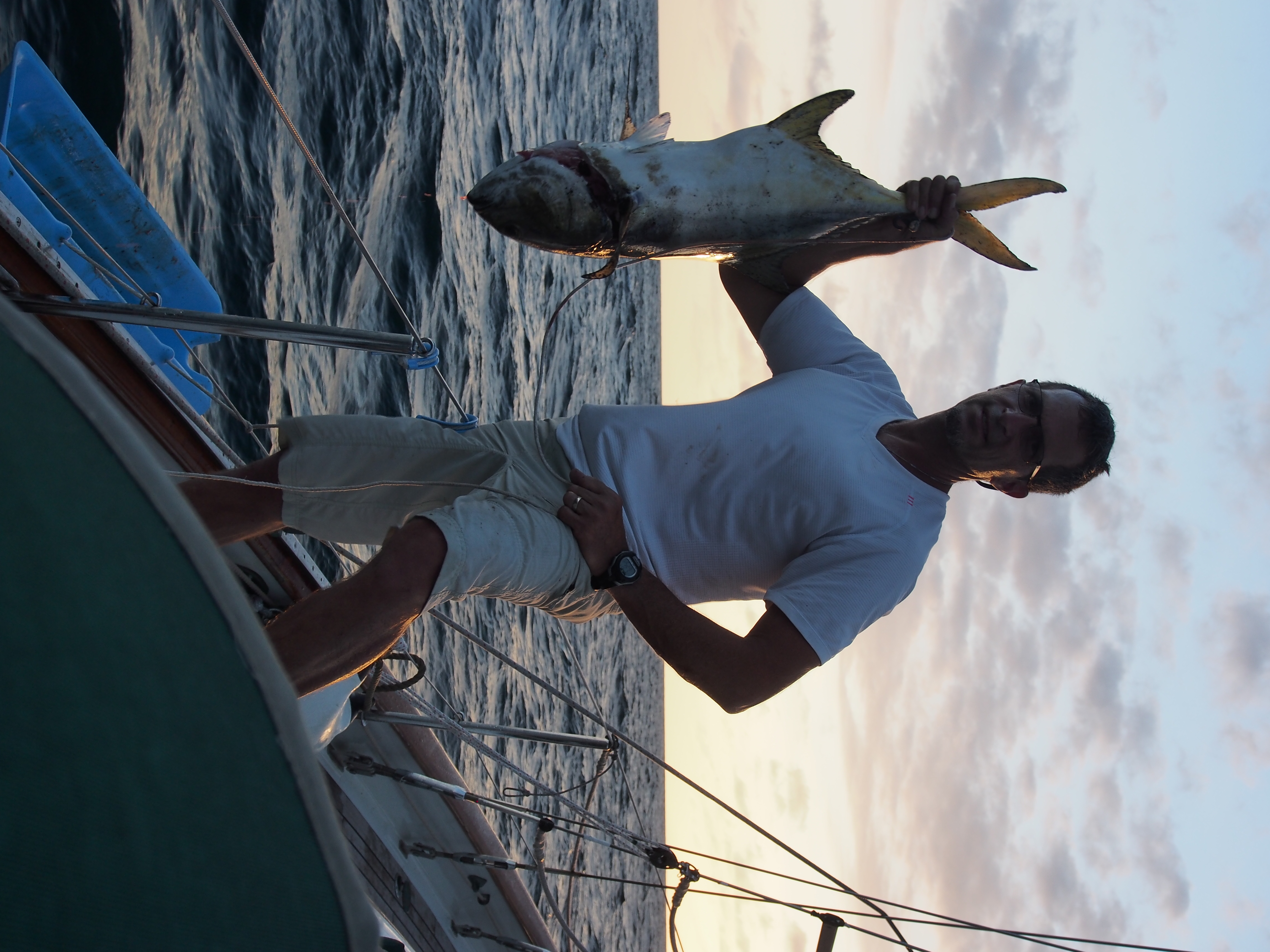
We had a nice 30 mile sail from Manzanilla to Chamela. A southern 15 knot wind kept us moving at 7 knots the entire way. We brought in a small Skipjack Tuna just outside Manzanilla and a nice Yellowfin Tuna at dusk just before arriving into Chamela so it was an interesting night time anchoring session. Good thing the bay was very wide.
Chamela is a small village with a few tiendas and palapas. The main street is paved but the side-streets are all dirt. The bay is big and offers protection from north-westerlies. When we arrived just near dusk, there was only 1 other boat anchored there. By the following evening there were 10. Chamela is 100 miles south of Puerto Vallarta and is a popular stop because it’s the first good anchorage for boats heading south or the last one for boats headed north. During our 2 days there we rowed the dinghy ashore, played on the beach, and bought some fresh produce at a tienda. Karen and Jacintha swam back to the boat as I rowed the dinghy.
Yelapa
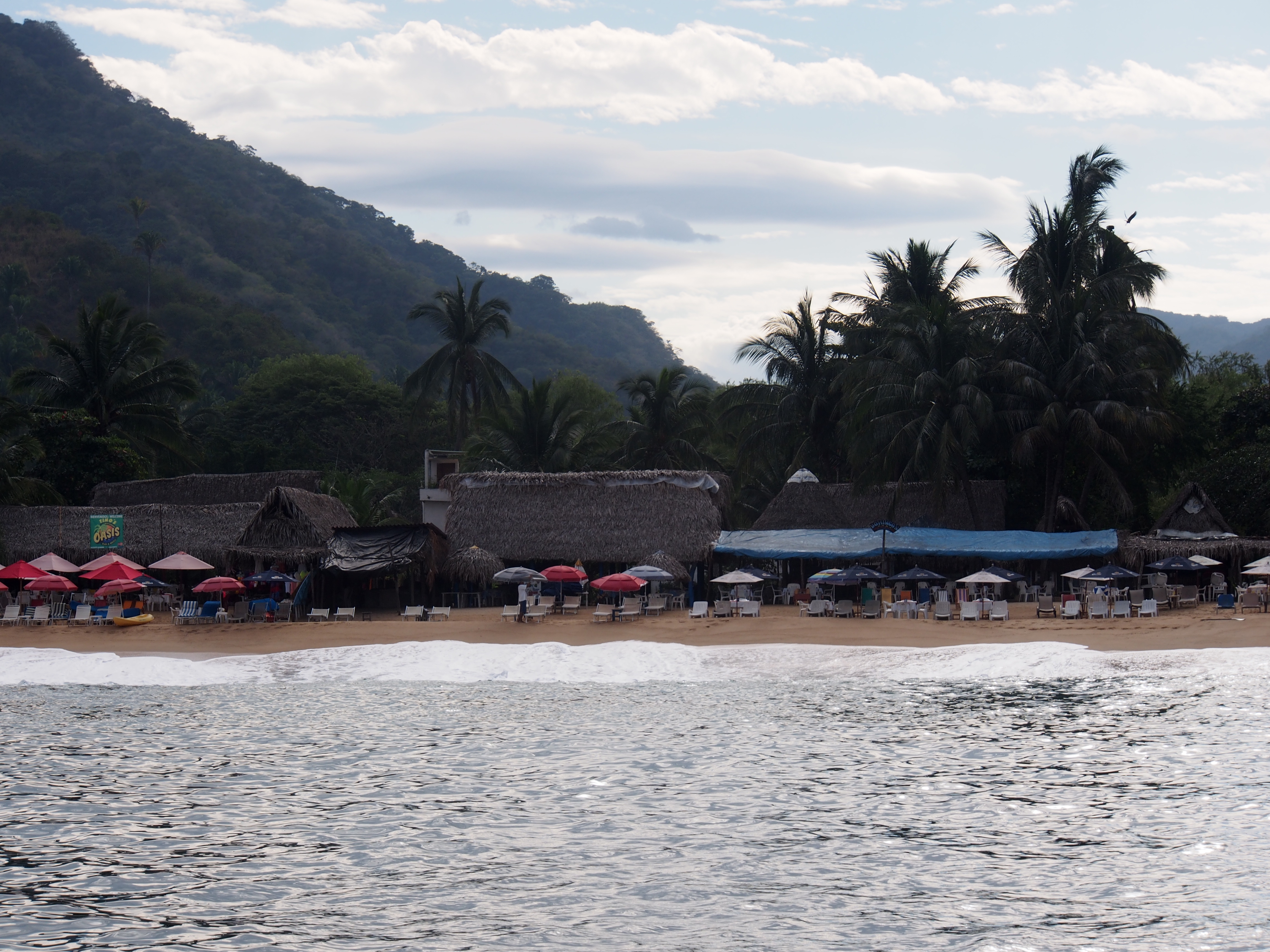
An overnight passage of 90 miles brought us to Yelapa, a funky little village in Banderas Bay about 15 miles southwest of Puerto Vallarta. We decided to stop there for a day before heading to the La Cruz anchorage. It’s surrounded by rugged mountains and has no road access, so people arrive either by boat or horseback. Electricity was brought to Yelapa just 14 years ago. We tied up to a mooring buoy and took a panga to shore where we ate at one of the beach restaurants and bought slices of coconut and lemon meringue pie from the pie lady who walked the beach balancing a basket full of pies on her head.
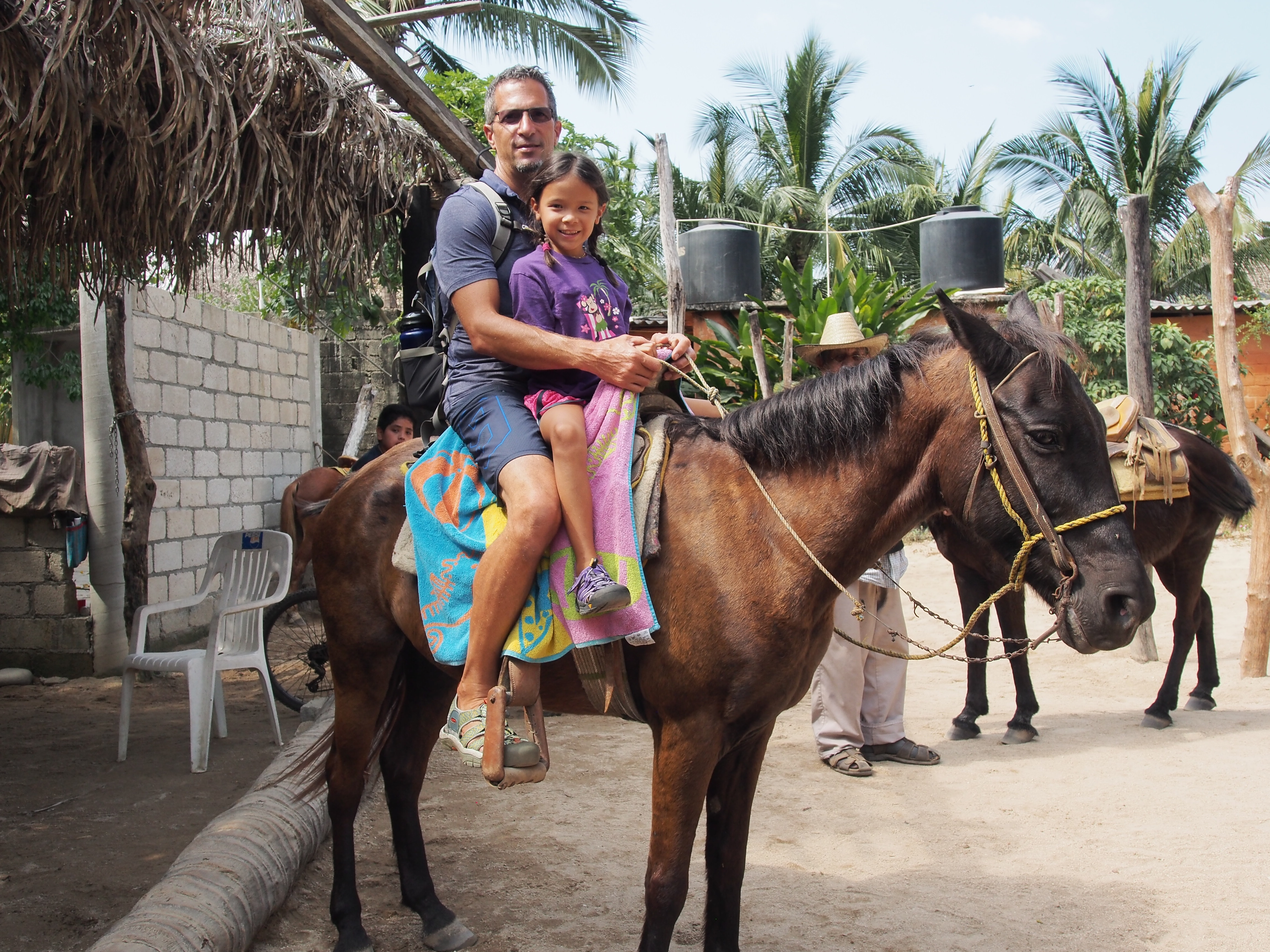
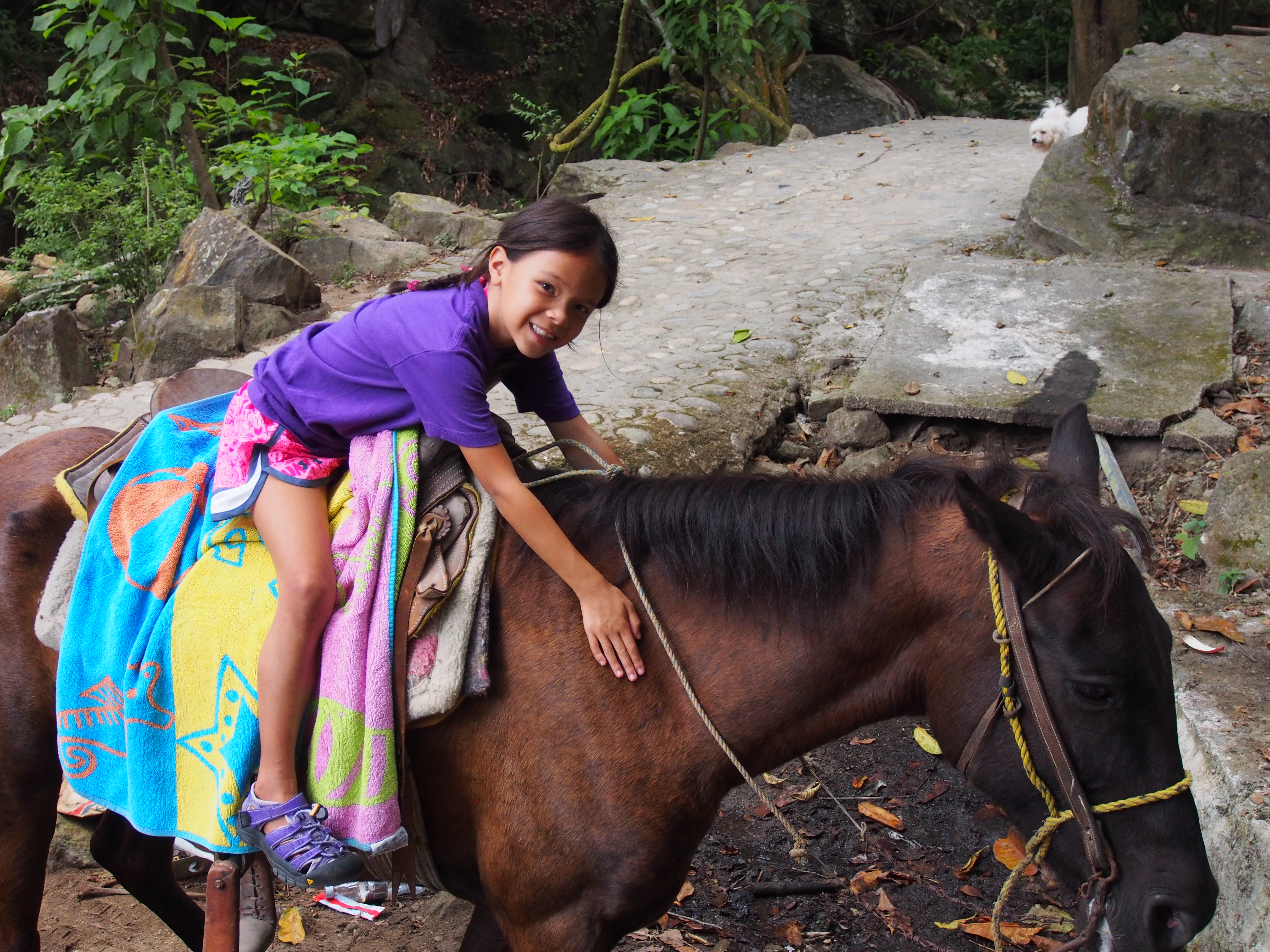
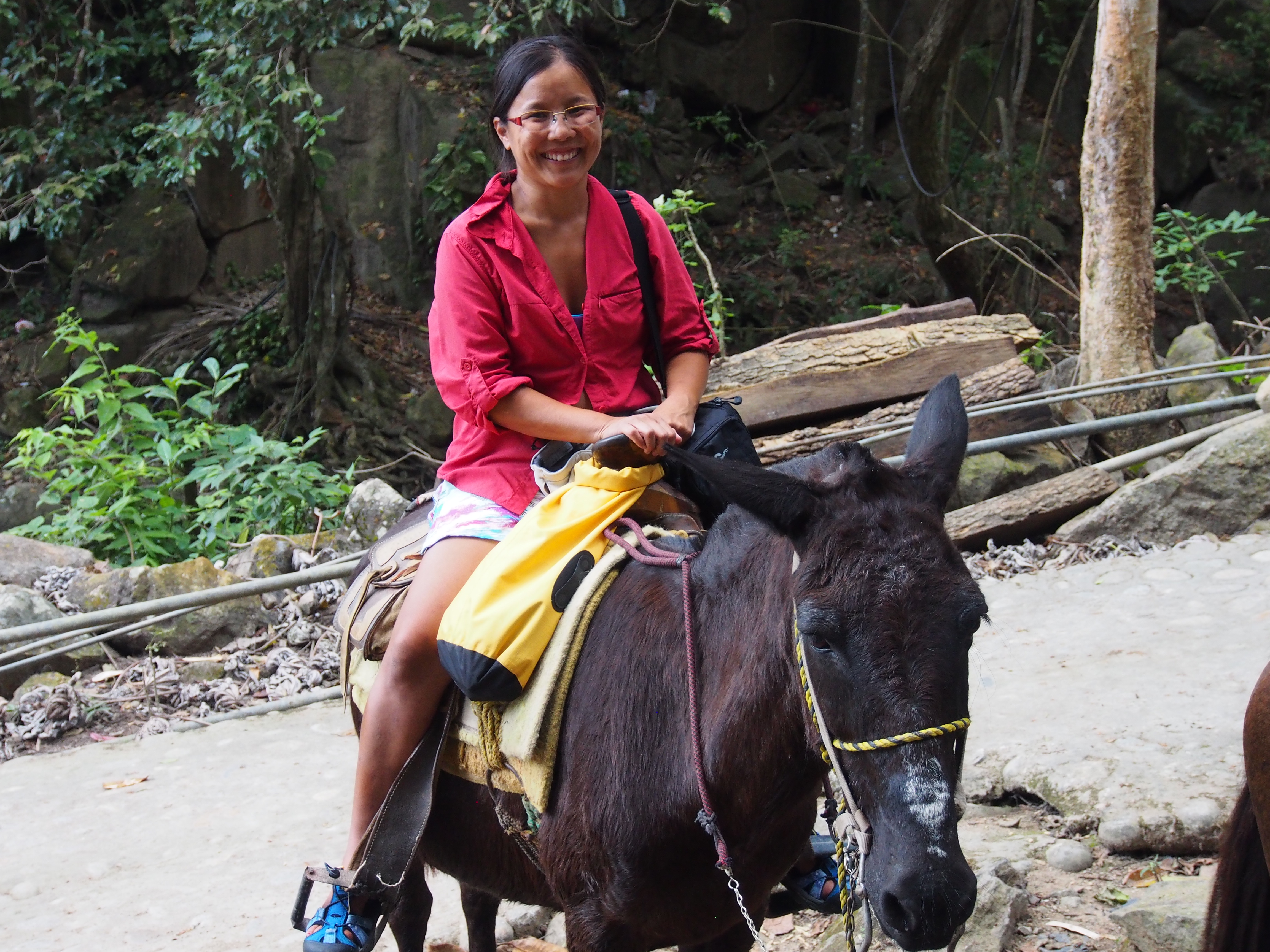
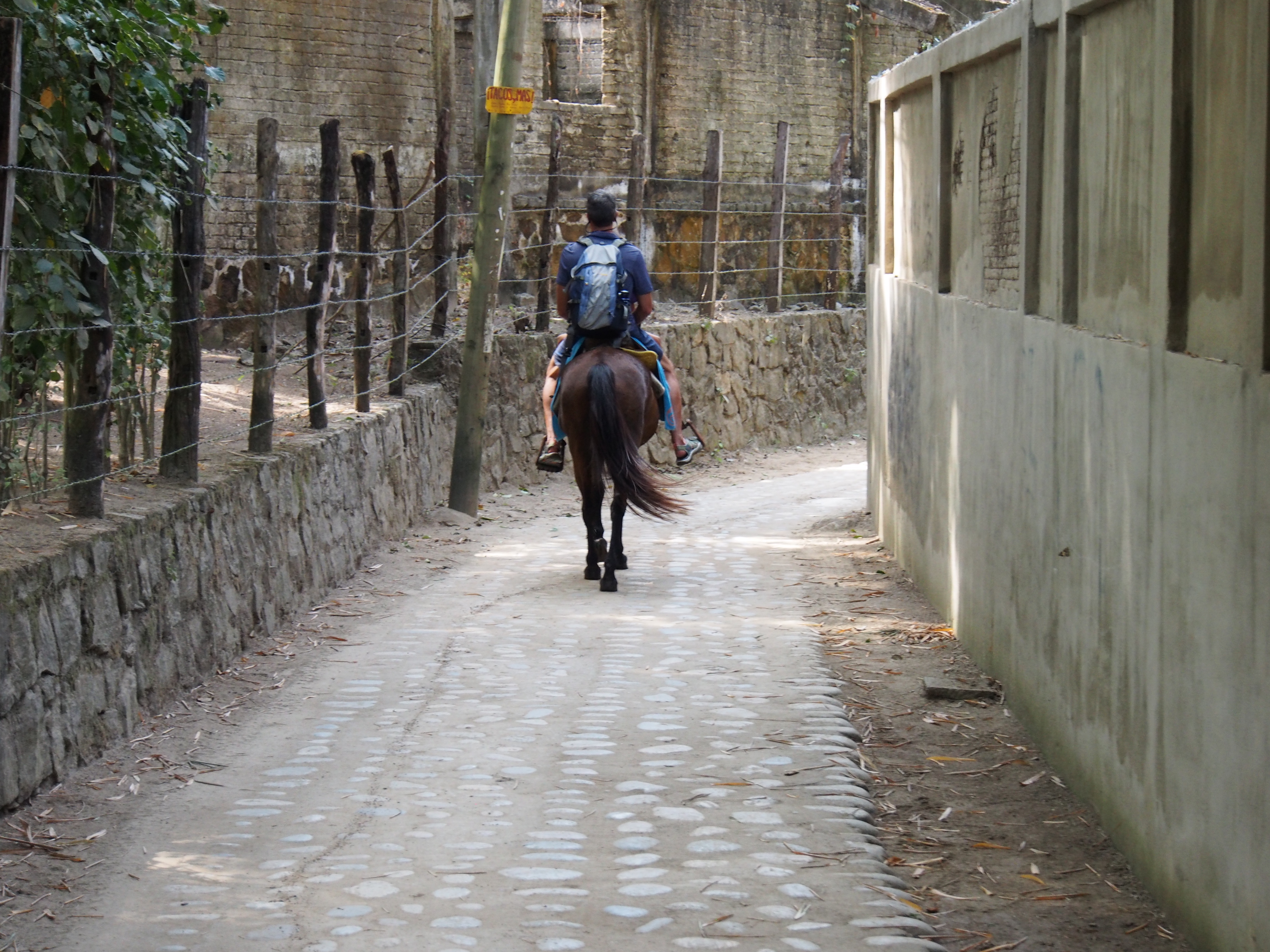
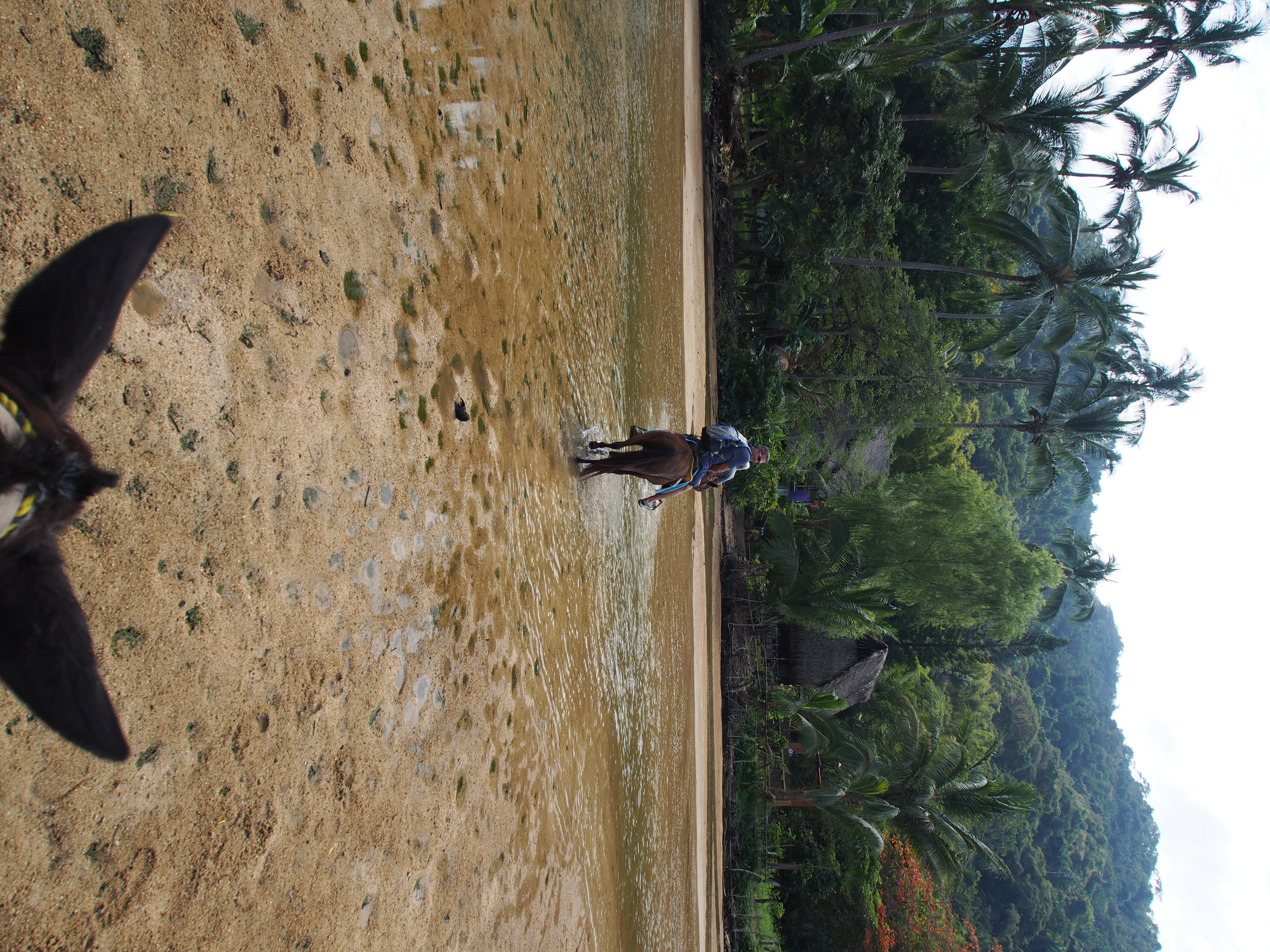
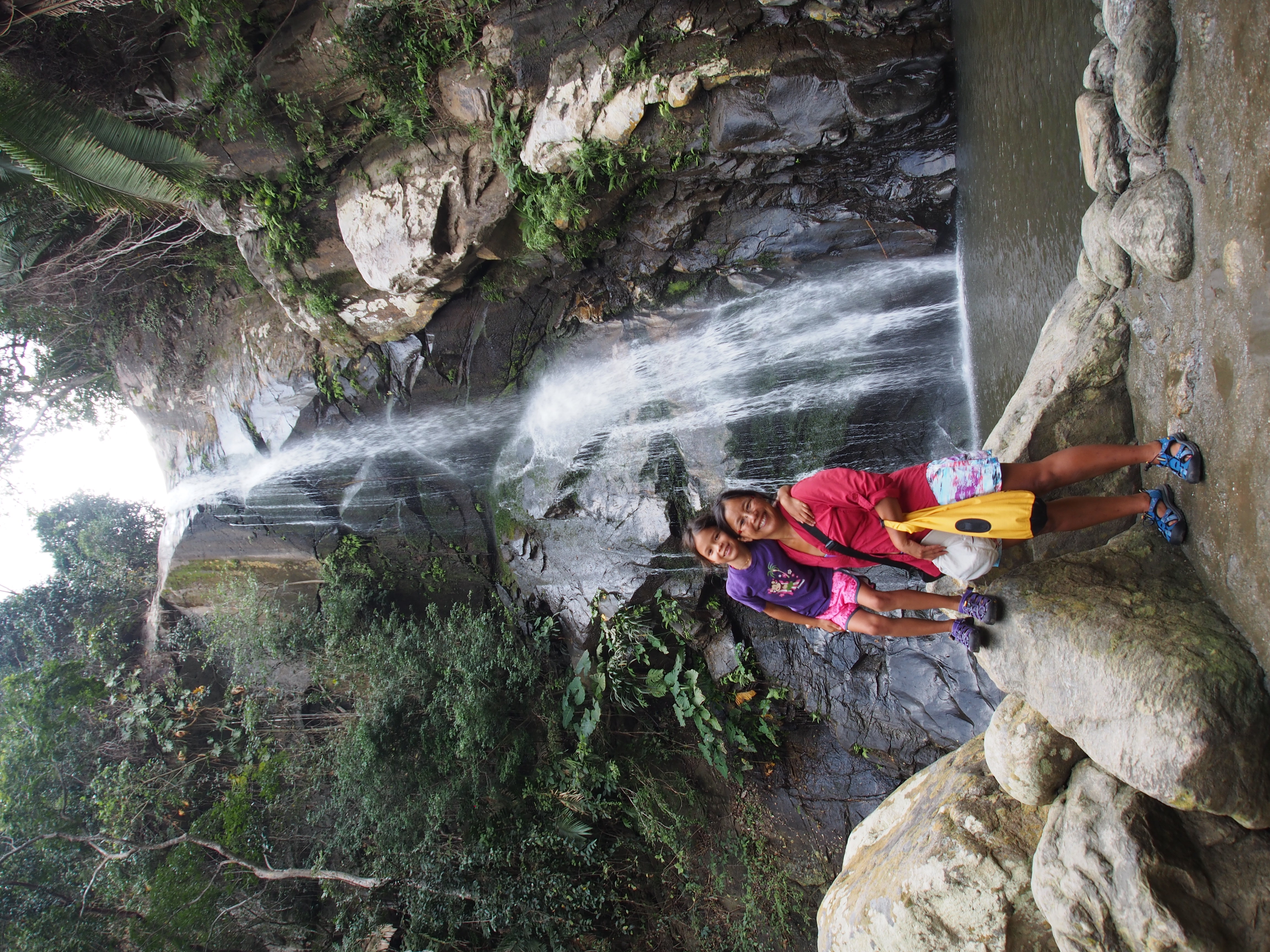
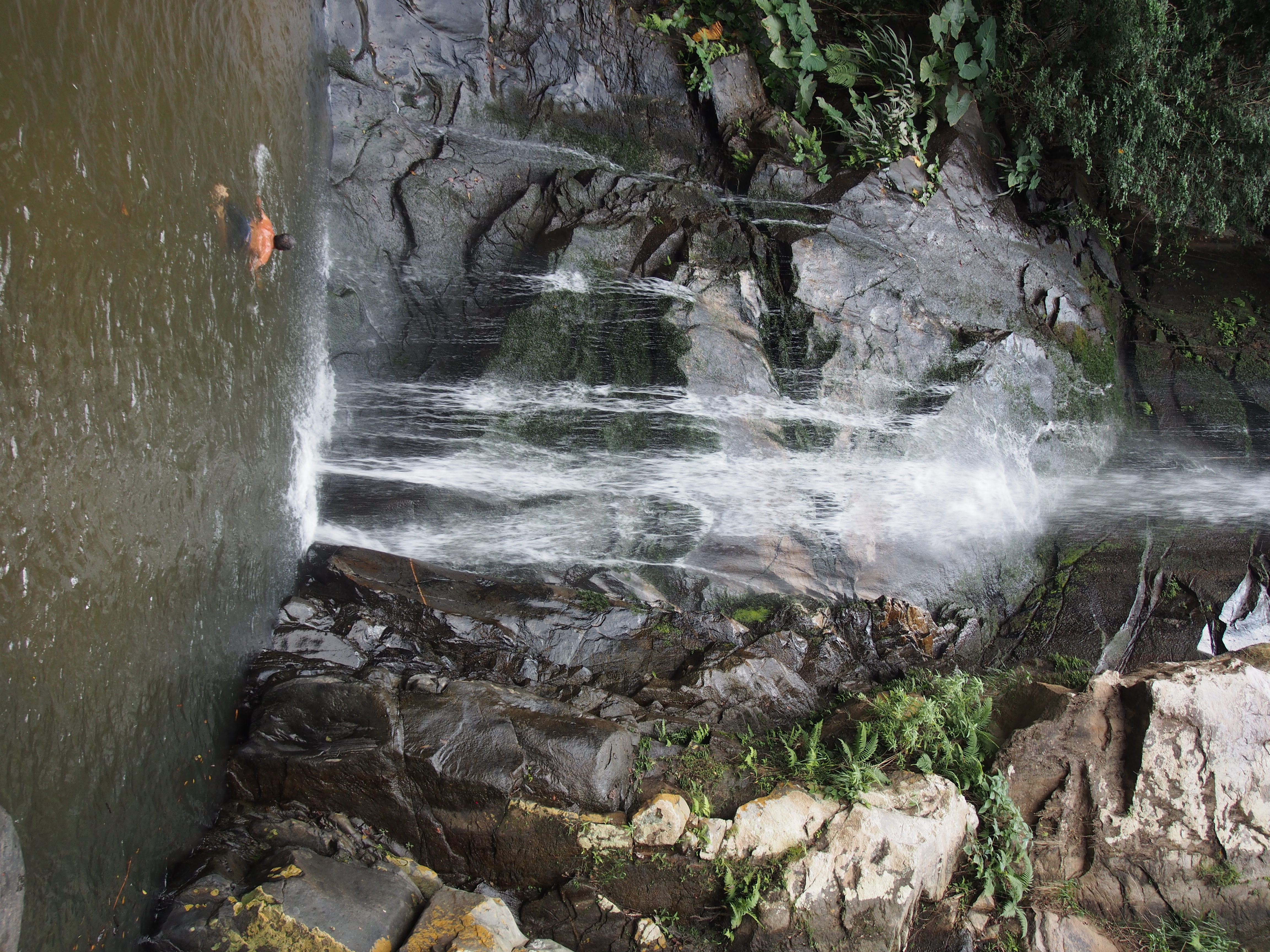
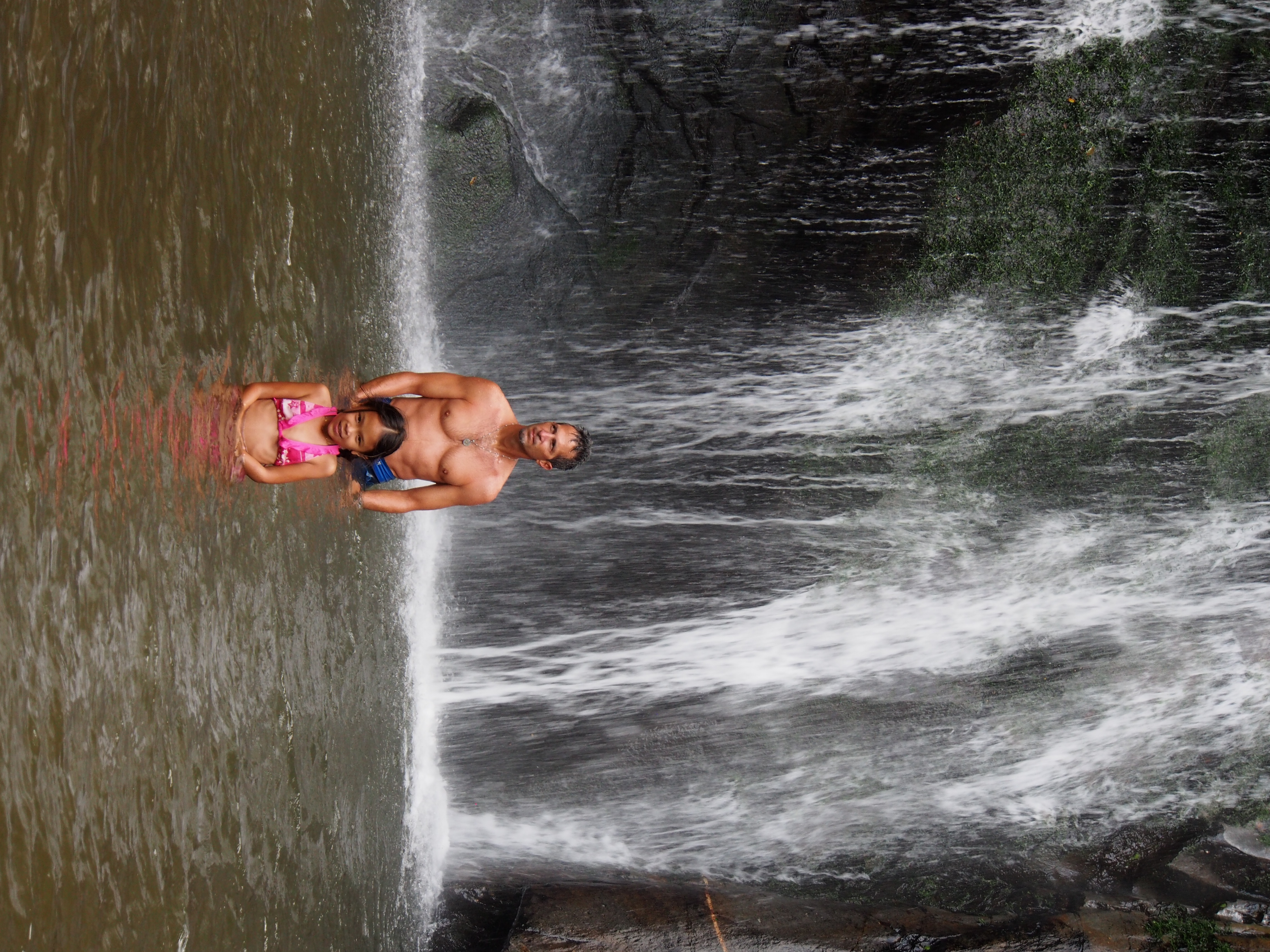
The highlight of the stop was horseback riding up into the mountains to a waterfall. We thought it was going to be a typical guided tour type ride, and were surprised when they let us go off on our own with two horses—Jacintha and I on a larger one and Karen on her own. The trail crossed a shallow river and meandered up the mountainside past homes and restaurants. The trail was mostly cobblestone and barely wide enough for the occasional 4-wheeler to get by us. It was also very steep and I kept thinking the horse would slip on the wet cobblestones. We were told to go until we reached a church, then turn left. Luckily for us, the horses have been on the trail many times so they knew where to turn! When the horses stopped, we knew we were at the place where the man told us to tie the horses to a pole. Then a short walk and we were at the high cascading waterfall with a pool at the base. The water was a bit cold but we all jumped in and enjoyed the refreshing pool. On the way back, the horse Jacintha and I were on must have been hungry as he galloped most of the way, ignoring any commands of WHOA and pulling back on the bridle. Karen’s horse, on the other hand, stopped to relieve itself and then stopped again at the river for a drink, so they arrived 10 minutes later.
Village of YelapaOur HorseJacintha was excited to ride on a trailKaren’s Horse looking a bit tired at the endRiding through the village on the way to the fallsRiver CrossingWaterfall at end of trailSwimming around the fallsEnjoying the cool water
Some boat related things:
Changed the engine oil & filter in Manzanillo since we’ve been motoring a lot and it was easy to dispense of the used oil at the fuel dock. I normally change the oil every 100 engine hours, but when using the engine so much while cruising (especially in Mexico where winds are light), most cruisers go a couple hundred hours between changes. The last time I changed the oil was in La Paz, 300 engine hours ago—that’s a lot of motoring in 2 months!
Spent 2 hours using the hookah system to dive under the boat to clean the barnacles off the bottom. The bow thruster cavity and stainless steel thruster props were heavily coated with barnacles since I hadn’t cleaned there before. Other challenging areas were the main propeller and the very bottom of the keel. I also made sure to clean the knot paddle and thru hulls well. The hookah has proven to be invaluable for bottom cleaning as well as replacing zincs and dealing with fouled props. We hope to use if for shallow recreation dives in the south pacific.
Dug out the shade cover for the boat and found it makes a huge difference in keeping the boat cooler during the day. The cover came with the boat but we improved it by buying custom-made, collapsible fiberglass poles (just like tent poles) and sewed pockets into the cover. We moved the solar panels onto the bowsprit so they still get the full sun.
Karen worked on making some canvas cockpit pockets. The cockpit always seems to be littered with small things such as iPhones, iPads, Kindles, hose nozzle, deck plate wrench, sail ties, snacks, and so forth. The dodger has 2 small built-in pockets that are always full. The new pocket will be large enough to fit an iPad, which we use for navigation, and will attach to the weather cloth.
We’ve been having better luck catching fish lately, but nearly all of them have been Skipjack Tuna, which are fun to catch because they put up a good fight for their size. Their meat is dark red and tastes good when prepared correctly—not something you want for sushi though.
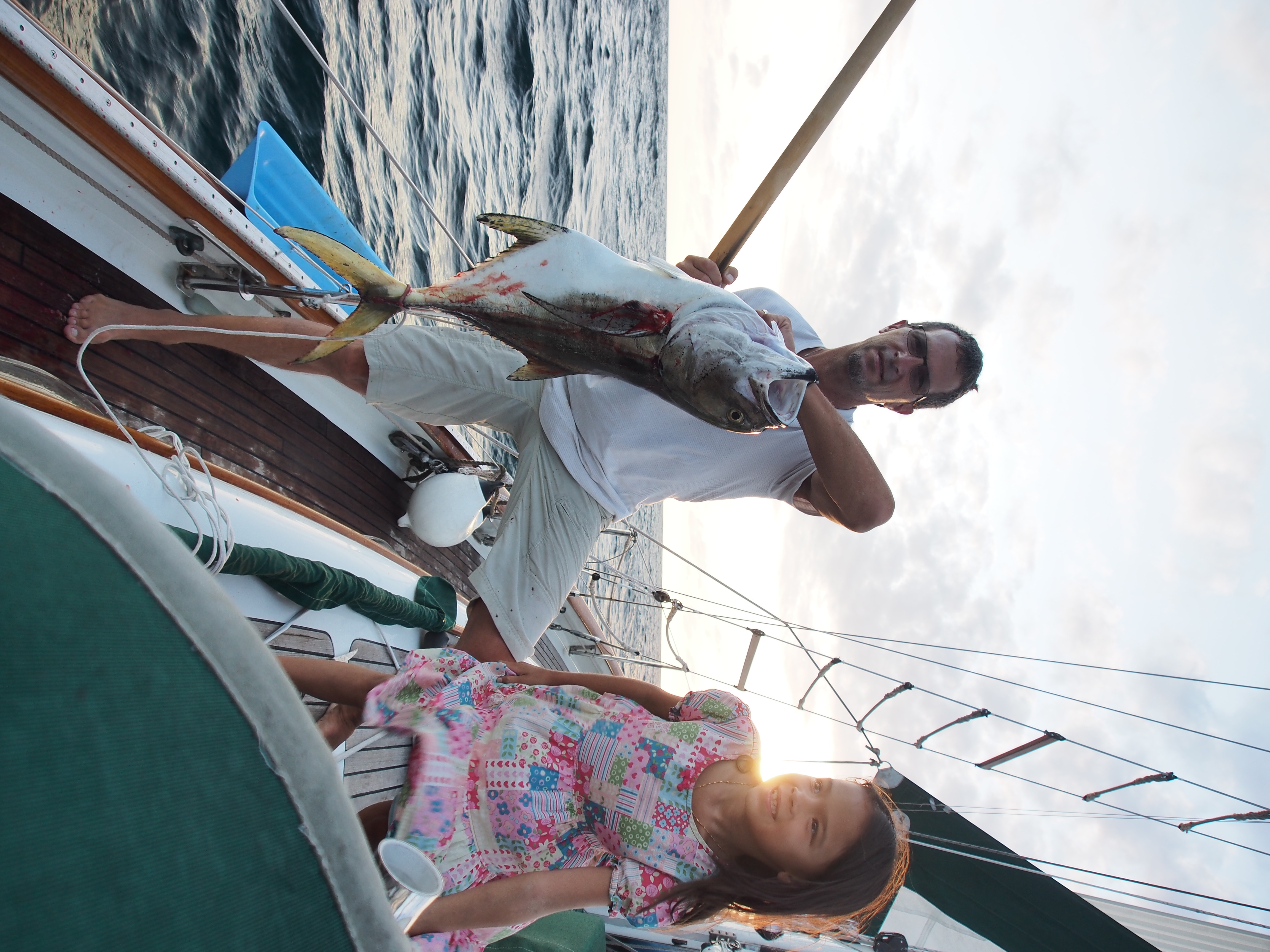
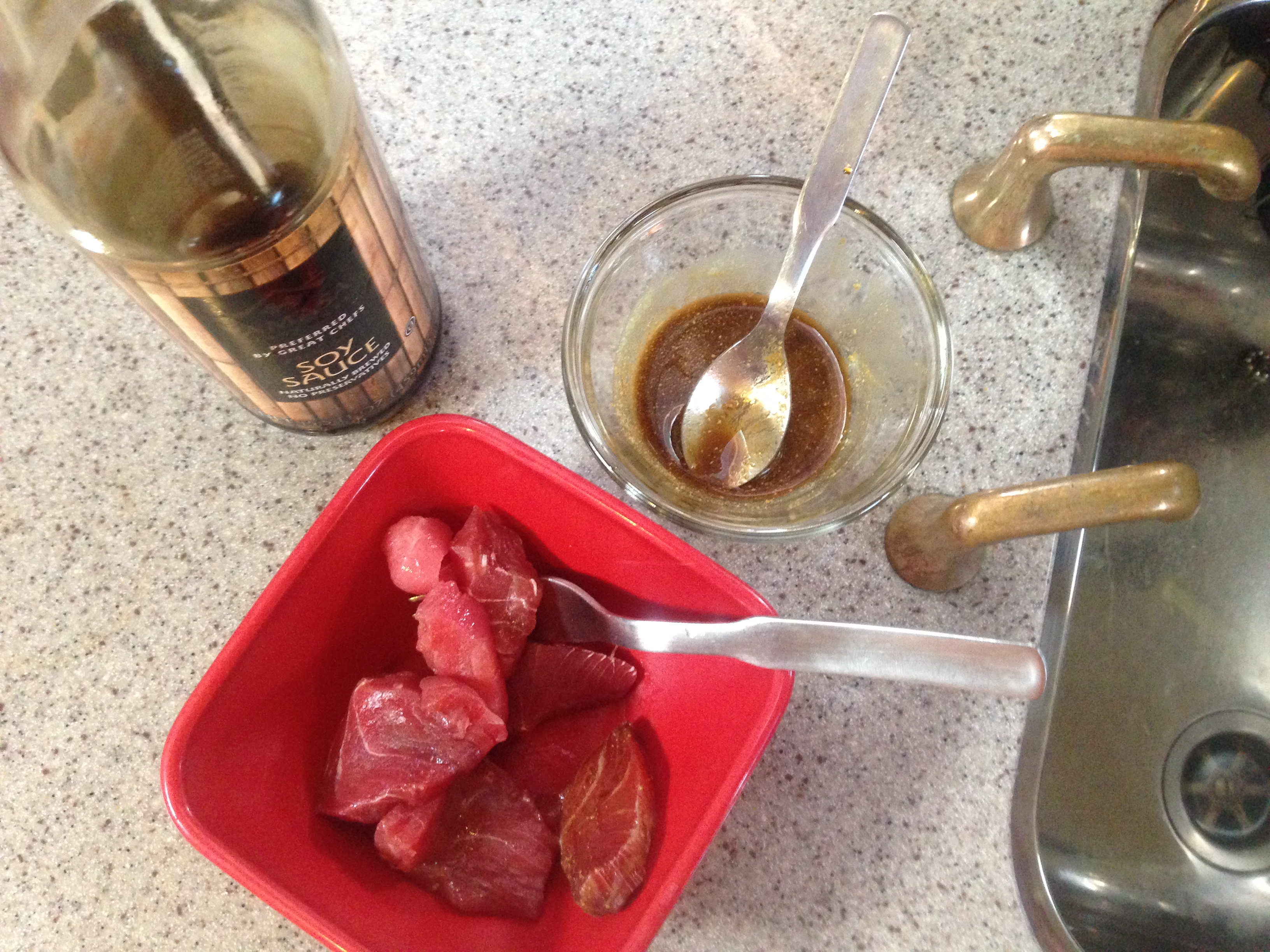
Sailing along at 7 knots near Chamela (Karen was at the helm and I was down below having a siesta), we heard the line flying out of the fishing reel. By the time I got on deck, it had ran with more than half the line and was still running. Karen worked on slowing the boat down while I tried reeling but it takes a while for a 16 ton boat to slow and the fish was still running line off the reel so I knew it wasn’t another small skipjack. About 20 minutes later a very tired 20 lb Yellowfin Tuna (commonly called Ahi) was finally alongside the boat and we used a gaff to bring it aboard. Jacintha was very excited to see such a big fish (by our standards anyhow). I cut the gills and bled it in the water by tying a line around the tail and dragging it for 5 minutes (this supposedly improves the taste). Karen did all the prep work after we anchored and we had grilled yellowfin that evening. The collars were especially good and we also ate some sashimi-style with wasabi and soy sauce. The following day Karen chopped up some tuna, deep fried it in tempura batter, and served it with aoli and picante sauce on fresh tortillas for some amazing tasting Fish Tacos.
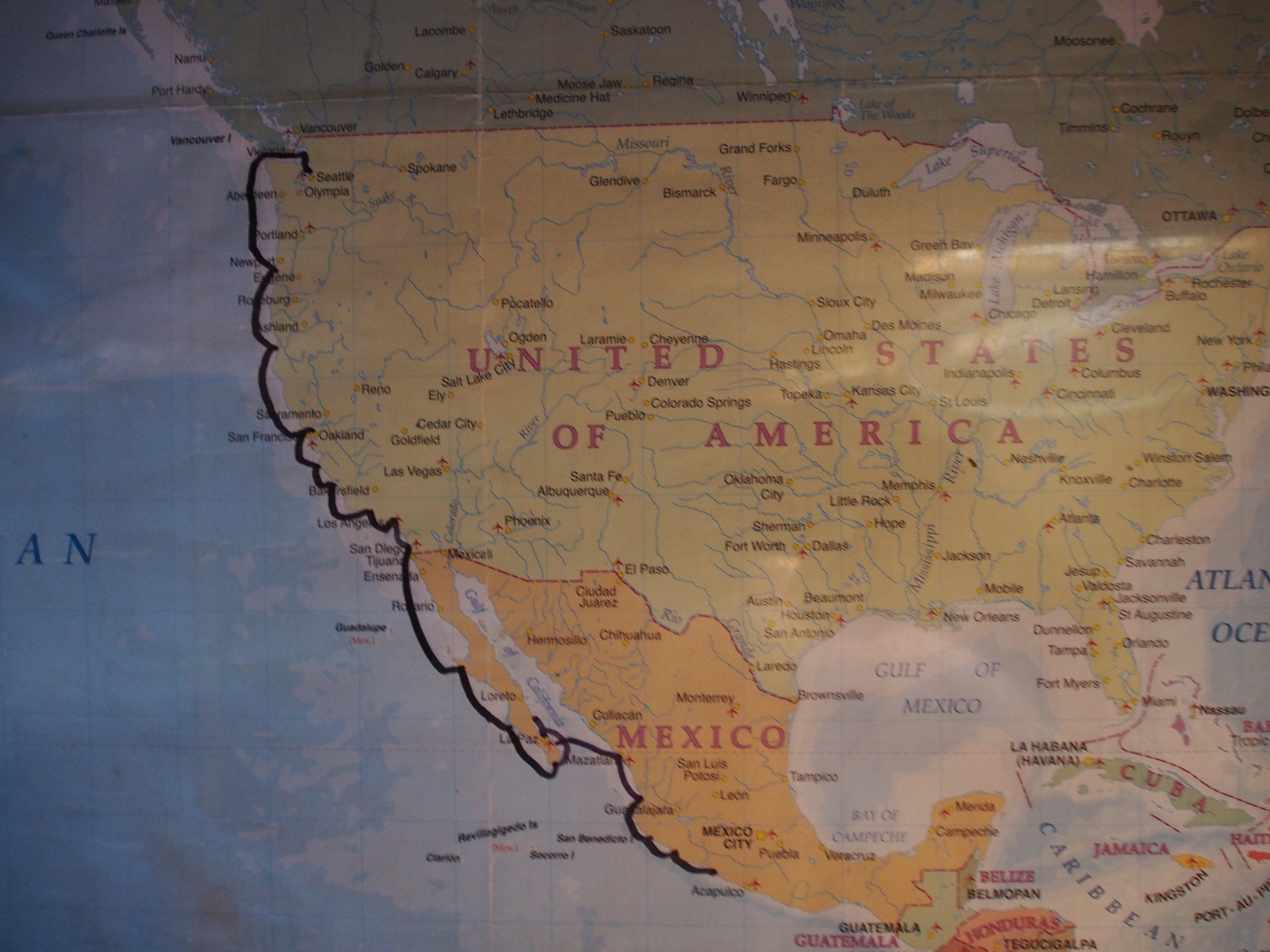
At a latitude of 17 deg 35 min N, Zihuatanejo is more south than the big island of Hawaii, and is the furthest south we will go until we depart for the South Pacific in March. The air temperature was a predictable 90 deg F and the water was around 82 deg. Seattle is 47 deg N, so we were 30 deg of latitude away, and since each degree of latitude is 60 miles, it works out to 1800 miles south of Seattle. Since we also traveled a significant distance east (about half the distance from San Francisco to Philadelphia), and made a lot of side-trips, our total mileage from Seattle to Zihuatanejo is 3,450. We’ve been tracing our journey showing all of our main stops on a map:
We left Zihuatanejo and motored 10 miles north to Ixtapa. Ixtapa was developed in the 1970’s as a mega resort town, similar to Cancun, with big hotels, cruise ships, and Senior Frog’s on every corner. Our short stop had 3 purposes: top off the diesel tanks, wash the boat, and find a place to watch the Seahawk-Packer football game.
We took on 31 gallons of diesel at the fuel dock, filled the water tanks, then pulled into a slip at Marina Ixtapa. Diesel is more expensive in Mexico compared to the US. We paid $3.80/gal in SF back in September and I’m pretty sure it has gone down since then, and we paid $4.60/gal in Ixtapa (if not for a favorable exchange rate, it would have be even more).
Next we found a marina restaurant with big screen TVs to watch the NFC Championship game. It was a disappointing 3-1/2 quarters but then turned into the most exciting come-from-behind Seahawk victory I’ve ever seen. Of course we flew our 12th Man flag and wore our Seahawk jerseys. The game was broadcast in Spanish and we were the only ones watching it. I think everyone thought I was crazy during the final 3 minutes of play with all the cheering and jumping up and down I was doing! We celebrated the super bowl bound victory with blended lime margaritas.
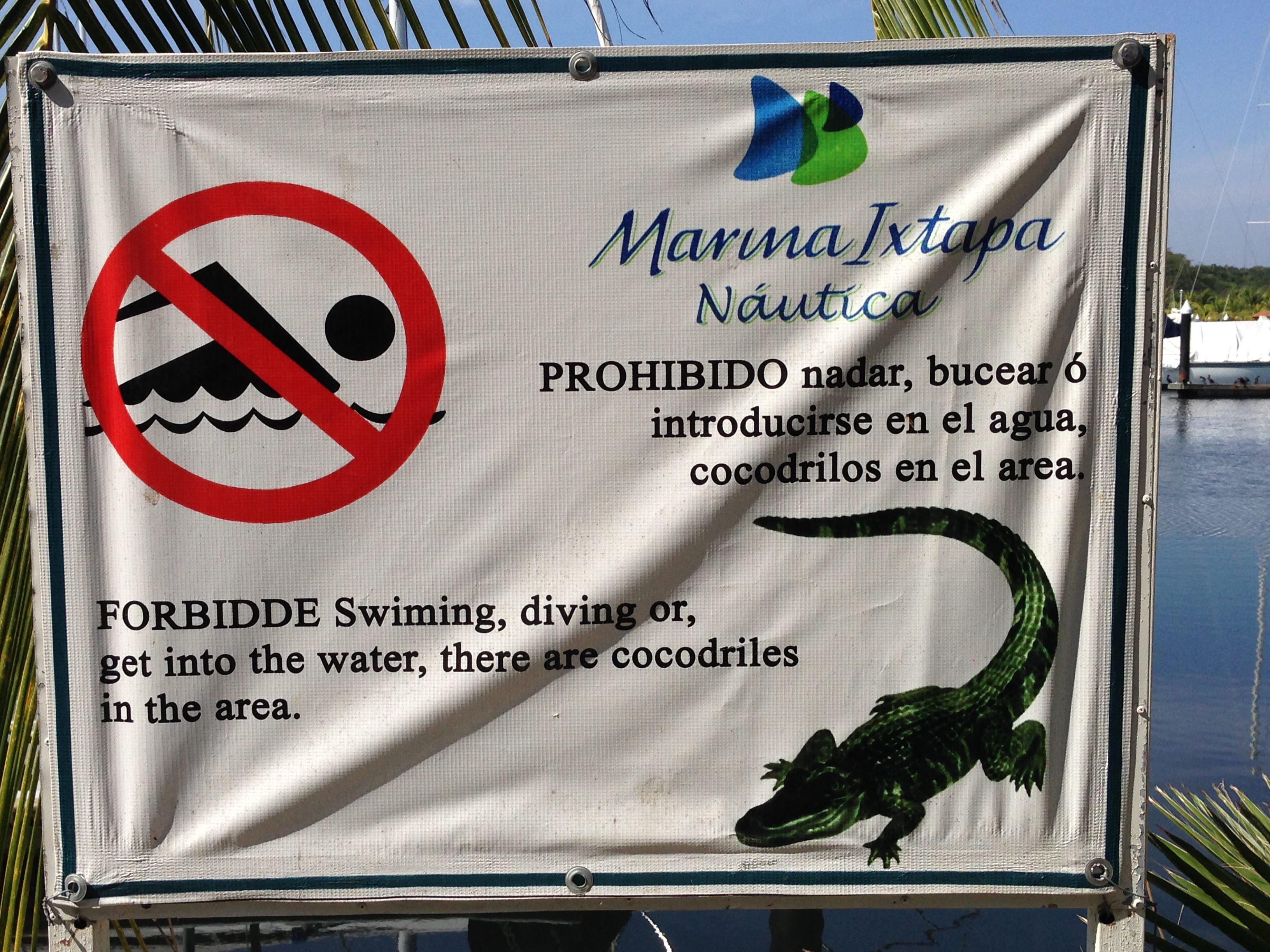
Back at the boat we prepared for an early morning departure. A 12 foot crocodile came out after dark and swam around the empty slip next to our boat. I was on the dock giving the dinghy a fresh water rinse so was extra cautious not to fall in. We had to get out of the marina before 7am due to the channel dredging they had scheduled, so we got up at 5:45am and left the dock at 6am for the 190 mile trip back to Manzanillo.