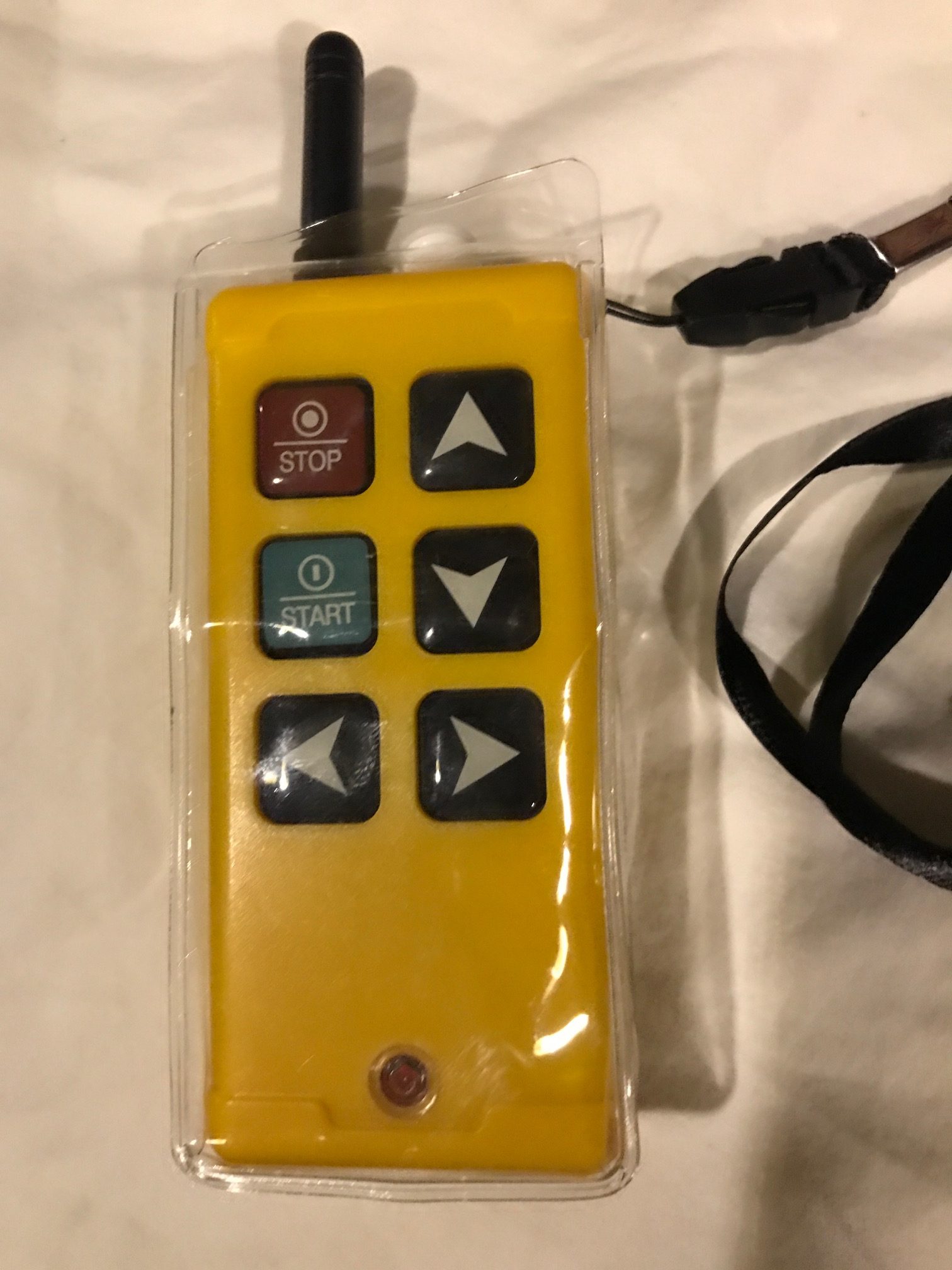
Adding a wireless remote to the windlass has 2 benefits–it gives redundancy to the foot switches (we recently discovered the “down” switch worked intermittently due to corrosion on the terminals), and it also allows controlling the windlass from different locations on the boat (the foot switches are right next to the windlass). Adding wireless control to the bow thruster was an added bonus since the controller I ordered had 4 relay outputs for Up, Down (windlass) and Left, Right (bow thruster). I can see where the wireless bow thruster control will come in handy when the person controlling the windlass from the bow may need to align the boat to the anchor rode by using the thruster (the main bow thruster control is located at the helm).
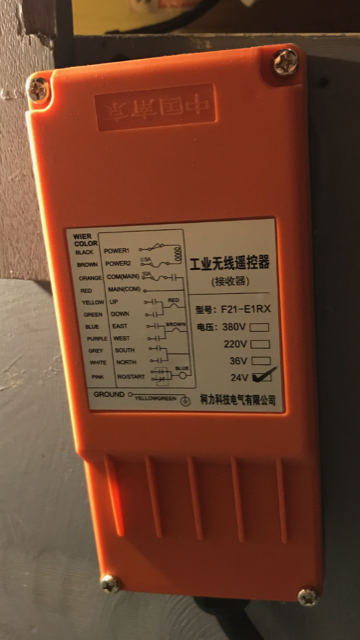
I found a rugged (non-marine) wireless controller that was advertised as an industrial crane hoist controller. And it was only $55, compared to $300 or more for ones built specifically for a windlass, so I thought I’d give it a try. The model I bought was made by a Chinese company and came with a wireless remote that has 4 control buttons (Up, Down, Left, Right) and a Power On and Power Off. The instructions were all in Chinese but I was able to figure out the connections from the schematic printed on the controller box. The controller has 4 outputs, so I will also try to connect it to the bow thruster using the Left/Right controls. Aside from the wireless radio circuitry, the controller is basically a bunch of relays that perform the same function as the windlass foot switches–providing a 12V control signal when a button on the remote is pressed. My Lofrans windlass uses a controller made by Imtra. My bow thruster has a built-in controller. Both of these controllers use low-current 12V signals to activate relays that switch the high-currents to the windlass and thruster motors.
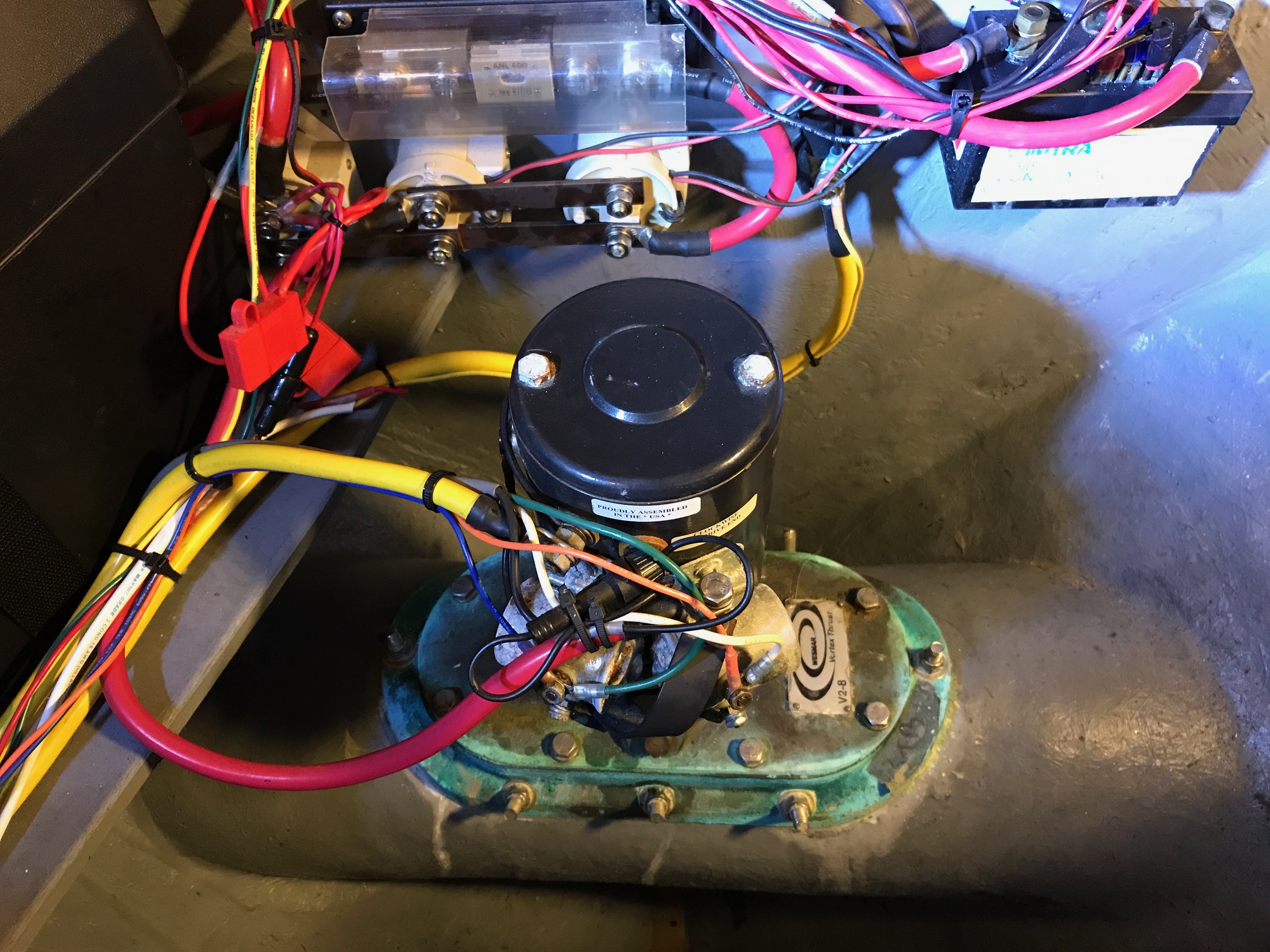
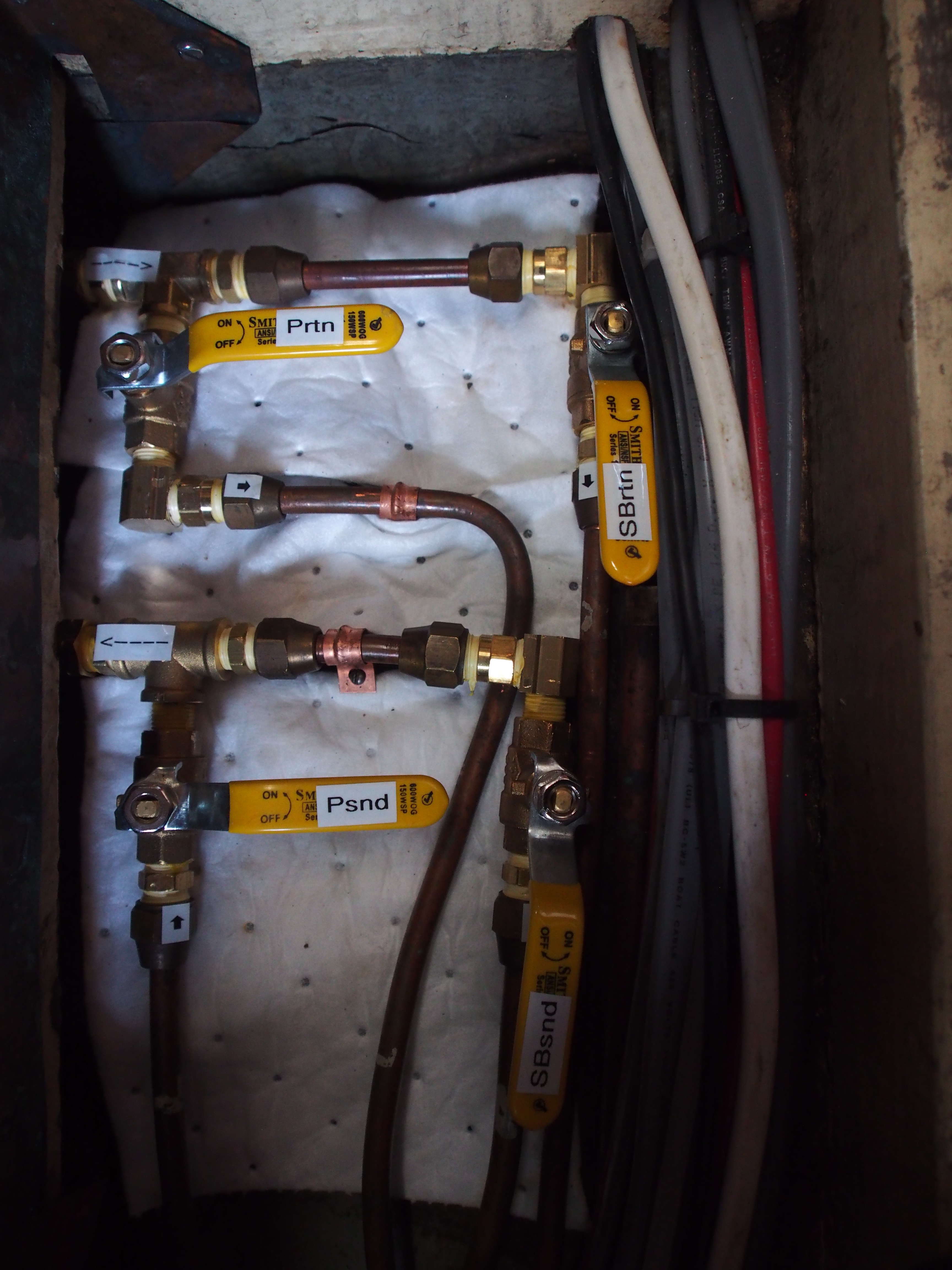
The installation was very easy since everything is located under the v-berth (windlass control, windlass and bow thruster batteries, bow thruster controller). This area is a dry locker and is separated by a bulkhead from the anchor locker as shown below. I powered the wireless controller with a switched 12V that turns on when the Windlass is activated at the DC panel. I used inline fuses for both the controller power and the controller output source power.
Note: This post is probably not interesting or relevant to most readers–it’s a detailed account of a specific project that I put a lot of time and effort in. Some boat owners may find it useful if they have a similar problem.
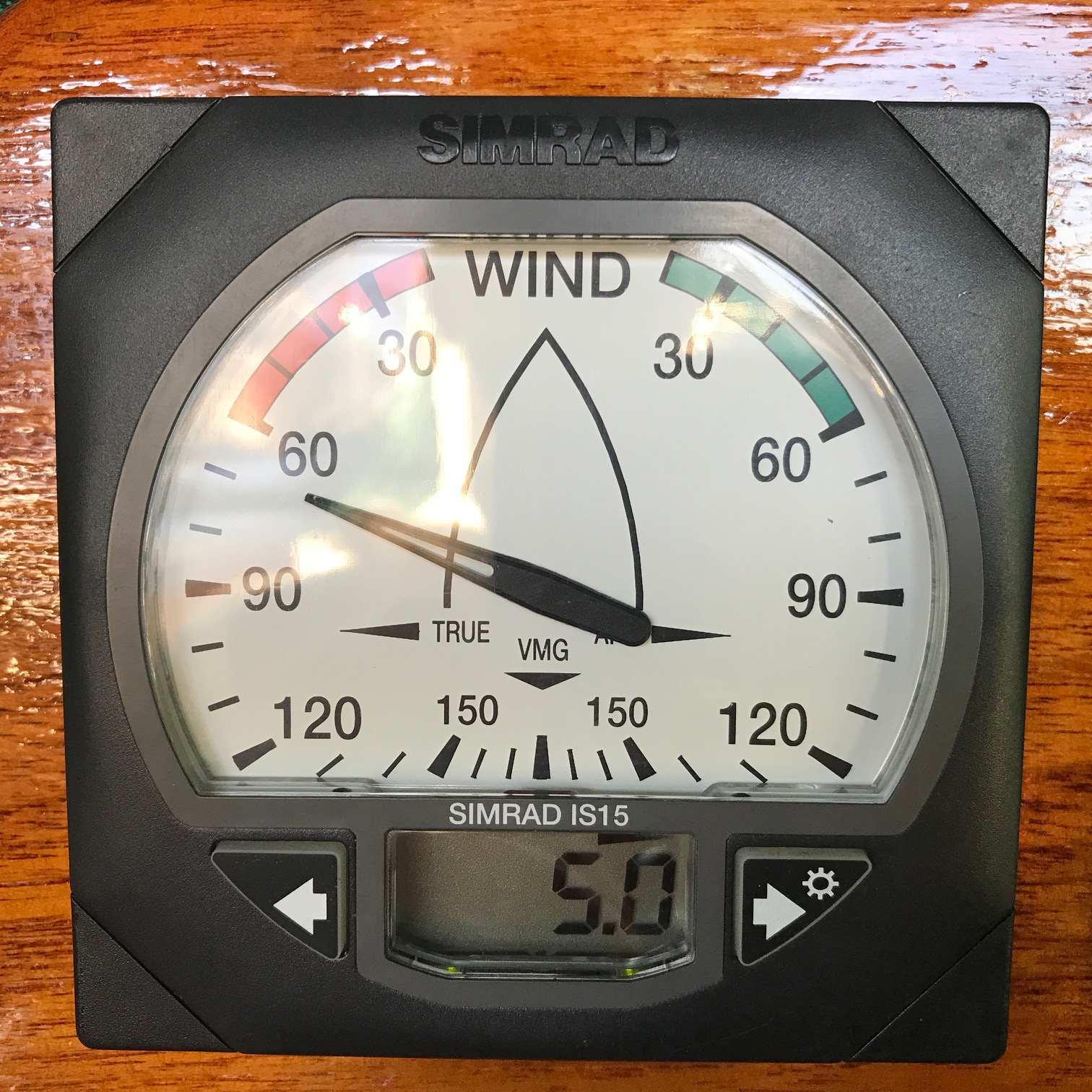
The project began over 2 years ago when I returned to my boat in Fiji and discovered the masthead wind sensor was gone, thanks to Cyclone Winston. The sensor was part of the Simrad IS-15 wind/speed/depth/rudder position system that uses the NMEA 0183 protocol. Unfortunately, B&G (formerly Simrad) didn’t have replacement IS-15 wind sensors, so I bought the newer IS-20 sensor along with the necessary parts needed to convert an NMEA 2000 signal to an NMEA 0183 signal needed by the wind display instrument. Many hours were spent trying to get the new wind sensor to move the indicator on the display, but to no avail. We ended up sailing over 6000 nautical miles from Fiji to Seattle without any wind speed/direction.
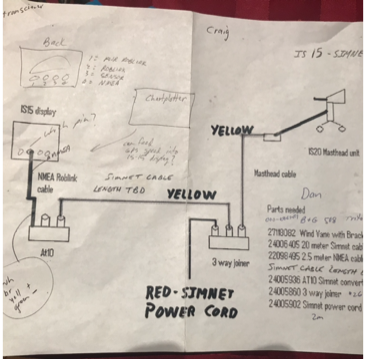
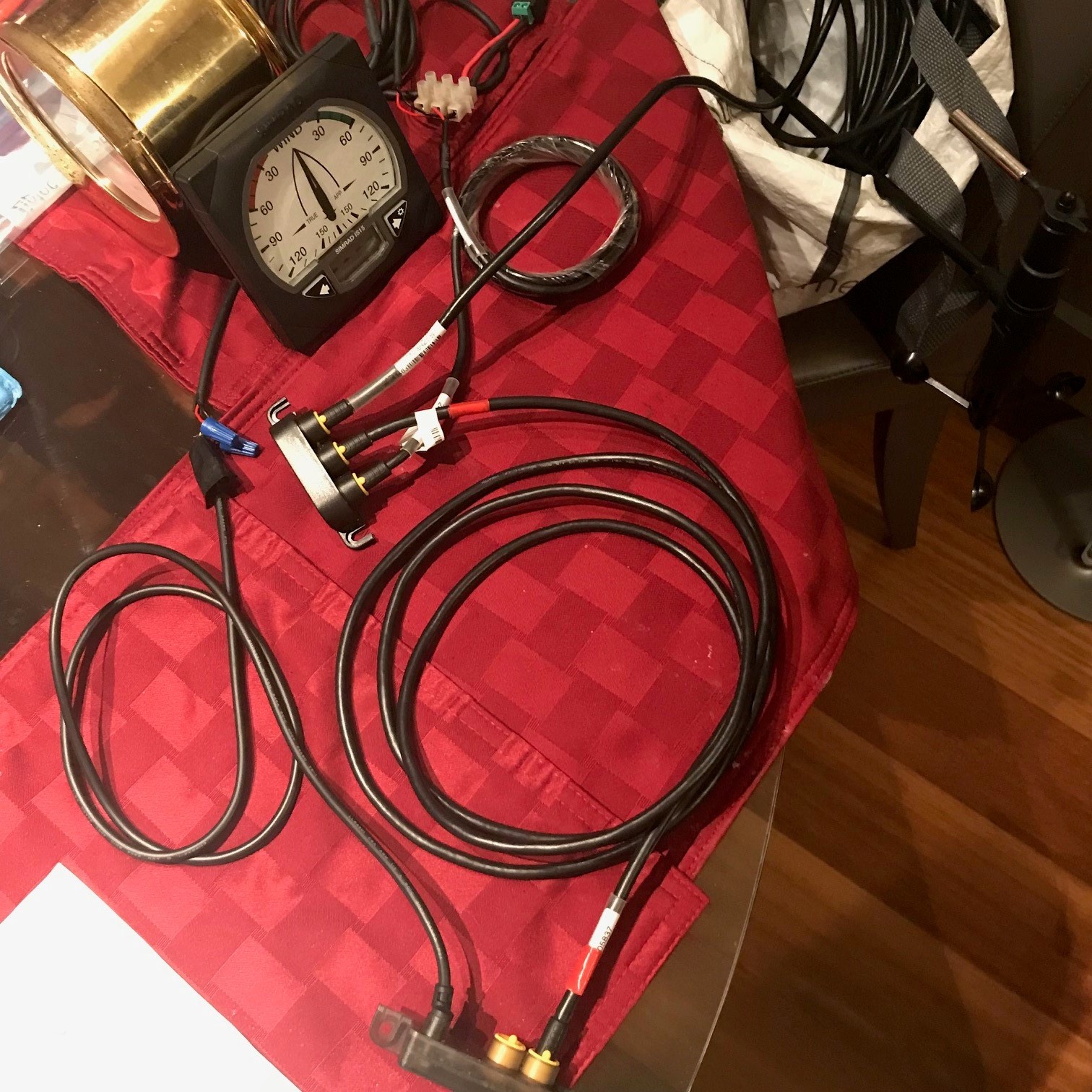
Back in Seattle, I re-started the effort to get the wind sensor working. I brought the system home and set it up on the kitchen table to debug the problem. I used the diagram from B&G tech support shown below. It’s not very complicated, but it still didn’t work.
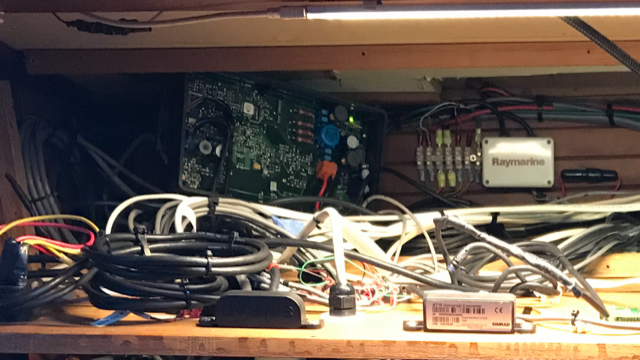
There are 2 parts used to convert the signal from NMEA 2000 to NMEA 0183–a 3-way joiner and an AT10. Since the system still didn’t work, I suspected I had a bad part so I bought a new AT10 and then it worked! After I had the system shown in the diagram working, I took it back to the boat to install. But there was 1 more piece to the system, a Simrad transceiver with inputs for wind, speed, and depth that multiplexes to a single output that goes to the wind, speed, and depth display instruments. Since the transceiver is installed at the navigation station (behind the main panel), I installed the 3-way connector and AT10 next to it (shown in the picture below with the transceiver box cover off).
Next was to run the wire from the 3-way joiner to the mast head where the wind sensor will be installed. Unfortunately, the existing wire and connectors were not compatible with the new wind sensor. The first step was to run the wire to the base of the compression post, about 15 feet away. This section went through cabinets and the settee before reaching the bilge near the base of the compression post. I cut the wire there and installed a junction box for easy disconnect when pulling the mast.
The final step was to pull the new wire through the compression post and up the mast. This turned out to be impossible because the existing wire would not budge either way. There are a total of 6 wires going through the compression post and mast for 2 spreader lights, a vhf antenna, masthead running, strobe, & anchor lights, a steaming light, and the wind sensor. Inside the mast, they are run in a conduit along the aft side of the mast. I suspected the wires could be taped together inside the mast as they exit the compression post and make 90 degree bends before they enter the conduit as the reasons for not being able to pull the existing wire. I considered pulling the deck-stepped mast to do the wiring, but the cost was going to be close to $1000 (crane fees, rigger fees) plus a whole lot of work (removing sails and boom, disconnecting all the wiring, loosening all the stays, getting the boat to yard). Since the cost and amount of work didn’t seem worthwhile for running a single wire, I thought of an alternative.
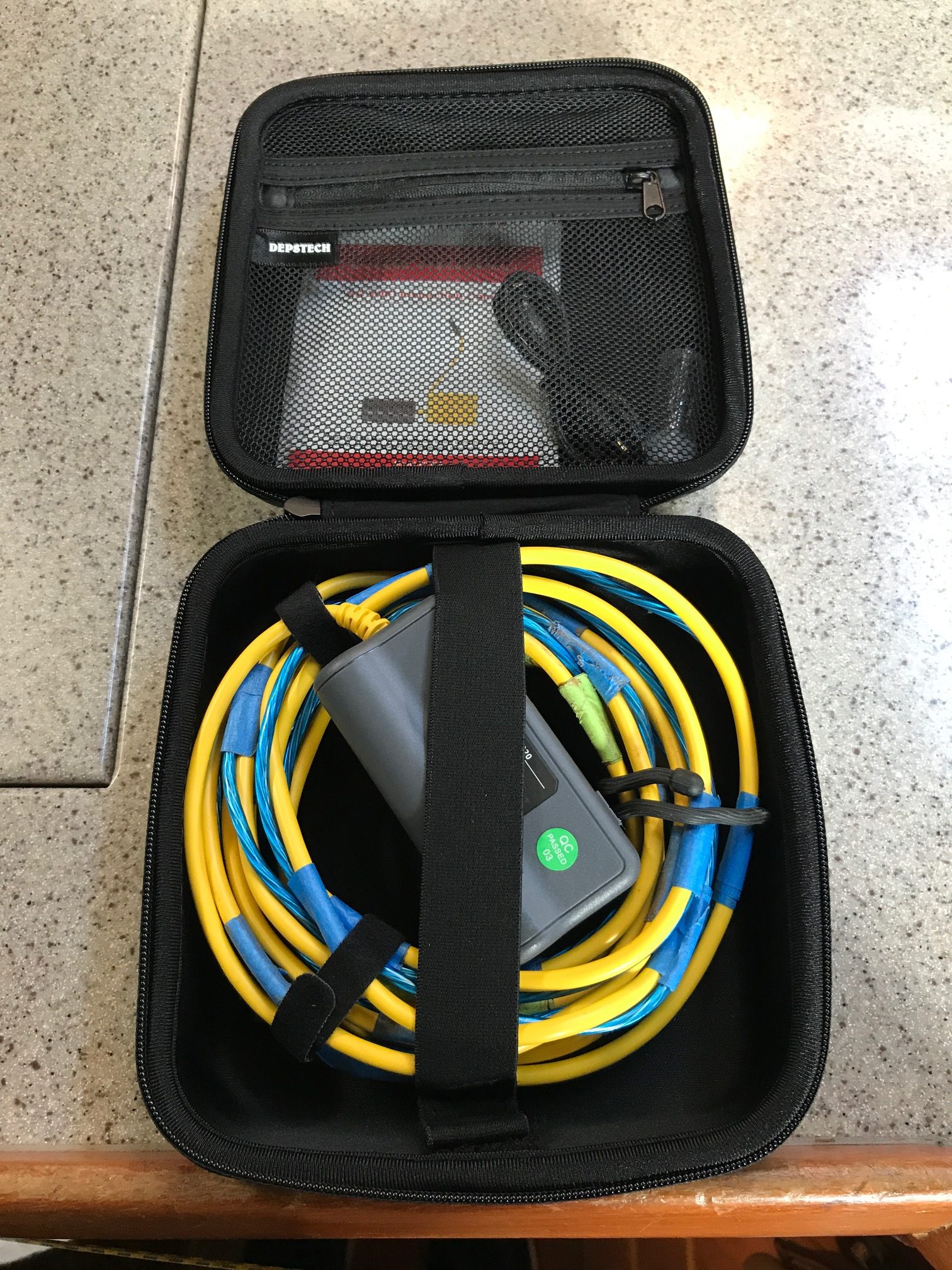
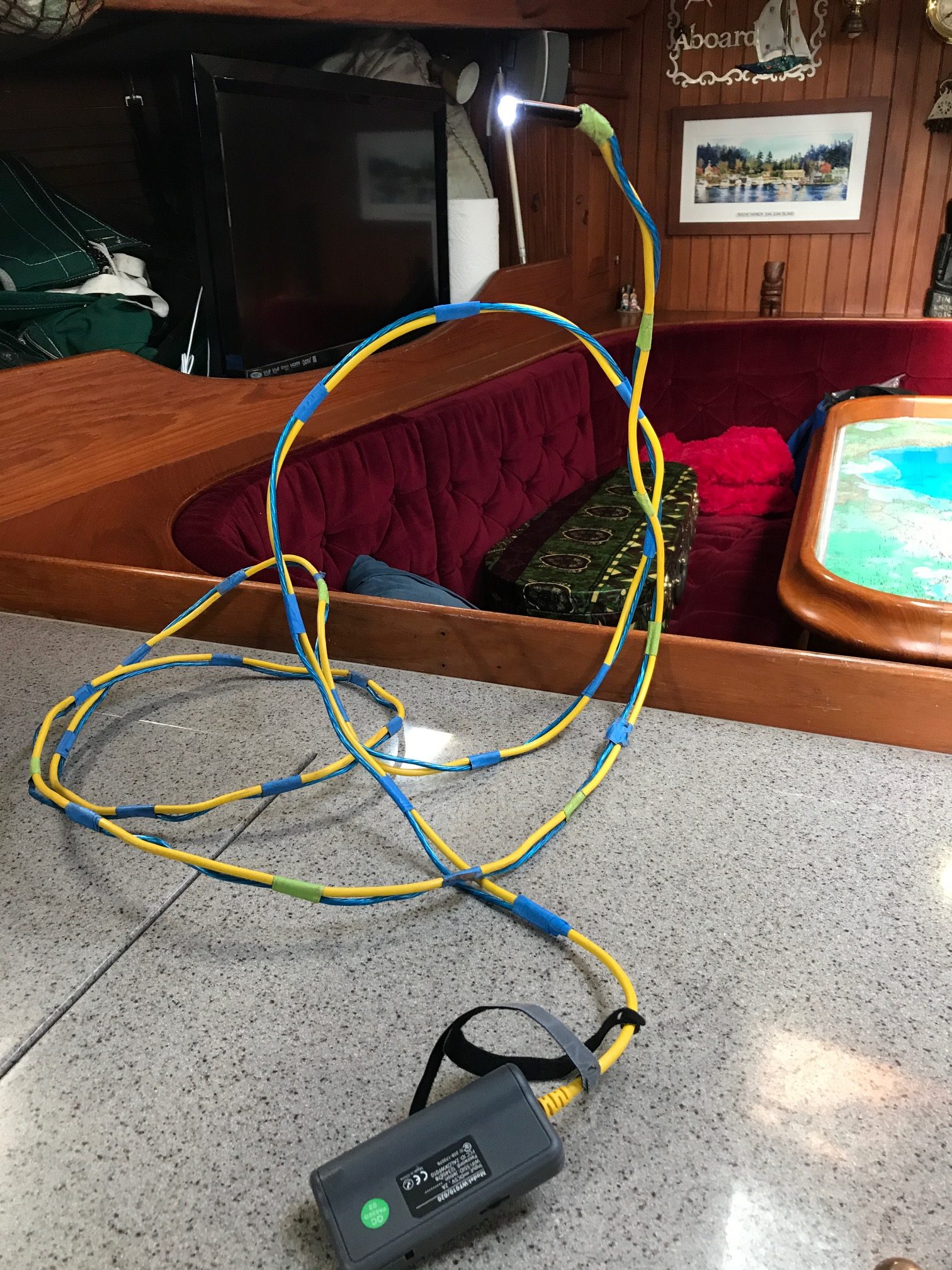
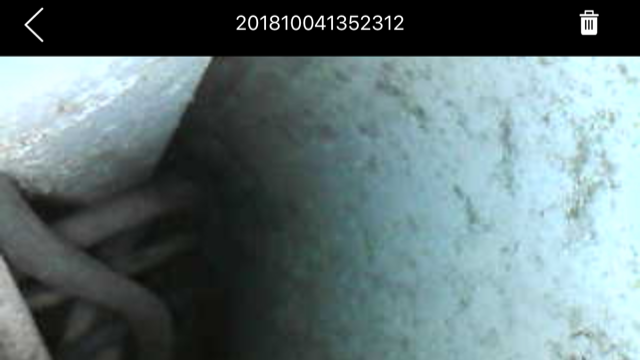
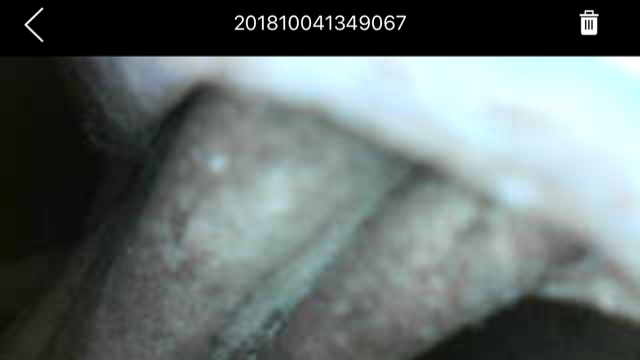
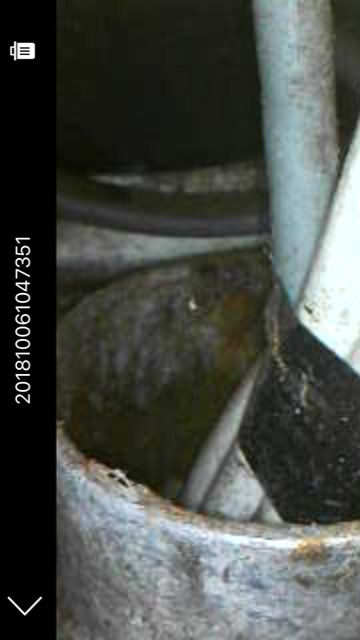
I purchased an endoscope for $40 on Amazon (Depstech Semi-Rigid Wireless Borescope WiFi Inspection Camera 2.0 Megapixels HD 1800mAh Lithium Battery Snake Camera – Yellow 11.5FT ). It uses a Wifi connection to display the camera images on smartphones. My plan was to feed the endoscope down a halyard exit hole on the side of the mast about 6′ above deck level to see what the wiring looked like near the mast base. The first thing I noticed was the 11′ semi-rigid wire was too flimsy, especially when feeding it long distances. So I taped an 11′ plastic-coated wire along side it to give it more rigidity. It took some practice but I was able to manipulate it to see the wiring near the bottom of the mast where it exits the conduit. The focal point of the camera lense is about 6″ and the intensity of the blue LEDs can be adjusted. I took video and pictures, below are some of the pics.
The top pic shows most of the wires as they exit the compression post. The smaller diameter grey wire is the wind sensor wire. The bottom pic shows the wires exiting the mast conduit and the smaller grey wire can be seen between the 2 larger diameter spreader light wires.
Next I decided instead of pulling the mast, I would cut a 7/8″ diameter hole about 3″ from the base of the mast to try to get a better view of the wiring. My mast is 3/8″ aluminum, plenty thick enough for a small access hole to have no affect. This allowed me to get a better shot of the wiring with the boroscope, and sure enough the wires were taped together in a bundle right as they exit the compression post.
The 7/8″ hole allowed me to use a long screwdriver to break the electrical tape then grab the grey wind sensor wire with needle-nose pliers and pull it out the access hole. Next I taped a feeder string to the end of the grey wire at the bottom of the compression post (in the bilge), and pulled it up through the compression post and out the hole. Then I taped the new wind sensor line to the feeder string to pull the new line. I had to tug on the feeder line quite hard to squeeze the larger diameter connector on the end of the wire through, so I also used some thin black tarred seine twine to tightly wind over the tape to make sure it didn’t slip as I pulled. I also used liquid soap along the length of wire to make it more slippery. It all worked as planned and I pulled about 75′ of wire from the bilge to the access hole at the base of the mast.
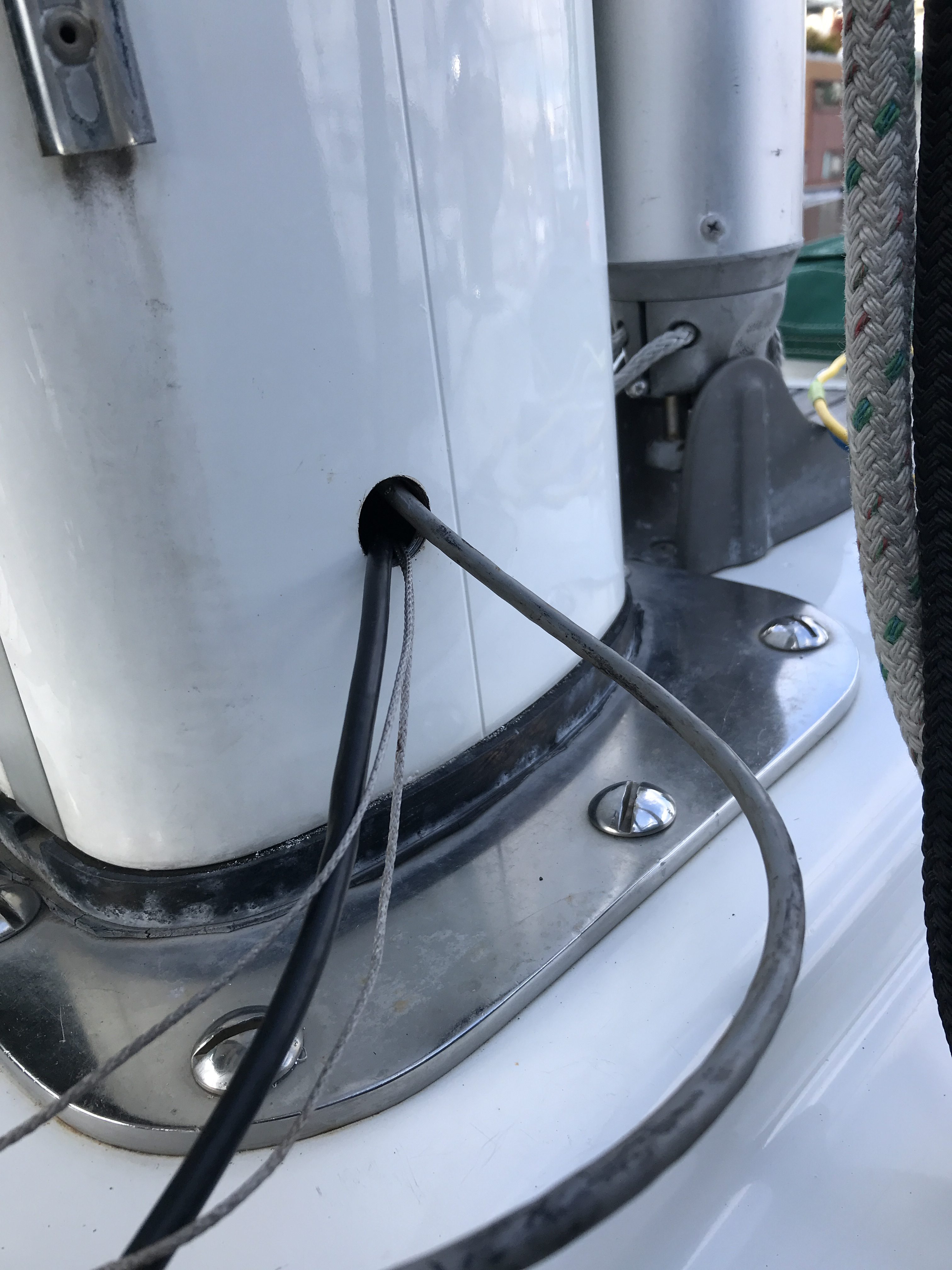
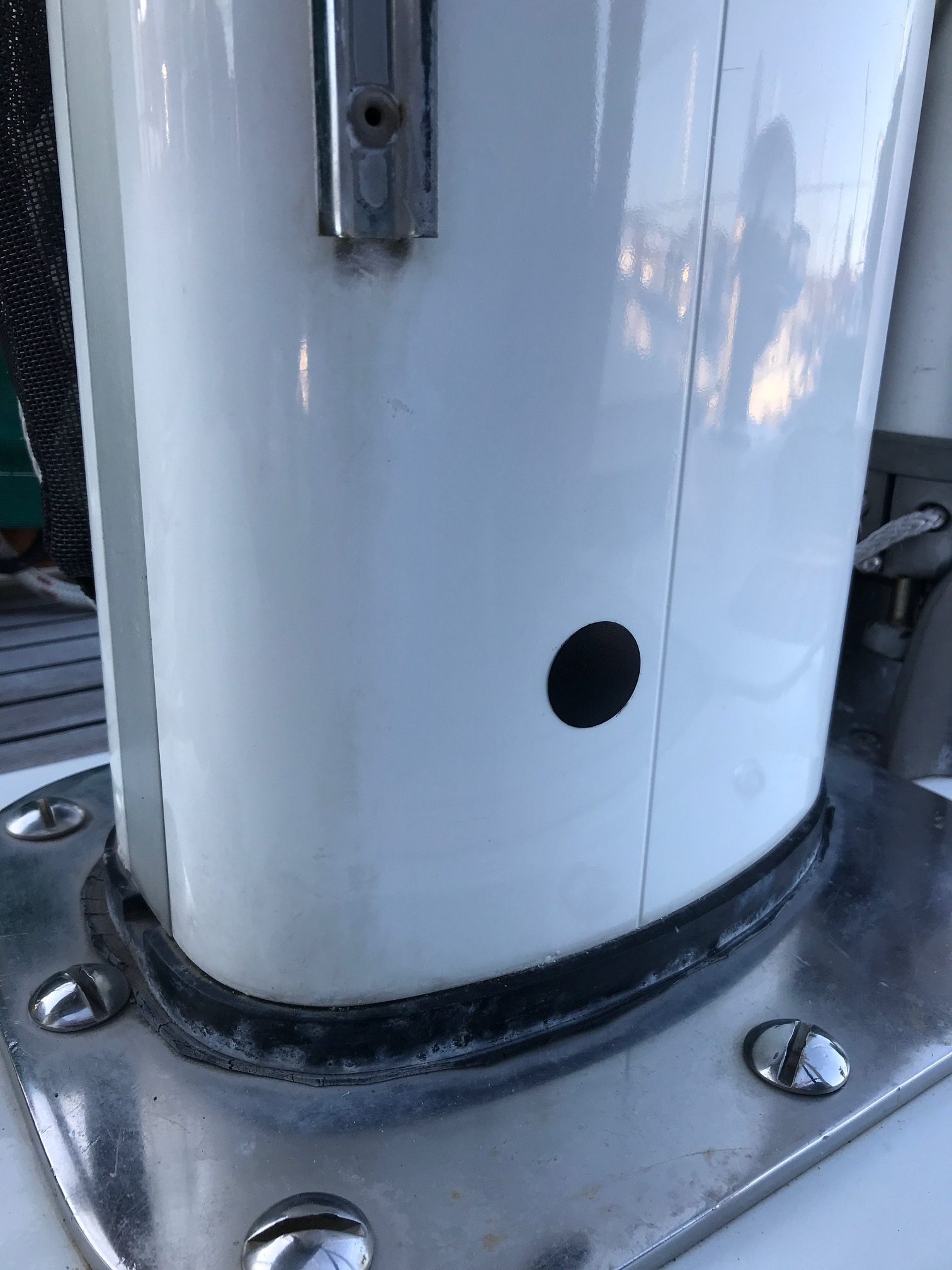
Here’s a picture of the access hole on the starboard side of the mast with the new NMEA 2000 wire (black) coming out. The old NMEA 0183 wire (grey) goes to the mast head and will be used to pull the new wire 58′ up the mast. The dynema string is a tracer pull-line through the compression post that will be left in case it’s needed in the future. After the wire was pulled up the mast, I capped the access hole with a plastic cap.
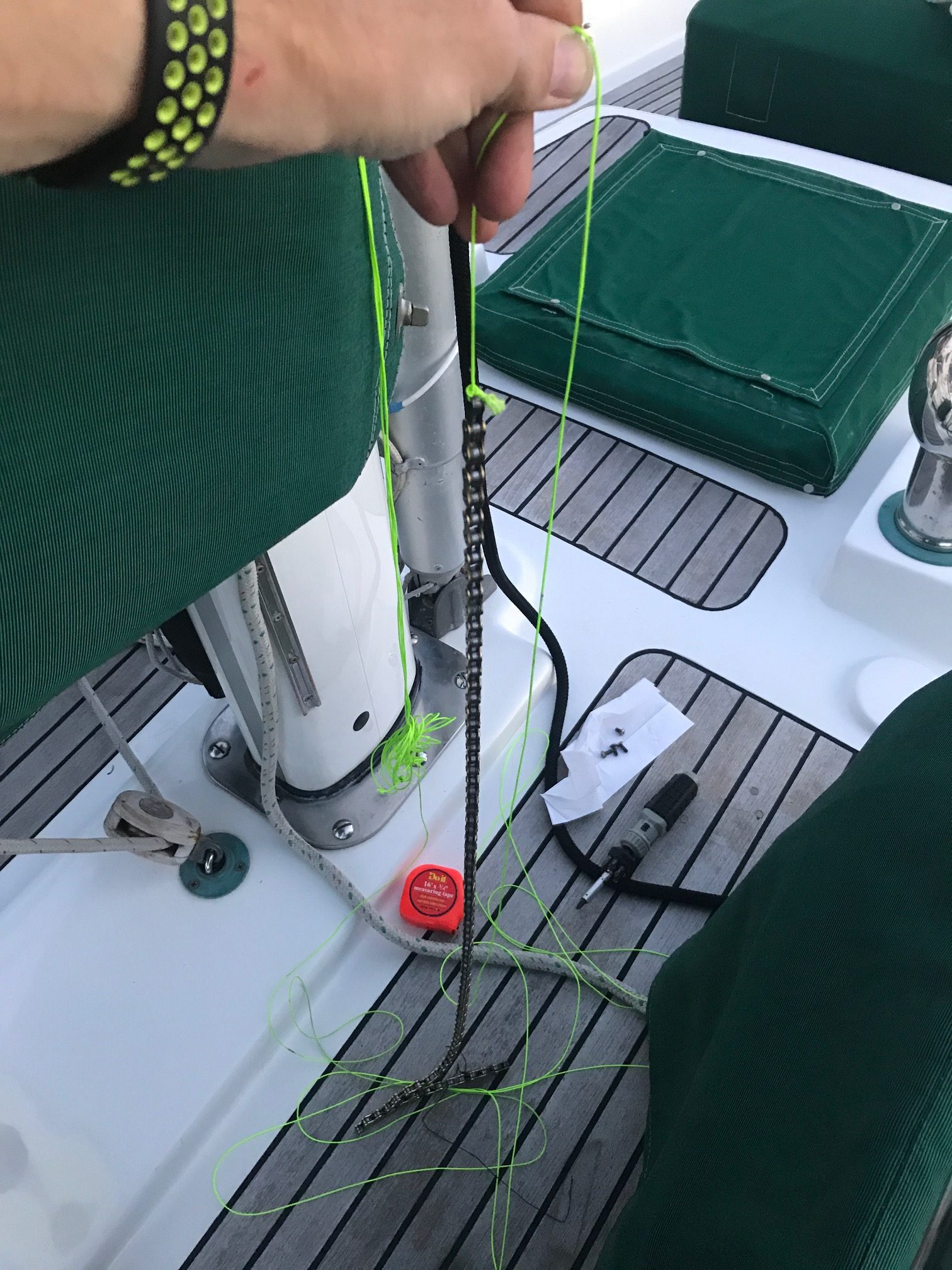
The final step was to run the wire up the mast. I thought it would be easy. I was wrong. Since I could not pull the old wire up though the conduit, I decided to run the new wire inside the mast (but not in the conduit). So I bought a bicycle chain to tie onto the end of a string and lowered it from the top of the mast. The weight and flexibility of the 3′ bike chain allowed the feeder string to go all the way down the mast to the base, where I was able to fish it out the access hole. So far, so good. Next I fastened 3 long zip ties around the wire about every 10 feet. By not cutting the ends off the zip ties and offsetting them by 120 degrees, this trick should buffer the wire from hitting the sides of the mast as the boat rolls and pitches. Next I securely taped the new wire to the bike chain, then went up the mast again to pull it up. About half way up the mast, it got stuck! Since I couldn’t pull it up (I tugged as hard as I dared) , I tried lowering it but it wouldn’t go down by gravity. I went back down to deck level and tried to pull it down, but it was stuck. I finally pulled hard enough to free the wire from the chain. Since my string was 100′ long, I decided to feed down more string from the top of the mast. Gravity took it all the way down to the bottom, where I was able to fish it out the access hole. Next I tied the new wind sensor wire to the string, returned to the top of the mast, and successfully pulled it all the way up the mast. I mounted the new wind sensor at the masthead on a quick release bracket and plugged the wire into the sensor, flipped on the navigation equipment, and the wind instrument came to life, showing speed and direction! Success. Sort of. The bloody chain was still stuck somehow/somewhere inside the mast, with a string attached to it the came out the top of the mast. I tested all the halyards that run internal to the mast and they all move fine. My only thought is that there must be some pinch point near the spreaders that has wedged the chain. For now, I’m leaving it. I’m taking the boat out sailing tomorrow and will enjoy the wind instrument and try not to think about the chain that is stuck somewhere inside the mast! Another project for another day….
UPDATE: When I pulled up the drifter halyard today, the chain that was stuck inside the mast came tumbling down to the base of the mast and I was able to fish it out the small access hole. Problem solved!
I completed a lot of boat projects during the winter and spring. Some were left over from things that broke during our trip to the South Pacific, and some were completely new. Some projects took a day to complete and others took weeks. Here is a partial list:
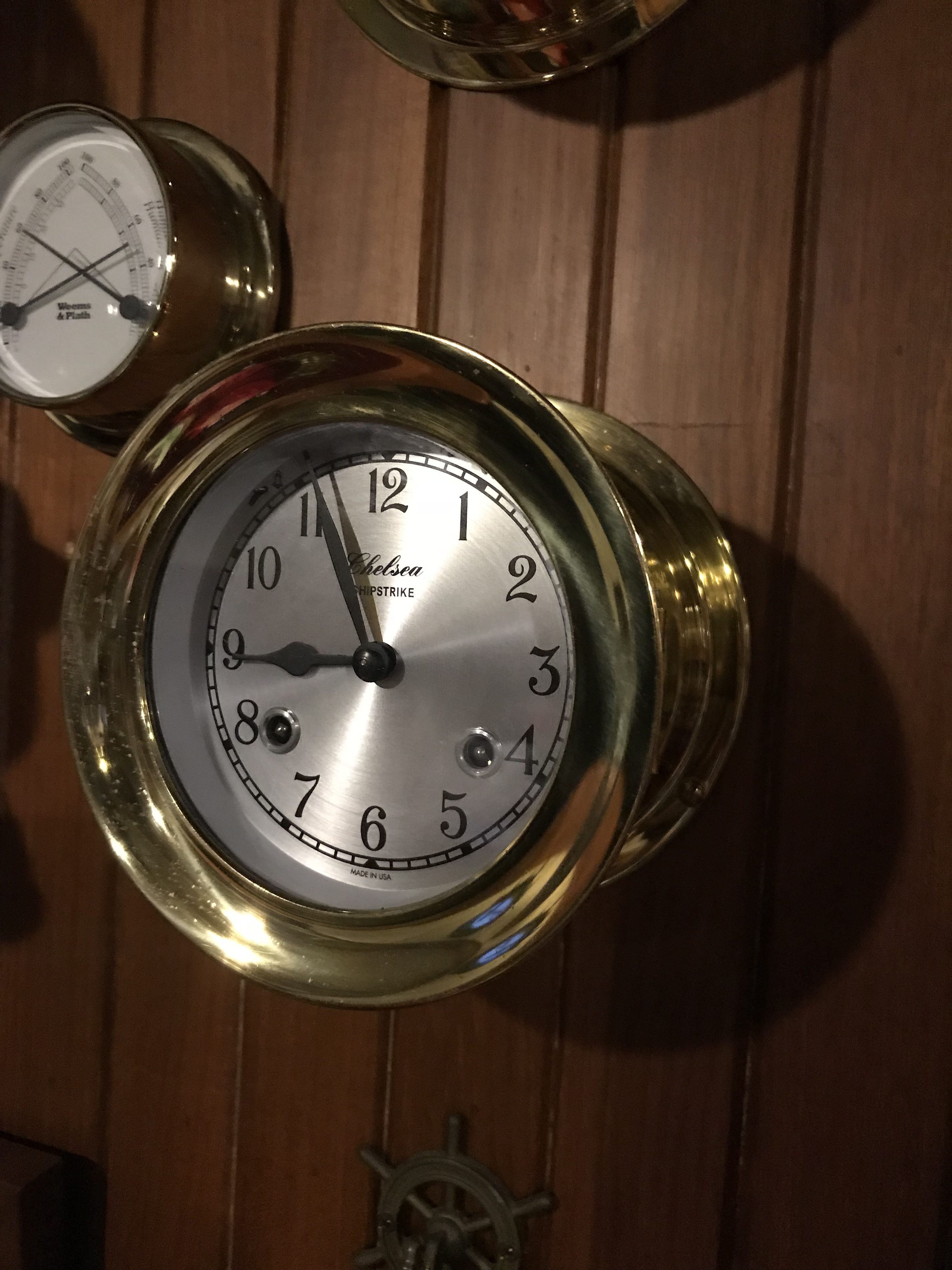
Chelsea Shipstrike Clock–the 10 year old mechanical clock worked intermittently by the end of our trip. When it stopped ticking, sometimes removing it from the bulkhead and shaking it would restart it. But eventually it stopped altogether. I got quotes from a local repair shop of $400 which included taking it apart to clean and lubricate. That seemed like way too much for a clock that sells for around $800. So, a bit of YouTube research, a $10 bottle of clock oil, and a few hours of my time was all that was needed to get the clock ticking again.
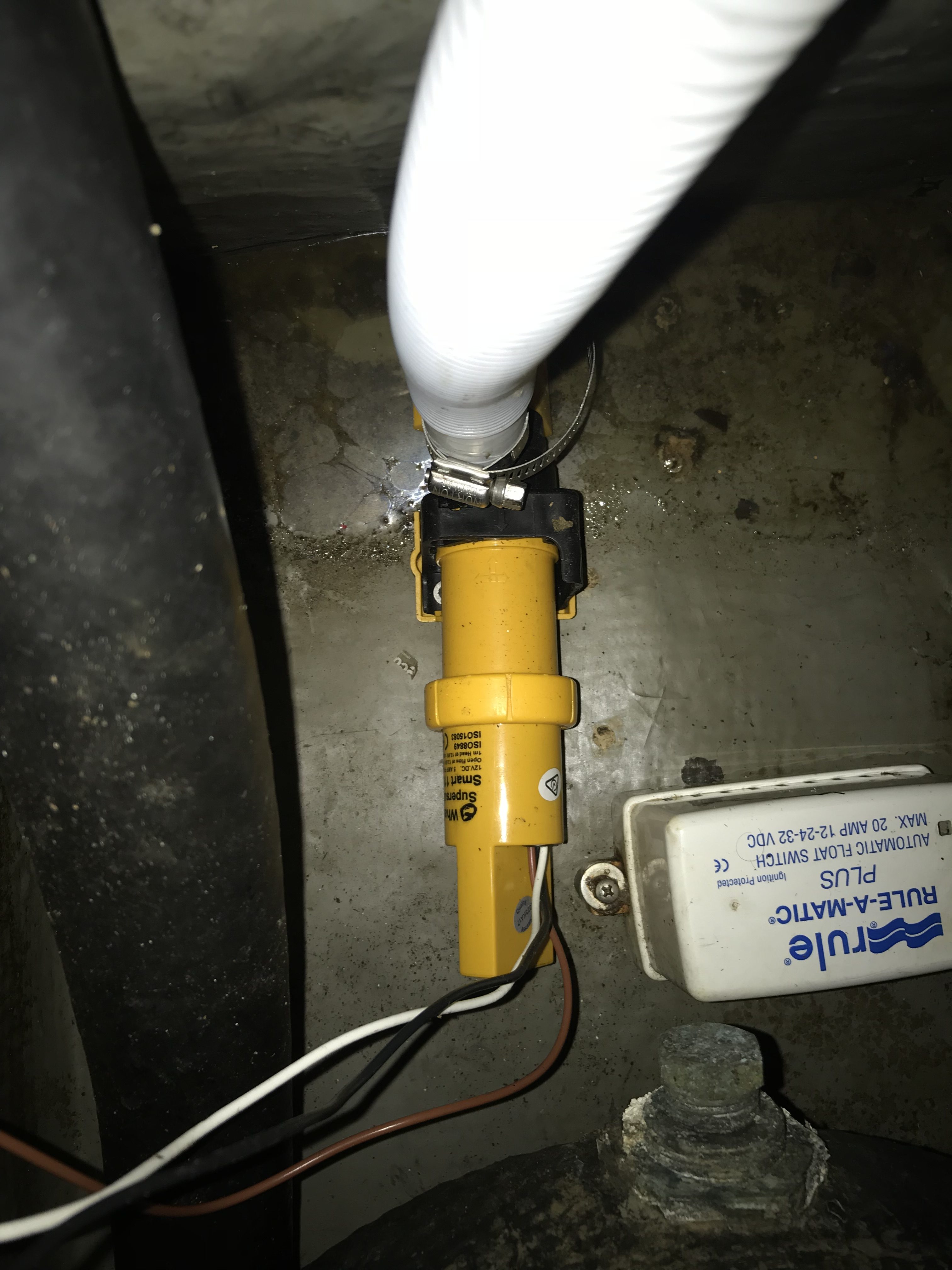
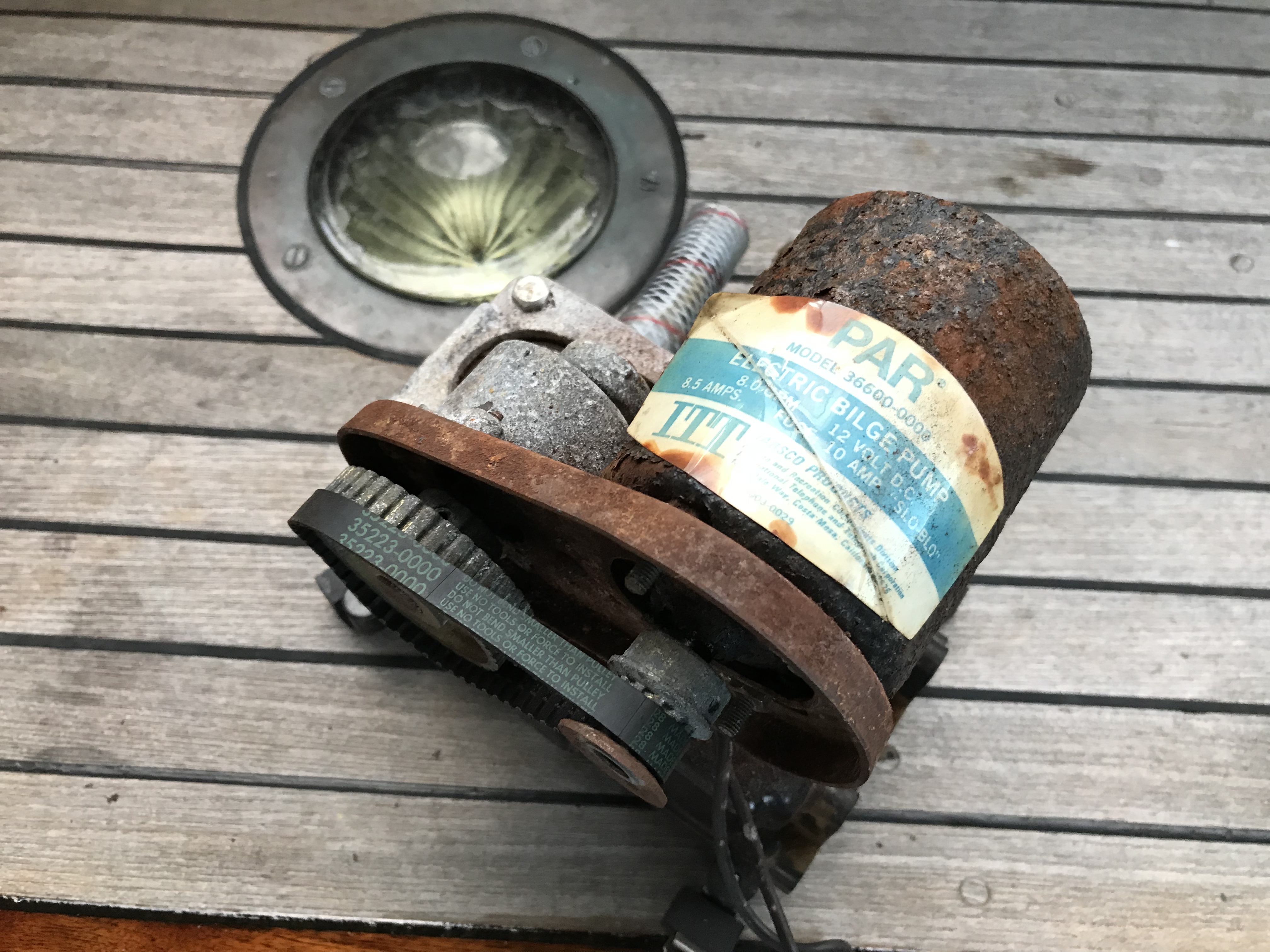
Bilge Pump–the secondary bilge pump that turns on first to remove water from the bilge was an old diaphragm pump with a 12VDC motor with brushes! Probably original equipment so it must have been over 30 years old. During our trip I replaced the belt and internal diaphragms with a rebuild kit I brought along. The pump got a real good workout on the wet passage from Hawaii to Seattle with lots of water on the deck finding its way to the bilge. It also had an inline filter that I had to clean often because it was getting clogged up with dead cockroaches! Anyhow, I decided to replace it with a new pump that is half its size and pumps twice the GPH. The Whale Supersub Smart pump has automatic water sensing that uses no moving parts, and was easy to install. Since this pump sits in the bilge (the old one was located outside the bilge and had a hose going to the bilge), it required running new wiring and a new hose to a thru-hull. Total cost was about $125.
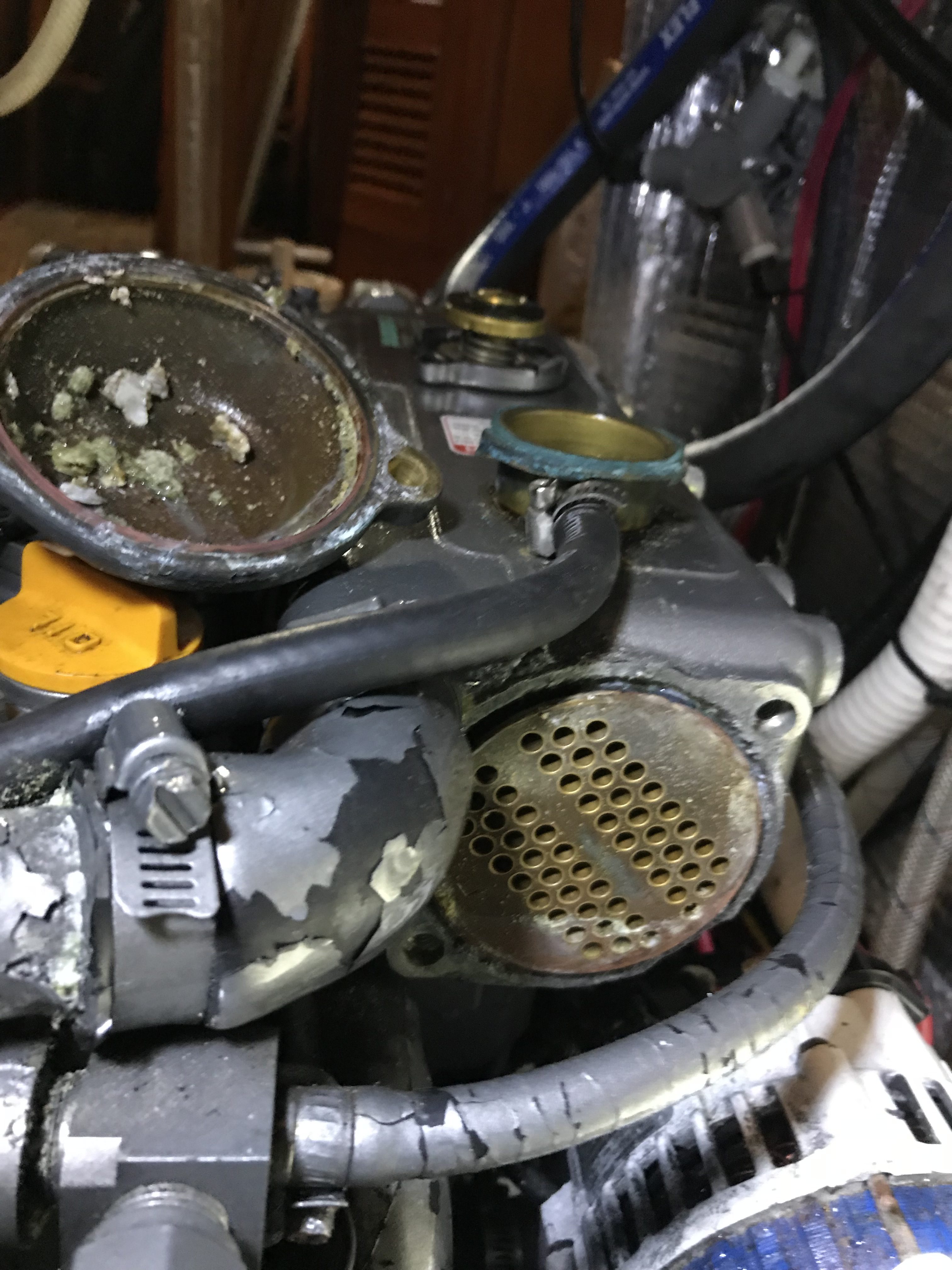
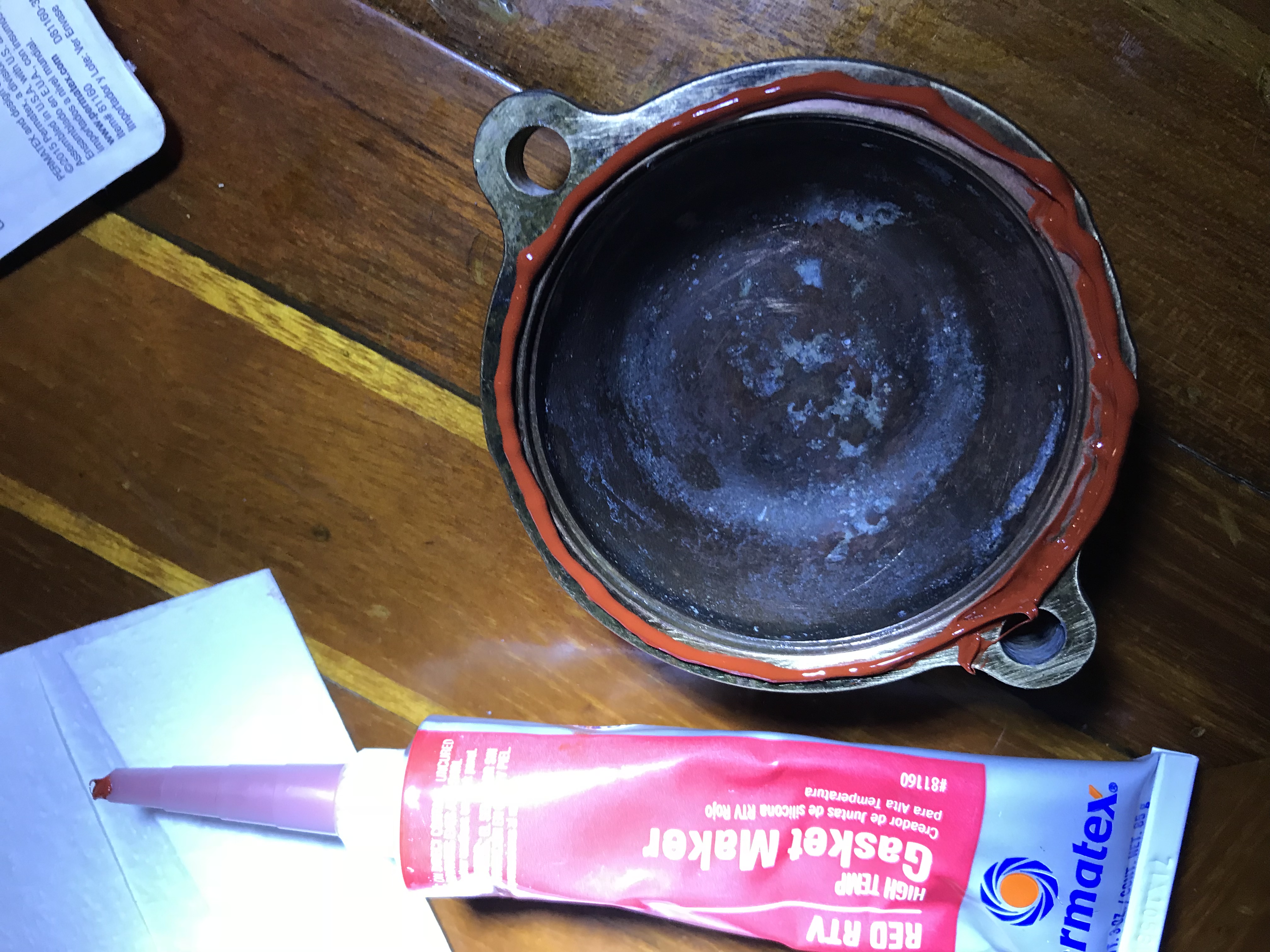
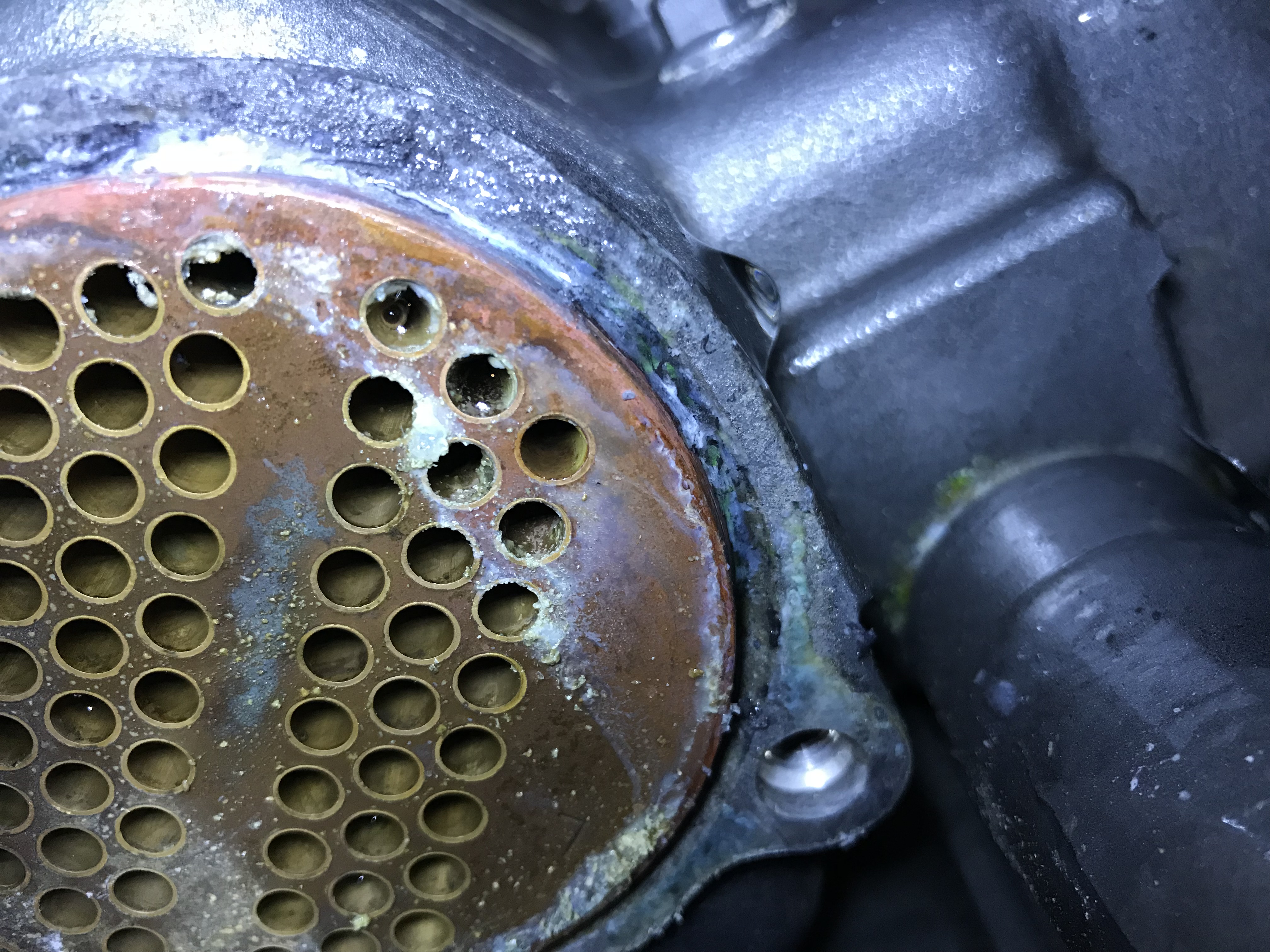
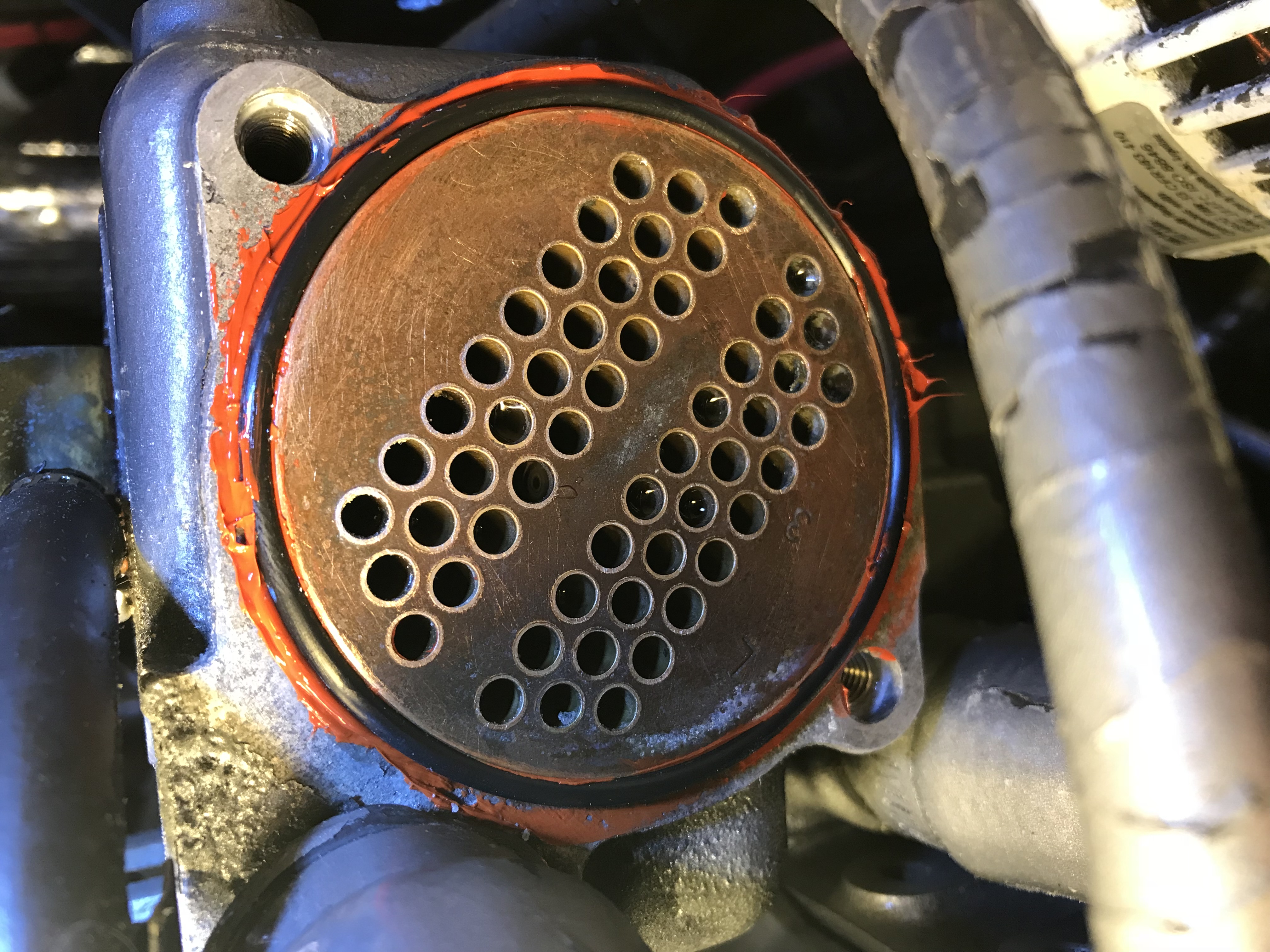
Heat Exchanger–a marine diesel engine removes heat from the engine by passing sea water through a heat exchanger. The sea water passes through 54 copper tubes that are surrounded by fresh water (radiator fluid plus water) that circulates through the engine for cooling. Since saltwater runs through these tubes, they often get clogged and need to be removed for cleaning. The heat exchanger on my Yanmar engine sits on the side of the engine with not access, so removing it is challenging. The alternator needs to be swiveled away and some hoses need to be removed to gain access to the 2 end-caps. Once I removed the end-caps, I could shine a light through the tubes and found them to be surprisingly clean, with no buildup. This was probably due to the fact that since 2004 when the new engine was installed, the boat has lived in fresh water most of the time. Unfortunately I could not manage to slide the heat exchanger tube housing out of the heat exchanger, even tapping one end with a heavy mallet. I tried applying heat using a heat gun but there’s a lot of metal and it didn’t seem to get very warm. Since it looked very clean anyway, I decided to let well enough alone and not remove it. Using new O-rings, I reassembled the end-caps, turned the sea water valve back on, and water leaked from both end-caps. On my next attempt, I was more careful when seating the O-rings, and then I only had one end-cap leaking. But this was a different problem. I noticed the heat exchanger housing had corroded at the bottom lip of the end-cap. So as I tightened the end-cap bolts, the O-ring had nothing to push against so it wasn’t making a water-tight seal. I suspect there was a small leak that over time caused the metal housing to corrode. A new housing is around $2000, so I took a few days to think about how to fix it without buying a whole new heat exchanger. The O-ring is about 4″ in diameter, and the metal was corroded in only about 1/2″ of the outside groove. So I clipped a 1/2″ section out of the O-ring and seated the remaining O-ring (maybe now it’s a C-ring) in the end-cap groove. Then I applied high temperature gasket material where the 1/2″ gap was, hand tightened the end-cap bolts, let it sit for 1 hour, then fully tightened the bolts. After sitting for 24 hours, I opened the sea water valve and there was no leaks. I ran the engine for 30 minutes and still no leaks. I’ll keep an eye on it the next couple of times we take the boat out, but I think it’s a good fix.
After cleaning and applying gasket maker (this was before I cut the O-ring)
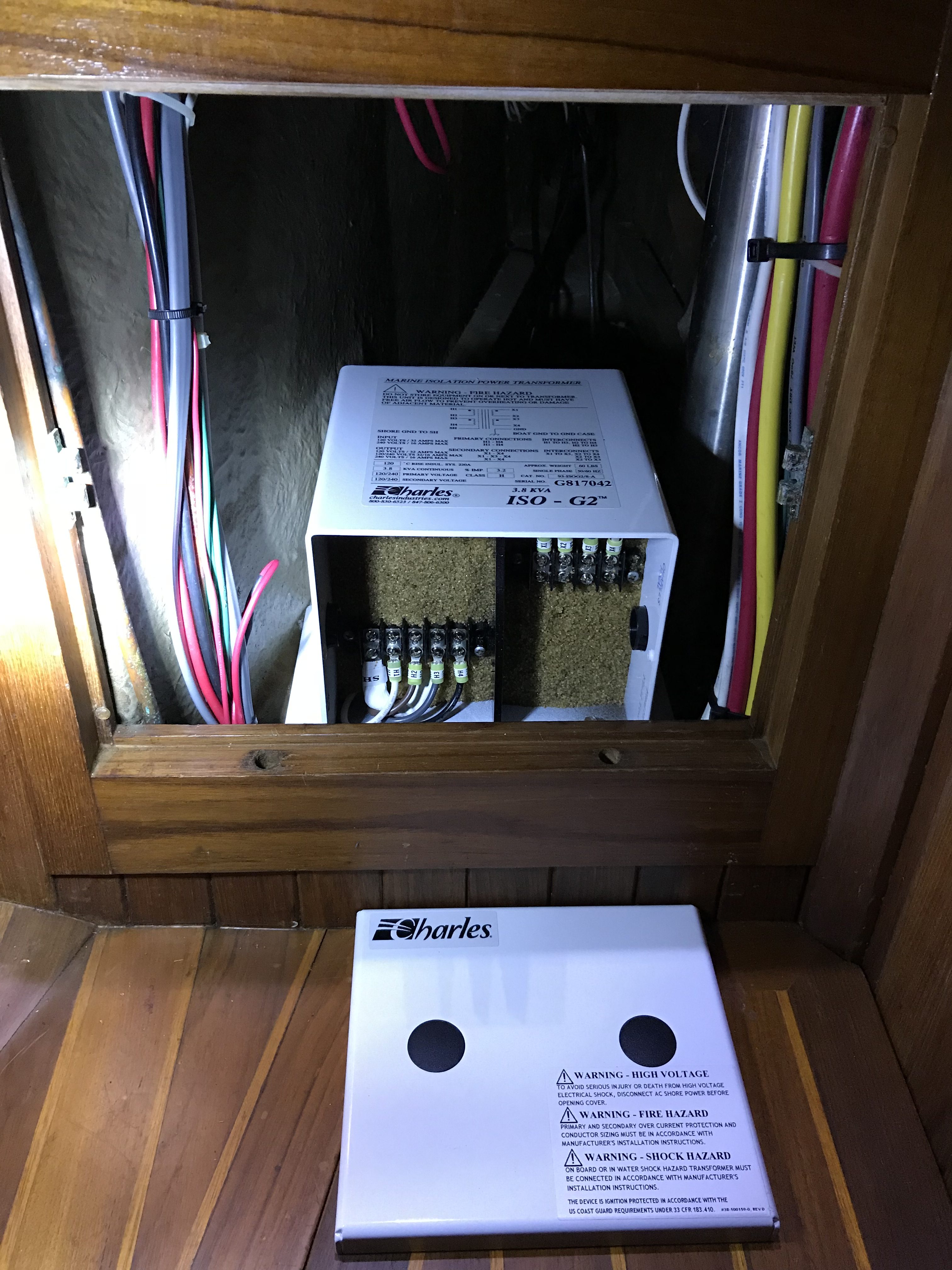
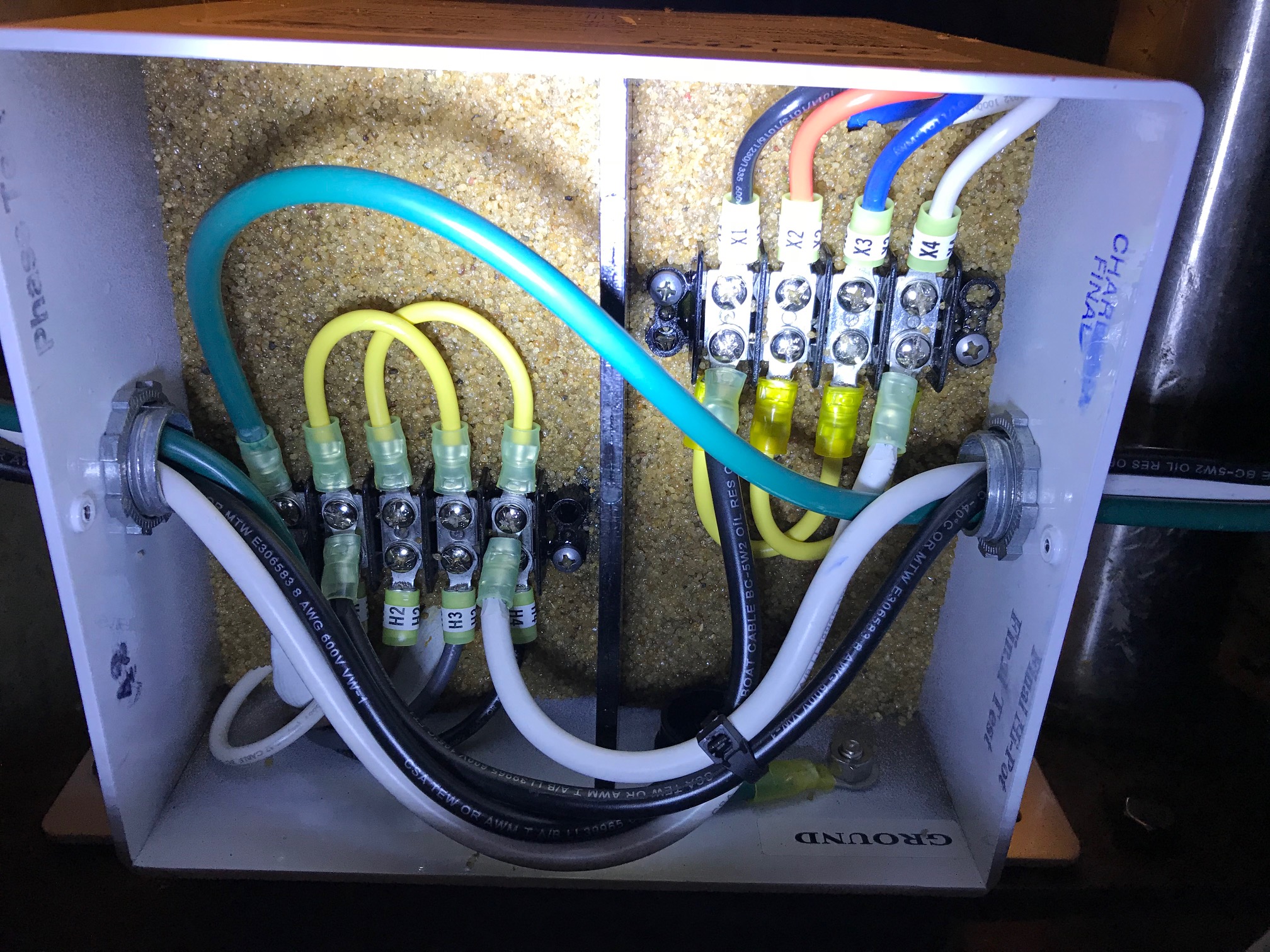
Isolation Transformer–The marina recently upgraded its wiring to newer standards and throughout the winter, boats were tripping the more sensitive GFCI electronics. Eventually, the marina is requiring all boats to install isolation transformers. More common on boats in Europe, this is a safety device that helps prevent stray currents going into the marina water on boats that are not wired correctly or have a fault. Stray currents entering the water can cause muscles to cramp and result in electrocution and drowning of swimmers next to the boat. An isolation transformer magnetically isolates the shore AC power from the boat AC power. So it also protects a boat from faulty marina wiring. I decided to buy a Charles Industry “international” 3.5KVA transformer. The international part means that it can be configured to accept either 120VAC or 240VAC shore power, and output either 120/240VAC. So I could (theoretically) take the boat to Australia and, after moving a few jumpers to reconfigure the isolation transformer, plug into a 240VAC dock power and have 120VAC onboard. The transformer weighs a whopping 70 lbs with its iron core and windings. I used the space from where I removed the old bilge pump to install it–it’s a dry place and sits directly below the AC electrical panel. Since it didn’t quite fit, I had to saw a small piece off the bottom mounting bracket, then drill 4 holes and screw it down. Next I made the 4 required jumpers to configure it for 120VAC input and 120VAC output using 12 gauge wire. Next I ran new 3-strand 8 gauge wire from the shore input connector to the isolation transformer. The run was only 10 feet long but it took about half a day! There a 4′ section that you can’t see or feel, but the wire would not push through. 3-strand 8 gauge wire is pretty thick, so I ended up removing the sheathing and feeding each wire (hot, neutral, ground) through separately. I suppose I could have used the existing wire, but it wasn’t long enough to reach the transformer and I didn’t want any connectors. Plus I wanted all new wiring for such an important piece of equipment. Next I had to figure out how to wire the output of the transformer. I made a complete diagram of the boat’s AC electrical system, then researched (Nigel Calder’s electrical book, Google searches) and came up with a plan. I learned that without an isolation transformer, it’s important to never short AC neutral (white) to ground (green). This is done on shore at the marina. But with an isolation transformer, you must short the neutral and ground on the boat. I also learned exactly what the AC Main dpdt switch does, and what the SHORE/OFF/INVERTER switch does. In short, I learned a lot about the AC system on my boat. After wiring up the output hot/neutral/gnd, and swapping the new wires into the shore power input connector, I nervously turned the power on and it worked. Before installing the isolation transformer, when plugging into the shore power, I had to bring things up in a particular way or else I would trip the sensitive marina electronics (it has to so with the boat inverter powering up with a 30 second short between neutral to ground). With the isolation transformer, I no longer need to delay the SHORE/OFF/INVERTER switch 30 seconds. The final step was zip-tying and labeling the new wiring. The isolation transformer and all the wiring and connectors was about $1000. Project time was about a month.
Here’s a diagram showing the complete AC System of the boat: AC System Diagram
Here’s a diagram showing the complete DC System of the boat: DC System Diagram
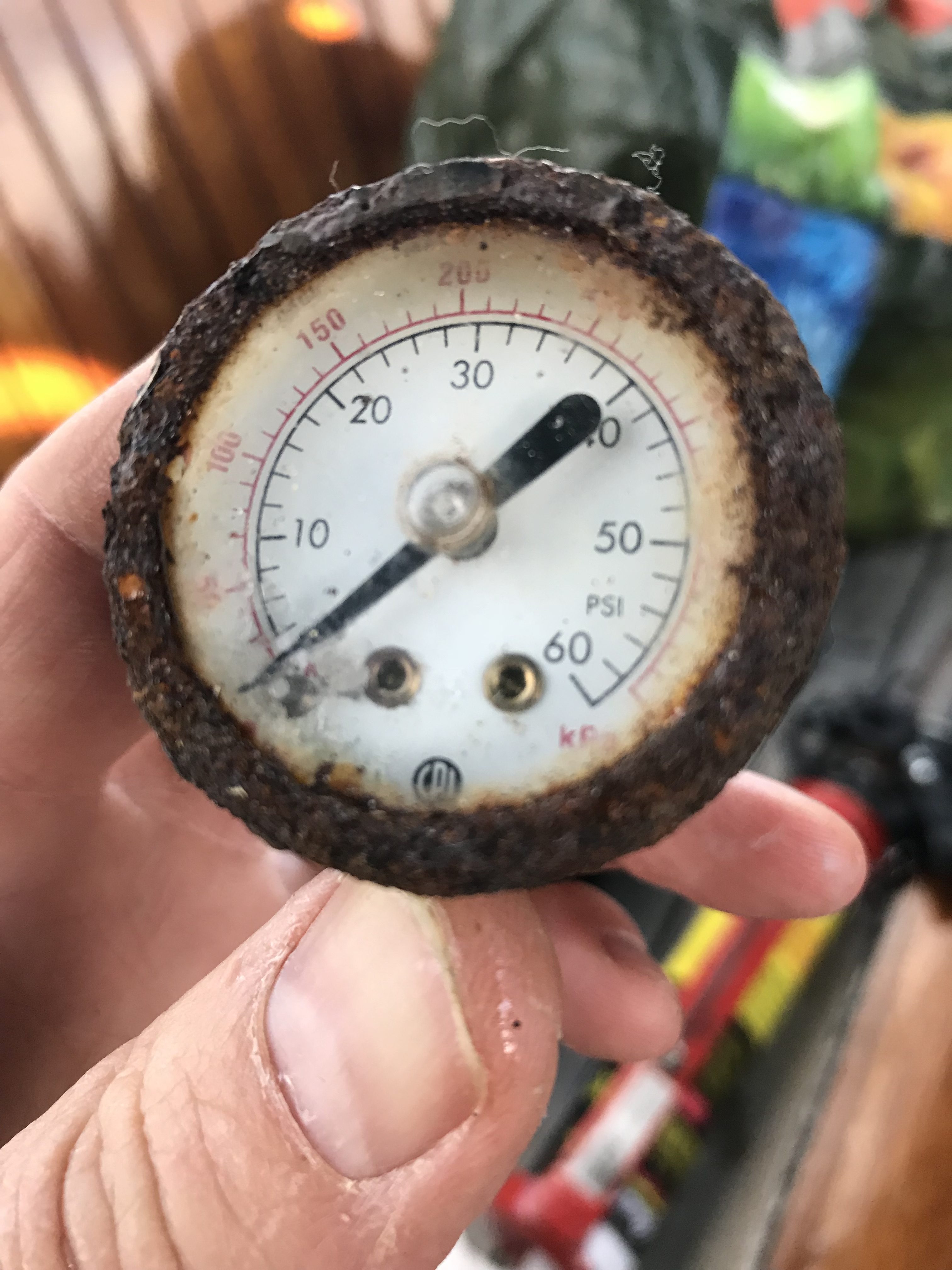
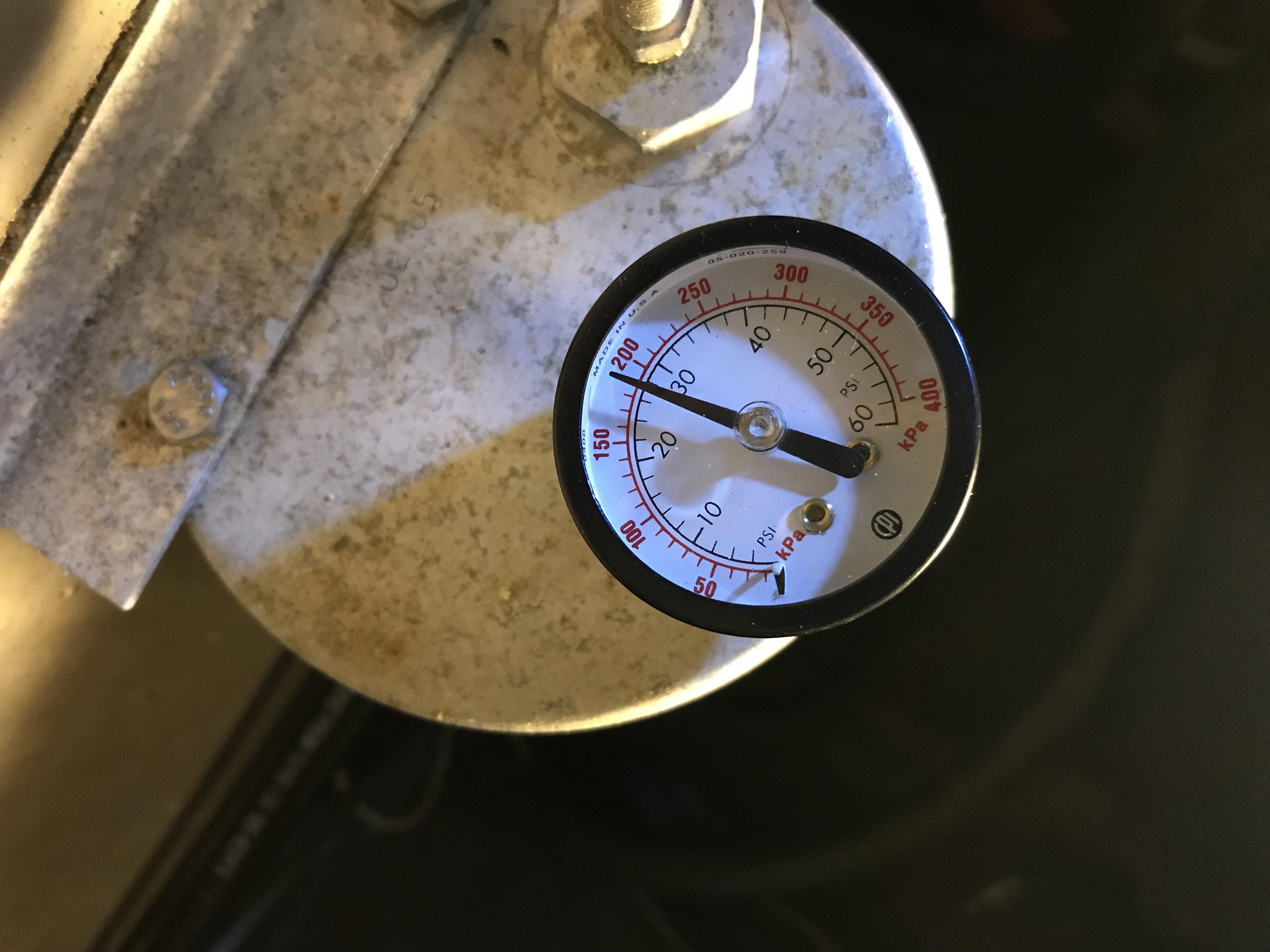
Hydraulic Pressure Gauge–By the end of the trip, corrosion got the best of various metal items. This is what the hydraulic pressure gauge looked like (top) and the new gauge I mounted to the hydraulic fill cylinder. Cost was $15.
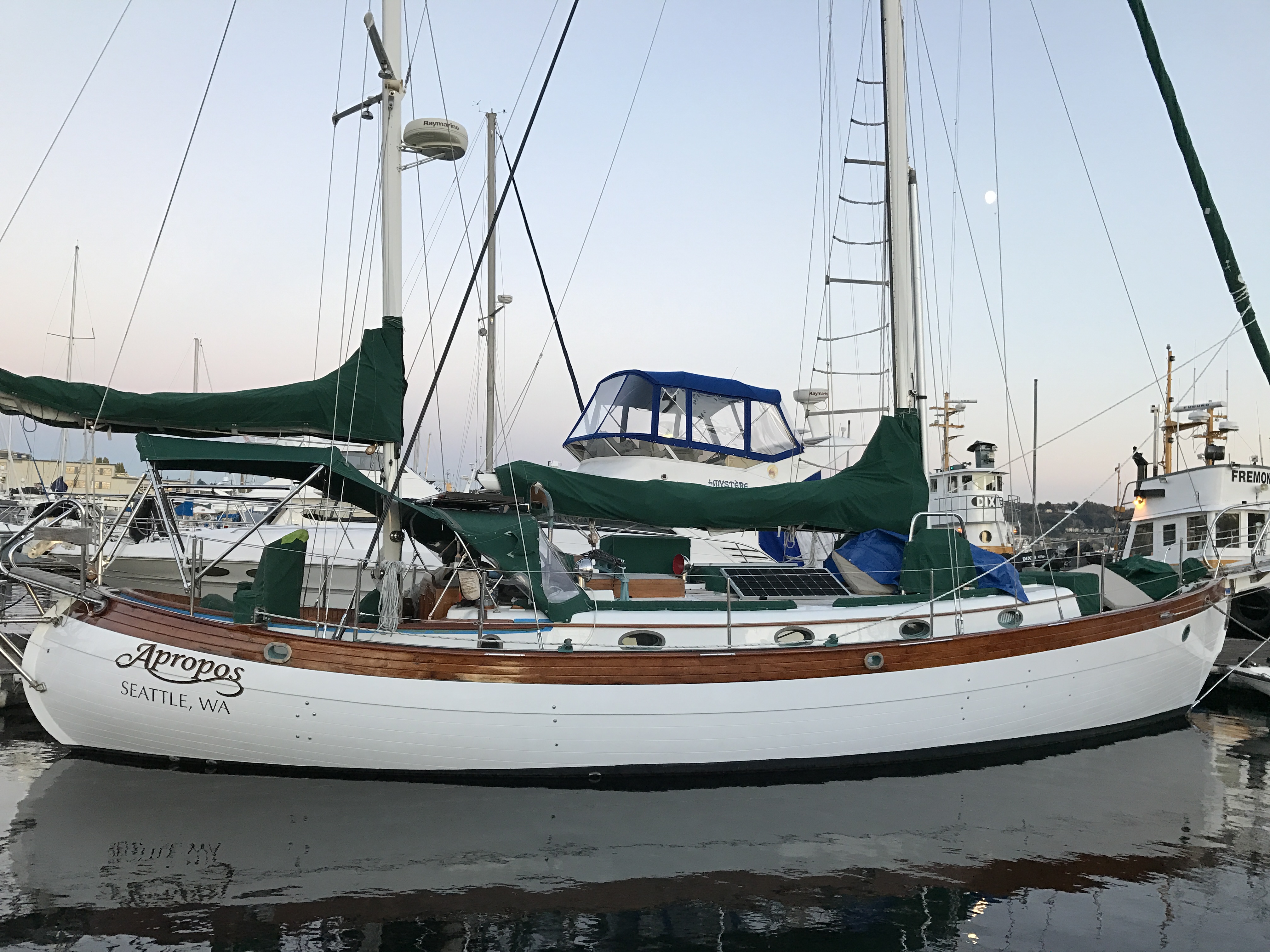
Part II restoring Apropos’ brightwork was accomplished during August-October 2017. Restoring the brightwork entails removing the existing varnish using a heat gun and scraper, fairing the bare teak by sanding, applying Awlwood Primer with tint, and building up the surface with 8 coats of Awlwood Clear.
Last summer, the following parts were finished:
Caprail & outer planks
Cockpit combing (vertical & horizontal)
Coachtop eyebrow
Misc.–bowlight bases, flu cap
Part II this summer included the following:
Cockpit seating
Boom gallow
Butterfly hatch
Turtle hatch
Wheel
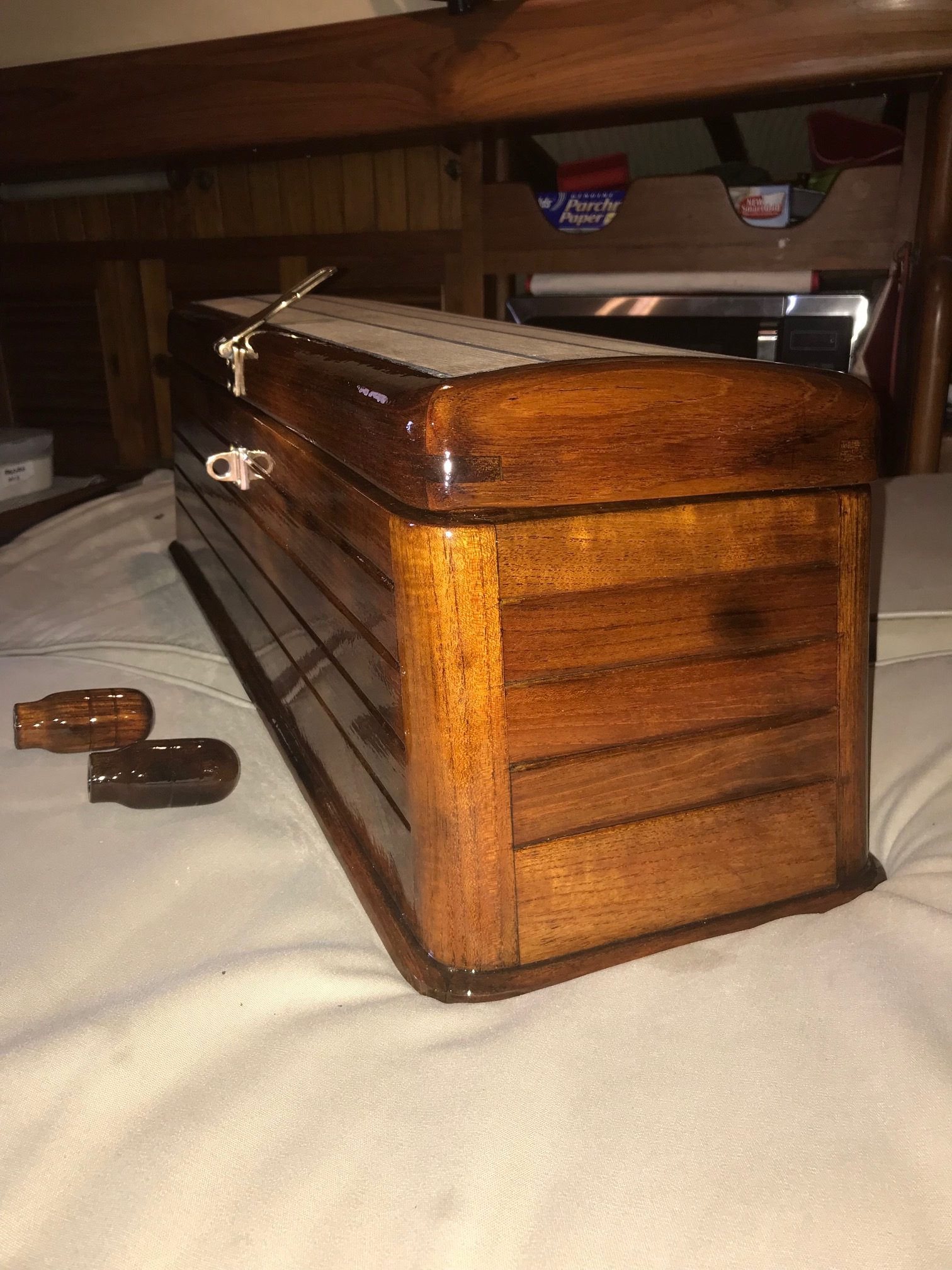
Small deck box
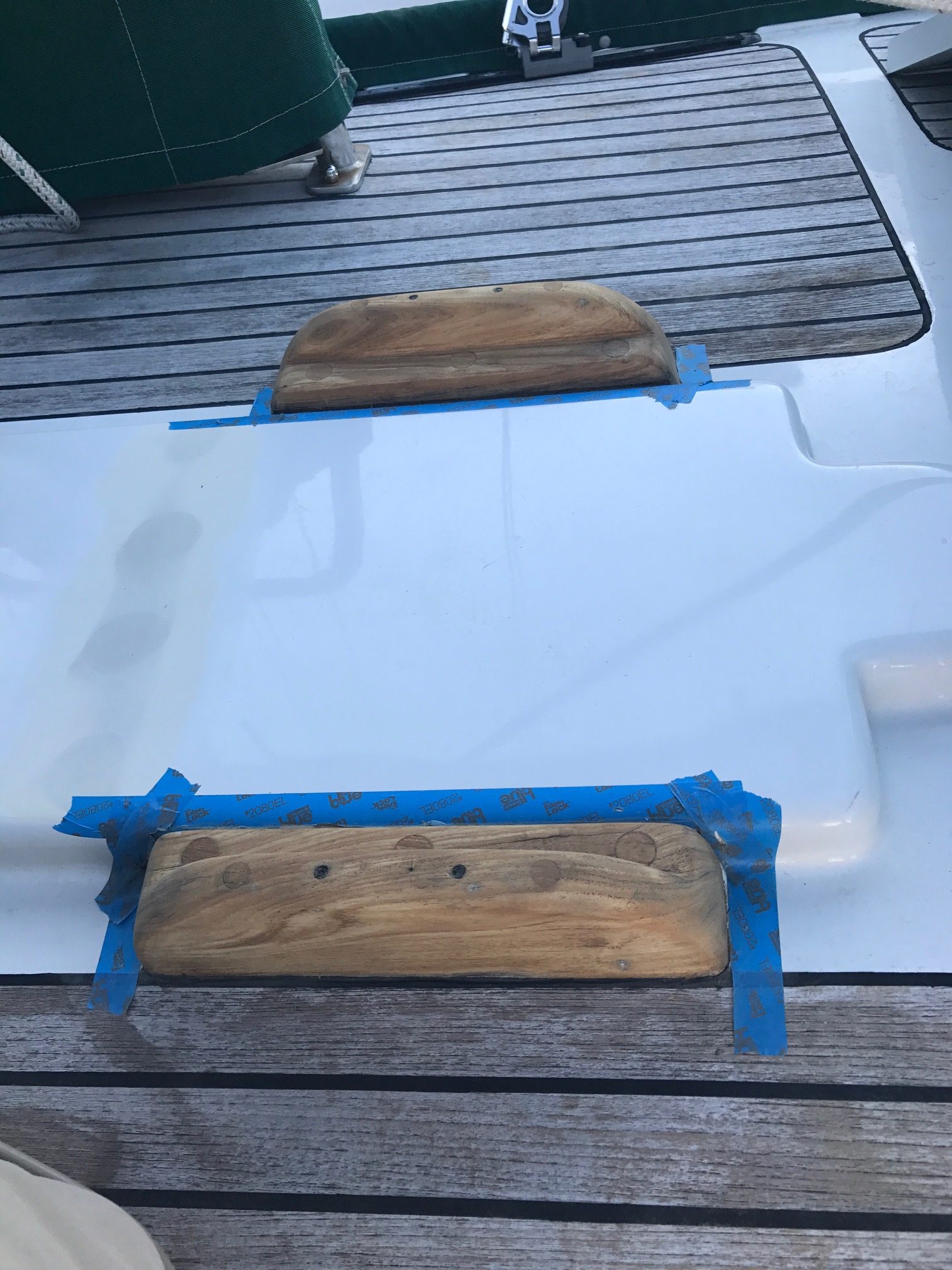
Misc.–throttle/transmission lever knobs, compass base, winch bases
I had near perfect weather, sunny but not too hot, for applying the gloss coats. The only thing I did differently from last summer was to use foam brushes instead of high quality bristle brushes. I found the bristle brushes were nearly impossible to clean up after each use, and it was easier to just throw away the foam brushes after each coat. I built up the 8 coats of clear by applying 2 coats per day, then letting it dry for over 24 hours, and lightly sanding with 320 grit.
Stripping old varnishReady for primerCompanionway hatch and instrument turtle preppedCoachtop life raft chocksBoom crutch prepped1st coat of Awlwood Clear
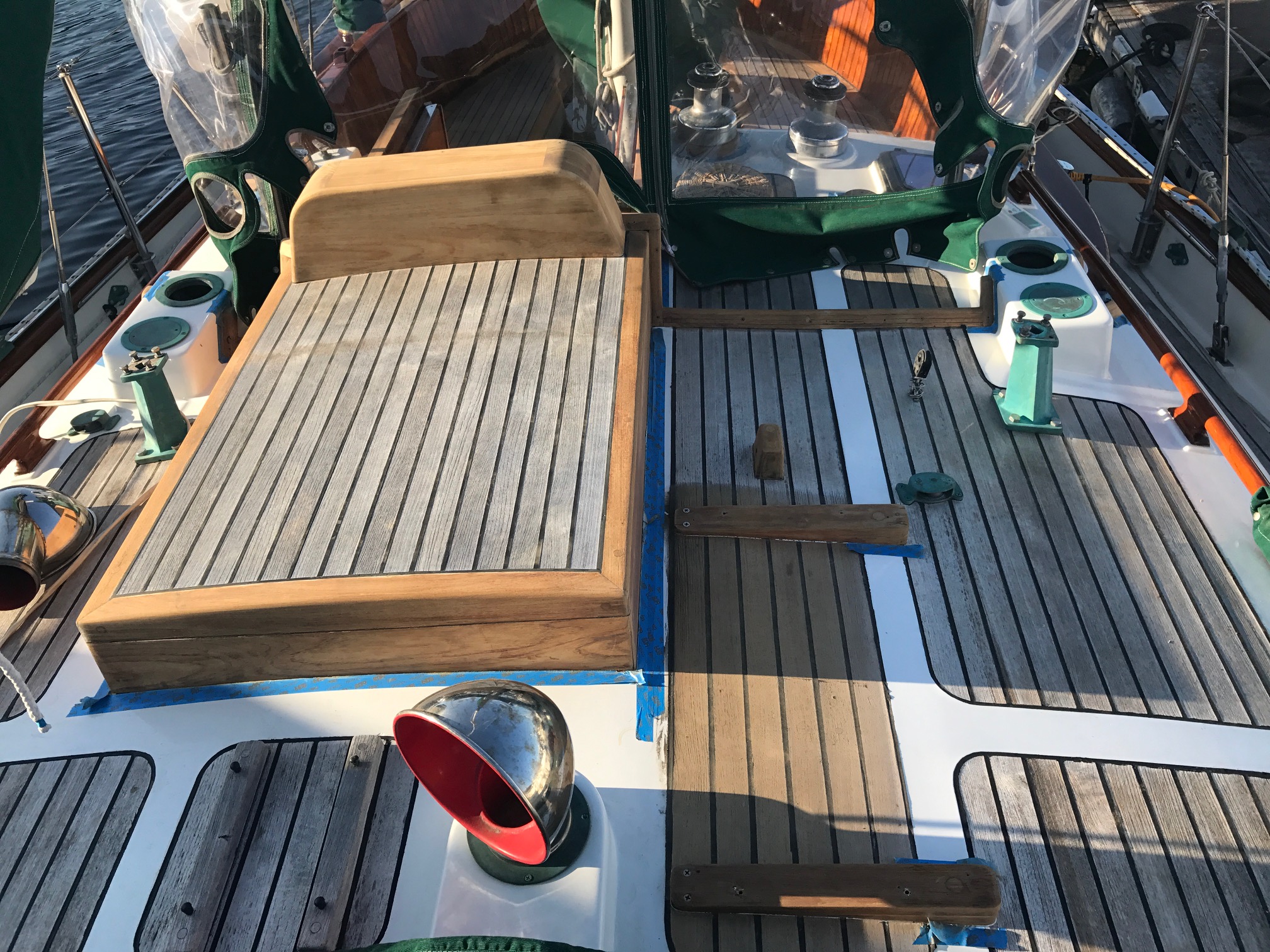
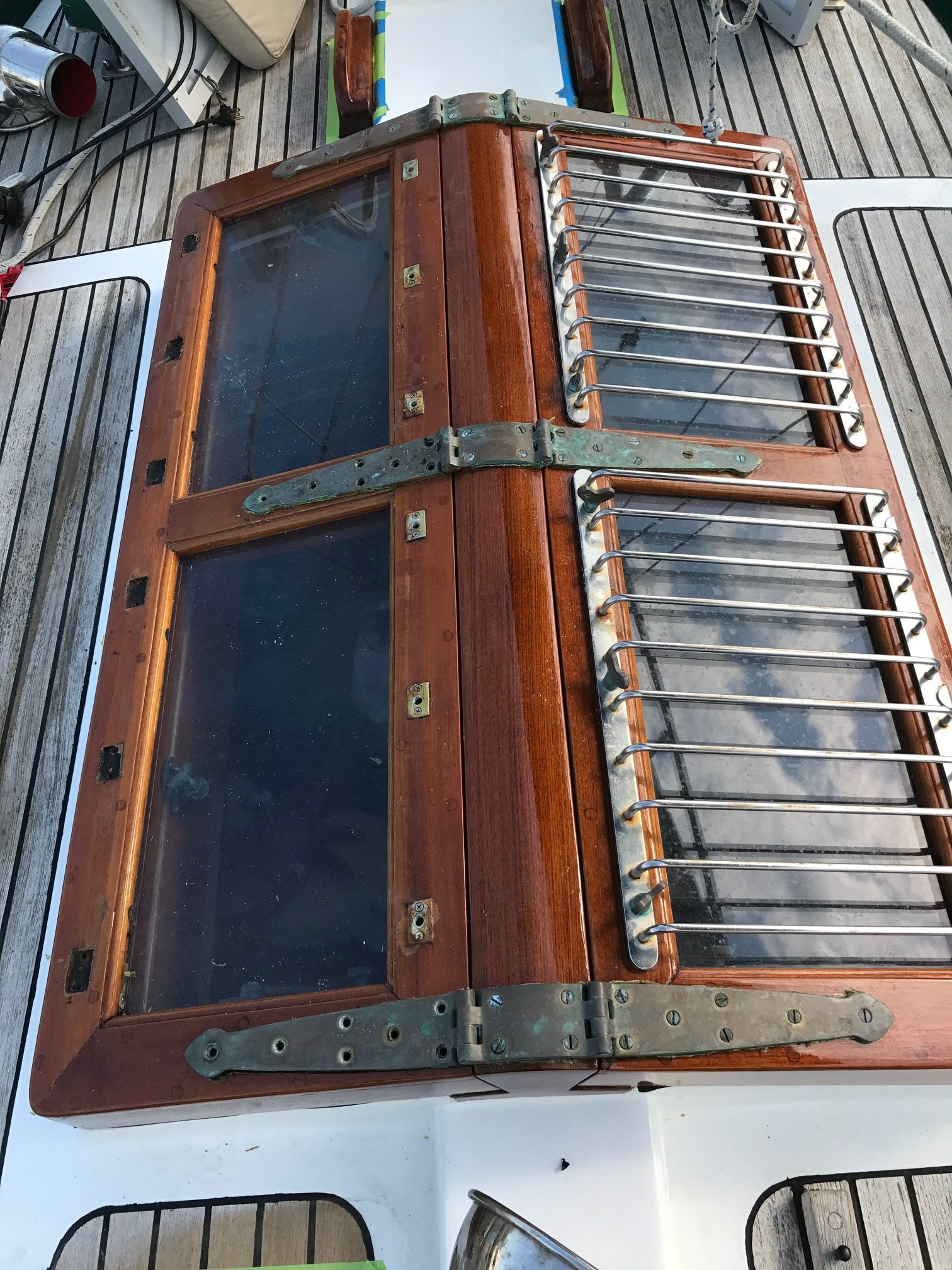
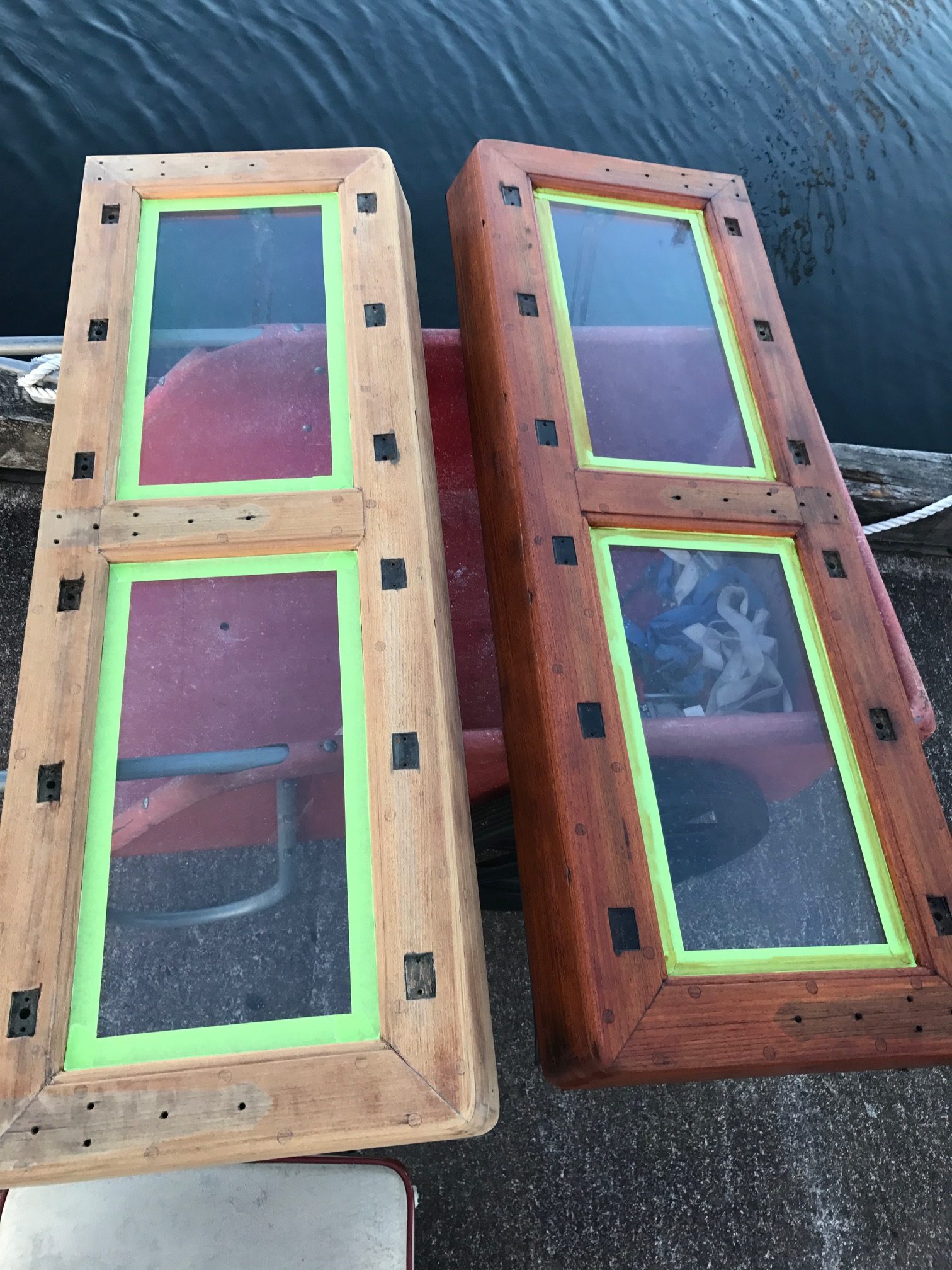
The butterfly hatch took a lot of time since I had to remove the bronze hinges & stainless steel window guards, and mask the windows.
Prior to refinishingAwlwood primer applied to one half
Some of the parts (wheel, small deck box, knobs, compass base) were removed from the boat and refinished indoors after the weather became cooler and rainier in October.
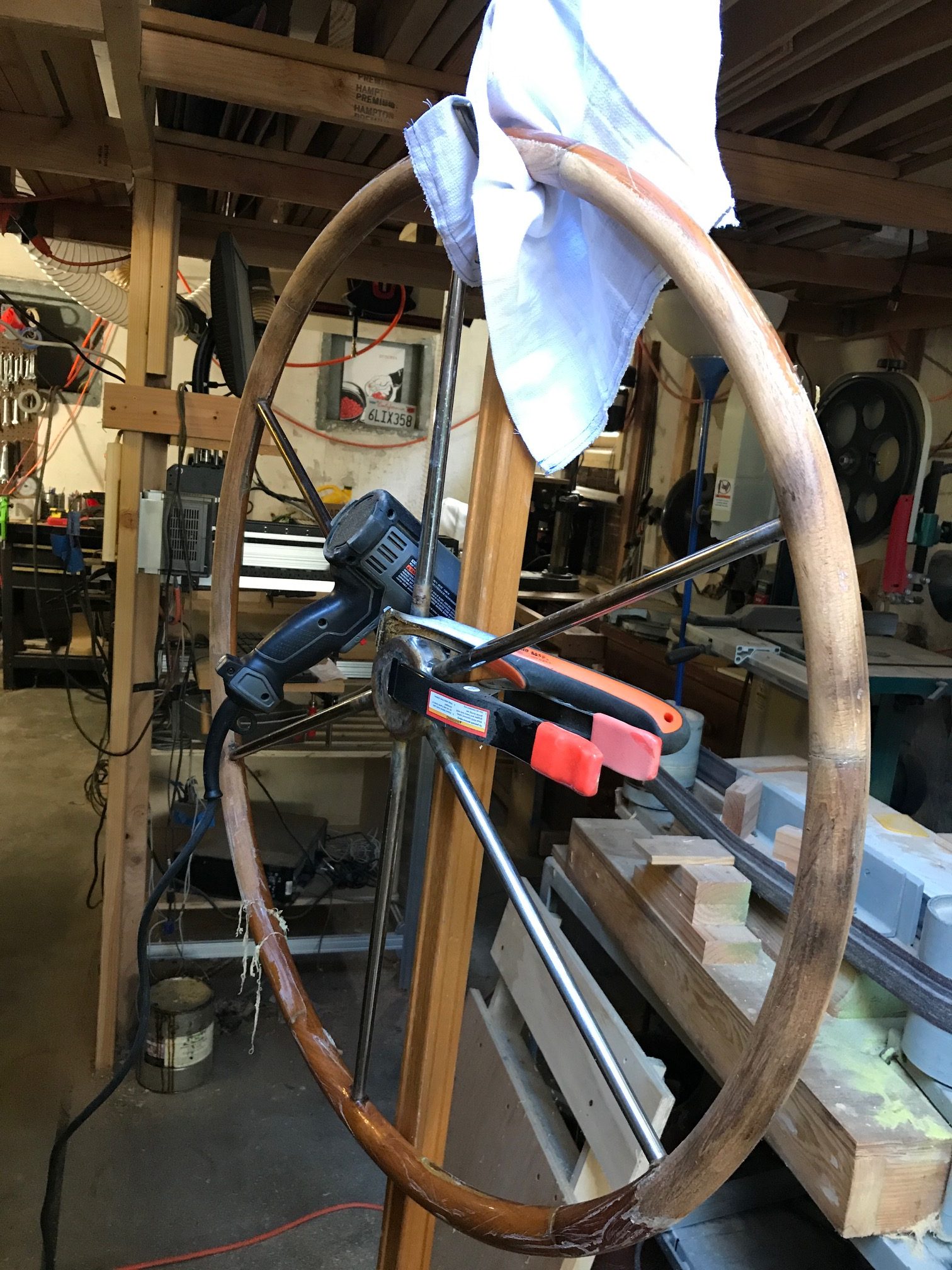
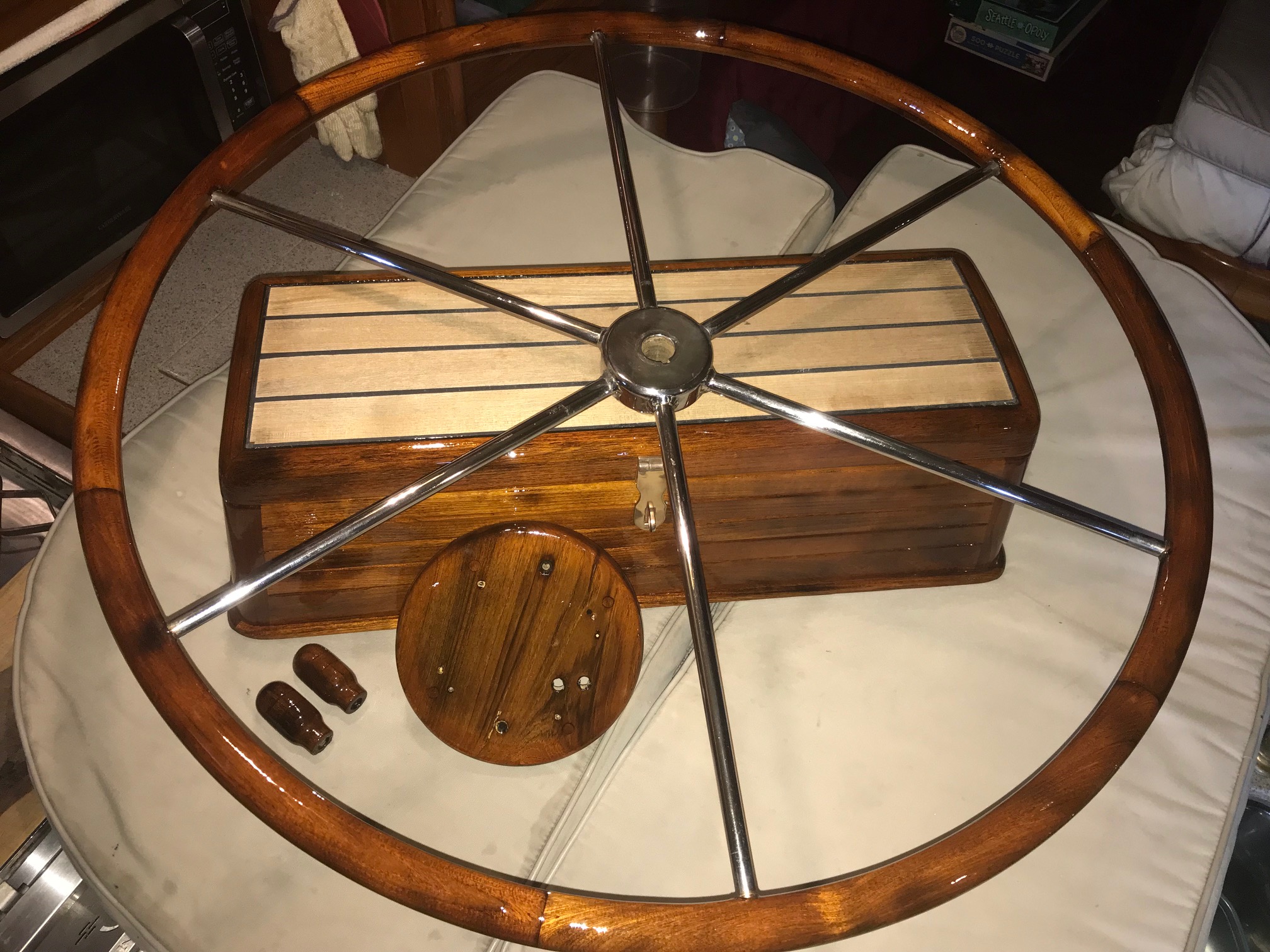
Stripping wheelAfter 8 coats of clearSmall deck box refinished
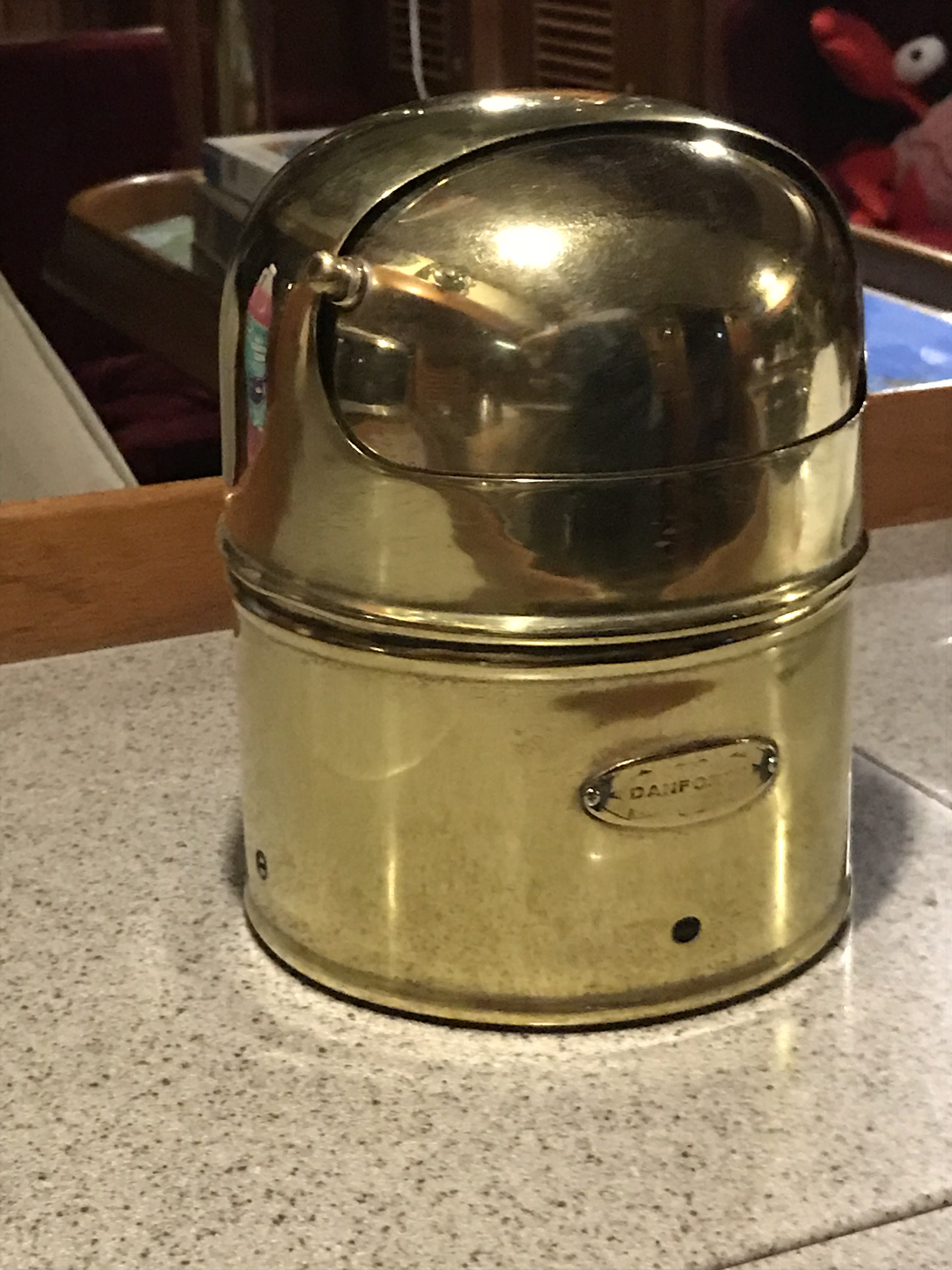
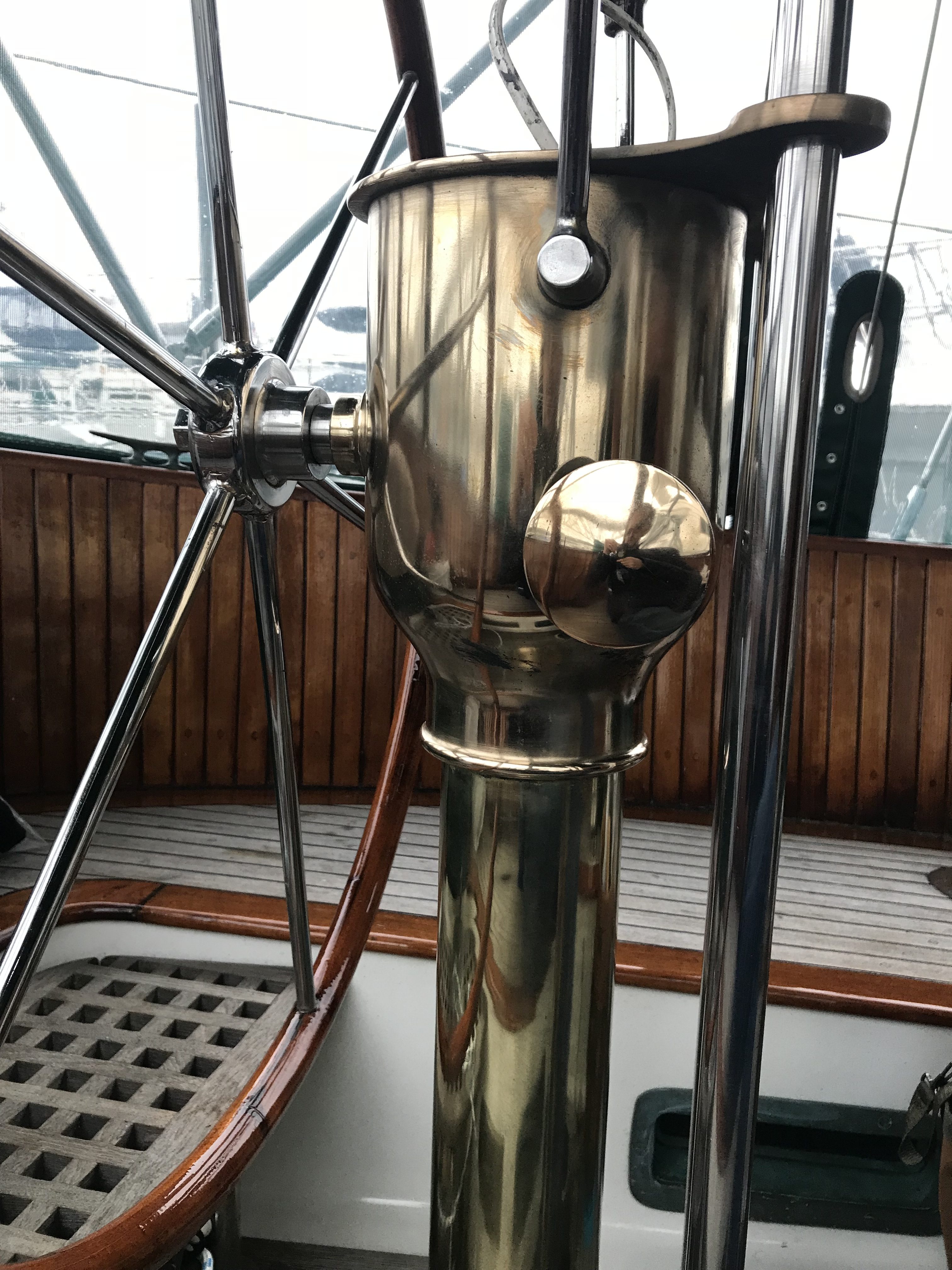
I also took some time to clean up the brass compass housing that was severely corroded from the constant salt spray while offshore. I had to get fairly aggressive with 80 grit sandpaper and an orbital power sander, then work my way up to 2500 grit paper and finally hand-buffing with polishing compound.
State of compass housing and binnacle (taken between Hawaii and Seattle)Compass housing brass restored
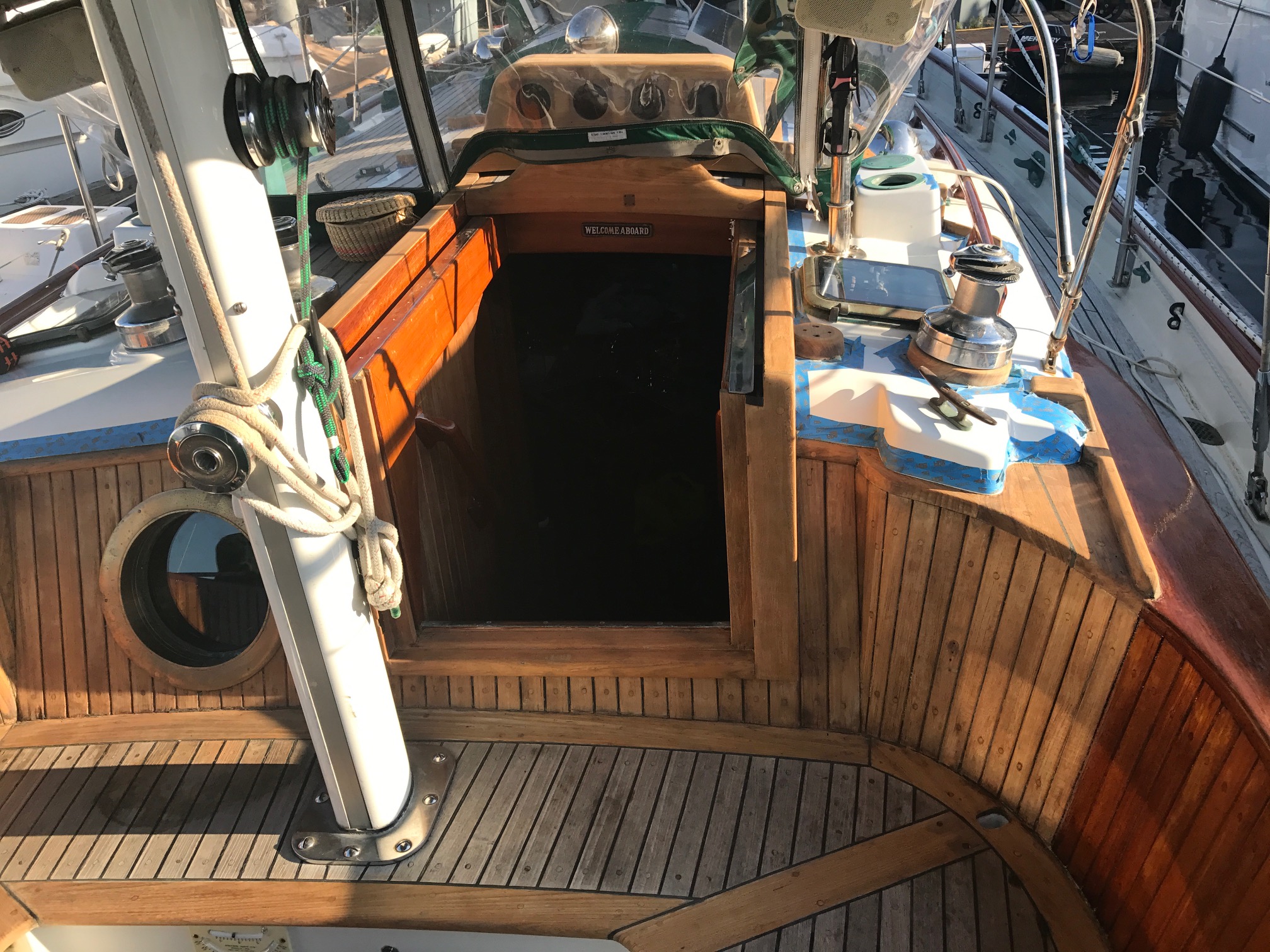
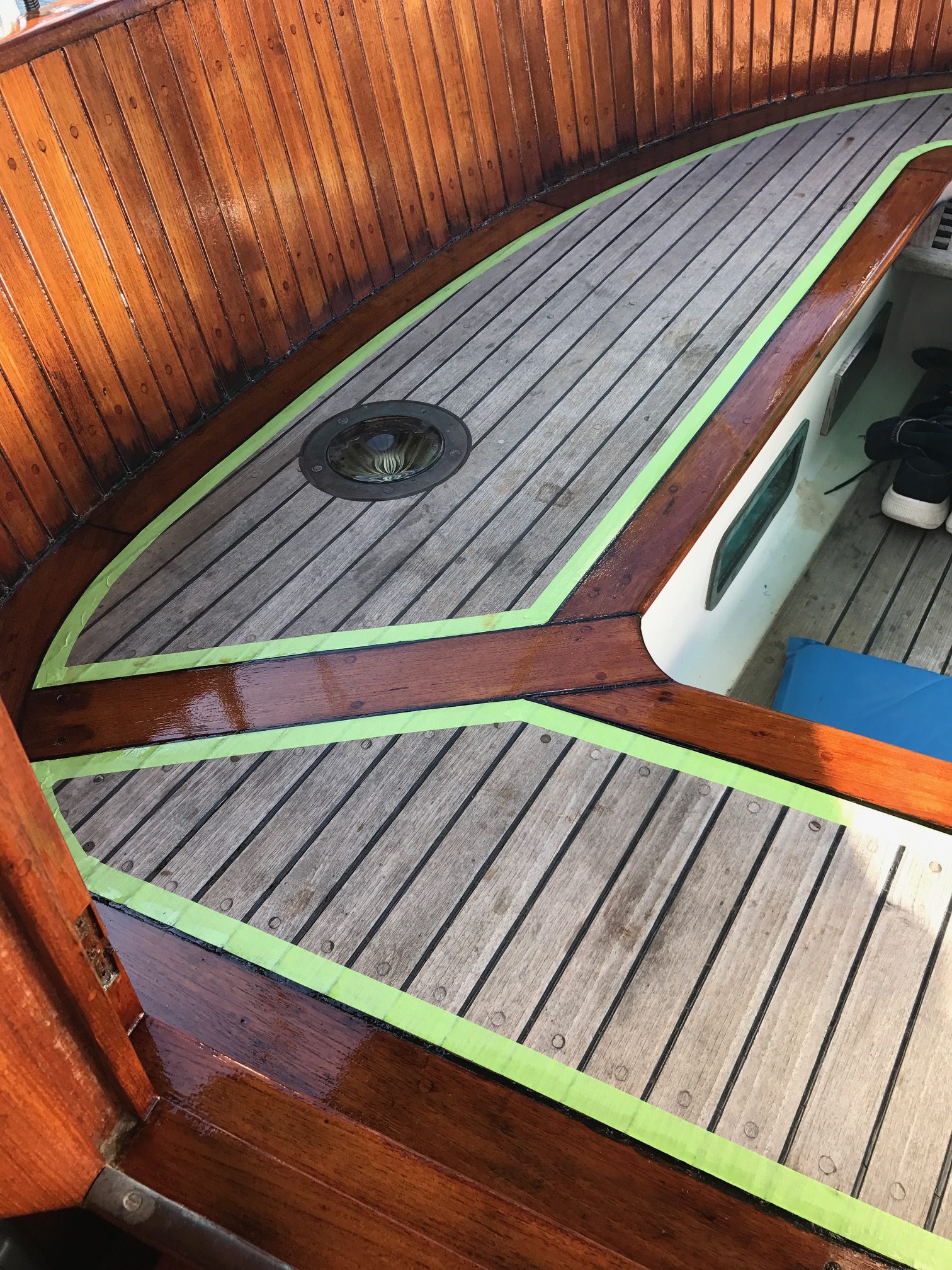
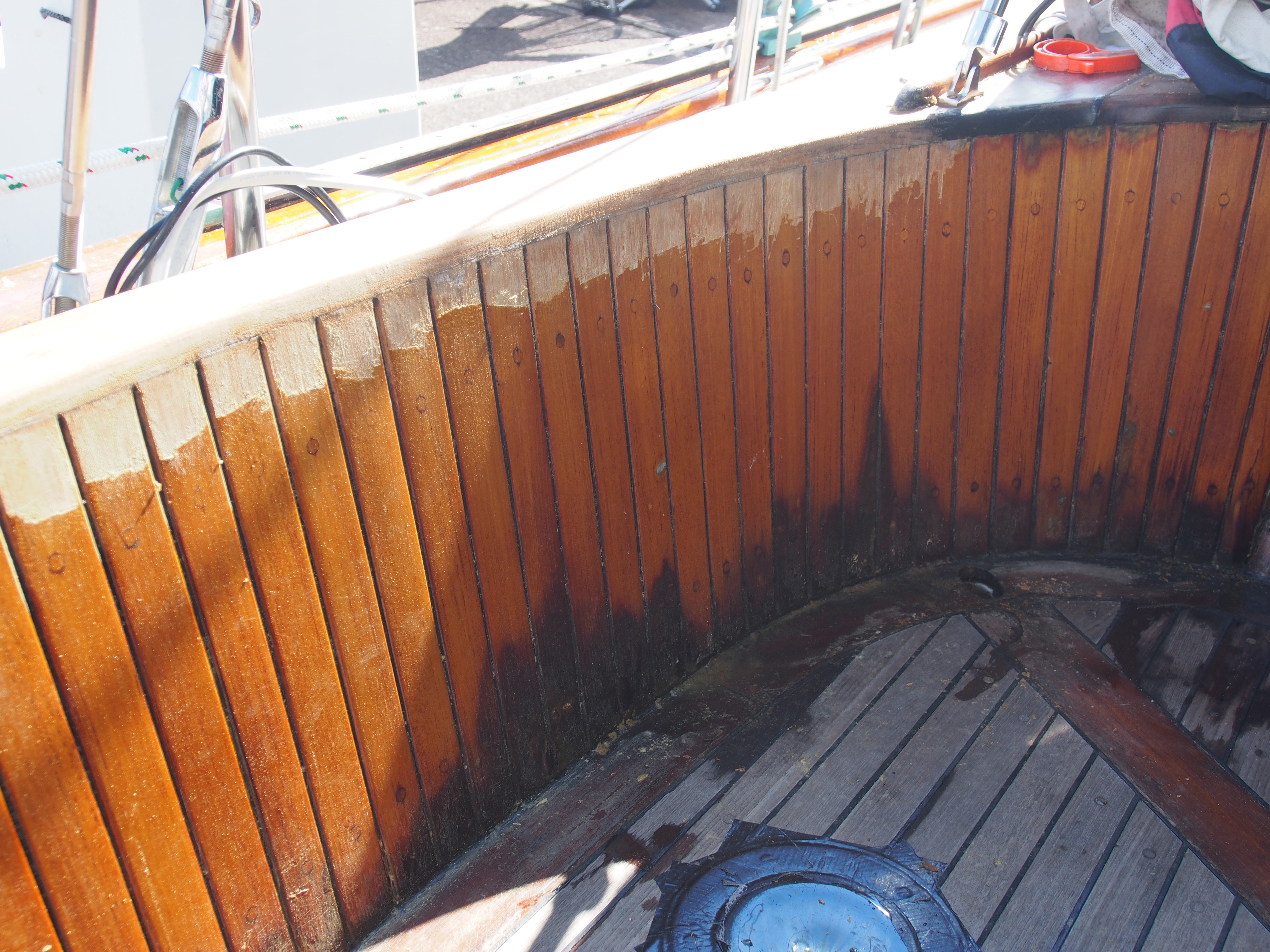
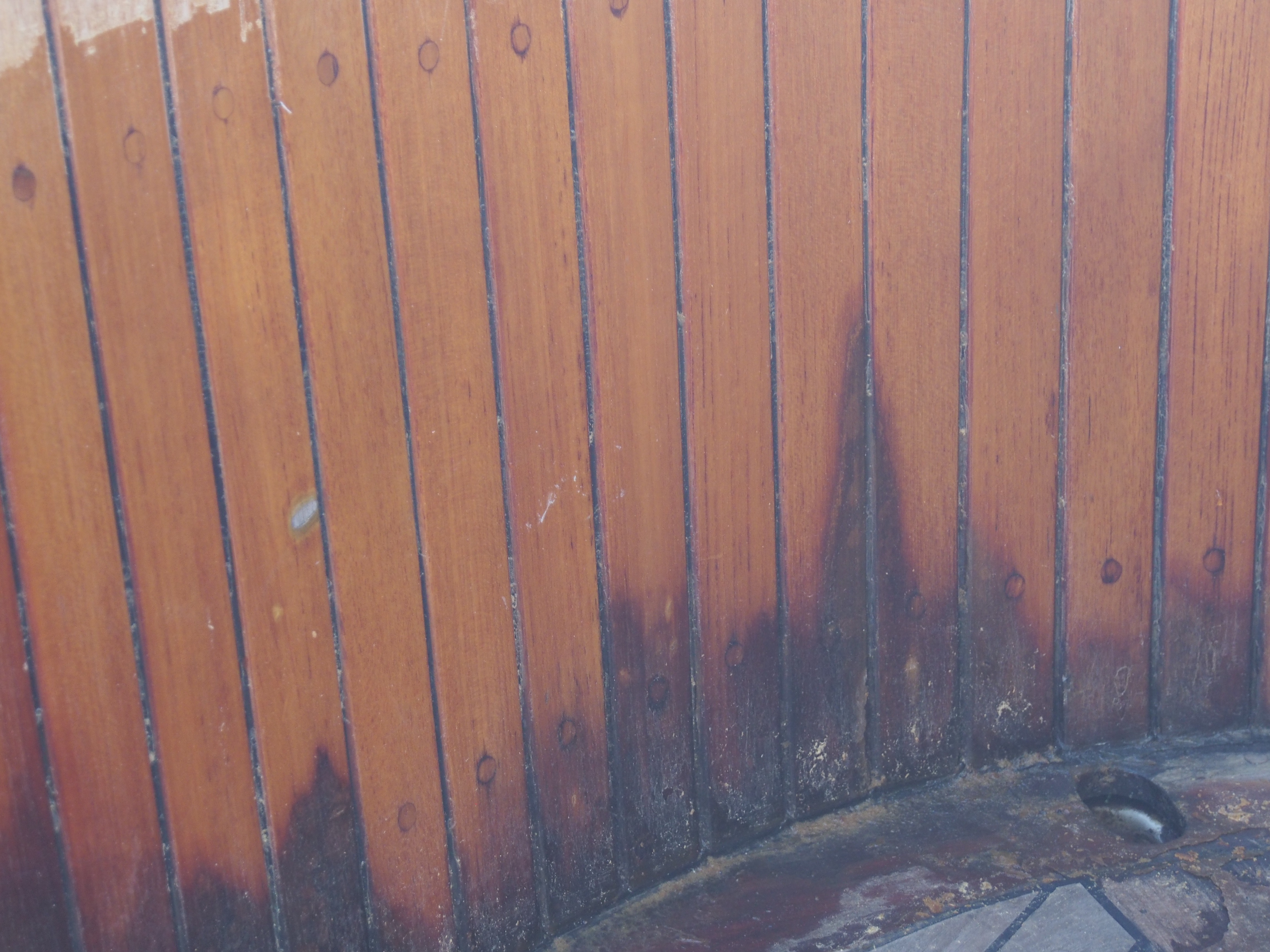
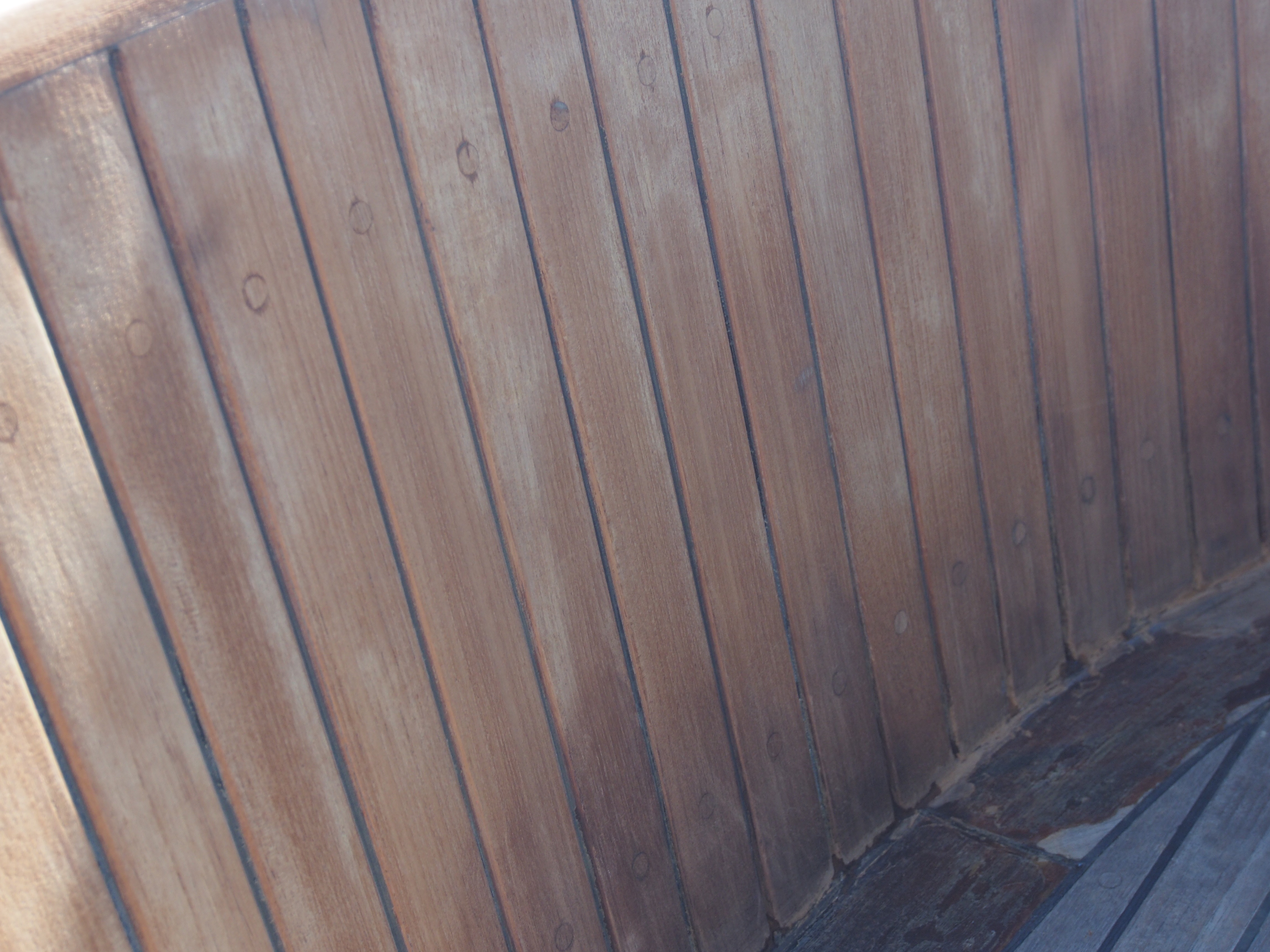
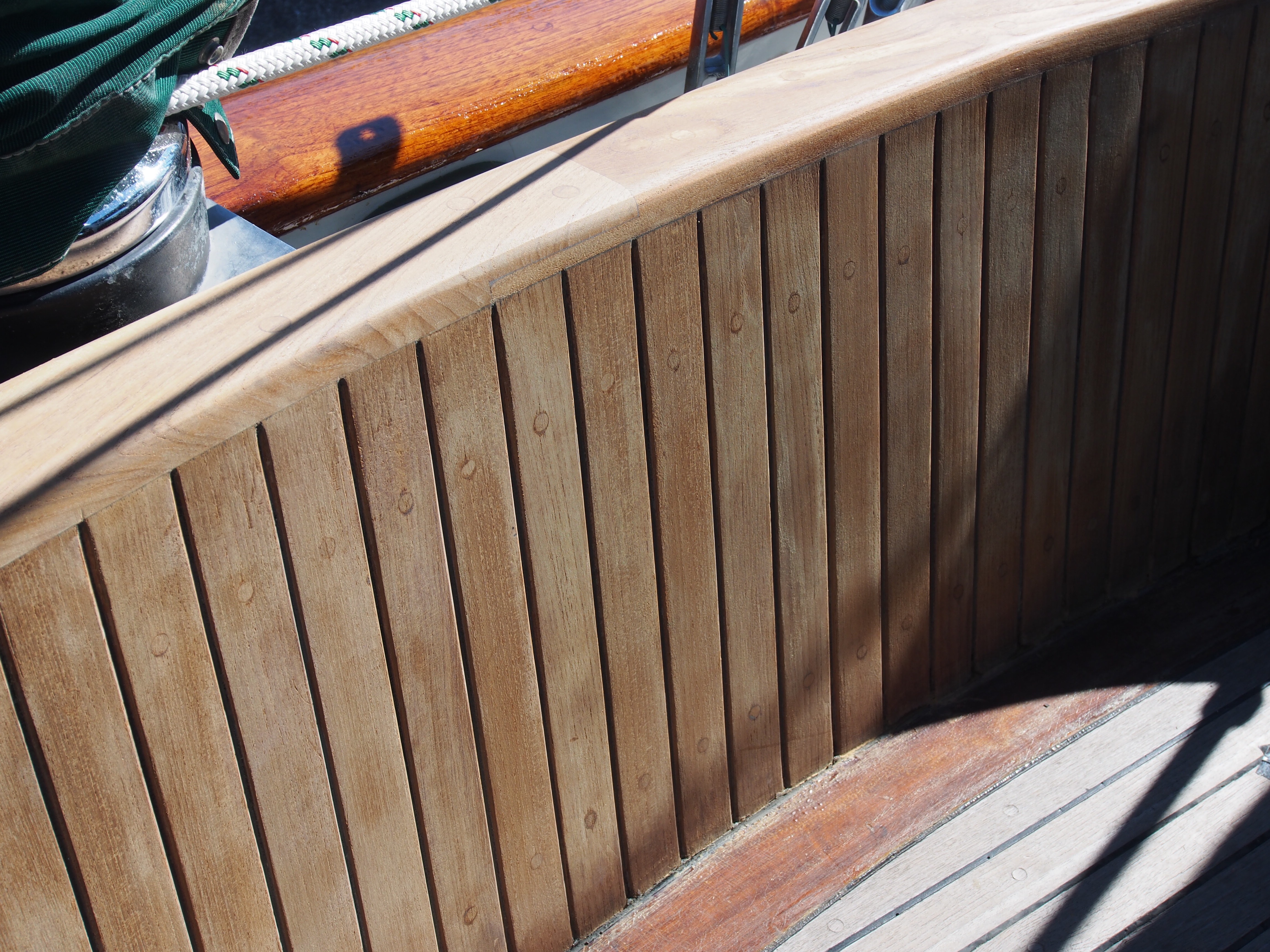
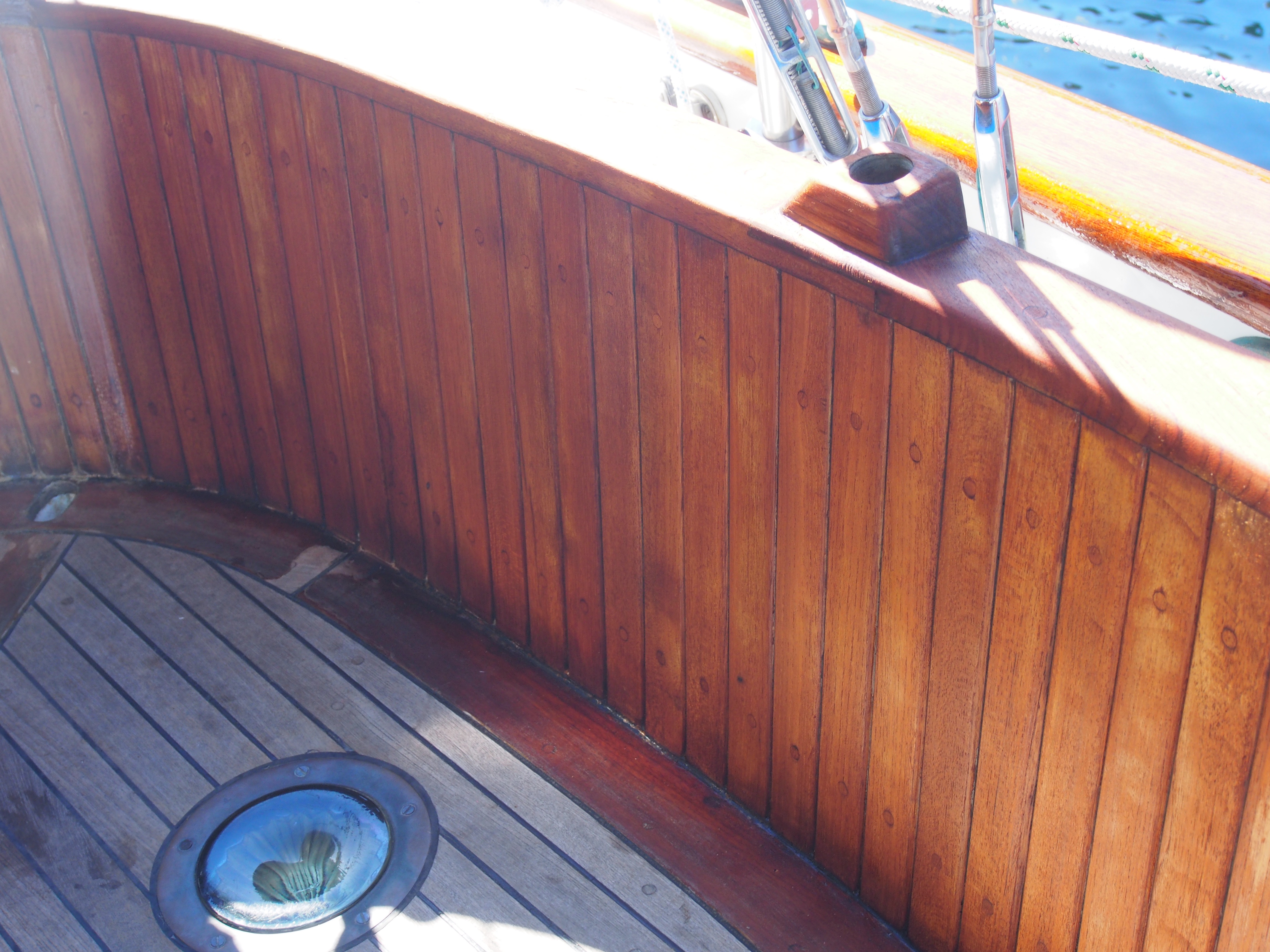
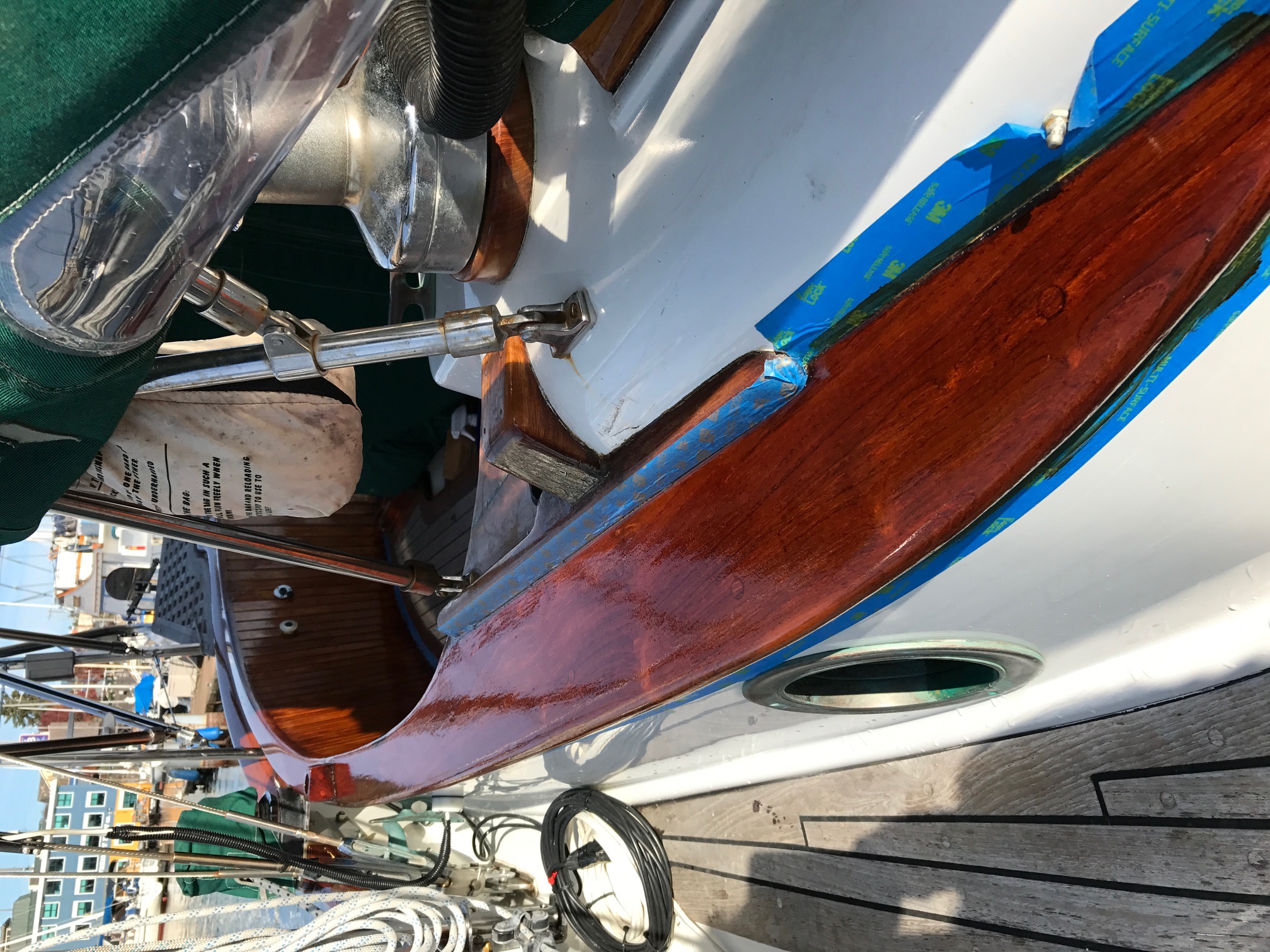
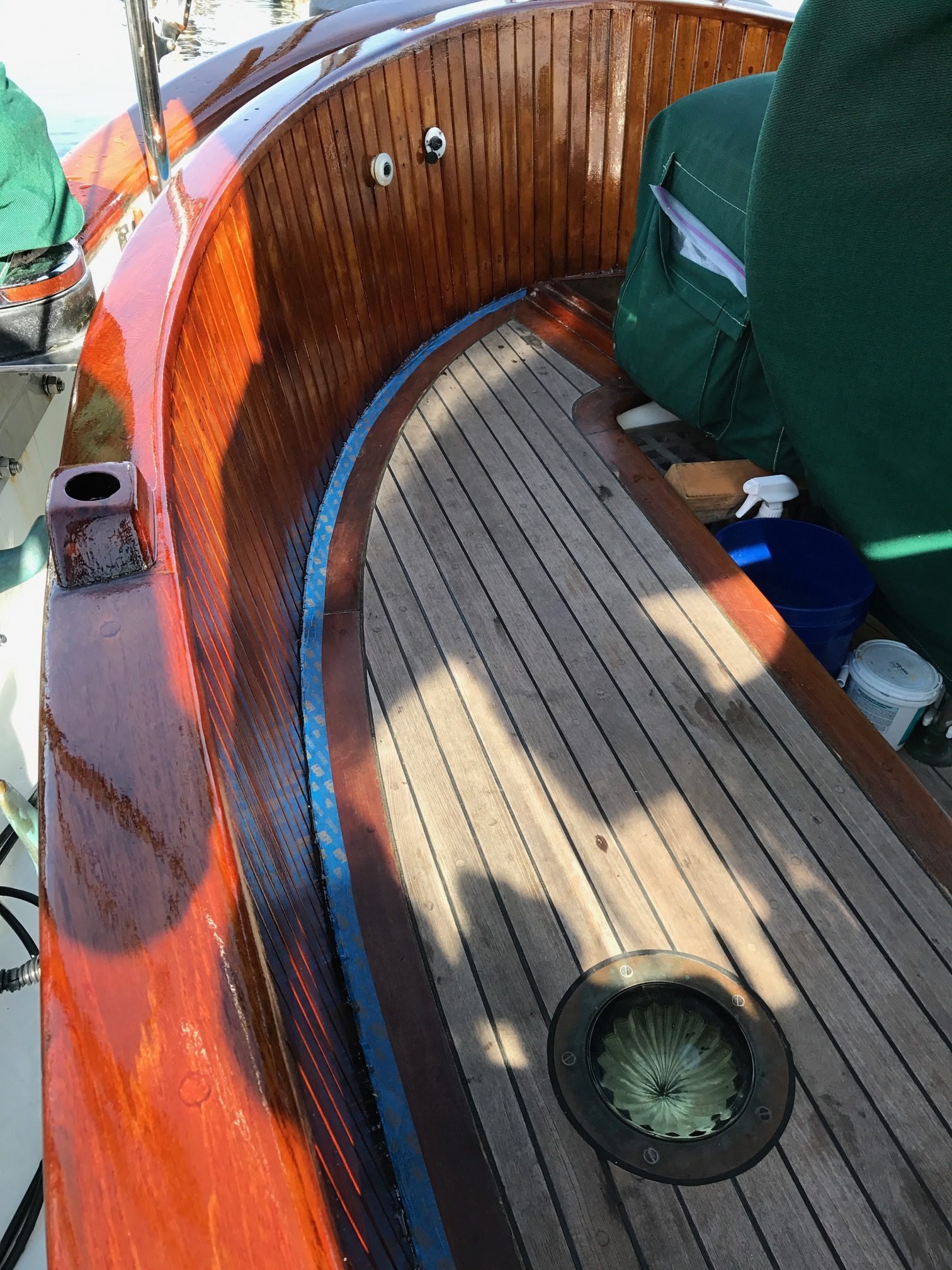
I decided to refinish another section of brightwork during a small window of good weather. As long as I got the section stripped and sanded, applied the primer and 2 coats of Awlwood Clear, the remaining coats could be done as the weather allowed. So in a fury of 3 sunny days, I stripped, sanded, primered, and got 2 coats of clear on the cockpit inner cap rail and the cockpit vertical teak planks (the cockpit horizontal planks will be done later). The lower parts of the vertical planks have been an eyesore for some years due to water wicking under the varnish at the joint between the vertical and horizontal planks.
Removed varnish from cockpit inner cap railDark areas are where water penetrated under the varnishRemoved varnish from cockpit vertical planksAfter final sandingAfter applying Alwood Primer
After the 3 sunny days, it rained in Seattle for almost 2 weeks until we finally got another few days of clear weather, during which time I applied Awlwood Clear coats 3 through 8.
Cockpit combing finished with 8 coats of Awlwood Clear
In my last post, I wrote about how bad Apropos’ teak brightwork looked and how I would have to tackle it “some day”. Well, I decided to get started on it after seeing the long-range weather forecast showing sunny conditions for most of September and into October.
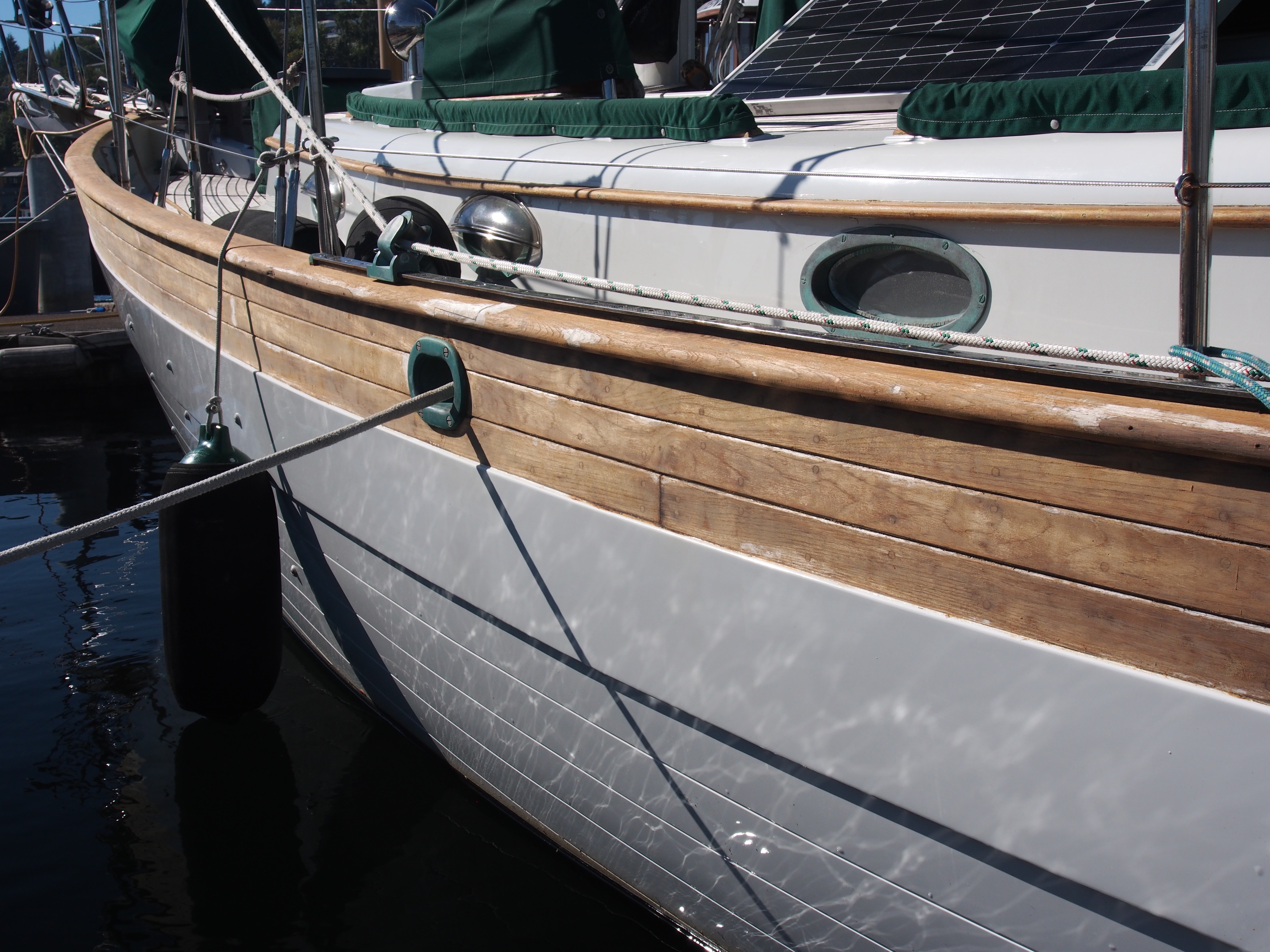
Over the previous 12 years, I applied 2 “refresher coats” to most of the exposed brightwork–cap rails, turtle/hatch, coach-roof trim, cockpit, boom gallows, etc. The brightwork that was normally covered by canvas would get refresher coats every other year–deck boxes, grab-rails, helm seat, butterfly hatch, etc. But after spending 2 years in the tropics, sitting on land for 6 months in Fiji, and sailing 16,000 nautical miles in the ocean, all of the varnish was in very poor condition. The worst were the cap rails, outer planks, cockpit, and coach-roof trim since they were exposed to UV rays most of the time. I decided to attack these first.
Cap-rail, outer planks, and coach-roof trim
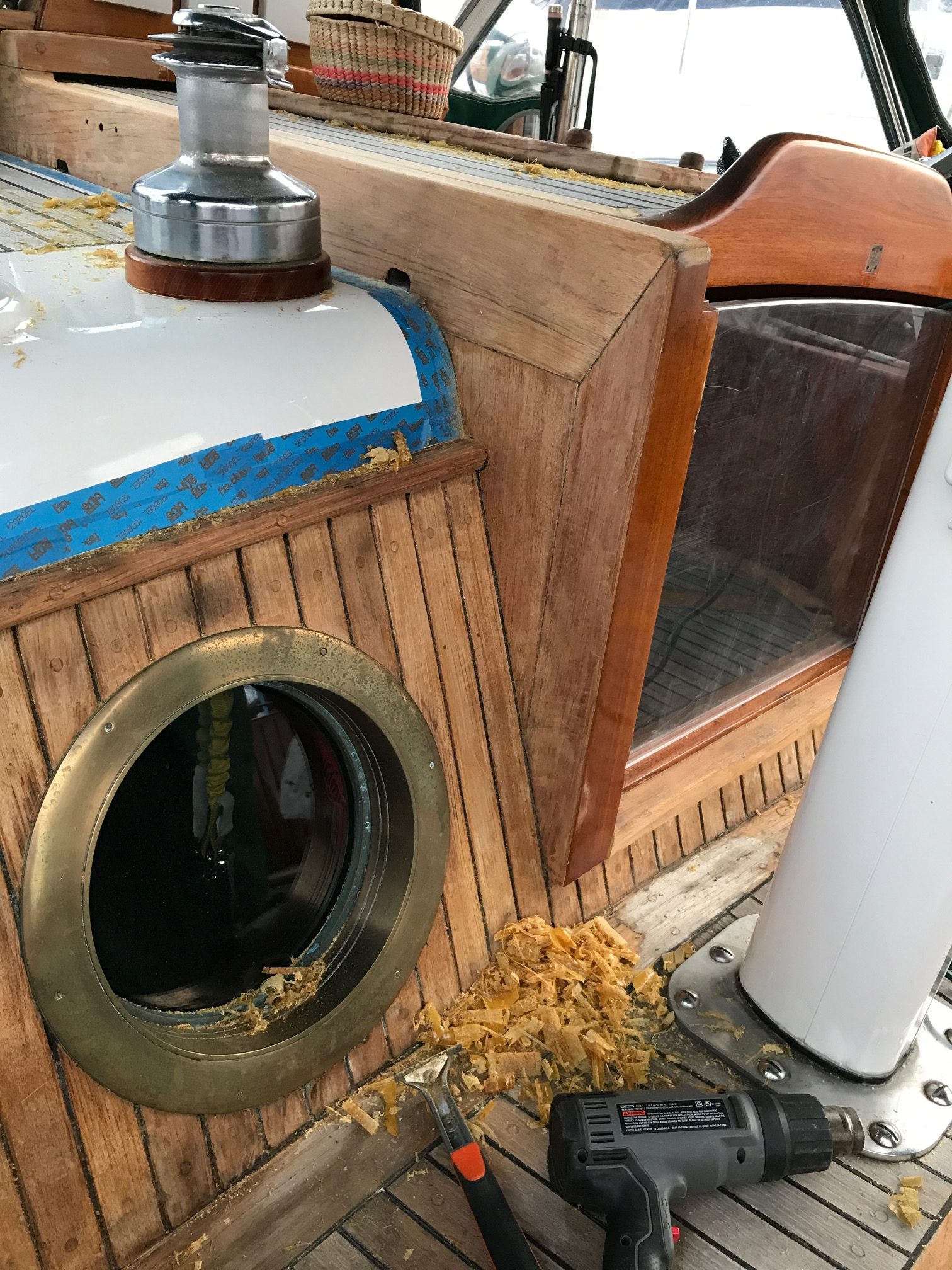
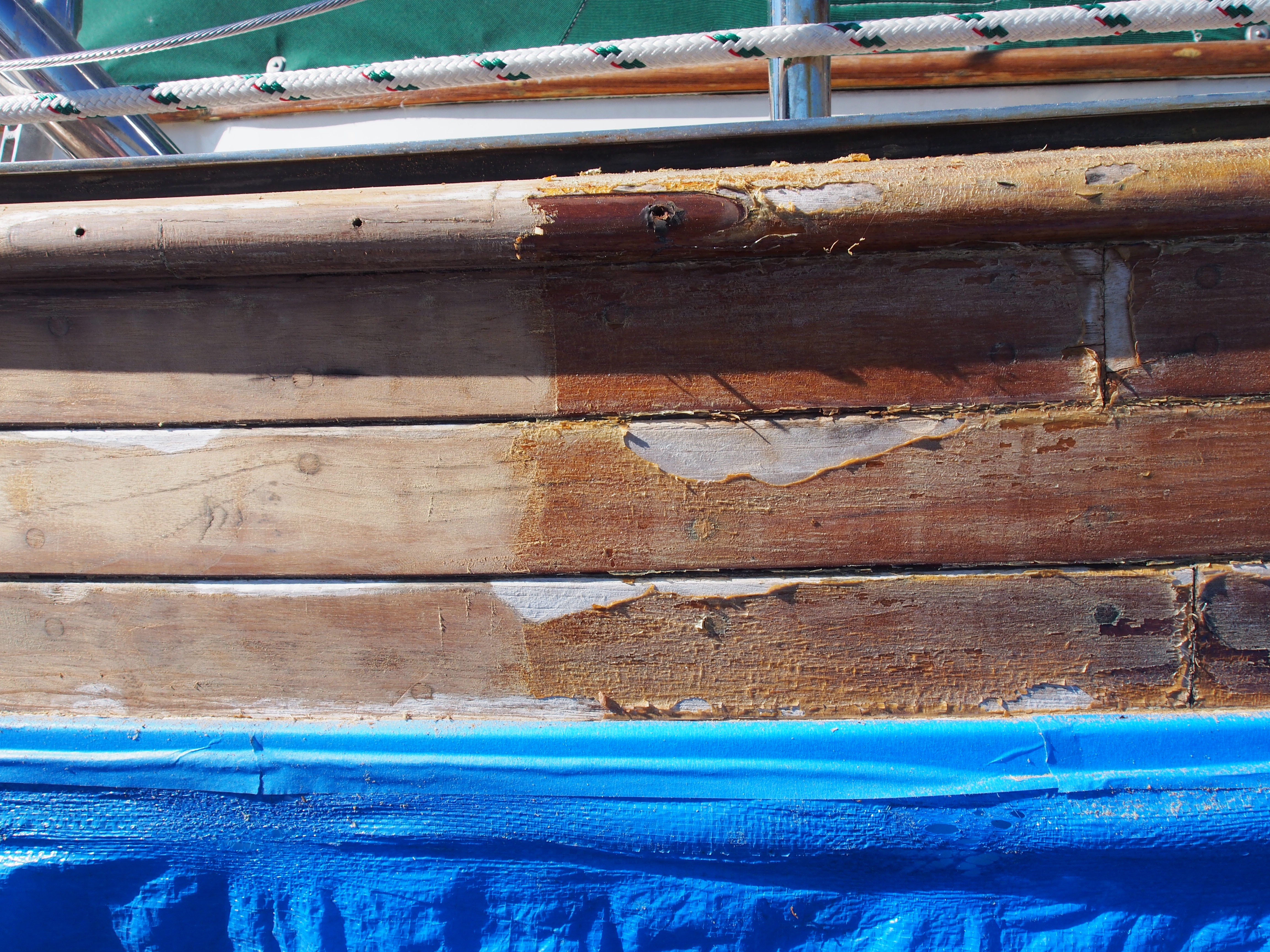
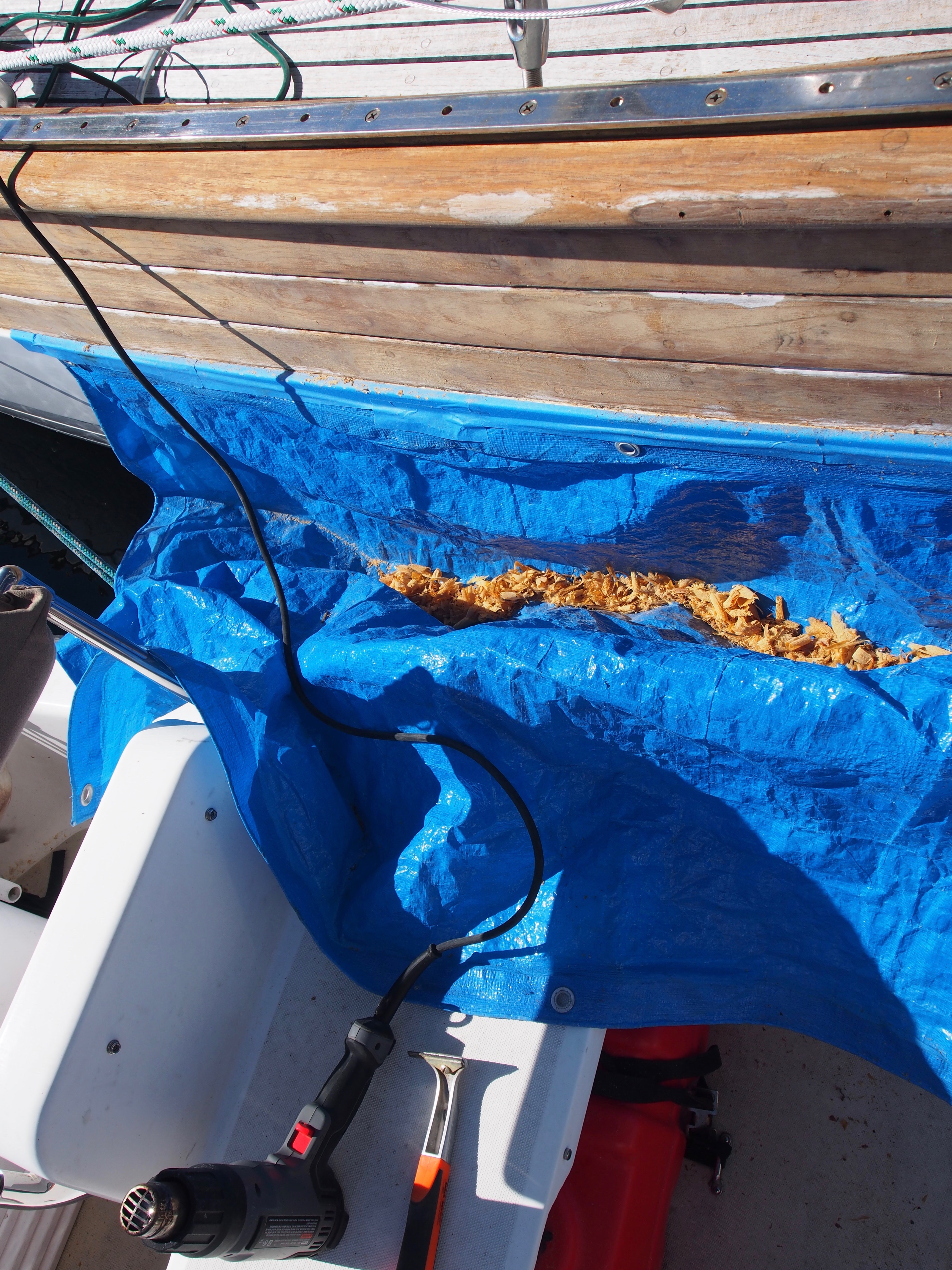
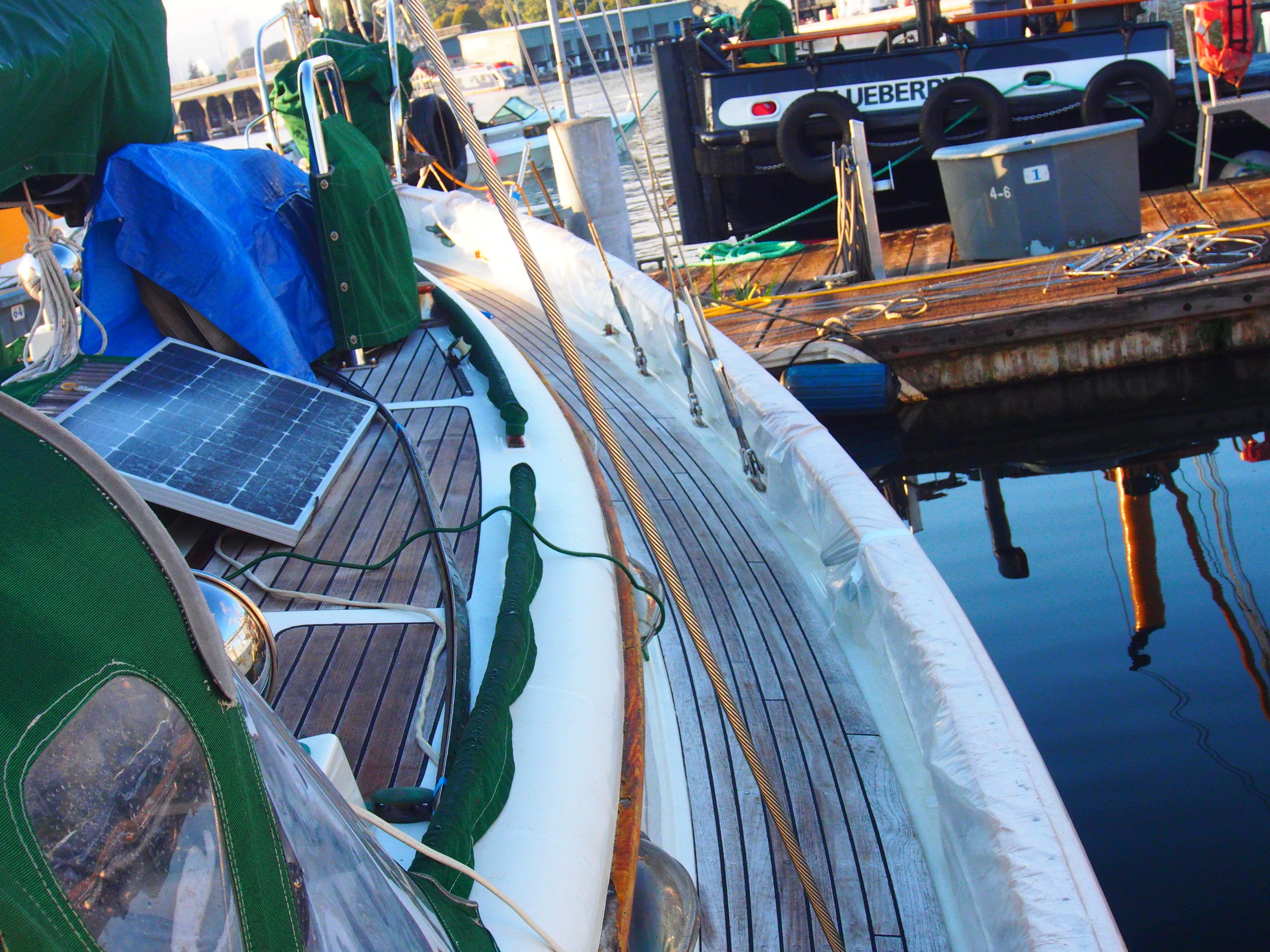
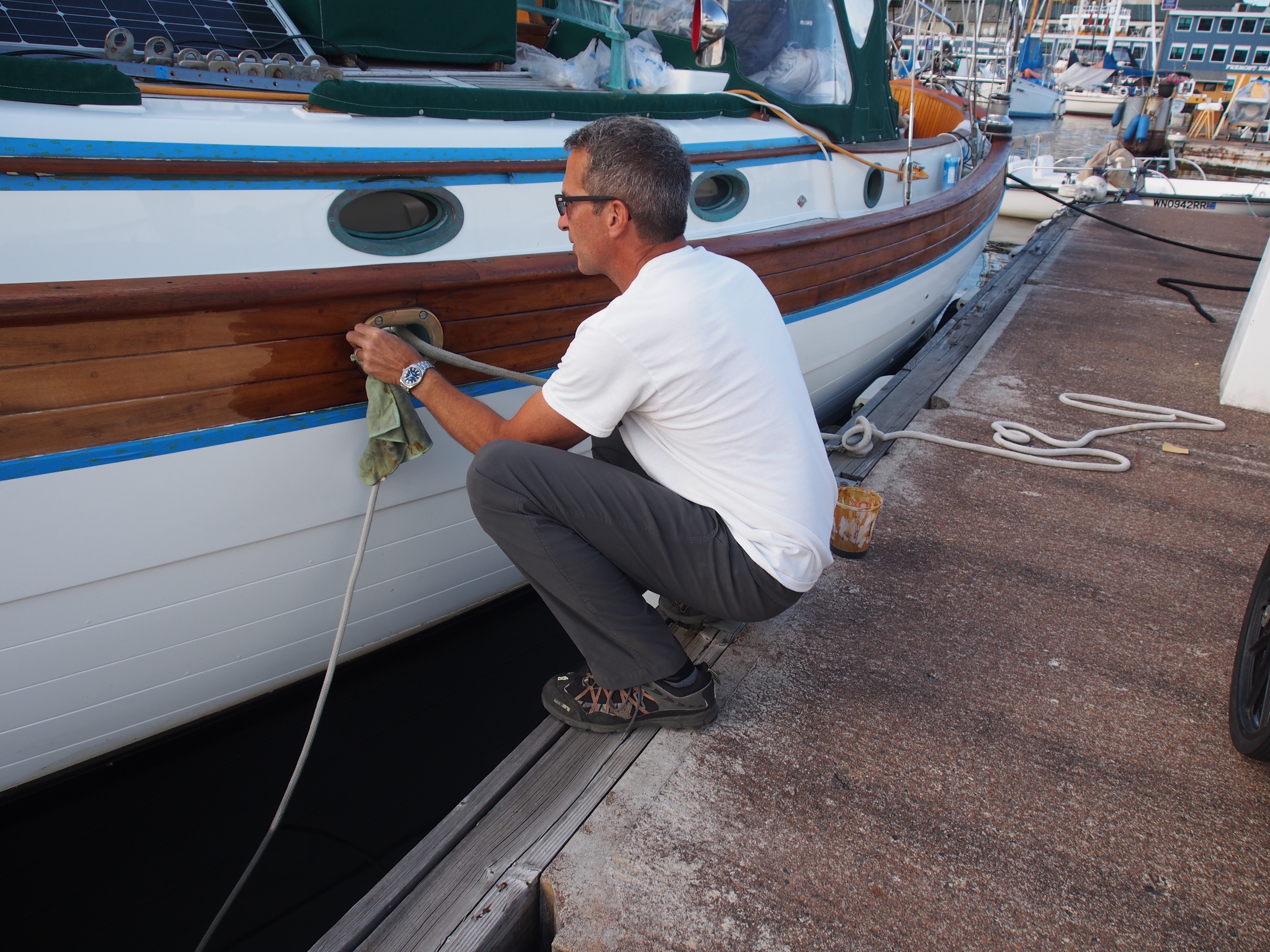
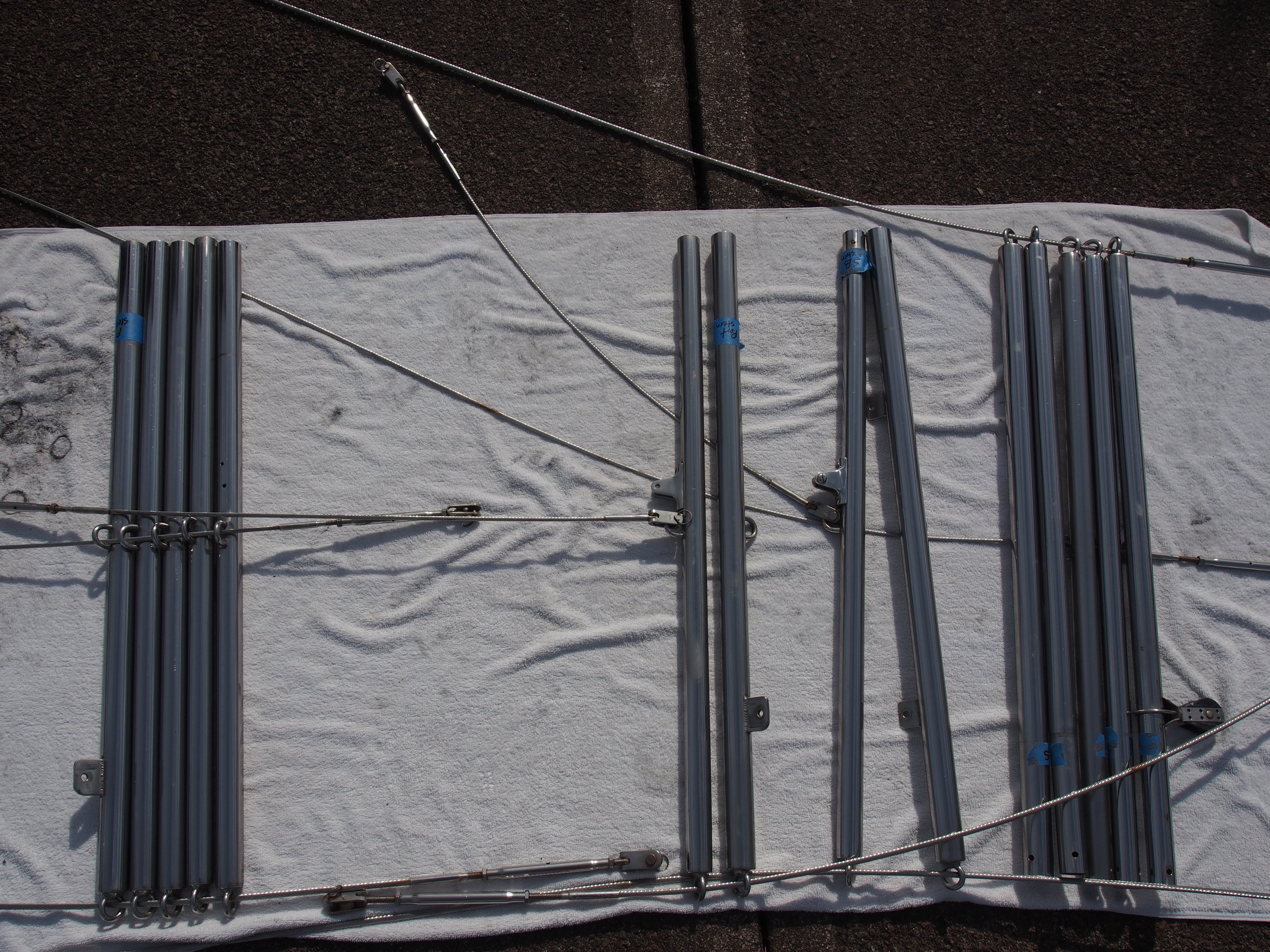
I used a heat gun and scraper to remove the old varnish. It’s time-consuming but effective, and I got better at it the more I did. When I first started, I hadn’t removed much from the boat besides small things like cleats and fender protectors. But as time went on, I realized how much easier (and how much better of a job) it would be to remove as much as possible, so I ended up removing the stanchions, lifelines, bimini, genoa tracks, whisker stays, and the stern pushpit. Even though it took over a day, it was worth it as it made the varnish removing, sanding, taping, and applying the new finish much easier and faster. Since I was working with the boat in the water, I was able to use the finger dock when working on the port side. For the starboard side, I borrowed a small Boston Whaler from a friend and used it to move along-side Apropos. I tarped below the outer planks to keep the removed varnish chips from reaching the water and vacuumed up gallons of it from the tarp. It took about a week of full-time (10-hour days) work to remove the varnish from the cap rail, outer planks, and coach-roof trim.
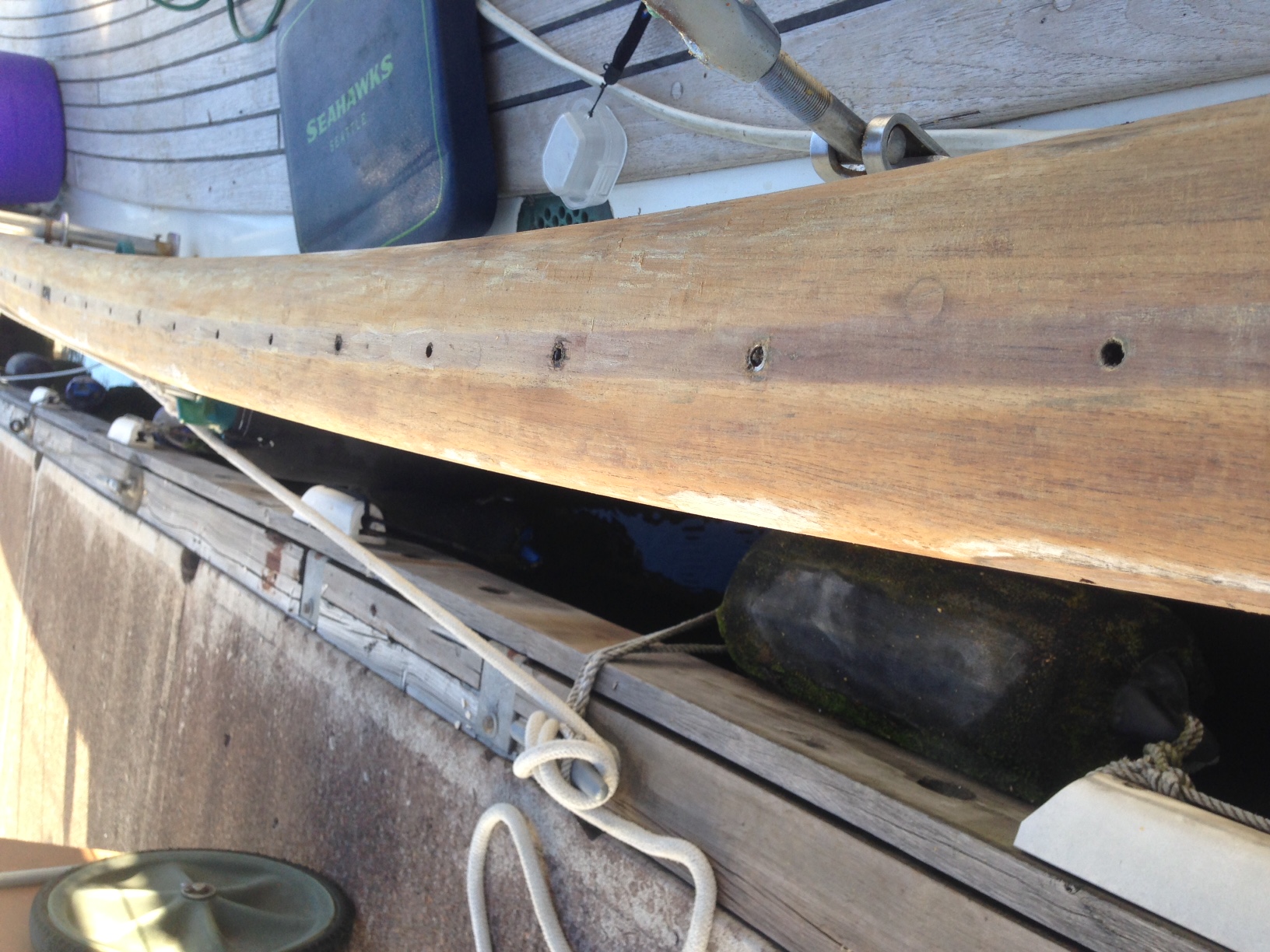
Heating and scraping the old varnishDown to bare teakCap rail with the genoa track removed
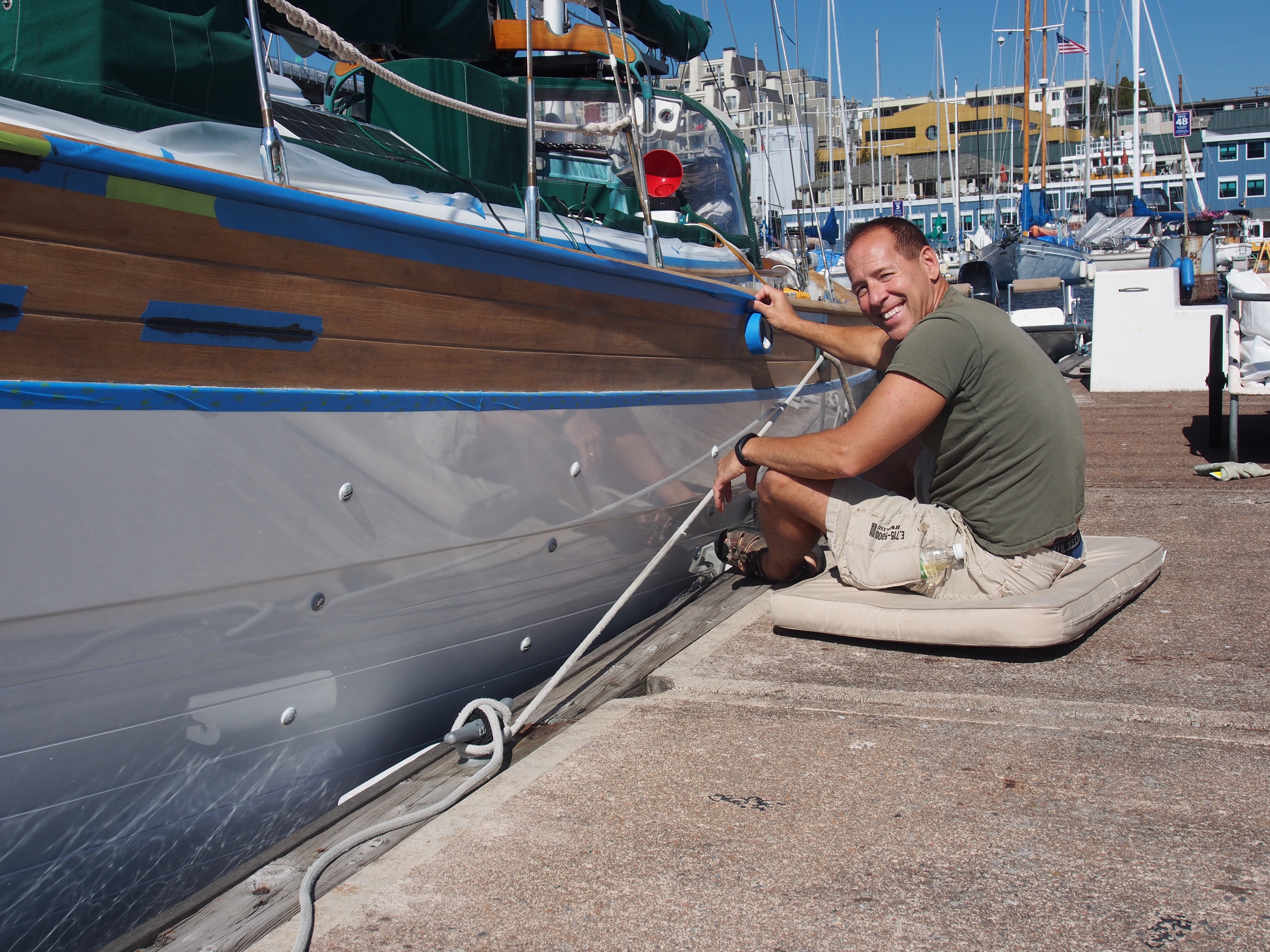
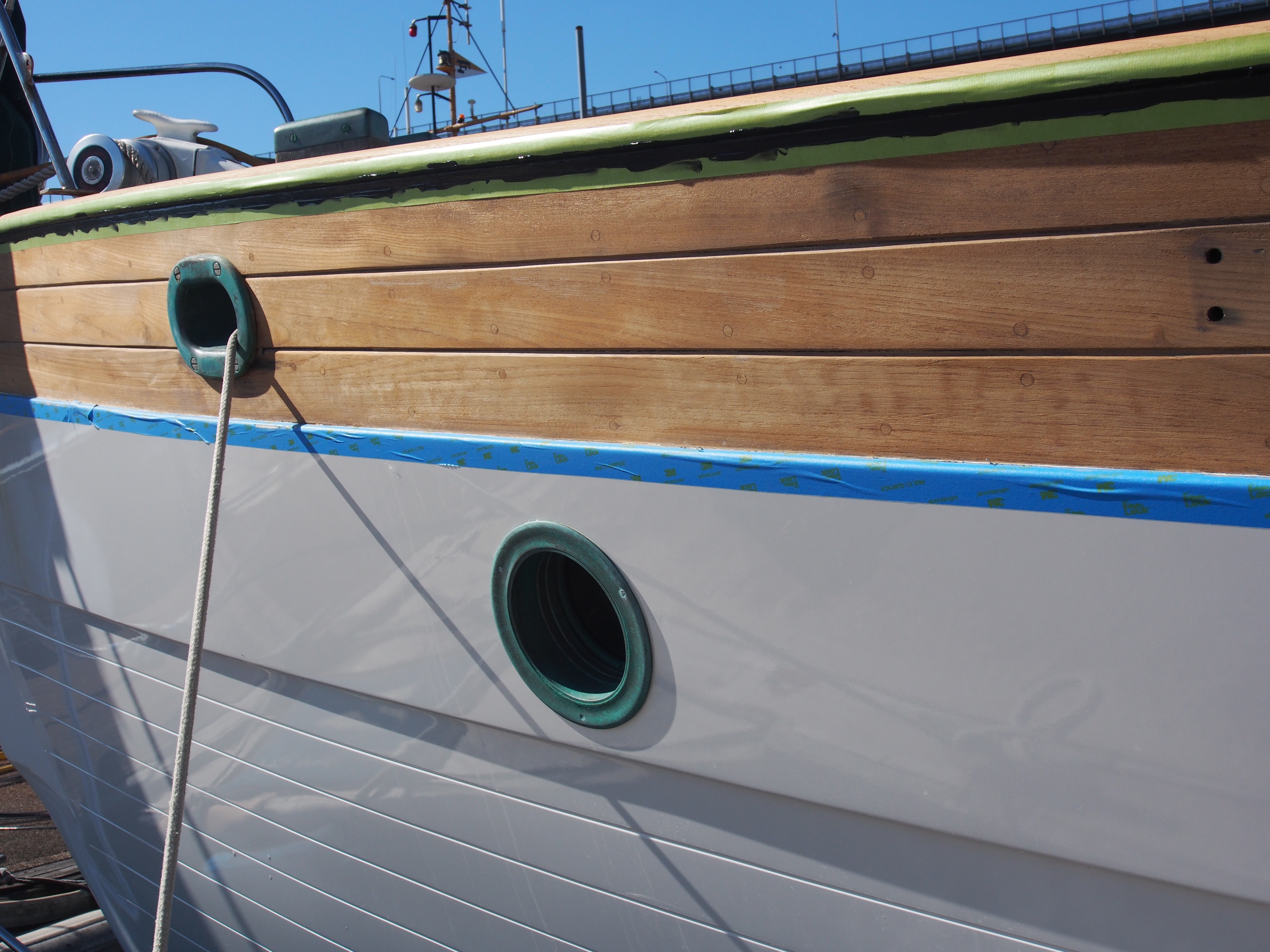
Next came the sanding to remove any scrape marks left behind after melting and scraping off the old varnish. This also removed the gray areas where the varnish had completely lifted, exposing bare teak to the elements. I first used a 5″ orbital sander with 120 grit paper and followed it by hand sanding with a 15″ long-board to get the surfaces as level as possible. This took a couple of days. A friend helped with masking the joint between the cap rail and outer planks and I applied a marine sealant to fill the small void, possibly the cause of some of the water entry we experienced during the trip.
Mike was an expert with the masking tapeSealant applied between the cap rail and outer planks
Now that the surface was ready for re-finishing, I made sure to cover it with plastic to keep the overnight dew from reaching the bare teak.
Covering the bare teak
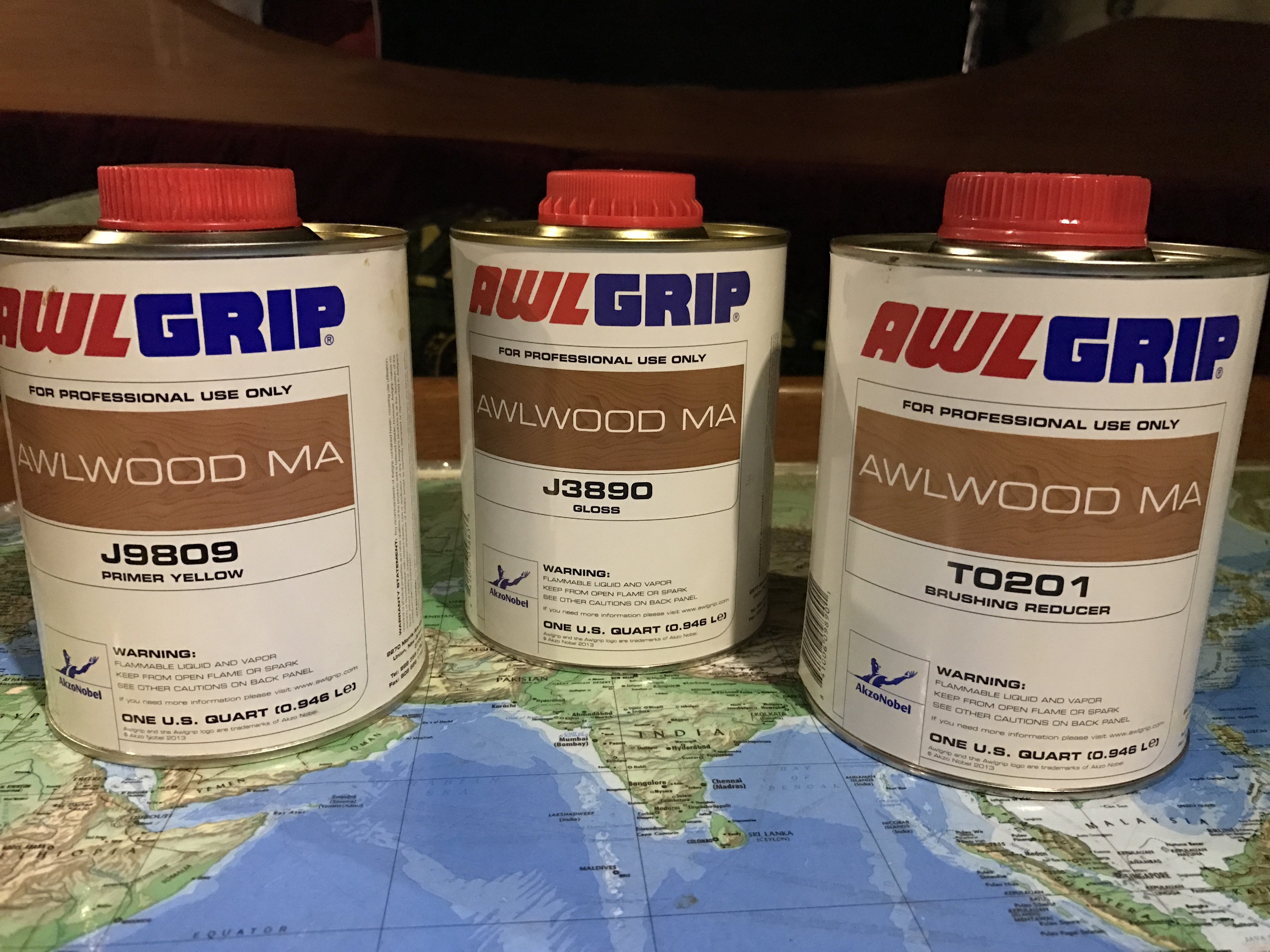
Finally it was time to apply the new finish. I looked into alternatives to varnish, and decided on a product called Awlwood system made by AwlGrip. It’s a one-part system that catalyzes by the moisture in the air (as opposed to a 2-part system that requires a hardener). It’s relatively new, but testing claims it outlasts traditional varnish and can go several years between refresher coats. Some of the downfalls with it–it’s expensive at $65/quart, and it takes some getting used to applying. Since it catalyzes with moisture, you need to work with a small amount at a time. I settled on 4 ounces and found that I could apply that amount in 20-30 minutes, before it became too thick.
Awlwood System
The first step with the Awlwood system was to apply a primer coat for the clear coat to adhere to. The primer coat contains a yellow dye to give the teak a more consistent and deeper tone. It was easy to apply with a cloth–similar to applying stain. This was an important step and without it, the top coat would just peel right off.
Applying the primer coat
Finally, the clear top-coats were applied using Awlwood Clear. They recommend 8 coats, and one of the advantages of the product is that multiple coats can be applied in one day. A 4-hour dry time is needed between coats, and it took me 3 hours to apply, leaving an hour to rest in between! I settled in on applying 2 coats per day for 3 days, lightly sanding at the beginning of each day to remove imperfections. I found tiny bubbles forming in the first few clear coats (not sure why this happened, but a friend who used the same product on teak also found this). A light sanding each morning removed these imperfections and allowed the next coat to flow better. Prior to the 8th (final) coat, I let the 7th coat dry for 24 hours, gave it a final sanding, then applied Awlwood Clear thinned 5% with Awlwood Brushing Reducer and was pleased with the final outcome.
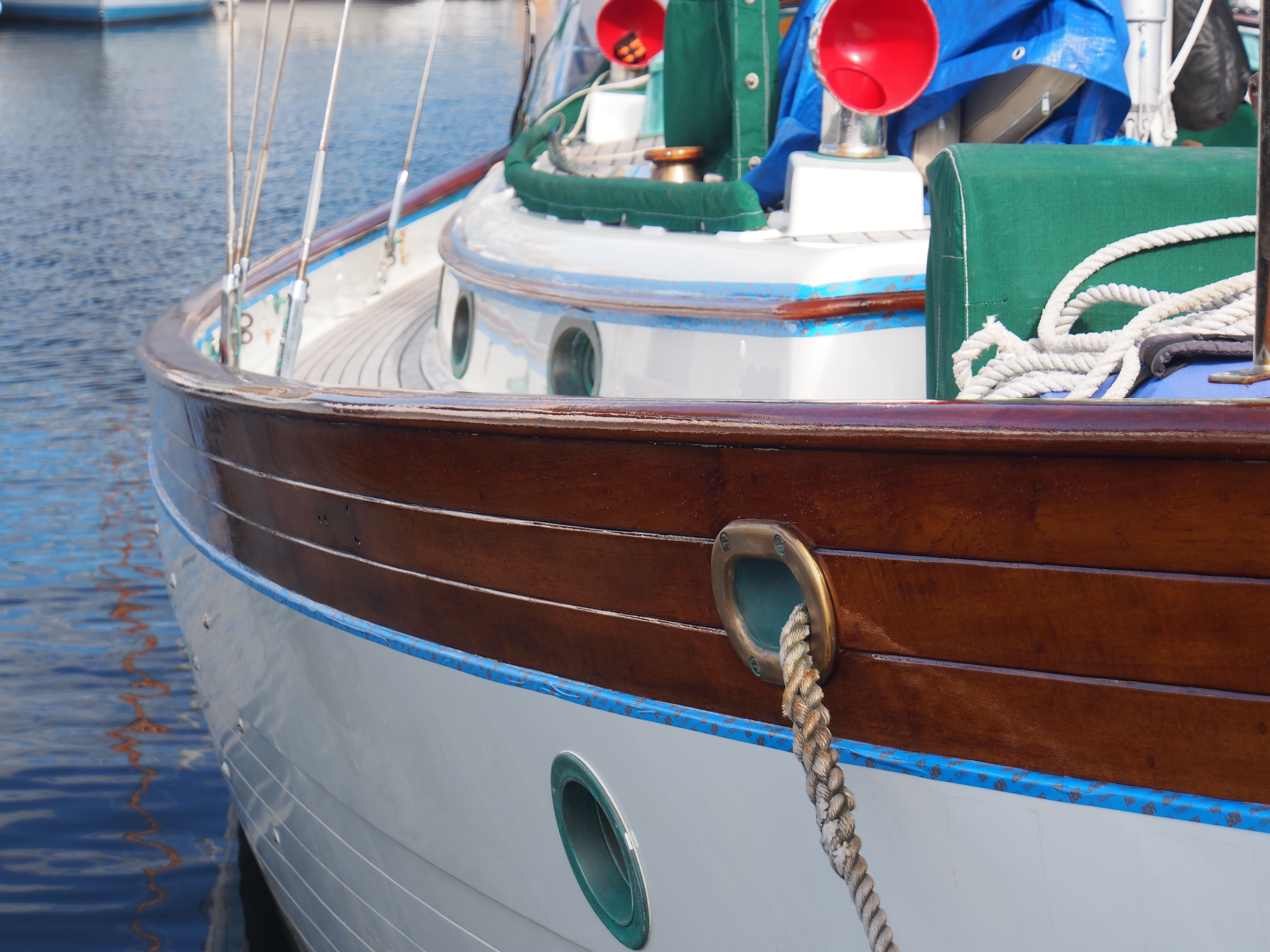
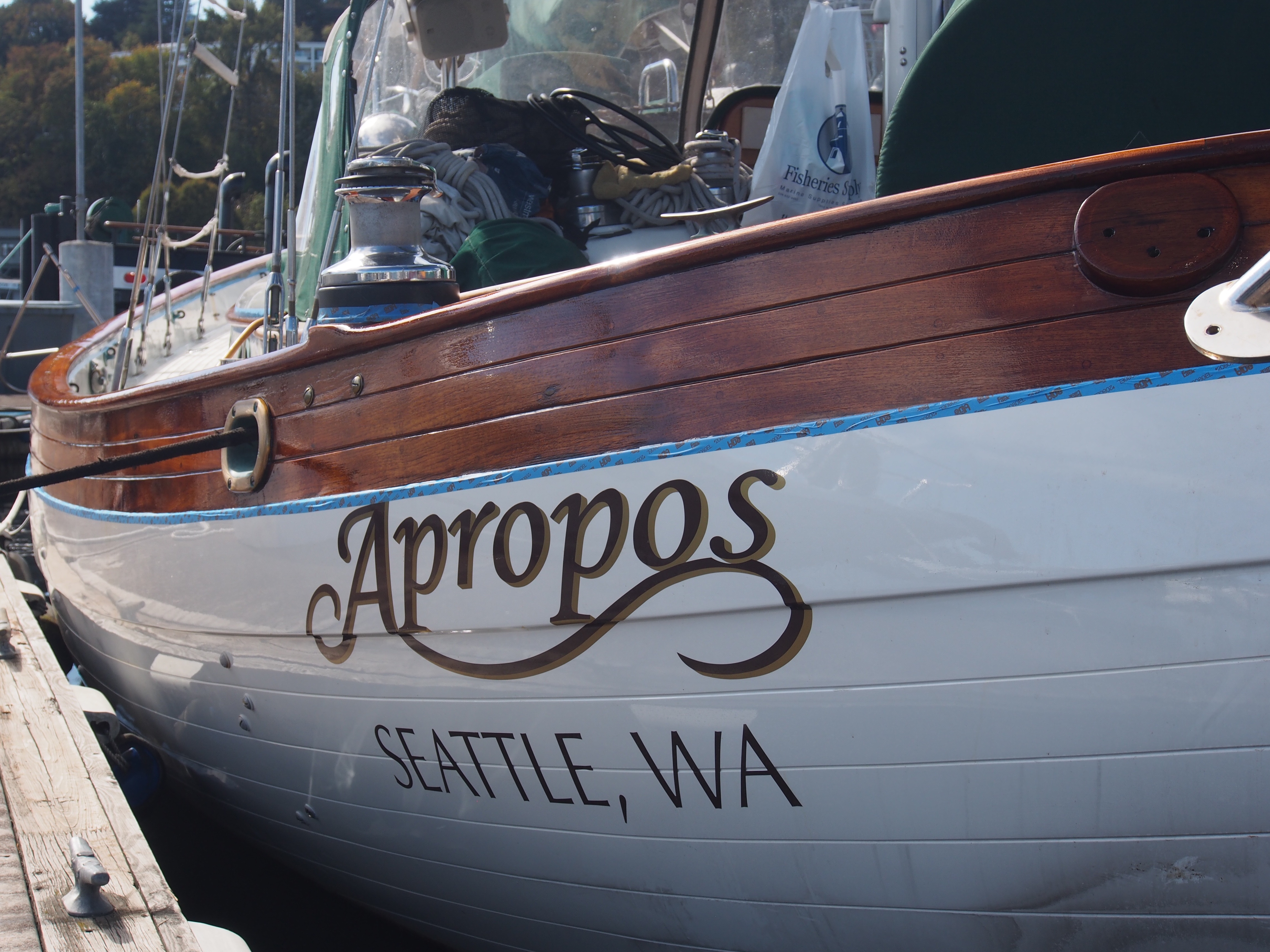
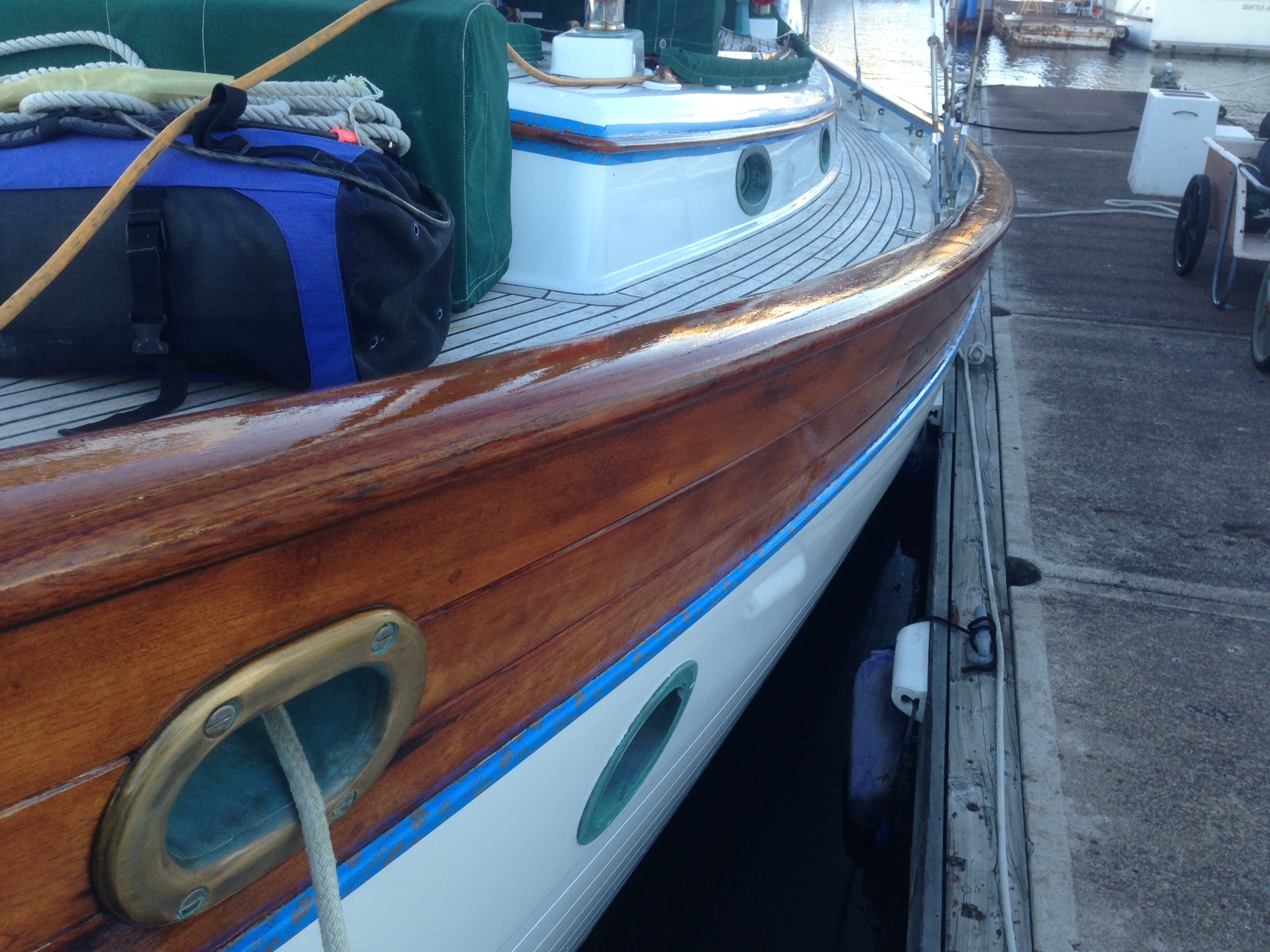
After 8 coats of Awlwood ClearAfter 8 coats of Awlwood ClearAfter 8 coats of Awlwood Clear
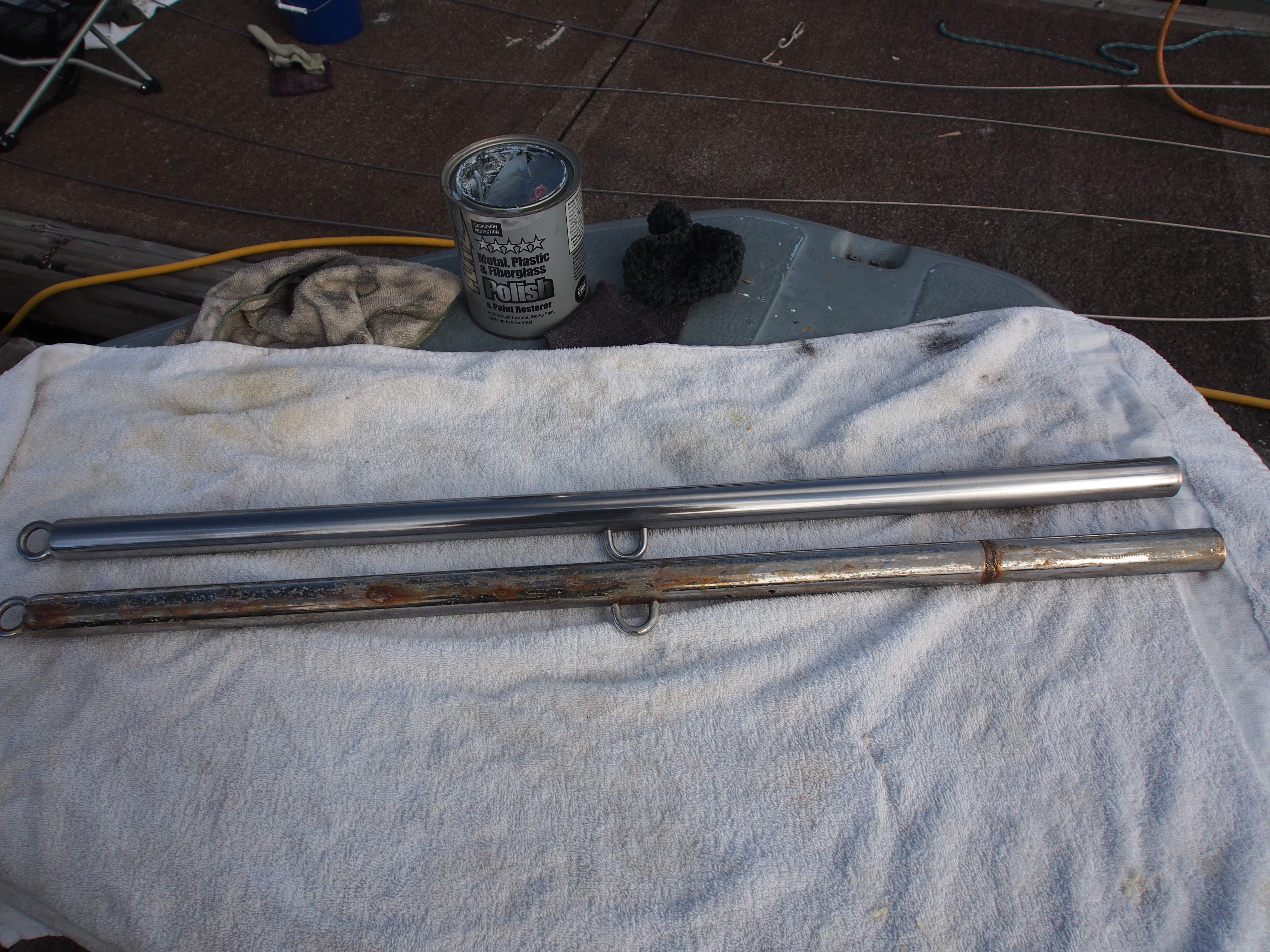
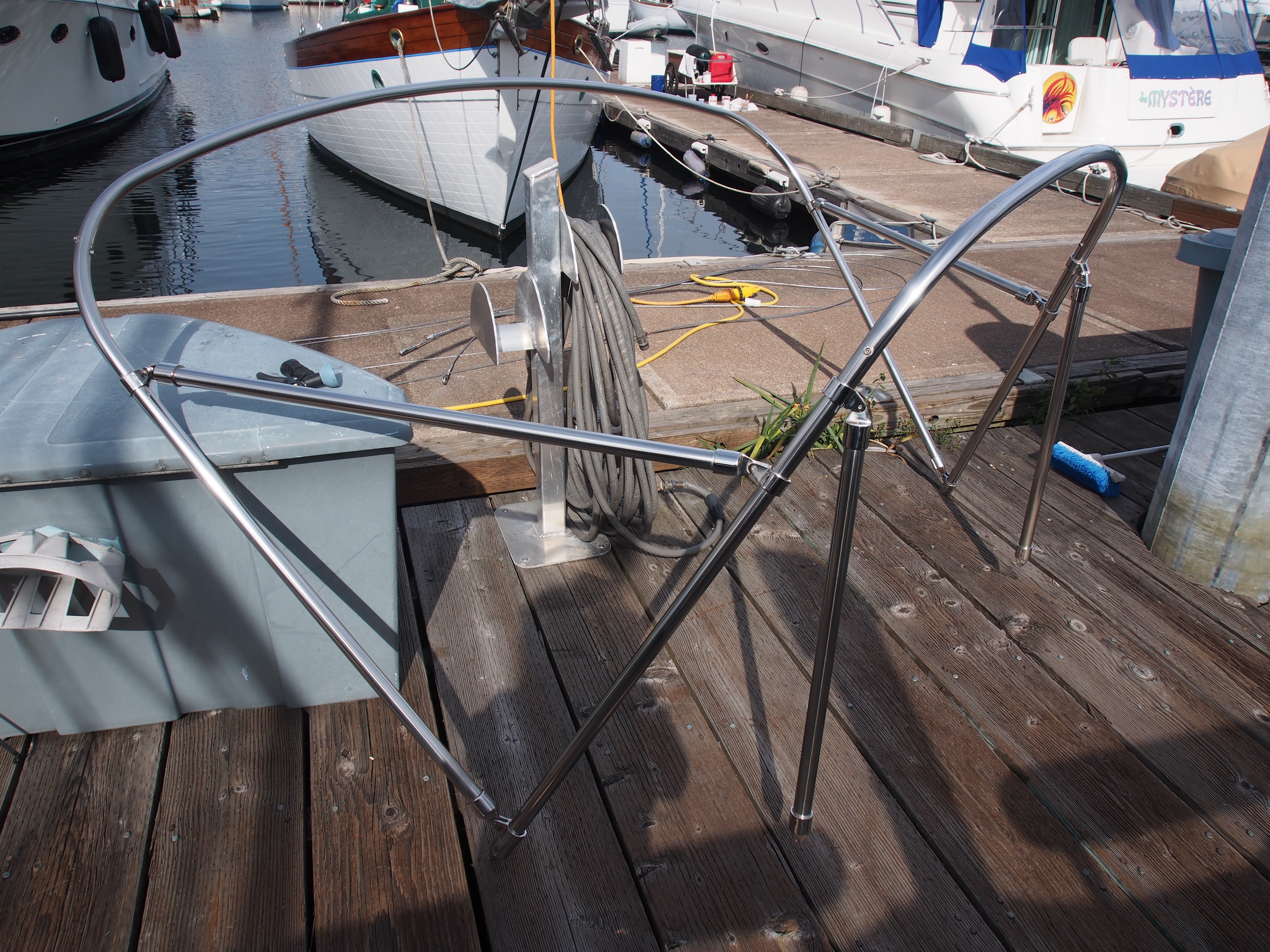
The final step was to re-bed the stanchion brackets, genoa tracks, whisker stay bases, etc. I polished all the stainless steel stanchions, push-pit, bimini, and genoa tracks using Fitz Polishing Compound prior to re-installing them.
Stainless steel stanchions really needed polishingStanchions after polishingStainless steel bimini frame after polishing
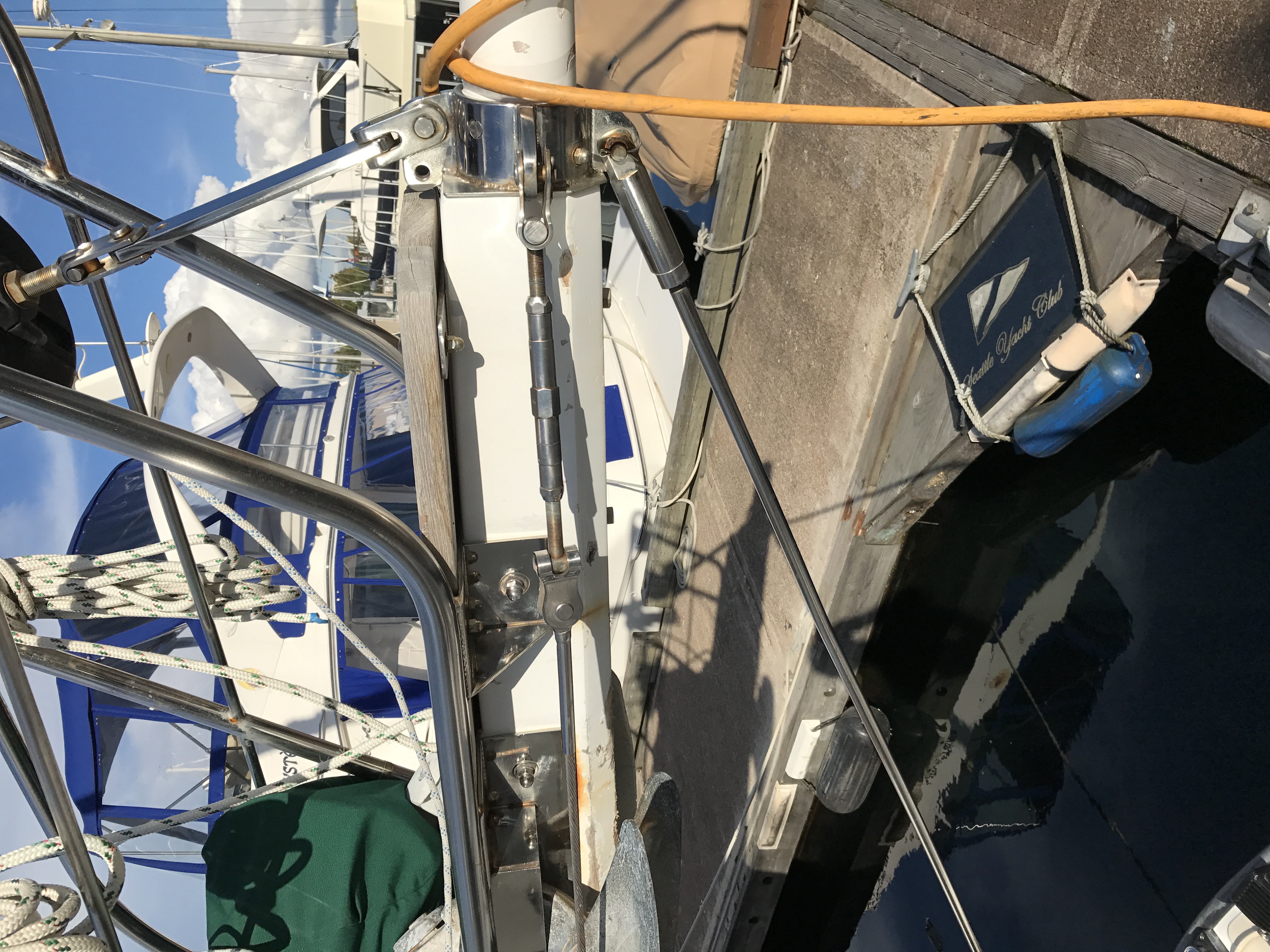
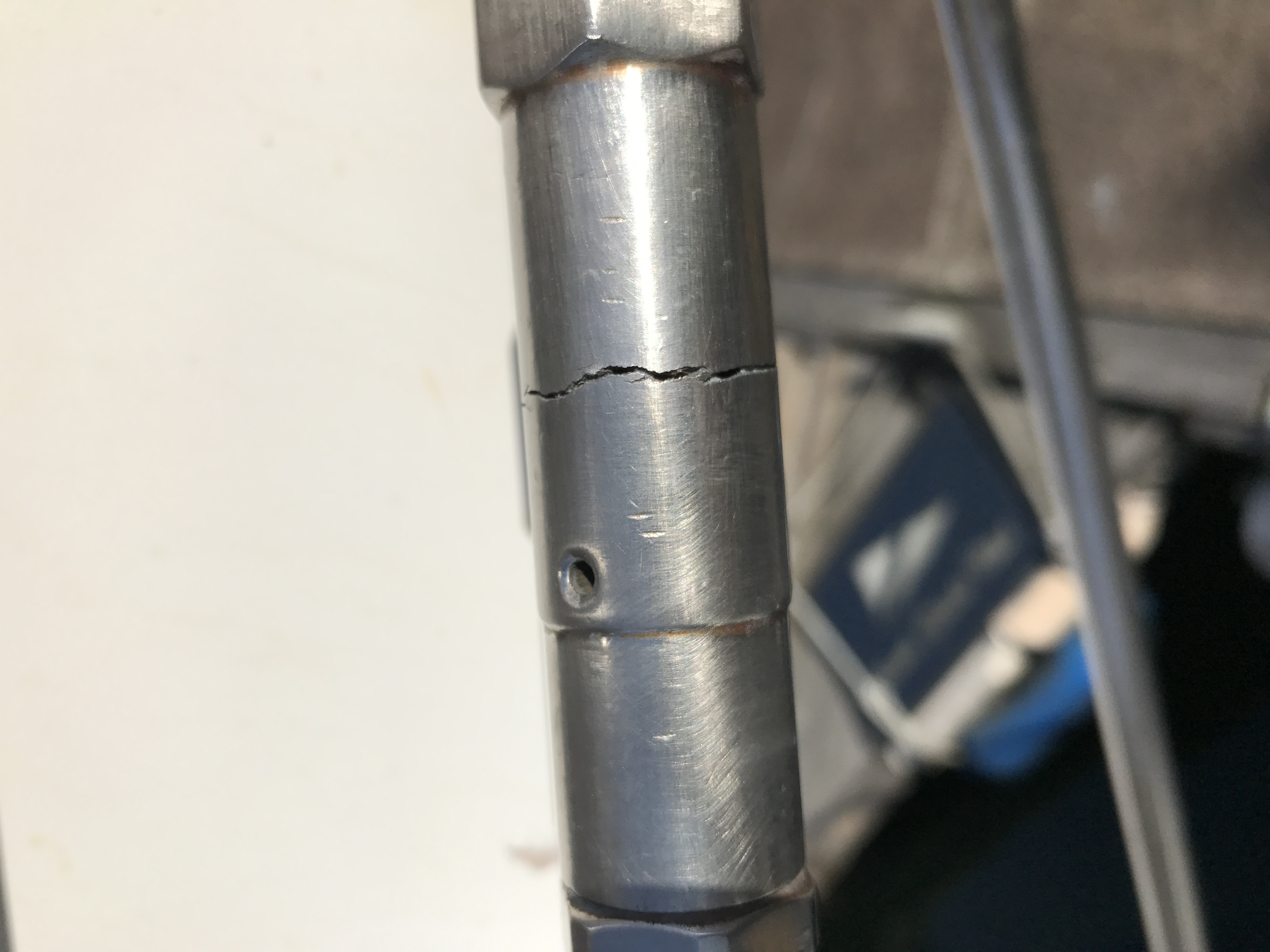
While polishing the stainless steel around the bowsprit, I noticed that one of the whisker stay stainless steel turnbuckle bodies had nearly failed. A stress crack on the starboard turnbuckle probably occurred somewhere between Fiji and Seattle on a starboard tack due to heavy shock-loads on the bowsprit when beating upwind with the genoa. A complete failure of the turnbuckle could have overloaded the bowsprit and, in a worst case scenario, brought down the rig!
Starboard whisker stay turnbuckleStress crack in turnbuckle body
The entire job took about a month of full-time work and covered the largest area of brightwork on Apropos. But there is still lots to do–cockpit, deck boxes, butterfly hatch, grab rails, helm seat, instrument turtle box, winch bases, cabin doors, companion way hatch, wheel, boom crutch, and several small pieces of teak. These will have to wait until next spring when the weather is drier–phase 2.
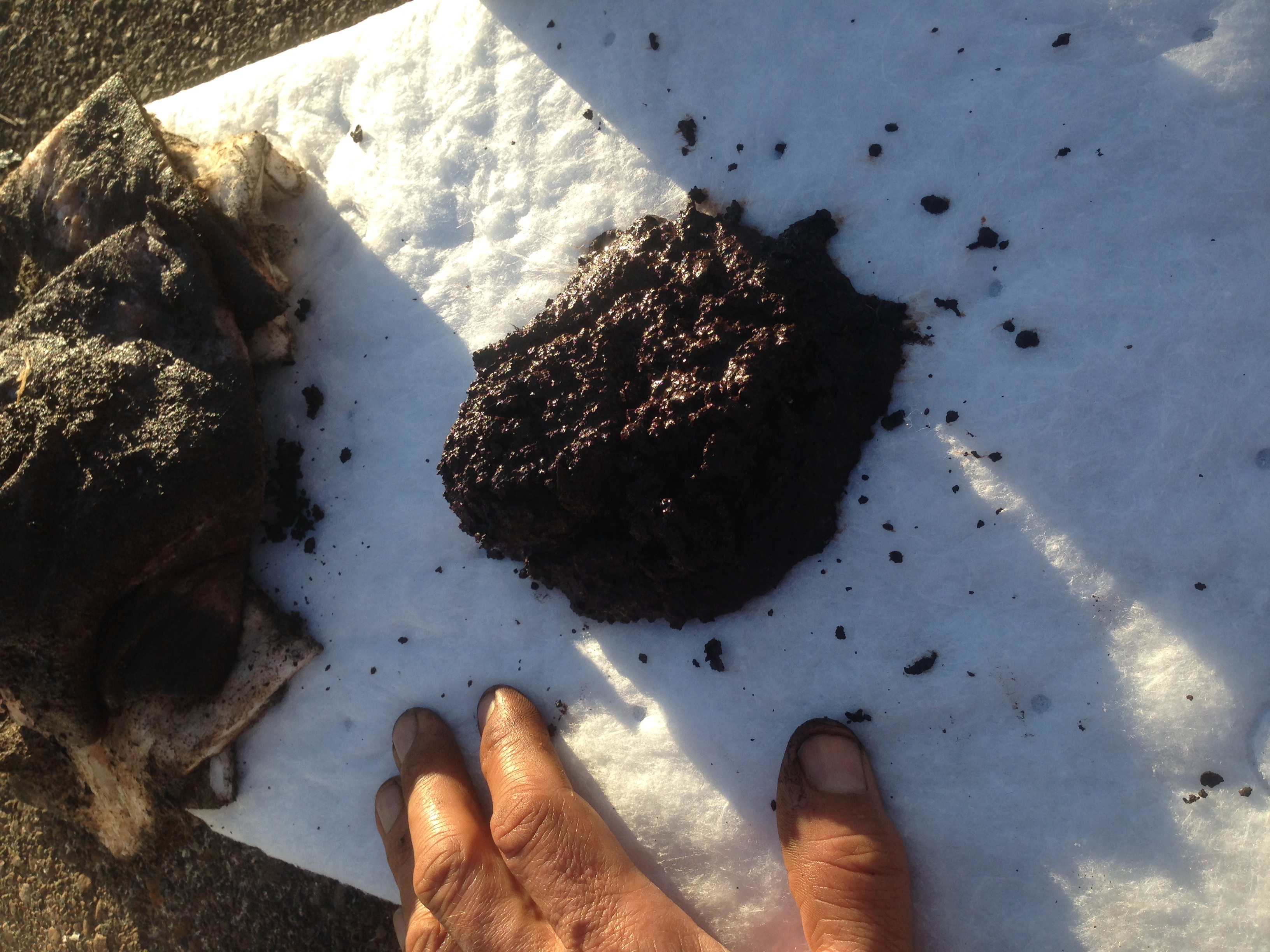
Now that we’re back from cruising, it’s time to clean, repair, and restore Apropos. Being in the tropics for almost 2 years and sailing 16,000nm in the ocean is hard on a boat. We had every nook and cranny of the boat packed–under floorboards, under cabinet drawers, the v-berth (“garage”), etc. The first thing I did was to remove a lot of “stuff” and give the boat a thorough cleaning. A solution of tea-tree oil and vinegar was used to wipe down all the walls and inside cabinets and drawers. Next I tackled some of the recent problems related to fuel. I emptied both fuel tanks and scooped out the debris at the bottom. Almost all the refueling outside the US was done with jerry cans and never did we see any sign of dirty fuel in the bottom of the cans, so I assume the debris was from the growth of microbes. I always add a small amount of Biobore fuel additive when refueling, but maybe the tropical heat, and having the boat sit in Fiji for 6 months, accelerated the microbe growth. While I had the tanks empty, I also took the opportunity to replace the 4 old gate-style valves with ball valves. Refueling the tanks from empty also allowed me to precisely measure the tank capacity. I’ve always knew the total diesel capacity to be about 120 gallons (from the boat specs), and assumed the 2 tanks were equal capacity. I now know the port tank holds 64.4 gallons and the starboard tank holds 55.6 gallons!
Debris taken from the empty diesel tanks4 new ball valves between diesel tanks and engine
Moving to the outside of the boat, I gave it a good wash to remove the salt that accumulated from the Hawaii to Seattle passage. I also removed some of the solar panels, the dinghy and outboard engine, the life raft and stored them in the garage until they’re needed next summer. Then I stepped back and looked at the poor state of the sun-wreaked varnish and thought about the monumental task “somewhere down the road”.
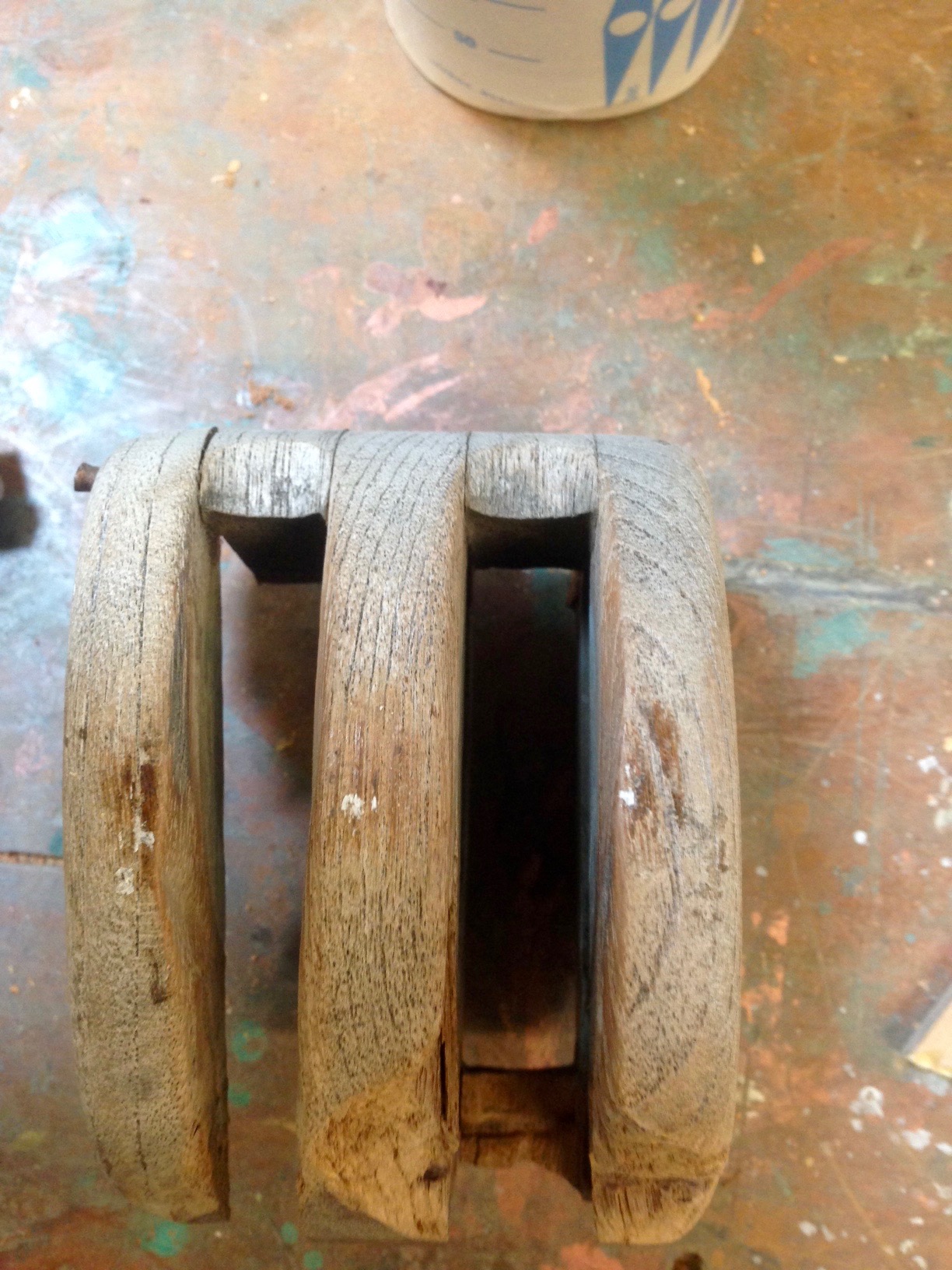
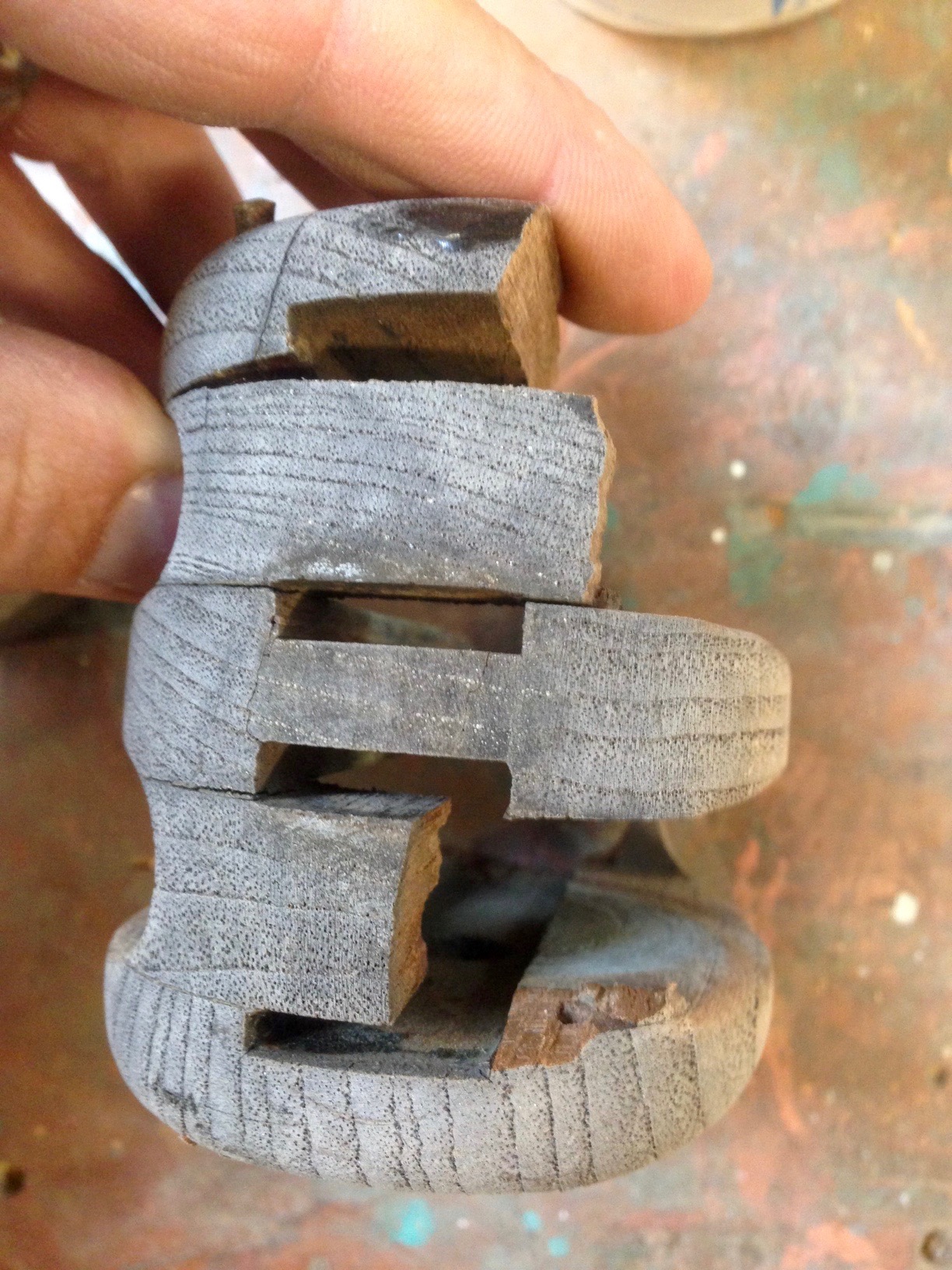
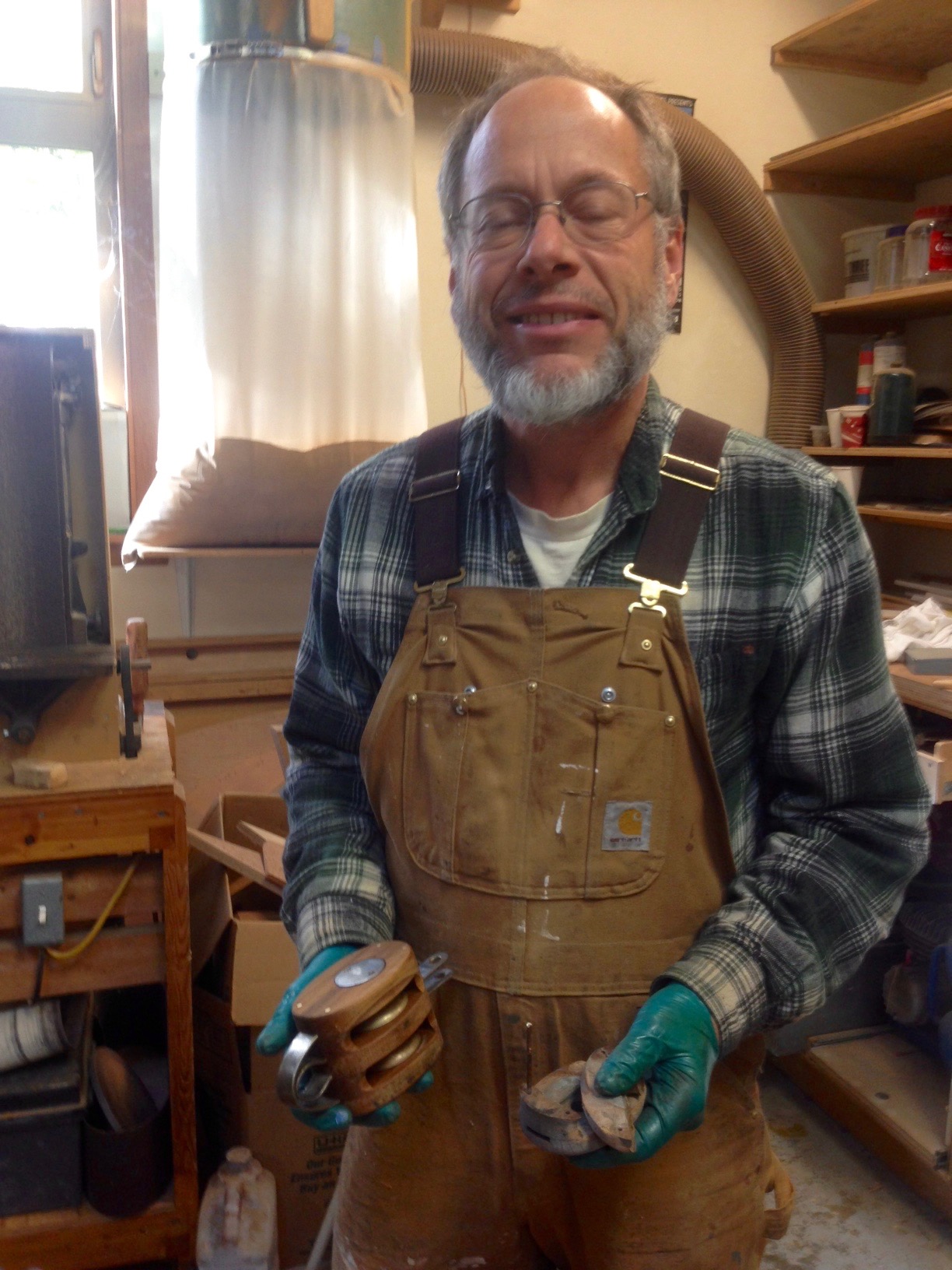
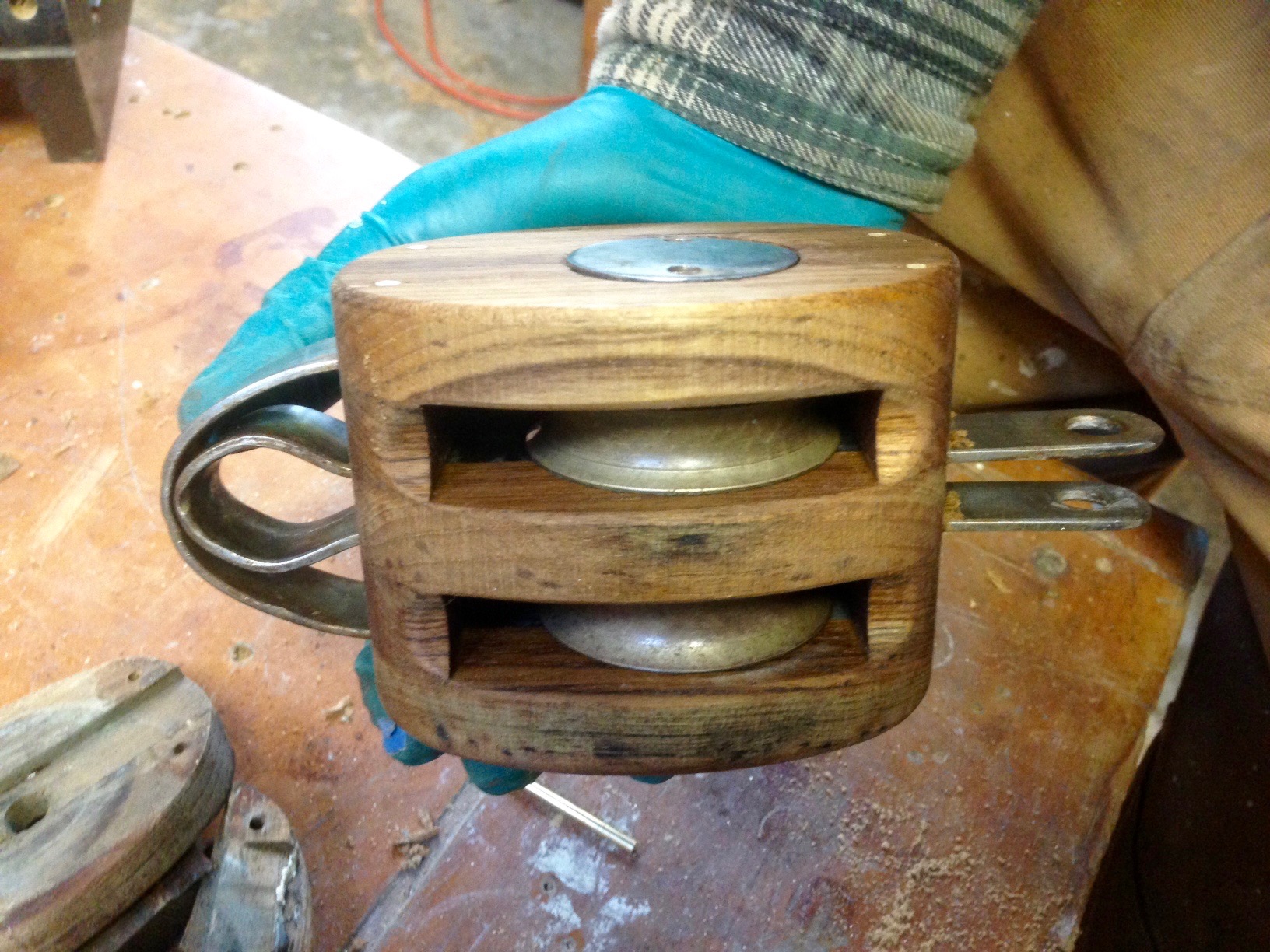
Apropos has 7 teak blocks that are used on the main and mizzen sheets. Somewhere between French Polynesia and Tonga, one of these blocks started coming apart. It was a teak double block with becket, used between the main boom and traveler. When sailing downwind with the boom way out, the sheet running through this block puts pressure on the side of the block, and after 30 years of use, the teak began to split. I found bits on the deck and was able to clamp it back together using 5200 marine adhesive, a short-term fix that lasted to Fiji. I carted the block with us back to Seattle to get it repaired since nowadays you can’t buy teak blocks like this at chandleries. I found a woodworker near Seattle and knew I had the right man when I went into his shop and there was a 23′ rowing sailboat that he was building. Although he never rebuilt a wooden block before, he had the woodworking skills and shop equipment to do it. Together we figured out how to disassemble the block into its components–a pin, 2 sheaves, 3 cheeks, inner and outer straps, and 4 swallows. As we took it apart, the teak cheeks and swallows broke apart and we realized they would all have to be replaced–a complete re-build. We were able to salvage enough to use as patterns for shaping the new parts. When I returned a few days later, Mark had all the teak pieces shaped and ready for assembly. I brought with me a bronze welding rod that we used for the 4 pins that, along with the main pin, help hold the 3 cheeks together. After assembling and driving in the 4 bronze pins, I gave it a quick coat of teak oil and it was finished–good as new!
Partially disassembled blockTeak was weathered and brittleThe master woodcrafter with rebuilt block in handFinished block with all new teak. The ends of the 4 bronze pins can be seen on the top.
While at Marina Vallarta, we saw a lot of boat work being done to other boats on our dock, so I asked around and found someone who does teak deck work. Apropos has all-teak decks and most of it is in good shape for a 33 year-old boat. Built in Taiwan in 1982 when quality teak was in good supply and relatively inexpensive, the teak decks on Apropos still have plenty of thickness, thanks in part to not using a course bristle brush to scrub them. Much of the teak caulking had been re-done during the refit in 2004 and is still in good condition, but all the panels on the coach-top still had the original caulk and showed signs of cracking with age.
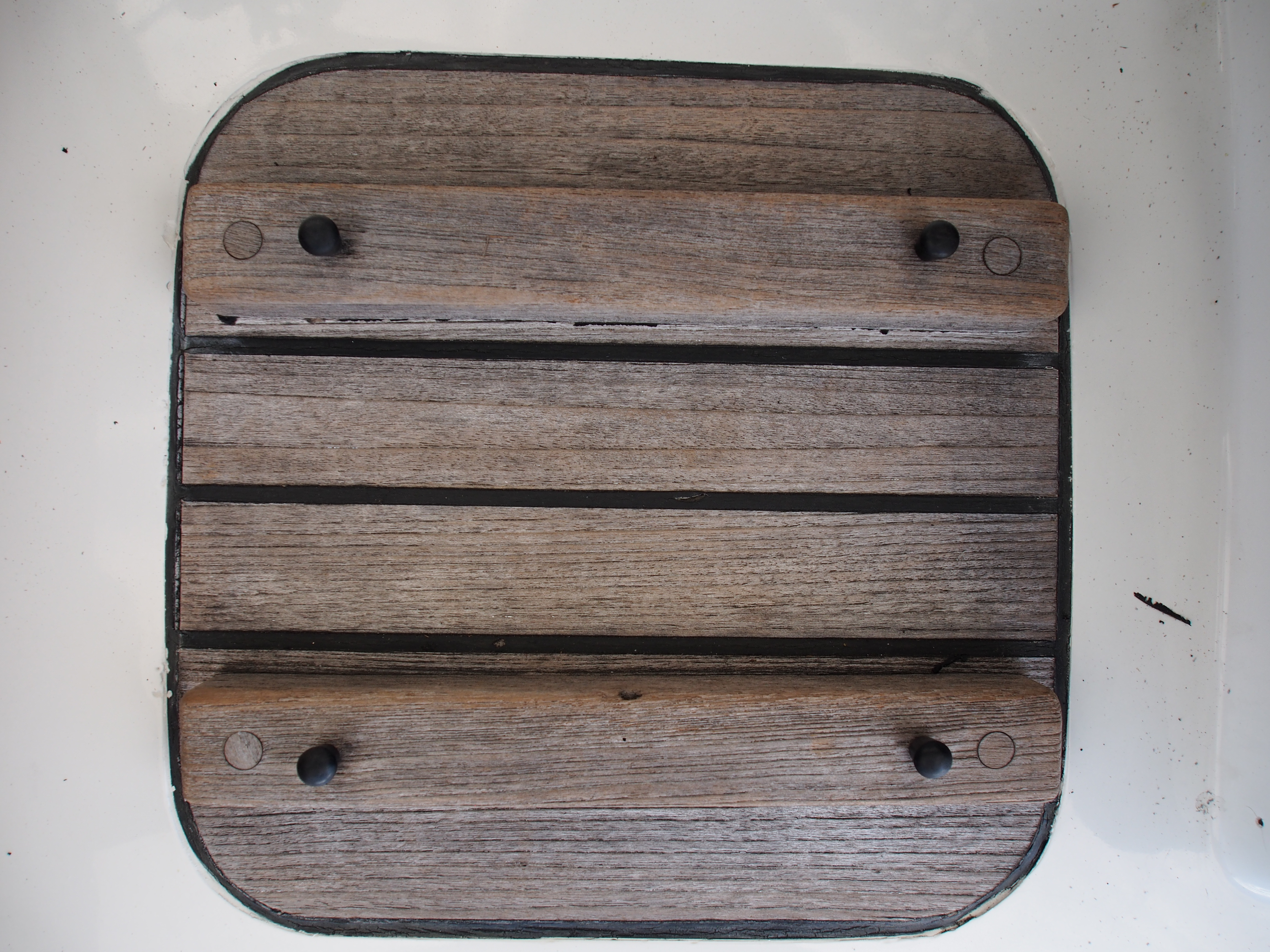
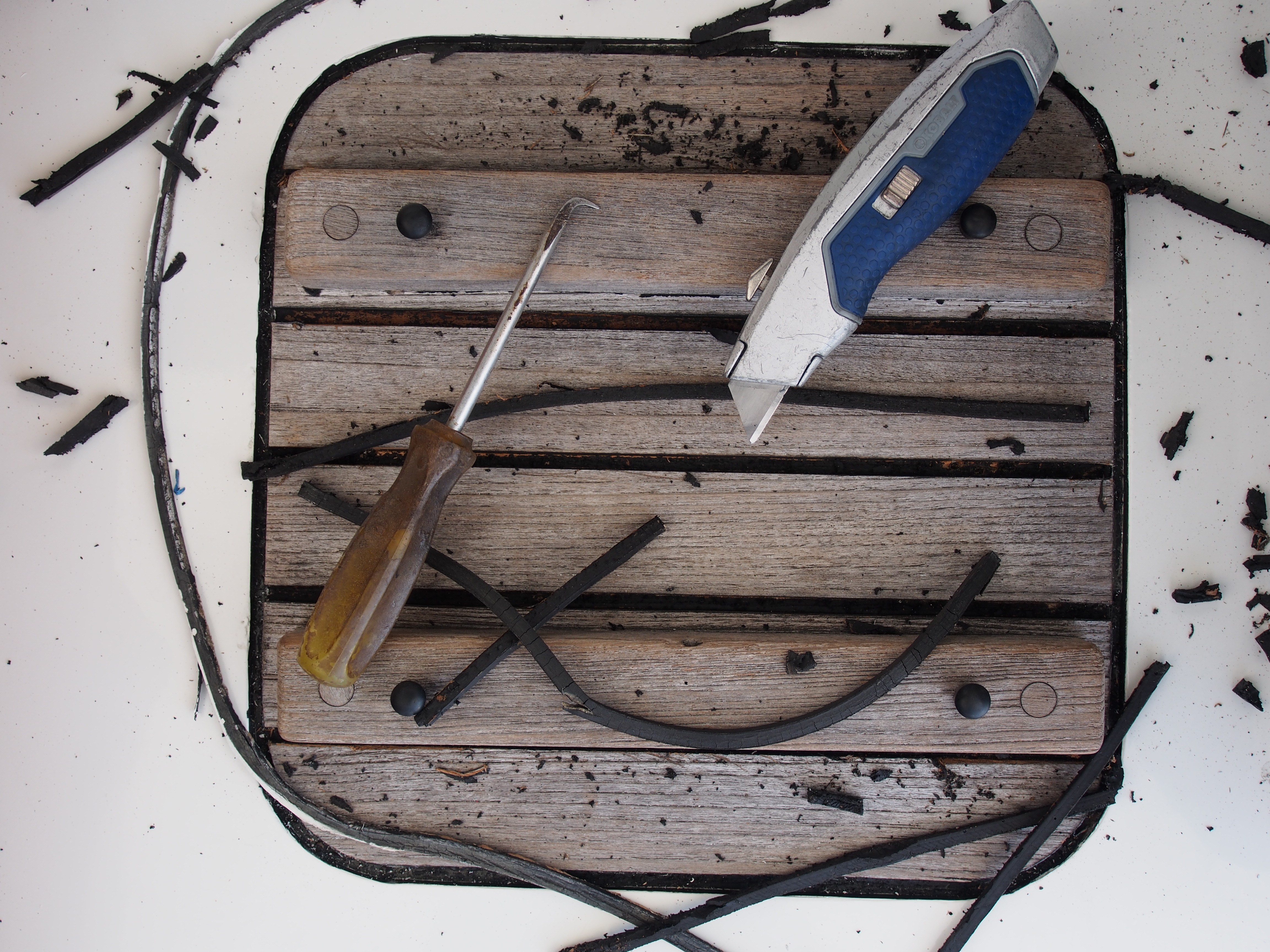
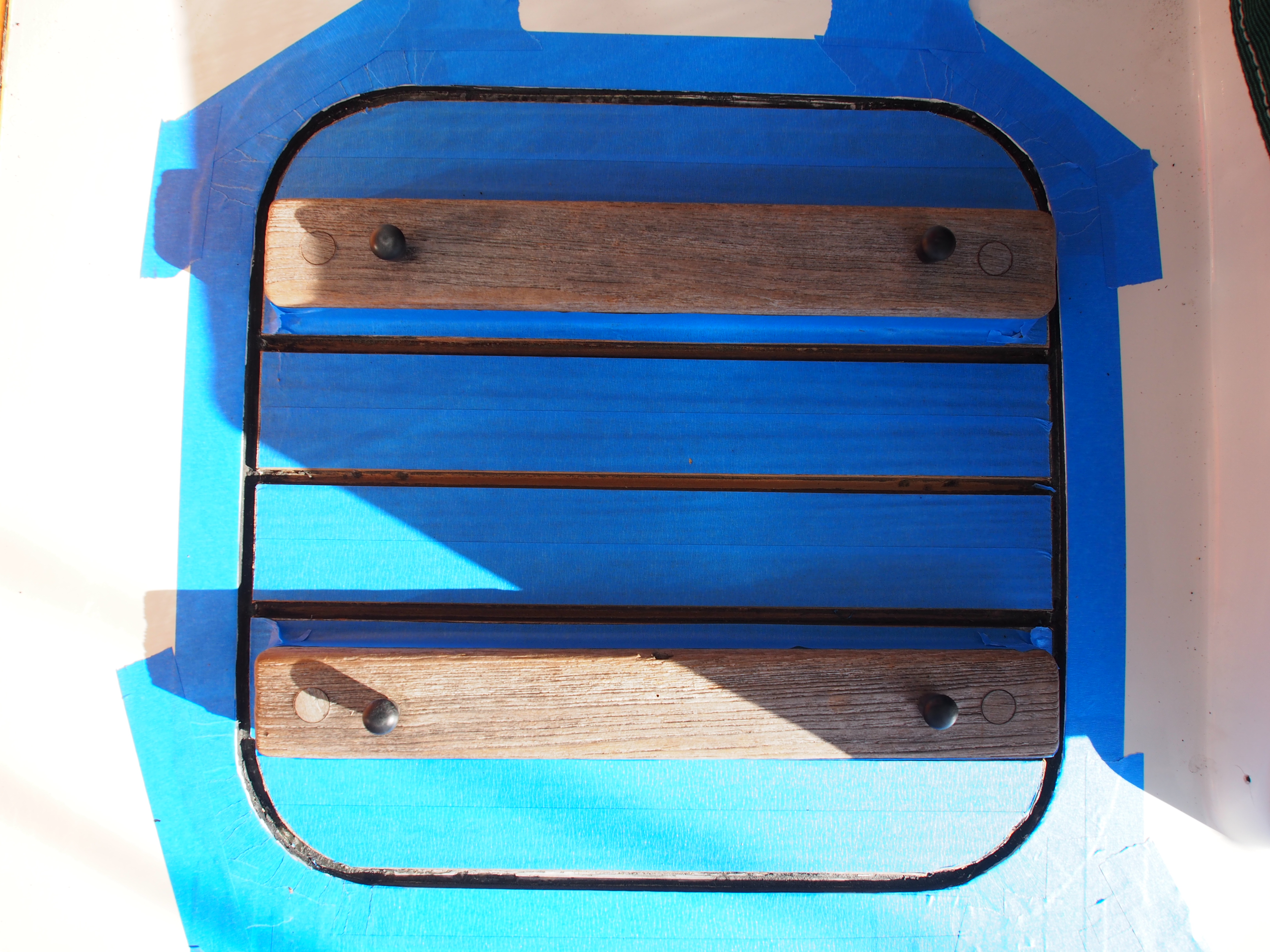
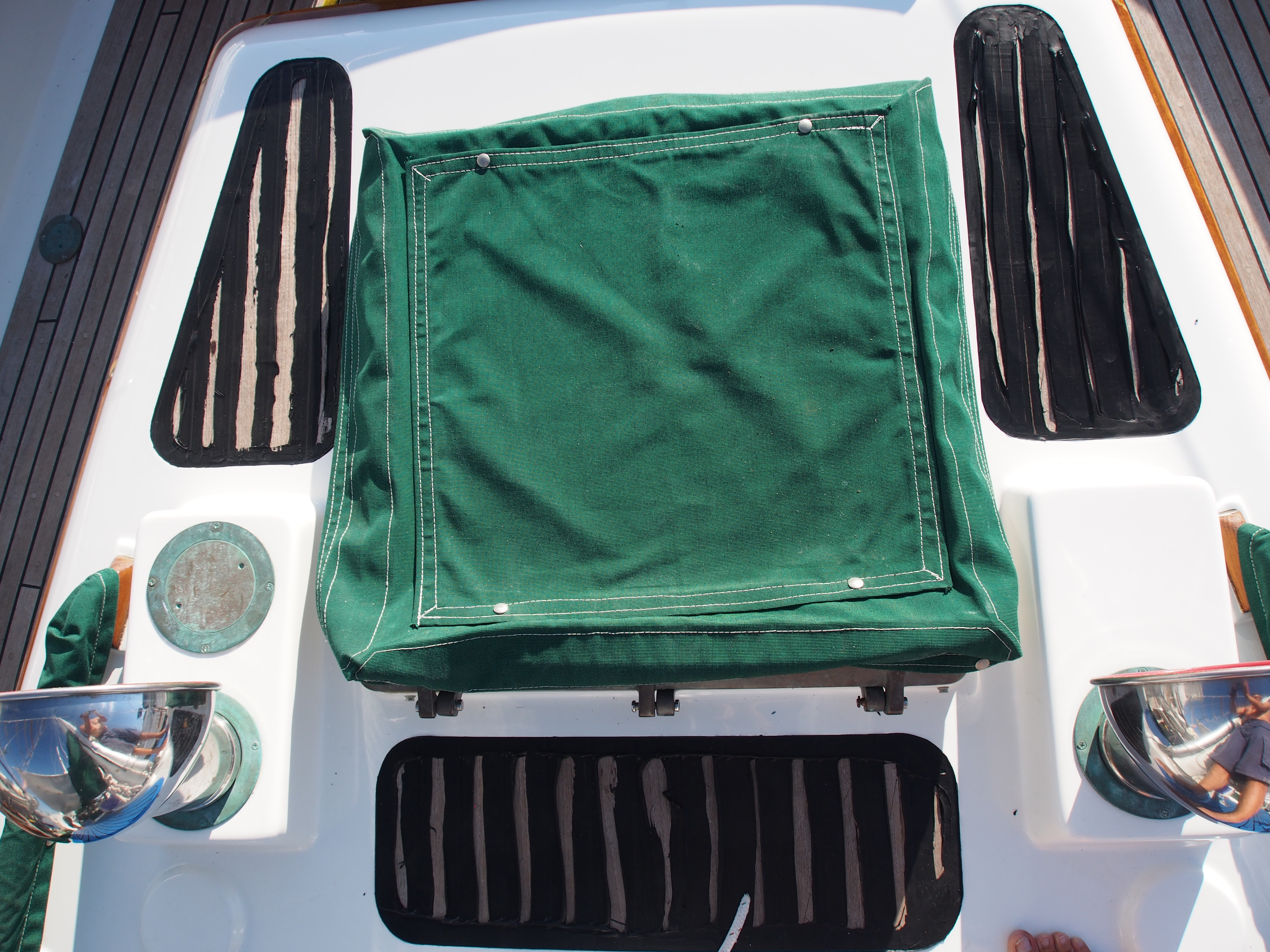
I hired Misha, who makes a living taking care of large yachts for their owners, to re-caulk all the deck panels on the coach-top. We agreed on an hourly rate (about 1/4th what it would cost back in Seattle) and he said he could start immediately. He didn’t mind if I helped and I soon became an apprentice working alongside him for 3-1/2 days. After removing deck hardware, deck boxes, the traveler, and anything else in the way, we began by removing the old caulk. This is very labor intensive and involves using a utility knife to score both sides of the channel of caulk along the teak. The channel is U-shaped and about 1/4″ deep, so a small amount of pressure is applied. The caulking can then be removed using a handmade tool to help pull out the caulk. Long strips can be removed by gently pulling on the caulk while using the tool to scape along the bottom of the channel. The tool, similar to a reefing hook, was made from a flat screwdriver that was heated, bent, then shaped to a tapered point. I ended up doing the majority of the caulk removal job while Misha followed with hand-sanding the channel to remove any leftover caulk for better adhesion of the new caulk, and masking the seams with blue 3M tape. As I got more efficient, I would have another panel ready by the time Misha finished masking a panel http://blogs.asburyseminary.edu/blog/cialis-online.html.
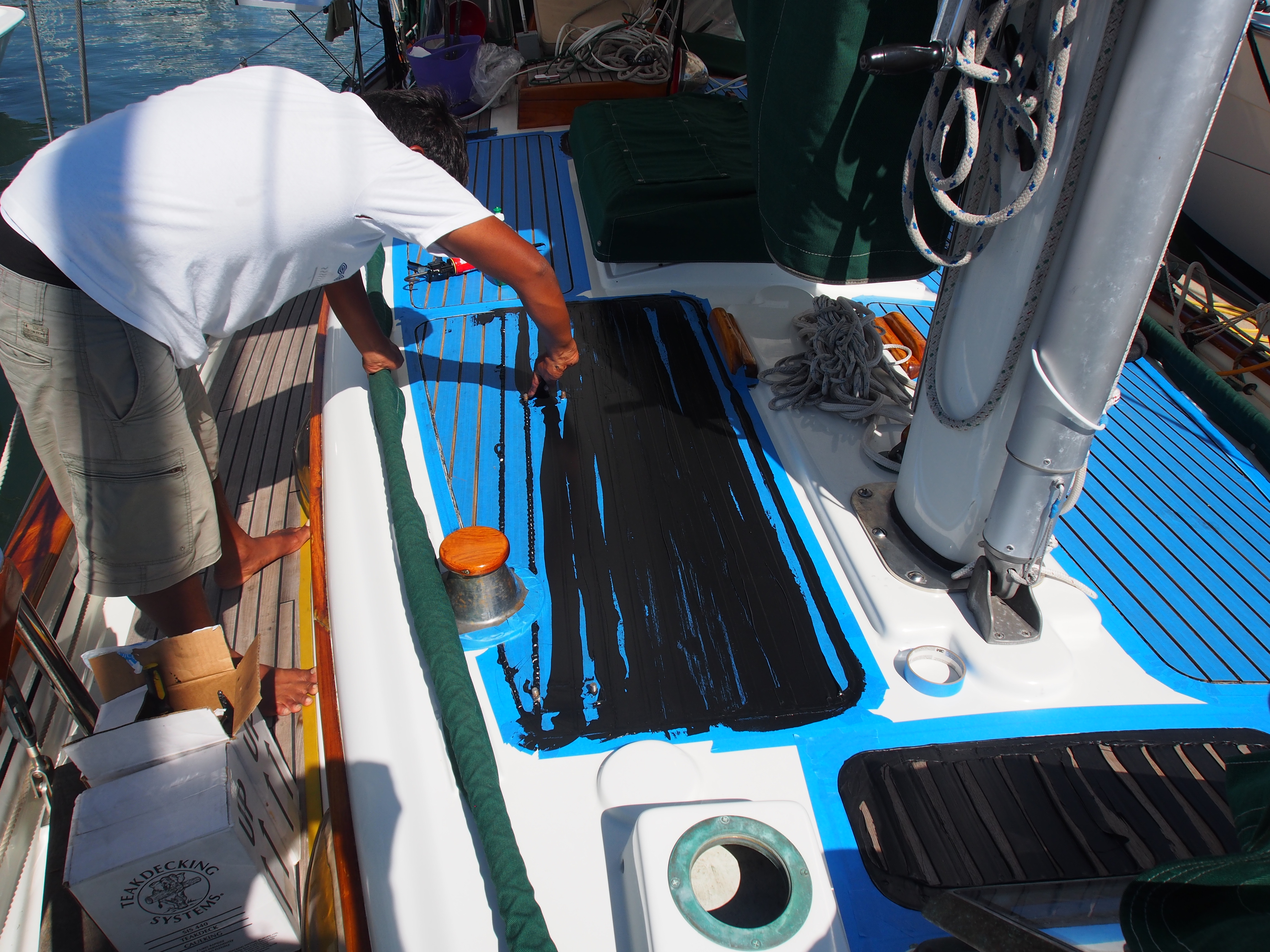
There are 2 methods for re-caulking. One is to mask only around the outside edge of the panel (where the fiberglass gel coat is), then apply the caulking (Teak Decking System SIS 440) to the channel and smooth it out with a putty knife. After the caulking dries and cures in 48 hours, some of the excess caulking is cut away with a razor knife and then the entire panel is sanded until only the caulk in the channel remains. The disadvantage of this method is that some of the teak gets sanded away. The advantage is, as long as the teak is thick enough, it removes the ridges in old teak and leaves it nice and flat. I decided to test this method on 3 of the small panels towards the bow.
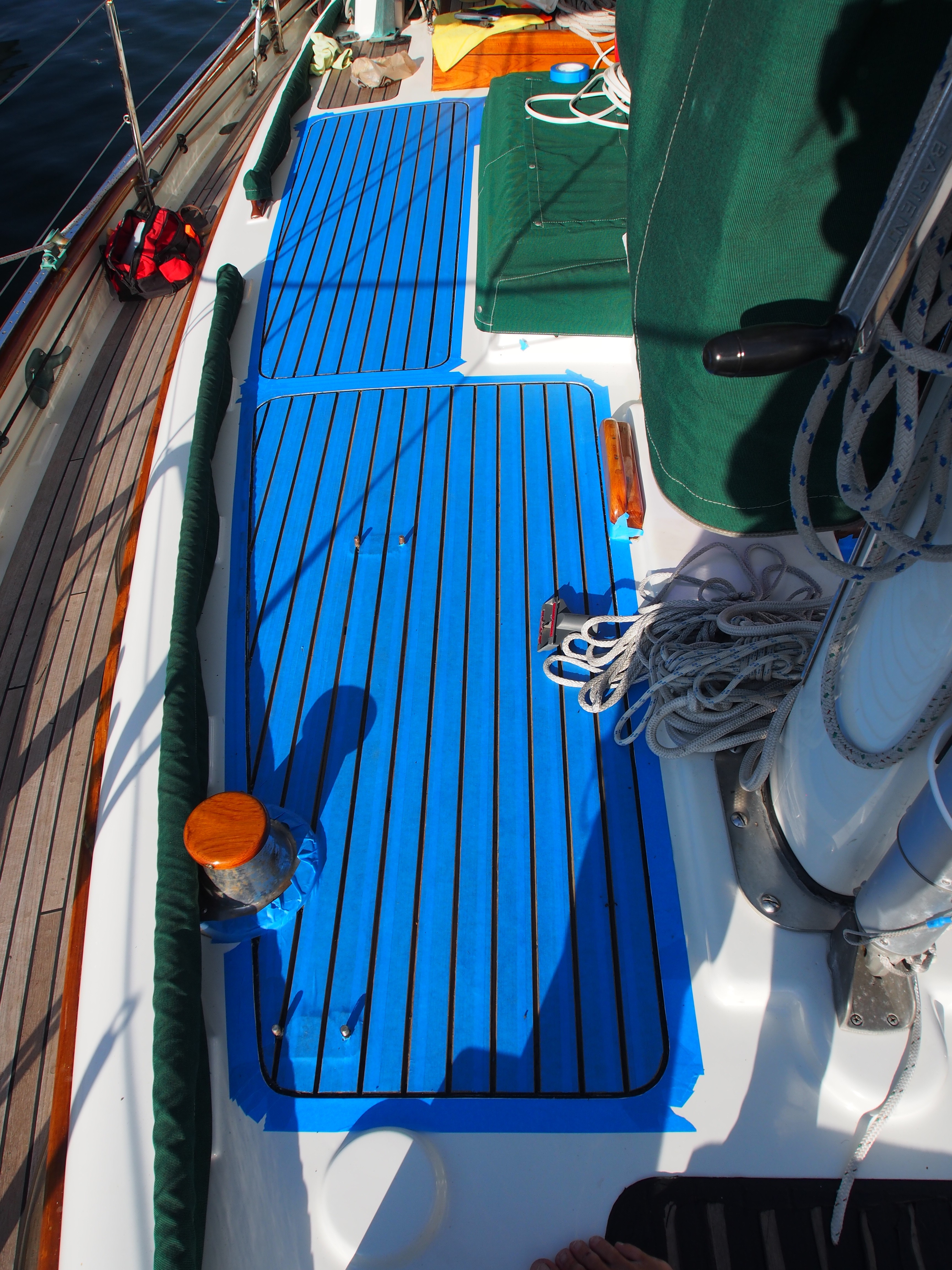
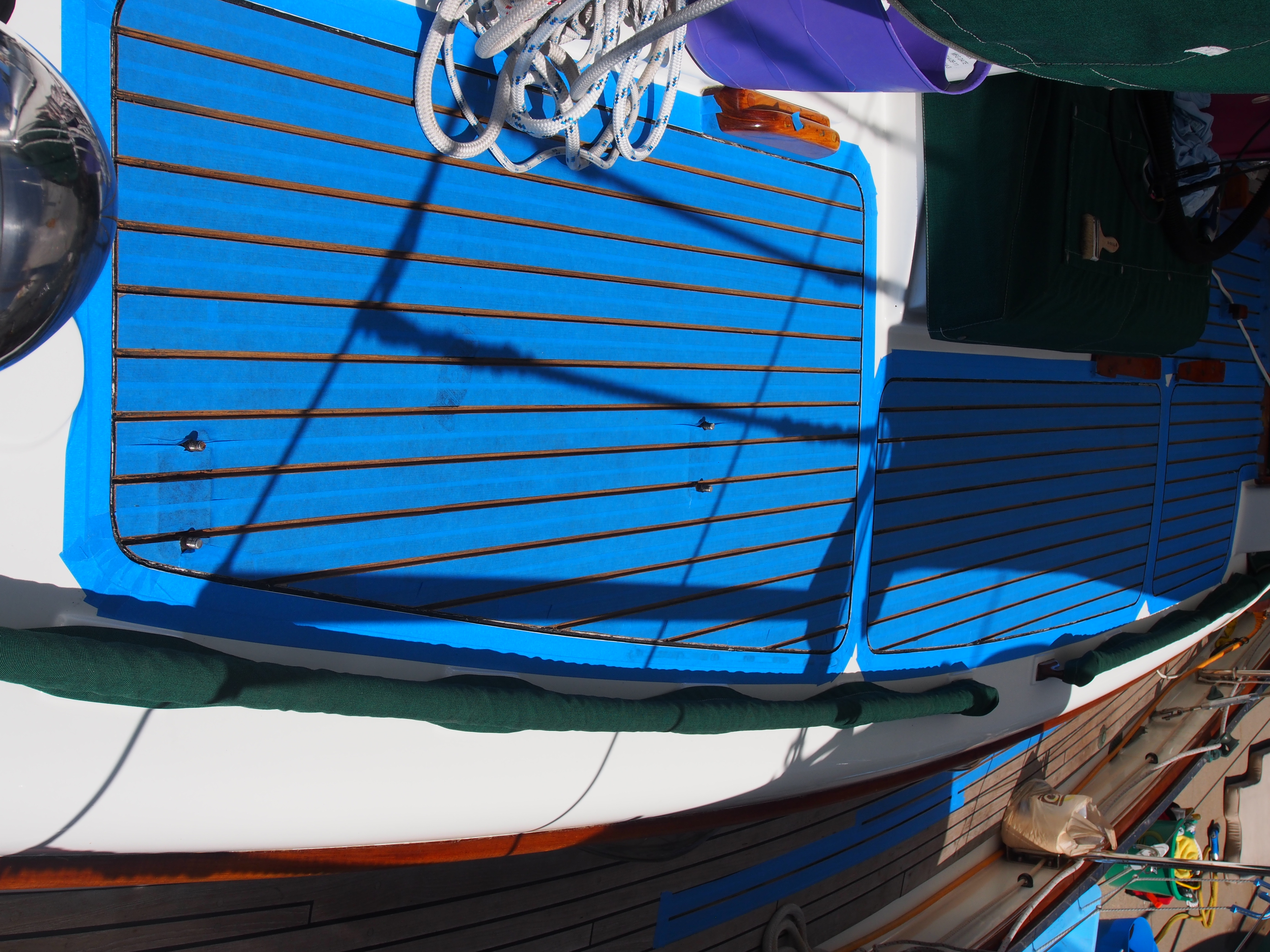
The second method is what we ended up using on the majority of the teak panels. It involves masking every seam so that only the channel is exposed, then applying the caulking and smoothing it with a putty knife. After the caulking cures, the tape is carefully removed and the panel is sanded. I did the masking of a few of the panels and realized how painstakingly a job it was, especially going around curves! The extra time spent masking the teak in this method is about equal to the amount of time spent removing all the excess caulking in the other method. But in the end, I believe masking every seam is the better approach http://enligneviagr...
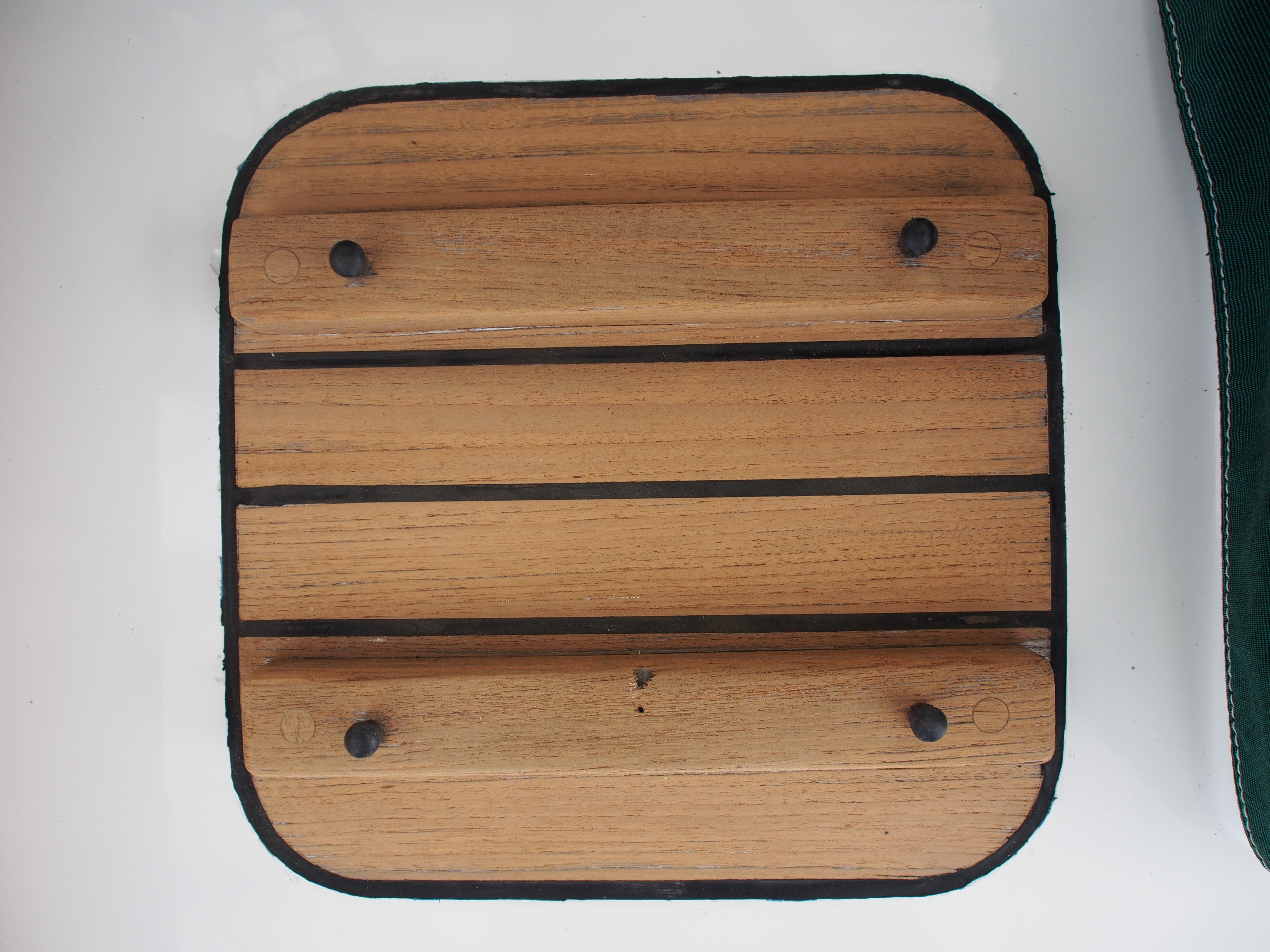
After 3-1/2 days of hard labor and 22 tubes of caulk, the job was completed. The coach-top panels are much smoother and the caulking came out great. The final step was to re-bed all the hardware, deck boxes, and traveler back in place.
Deck panel with old worn/cracked caulkingStep 1: remove old caulking with knife and home-made tool (bent hook made from a screwdriver)Step 2: clean channels by sanding, then mask the teak around channels where the new caulk goesAfter re-caulking and sandingAlternate Method Step 2: apply caulk without masking the teakStarboard-Side MaskingPort-SideMisha applying SIS 440 CaulkingStarboard side deck re-caulking finished
As the saying goes: Cruising is fixing your boat in exotic places
I spent a good part of the day fixing things:
One of the dual Racor fuel filters had been dripping fuel into the bilge (onto absorbent pads) for a couple of weeks. I’ve tried replacing o-rings on the threaded drain knob at the bottom of the bowl several times in the past, but it continued leaking a few ounces per day. It was a nuisance cleaning up the pads and once I forgot to check things for a week and had to remove a half gallon of diesel from the bilge using a drill pump. I noticed if I tightened the plastic drain too much, the o-ring compressed too much and it leaked faster. But even loosening it by various amounts wouldn’t stop the leak all-together. Removing and inspecting the drain plug, I noticed the bottom of the plastic bowl was a little uneven, so I filed it smooth with a very fine file. I also put a bit of silicone gasket sealer on the threads next to where the o-ring seats. After screwing the plug back in and re-filling the bowl with diesel, it seems to have stopped the leaking–at least 24 hours later, I’ll keep an eye on it!
Racor Fuel Filter (1 of 2)
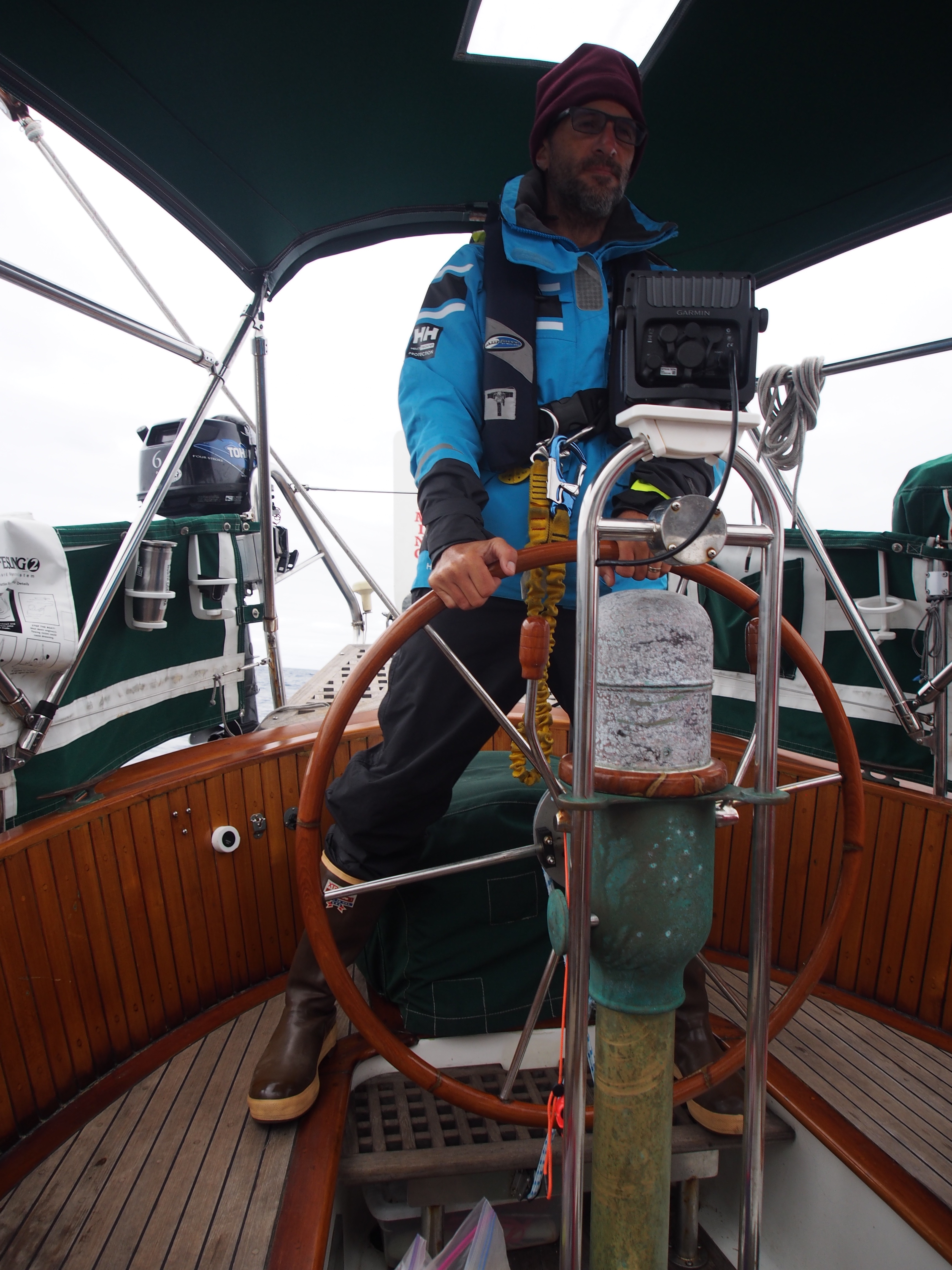
Our Fleming self steering wind vane, nicknamed Ian, never really worked right and I think I finally found out why! Another cruiser (Scott from SV Velvet Sky) was telling me how well his wind vane steered his boat and offered to take a look at mine. His is a Monitor, but works the same by turning the wheel in response to veering off a set course with respect to the wind. The problem with Ian, is that he seemed to turn into the wind all the time and never corrected course. Analyzing how the wind affects the vane, which affects the servo-pendulum rudder, which in turn moves the wheel, we realized that the lines going from Ian to the wheel drum needed to be reversed, or criss-crossed, to make the wheel turn in the correct direction! I decided to cross them where they were routed through the lazarette, which was more difficult than crossing them near the wheel drum, but provided a fairer lead through the blocks. Can’t wait to test Ian out on our next sail!
Fleming Self-Steering Wind Vane (AKA Ian)Control Lines Routed to Wheel Drum (the spring pin is used to engage the wind vane)Control Lines Inside Lazerette Needed Crossing
The head felt like it wasn’t flushing properly. The Y valve that steers waste either into an onboard stainless steel tank or overboard was getting harder to move, and with the valve in the tank position, you could hear some of the water going overboard. So I disassembled the Y valve and right away could see the problem–lots of calcium deposits had built up so the valve wouldn’t completely move to the tank position. This was not a fun job, but was finished in about 2 hours and now the Y-valve operates much better.