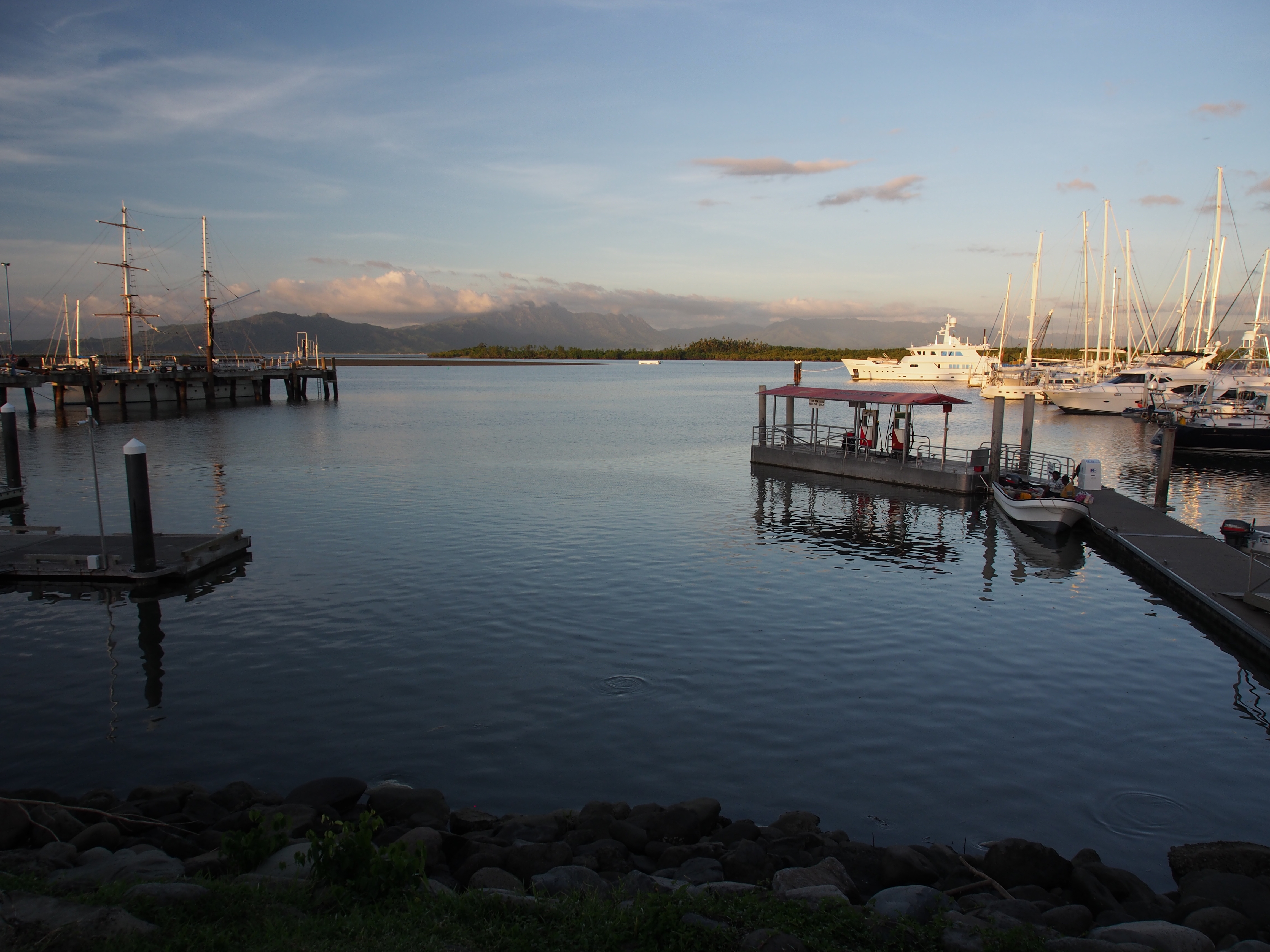
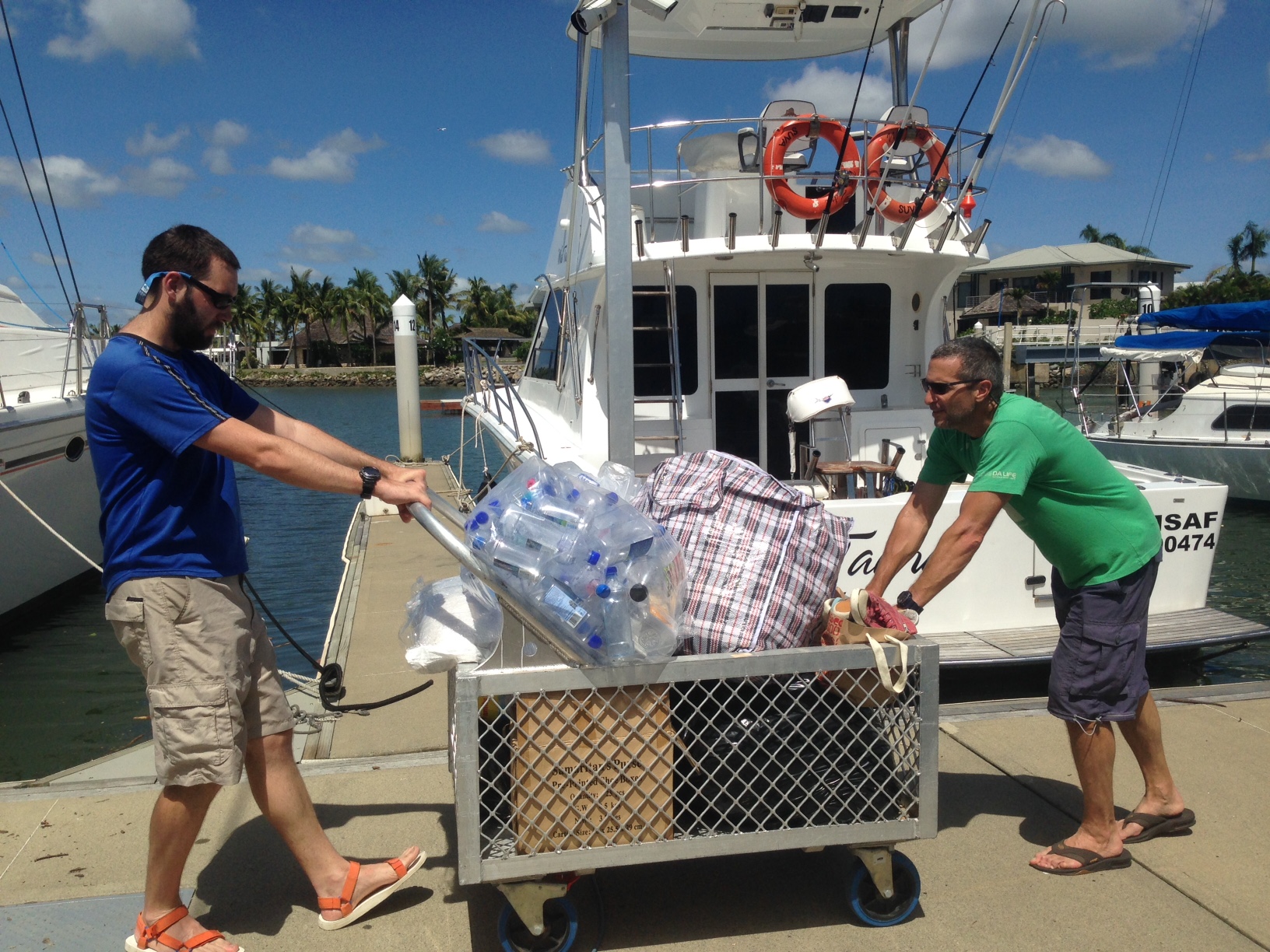
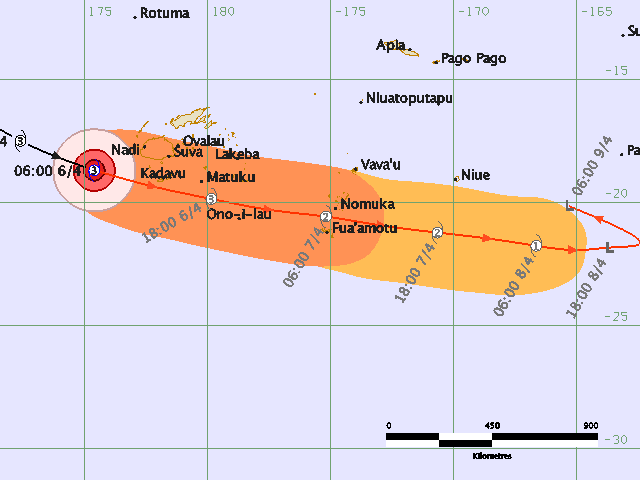
Our final few days in Savu Savu were spent provisioning, re-fueling using 20 liter jerry cans, and tracking former Tropical Depression 17-F, now Tropical Cyclone Amos, as it moves east towards Samoa. Following behind the low pressure system could bring us some favorable southerlies to get us to Samoa faster. Of course we will watch it closely and be prepared to turn around if it does a 180. We will keep at least a 3-4 day separation from it. We’re planning on a 4-6 day passage. Found out today that Fiji Customs Regulation #WTF requires us to depart within 1 hour of clearing customs and immigration, so a daybreak departure isn’t possible. Good thing both offices are a 5 minute walk from Copra Shed marina, and they will open at 7am if we call ahead.
We found crew for the Samoa to Kiribiti passage, so we are back on schedule! Departing Savu Savu in 3 hours. Our planned route is to head south and go around Koro Island, then tack NE and point to Samoa. The Koro sea is still rough today but is expected to calm down some by tomorrow, so we will be moving slowly for the first 24 hours. Nanuku passage is wide so ok to go through at night.
Well, it is still the rainy season in the South Pacific, but I’ve been in Fiji 19 days now and we’ve had 3 Tropical Depressions and 1 Tropical Cyclone! We had planned on leaving Makogai and sail to Savu Savu, about 50 miles north. After getting outside the reef, the wind, seas, and rain told us to go back to the protected harbor. We later received weather reports over the HF radio saying a strong tropical depression was headed our way. It was reported to have an elongated spiral, one step away from forming a tropical cyclone. We put out 125’ of chain and the 75 lb CQR anchor held well on the sand bottom. During the next 12 hours we filled 8-gallon buckets numerous times with fresh rain water running off the bimini and poured them into the water tanks. Wind gusts were about 40-50 knots overnight so we paid close attention to our GPS position to make sure we weren’t dragging anchor. Things finally settled down some at daybreak but the forecast was still for strong winds and showers so we stayed another day at Makogai.
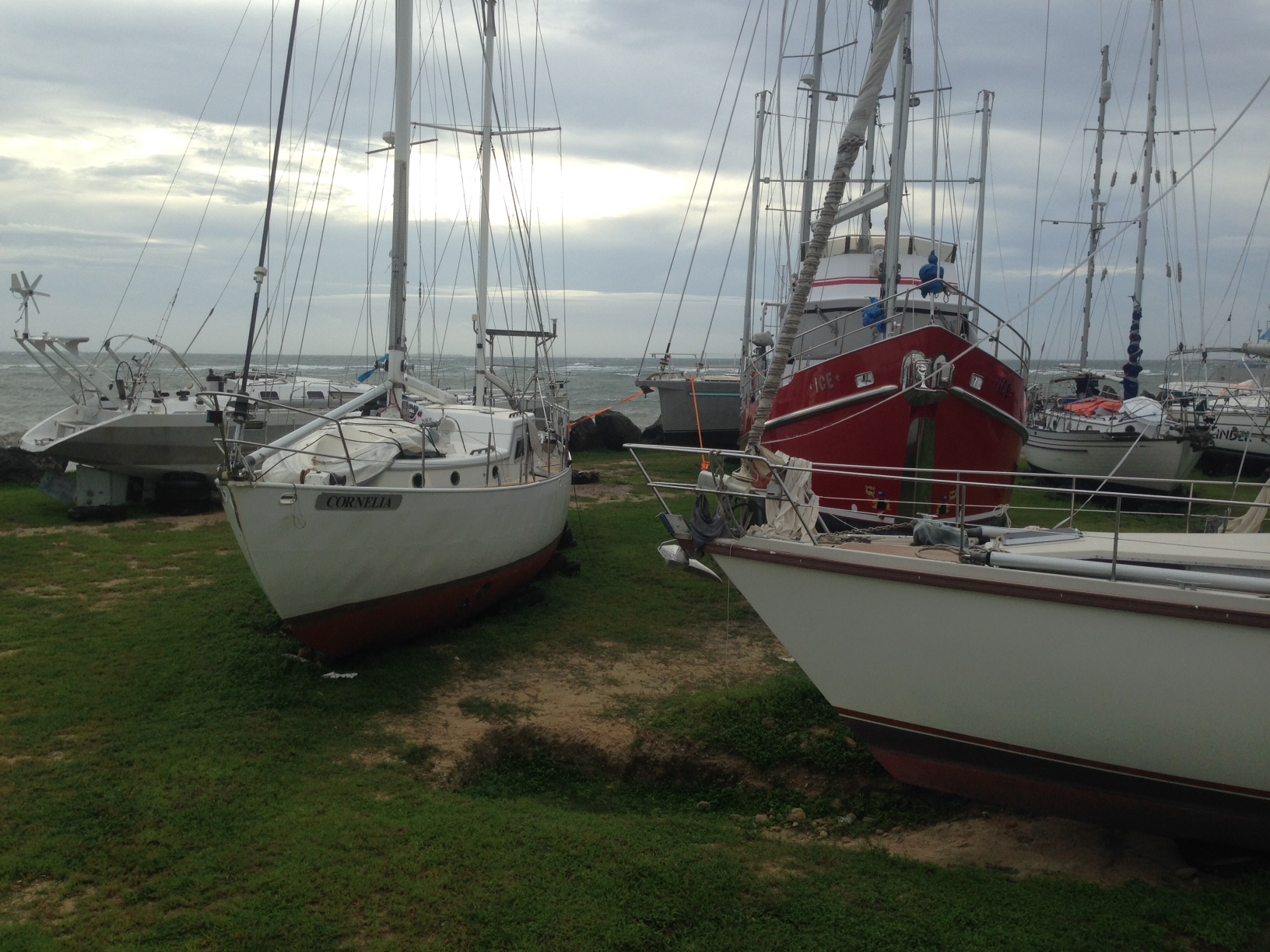
We finally left Makogai and had a nice downwind sail to Savu Savu, 50nm north. Sailing under a reefed main and genoa, we averaged around 6.5 knots under mostly sunny skies with a few brief squalls. It’s great being back at the Copra Shed marina. Unfortunately, many boats were lost here during the cyclone. We were running low on food, so after a much needed shower, we went our for Indian food.
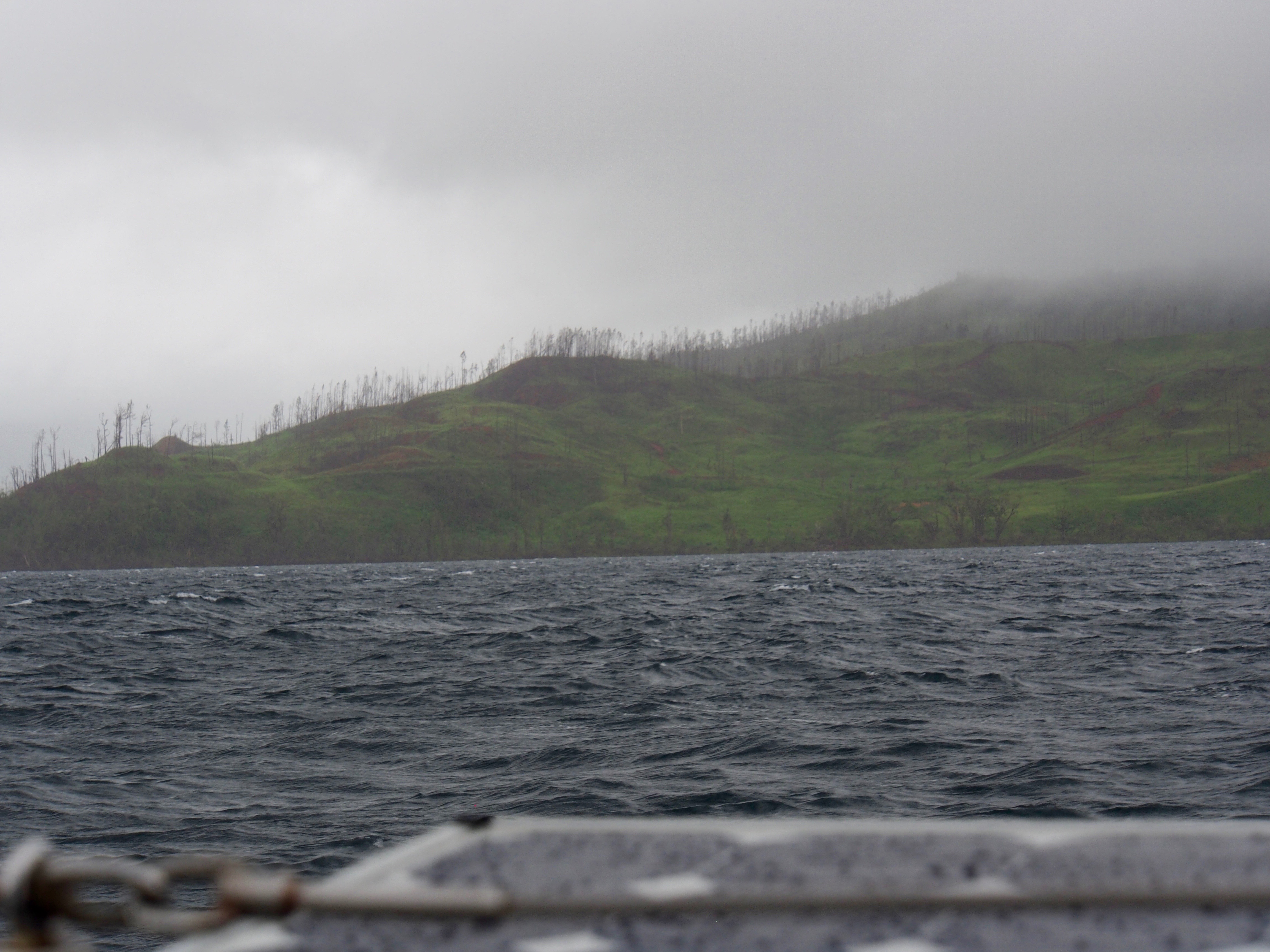
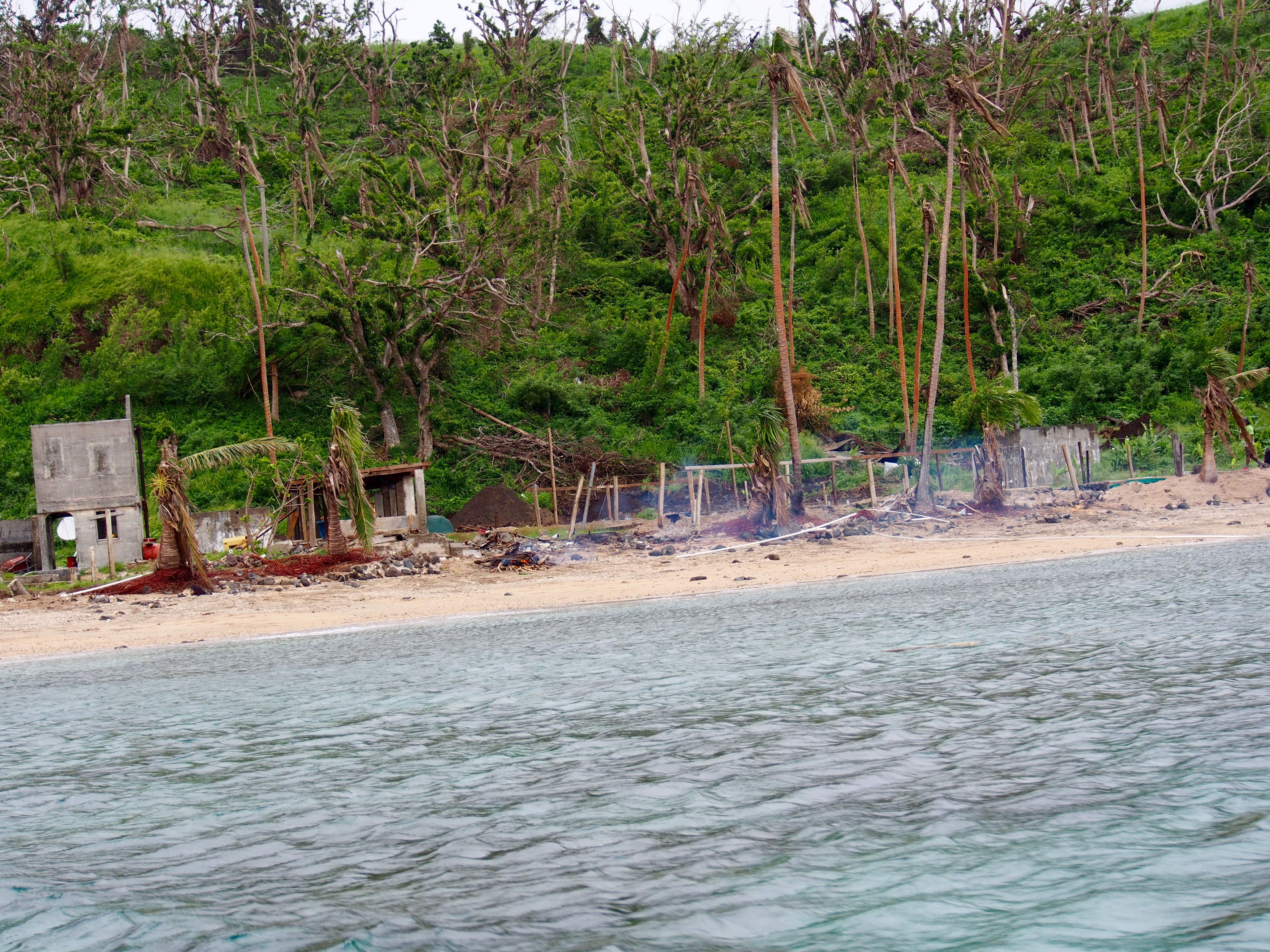
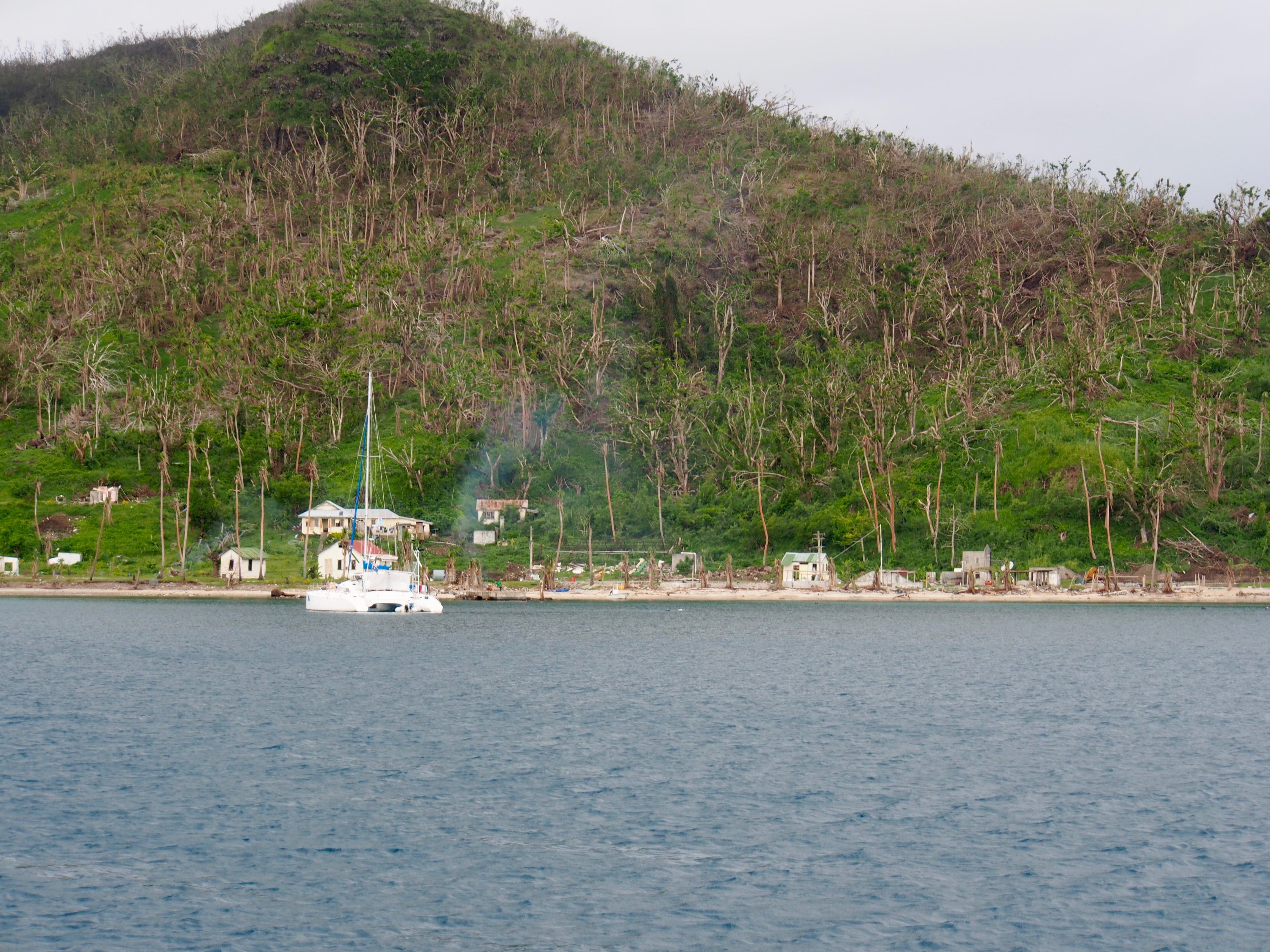
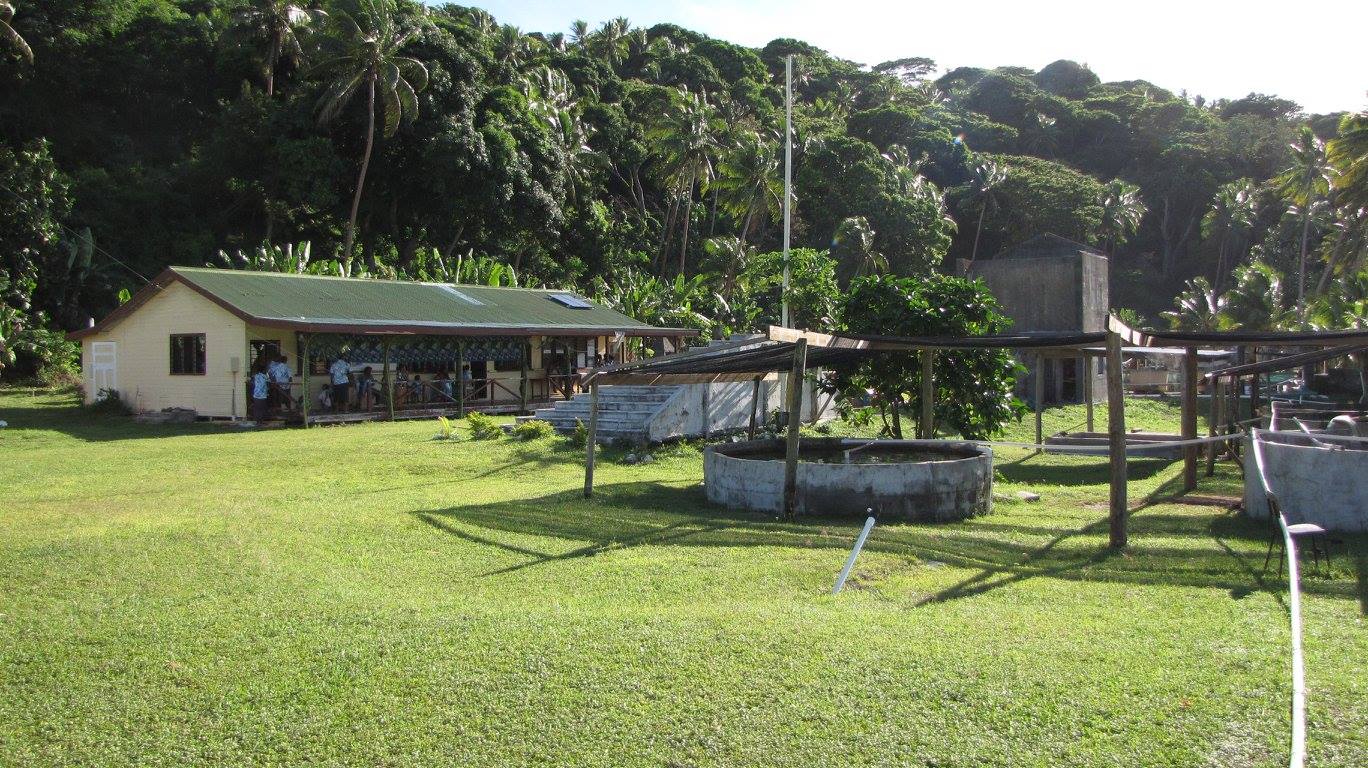
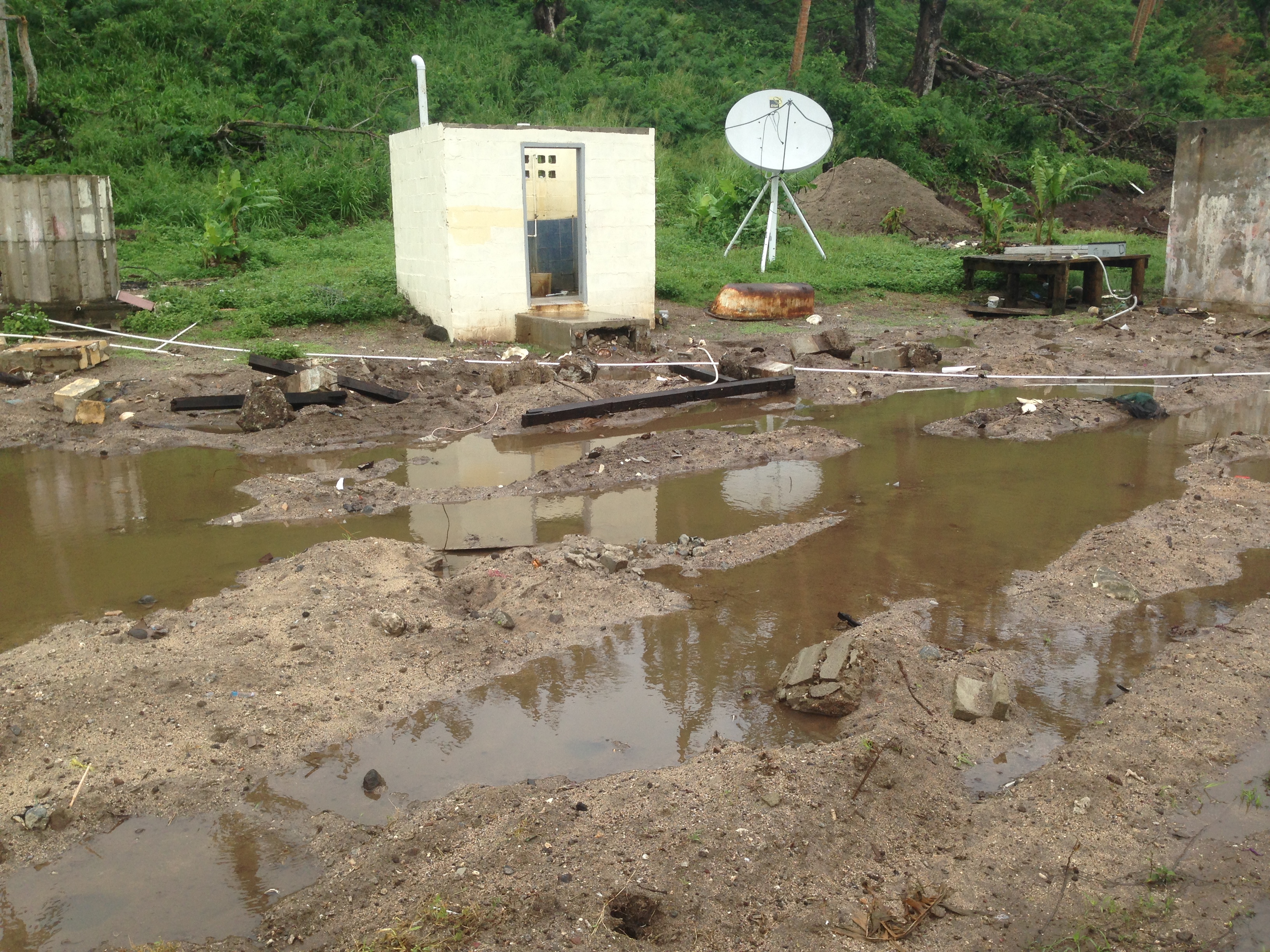
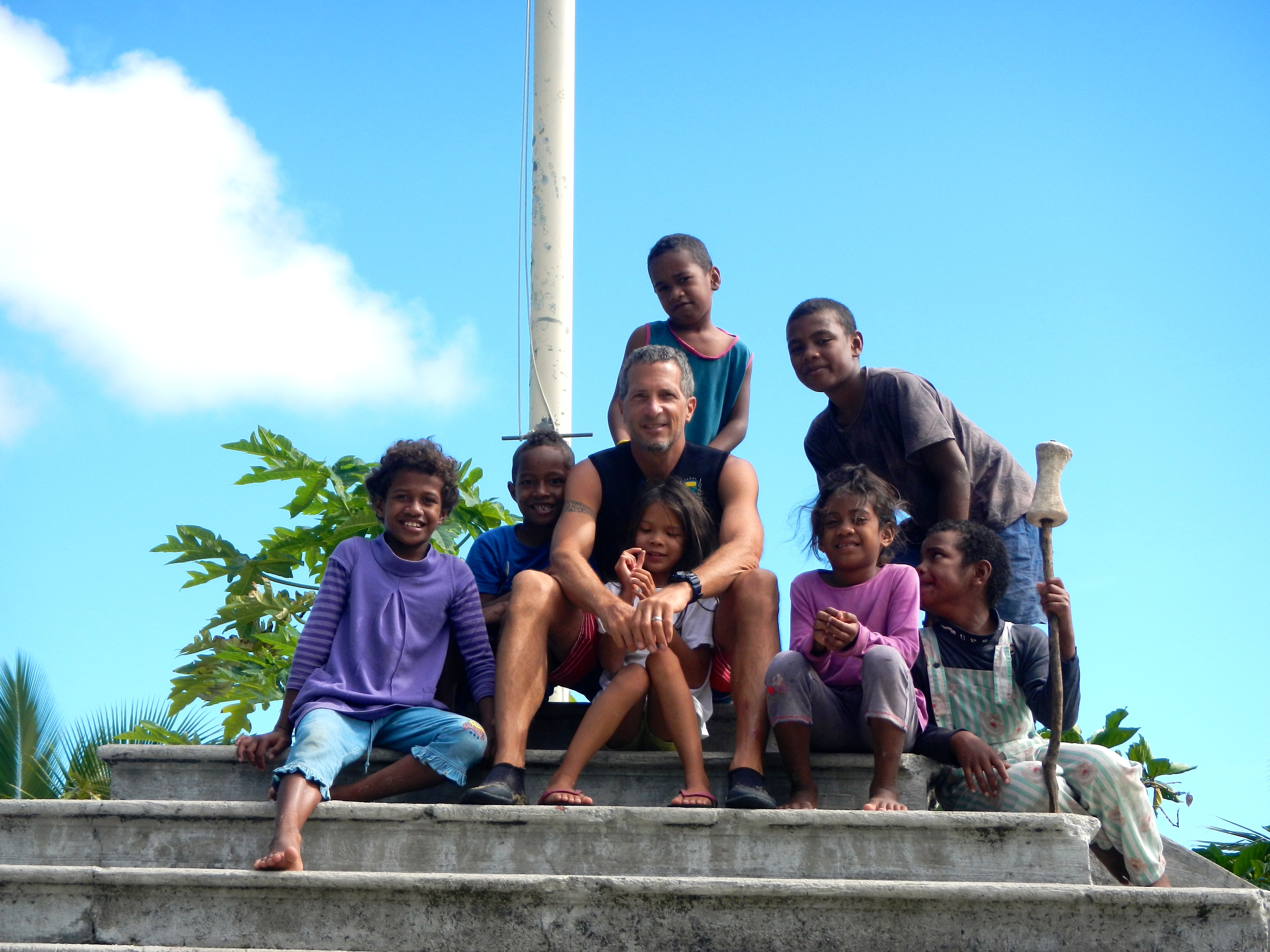
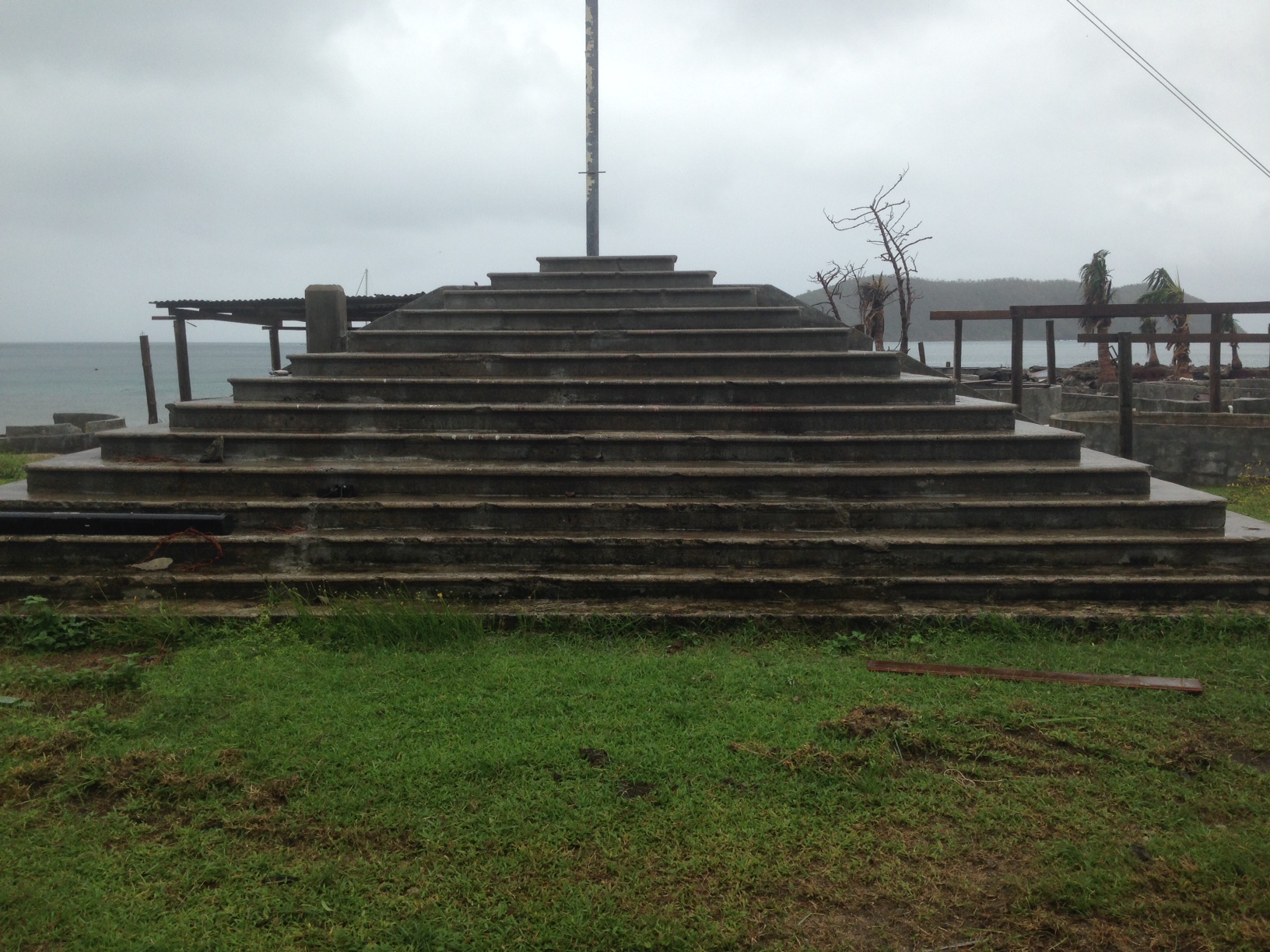
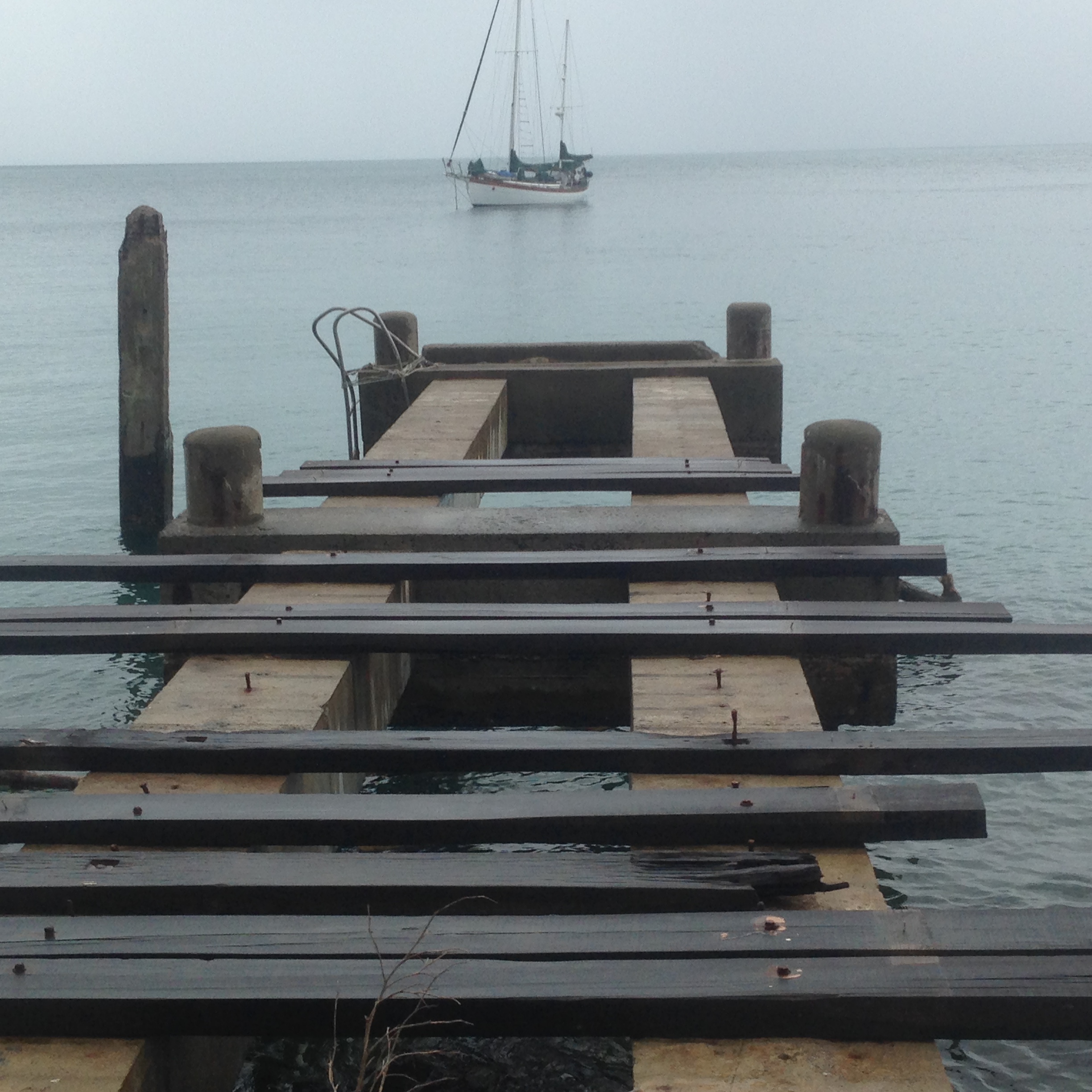
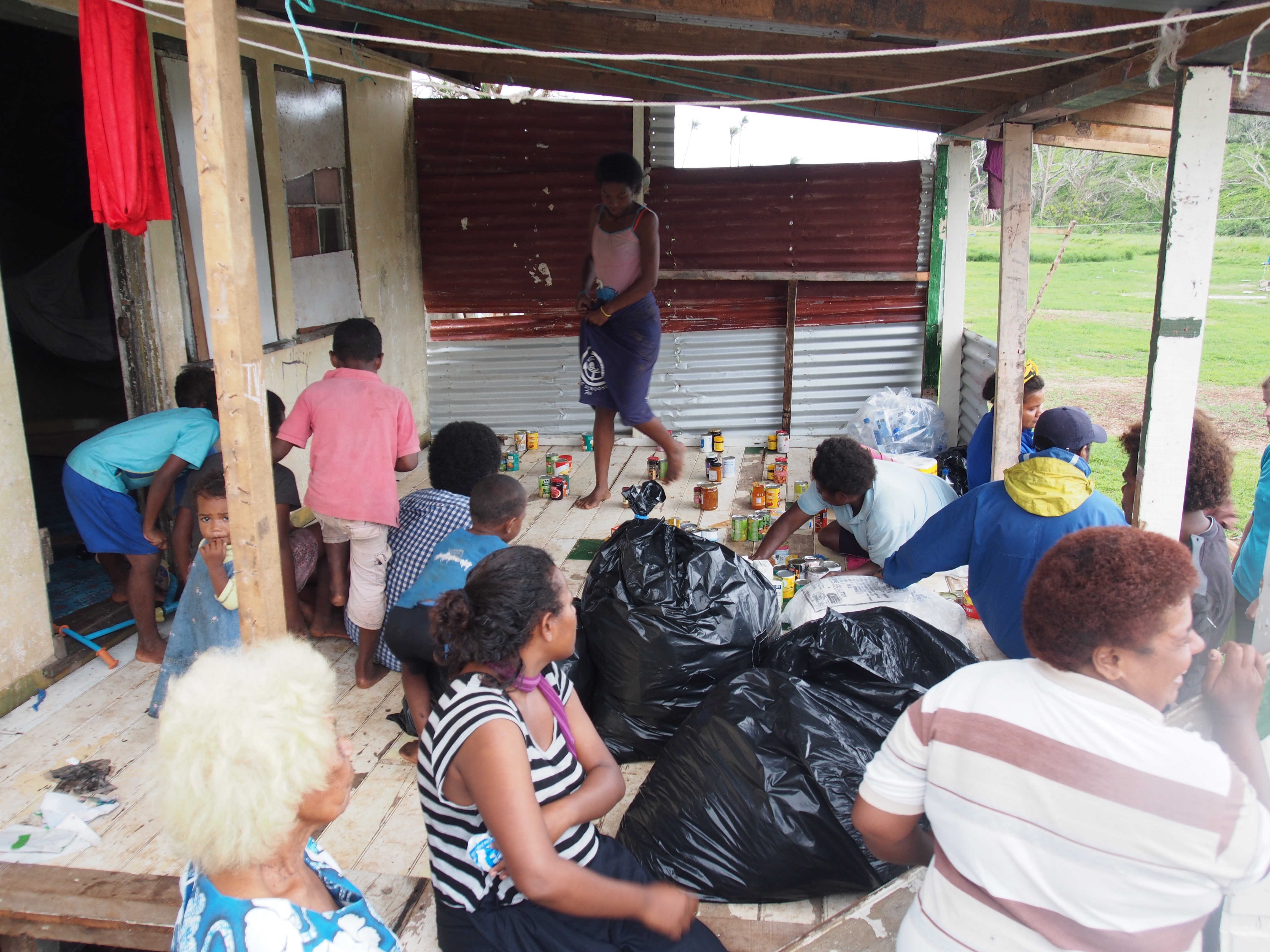
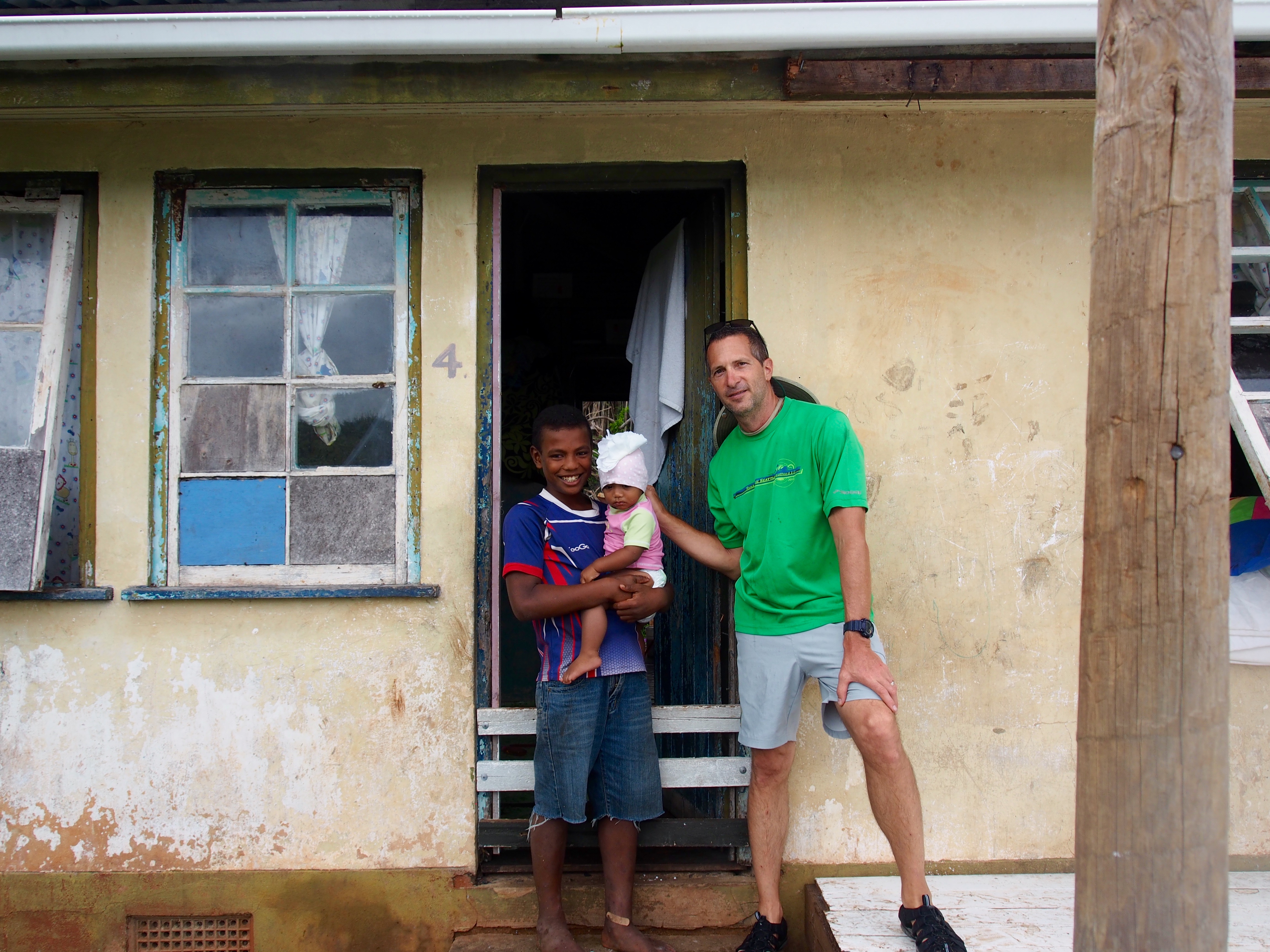
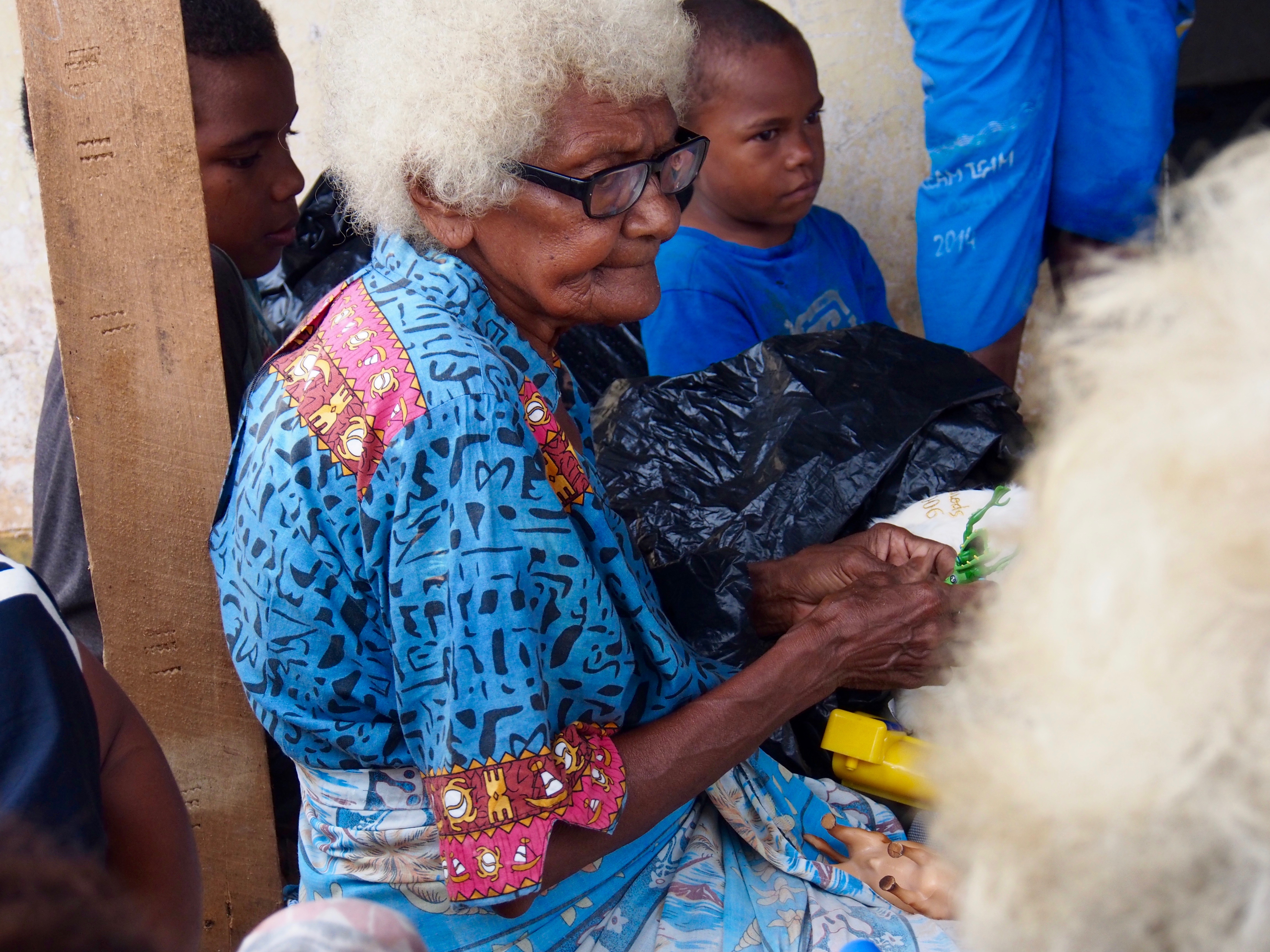
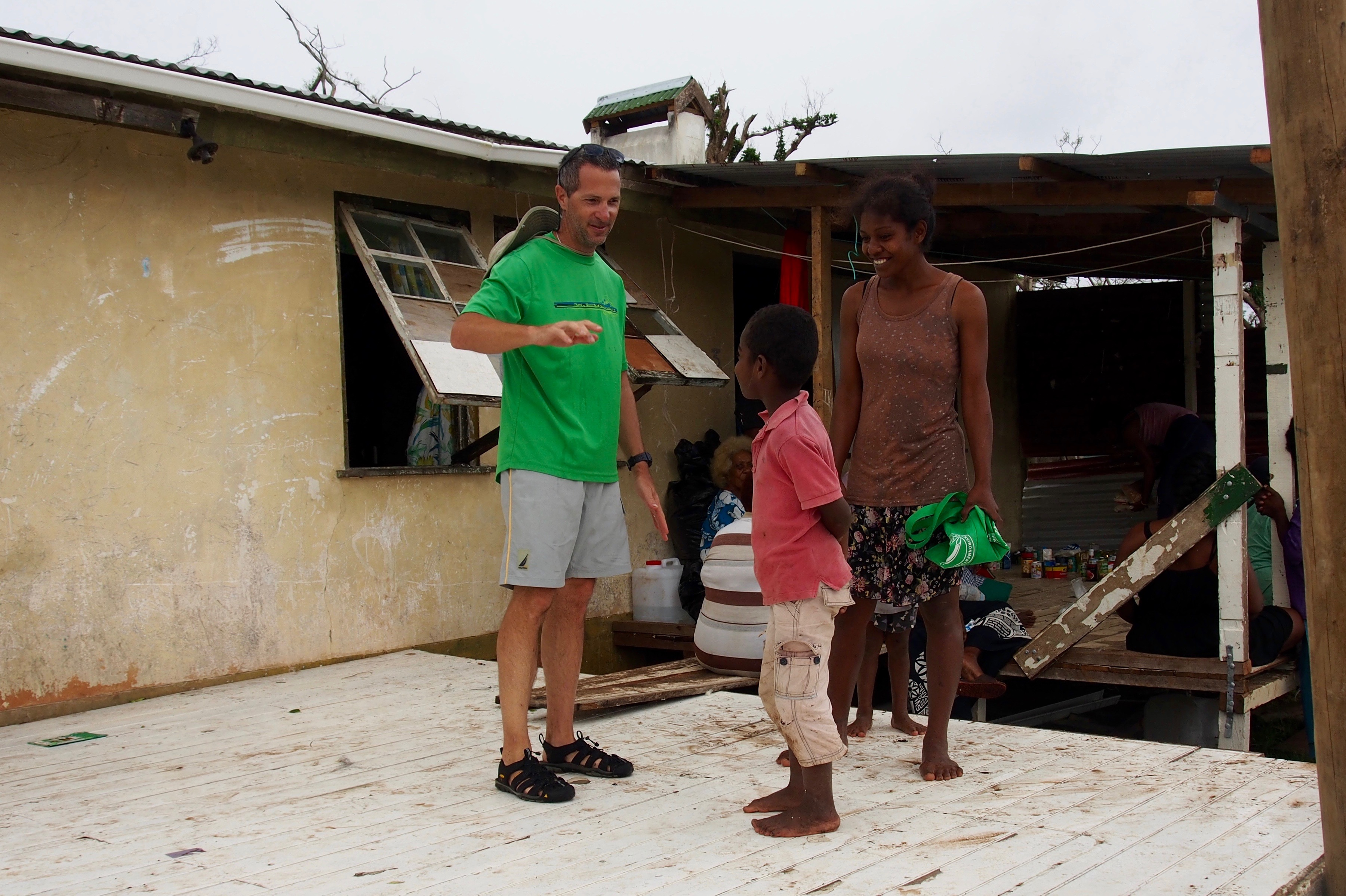
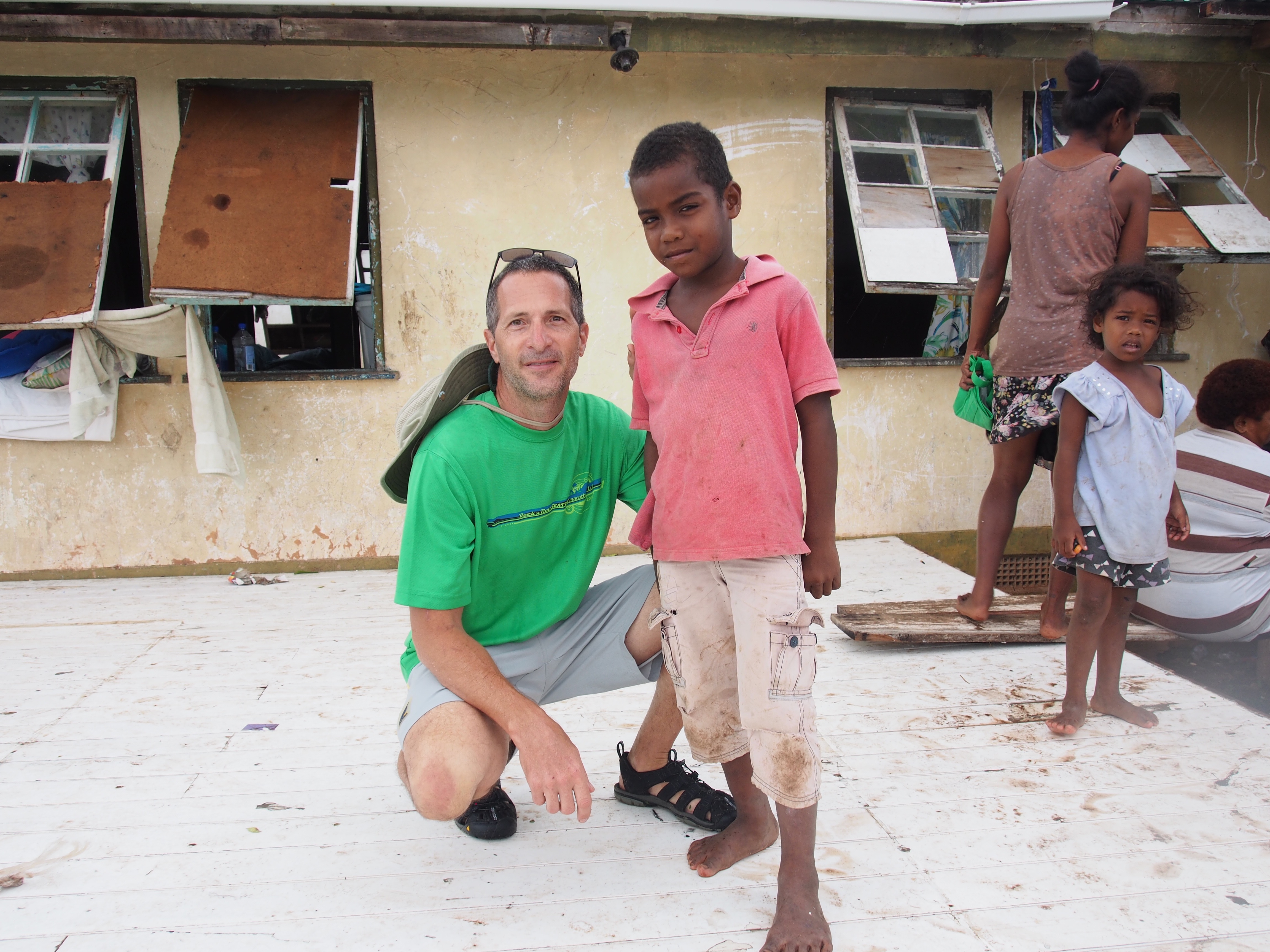
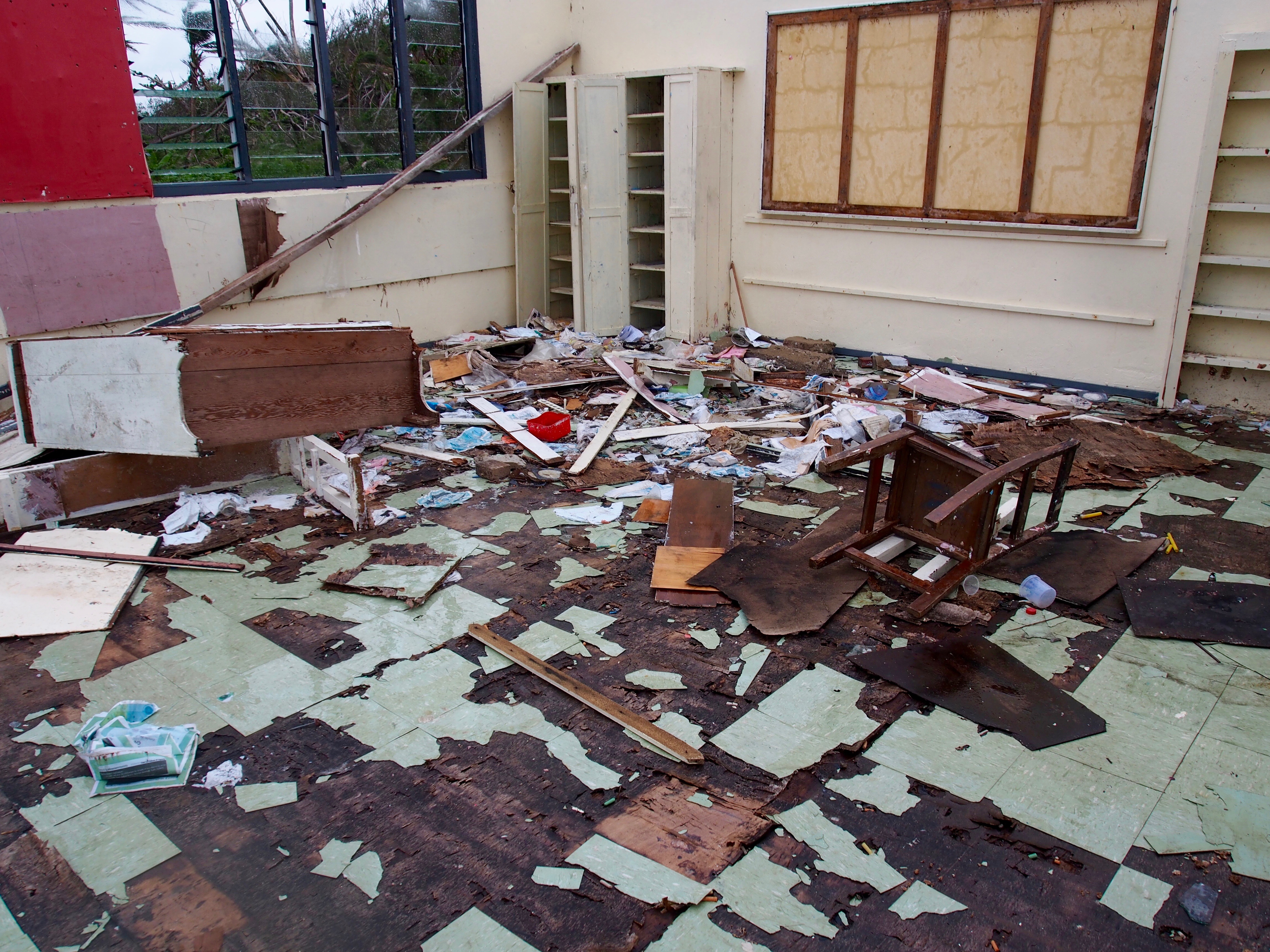
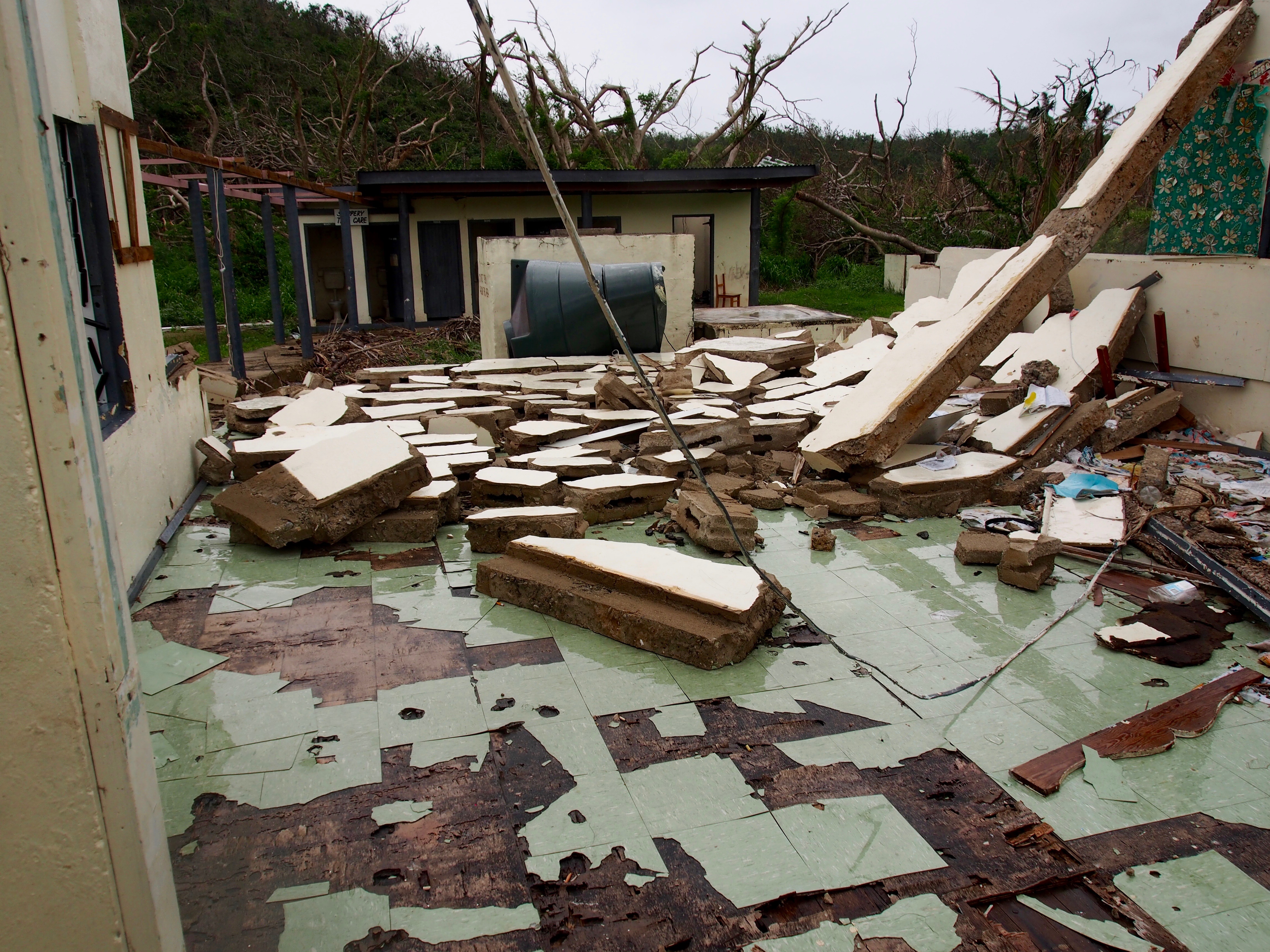
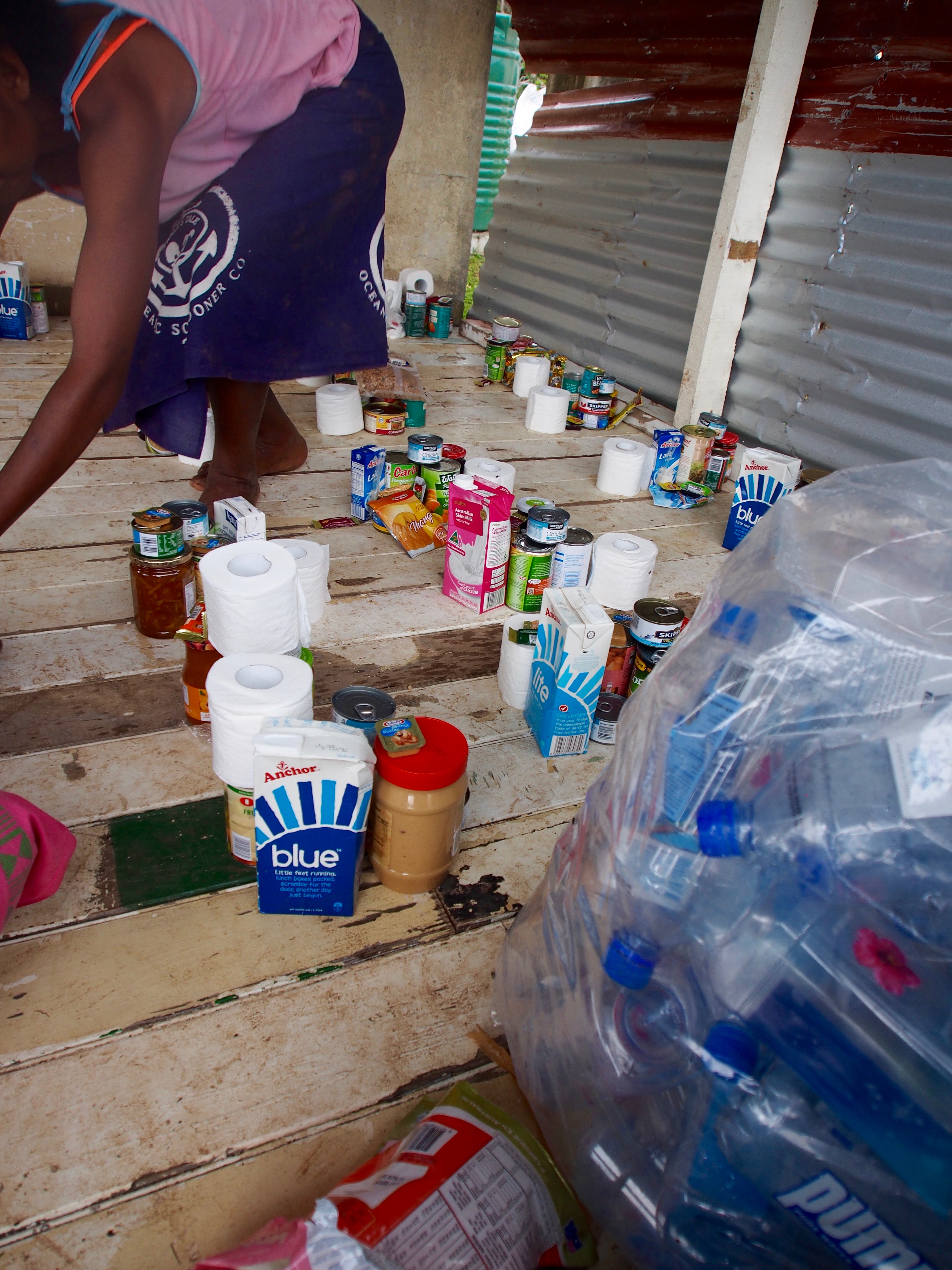
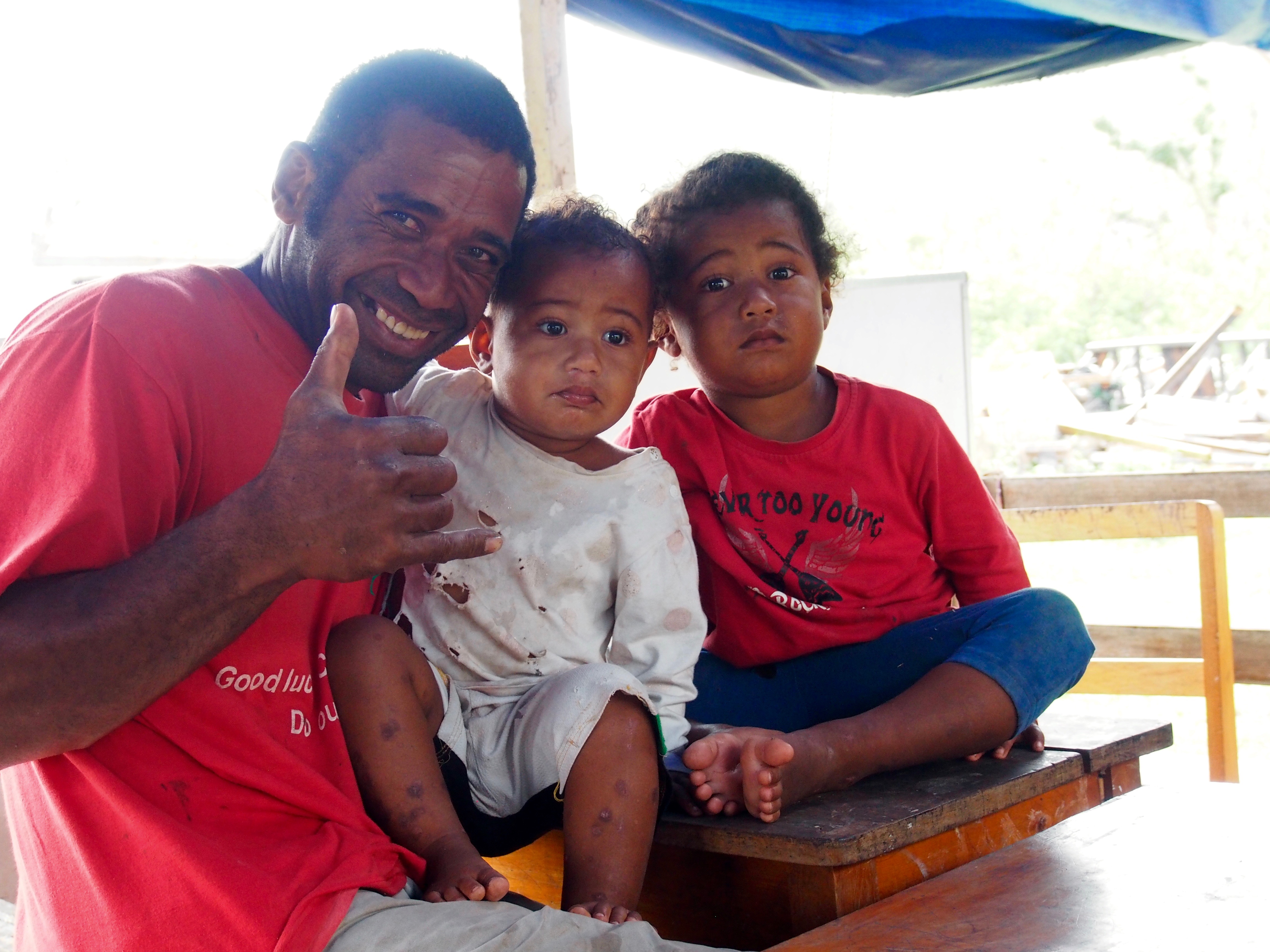
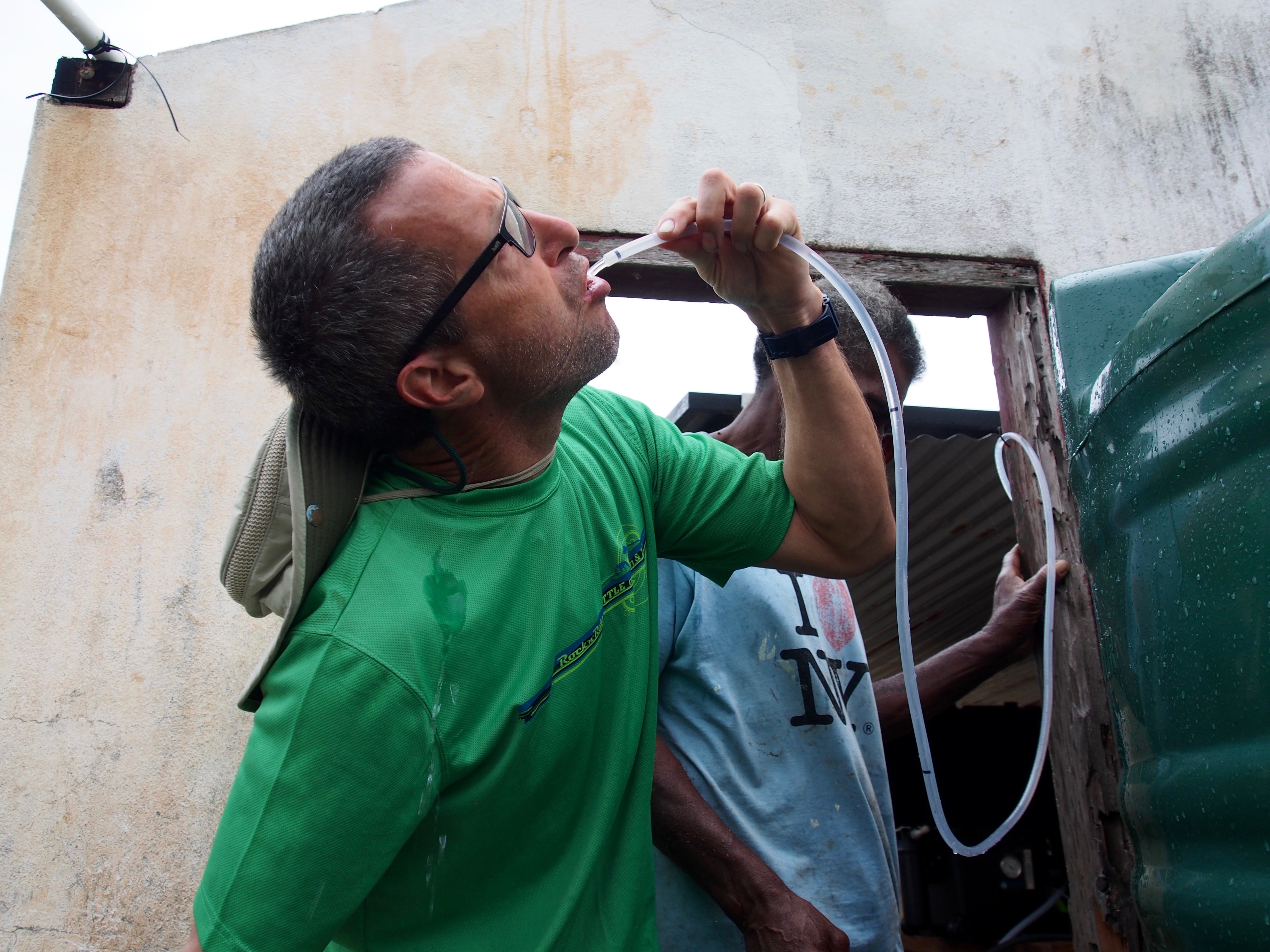
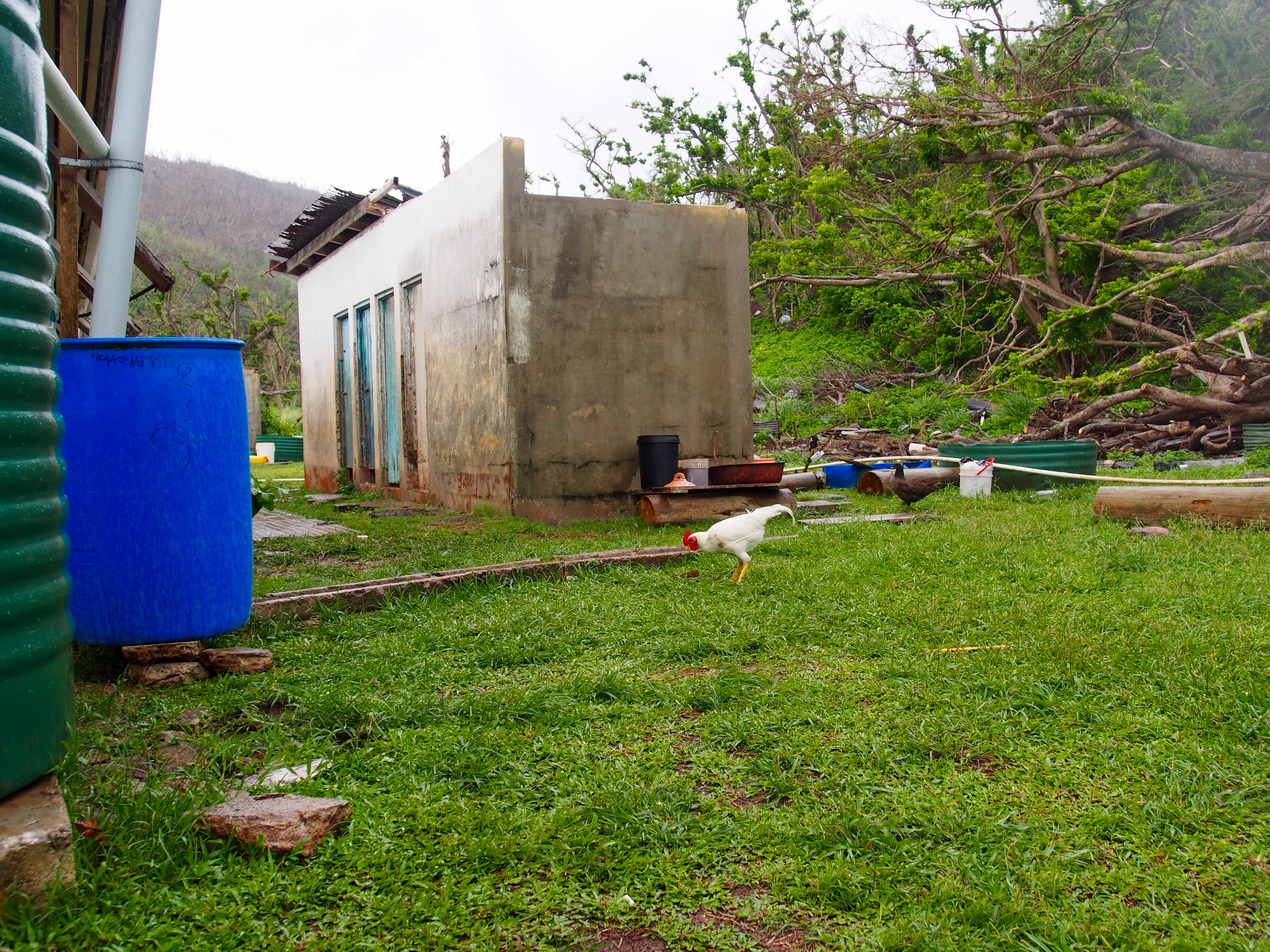
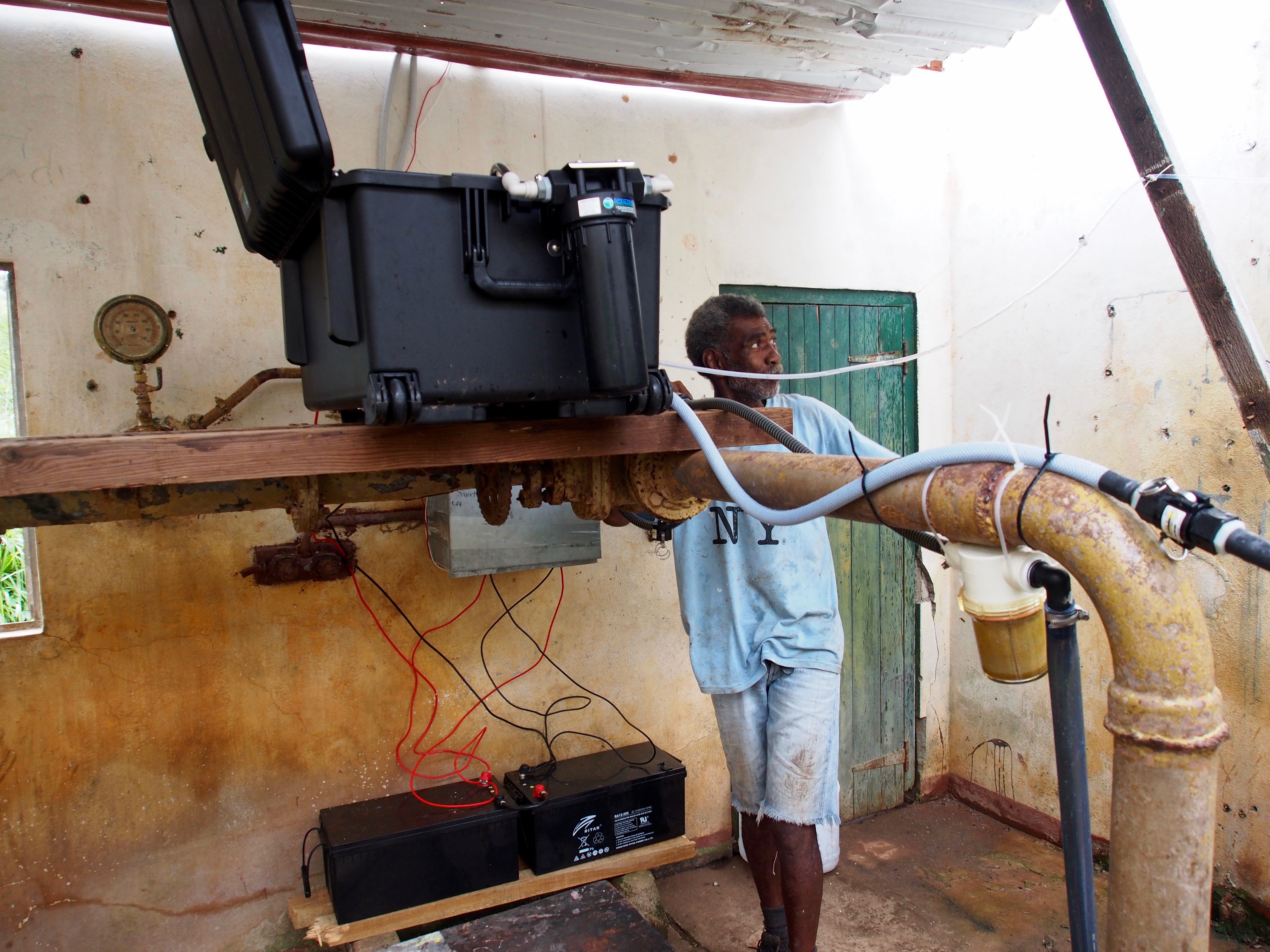
Motoring clockwise around Viti Levu and beating into the wind, we took 3 days to get to Makogai. The destruction was obvious as we approached the anchorage–most of the coconut trees were just sticks, the wharf was destroyed, and only a few structures remained. We went ashore and joined the men there who had just started drinking kava. Most were from Na Sau village on the south end of the island and were there helping to rebuild the government’s Fisheries program. At the kava ceremony we heard fascinating stories about how they survived a category 5 cyclone by running from houses as the winds ripped the roofs off. After most of the houses were destroyed, they ran up into the hillside to get some shelter from flying debris. Amazingly, there were no deaths or serious injuries on the island. Most of the people at Na Sau ended up under the foundation of their houses, which was all that remained after the cyclone passed through. It was dark by the time we left the kava ceremony and we made plans for them to pick us up the next morning in their long boat to deliver the aid supplies to Na Sau. The half hour boat ride to Na Sau was rainy and windy. They tied up the longboat and we carried the supplies along a muddy trail to the village. There were lots of women and children at what remained of the village, some of whom I recognized from my visit last year. The school was completely destroyed and the 20 families shared what was left of their houses. The youngest there was a 10 month old girl, and the oldest was an 82 year old woman. Some of the kids that Karen, Jacintha, and I played frisbee, volleyball, and rugby with last year remembered us when I showed pictures of them on my camera. One of the village elders showed us around as the women divided our supplies up into 20 neat piles, starting with the food, then clothing, then toys. A prior Sea Mercy delivery vessel brought a portable Spectre watermaker unit (desalinator) which he turned on while we were there. It took about 2 hours to divide up the supplies, and by the time we left, some of the kids were running around wearing probably their first pair of Nike sneakers. There were lots of questions about some of the food we brought since they werent familiar with much of the canned food. The living conditions there are harsh, especially during the rainy season while they are still rebuilding their houses. We asked what they were most in need of so we could report back to Sea Mercy. A chain saw, more food, re-building the school (their makeshift school was a dozen or so desks under a torn tarp, making it difficult to have class during the rainy season) and more kids clothing were at the top of their list. We also left them with 8 LuminAid solar lights that we brought from Seattle. We took lots of pictures and heard stories about the cyclone during the 3 hours we spent there. They were very appreciative of Sea Mercy and thanked us for bringing the supplies.
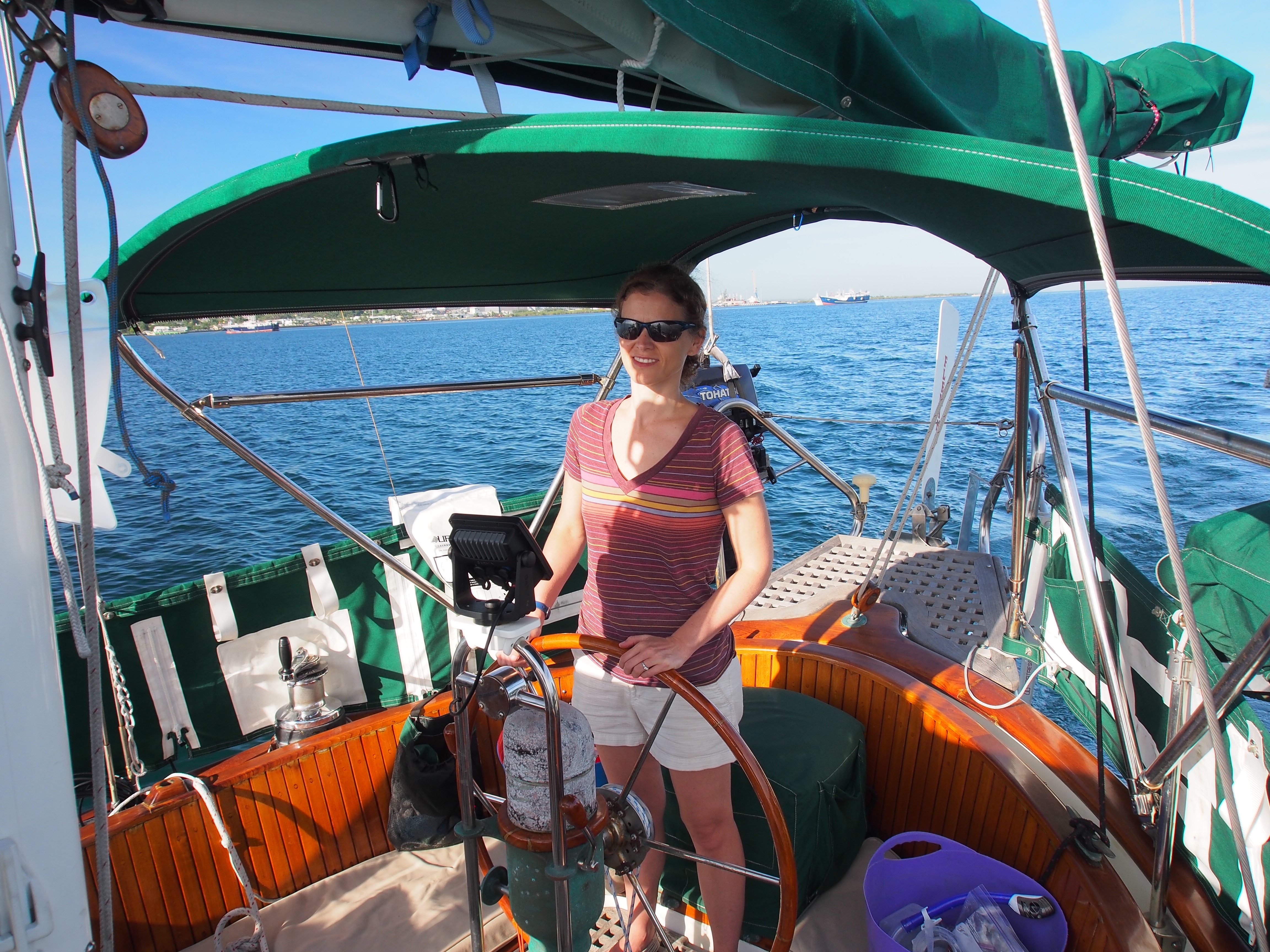
Denise at the helmCyclone destruction evident at north side of Viti LevuFisheries side of MakongaiCyclone Winston Destruction on MakogaiTaken in July 2015Taken in April 2016Taken July 2015Taken April 2016Taken July 2015Taken April 2016Remains of the dockNa Sau village, dividing up the supplies we broughtThe youngest at Na SauAt 82, she is the eldest at Na SauReminding him of our last visit when he played with my daughter JacinthaWe played lots of frisbee during our visit last yearNa Sau school remainsAnother shot of the school20 piles for the 20 familiesDespite their loss, they are always smilingFili showing us the watermaker donated by Sea MercyTesting the desal waterVillage of Na Sau
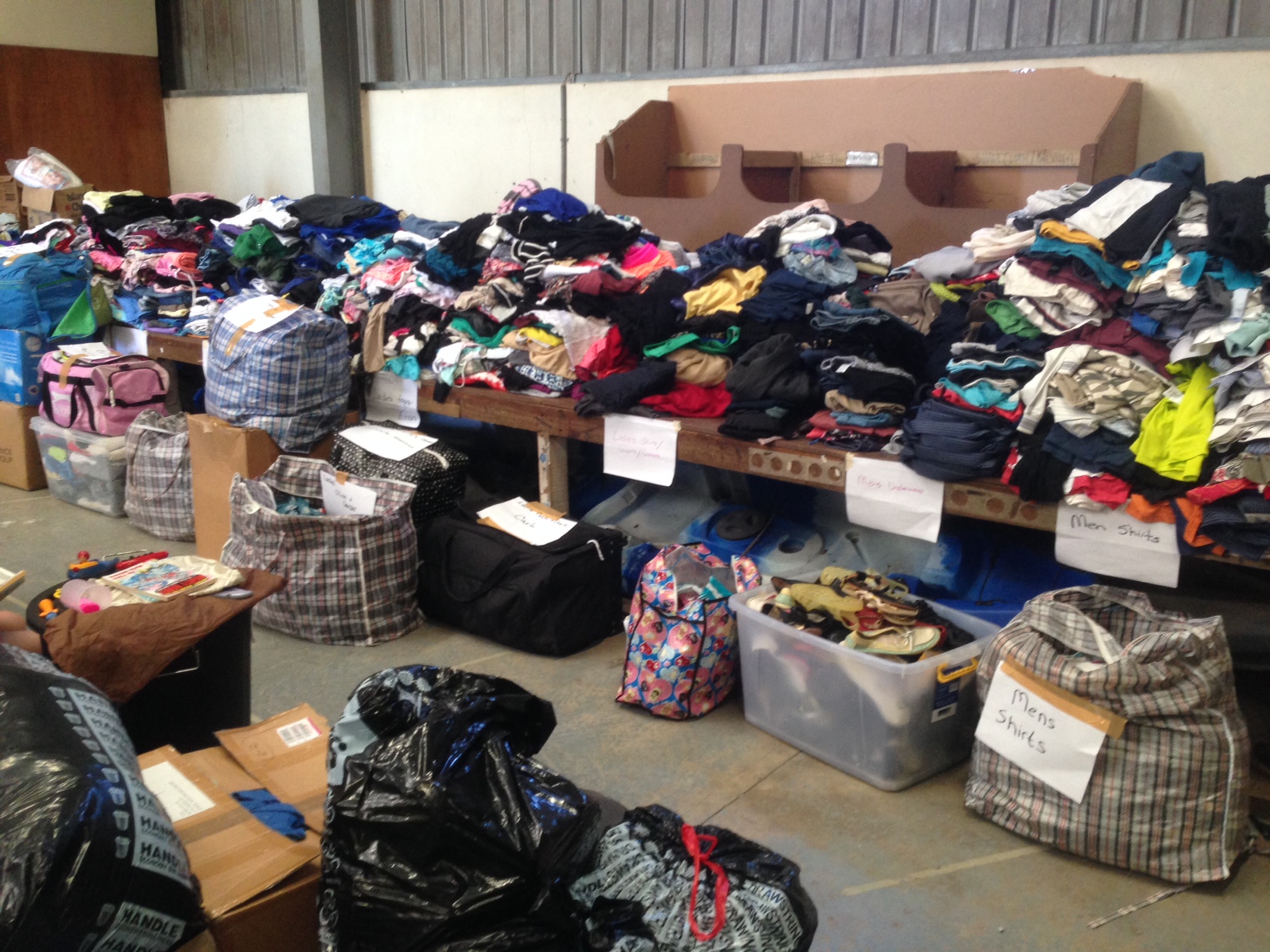
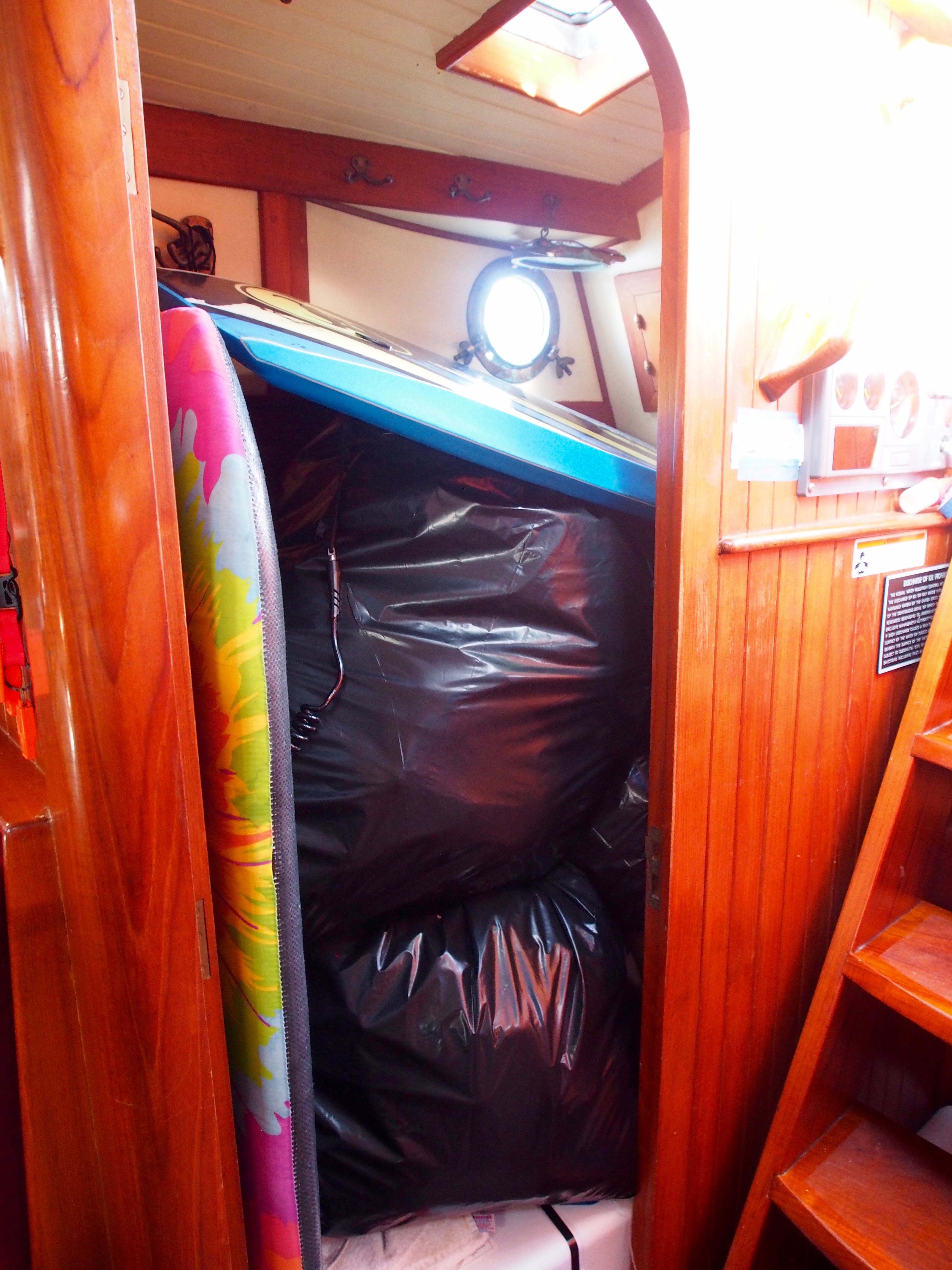
Sea Mercy (www.seamercy.org) is a non-profit organization whose vision is to be the most effective preventive, curative, promotional and rehabilitative floating health care provider and service delivery mechanism to support the remote citizens of the island nations. I found out about Sea Mercy while back in Seattle when I was tracking the cyclones in the South Pacific. Since I returned to Fiji early in the season, I decided to sign on as an aid delivery and assessment vessel. Prior to our arrival, a couple of 1st response yachts went to some of the hard to reach villages that got hit hard by tropical cyclone Winston. One such place, a small island called Makogai, took a direct hit. We spent several days on the island last year and it was one of the places I wanted to return to. Sea Mercy has a warehouse at Port Denarau, not far from Vuda Point marina, so that was our first stop after getting Apropos back in the water. The warehouse was full of donated items such as clothing, canned food, diapers, bags of rice, plastic water containers, and some larger items like tents, shovels, pitchforks, boxes of nails, and building materials. It looked like most items came from New Zealand and Australia. We filled the entire aft starboard berth with 3 large bags of clothing and shoes, 1 bag of toys, 4 bags of canned food, a sack of rice, and a bag of empty plastic water bottles (kids take these to back and forth to school for drinking water). Sea Mercy staff gave us the go-ahead to take everything to Makogai and asked us to report back as to what else they were in need of.
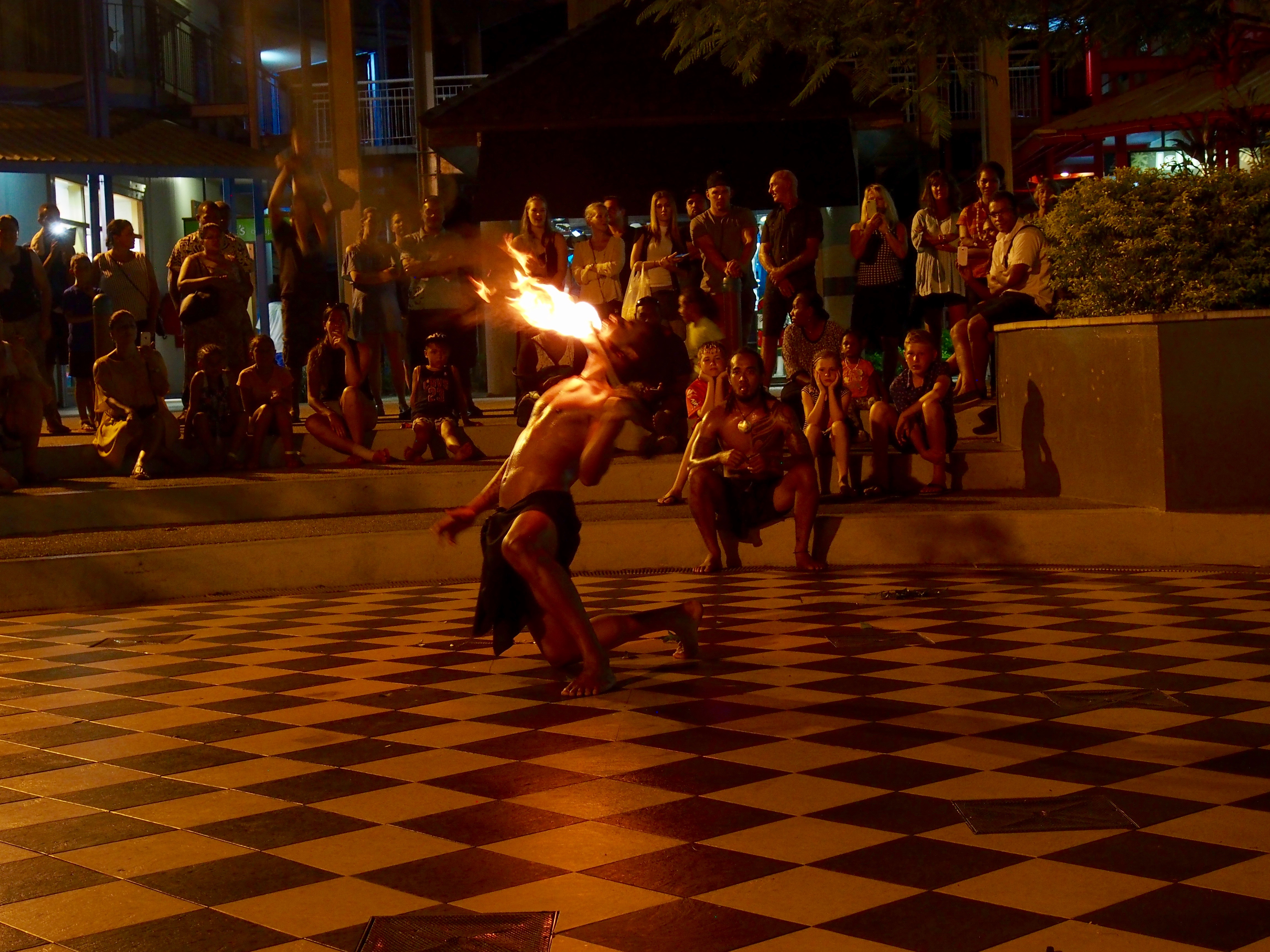
Port DenarauSea Mercy Warehouse SuppliesLoading up aid suppliesSupplies in quarter berthFire show at Port Denarau
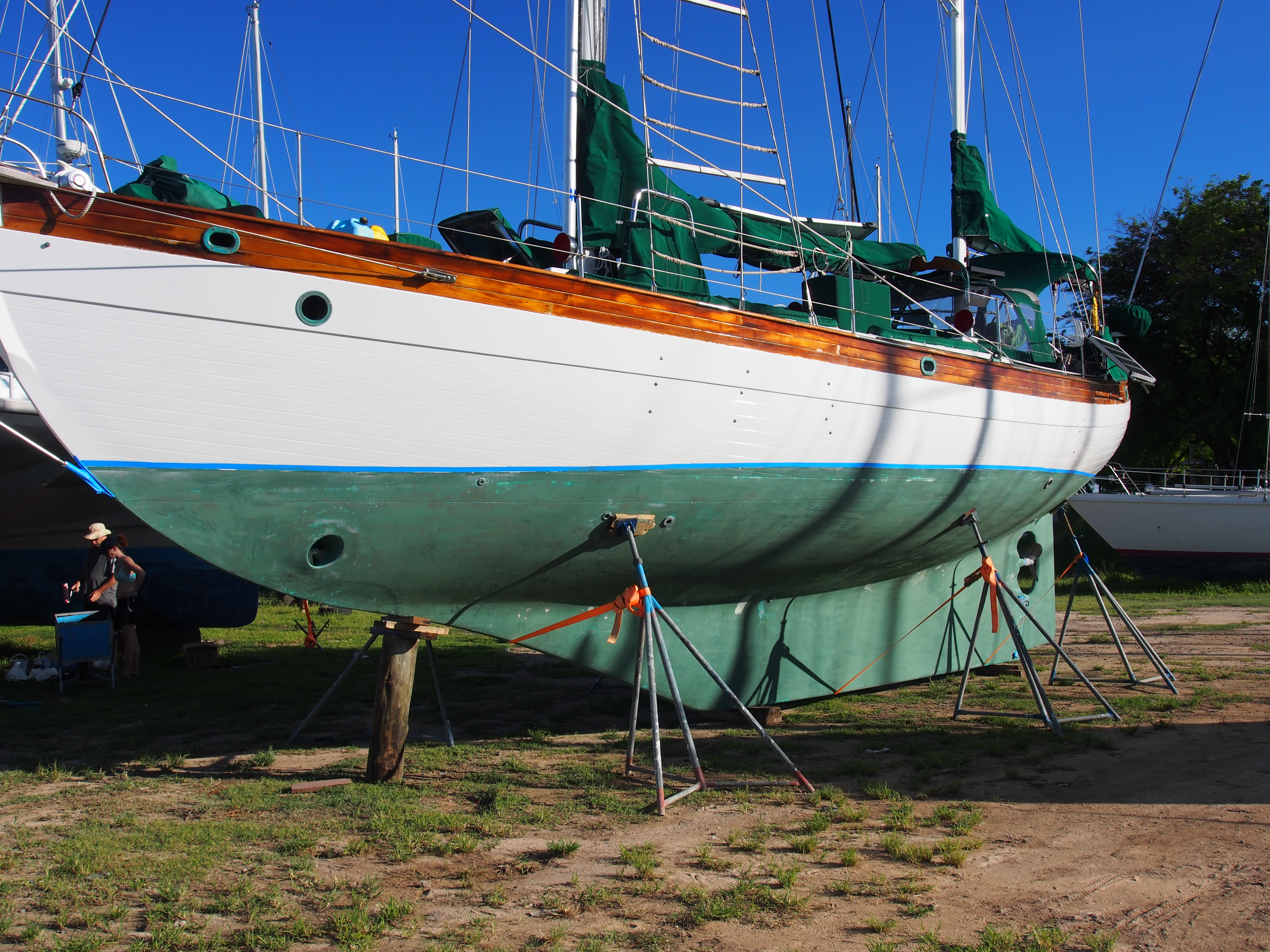
A quick trip to Lautoka for provisioning, banking, and renewing a cruising permit was followed by a flurry of activity back at the marina. We finally got the boat out of the pit and into stands to do the bottom paint. With 4 of us working, we sanded and scraped, then rolled on 3 gallons of Interlux Micron Extra bottom paint and changed the zincs, then were launched into the water at the end of the day. Here’s a short video showing just how fast we worked!
Two days ago a tropical depression formed north of Venuatu and was predicted to bring gale force winds to Fiji, mostly along the west coast where Apropos is still sitting in her “cyclone pit”. Yesterday it was upgraded to a category 1 cyclone and named Zena, making it the 26th cyclone of the season. Early this morning is was predicted to stay cat1 until it passed Fiji, then go to a cat2 as it moves SE. About 2 hours ago, Zena went to a fast moving cat3 and is expected to pass by us between midnight and 3am. The eye of a cat3 cyclone has winds between 111 and 129 mph and it’s expected to pass within 50 miles of us, so we could see winds close to 100mph. I think I’ll go out on deck to see what it feels like!
The bigger concern for Viti Levu is the rainfall. The ground is already saturated from the last couple days of rainfall–nearly 20″–from the tropical depressions that passed through 2 days ago. The road from Vuda to the airport in Nadi was flooded and closed today. Things will only get worse as Cyclone Zena is expected to add another 12 to 18 hours of heavy rainfall tonight and tomorrow.
Cyclone Zena Approaching Vuda Marina PitsExpected path of Cyclone Zena
Update: Cyclone Zena went further south than predicted and started breaking apart as it passed more than 50 miles off Fiji’s west coast. All we got at Vuda Point marina were 30 knot winds and zero rain. Great for sleeping–no mozzies and great ventilation while on the hard.
After 6 months in Seattle, including the rainiest Dec/Jan/Feb ever, I returned to Fiji with a suitcase full of boat parts—new halyards, pump re-build kits, shackles, wind instruments, dinghy parts, watermaker filters, vhf radio mic, stern light, flags, charts, etc. Another checked bag held a few clothes, some favorite foods, and 4 cans of Fremont IPA. We filled the remaining space/weight limitations with items to give to the villages that were hard hit by Cyclone Winston—the biggest cyclone in the southern hemisphere that hit Fiji in February.
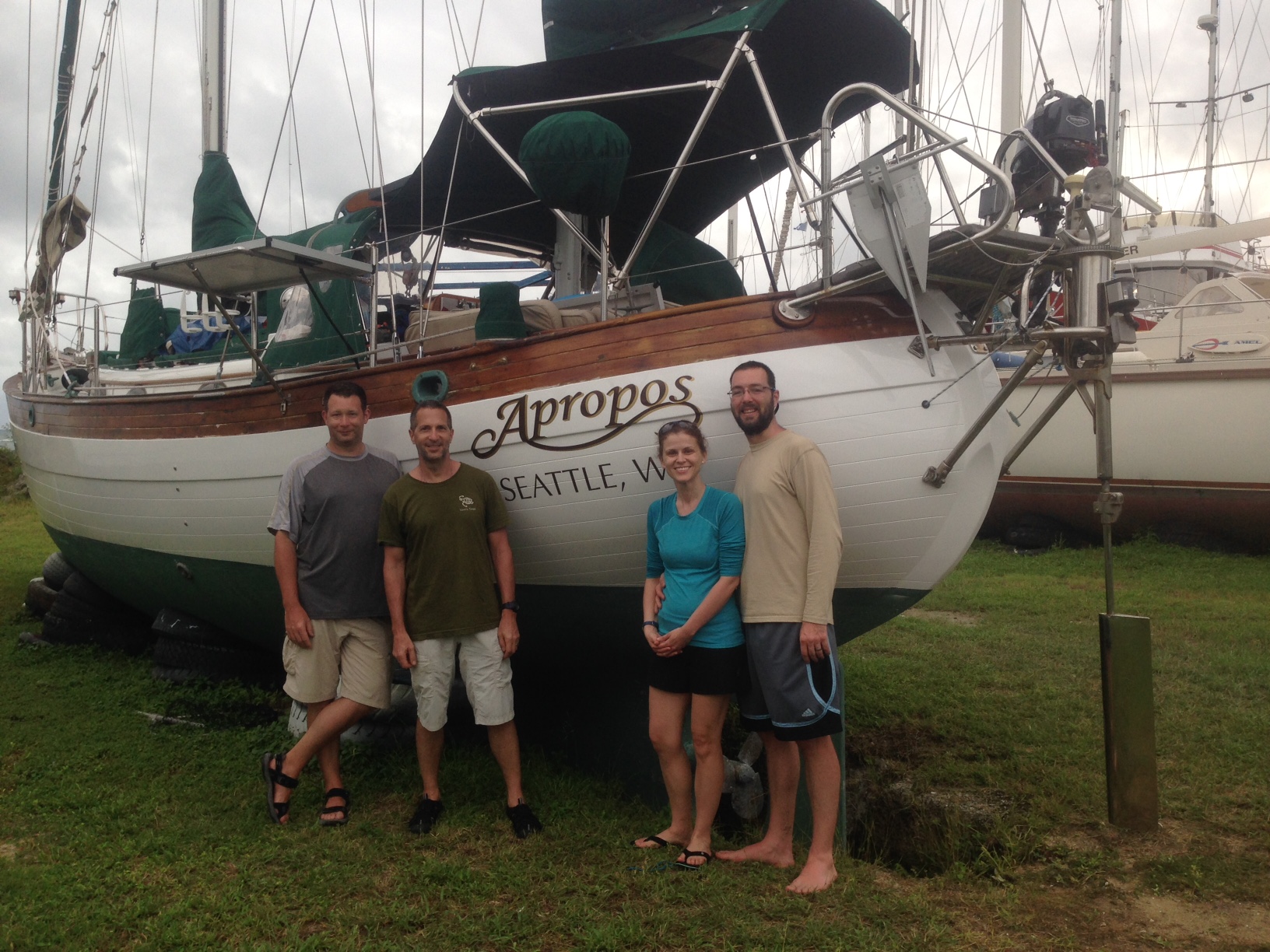
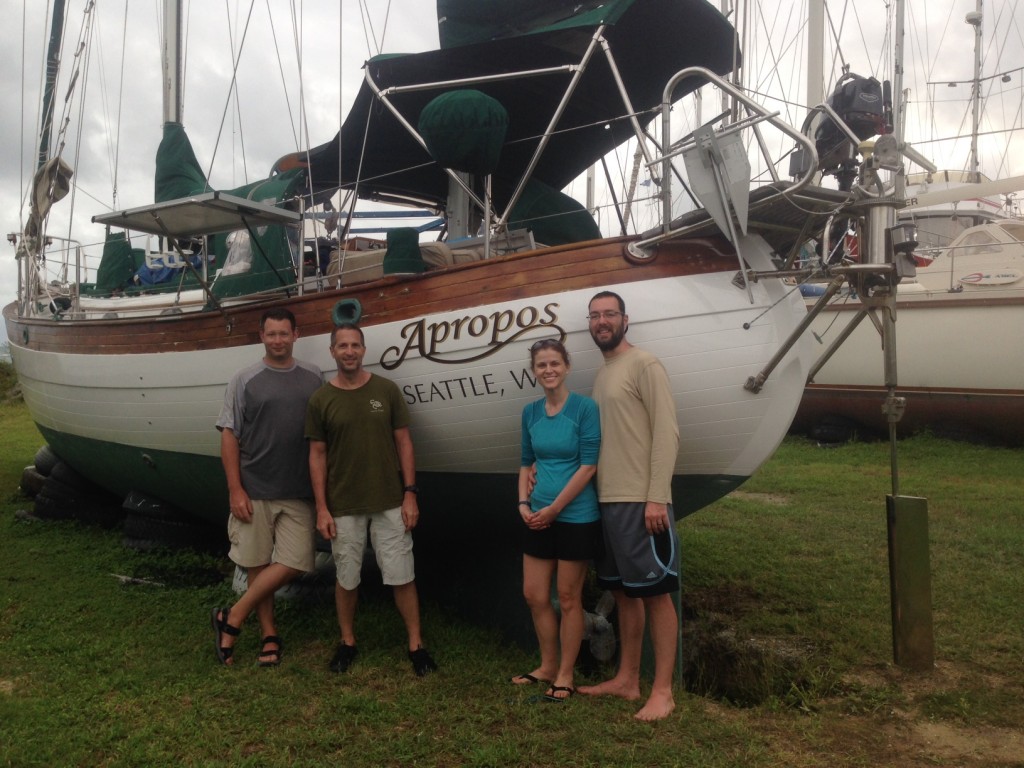
Lance and I arrived on the same flight to begin preparing Apropos for passage-making. Lance is 1 of 3 crew flying into Fiji, and will be aboard from Fiji all the way to Hawaii. We have a long list of chores: bending on sails, putting the dodger and bimini back on, reconnecting the solar panels, clearing out the cabin, re-commissioning the water maker, painting the bottom, and repairing a number of items. The biggest repair will be to replace the wind instrument atop the mast that was lost during Cyclone Winston. New wiring and a conversion device need to be added to make the new wind anemometer running on NMEA 2000 compatible with my NMEA 0183 system.
4 Days later—
Lance and I got lots done our first 2 days, working in sweltering heat and humidity. Then, just like that, the weather changed as a tropical depression moved in bringing high winds and torrential rains. We then focused our tasks to those inside the cabin and continued doing small outdoor tasks during the lulls in the wind and rain. A second–and larger–tropical depression is following and will hit in 2 days. These 2 systems will delay our departure date by a few days since we need to wait for sunny weather to paint the hull bottom and have some welding done on the wind vane. I’m also waiting on a wind vane part that was shipped from Australia to arrive.
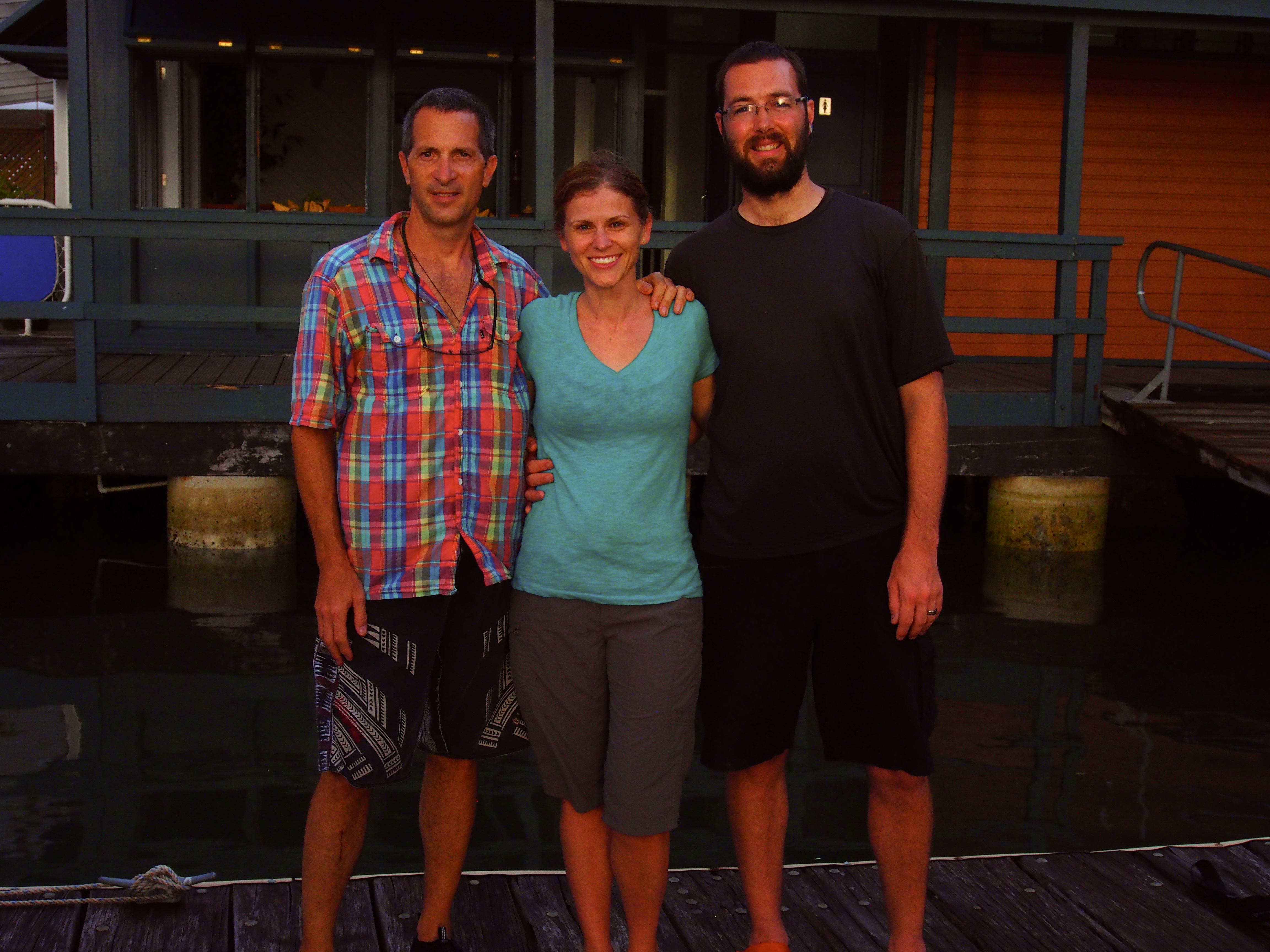
Dave and Denise arrived early this morning, showing up in a taxi during one of the biggest downpours. They are my 2nd and 3rd crew-members and will be sailing from Fiji to Samoa. The four of us continued cleaning and preparing the cabin for passagemaking. During the biggest downpour and highest winds, we all went out on deck in 40 knot winds. The horizontal rain stung but the shower was refreshing! Check out the wind speed where we are in the panel to the right….
Tropical cyclone Winston meandered around the south pacific for a couple of weeks before striking Fiji as a category 5 system–meaning sustained winds in excess of 137 knots (157mph). The eye moved along the north coast of Viti Levu and wiped out villages in Viti Levu, Vanua Levu, and many of the smaller islands. Winston is being noted as the 2nd most powerful cyclone ever to make landfall, with winds in excess of 200 knots.
Past and predicted path of cyclone Winston
Video from NOAA showing cyclone passing through Fiji:
News is slowly getting out describing the severe damage all over Fiji. Many houses were leveled, lots of trees fallen, and flooding has washed out roads. Power has still not been restored for many people. Loss of life (21 as of this writing) was minimized by plenty of warning and a good system of emergency shelters on the islands.
Coastal village wiped out by the cyclone
Aid is slowly reaching Fiji, but getting it to the people in need will be a big challenge. Me and 3 crew members from Seattle will be flying to Fiji in 5 weeks and will be bringing as much as possible to help out those in need. Two helicopters are being supplied by the Australian government to help distribute food and supplies to different locations.
The eye passed within 25 miles of Vuda Point marina, where Apropos has been for the past 5 months in a ‘cyclone pit’. We were told by marina staff that only 2 boats that were on jack stands toppled over, and all the boats in pits are ok and just shifted by a few degrees. So structurally Apropos is fine but I’m still waiting to hear about any damage from flying debris. I think I’ll buy a new wind anemometer just in case!
Leaving your boat in the South Pacific during Cyclone season (November through April) can be a bit nerve-wracking! As Apropos sits in a cyclone pit at Vuda Point marina on Viti Levu in Fiji, a cyclone is moving towards it. As I write this, Cyclone Ula is approaching the Vava’u group in northern Tonga, a place where we spent 4 weeks and where some of our friends have left their boats.
Some cruisers leave their boat in the water with multiple anchors and lots of chain. There are harbors in Tonga and Fiji that have huge concrete blocks on the bottom to tie to. However, surge and stress on the tackle gear are still major concerns. The next level of protection is to haul the boat out and place it in a cyclone pit. Vuda Point marina has about 40 of these pits and they sell out every year. We reserved ours in July when there were only 3 remaining.
Regardless of where you leave your boat during the cyclone season, the best thing you can do is to remove as much as possible from above deck. We removed the solar panels, dodger, bimini, sails, BBQ, and everything else that was loose. We also hired a caretaker for Apropos who checks on the boat about once a week and sends me a email report with things like battery voltage and overall condition. Since he works at the marina and is there every day, he opens and closes the ports depending on the weather to keep the interior well ventilated. He is my “eyes” and emailed photos of the hull painting and, in the event of a cyclone, will show me how Apropos fared.
As shown below, Cyclone Ula is predicted to veer more south before reaching longitude 180. The red line is the predicted path and the outer black line indicates the range of tracks due to the uncertainty in modeling. As it looks now, the path would spare the western side of Viti Levu from the eye and strongest winds. This map is updated every 6 hours so I’ll be tracking Cyclone Ula over the next coupe of days.
Cyclone tracking by Fiji Meteorological services
Update on Jan. 4, 2016–Cyclone Ula continued on its S-SW course as predicted, then decided to change course and head W-NW. Still a Cat3 system, it’s predicted to weaken over the next 2 days to Cat1. Nadi reporting heavy rain today, not sure how much wind.
Cyclone tracking updated on Jan. 4, 2016
Update on Jan. 6, 2016–Cyclone Ula continued moving west and is presently a Cat1 system.
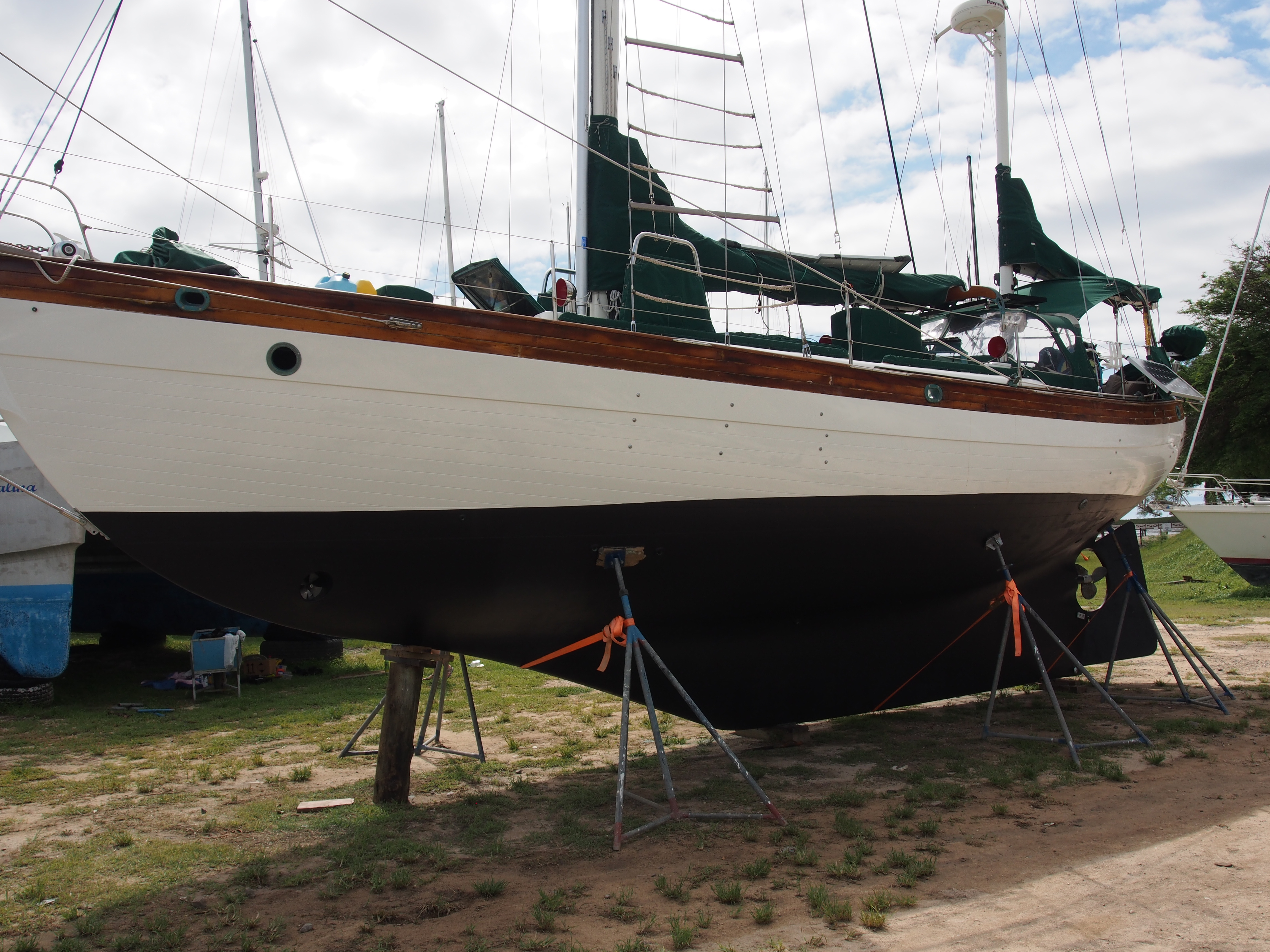
After getting a quote in Seattle for painting the hull, we decided to have it done in Fiji where labor rates are much less. To make up for the gelcoat mistake (see post from September 2015), they gave me a reduced price on labor and didn’t mark up the paint & supplies. I was confident in the painter’s skills and when I was in Fiji, he showed me another boat he had recently done.
Instead of gelcoat, most boats are using a polyurethane paint nowadays. It has better UV protection and isn’t susceptible to chalking, discoloration, or leaching. Polyurethane also maintains a high gloss appearance and flexibility even in full sun exposure and harsh environments. Repair of surface damage is easier than with gelcoat.
One drawback with using polyurethane on the hull is that the topsides will still be gelcoat, so the boat won’t be uniform. Exact color matching isn’t an issue since the outer hull isn’t right next to the topsides.
Since I wasn’t there when it was painted, I won’t know how well it turned out until I return in April. I’ll have new decals made in Seattle to take along and apply them in Fiji.
Tenting Apropos with tarpsUndercoat layer
Polyurethane after polishingPolyurethane after polishing