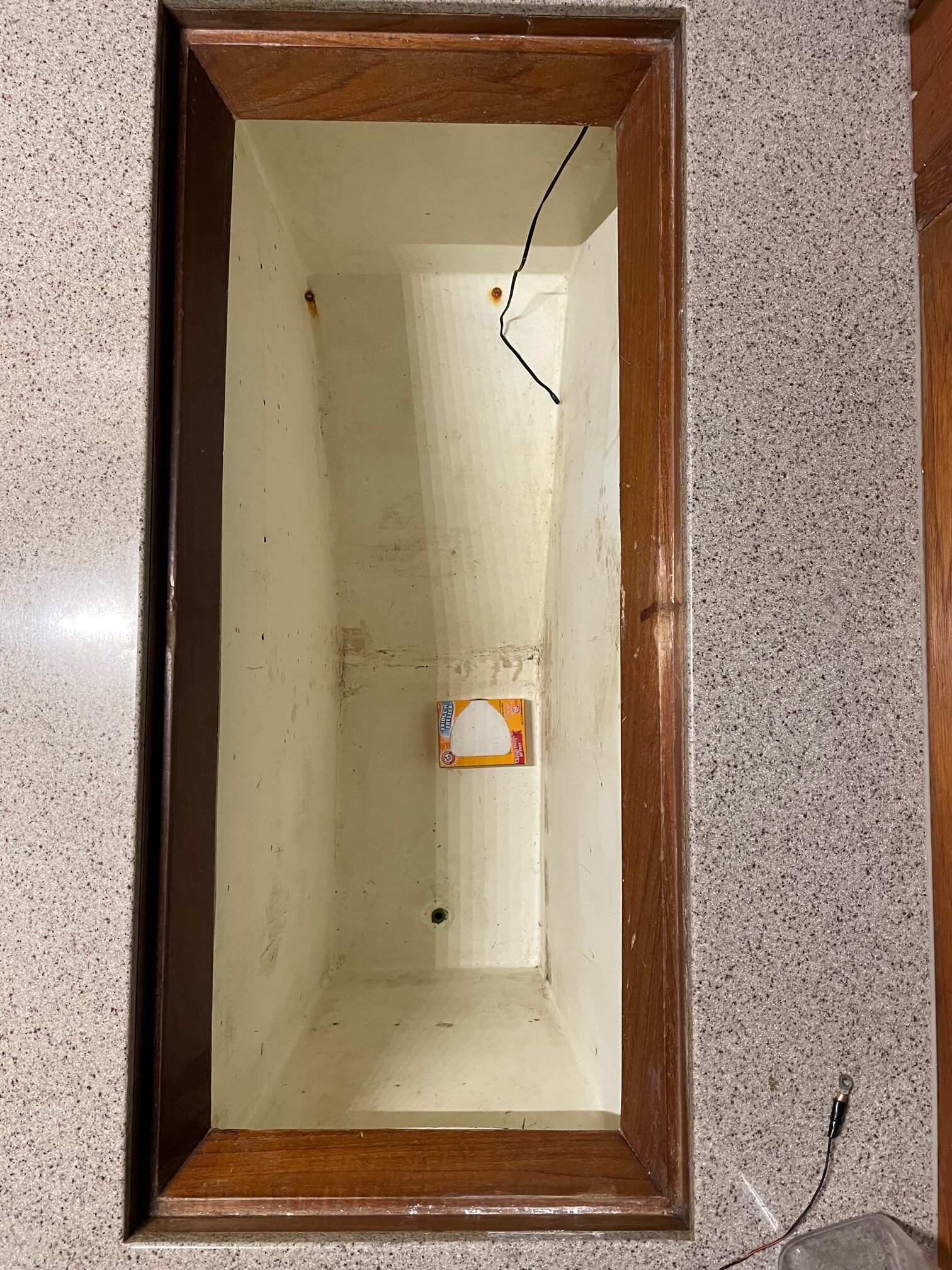
The refrigeration on Apropos has been inoperable for a long time. During our South Pacific trip, we shut the freezer down after departing Mexico for French Polynesia–it was consuming too much power for our solar to keep up with and we knew there would be no docks to plug into for the rest of the trip. We replaced it with a portable Dometic refrigeration box that found a place on the cabin floor in the v-berth. It eventually got moved closer to the batteries on the aft port-side cabin floor. It worked well but took up valuable floor space (24″ x 16″). After returning to Seattle, it was a low-priority project until now.
The Old System
The old system was very complex. It was a Glacier Bay 12VDC water-cooled, cold-plate system. It was installed in 2004 and was run continuously for about 10 years, but Glacier Bay went out of business so parts were no longer available. It had 3 zones–a refrigeration box, a freezer box, and an air conditioning zone (we never really used the air conditioning zone except to try it out a few times). There was a solenoid valve for each zone and only one zone could be active at a time. There were many feet of refrigerant carrying copper tubing that ran from the compressor to each of the 3 zones. It had 2 remote display/control panels for setting and reading temperatures in the freezer and refrigerator boxes. We discovered soon after arriving in Mexico that the refrigeration system was running too often, most likely due to the lack of good insulation of the boxes. While in Mexico, I bought a sheet of 1″ foam closed-cell insulation from a hardware store and lined both boxes, but it was a sloppy job trying to fit the insulation around the cold plates. Soon after, we gave up on it and began using the Dometic portable refrigerator.
The New System
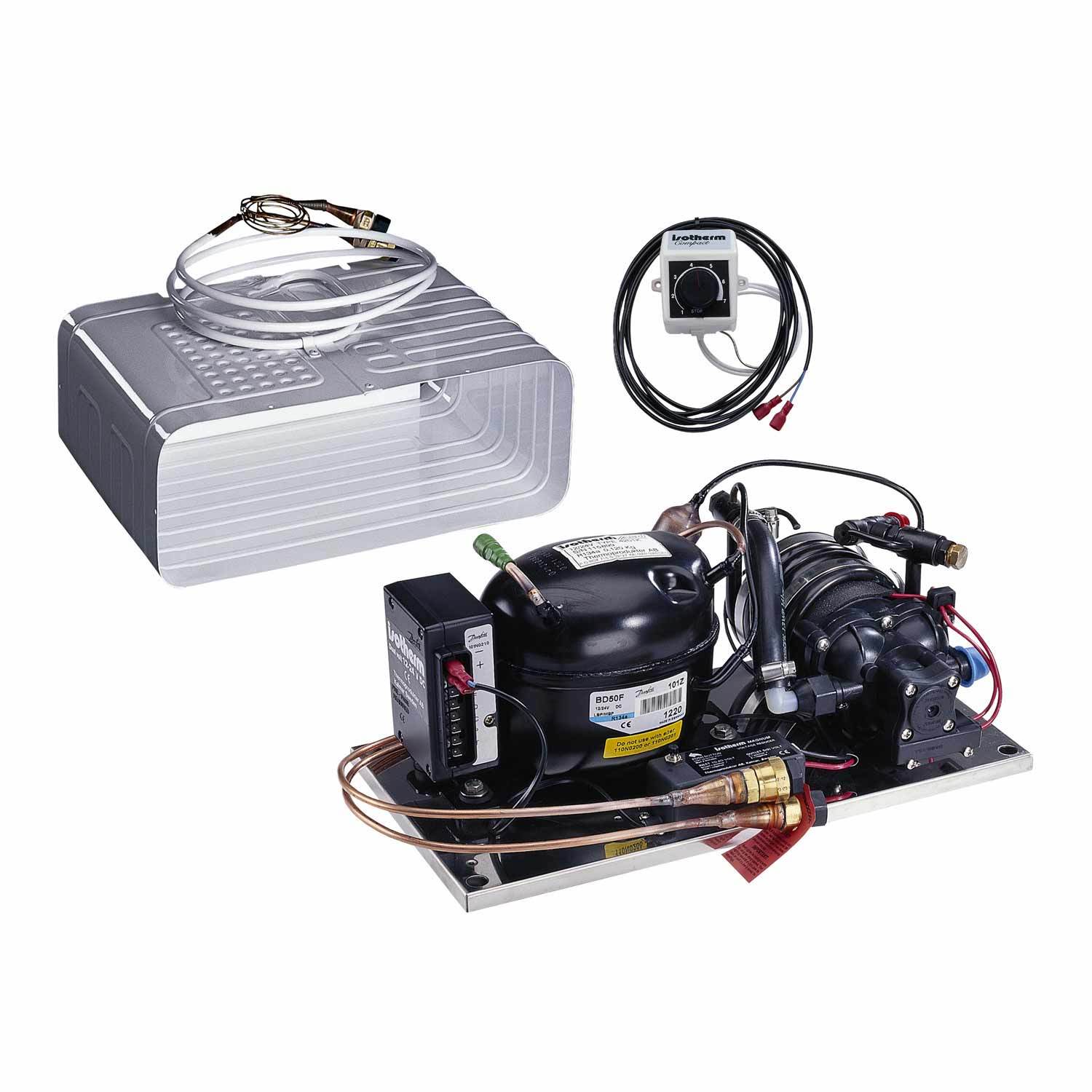
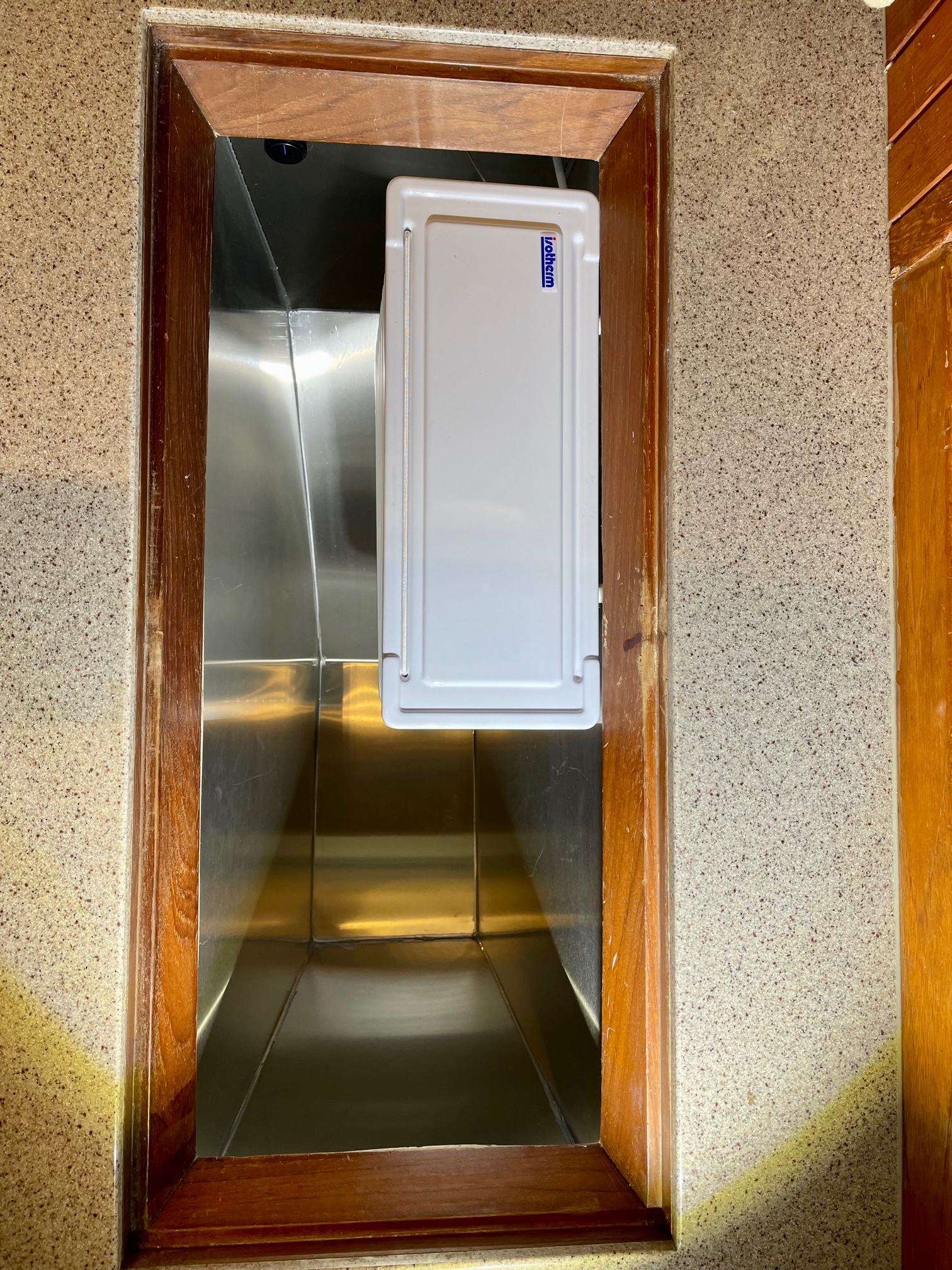
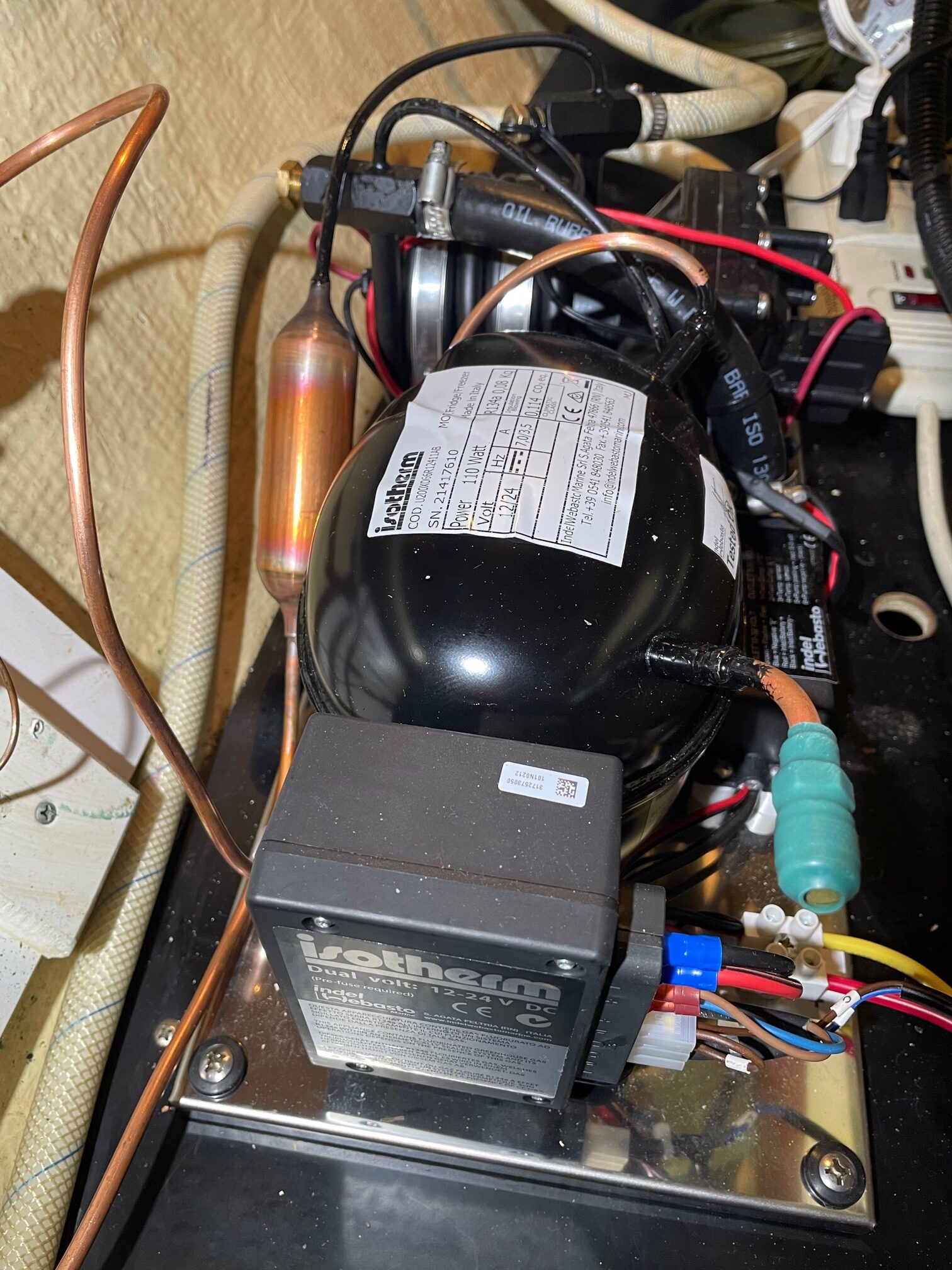
I chose an Isotherm Magnum 2505. It’s a 12VDC sea-water cooled system with an O-evaporator and built-in pump. I decided to keep it simpler by only having a refrigerator box, and convert the old freezer box to dry storage. The freezer box was very small and top-loading, and being tucked into a corner of the countertop, it was hard to access especially the lower half. For the amount of food it held, it wasn’t worth the energy it took to keep things frozen. The O-evaporator is like having a mini freezer within the refrigerator–with just enough volume to freeze a few items. The system comes fully charged with quick-connect self-sealing valves for easy installation–no refrigerant technicians needed. The compressor is industry standard Danfoss/SeCOP and is designed for volumes up to 7 cubic feet.
Isotherm Magnum 2505
Installation
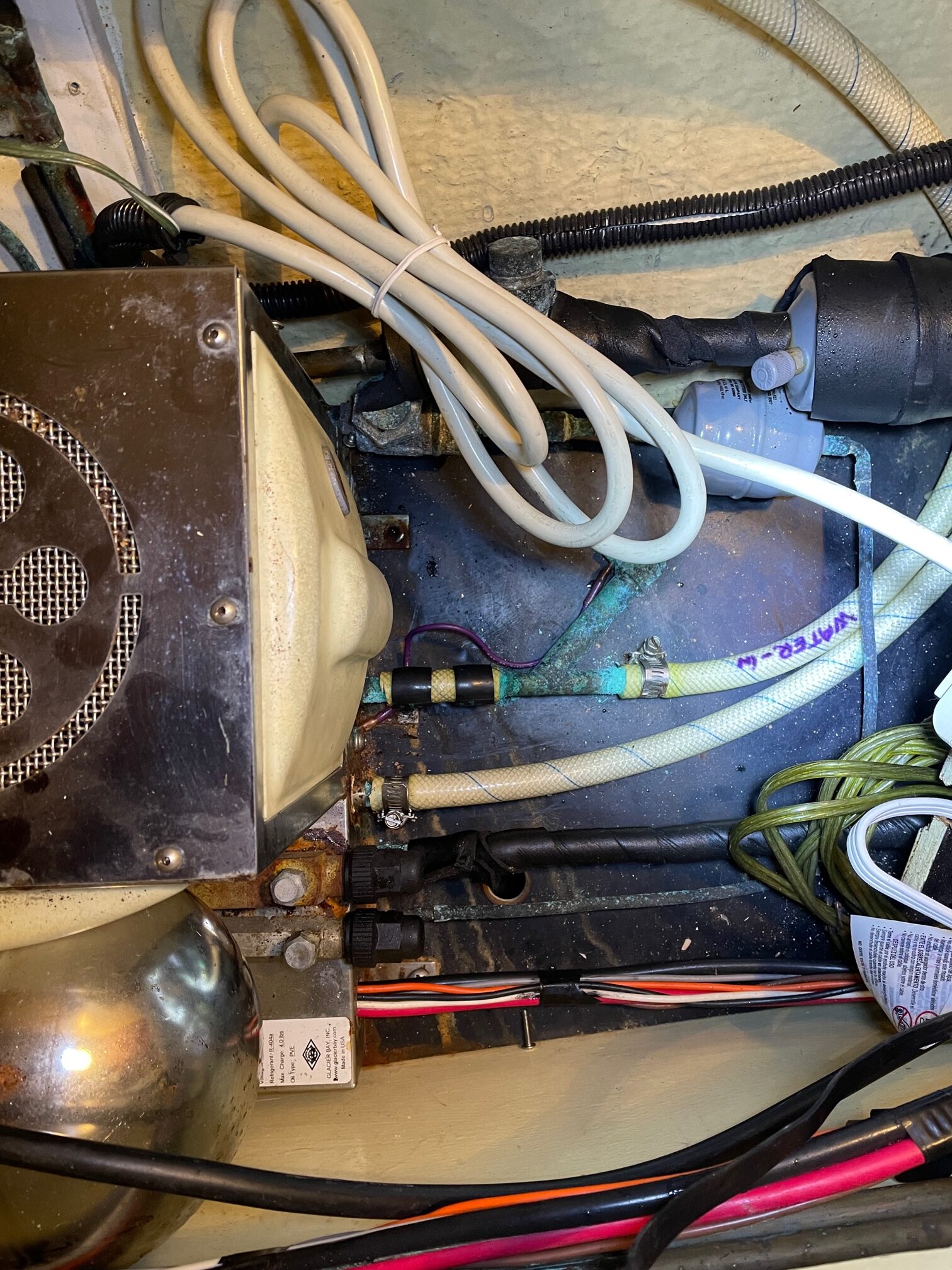
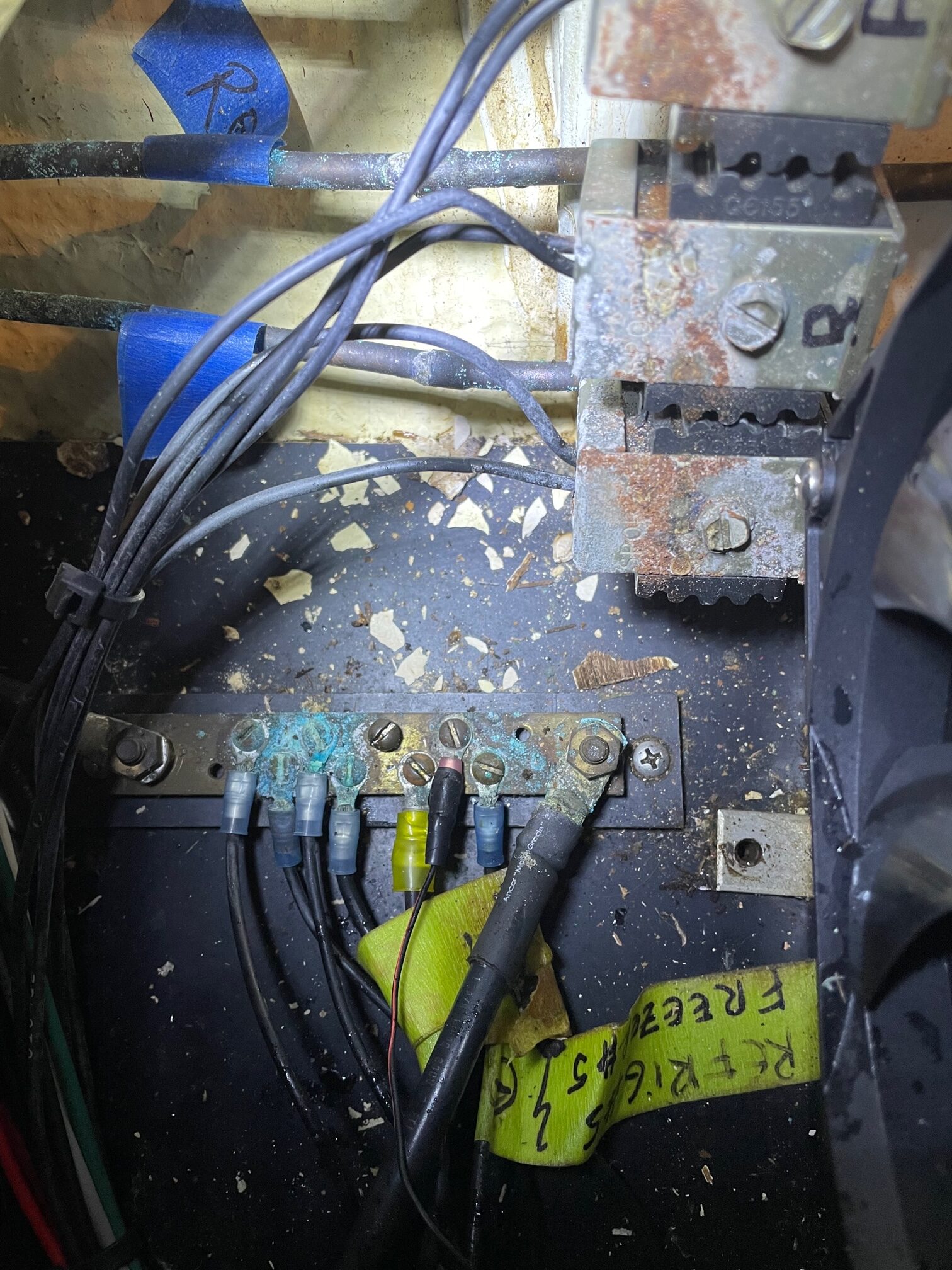
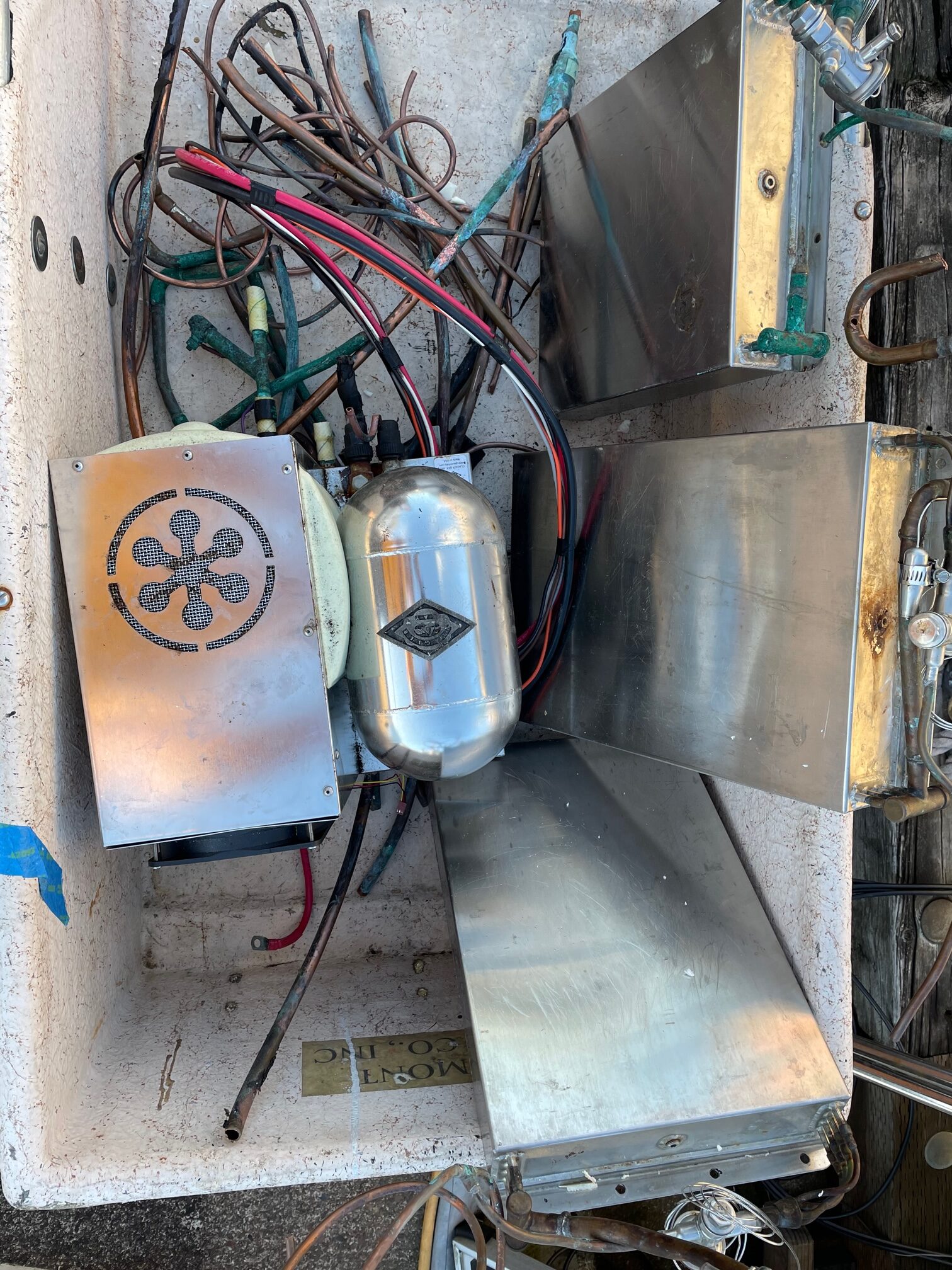
First I had to remove the old system. The holding plates came out easily and I was surprised how little refrigerant came out when I cut the copper tubing on the holding plates. I had always suspected a leak in the system so either it leaked out or settled in the tank or holding plates. The compressor unit was mounted under the pilot berth in a “dry” bay, but signs of moisture and corrosion were obvious.
Refrigeration CompressorGround Bus and Solenoid ValvesDock Cart Full of Old Refrigeration Equipment
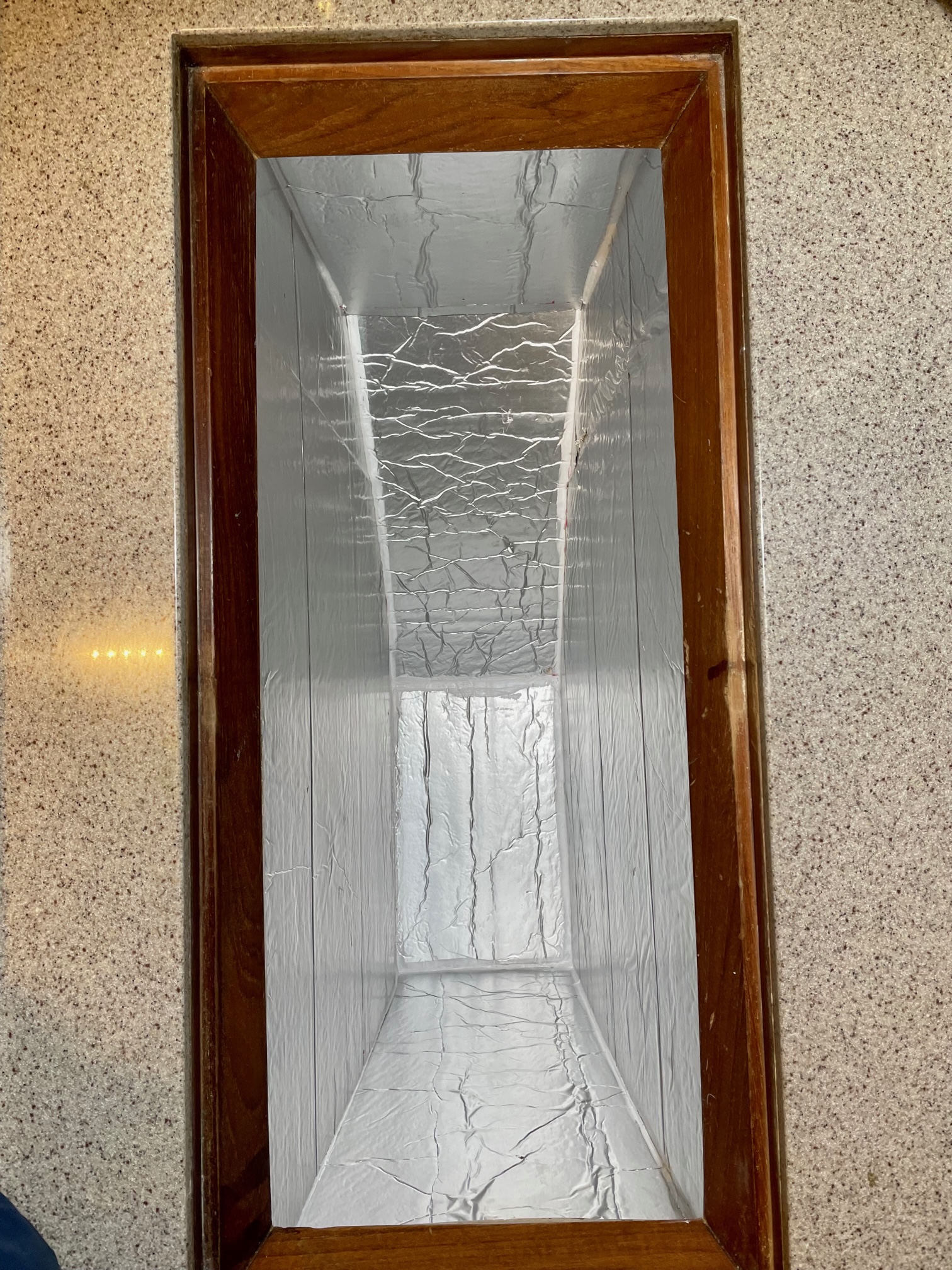
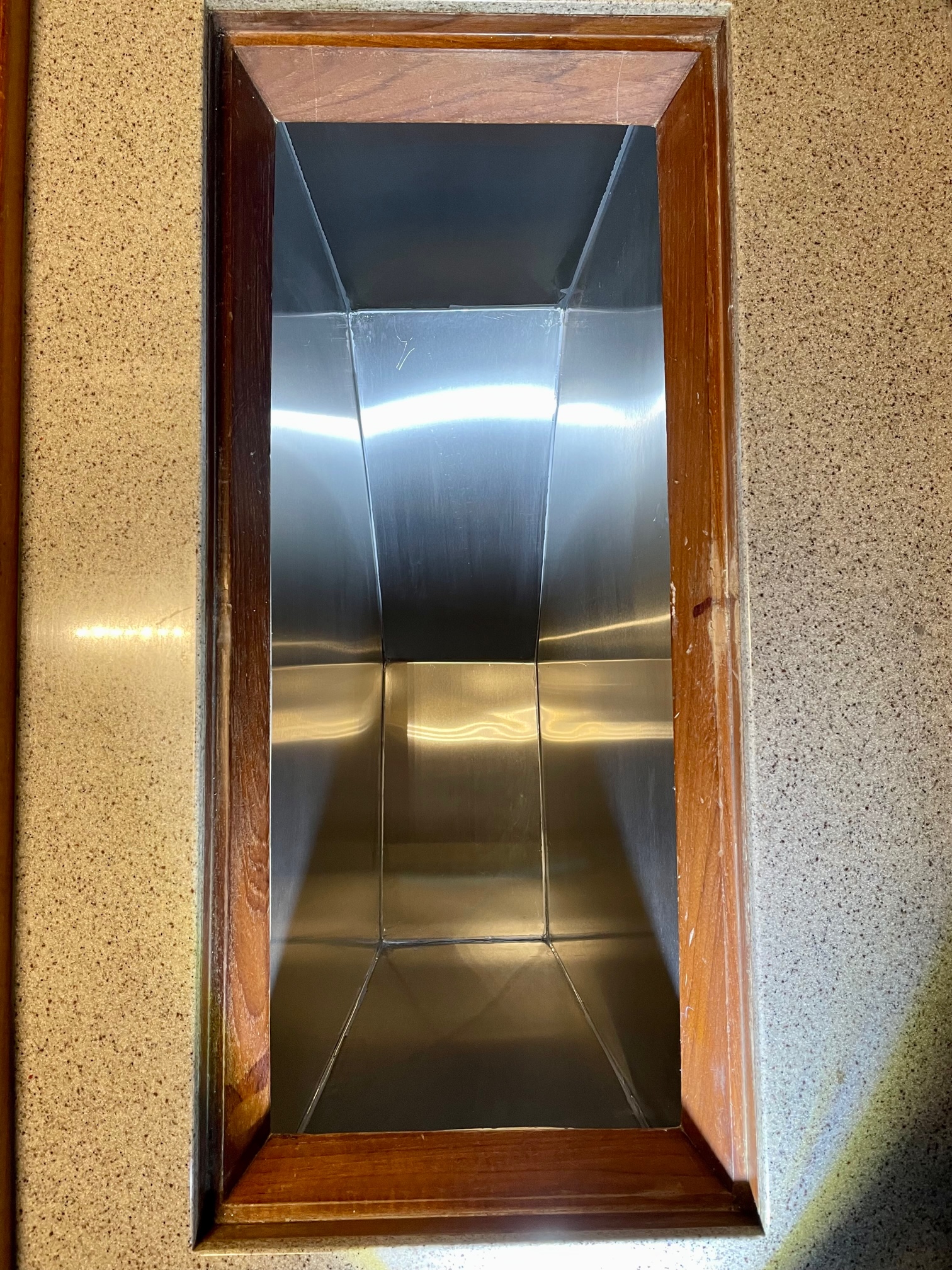
After removing all the old equipment and cleaning, the next step was to insulate the box. Without insulation, the box measured about 7 cubic feet. I used 2″ thick closed cell insulation (R factor of 12.5) for the bottom and 2 sides (hull side and engine side). For the large sides (fore and aft) I intended to use 2″ but after seeing how much smaller it made the box, I compromised with 1″. Since the box is top loading, we stack lock-n-lock boxes to organize the food (one for meat & cheeses, one for soda cans, one for condiments, etc), and they fit perfectly with the 1″ insulation on the sides (the box would have been too narrow if I had used the 2″). After fitting the insulation, I caulked all the seams to fill in any air gaps. Next I covered the insulation with 20 gauge stainless steel to protect it and make it easy to clean the inside of the box. For this, I made a cardboard template of all the sides and took them to Ballard Sheetmetal for cutting. It fit perfectly so I used adhesive to hold them in place, then caulked all the seams with grey silicone caulking. The final refrigerator box measurements came to 5.9 cubic feet, so I lost about 1.1 cubic feet from the insulation, but this should be a big improvement since the system won’t be cycling on as much.
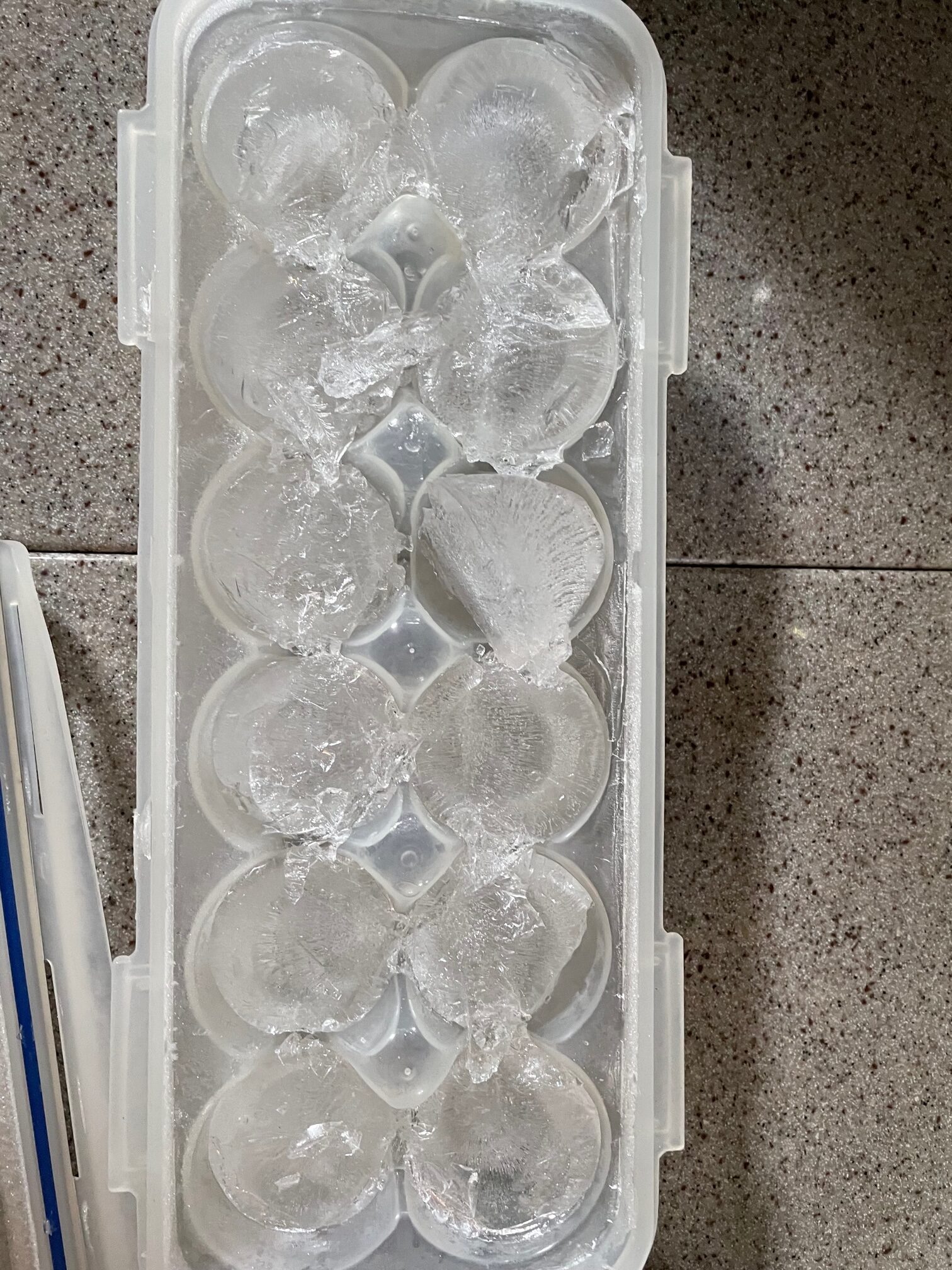
Installing the compressor was easy. I ran the refrigerant lines from the evaporator box and connected them with quick-connect couplers, then ran the input and output seawater hoses for cooling, and connected a fused 12V supply. These were already in place from the old system. The old system required an external water pump, so I bypassed the old pump to feed seawater directly from an existing thru-hull. I used the old temperature probe and digital display from the old system so I can monitor the temperature inside the box. Everything worked when I turned it on and the O-evaporator box easily freezes water so we’ll have ice cubes now!
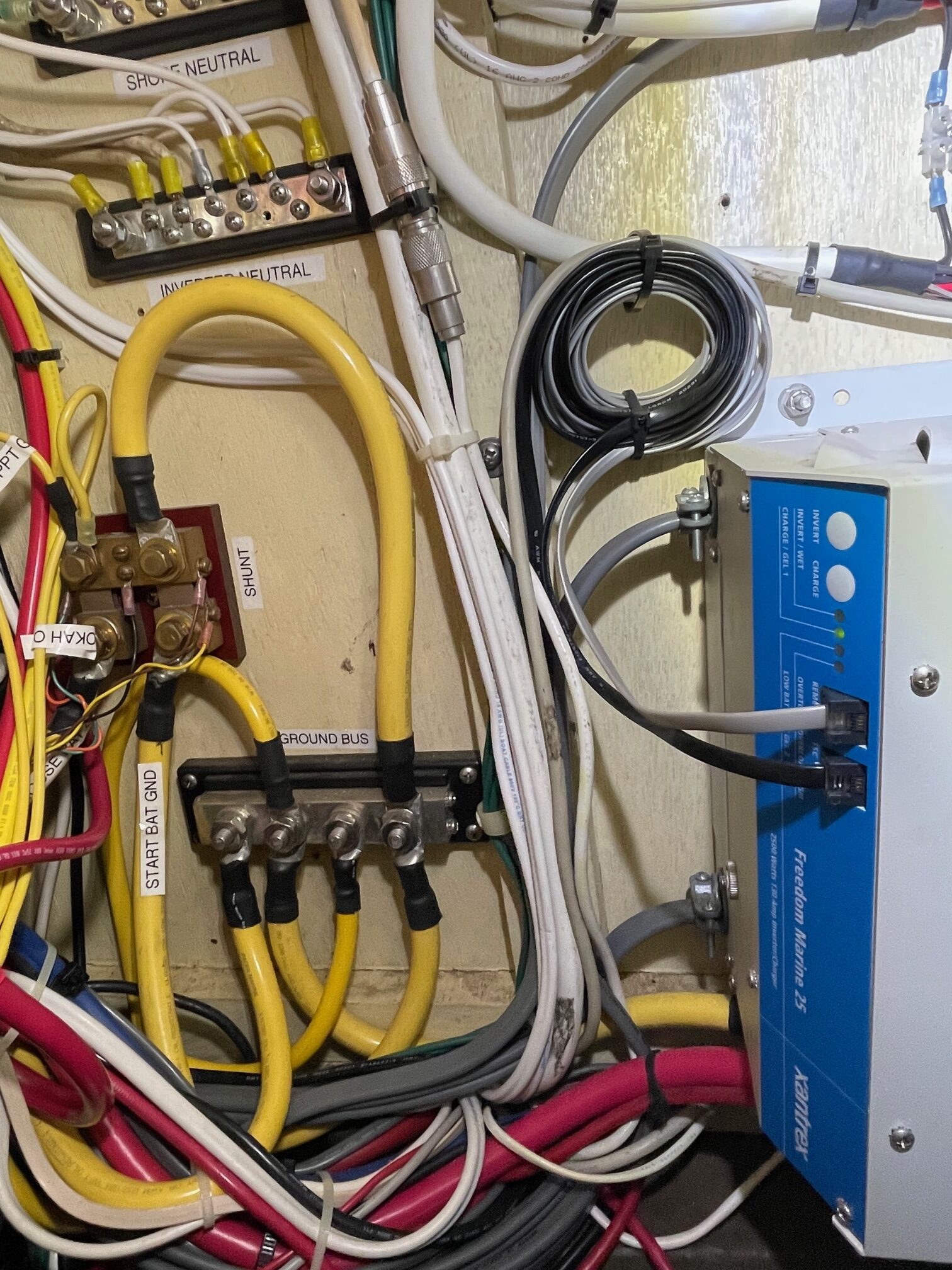
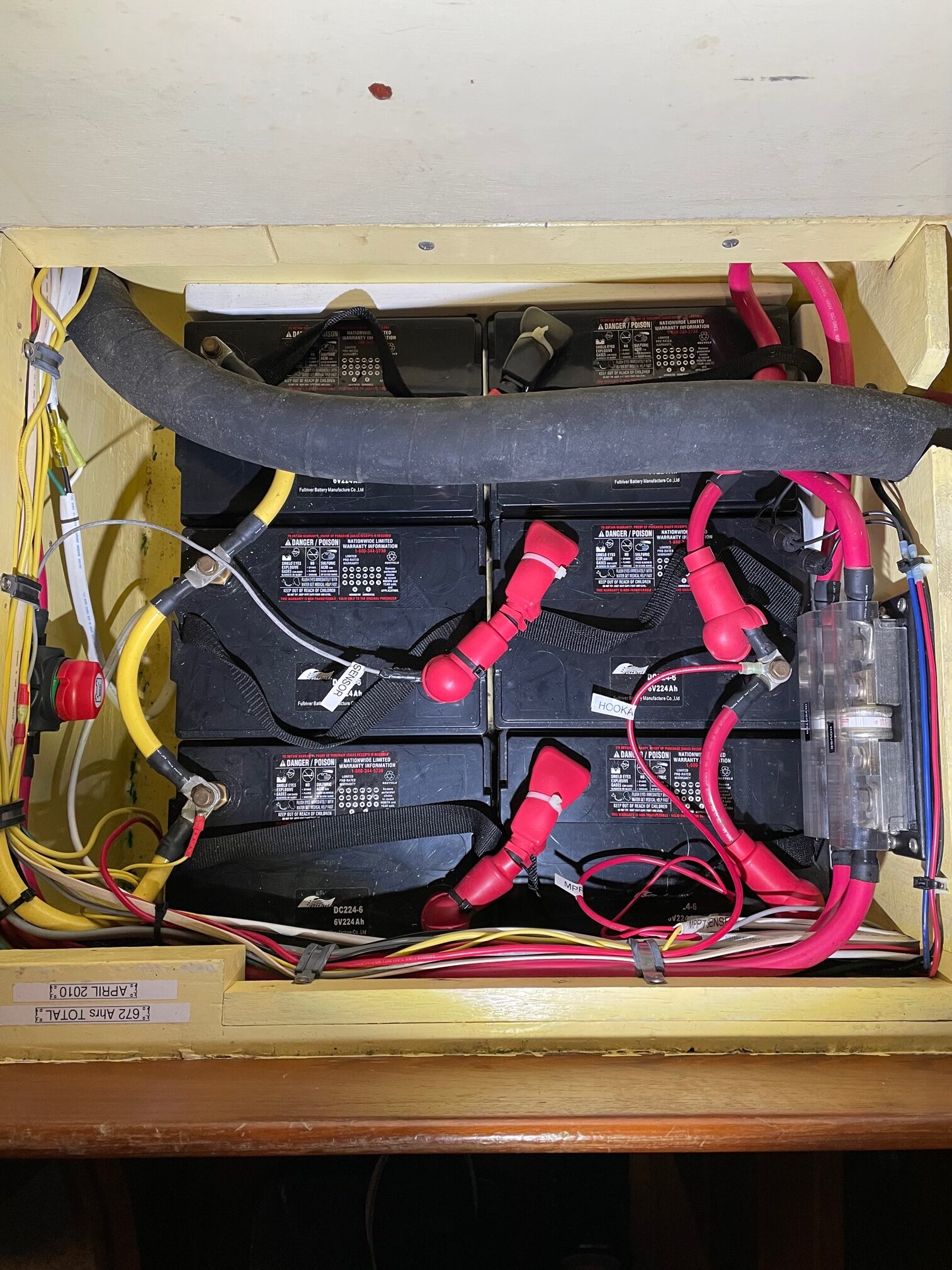
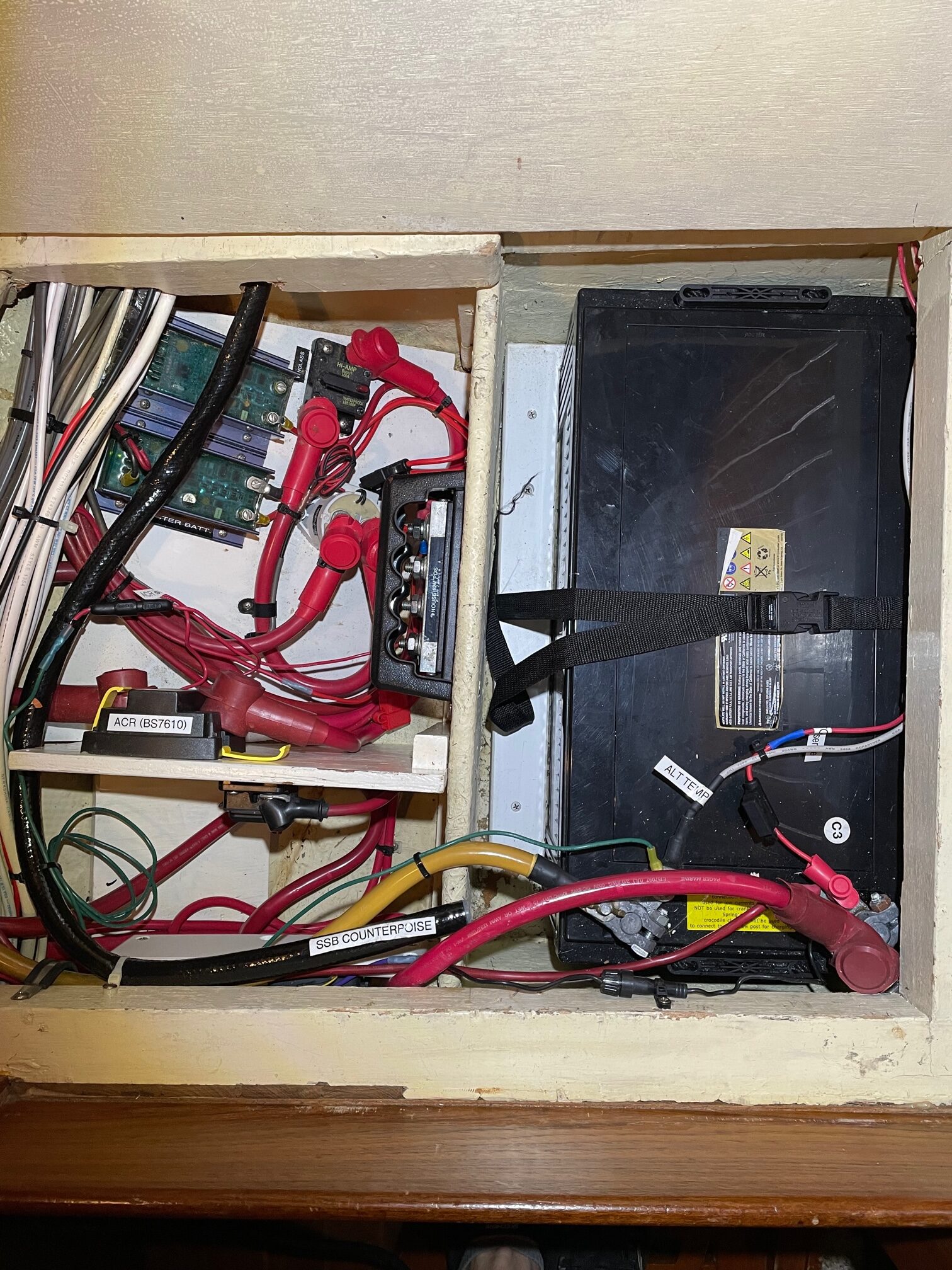
The battery and charging system on Apropos was as follows: an AGM 12V Group 8D Starter Battery, 6 AGM 6V series/parallel combo House bank (672 AHrs), and 2 AGM 12V parallel combo Windlass & Thruster bank. A Xantrex Charger/Inverter (Freedom 25) that outputs a modified sine wave for AC and a 130A max 12VDC charging current. An Automatic Charge Relay (ACR) used to combine the House and Starter batteries whenever a charging source is present (solar, shore power, alternator). A Xantrex Link 2000 that monitors and controls the charging of the House and Starter batteries. A solenoid parallels the House bank with the Windlass bank whenever the Windlass breaker is turned on. The charging of the Windlass battery bank is handled by a Balmar Digital Duo Charge (30A DC/DC converter) from the House bank. A 110A Balmar alternator with external Balmar MC-16 regulator is connected to the Starter battery.
This system was well thought out and worked well for 17 years. The only components I changed were battery replacement as needed, and the higher amp Alternator with external regulator. I also removed the manual battery ‘1-2-both’ switch and replaced it with an ACR.
Charger/Inverter, Shunt
House Bank AGM Batteries, Fuses
Starter AGM Battery, DC/DC, ACR
The Good:
Very reliable system
Fully automated charging
The Bad:
Long charge times, especially the last 10% of the battery
50% DOD (depth of discharge) for lead acid batteries
Heavy lead acid batteries (468 lbs for house bank)
Modified sin wave inverter not compatible with some electronics (Nespresso machine doesn’t work at all and Microwave struggles)
Most components 17 years old
Performance issues during year-long cruise with no shore power
No remote monitoring/control of the system
In 2021 I noticed my House batteries were getting weak. They were fine for day sailing, but a week-long trip to the San Juan Islands where we mostly anchored really exposed their weakness. By mornings our battery voltage was below 12.0V until the sun came out and the solar panels brought them back to a normal voltage. I installed these AGM batteries way back in 2010, so they definitely exceeded their expected life.
This left me with a big decision–do I replace the 6-6V, 672AHr AGM batteries with the same (a 1-day project costing $2,500) OR switch to Lithium technology (a multi-week project and 3X cost)? I did a lot of research on Lithium-based systems and decided to update to Lithium Iron Phosphate (LiFePO4) house batteries, a new Inverter/Charger that could handle Lithium charge profiles and a new solar controller with LiFePO settings.
Goals:
Safe and reliable system
Higher overall amp hour capacity for house bank
Faster charging rates especially while away from the dock
Have capability to remotely monitor and control the system
New System
Batteries
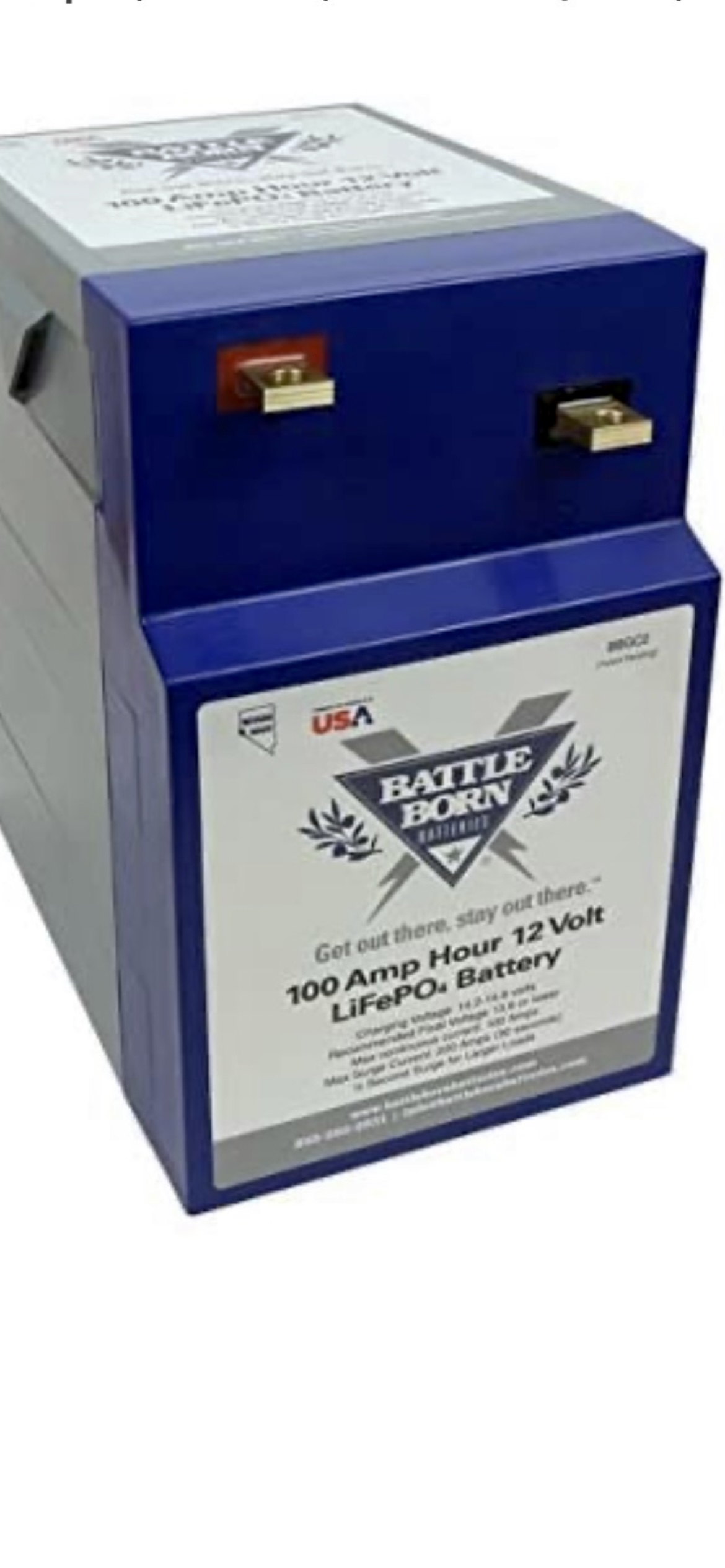
One of the biggest choices in the design was what type of battery to use. Lithium Iron Phosphate (LiFePO4) batteries have been around awhile and seem to be the choice for many boats converting over to Lithium. There are plenty of manufacturers with BattleBorn, Victron, VPR, Lithionics, and Relion being some that I looked into. I narrowed my choice to 100AHr “Drop-In” LiFePO4 with built-in BMS (battery management system). They are designed to drop-in nearly the same footprint as 6V lead acid batteries, making installation easier. The internal BMS built into each battery removes it from the bank when an unsafe condition is detected. This could happen to a single battery (eg a bad cell) or all batteries (eg faulty charging conditions).
Sizing:
My AGM house bank was made up of 3 parallel sets of 2 series-connected 6V batteries (total of 6 batteries equaling 672 AHrs). Lead acid batteries are limited to 50% DOD for long life, meaning you should avoid discharging the bank more than 50%. In other words, my 672 AHr AGMs really only had 336 AHr of usable charge. And unless you’re plugged into shore power, it takes a very long time to charge the last 10% of a lead acid battery, making the usable AHrs even less. The reason is due to the charging profile of lead acid where the charge current is significantly reduced for that last 10%.
My design requirement was to at least match the usable AHrs when I switched to Lithium. But that doesn’t mean that I need 672 AHrs since Lithiums have nearly 100% DOD. So a 100AHr Lithium battery would be approximately the equivalent of a 200AHr AGM battery. I chose 4-100AHr BattleBorn LiFePO4 GC2 batteries for a 400AHr house bank.
Inverter/Charger
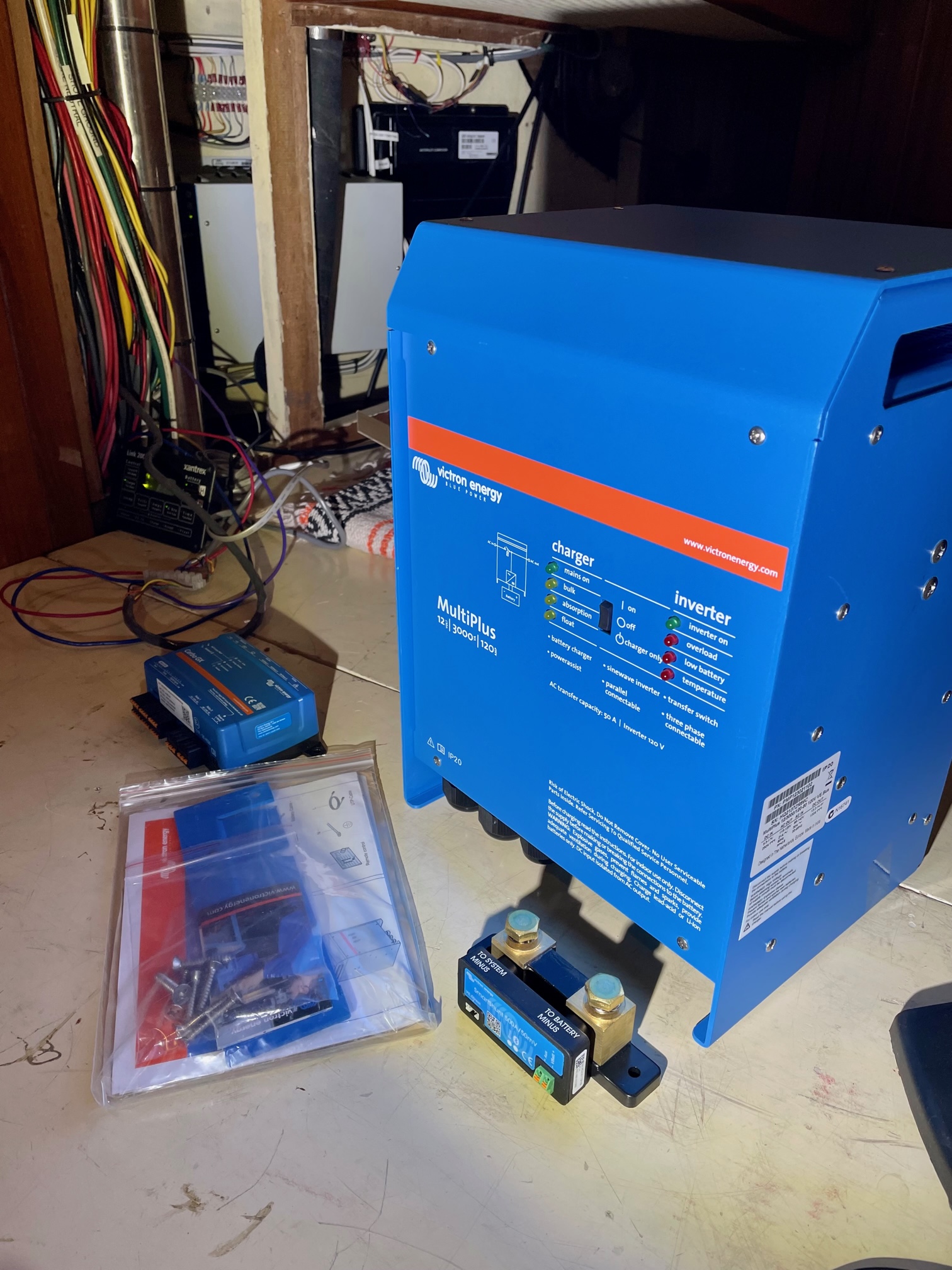
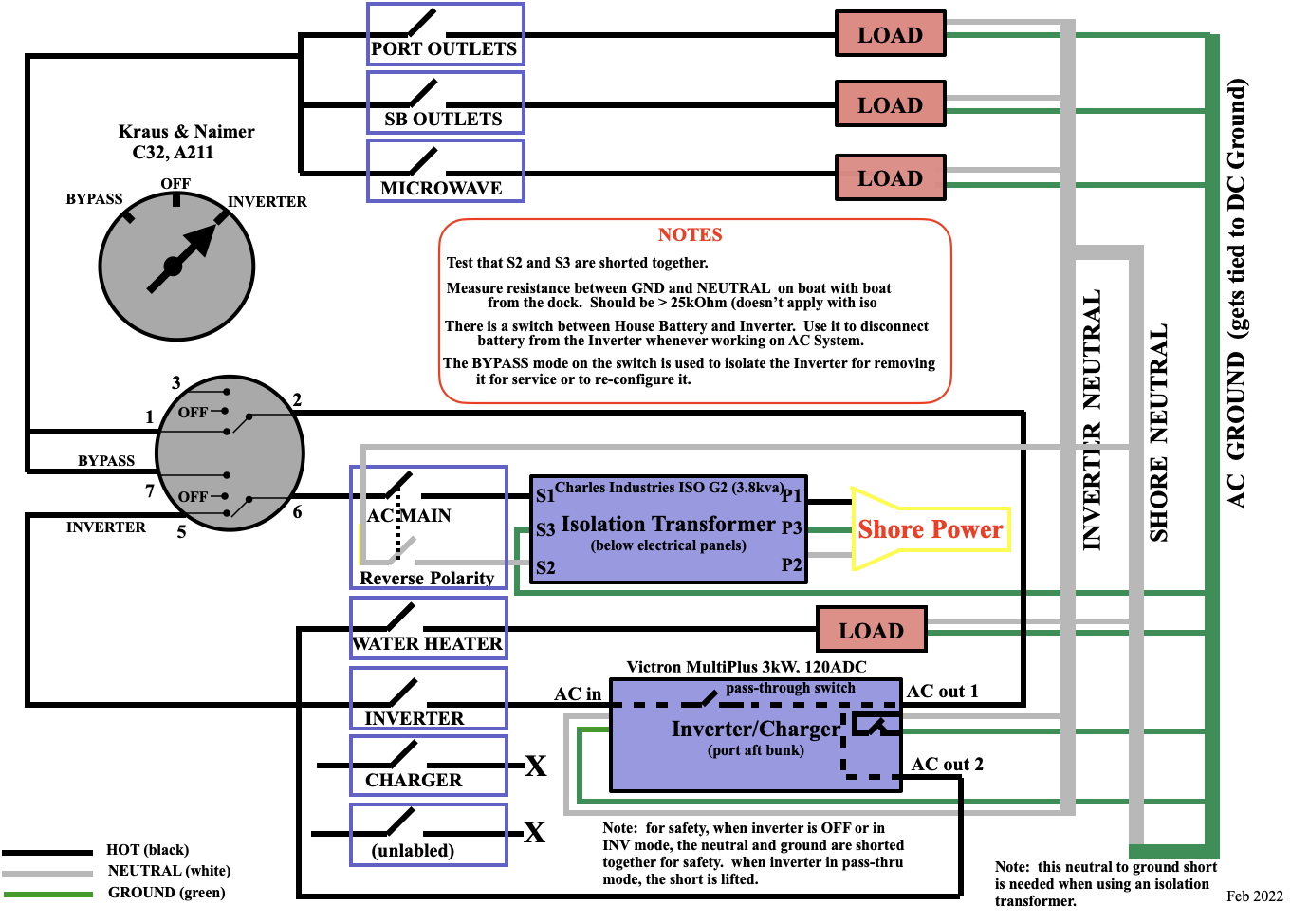
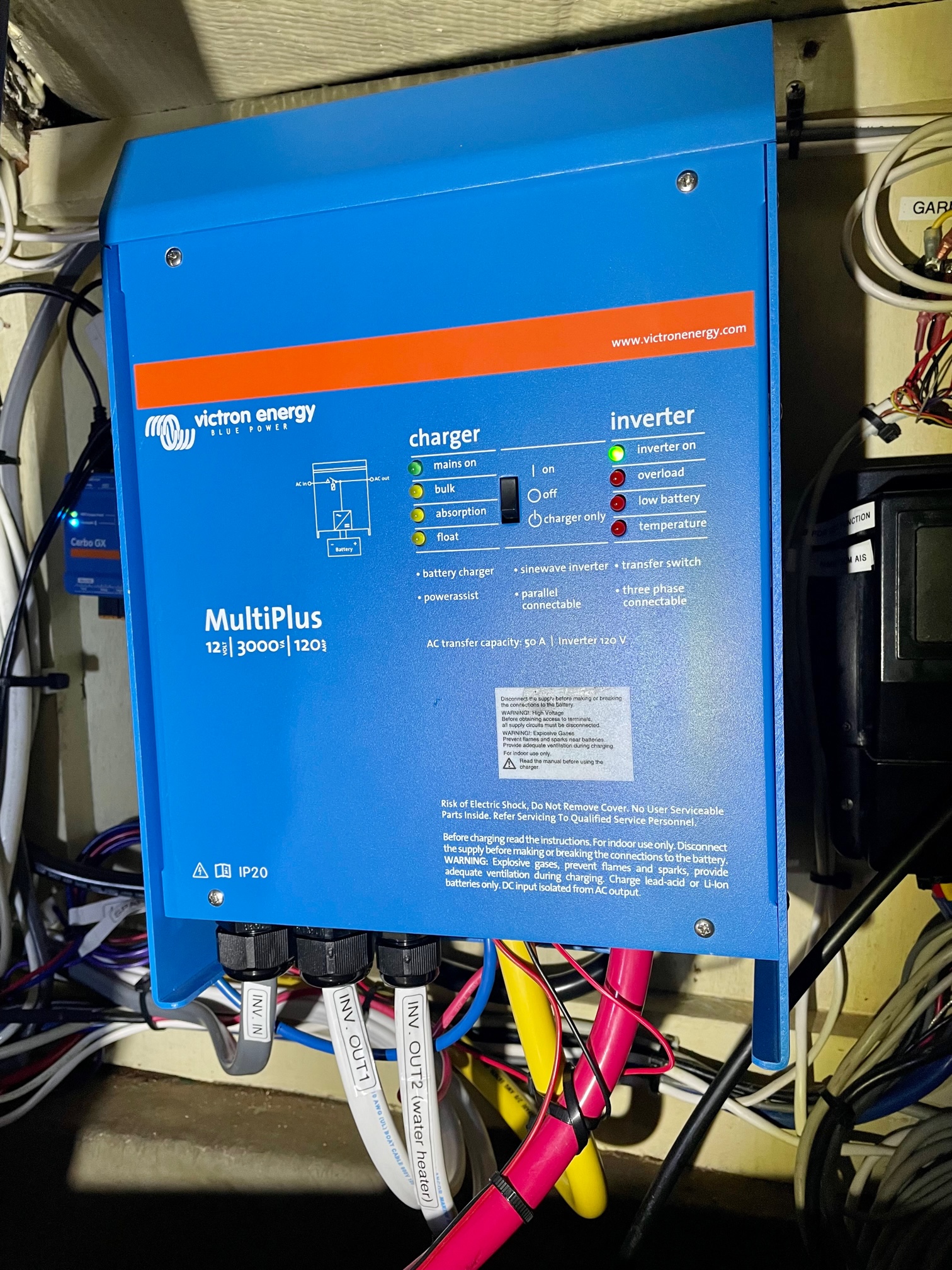
I installed a Victron MultiPlus 12/3000/120 Inverter/Charger. Due to the location of inputs/outputs on the MultiPlus, as well as the orientation, I had to replace some of the heavy 2/0 gauge wire on the DC side, and the 10 AWG on the AC side. The previous setup was not wired with the AC main going through the inverter before any loads, so I had some re-wiring to do at the AC panel. I used both AC outputs–AC1 supplies the AC outlets and the microwave, AC2 supplies the water heater. The MultiPlus passes the AC input through to both AC outputs when it detects an AC source coming in. When there is no AC source, it switches on the Inverter. Only AC1 output receives the Inverter output. This prevents overloading the Inverter and draining the batteries that would occur by trying to run the water heater with inverted power. I rewired the AC switch to be able to disconnect the MultiPlus AC input and output (bypass mode) in case it has to be removed for service. Here’s a picture of the new equipment and a diagram of my AC system.
Victron MultiPlus 3000, Shunt, Cerbo GXAC System Diagram
Monitor/Control
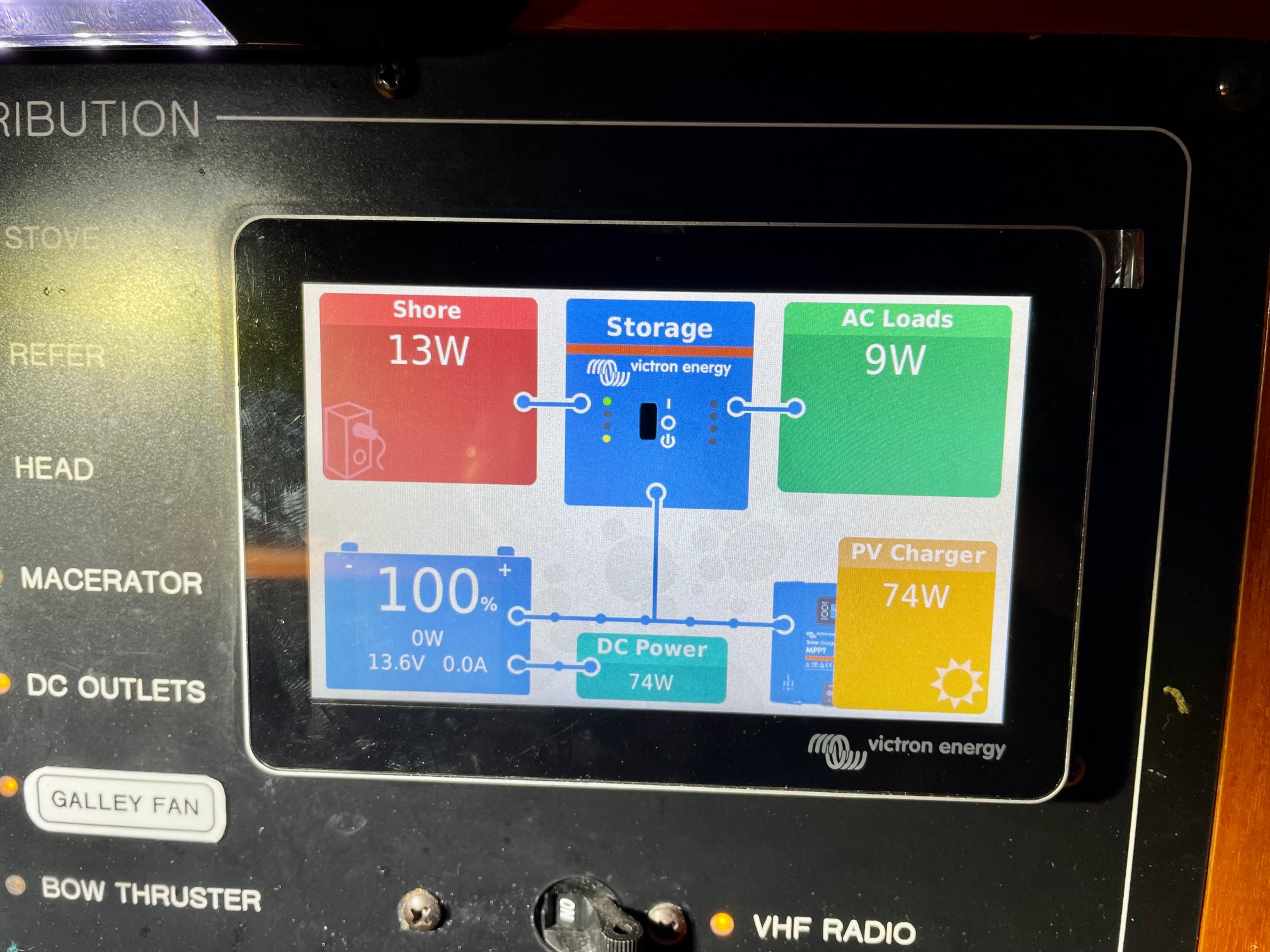
For the Monitor/Control, I installed a Victron Cerbo GX with a GX Touch display, and a SmartShunt. This allowed me to do most of the wiring near the MultiPlus while running a single wire to the touchscreen display. The 5″ display took the place of the old Link 2000 with minor changes to the DC distribution panel. The touchscreen has lots of info and menus for setup and making changes.
GX Touch
Solar PV MPPT Controller
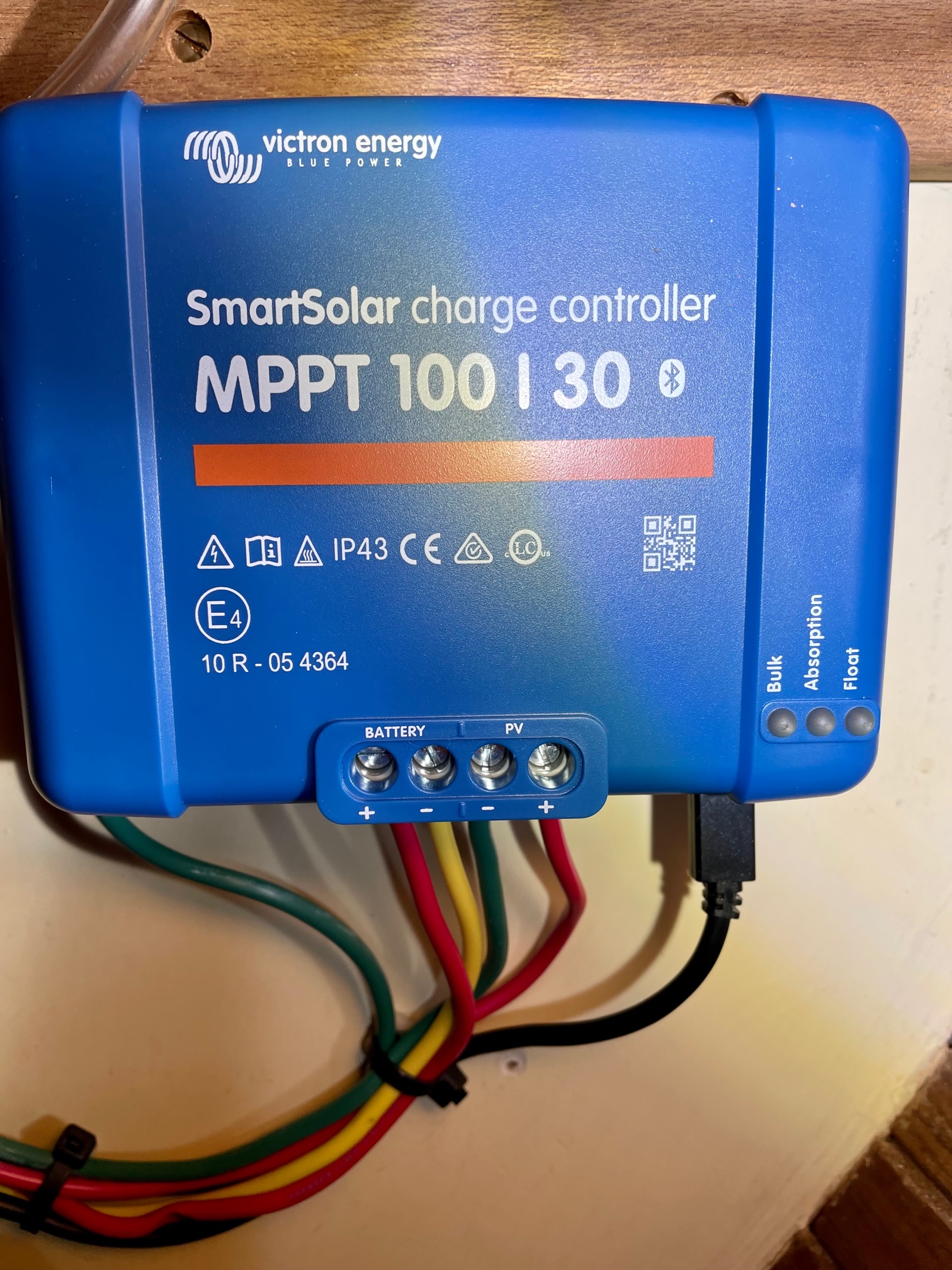
I decided to replace my older Outback Solar Controller with a new Victron SmartSolar 100/30. This integrates well with the Cerbo GX with a VE-direct cable and when connected, solar charging information appeared on the touchscreen as seen in the above picture (PV Charger). The controller can provide as much as 30A of solar charging to the Lithium batteries. On my boat, even in the tropics, the most output I ever saw from my 5 solar panels was about 20A since there’s almost always some amount of panel shading from the rigging. The built-in Bluetooth allows it to be controlled from anywhere by pairing it with a smartphone via Victron Connect.
SmartSolar 100/30
Remote Monitoring
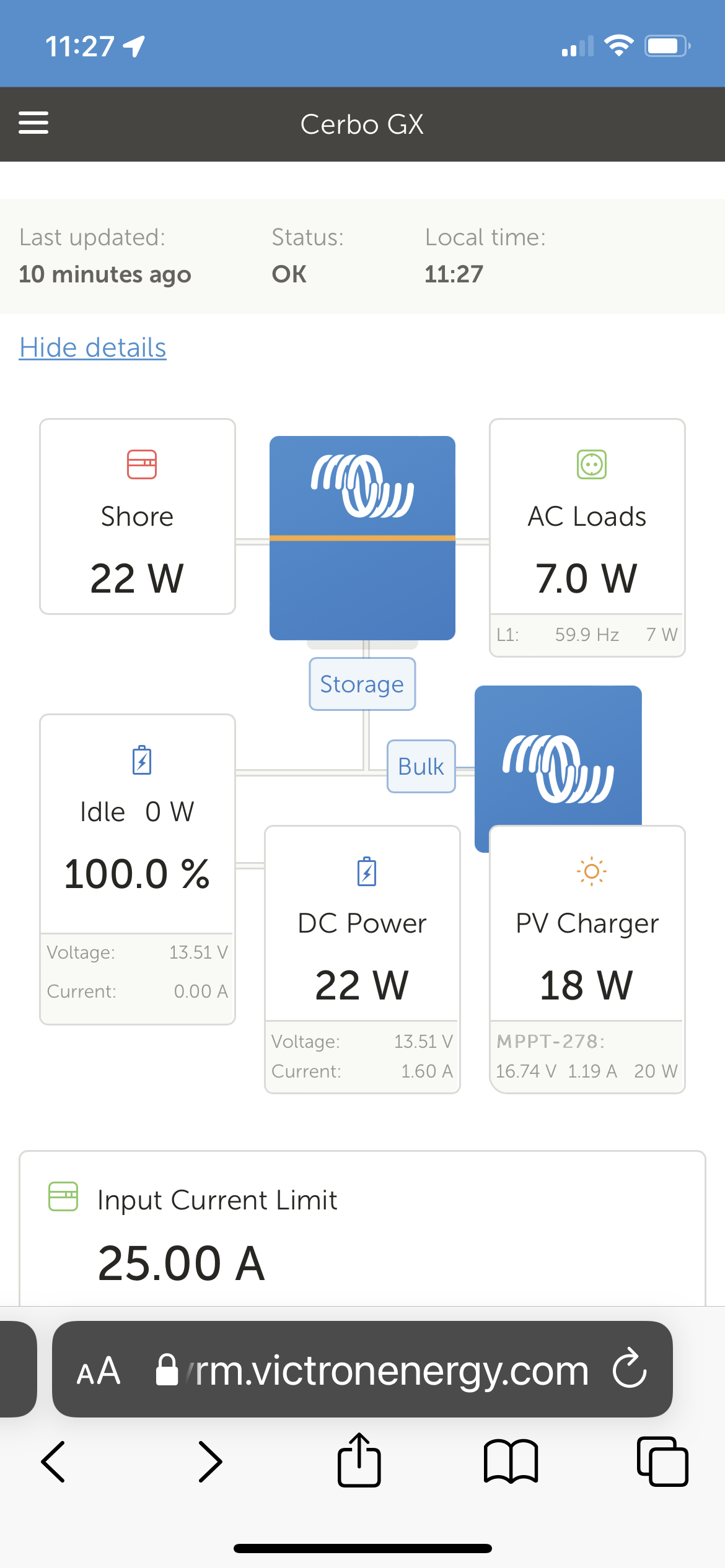
The Victron System (Charger/Inverter, SmartShunt, Cerbo GX, SmartSolar) is able to be monitored remotely as long there is WiFi on the boat. The VRM Portal is free and allows me to observe the following from anywhere in the world:
the battery state of charge
amount of AC shore power being drawn
solar charger output
amount of AC and DC loads are being consumed
“time to go” before charging is needed (based on current consumption)
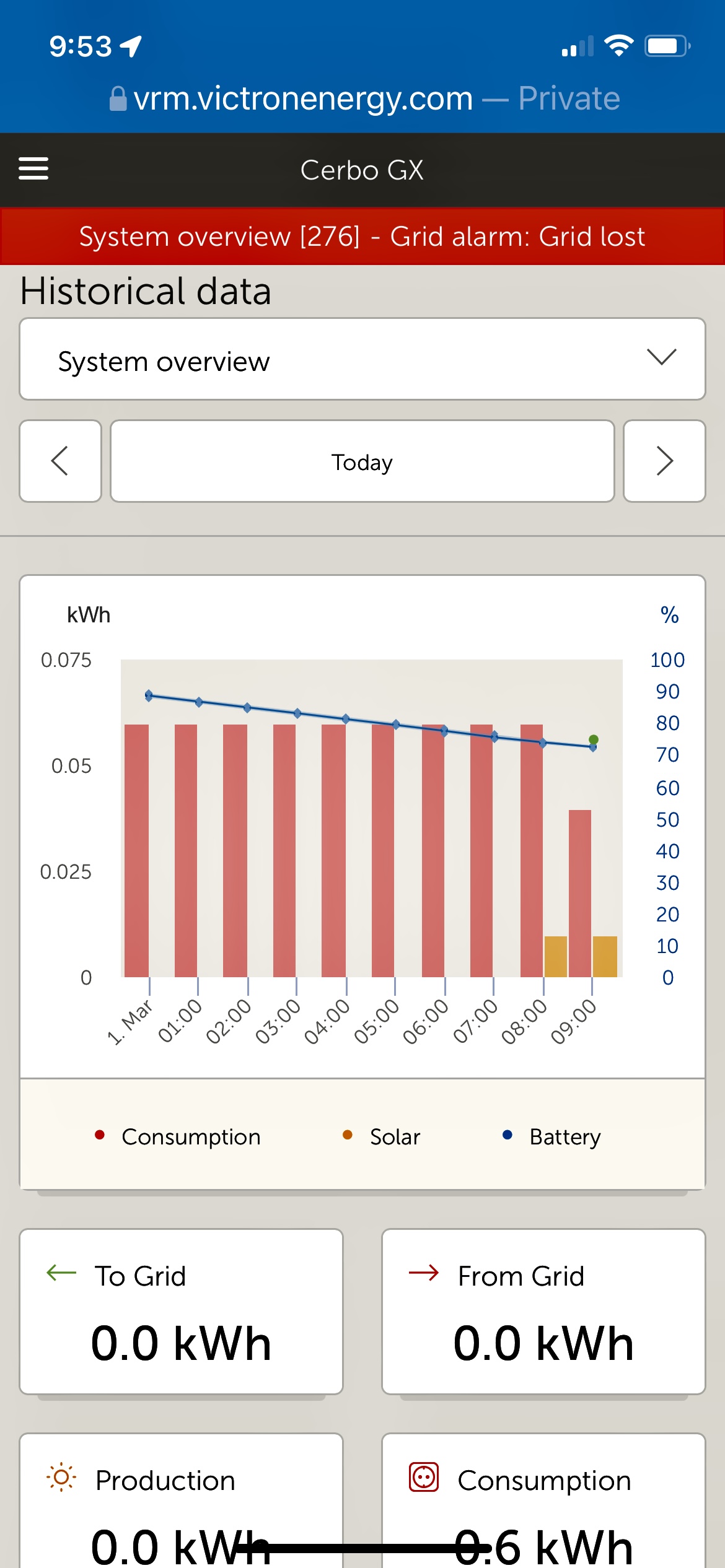
historical data for power consumption, solar charging, and battery level
Main Screen in VRM PortalScreenshots from VRM remote monitoring
Installation
I decided to break the installation into 2 parts–first change out the Inverter/Charger, Controller & Monitor, Shunt, and Solar Controller and get that all working with my AGM house batteries. Then part 2 was to swap in the LiFePO batteries.
The first step of part 1 was to remove all the old equipment. As I was doing this, I realized that most of the AC and DC wiring to the Inverter would need to be replaced since it wouldn’t reach the location/orientation of the new Inverter. I also had to move the autopilot controller, radar wiring bus and a few other things to make room for the larger inverter. Most of the wiring was in hard to reach places, which is typical on boats. With the old equipment gone, I laid out the locations of the shunt and Cerbo GX, then mounted the touchscreen on the DC panel, and finally the Inverter/Charger. Everything tested out fine when I powered it up. Next I swapped the old solar controller for the Victron SmartSolar. I programmed the Inverter/Charger for AGM batteries, and also set the switch on the solar controller to AGM.
Installed Inverter/Charger and Cerbo GX
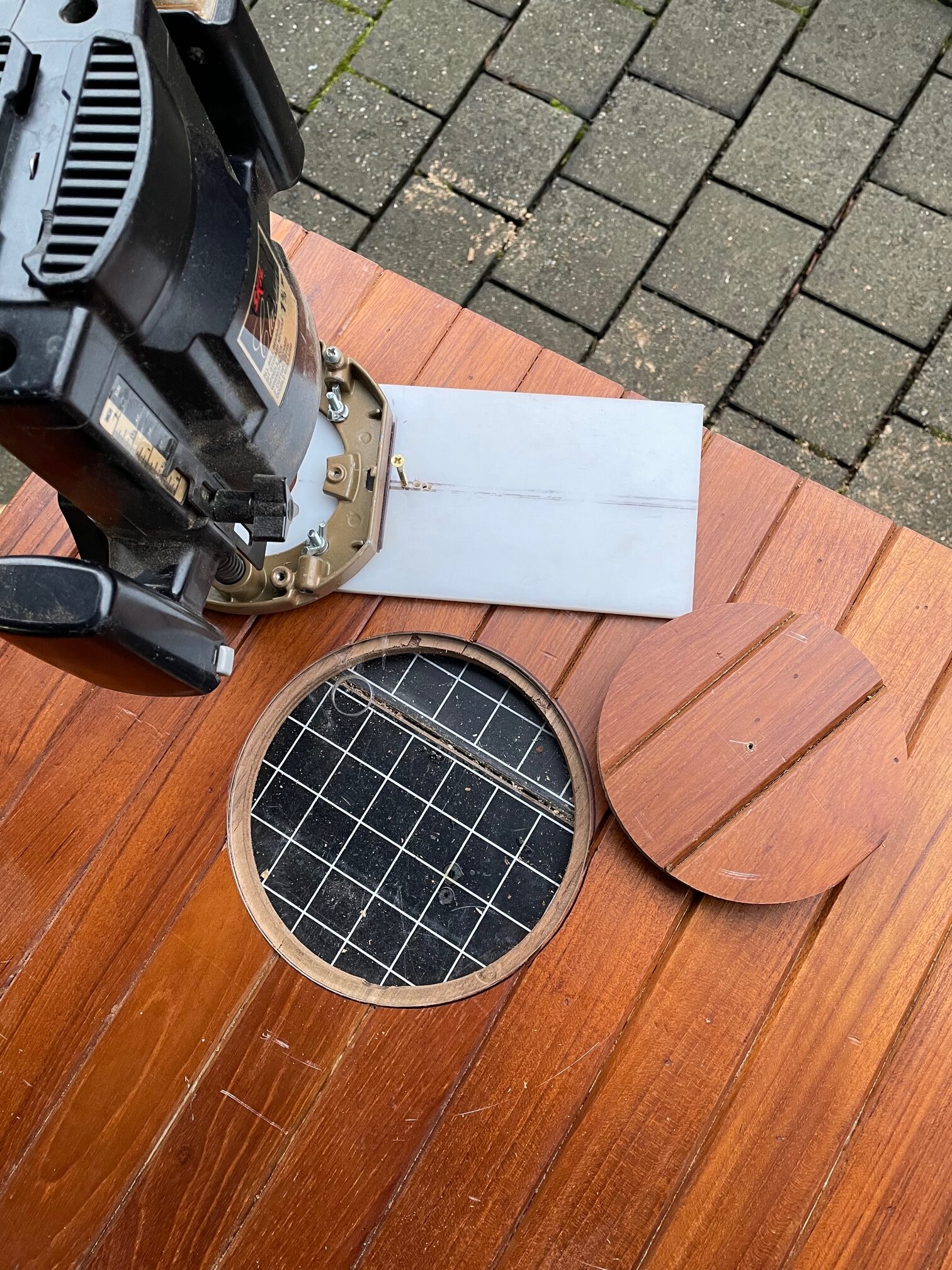
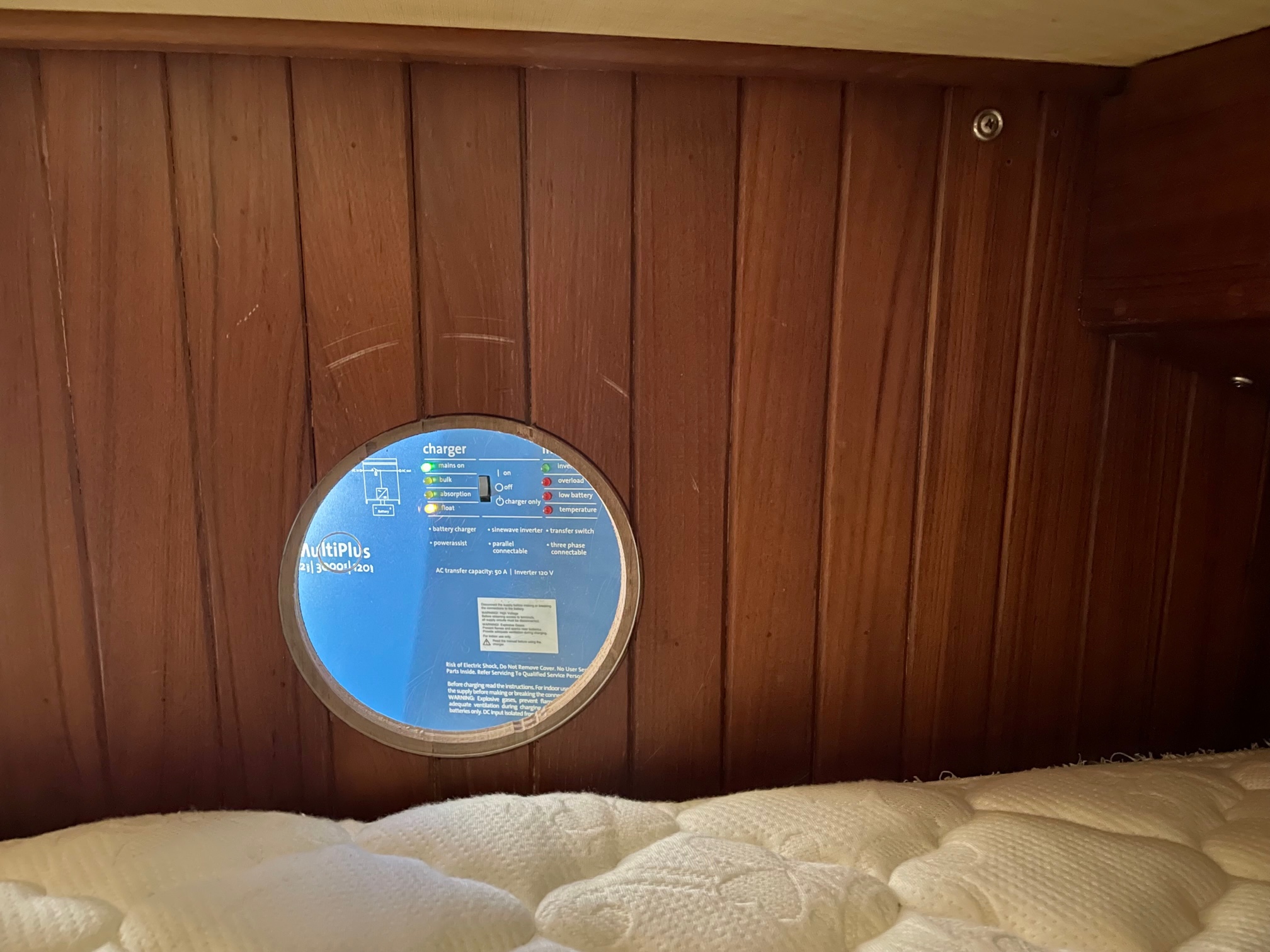
Since the Inverter/Charger and Cerbo GX are behind a panel in the aft berth, I wanted a way to observe and access them quickly without removing the entire panel, so I used a router to cut a 6-3/4″ circle with a 1/4″ lip for a 7″ acrylic port.
Access Port
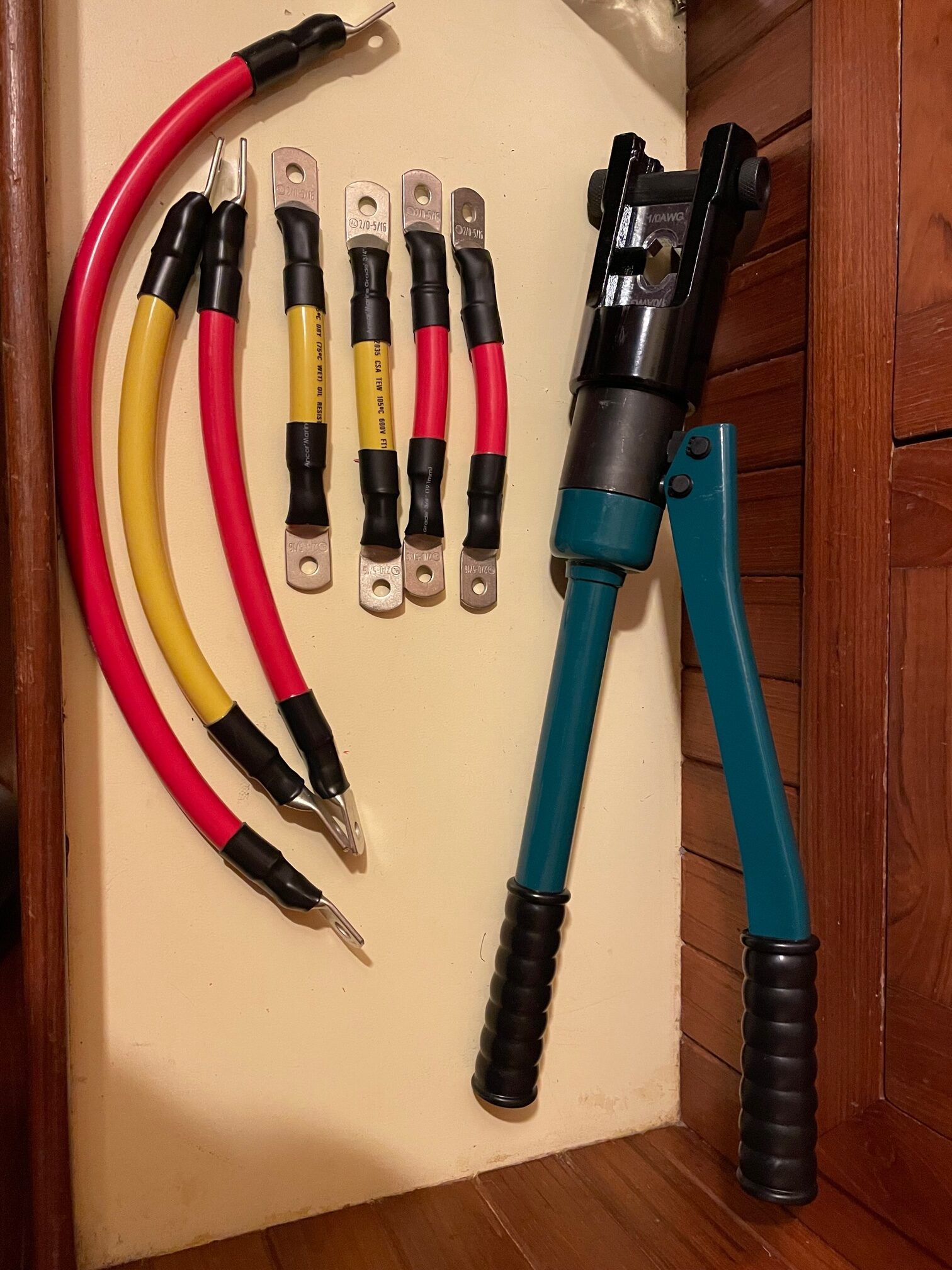
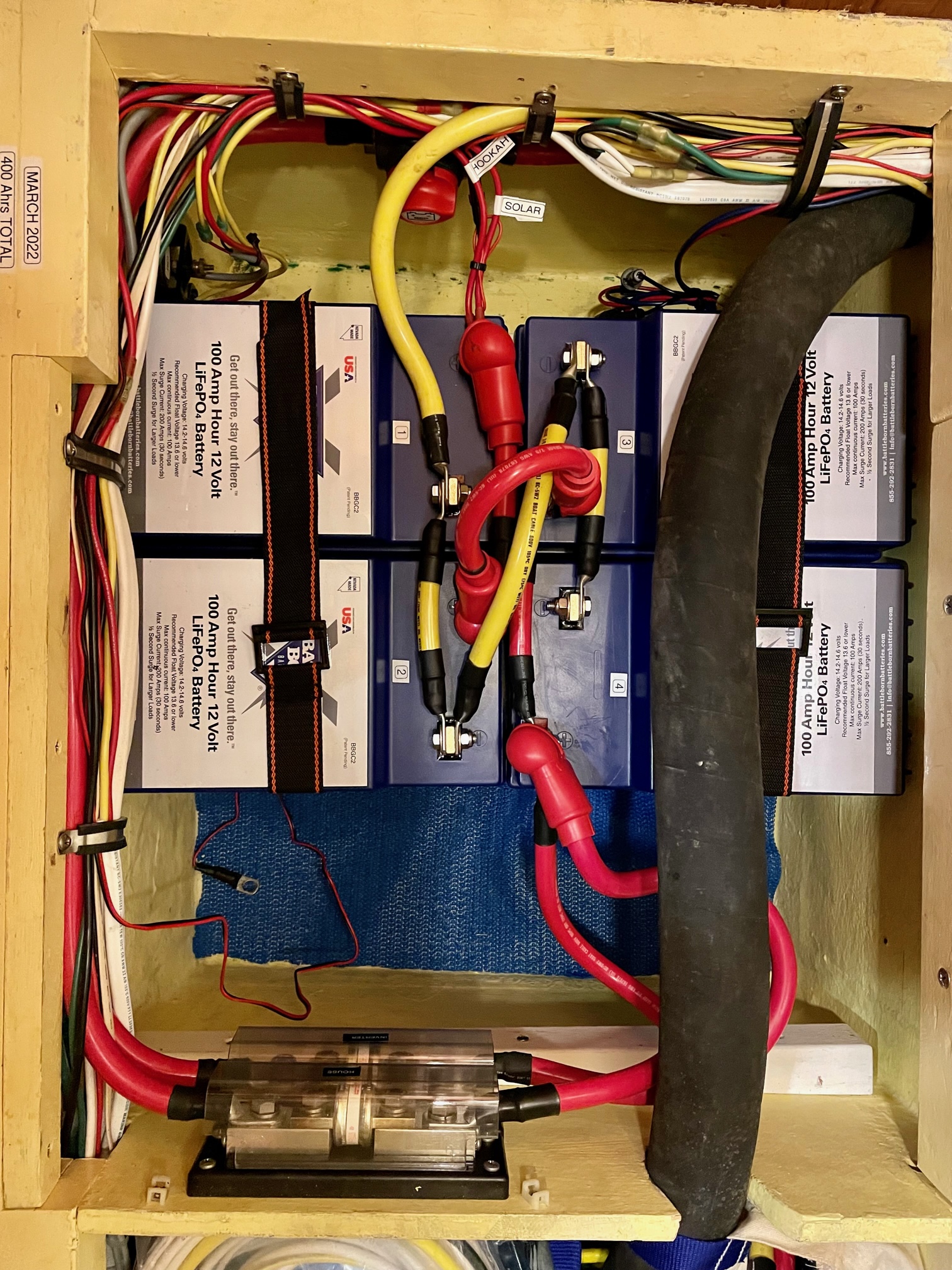
With everything working with the AGM batteries, it was time to swap in the 4 new Lithium batteries. Each of the 6 AGM batteries weigh 78 lbs and each Lithium battery weighs 31 lbs– that’s a difference of 348 lbs! I ordered the GC2 version of the 100AHr BattleBorn and the location of the pos/neg terminals made it easy to connect them in parallel using 2/0 (70mm^2) wire. I bought a good heavy duty hydraulic crimping tool that has die for 10 AWG to 4/0 AWG wire, used high quality lugs, and good heat-shrink tubing to build the 7 connectors I needed.
Hydraulic Crimping Tool & 2/0 (70mm^2) Connectors
It’s important to make sure each battery in the bank has the same length of wire from its positive and negative terminals. The 4 short wires that connect battery 1 to battery 2, and battery 3 to battery 4 are all the same length. The 2 wires used to parallel battery 2 and 3 are also equal length (even though the distance for the red positive is half the distance for the yellow negative). Choosing the negative to come off battery 1 and the positive to come off battery 4 ensures each of the 4 batteries have the same length of wire between it and the charger. This is important so that each battery charges and discharges equally and they wear evenly. There is just enough room for 1 more battery in the box (the box is not rectangular and the distance from left to right in the picture gets smaller towards the bottom) so I’m thinking of increasing the bank to 500 AHrs. This should be done within about 6 months while the batteries are still fresh, so I will decide after a few cruises if I want another 100 AHrs.
400 AHr BattleBorn LiFePO
With the new Lithium batteries in place, the final thing to do was reprogram the system for a 400 AHr LiFePO4 bank and rotate the switch on the Solar controller for LiFePO4.
Programming
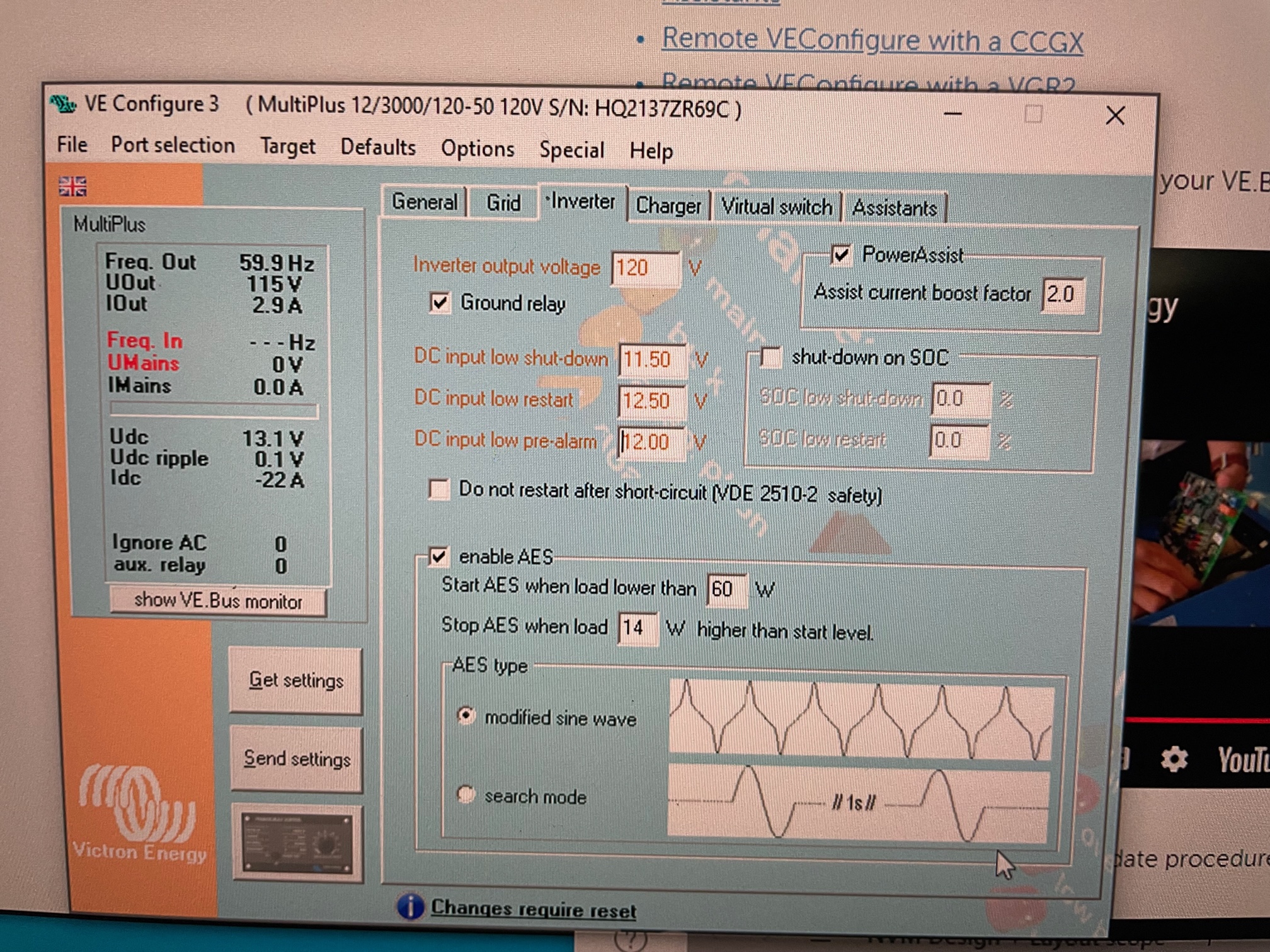
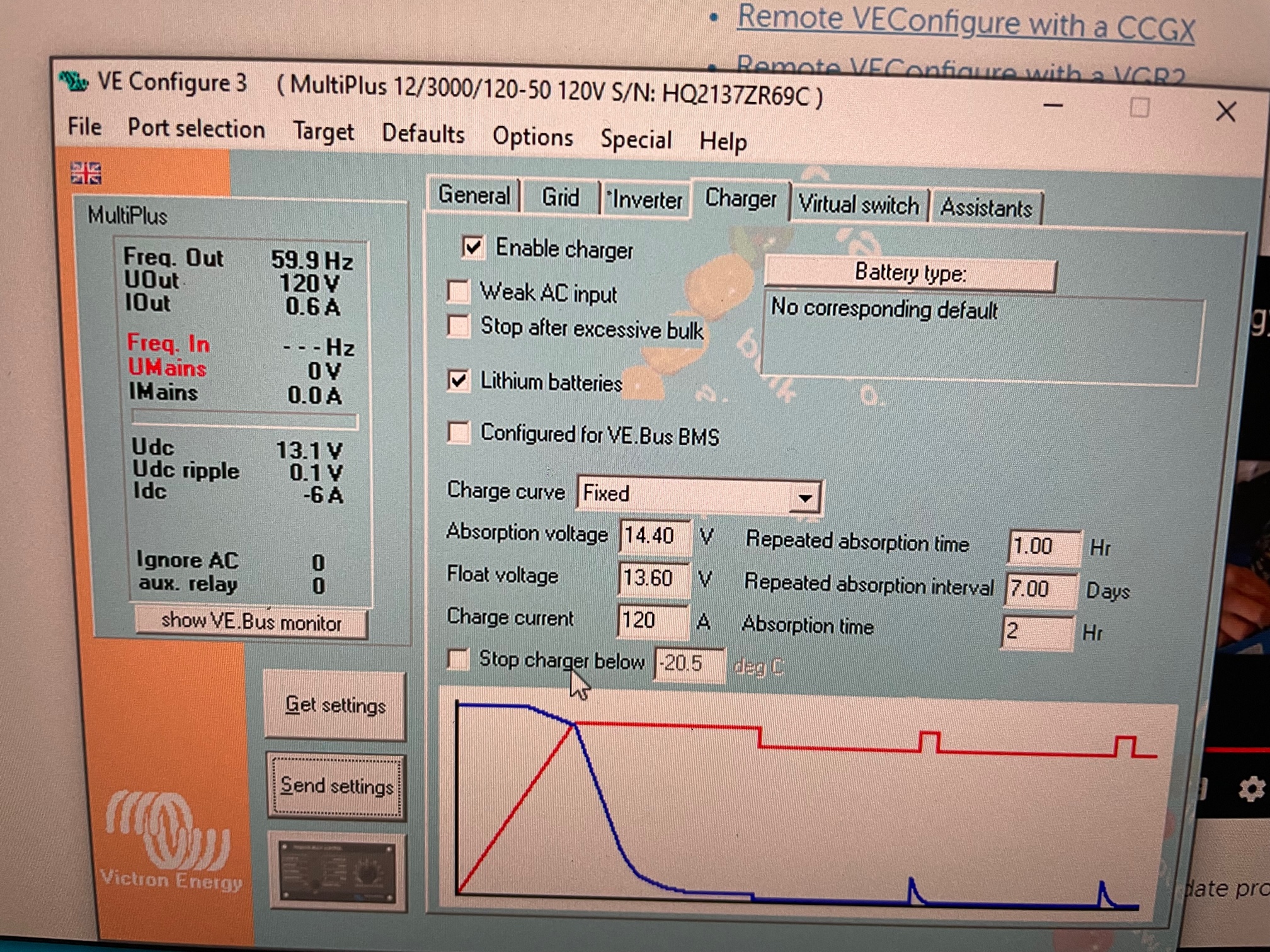
There are a few ways to program the system. For battery type, it requires a Victron program called VE Configure (runs only on a Windows machine) and a special cable called MK3 that connects a PC USB port to an RJ45 Ethernet port on the Inverter/Charger. In the “Charger” tab, I input LiFePO4 as battery type and supplied specific numbers for my BattleBorn batteries. In the “Inverter” tab, I configured the AC output voltage and shutdown/restart numbers and enabled AES mode where it reduces power by outputting a modified sin wave when very little load (less than 60W) is detected. There’s also a “General” tab where I set the max AC shore current allowed to 30A.
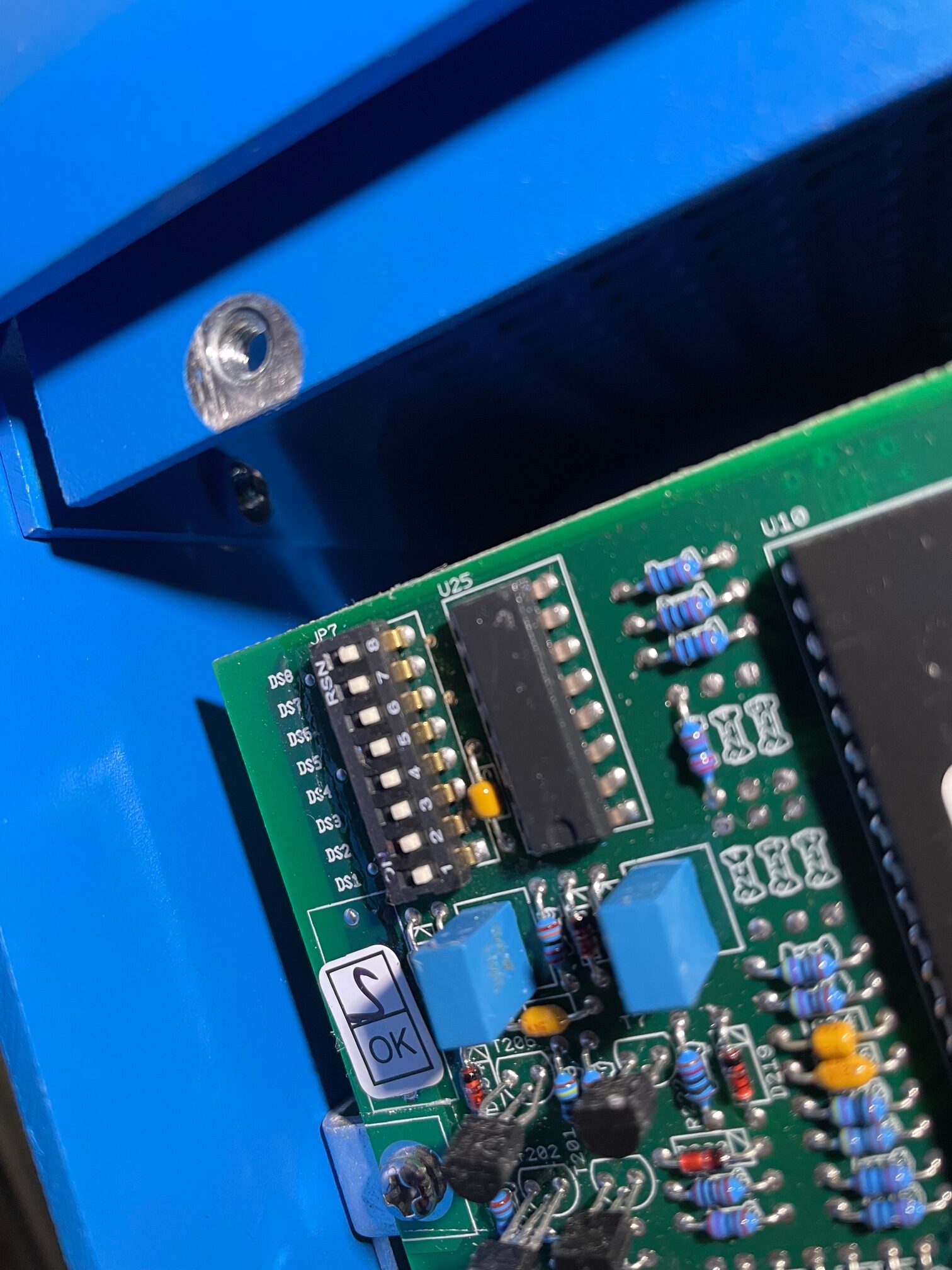
A second way to program certain things for the Inverter/Charger is with DIP switch settings. The DIP switch is located on the main circuit board in the upper left corner. The 8 switches are each used twice. Once set, an UP button programs the first set, which includes things like AC input current limit, AES, and charge level %. Then you set the switches again, and a DOWN button programs the second set without changing the first set. The second switch settings are for things like AC output voltage and frequency choices.
A third way to program the system is using the touch pad that’s connected to the Cerbo GX. This is by far the easiest method for programming since it doesn’t involve a PC or require access to the Inverter/Charger. Here is where I set the batter bank size to 400AHrs. The AC input current limit can also be set here as long as an over-ride setting was set in the VE Configure program.
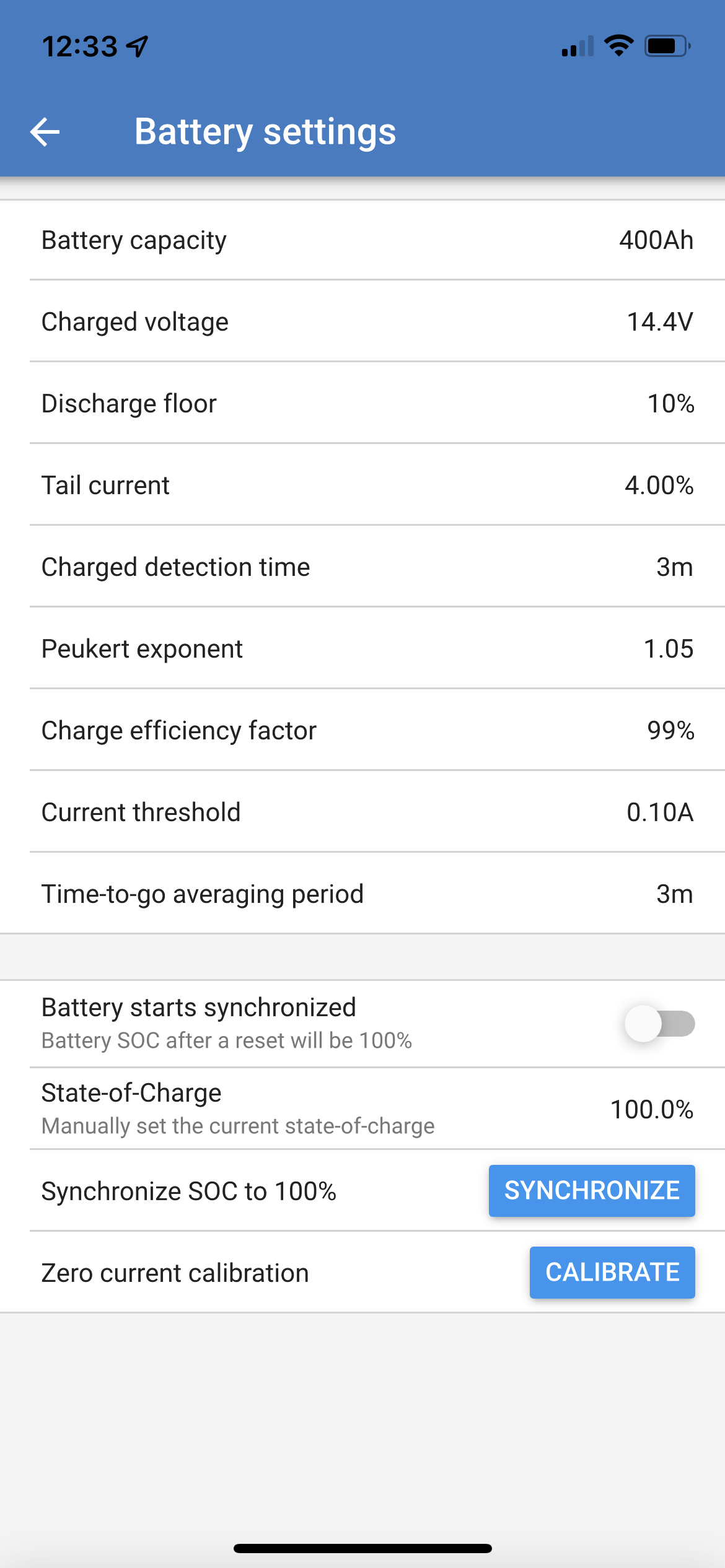
Here are the program settings for the SmartShunt (these are set in the VictronConnect app):
I had to do a lot of research to figure out the 3 programming methods and understand what each one could do. I’m hoping that Victron will simplify the programming into a single method that doesn’t require the special cable and PC program.
Next Steps
I will try out the system as-is for a few cruises and see how well it performs. Here are some enhancements I’m considering, in order of priority:
Add another 100 AHr battery for a total of 500 AHrs.
Move the alternator from charging the starter bank to the Lithium house bank.
Add a protection device to the alternator to keep diodes from blowing in case the internal BMS shuts off the LiFePO4 batteries while the engine is running.
Add a DC/DC charger from the house bank to the starter battery.
Change the alternator from 110A to 170A to take advantage of faster charge times while motoring (will require a serpentine belt conversion kit)
Update
I used the system as described above for a year–the alternator connected to the AGM start battery, DC-DC converter charging the Lithium house batteries at 30A, solar panel controller charging Lithium house batteries, and Inverter/Charger connected to Lithium house batteries for dock charging. This worked well, but the weakness was that when motoring, only 30A was available for charging the house batteries. One of the advantages of switching to Lithium is faster rate of charging away from the dock, but I was limiting that to 30A. Worst case I would need to run the engine longer to charge the house bank, especially on cloudy days when I wasn’t getting much solar charging.
Changes I made for the 2nd season are as follows:
Rewired alternator output from start battery to Lithium house batteries
Added an Alternator Protection Module (Balmar ATM) to protect the alternator in case the Lithium batteries shut down
Reversed the DC-DC converter from start battery–>house battery to house battery–>start battery
Replaced the Balmar alternator regulator with the newer Balmar MC-618. Programmed it for Lithium profile.
These changes improved the system by allowing the full alternator current to charge the lithiums. To keep the alternator from working too hard, I derated the output by 15% to produce about 95A of current for charging the lithium batteries. Now running the engine for just a short time charges the batteries much quicker. On a 2 week trip to the Gulf Islands where we anchored most of the time, the house bank never dropped below 80% state of charge. Of course it’s a lot of motoring in the PNW during summer. The real advantage will be going offshore where battery management is more crucial.
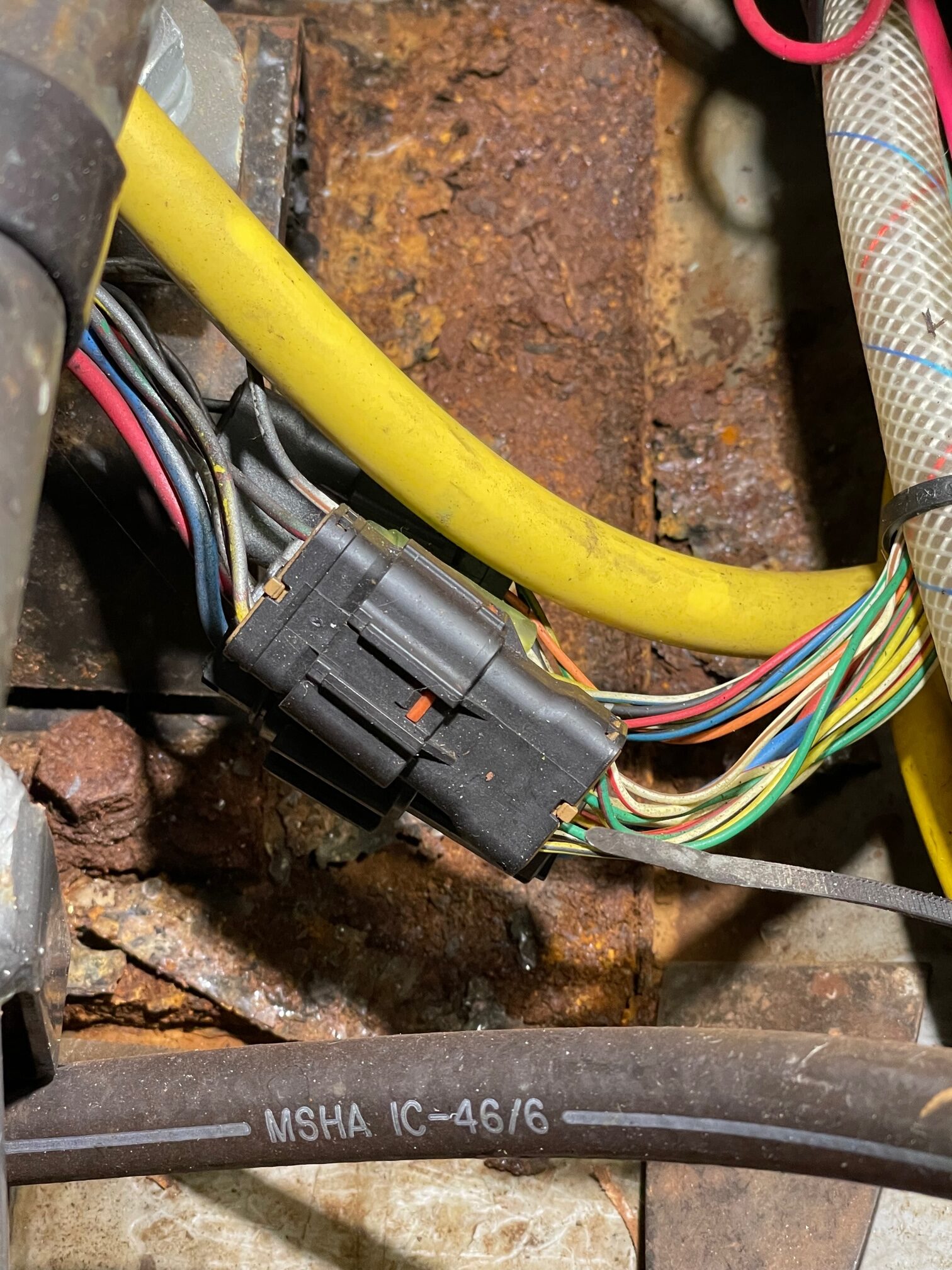
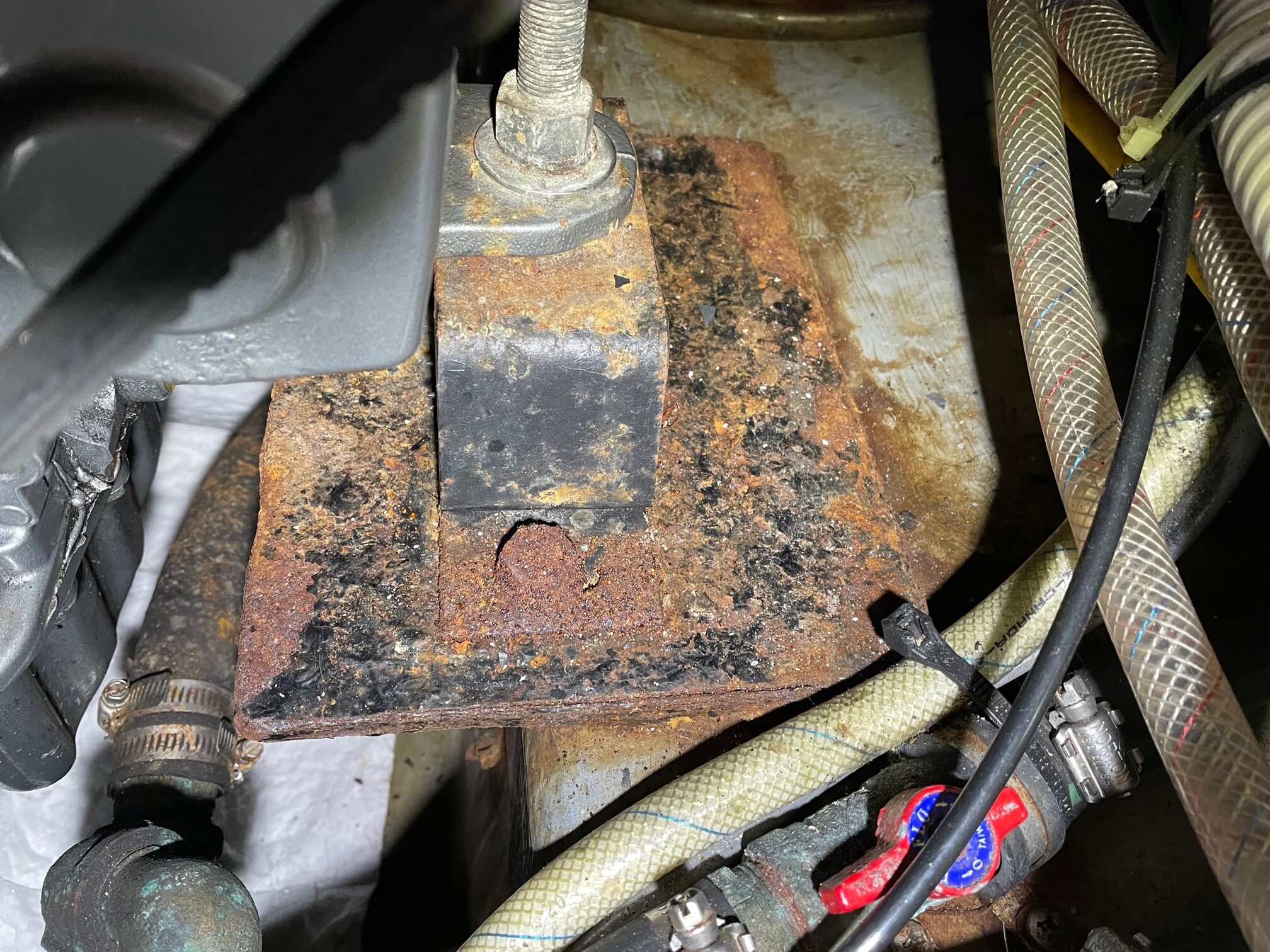
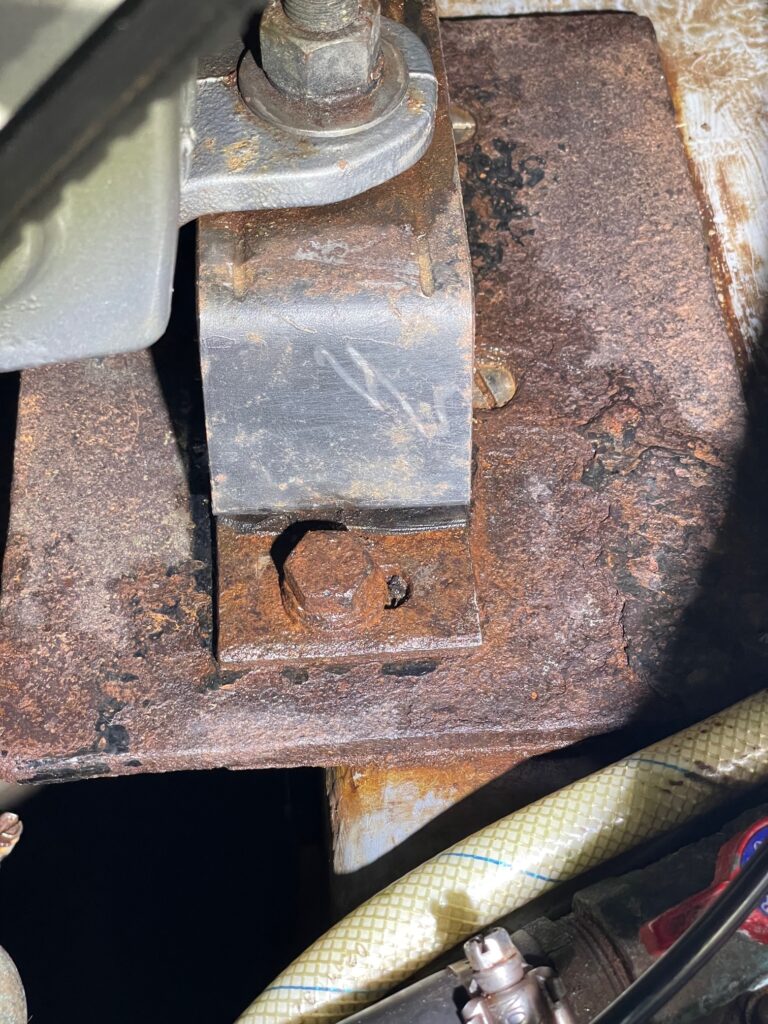
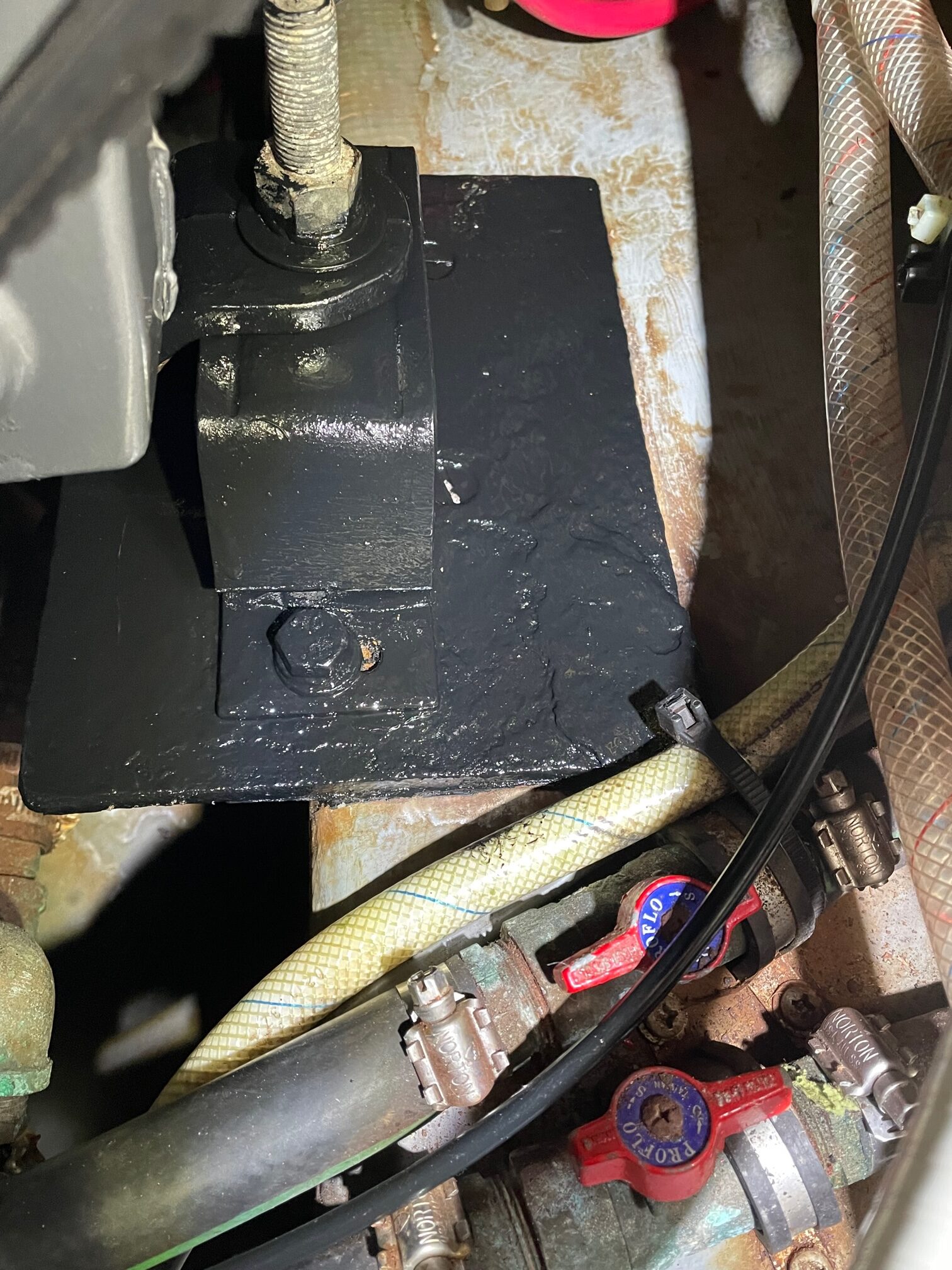
While changing the engine water pump impeller, I noticed all 4 engine mounting plates were corroded. These were newly installed during the repowering of the Yanmar 4JH3-TE in 2005, so I was hoping it was mostly surface rust and they could be cleaned up. The engine mounts are bolted to 3/8″x6″x10″ steel plates and these plates were not properly protected for the marine environment. I started with a wire brush and scraper to remove the loose stuff, then a coarse brillo-pad. At this point I realized it was just surface rust and replacement wouldn’t be necessary. Next I applied 2 coats of Ospho, which chemically seals metal and prevents rust from reoccurring by converting iron oxide (rust) to iron sulphate. Each application needed to sit 24 hours for the chemical process to complete. The final step was applying 2 coats of Rust-oleum oil base paint.
Engine Mount & Plate #1
Engine Mount & Plate #2
After Treating Plate #1 with Ospho
After Treating Plate #2 with Ospho
Plate #1 After Paint
Plate #2 After Paint
Galley Sink Plumbing
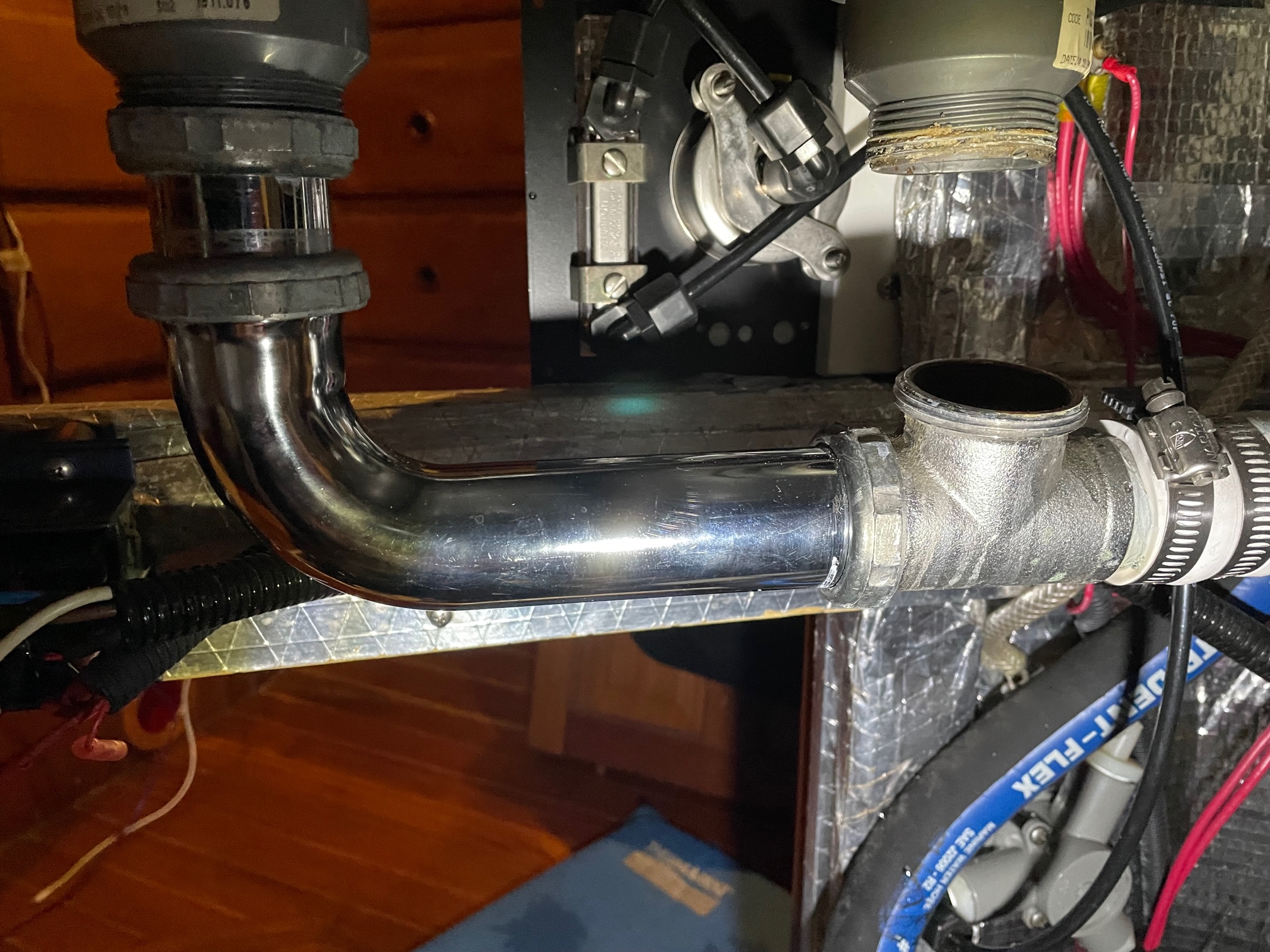
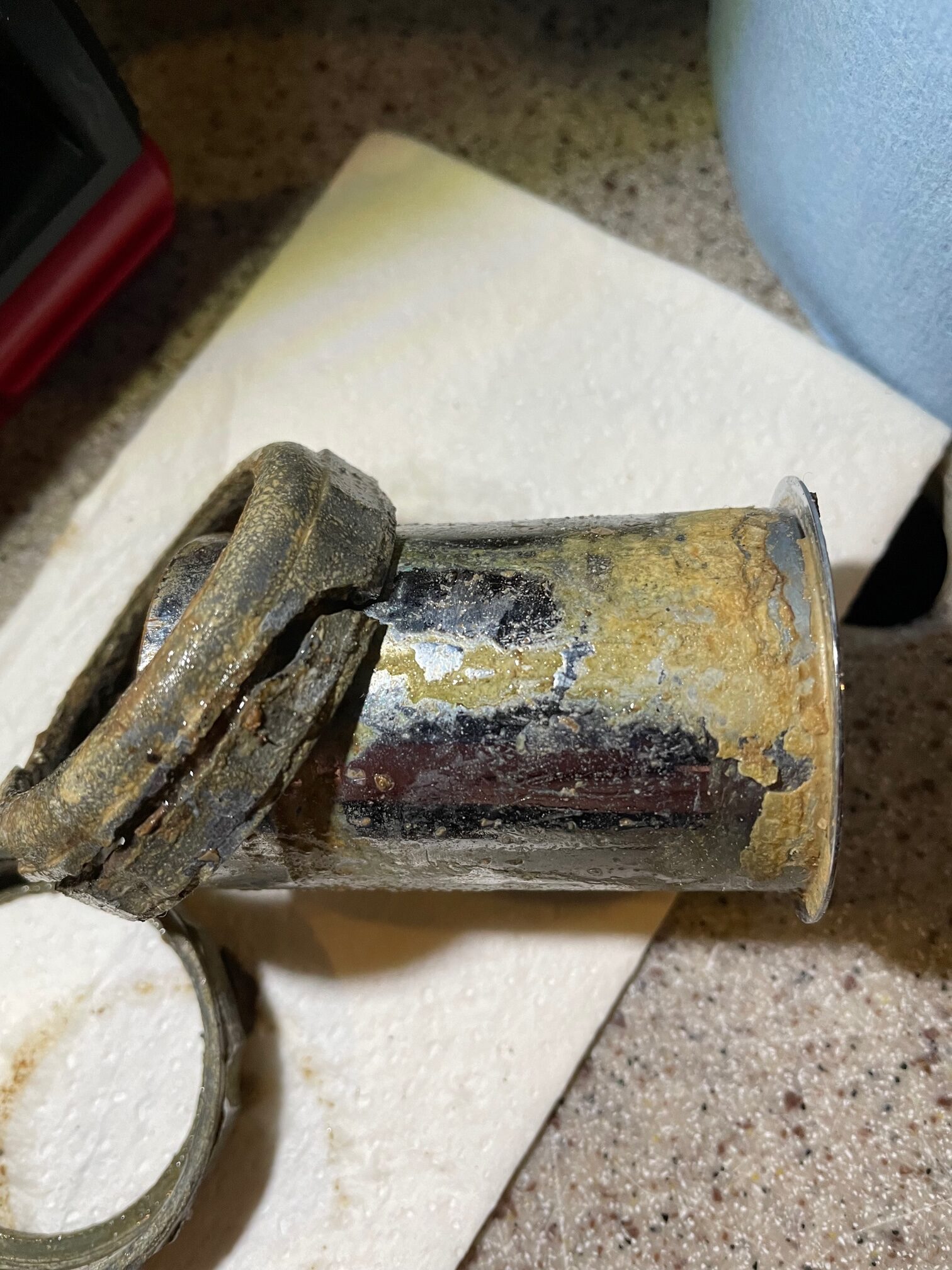
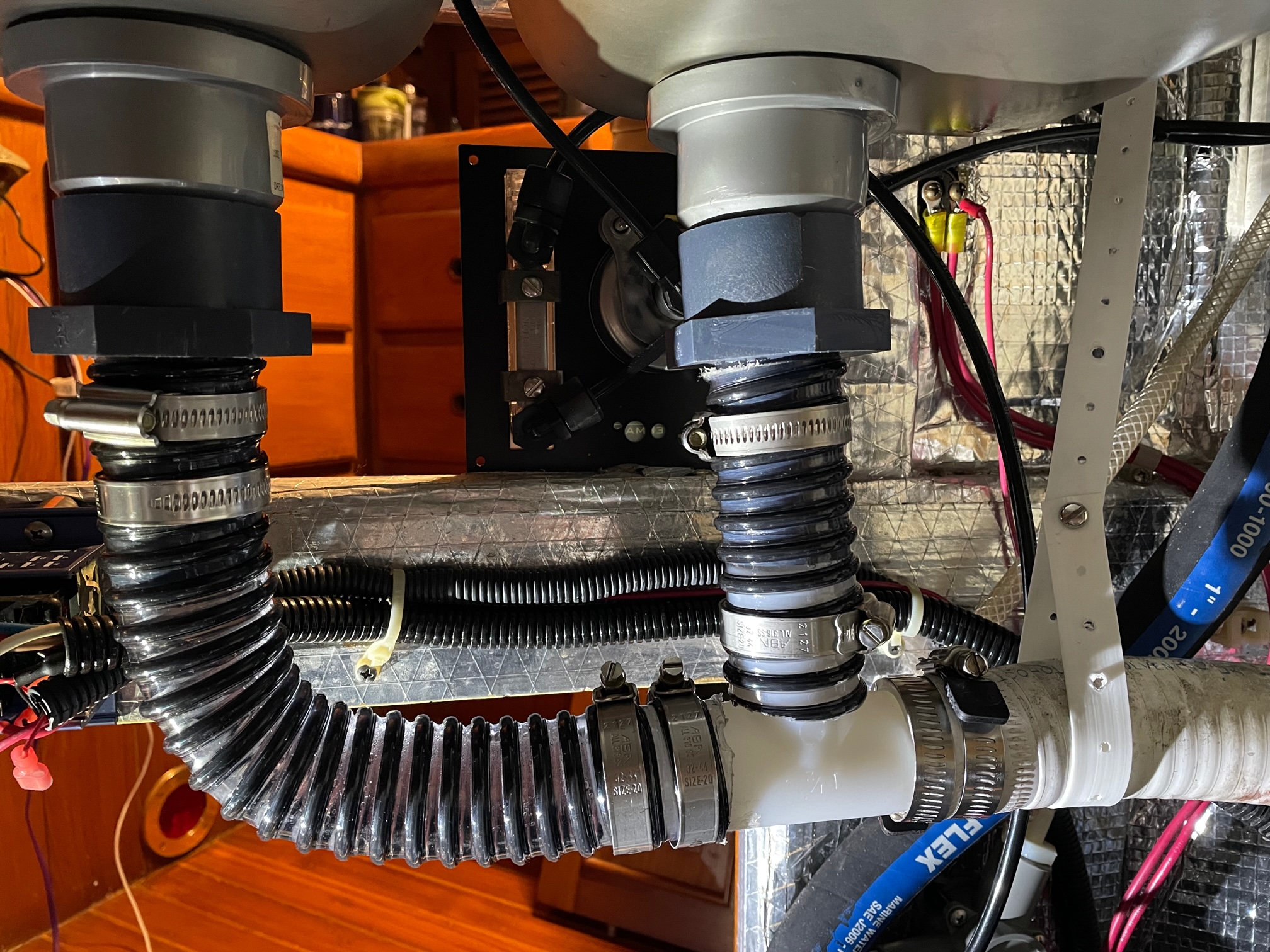
After noticing a slow leak in the galley sink drain plumbing, I removed the “house grade” plumbing that wasn’t meant for harsh marine environment, and replaced it with flexible bilge pipe, PVC fittings, and new SS clamps. The bottom of the double sink is in the engine bay. Since the horizontal part of the piping is below the water line, it remains full of water, and even though the sink is plumbed for fresh water only, sea water will come in the thru-hull and corrode any metal piping. The thin chrome elbow shown in the top picture was already replaced a few years ago after the old one rusted through. Getting rid of all metal piping should make this maintenance free for many years.
Old Drain Plumbing
Corroded Pipe and Spit Collar/Nut
New Double Galley Sink Drain Plumbing
Interior Port Polishing
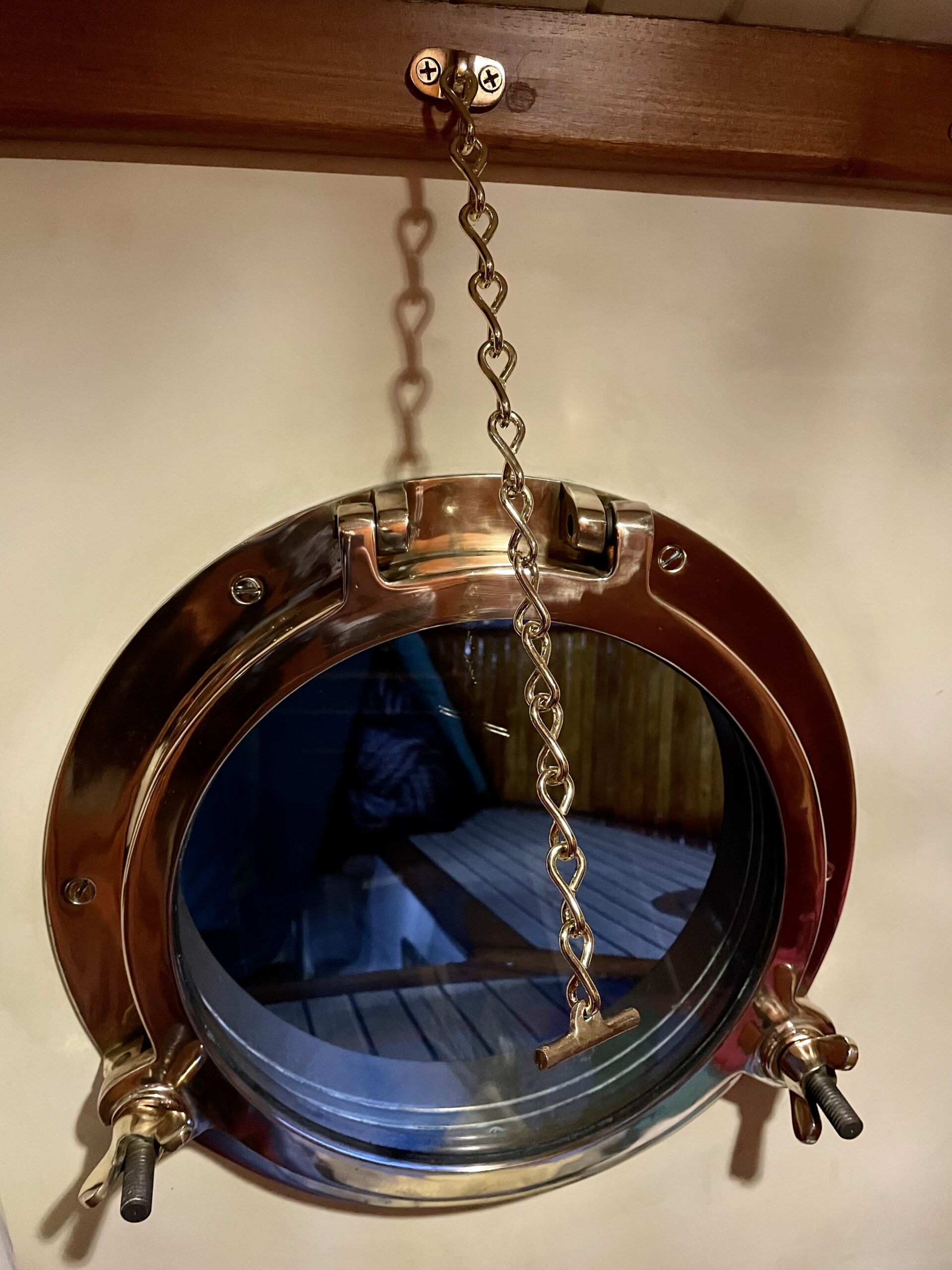
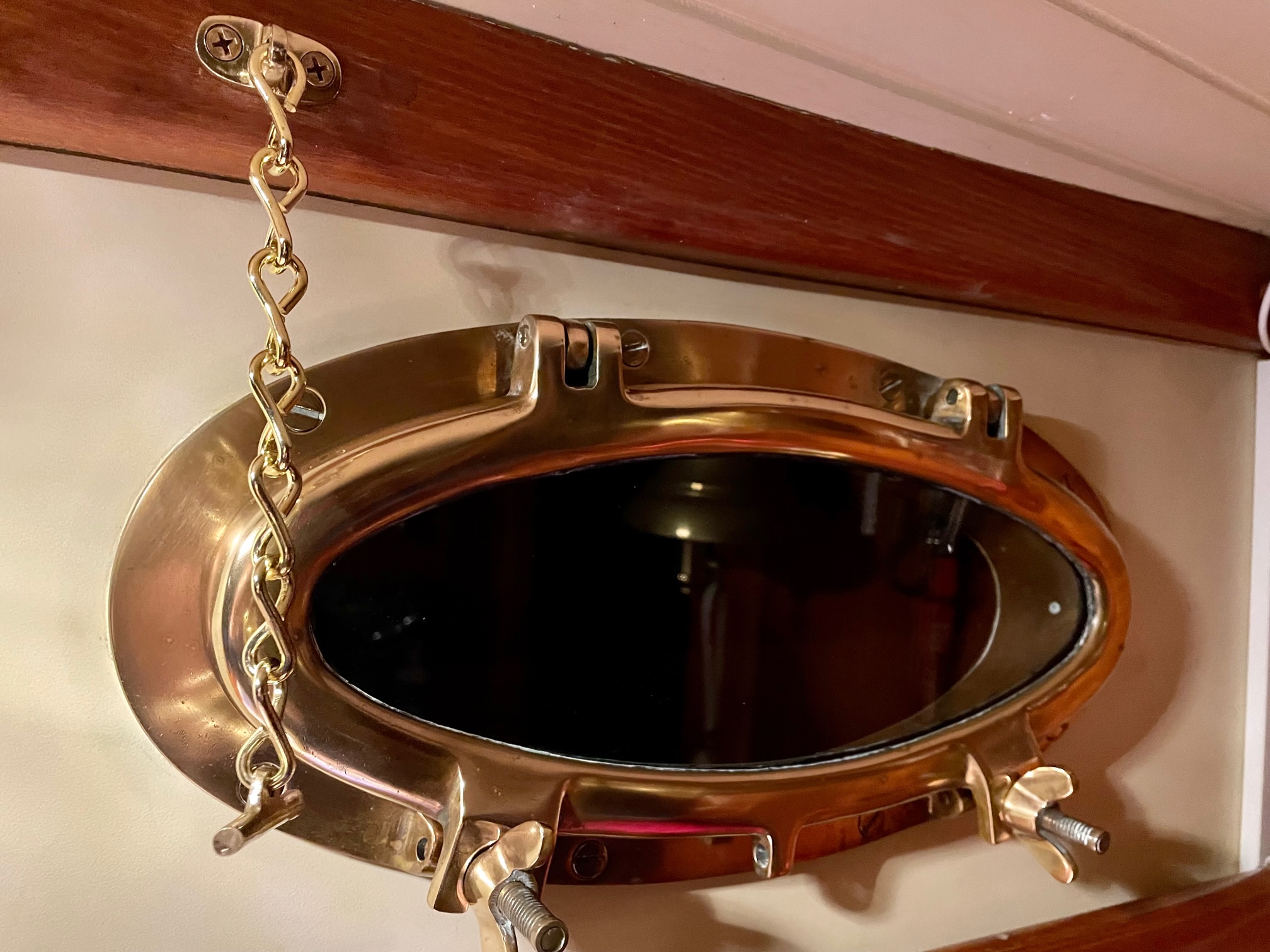
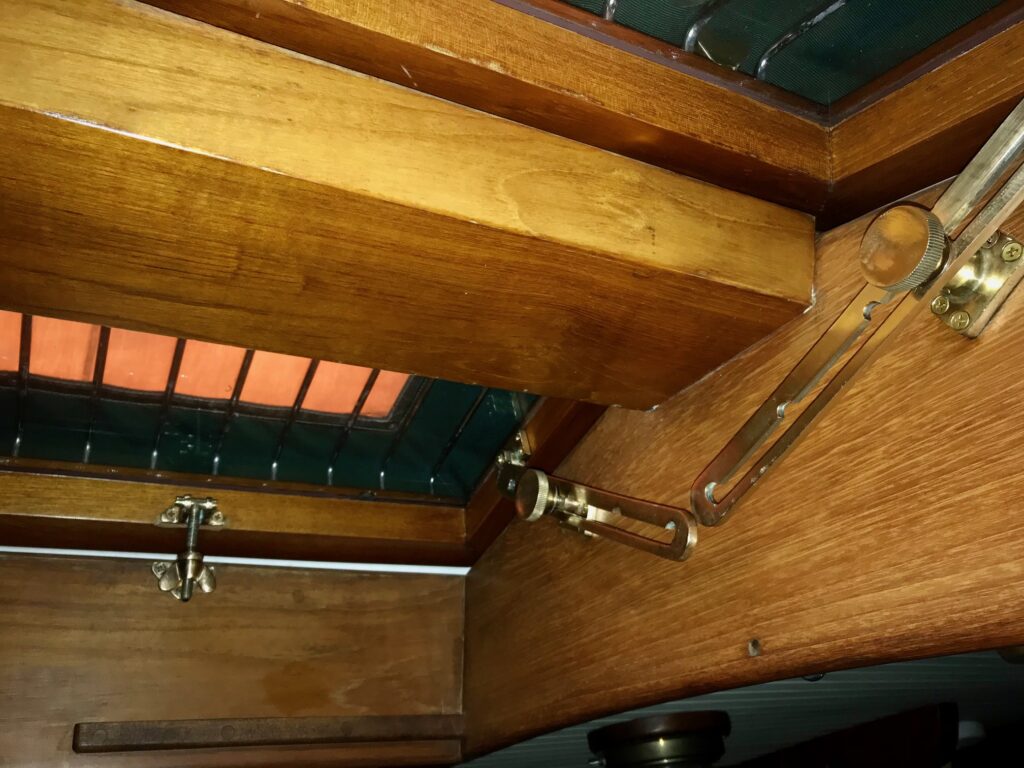
About every other year I go through the boat and polish up the interior side of the 16 bronze ports. A Dremel tool with a buffing attachment used with Flitz polishing compound speeds up the process. I also replaced the chain that holds the ports in the open position with new solid brass Single Jack chain.
Polished Port with New ChainPolished Port with New Chain
Diesel Tank Sending Units
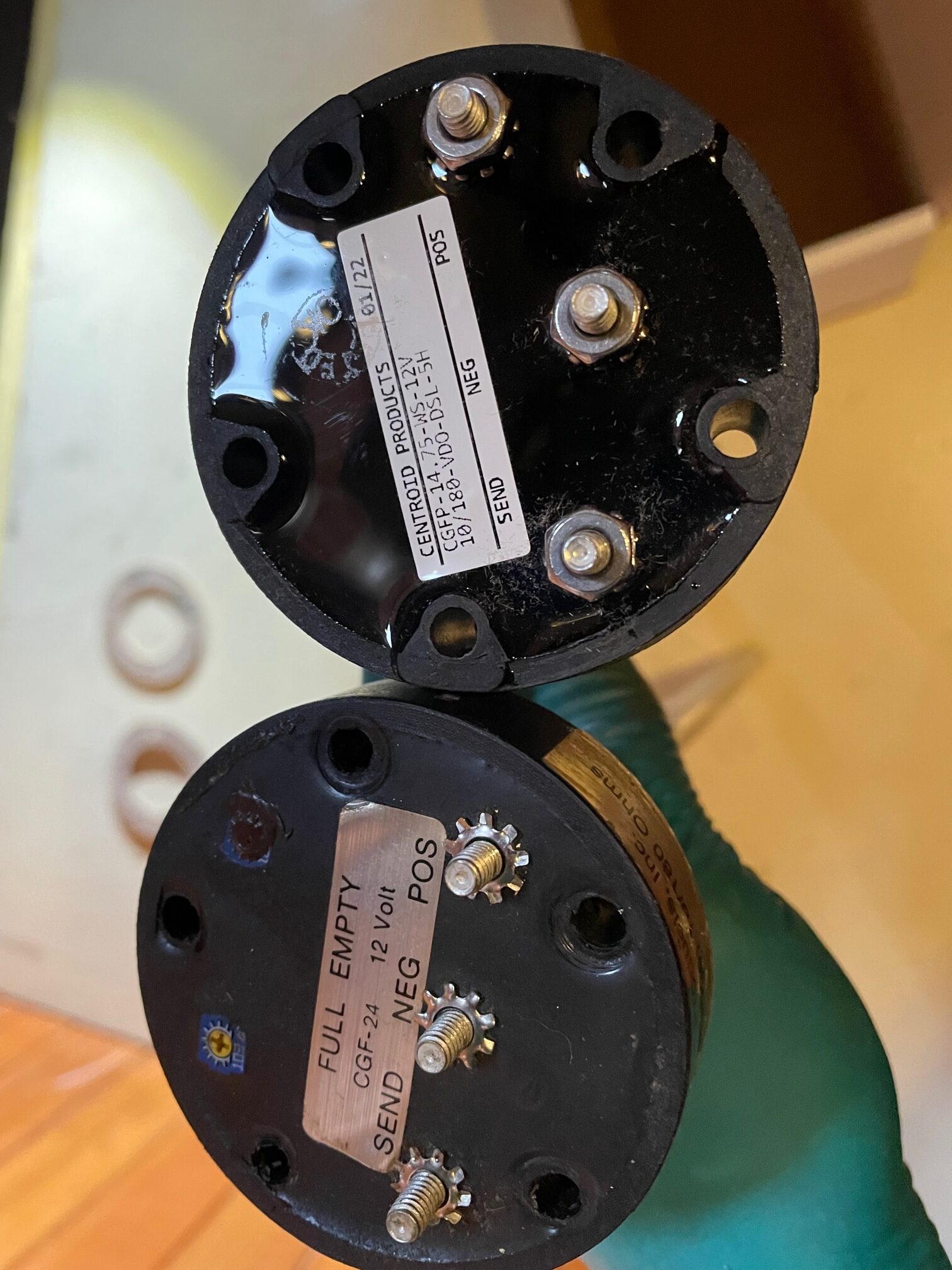
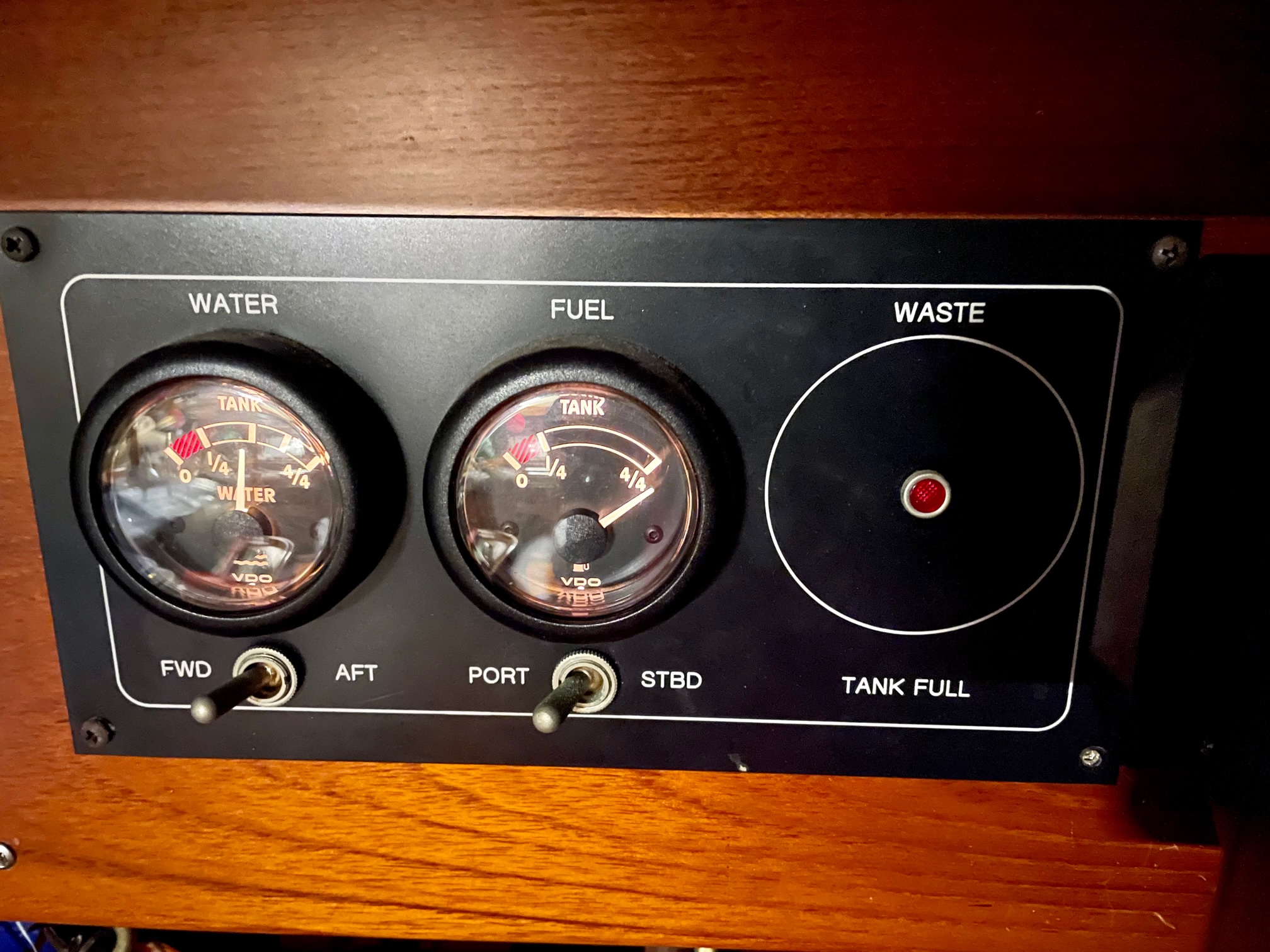
Both diesel tank sending units gradually became inaccurate and finally stopped working a few years ago. Based on measuring a capacitance change as the tank fuel level changes, they worked well for over 10 years. I keep track of engine hours and burn rate to calculate the approximate amount of diesel in the tanks, but having a tank gauge is always nice. I removed them from the tanks and was able to order new ones from the same manufacturer, Centroid Products. They even had the paper record dating back to 2004 from the original purchase filed under my boat name! The tube length is 14.5″ so it’s about a half inch from the bottom of the deepest part of the tank. Installation was easy and now I have accurate tank level readings that are displayed on a VDO gauge that has a selector switch for port and starboard tanks.
Old (bottom) and New (top) SendersWater and Fuel Gauges
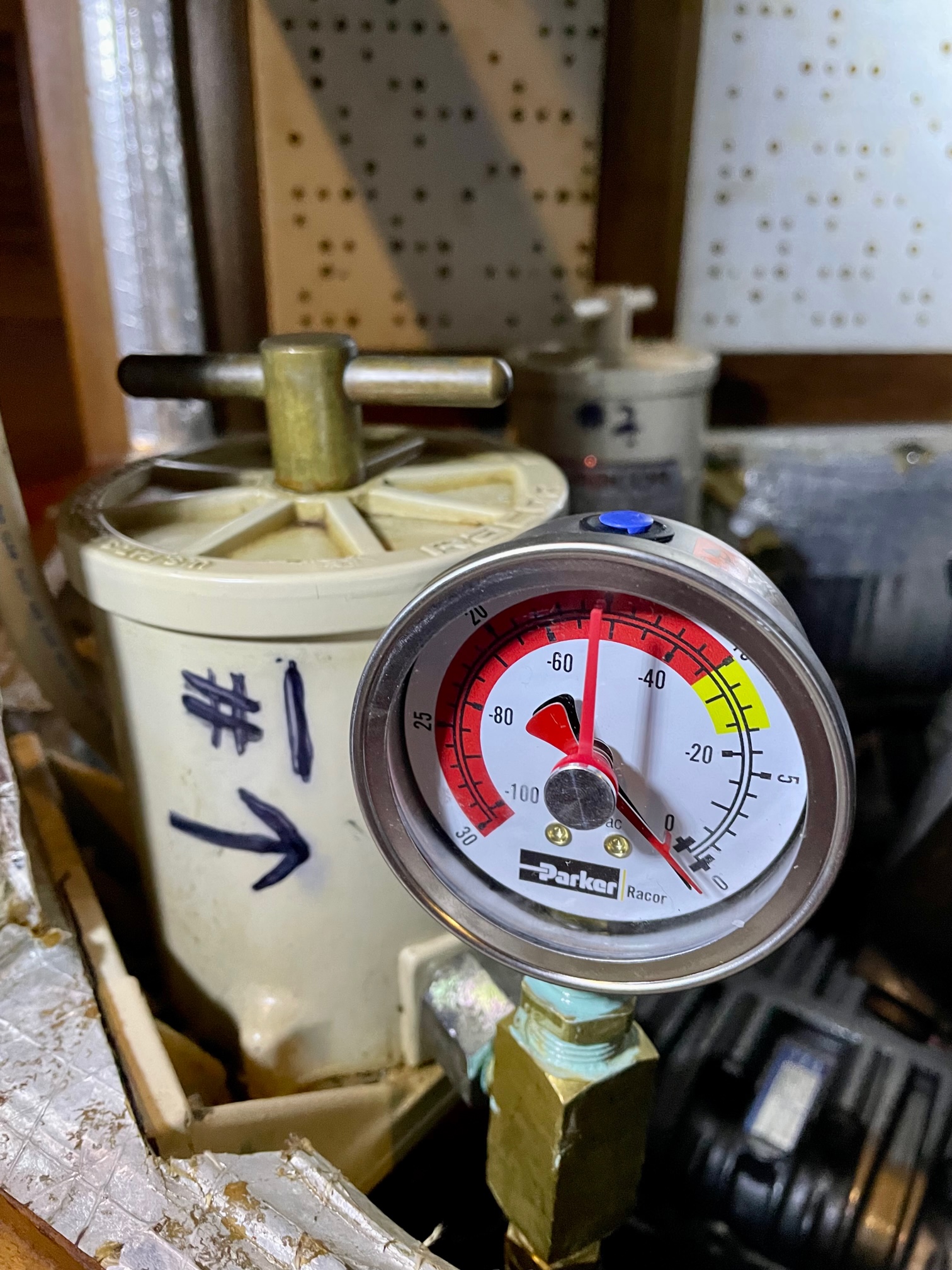
Diesel Vacuum Gauge
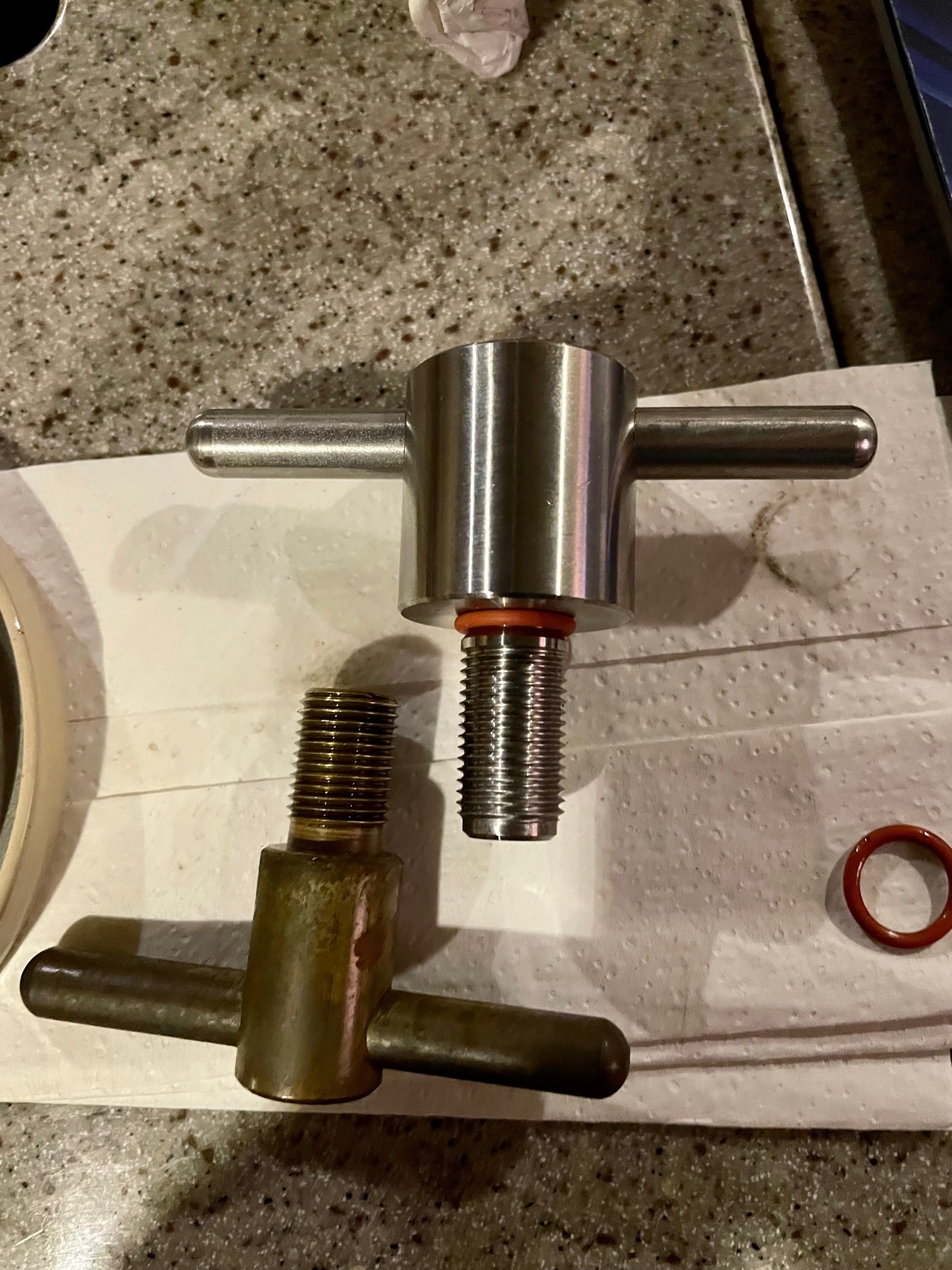
Diesel flows from the tanks to the engine, and in between is a Racor fuel filter. Since the fuel pump is on the engine, the diesel flows in a vacuum through the filter. Knowing the vacuum level helps to determine when the filter element needs changed. As the filter becomes clogged, vacuum increases. Parker, the maker of Racor diesel filters, makes a convenient “T” handle vacuum gauge that replaces the regular “T” handle on top of the Racor filter housing. Unfortunately, the threads on the “T” handle are too long for pre-2004 Racor housings so I wasn’t able to mount the gauge on the top. Instead, I added a bronze T-fitting at the output port of the Racor and threaded on the vacuum gauge. The gauge has a red stationary needle that can be set anywhere, a red moveable needle that indicates the maximum vacuum that was reached (and can be reset with the blue button at the top of the gauge), and a black needle that indicates the real-time vacuum. In my dual Racor system, the gauge will measure vacuum in whichever Racor is selected.
With the full cover on that protects Apropos from the winter wet season, I make progress on my long list of projects.
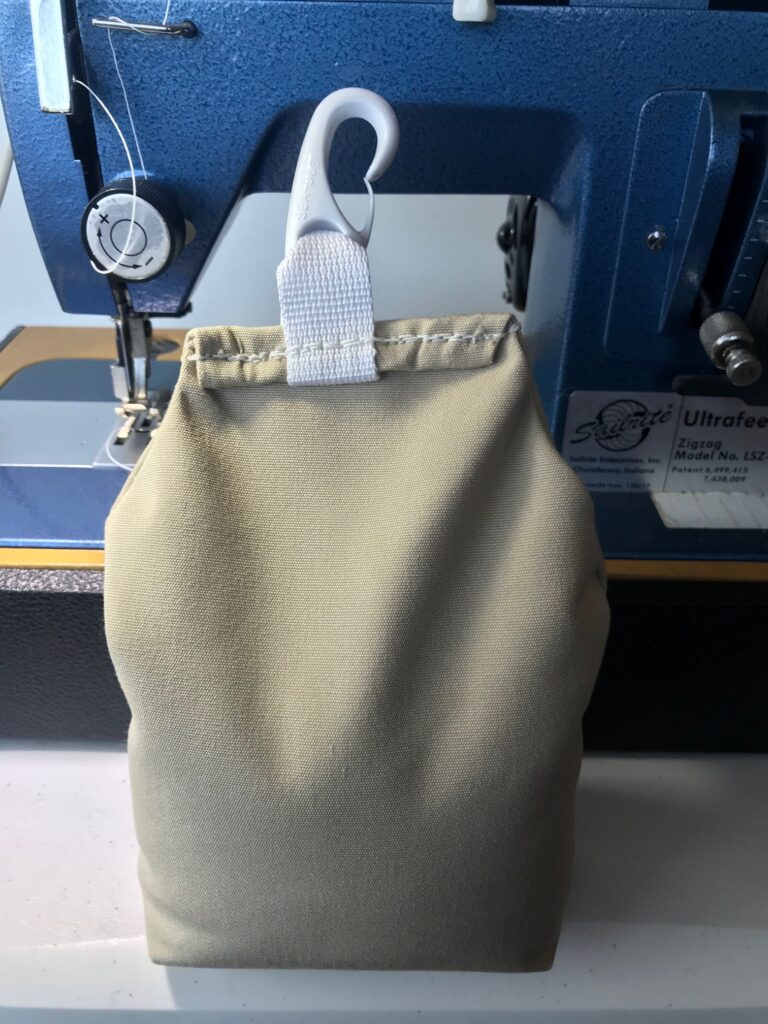
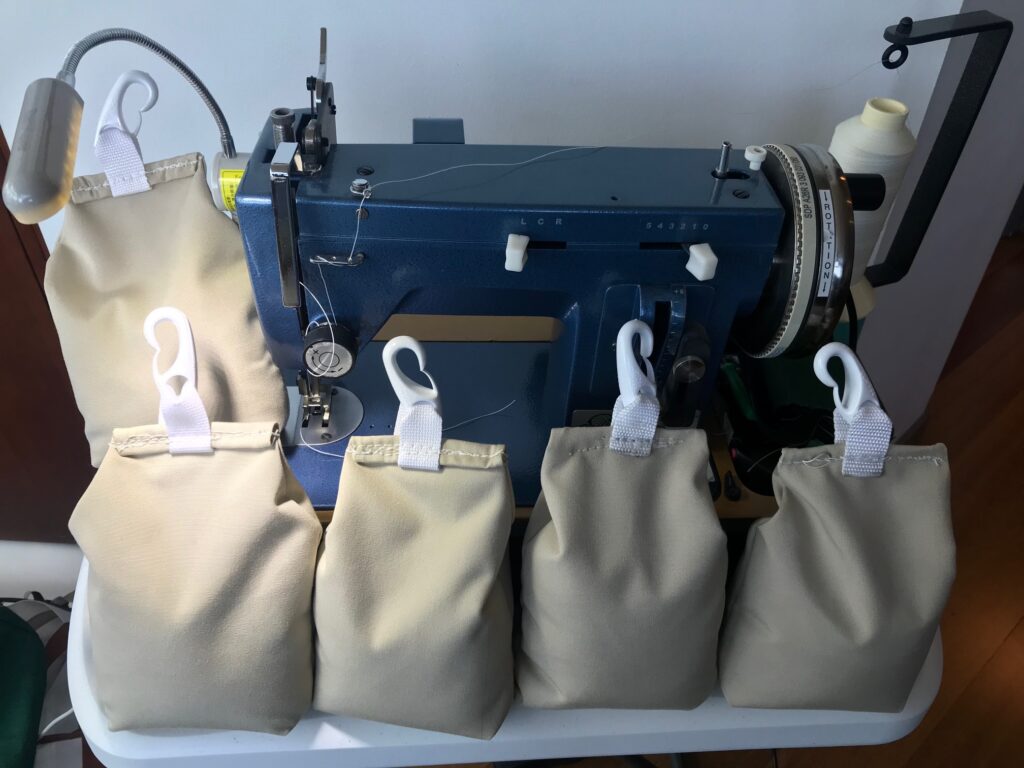
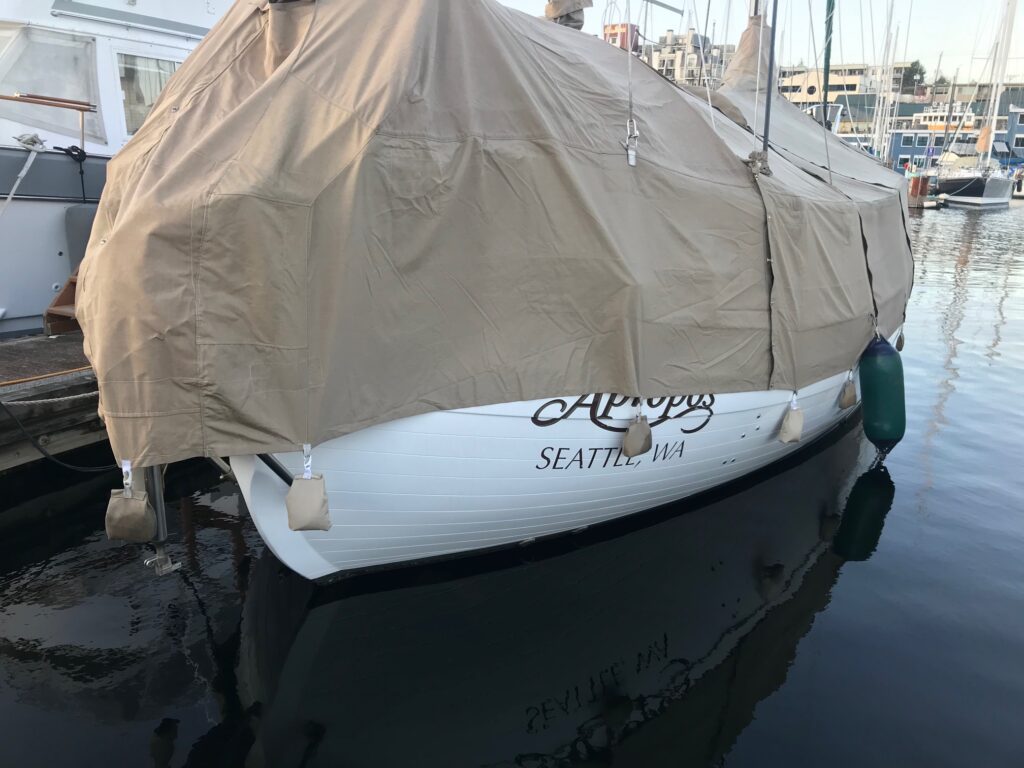
Boat cover sand bags
There are 19 canvas sandbags used to add weight along the bottom of the boat cover and over the 15 years since the cover was made, a few were accidentally dropped overboard. So during a rainy Seattle weekend, we set about making 5 new ones. We already had all the canvas and webbing, so this project just involved designing the pattern, sewing, and buying a 50 lb bag of sand and plastic clips. Now there are 19 sand bags again plus 1 spare.
completed sand-filled bag
finished making 5 bags
Weighted (sand-filled) Bags Used on Cover
Butterfly Hatch Bronze Polishing
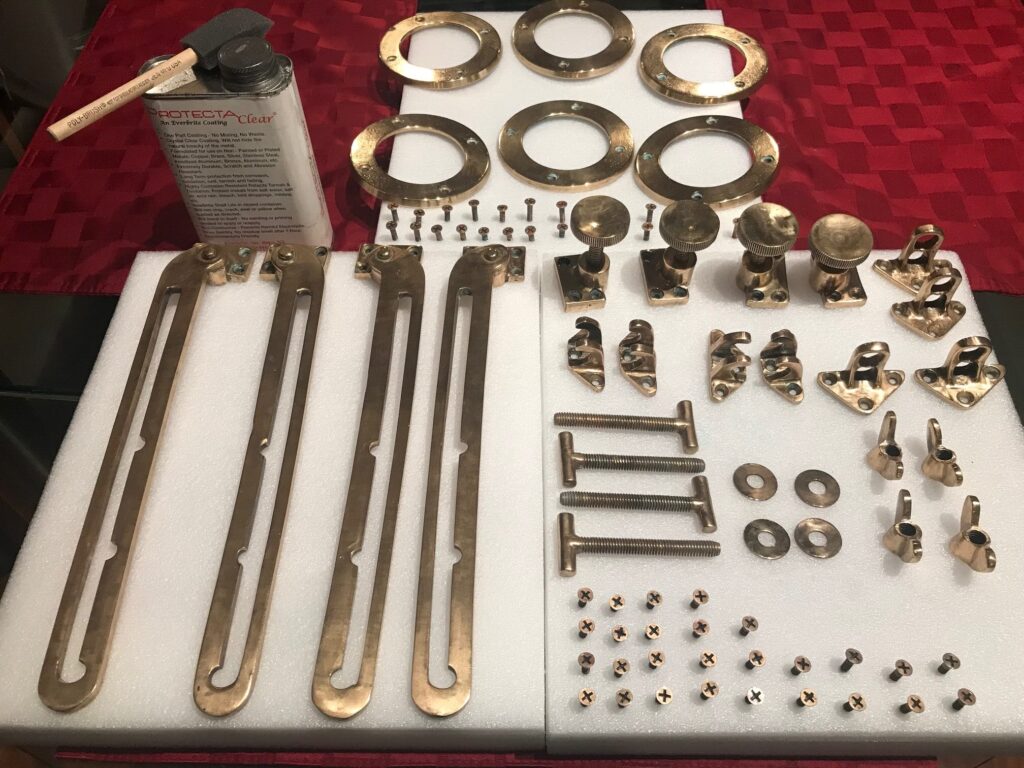
I removed, polished, and applied 5 coats of Everbrite ProtectaClear to the cast bronze butterfly hatch fittings and the 6 bronze rings for the courtesy lights. This adds to my list of interior bronze and brass parts that should never need polishing again, as the ProtectaClear provides a barrier to oxidation. Parts that I finished a year ago are still looking bright and shiny. The key is to do a good job in the polishing step and I use a Dremel tool and a good polishing compound for that.
Teak Block Cleaning & Oiling
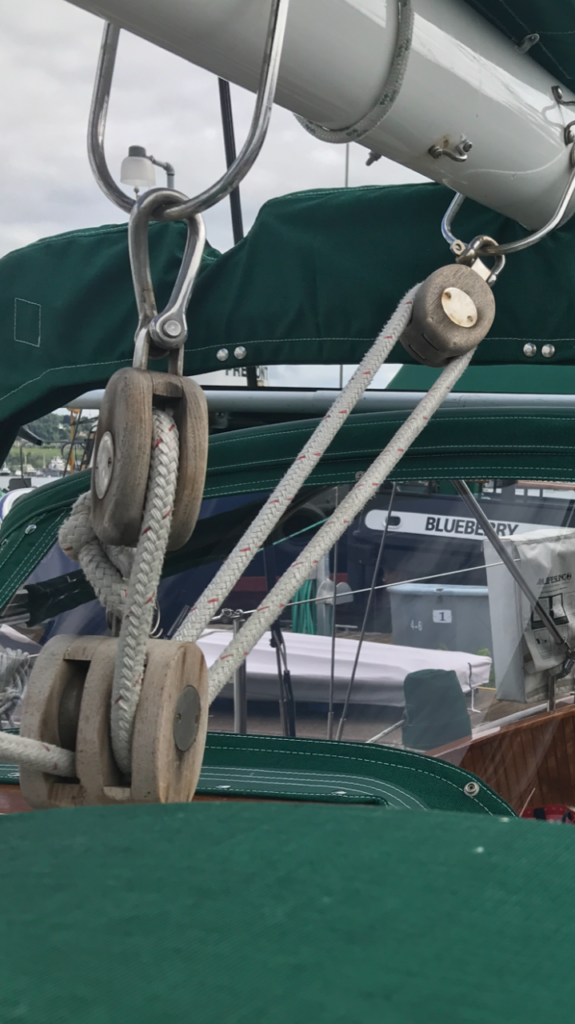
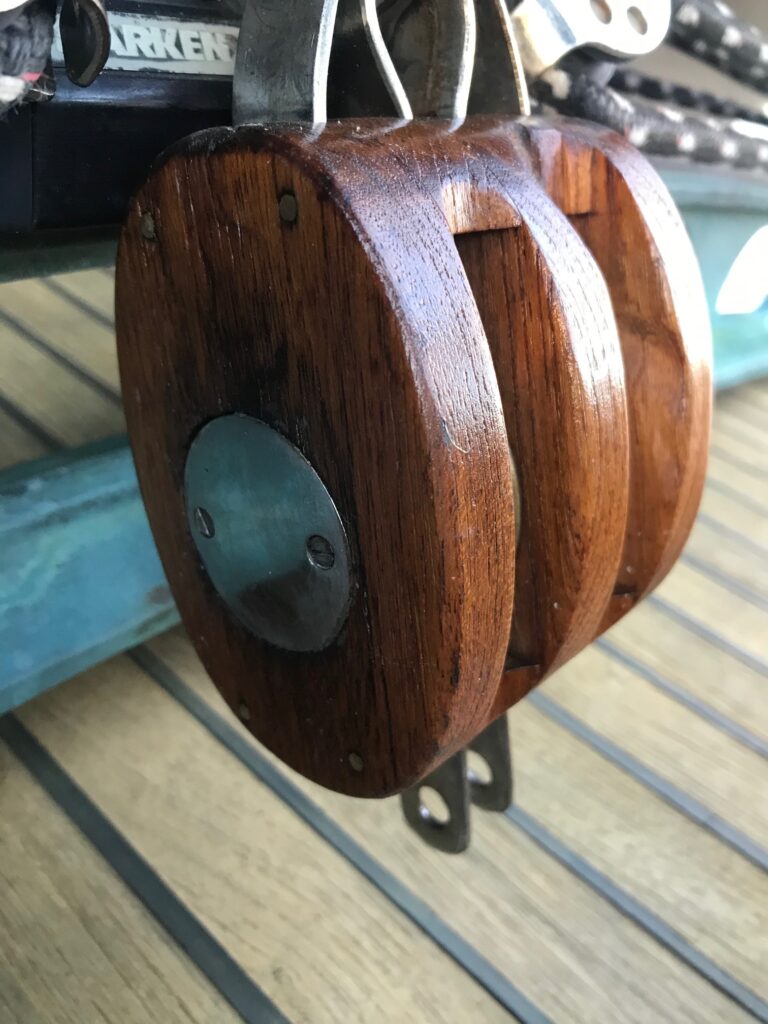
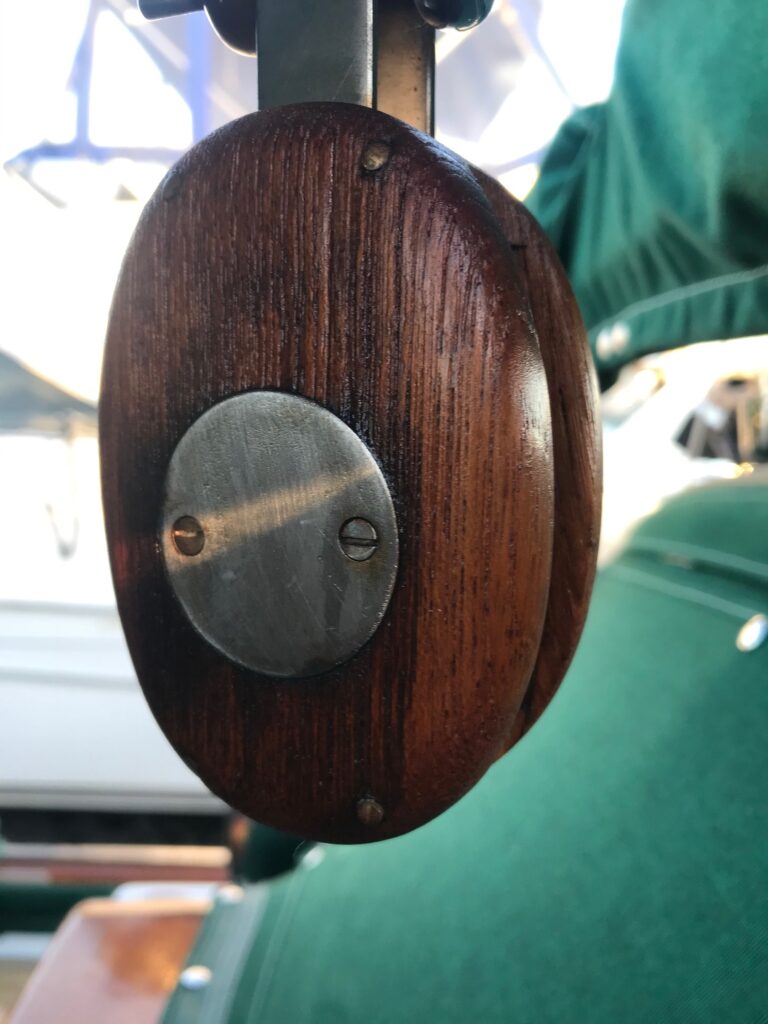
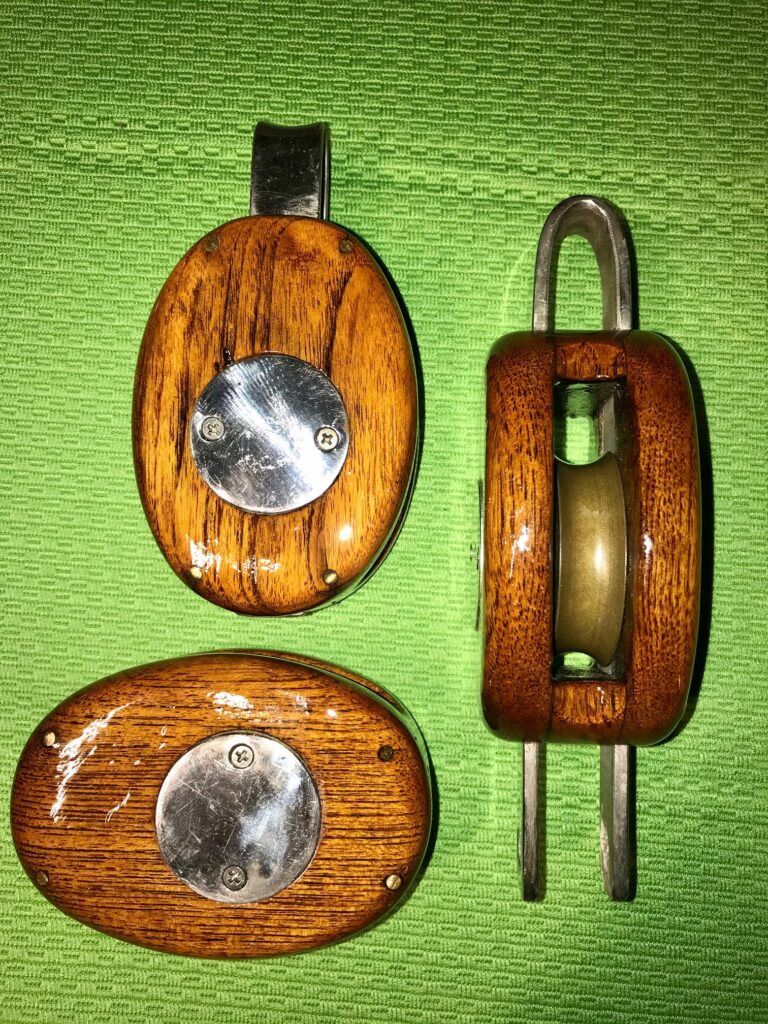
There are 8 teak blocks on Apropos–5 are used for the Main sheet and 3 for the Mizzen sheet. The 5 main sheet blocks have always remained unfinished and left to go naturally grey. I disassembled the blocks by removing the 4 small screws holding on the round stainless steel covers, then unscrewed the round covers and removed the pin and bronze sheave and ss becket. With only the teak parts remaining, I cleaned and brightened them with the same teak system I use for the decks. After lightly sanding them, I applied 5 coats of teak oil.
Before
After (double block)
After (single block)
Teak Block Finishing with Awlwood Clear
The 3 blocks used for the Mizzen sheet have always been varnished. It had been 6 years since they were last varnished, so I removed them from the boat, disassembled them, used stripping gel and a heat gun to remove the old varnish, lightly sanded them and applied Awlwood primer then 6 coats of Awlwood MA (modified acrylic) Clear. This is the same product that I have used on the exterior of all of Apropos’ brightwork over the past 4 years. It’s more durable than varnish and doesn’t break down from UV as fast as varnish.
Finished Blocks for Mizzen Sheet
Forward Hatch Acrylic Replacement
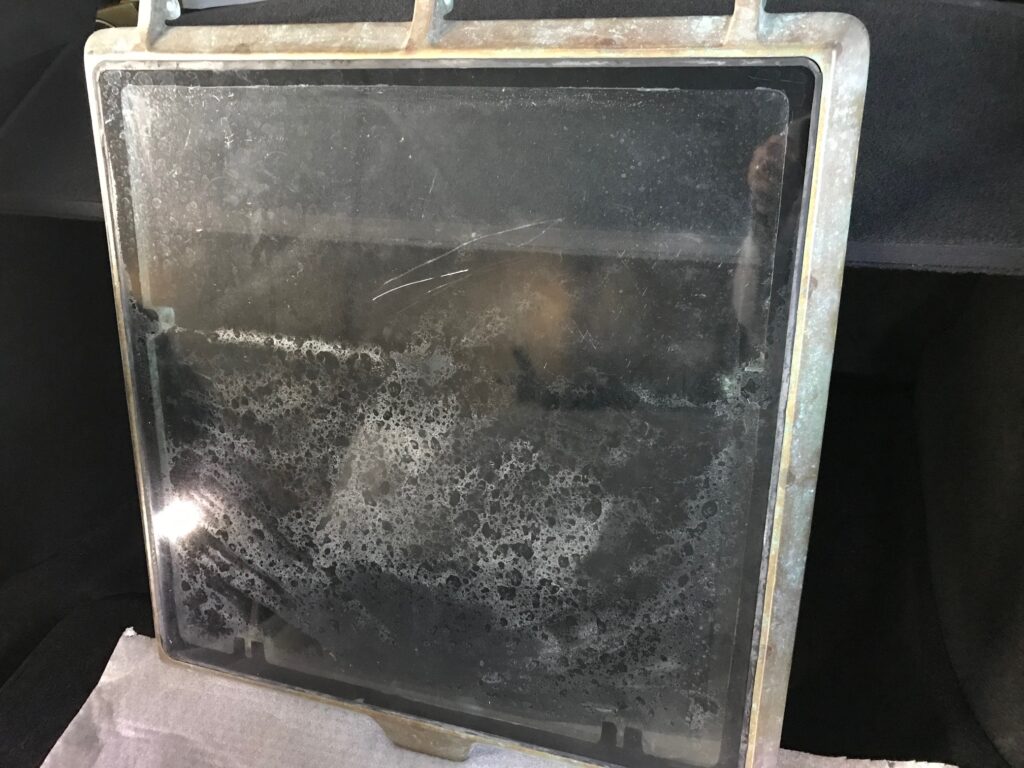
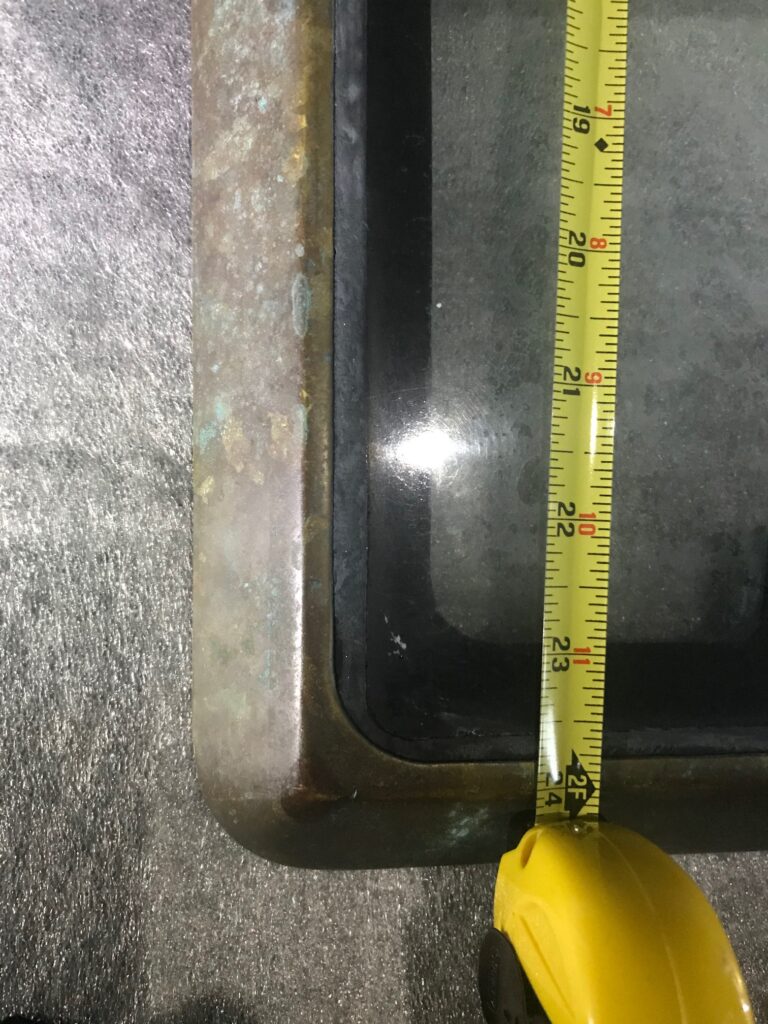
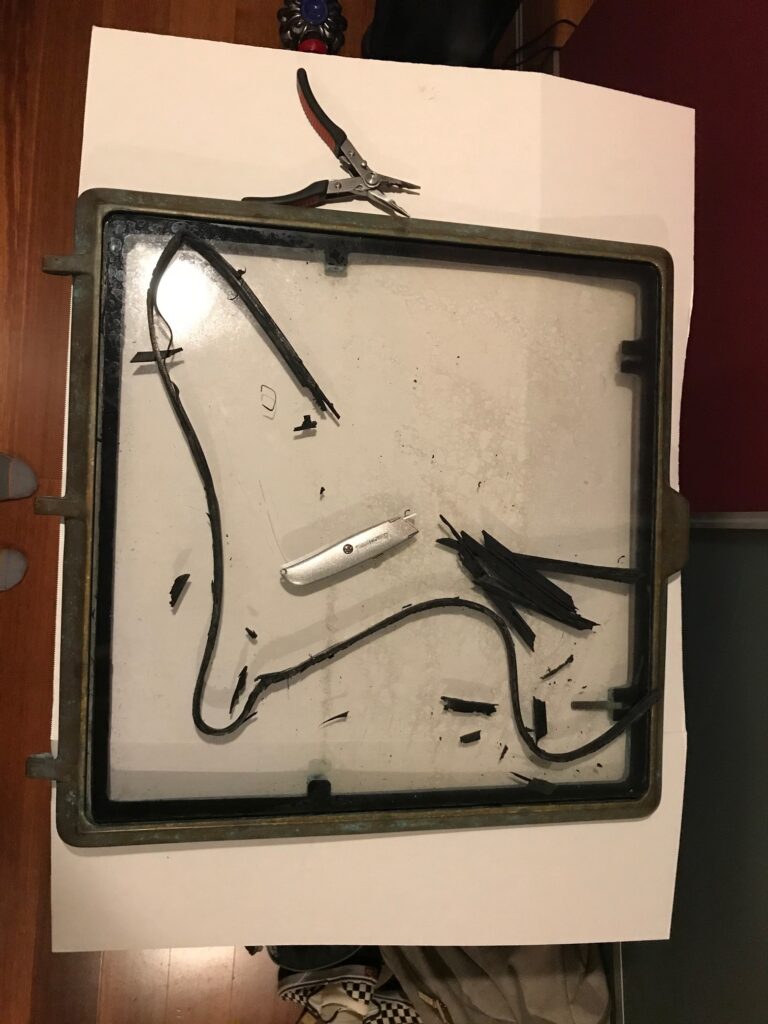
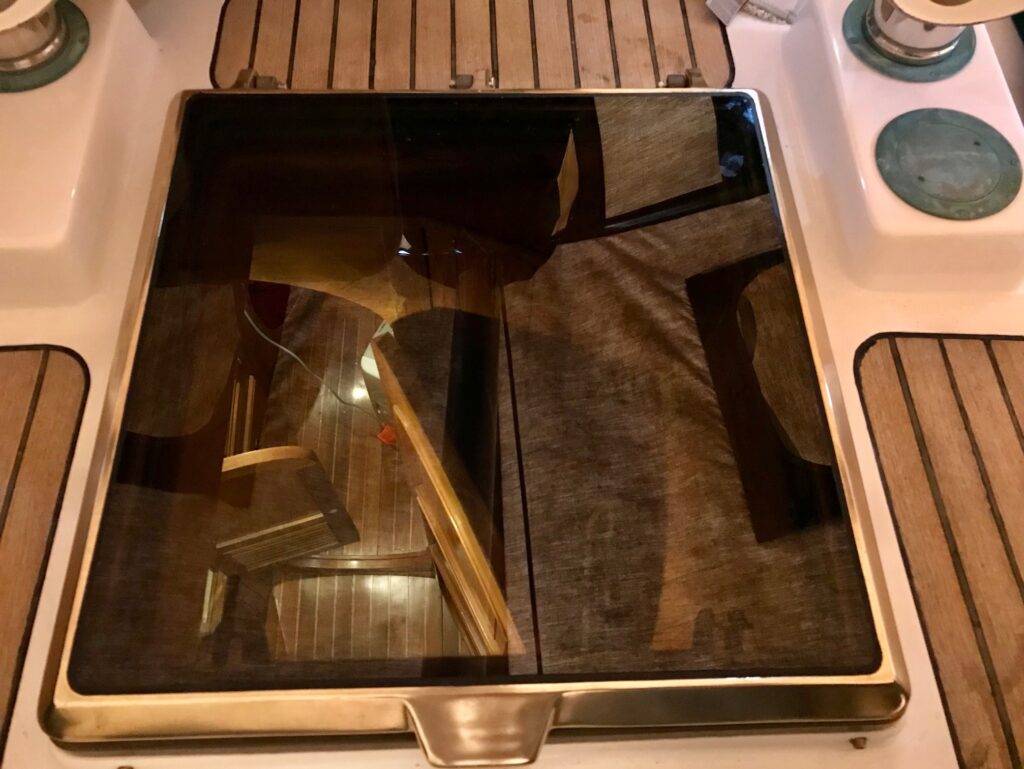
The forward hatch acrylic was probably replaced during the refit just before I bought Apropos. Over the years, the acrylic has appeared to have crazed not on the surface, but inside. After buffing failed to make any difference, I decided to replace it. I first removed the hatch by prying off the 3 hinge pins peened-on caps. Next I removed the TDS caulking and pried the acrylic out of the bronze frame. My options for replacement were laminate glass (too heavy and breakable), poly carbonite, and acrylic. I went to Tap Plastics to compare poly carb vs acrylic, and decided to go with 1/2″ acrylic after the salesperson gave me a demo of how to remove scratches in acrylic. Also, it was available in 3 shades of tint and they had it in stock and could cut it while I waited.
Before installing the new acrylic, I cleaned up and polished the heavy duty bronze frame. I used 3M Silicone to fasten the acrylic to the 1/2″ lip along the bottom of the frame. I added about 25 lbs of weight and allowed it to dry 24 hours, then used Teak Decking Systems (TDS) black caulking along the outer edges. After curing for 48 hours, I removed the masking tape, then masked over the caulking and acrylic so I could apply 5 coats of Protecta-Clear to the bronze frame.
With our summer cruise behind us, there were a few projects I wanted to get done while the weather was still nice.
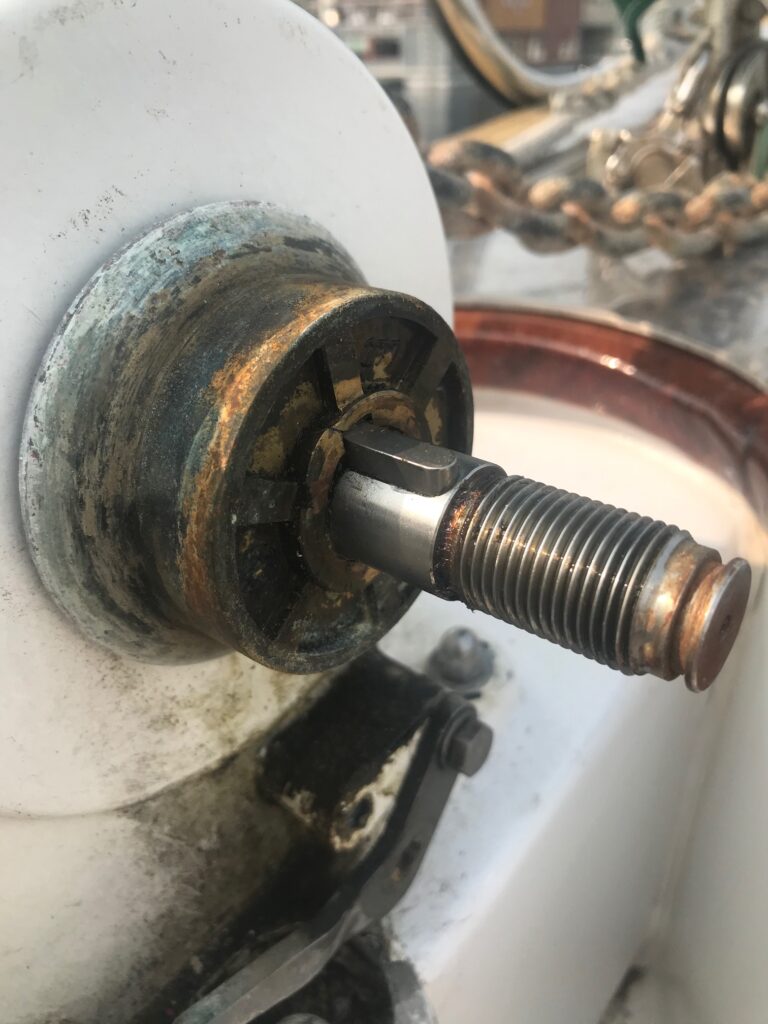
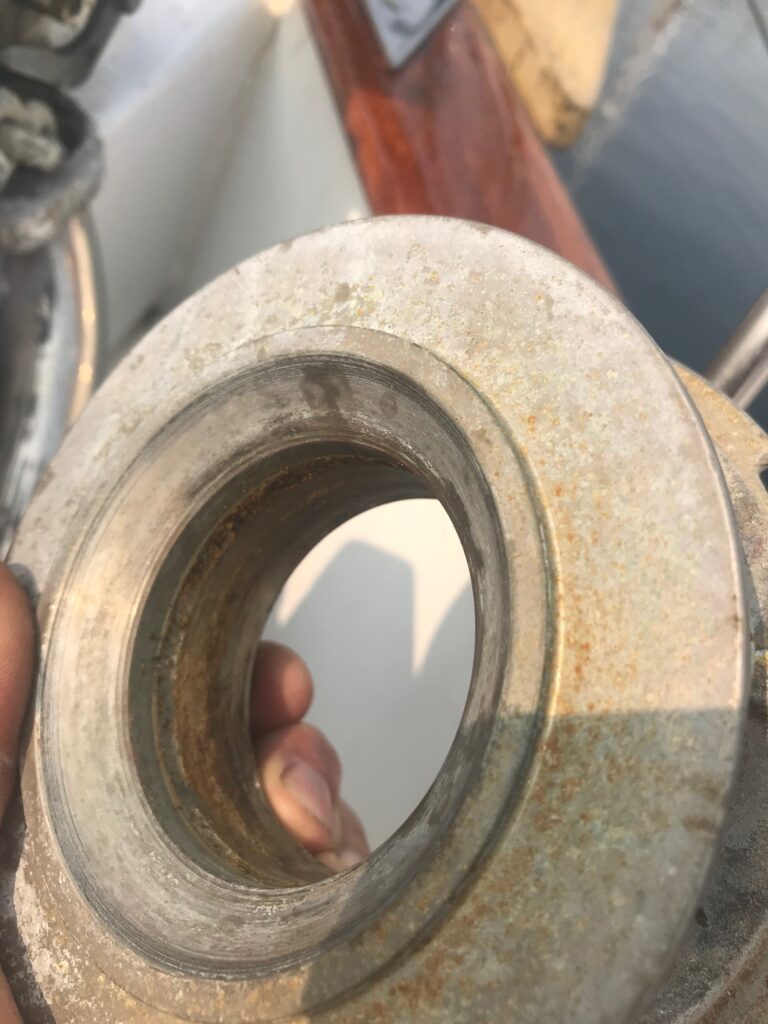
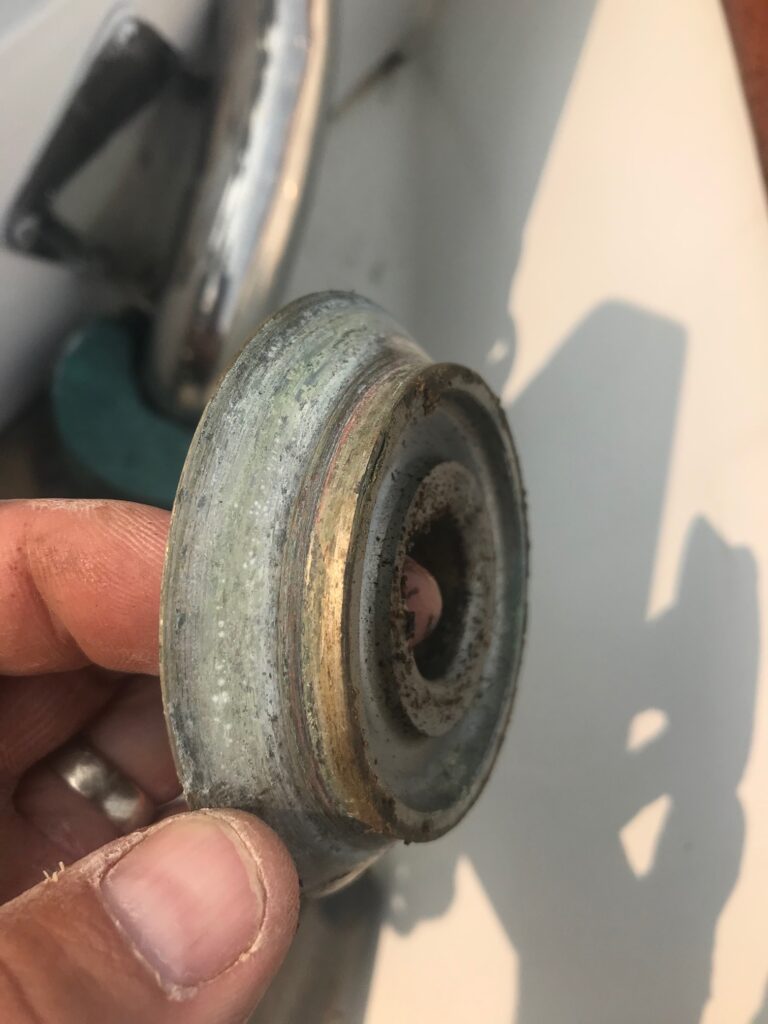
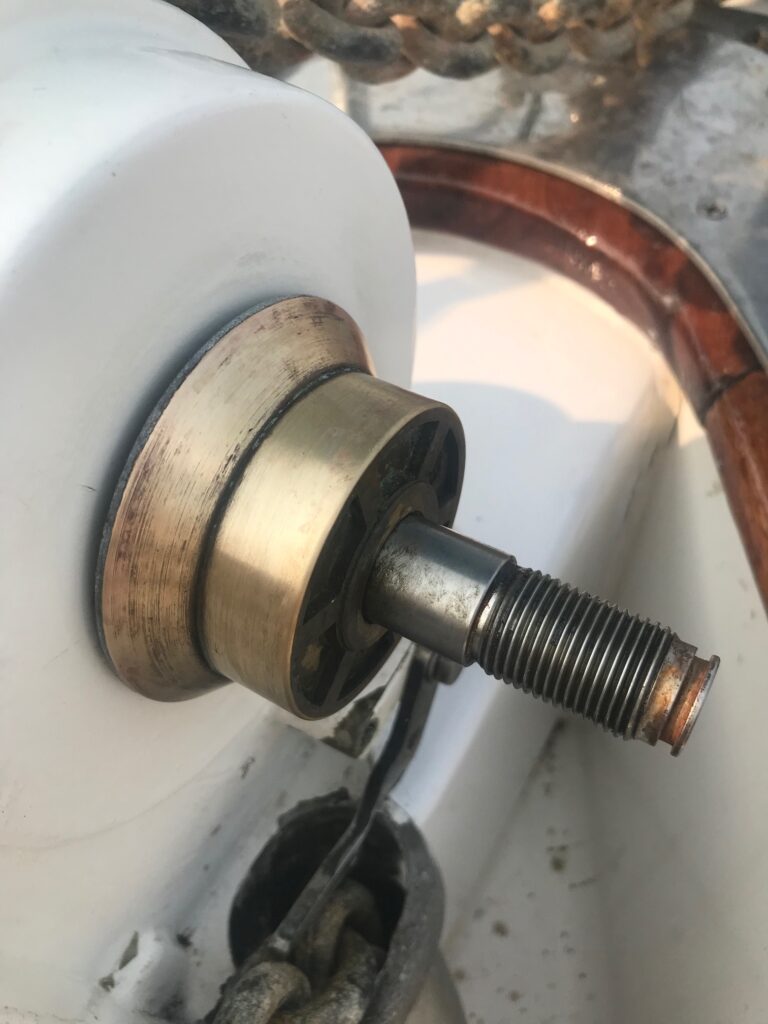
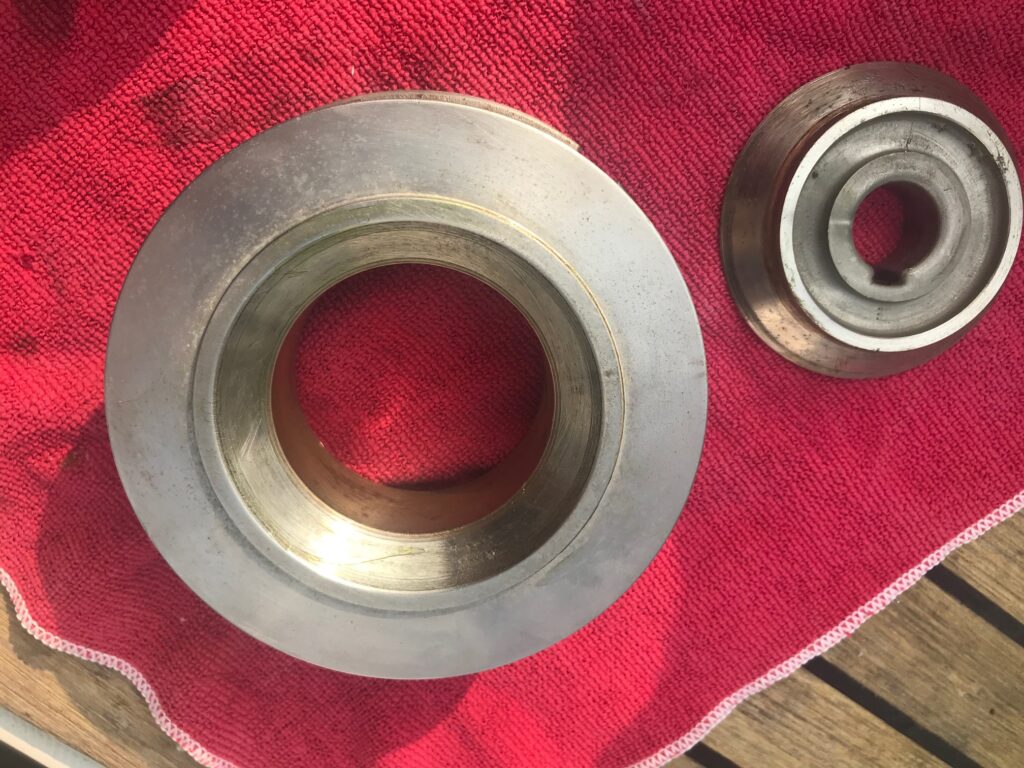
Windlass Gypsy cleaning–While anchoring, we noticed the windlass making some squeaking noises from time to time. This prompted us to watch some YouTube videos to see how to clean and grease the moving parts, which was long overdue. I removed the clutch cones, then cleaned them with Scotchbrite pads and applied a thin film of lithium grease to the moving parts.
Inner wheel of gypsy
Chain wheel
Outer clutch cone
After cleaning and lubricating
Cleaned and lubricated
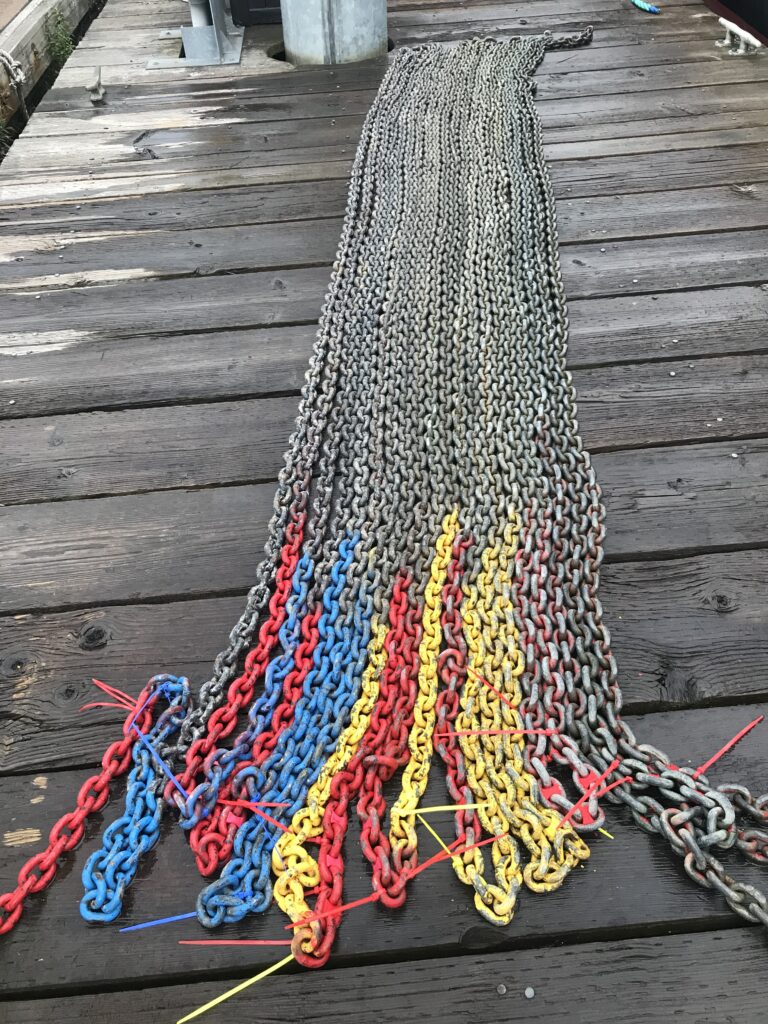
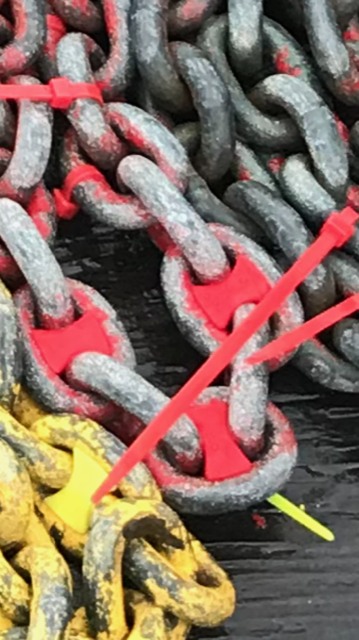
Anchor Chain Marking–knowing how much chain is out is important while anchoring. In the past, we used a combination of color-coded paint and zip ties to mark the chain every 25 feet. The zip ties last years, but eventually some break off and need to be replaced. After laying out most of the 300′ of chain on the dock, I replaced the colored zip ties and also used molded silicon chain markers in a particular color-pattern. I decided not to repaint the chain as most of the paint was still good (except the the markings below 100 foot). The colored zip tie markings are as follows: 1R=25′, 2R=50′, 3R=75′, 1Y=100′, 1Y1R=125′, 1Y2R=150′, 1Y3R=175′, 1B=200′, 1B1R=225′, 1B2R=250′, 1B3R=275′.
Chain marking
New silicon markers added
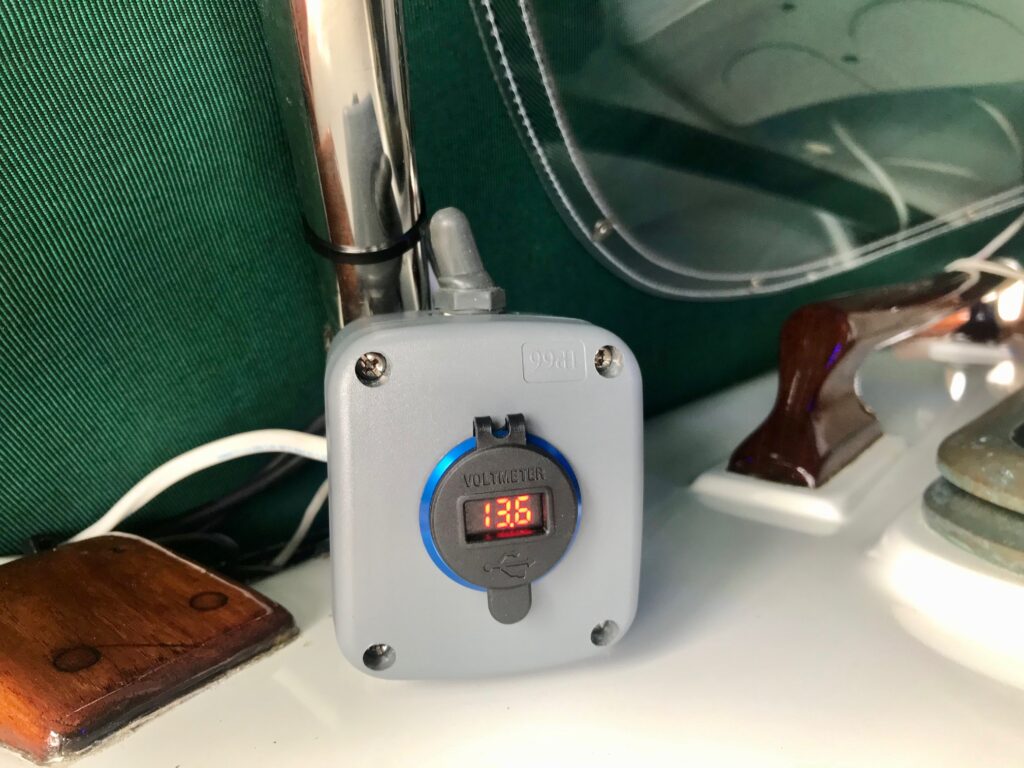
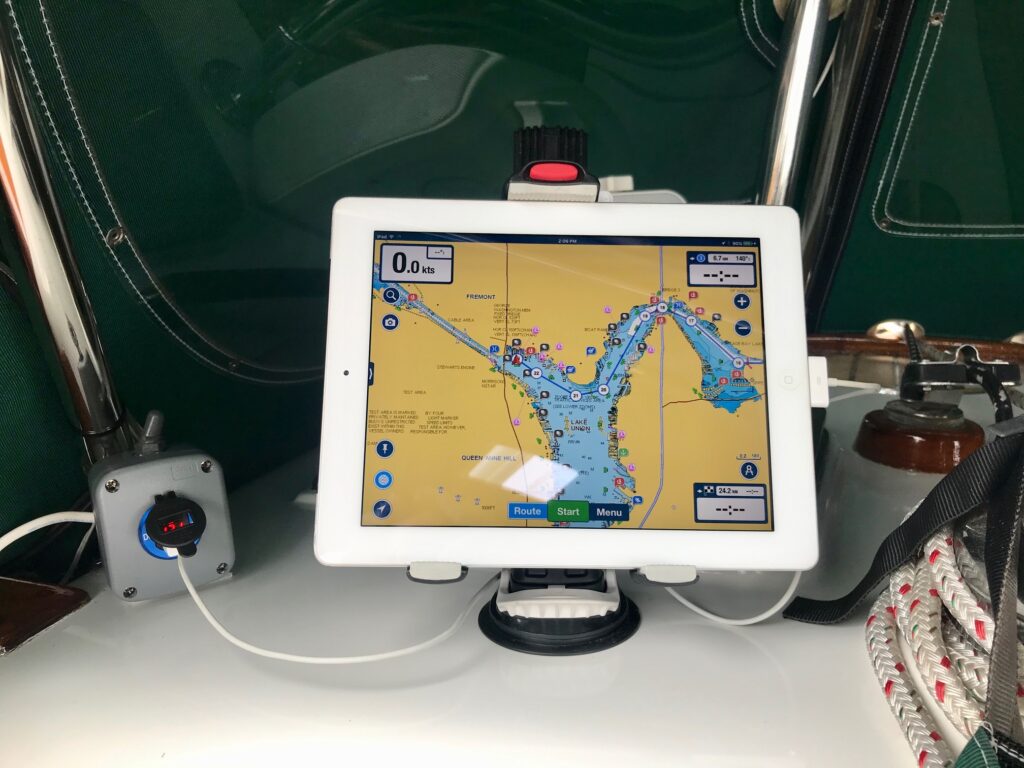
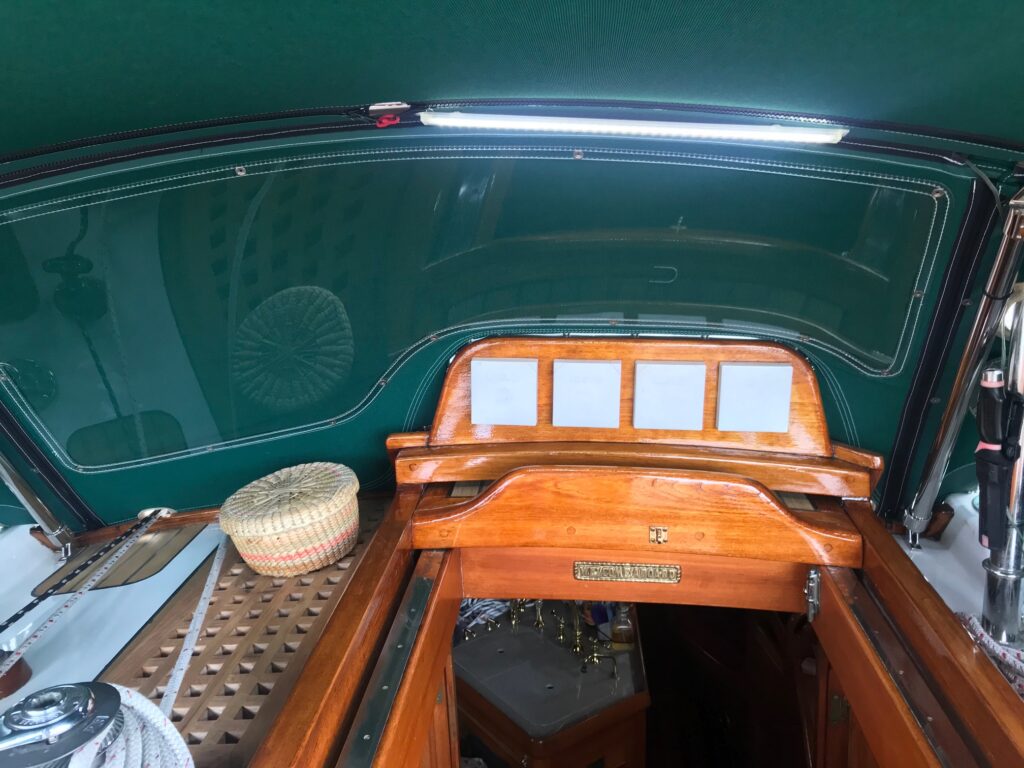
Adding Cockpit USB Port–We usually run an iPad with Navionics in the cockpit and use it for route planning and as a backup to the Garmin chartplotter. Having a USB charge port in the cockpit will allow us to keep the iPad as well as iPhones charged without needing to take them below decks. I mounted a USB dual-port with digital voltage display inside a waterproof box. The box is held in place with 3M dual lock fasteners (similar to Velcro but much better). I also added a waterproof switch on the top of the box for turning on/off an LED light strip that’s mounted under the dodger.
USB Port and LED Switch
Charging iPad
LED Light Strip (red-green-blue-white modes)
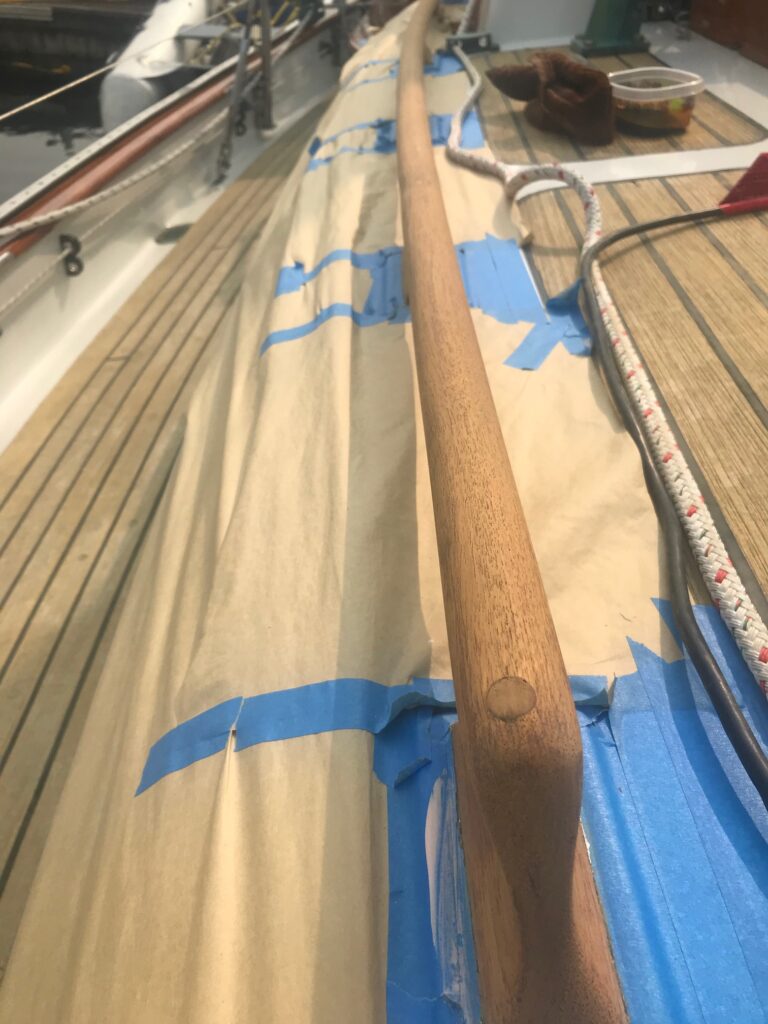
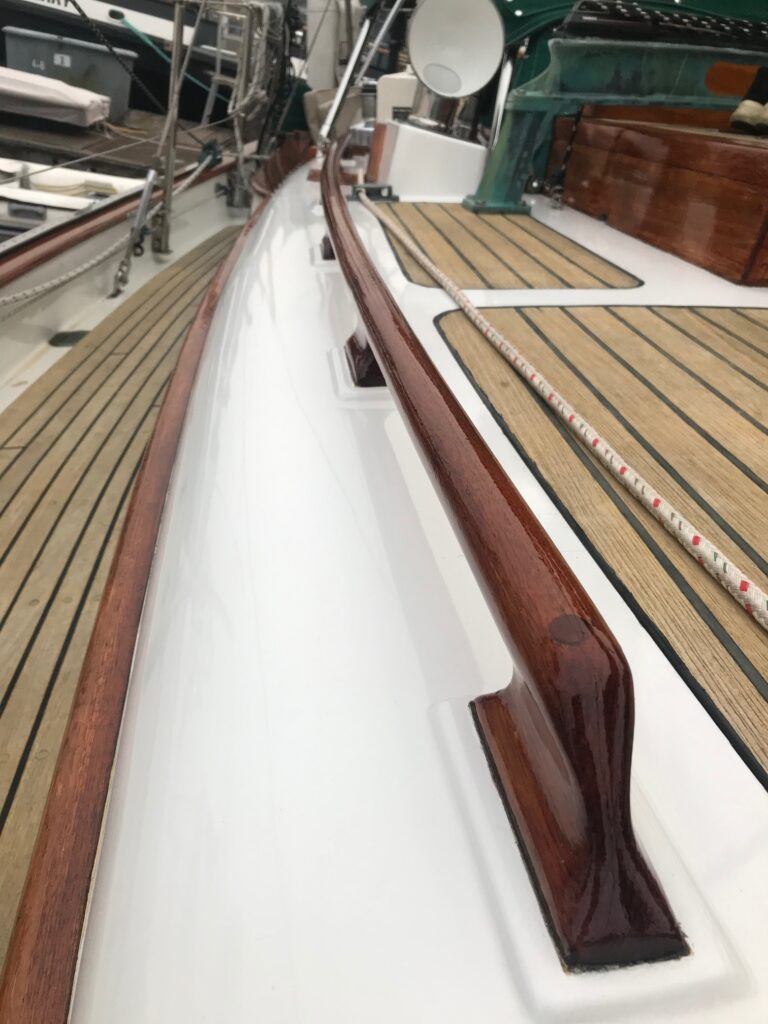
Grab Rail Refinishing–The final round of teak refinishing for the summer! I stripped and recoated 2 of the 4 grab rails in the spring-time. These are difficult to strip down to bare wood because of the curves and angles. I finally got the last two refinished during a week of dry weather in September. For stripping off the old varnish, I used a combination of Orange chemical stripper to loosen the varnish, then a heat gun and scraper to remove it. I followed up with 80 grit sandpaper, then 220 grit, applied Awlwood Primer, lightly sanded with 400 grit, then 8 coats of Awlwood clear with a light sanding after every 2 coats. I did this wearing an N-95 mask as Seattle was choked with smoke that blew in from the Oregon and California wild fires.
After stripping & sanding
After 8 coats of Awlwood Clear
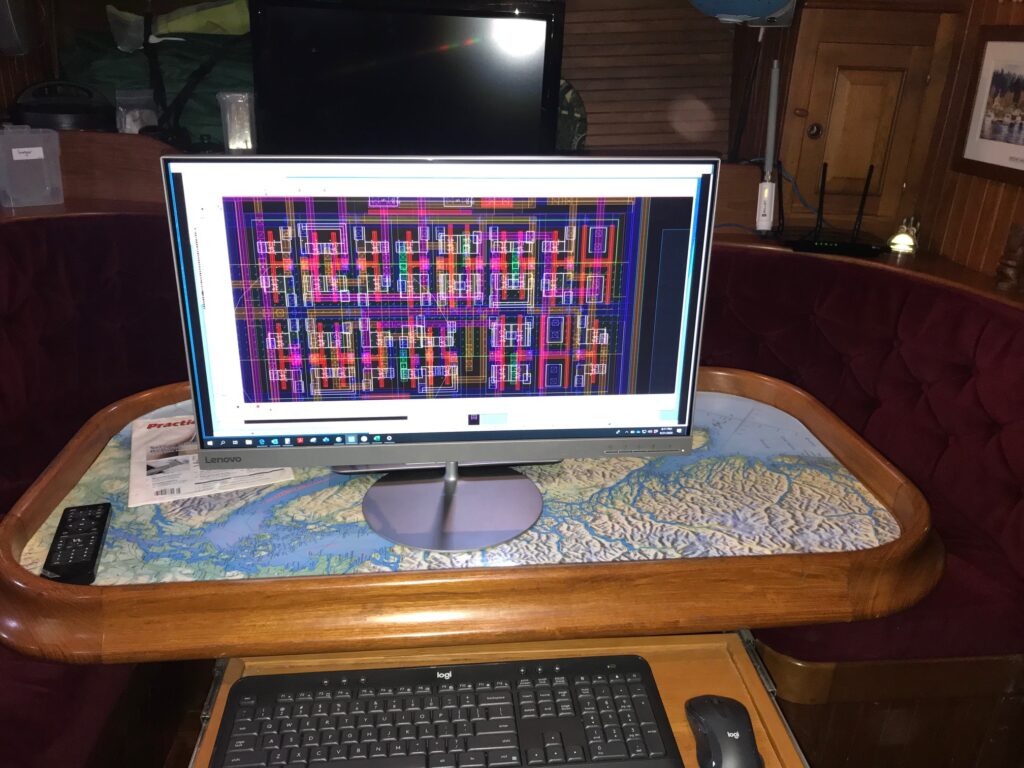
WiFi Internet Connection–The marina we’re in has WiFi but the signal is weak from where the boat is. To boost the signal, I added an antenna/radio and to distribute WiFi on the boat I added a router. The end result is a very strong signal on the boat that even gives me high speed data connectivity to allow me to work from the boat. The equipment includes a Ubiquiti M2 radio and POE, a 2.4GHz omni-directional antenna, and a TP-Link dual band router. The setup was easy and most components were plug and play. Now we have excellent wireless high-speed connectivity on Apropos.
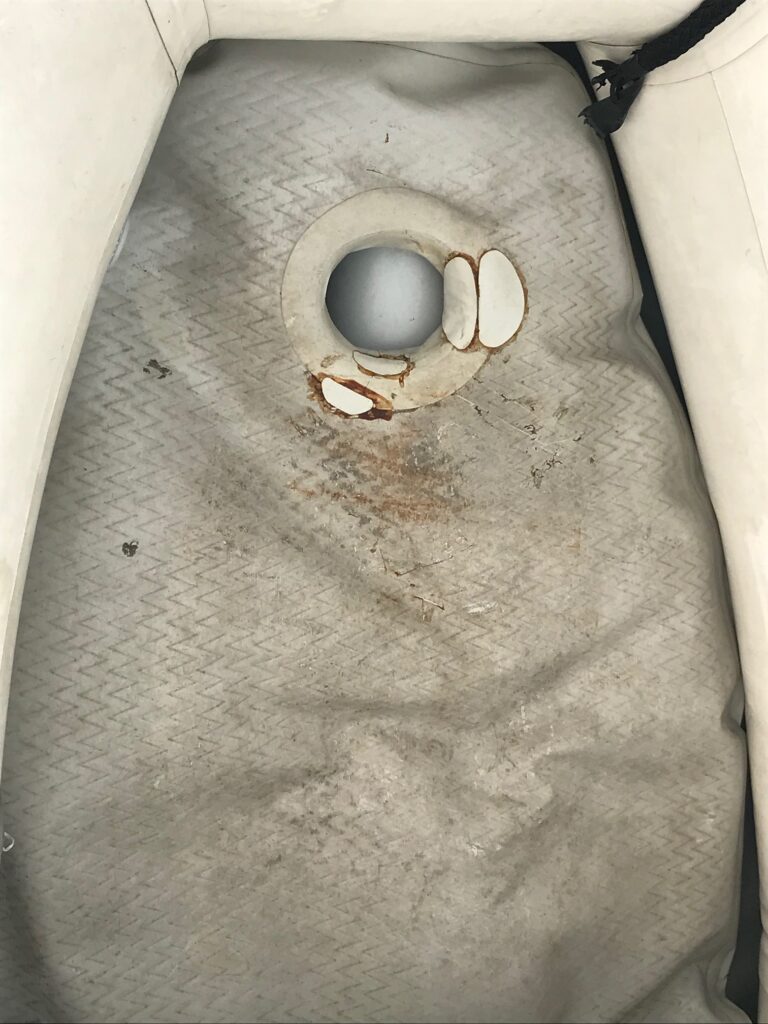
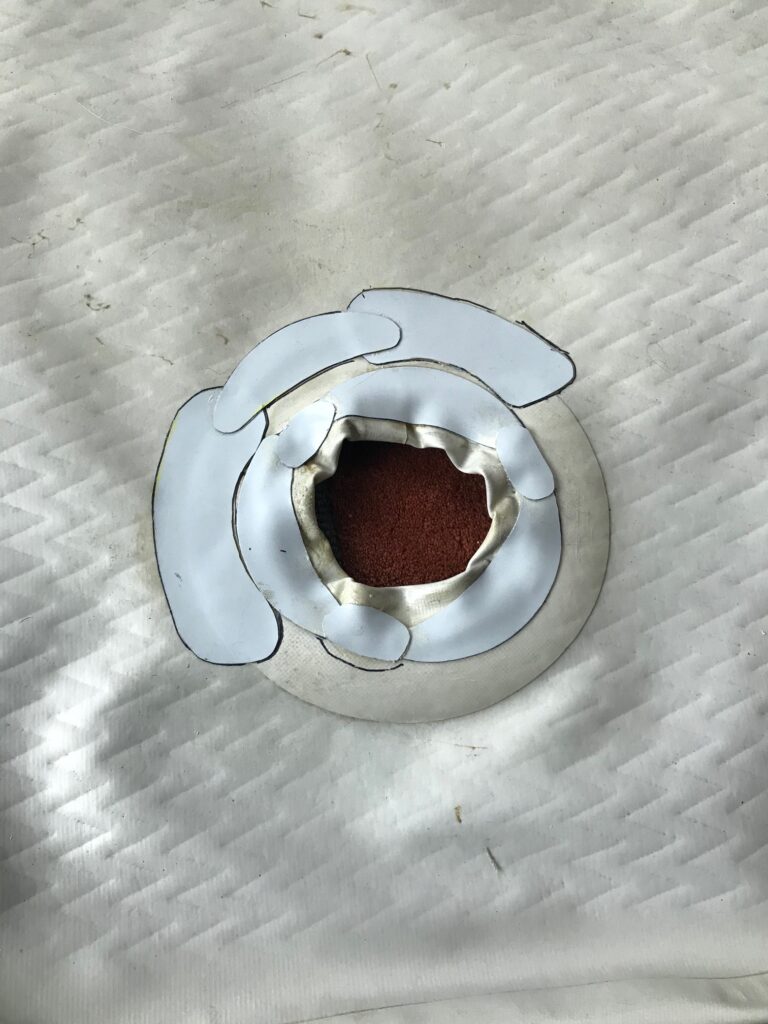
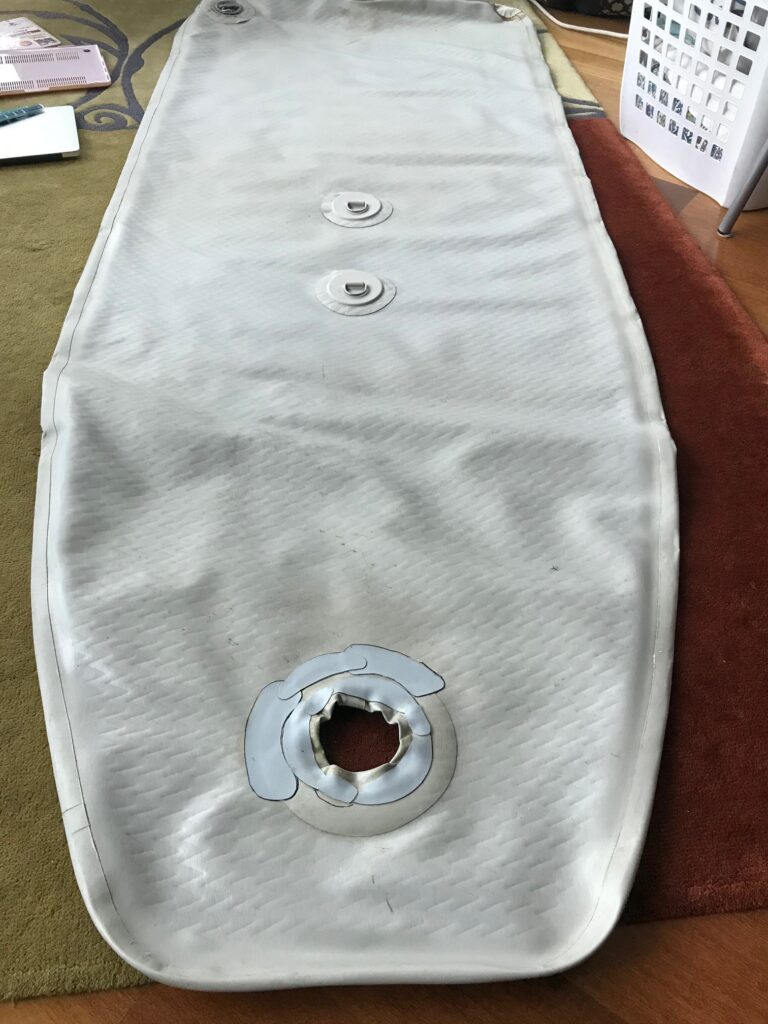
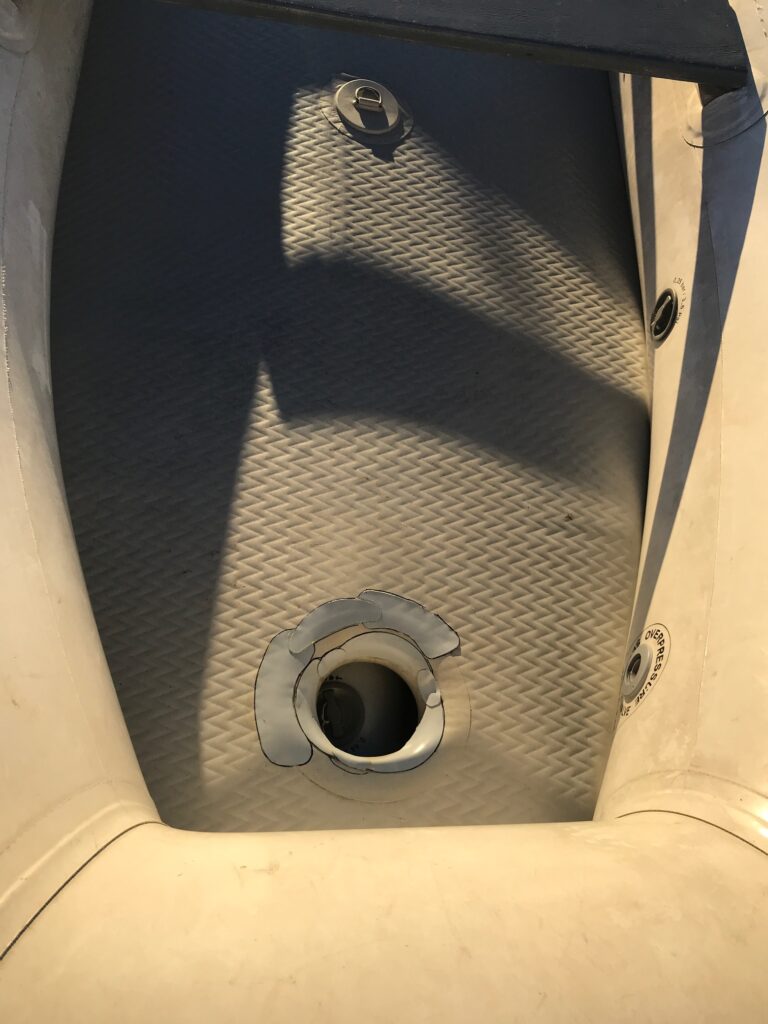
Dinghy Air Floor–After several attempts to patch the high pressure hypalon Air Floor during a two-week cruise, it still leaked at places that were difficult to apply a patch (around a doughnut-shaped hole for access to the air keel valve). The dinghy is a little over 10 years old but still in great condition. I decided to attempt patching one more time before buying a new Air Floor for $500, since the overall plan is to replace the dinghy in a few years. After removing the failed patches, I cleaned the surfaces well before applying new patches. It was much easier doing this indoors vs on the boat. The 2-part glue, mixed in a 25:1 ratio, seemed to adhere much better this time. I used 75 lbs of weights placed atop a sandbag over the patches for 24 hours, then let the Air Floor sit another 4 days to fully cure. I also gave it a good cleaning before taking it back to the boat. I put it back in the dinghy and inflated it to 3 psi, then sprayed soapy water around the patches and didn’t see any evidence of leaks. I won’t be too surprised if new leaks develop, but for now i think it’s holding air. I probably won’t be pumping it up to 10 psi any more…
We had 2 full weeks for out boat trip this year, and decided to spend it in the beautiful San Juan Islands. Normally we’d go further north with that much time, but due to Covid-19 border closures, we decided to slow down and visit some new anchorages and stay longer in some places.
During the trip, we anchored at James Island, Sucia Island, San Juan Island (Roche Harbor, Wescott Bay, and Friday Harbor), Stuart Island, Shaw Island (Blind Bay), and Lopez Island (Hunter Bay). On the way to and from the San Juan’s, we anchored at Port Townsend and Kingston. Overall, the anchorages were pretty crowded due to the Canadian border closure.
Here are some pictures:
Sunset from Wescott Bay
At Port Townsend
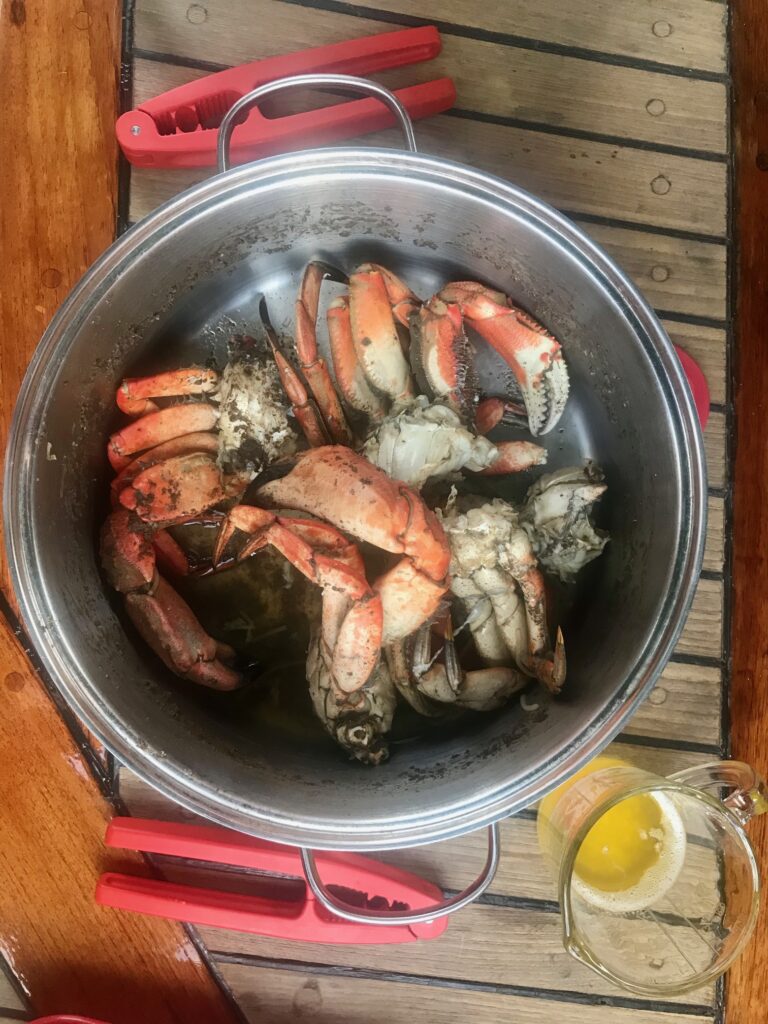
Fresh Dungeness crab
Walking around Blind Island
Hiking on Stuart Island
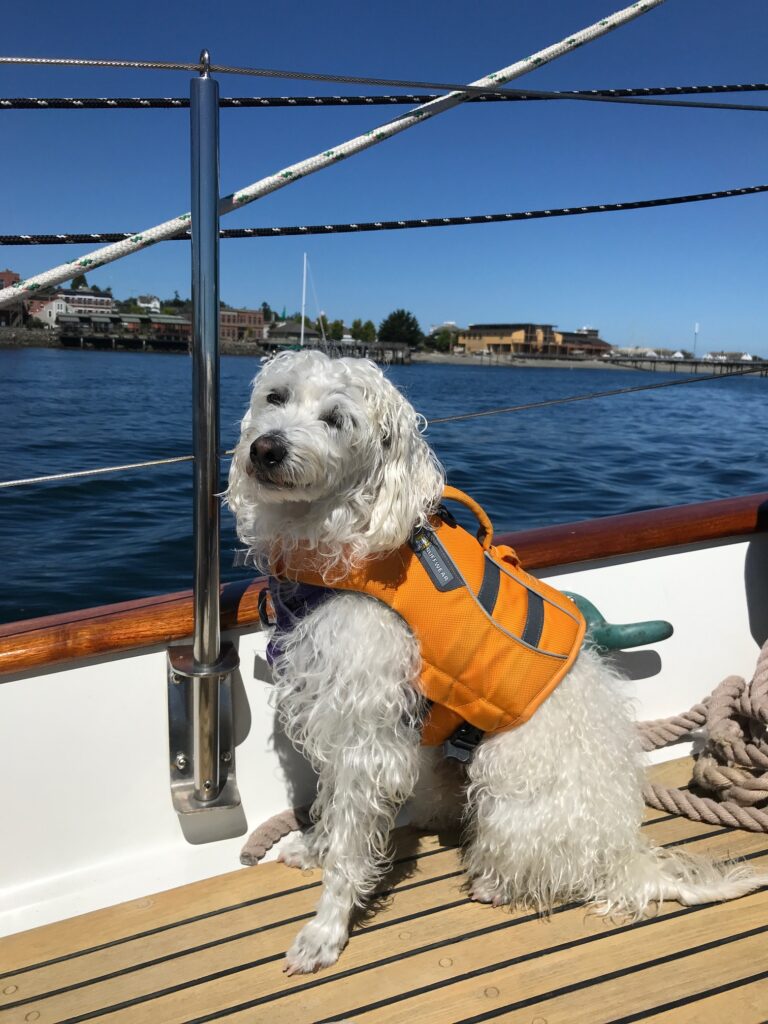
Boat dog Champ
Starfish
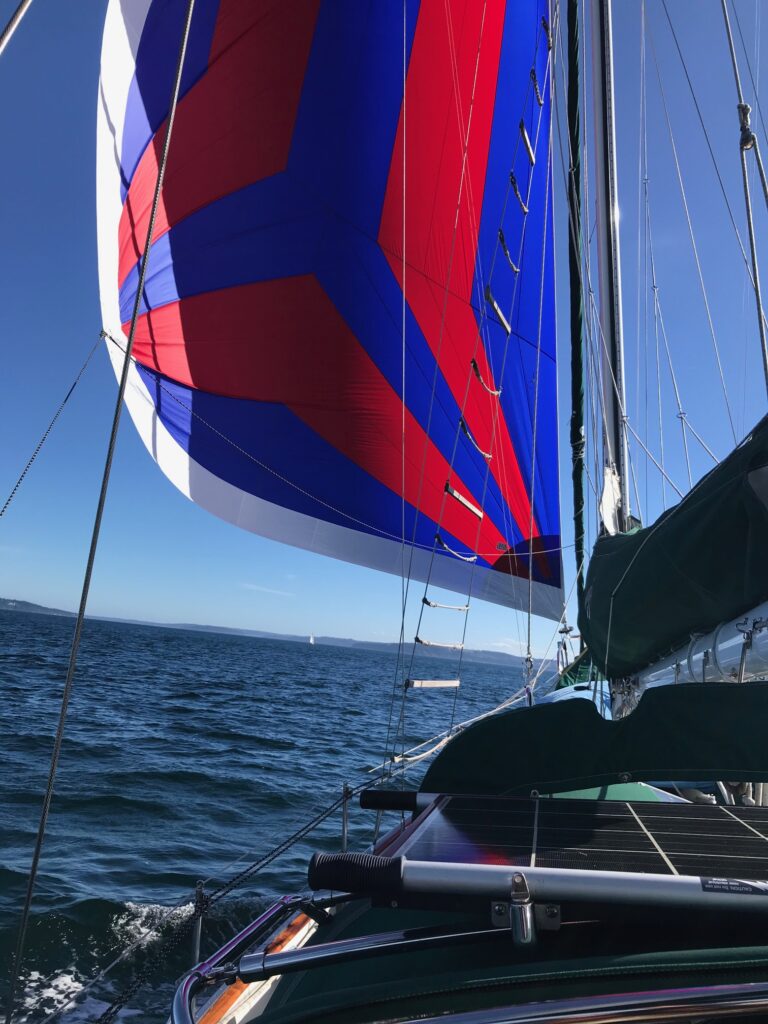
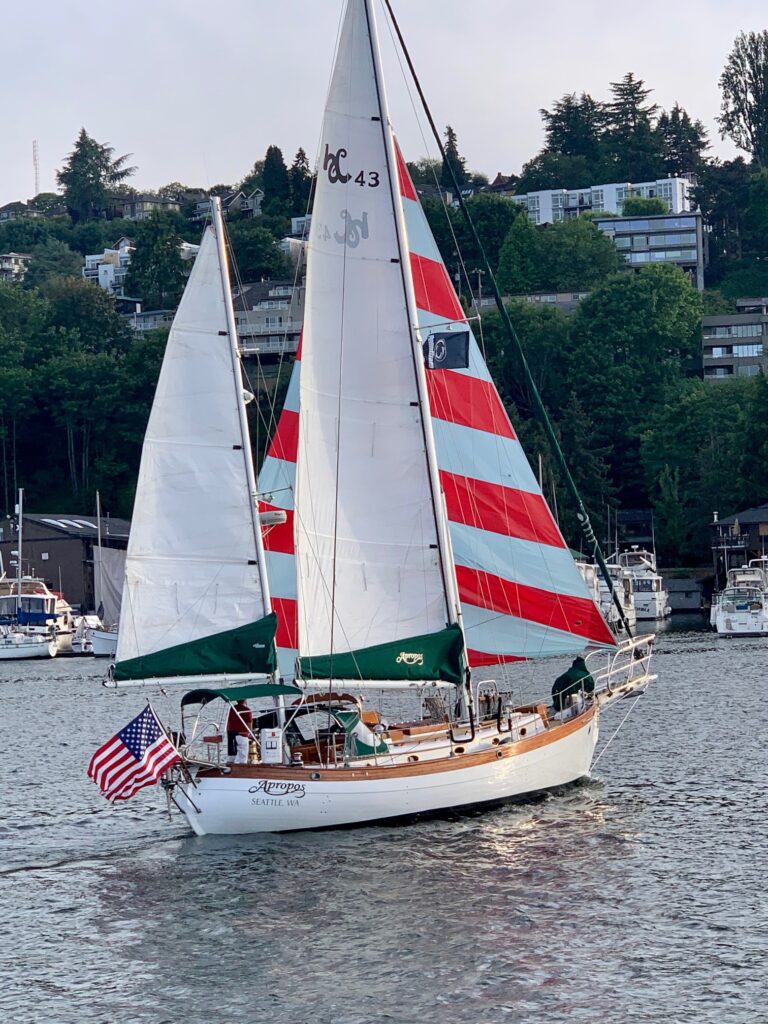
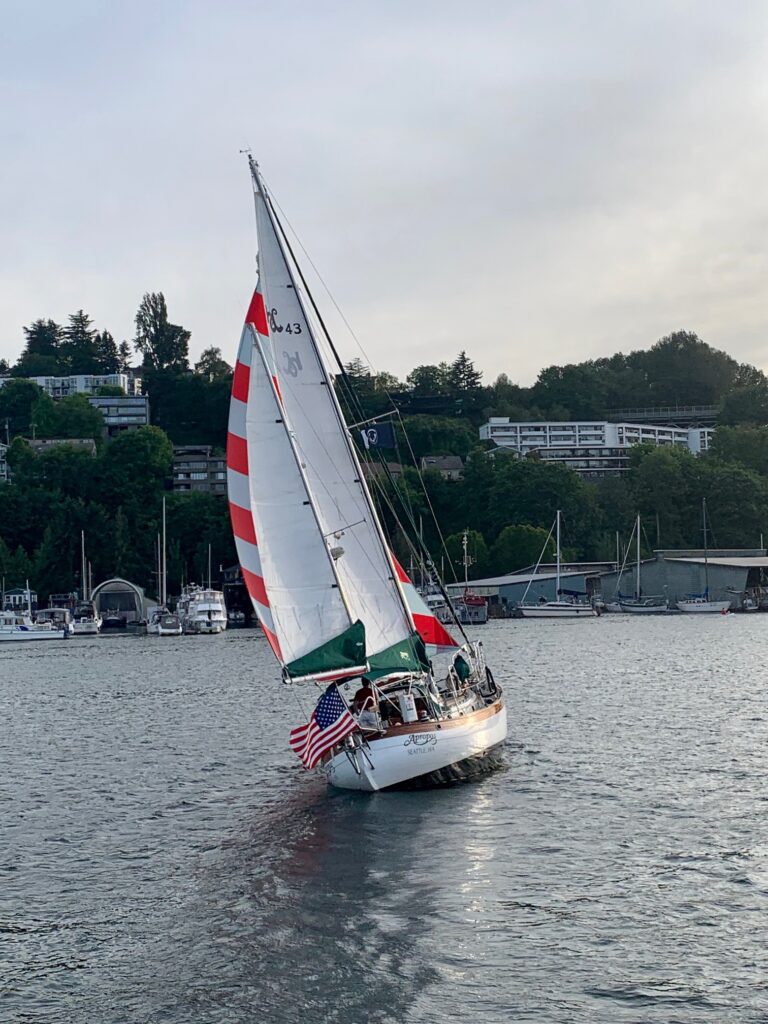
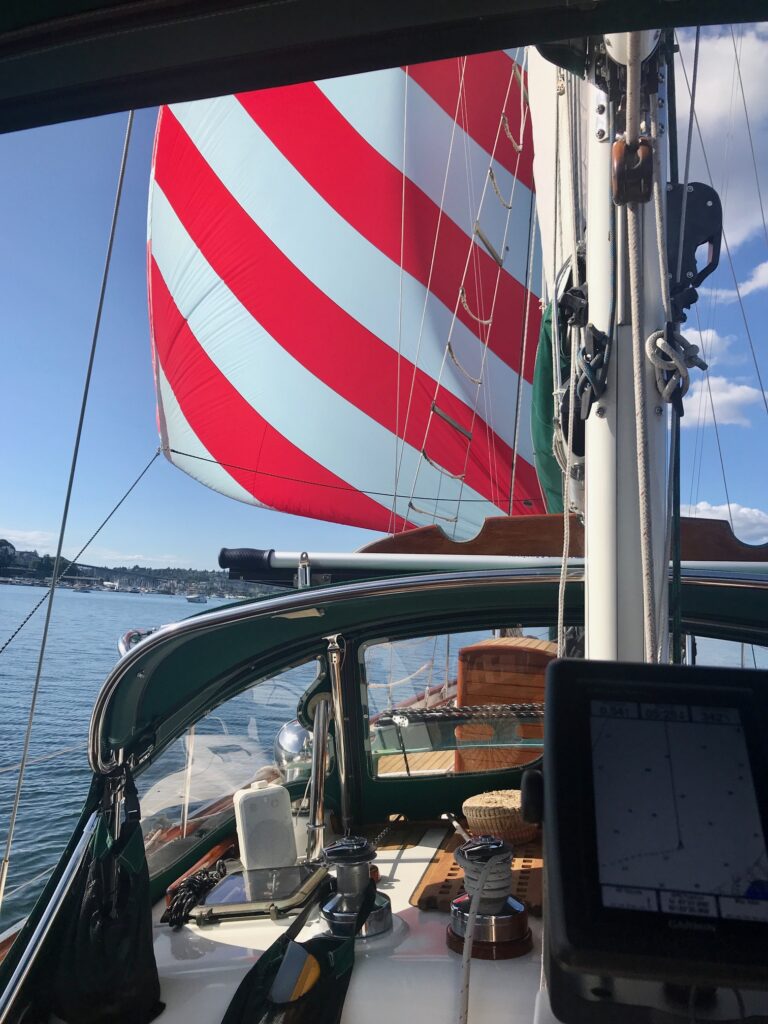
Code Zero sail
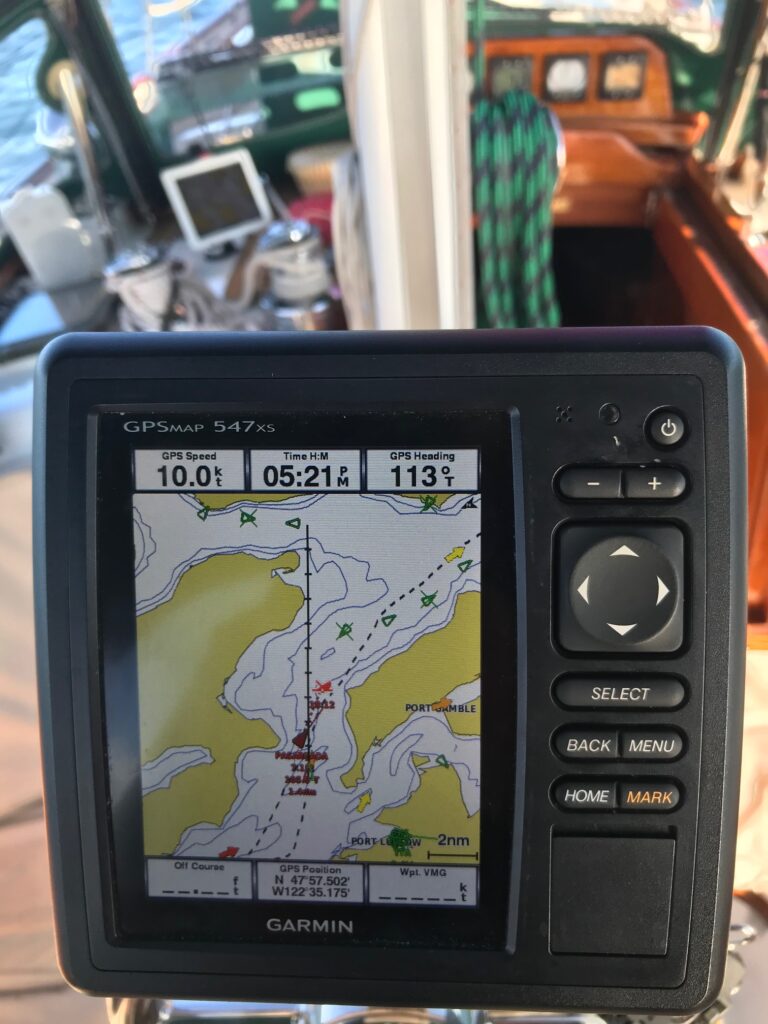
10 knots!
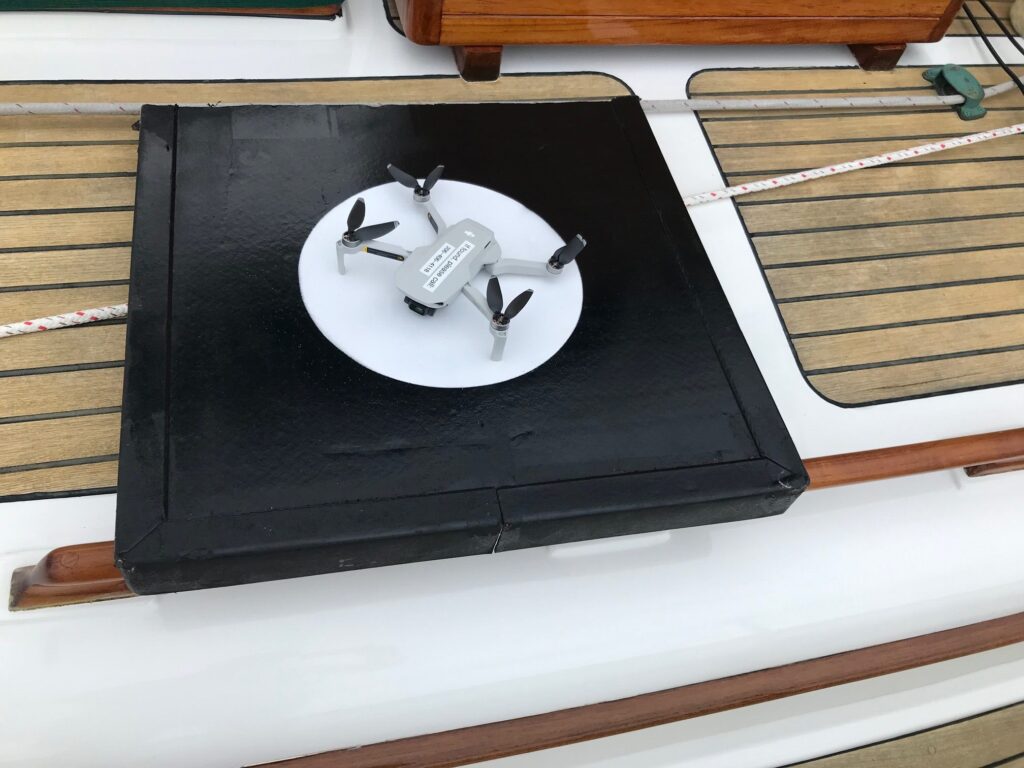
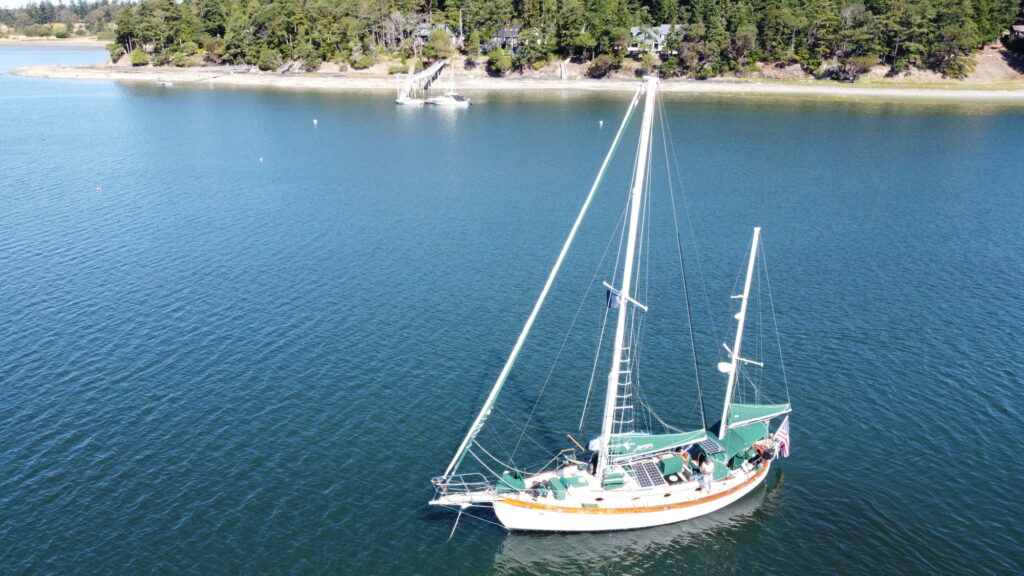
I flew my Mavic drone at some of the anchorages for a different view from the air:
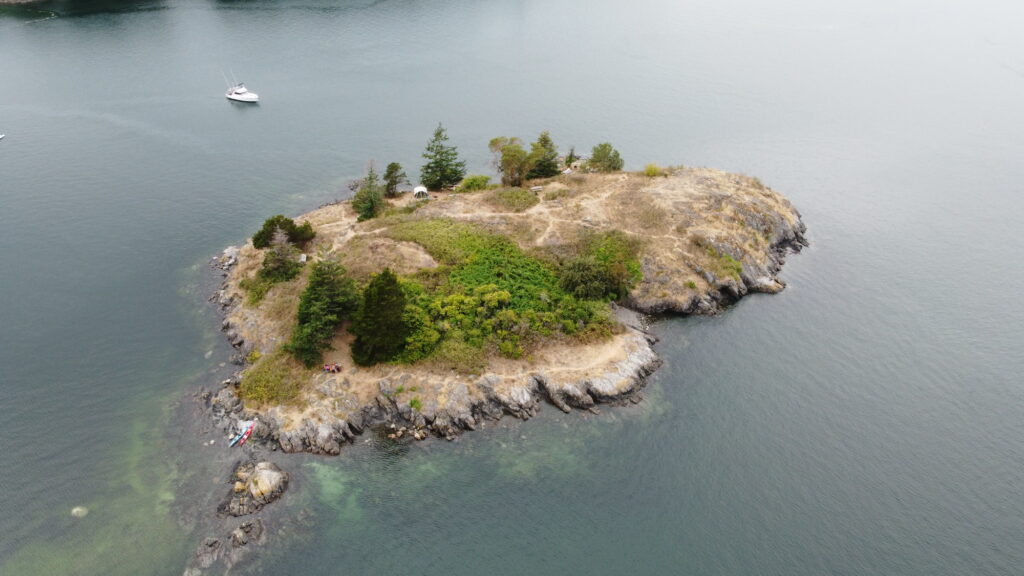
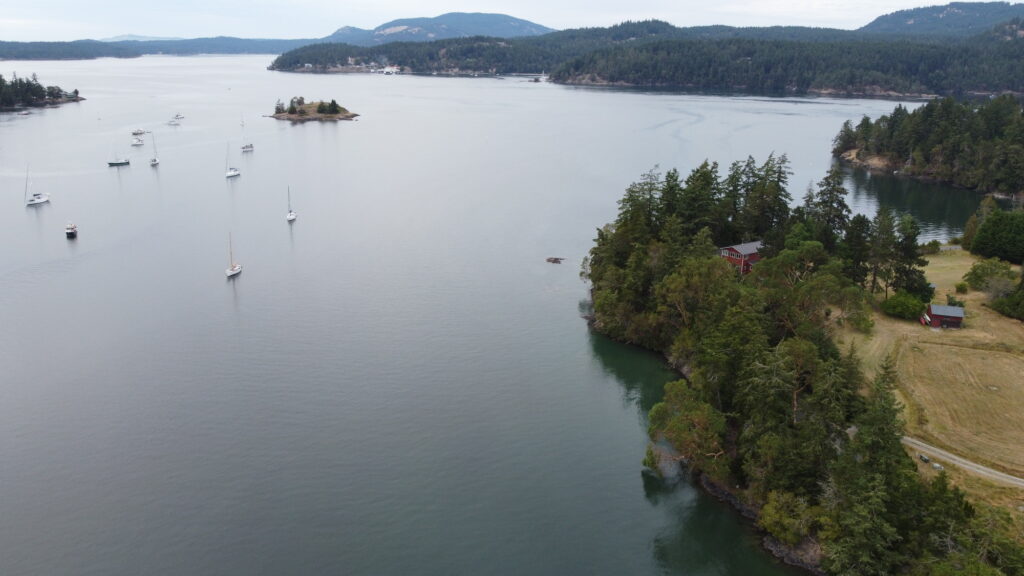
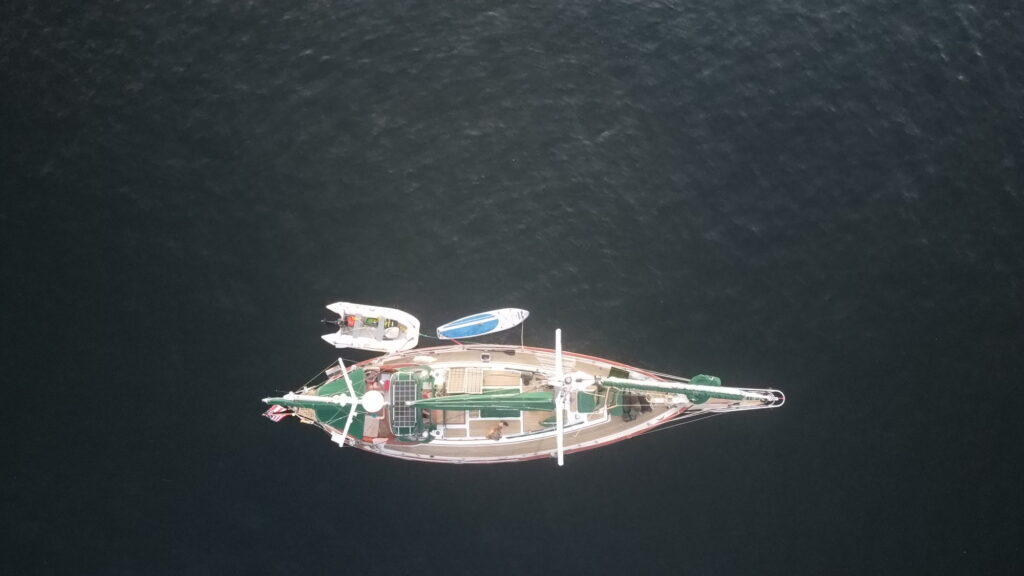
Mavic Mini droneWescott Bay anchorageHunter Bay anchorageBlind Island (off Shaw Island)Blind Bay looking towards Blind IslandDinghy and SUP alongside Apropos James Island anchorage
Here’s a video I put together from drone video and pictures:
We’ve been cruising the San Juan Islands for 15 years, and usually go to the same 5 or 6 places. Having more time, this trip allowed us to explore new anchorages and we found some (Hunter Bay, Wescott Bay, James Island) that we really liked and will return to. The slow pace was good for a change and I enjoyed getting up early, making coffee, and reading in the swing chair for a few hours in the morning. Crabbing was pretty good and we caught 9 Red Rock and Dungeness crabs at various anchorages. They made for some delicious meals. Our dog Champ finally learned that it was ok to relieve himself on the green grass carpet we bring along. On previous trips we would have to go ashore for those tasks, sometimes at odd hours. The weather was great–mostly sunny and warm. There were only 2 days that were cloudy with some rain.
The Bad:
Well, there were a few things that went wrong. The biggest was that we discovered our house AGM battery bank was toast. This went unnoticed during day trips throughout the summer, but when your anchoring for 2 weeks (we plugged in only once while at Roche Harbor), you quickly uncover problems like that. We coped by using the solar panels during the day (and adjusting them to keep them in the sun), and, when needed, using our Honda generator at anchorage. This also forced us to be very frugal with power, so instead of microwave popcorn, we made stove-top popcorn! We also turned off refrigeration during the night-time. I figured we had only about 30 AHrs of usable charge out of our 672 AHr battery bank! Another winter project added to my list…
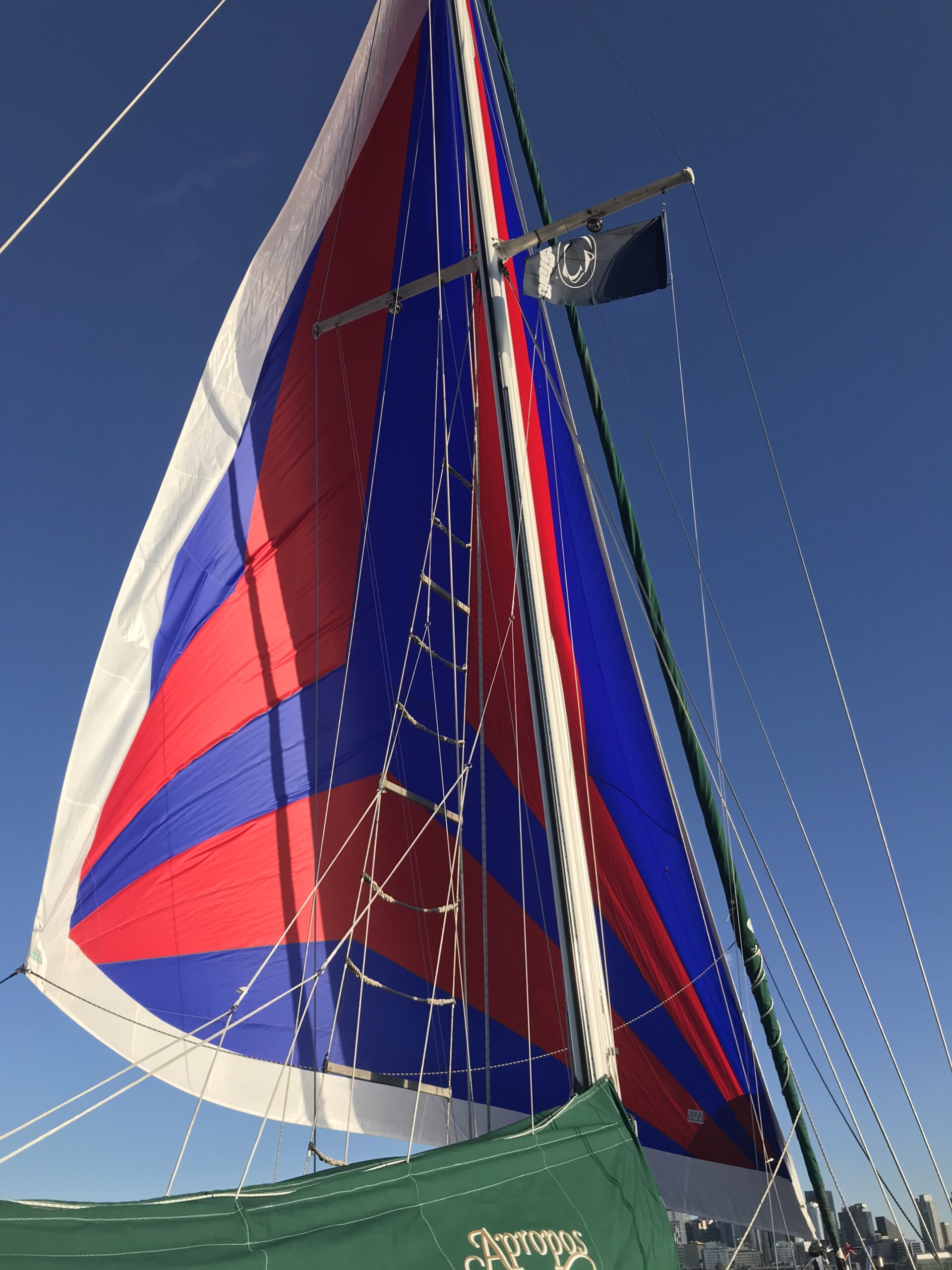
A drifter sail made from lightweight nylon came with Apropos. It’s a simple panel-cut sail that’s flown aft of the headstay and is pulled up in a sock. I just recently started using it more and am able to get it out while sailing single handed. It tacks easily if there’s some wind, otherwise it needs some help getting around the stays’l stay. With increased wind, it takes a lot of effort to dowse. And because it needs to be taken down after each sail, stuffed into a bag and stowed below decks, I was looking for something that was easier and didn’t have to be taken down after each sail or when switching to the Genoa if the wind suddenly picked up. I also wanted something more modern that had a better sail shape.
Drifter Sail
I began reading about Code Zero sails and learned that they originated from the racing scene to get around rules governing spinnakers. Eventually, furling Code Zeros were adopted by cruising boats, and are now becoming quite popular.
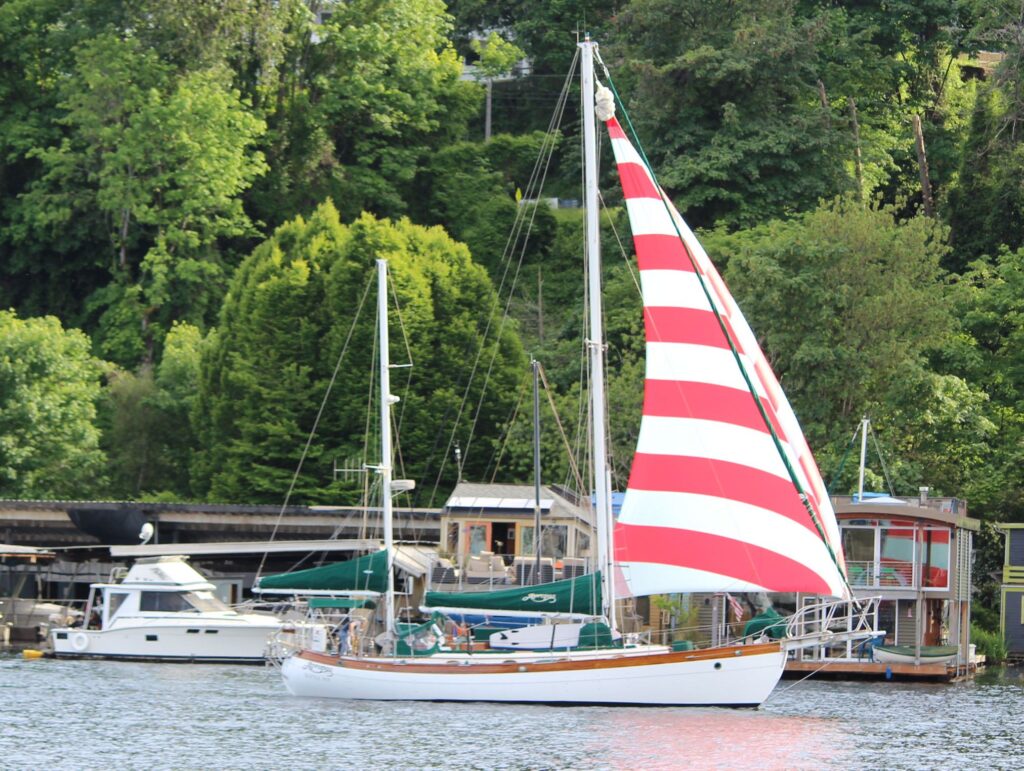
A cruising Code Zero looks like a genoa on steroids. Think of a 180% genoa and you start to get the picture. It’s intended for lower wind speeds (typically below 20 knots) and does best at wind angles between 75 and 125 deg. A Code Zero is flown out in front of the jib stay and is set up for roller furling, which is important for cruising boats and short handed crew. You just have to hoist the stay with the sail furled around it by using its halyard and then unfurl the sail from the cockpit. When tacking or gybing, just furl it in using the continuous line furler, change direction, then unfurl. When done sailing, or when the wind picks up and you want to switch to the Genoa, just furl it up and leave it in place since the sail has a UV protection strip.
I decided to use Mack Sails for the complete Code Zero system–sail, furling hardware, and boat modifications. I was very please with co-owner Travis and his customer service, quality workmanship, and delivery time when I had them make my Stack Packs. For the Code Zero, I sent Travis 6 measurements and chose the color pattern. The sail fit perfectly.
Tri-radial Sail
The sail material is 2.2oz nylon. The dimensions are Luff 49.67′, Foot 34.25′, Leech 46′ for a total area of 871 square feet (for comparison, my Genoa is 560 square feet). It’s tri-radial cut with 30 panels and dacron along the foot and leach to protect the nylon sail when it’s furled.
Furling Gear
The furling gear is a Bamar RLG 20 Evo. Bamar is a German company that casts their furler in bronze. My boat size was right near the cutoff for furler size, so we went with the bigger one (good for larger boats).
Boat Modifications
Since a Code Zero is flown out in front of the headstay, I had to add some hardware at the masthead and bowsprit.
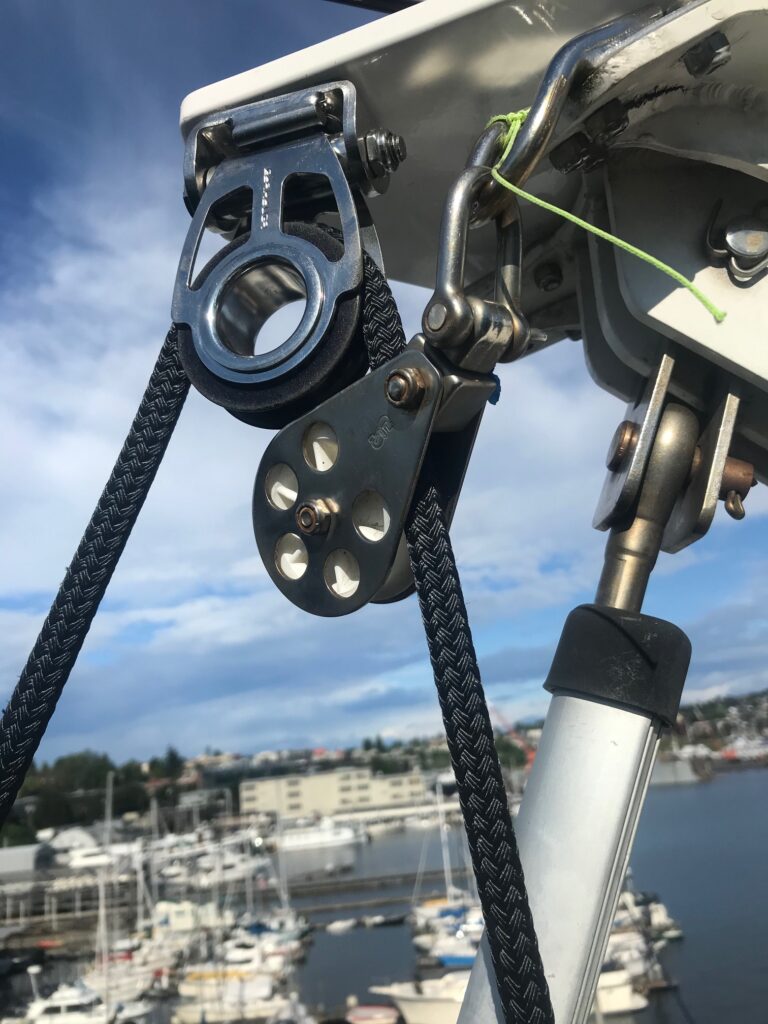
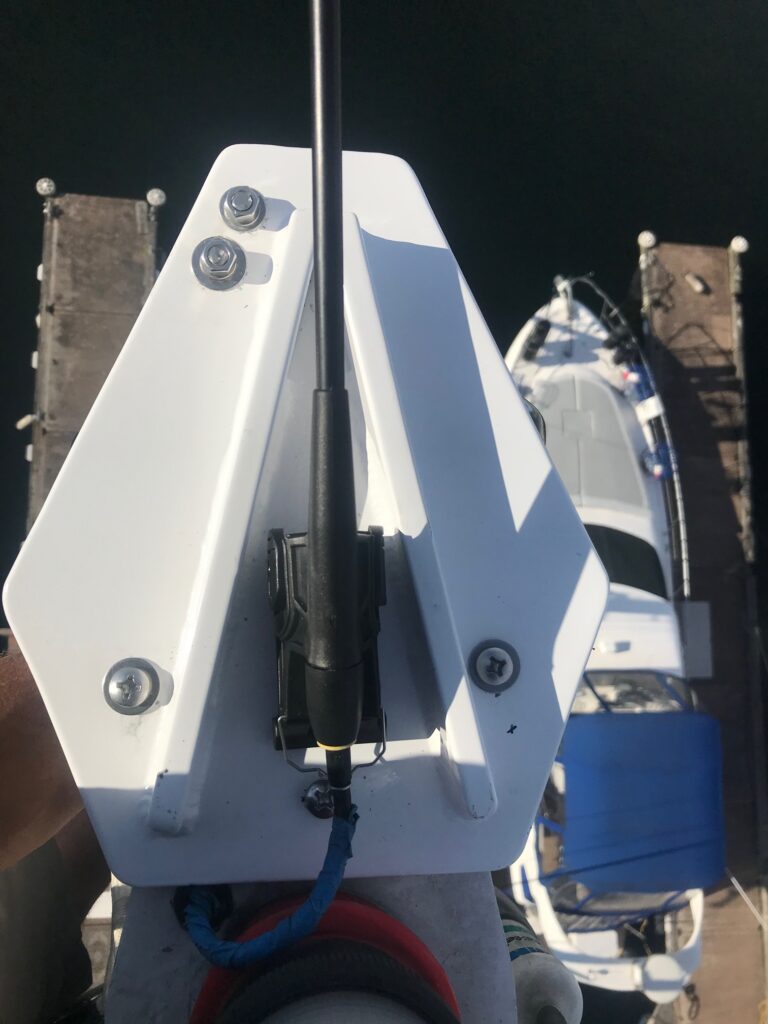
The masthead needed a bolt-on extension added to position the top furling gear away from the jib furling gear. I took measurements and made a drawing of the masthead, and a machine shop fabricated the 1/2″ thick aluminum extension with stiffeners. They painted it white to blend in with the masthead. A flip-flop block is mounted on the bottom. The halyard goes inside the mast, exiting a few feet from the masthead, goes through a block that’s mounted on the port-side stainless steel tang (used for spinnakers), then up through the flip flop block. I attached the extension using 4 5/16″ bolts–the 2 outer ones were thru-bolted and the 2 inner ones required tapping. Then I re-mounted the anemometer on top by tapping threads into the extension. The installation took 3 hours and I really appreciated the 2 mast steps I installed that puts me about waist high to the masthead.
Masthead Extension with Flip-Flop Block (from below)Masthead Extension (from above)
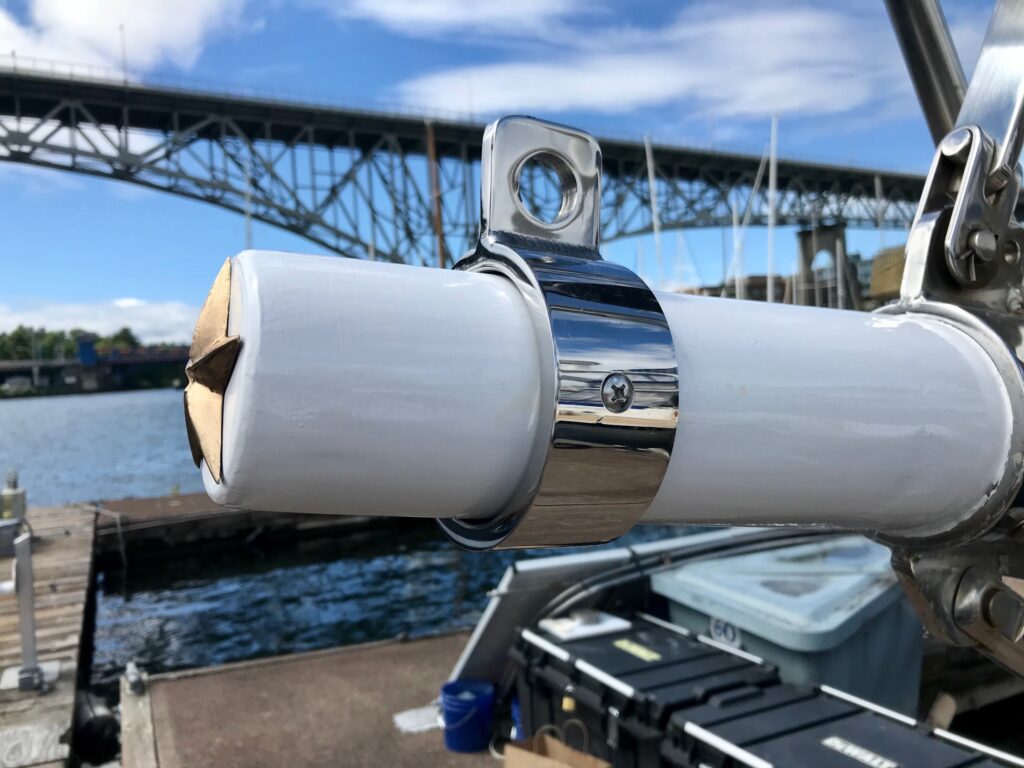
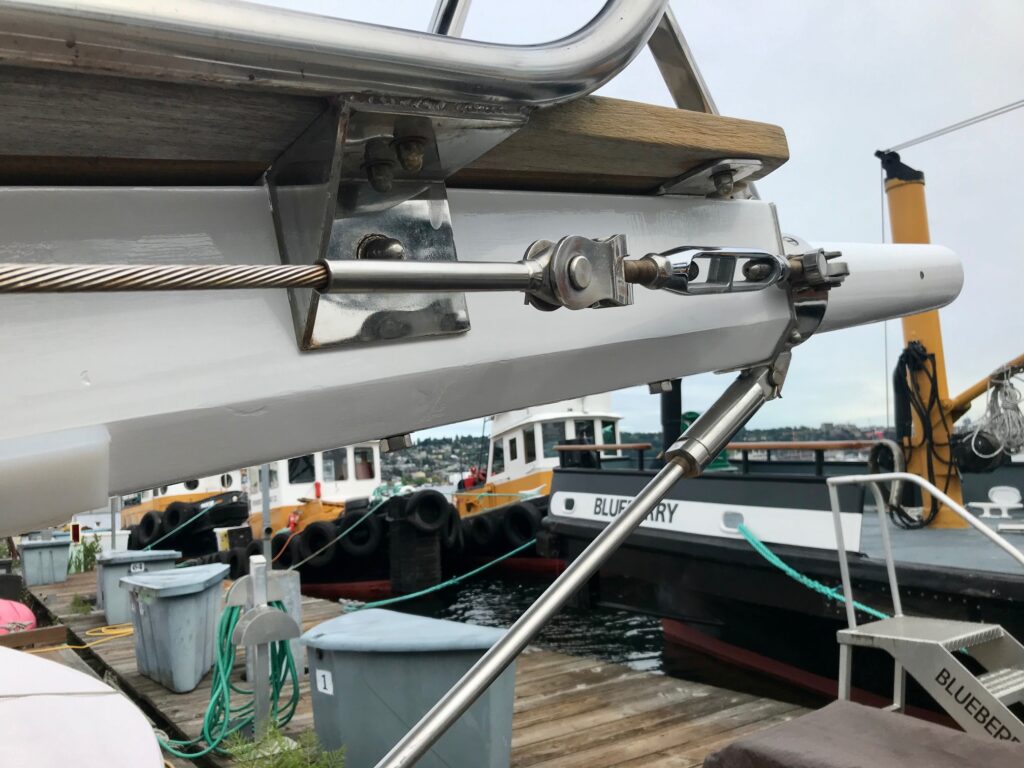
The bowsprit needed a collar similar to the cranse iron, but about 8″ closer to the tip. A machine shop found the right diameter stainless steel pipe and first sent me a 1″ piece to test fit since the bowsprit tip is tapered. It fit perfectly, so they cut a 2″ piece, polished it, and drilled & counter-sunk 2 holes for fastening it to the sprit. I drilled 2 oversized holes and filled them with epoxy, then screwed the 1/4″ x 1-1/4″ screws into the epoxy. An eye was welded to the top and is the attachment point for a cable that will hold the bottom furling gear.
Side story–when I went aloft to test fit the masthead extension, I first removed the anemometer. Being extra careful not to drop the masthead extension (which weighs a couple of pounds and would do major damage to whatever it hit), I accidentally dropped the anemometer and watched it bounce off the side rail and fall into the water. Two days later I rented a tank and went scuba diving, recovering the anemometer in 45 feet of very murky water with a few feet of silt on the bottom!
Apropos’ bowsprit measures 14′ in length, and is 8.5″ by 8.5″ at its largest cross-section. It’s by far the biggest piece of wood on the boat, most likely made of Apitong, a very strong/dense hardwood grown in Southeast Asia.
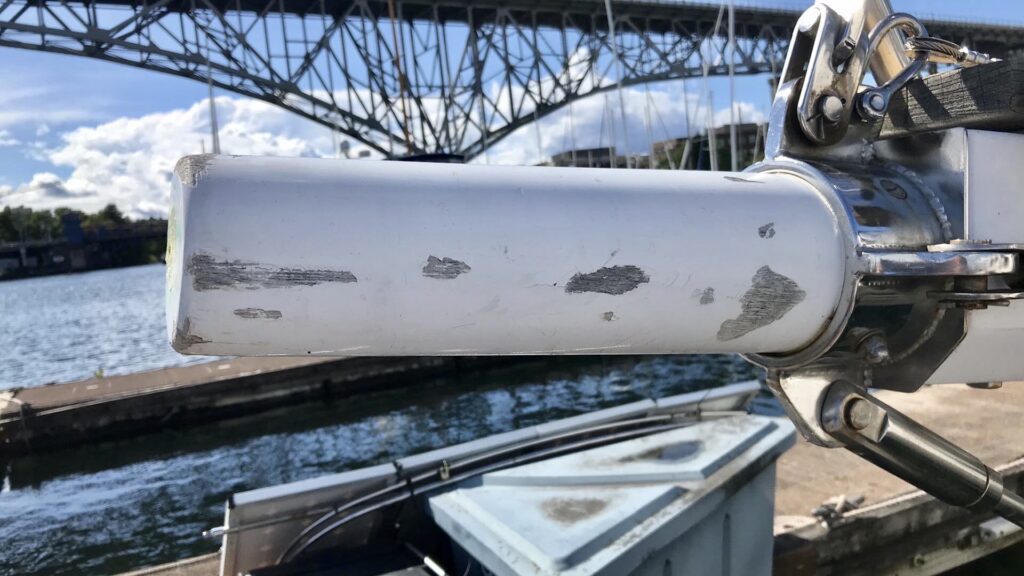
Like most projects, this one started out small. Something I could do in a day or two, but grew into something much bigger. I was only going to touch-up the bowsprit tip–a 16″-long section forward of the cranse-iron where the bowsprit is rounded. There were a few dings and dents from 16 years of docking at marinas, fuel stations, and ramming noisy power boats (kidding!).
Tip of Bowsprit
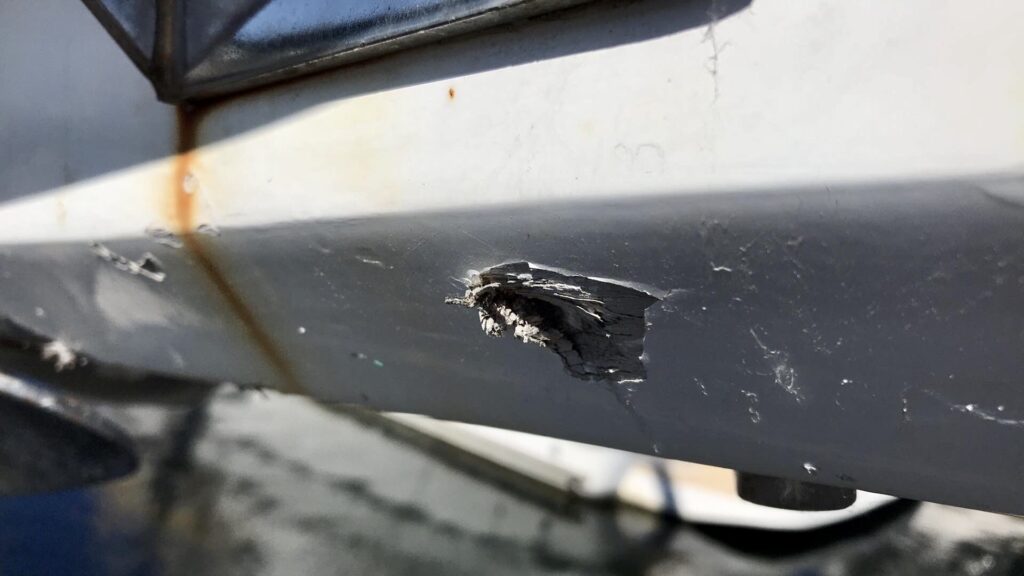
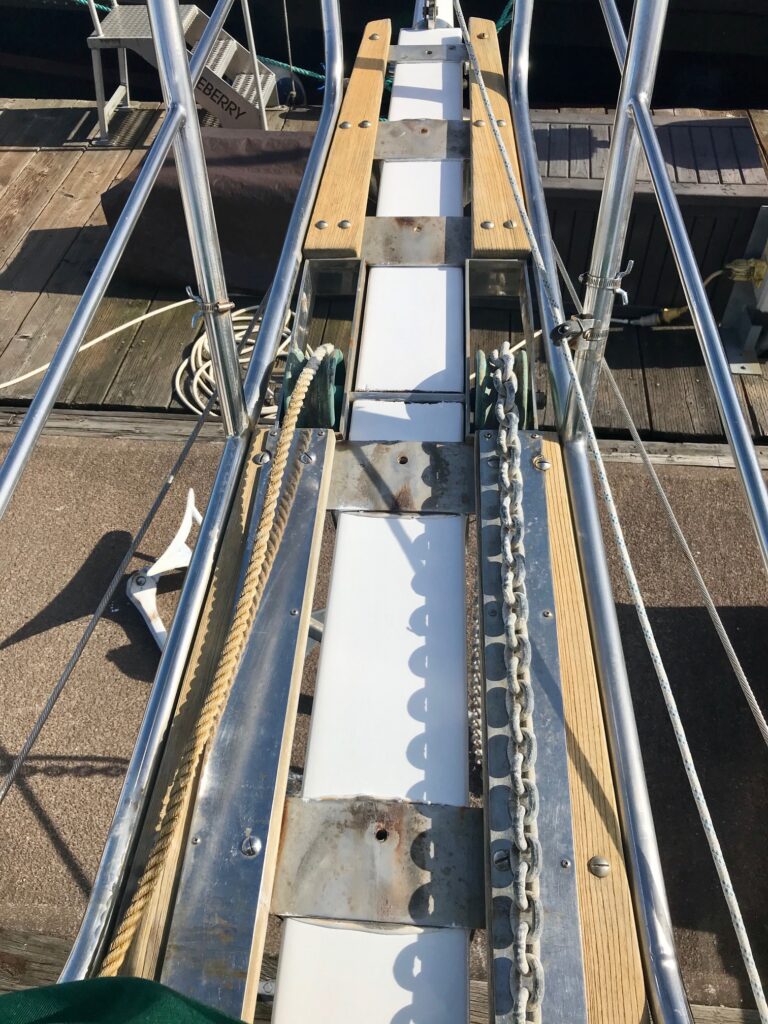
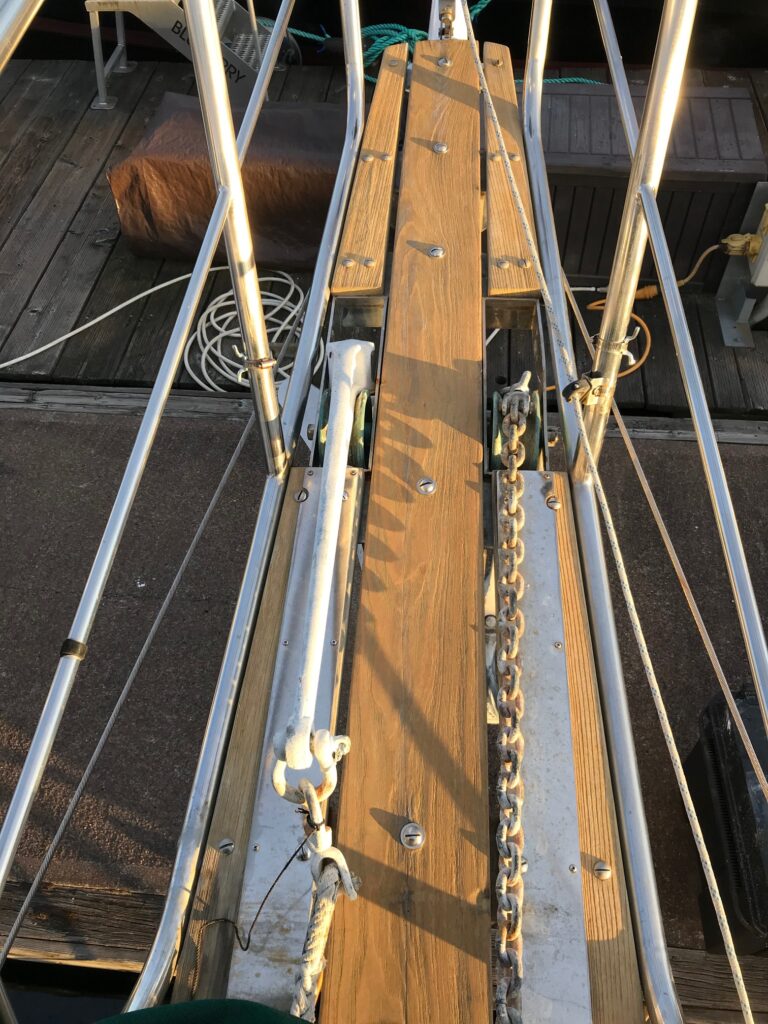
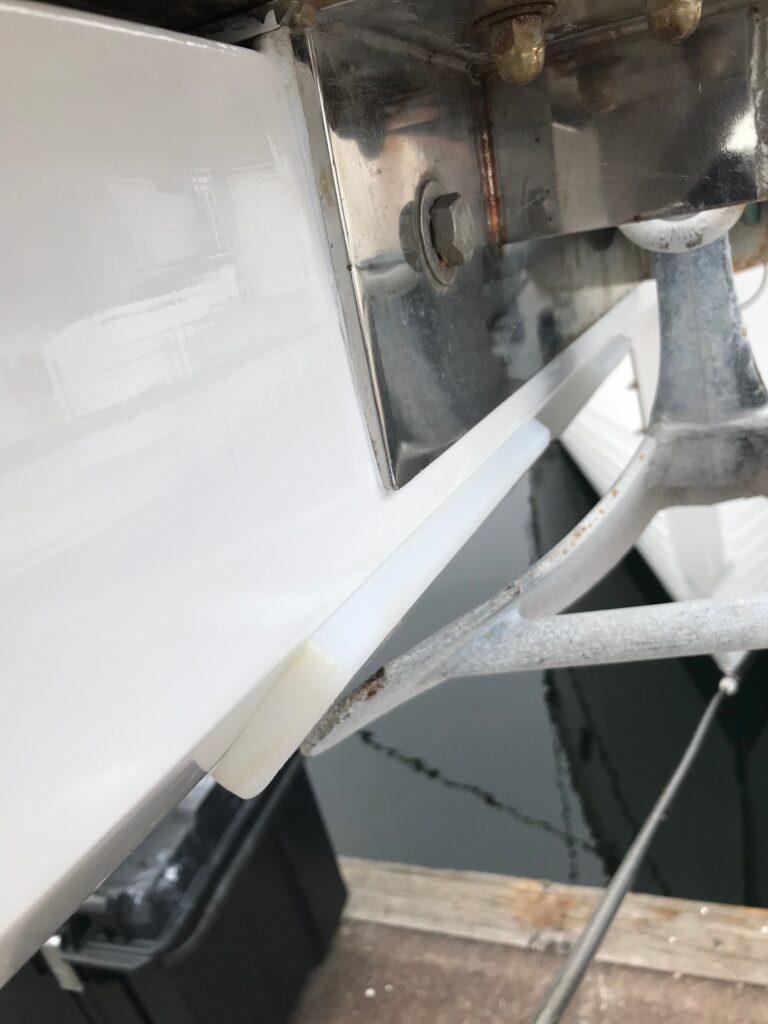
But then I started looking at the rest of the bowsprit and realized the entire thing could use refinishing. After all, it would be a waste to buy material (epoxy, primer, paint) for just repairing such a small area. A section along the bottom where the two anchors rest had some large gouges caused from up-anchoring and also from the chain scraping when the boat swings while anchored in windy conditions. There were small pieces of Starboard (UHMW ultra high molecular weight polyethylene) at the rest points of the stowed anchors, but their size and placement were not enough to protect the wood.
Deep gouges caused by the anchors
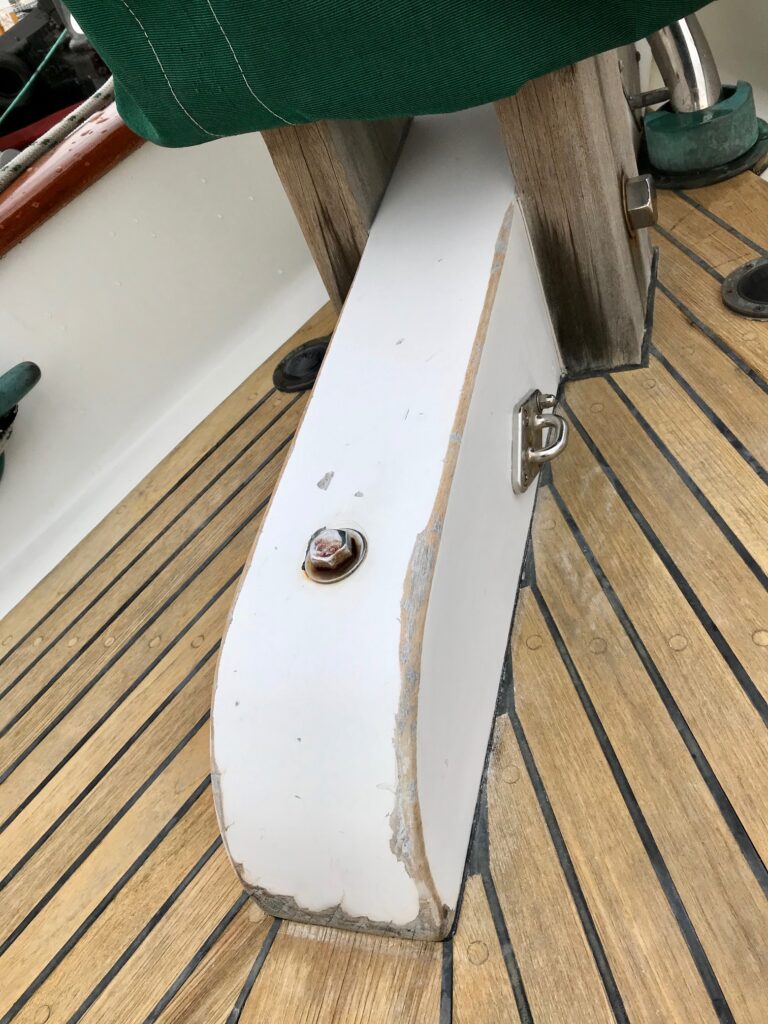
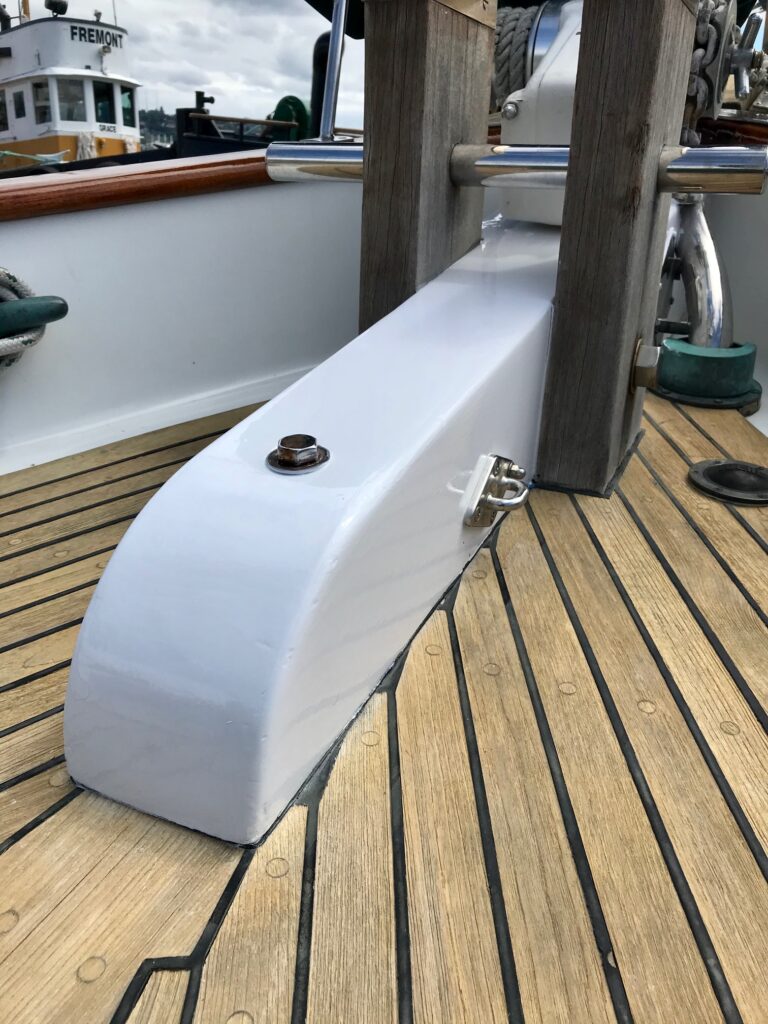
At the far aft end on the bowsprit, there was some wear and tear just from normal use (standing on it, dropping things, etc).
Aft end of bowsprit
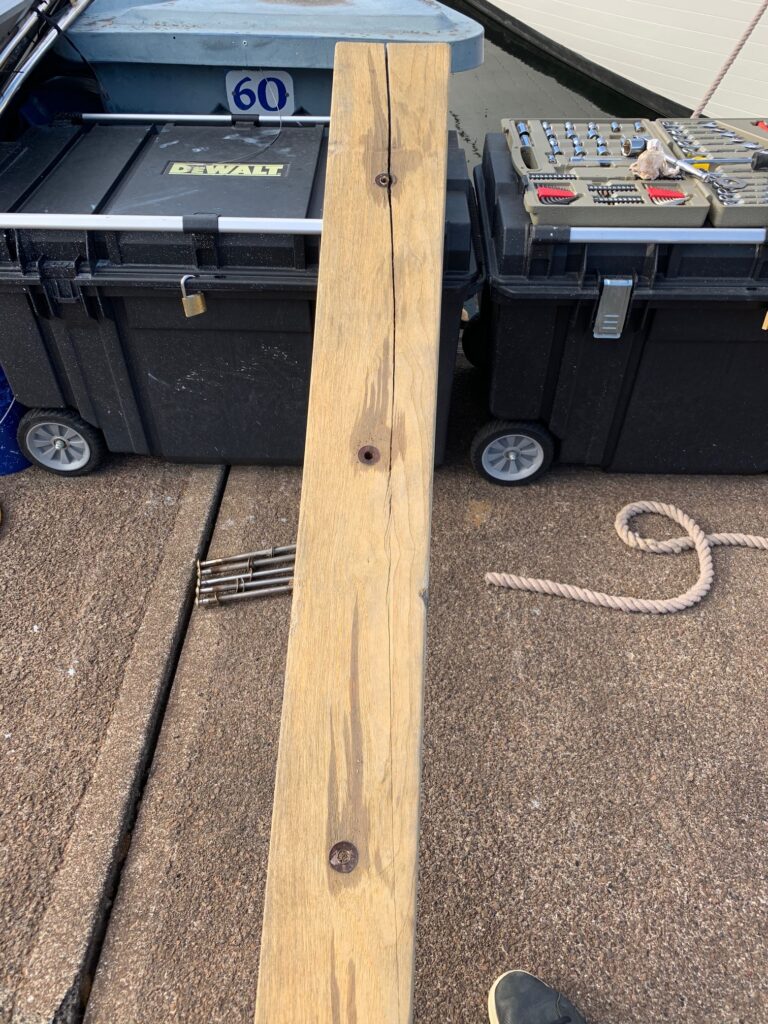
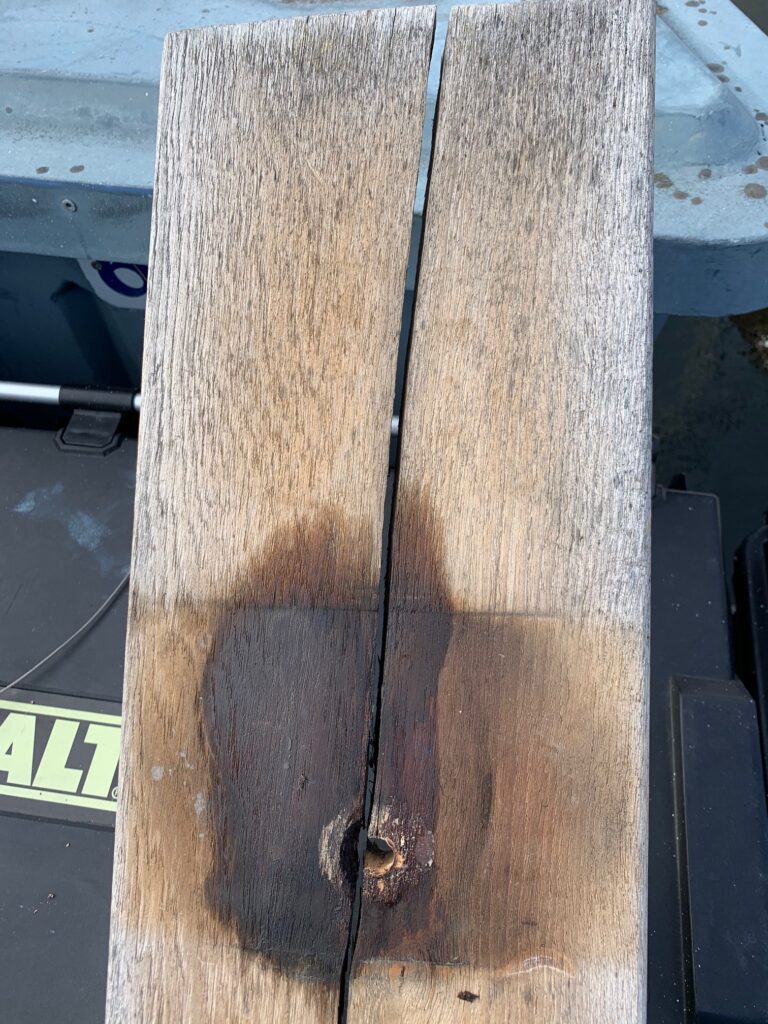
There was one more thing that needed some attention–the large piece of teak that is bolted to the top of the bowsprit had cracked a few years ago. This plank is 7′ long, 8.25″ wide and 1.25″ thick. Replacing it would cost a few hundred dollars just for the teak and a few hundred more to have it milled to proper thickness and cut. So before I sink $500 into a new teak plank, I thought I would try to repair it first. Removing it was no easy task–it’s held in place with 5 foot-long thru-bolts to the bowsprit. Also, removing the plank gave me full access to the top of the bowsprit for painting.
Split Teak Plank on BowspritPlank removed from bowsprit
So the task grew in scope and or course in time, but I’m glad I did it. Here are the steps I took in completing the bowsprit refinishing:
sanded the entire bowsprit with 80 grit paper followed by 220 grit.
used thickened epoxy (West Systems 610) to fill in all the scrapes and gouges, sanded and repeated where needed.
applied 2 coats of Interlux Pre-Kote primer, sanding between coats and after 2nd coat.
applied 3 coats of thinned Interlux Brightsides polyurethane, lightly sanding with 320 between coats.
used thickened epoxy (West Systems 610) to repair teak plank. Clamped tightly for 24 hours, sanded, and applied Semco teak sealer.
made new protection pads from UHMW polyethylene, rounded the edges with 1/4″ router bit, drilled and countersunk holes to attach with ss screws to the bowsprit.
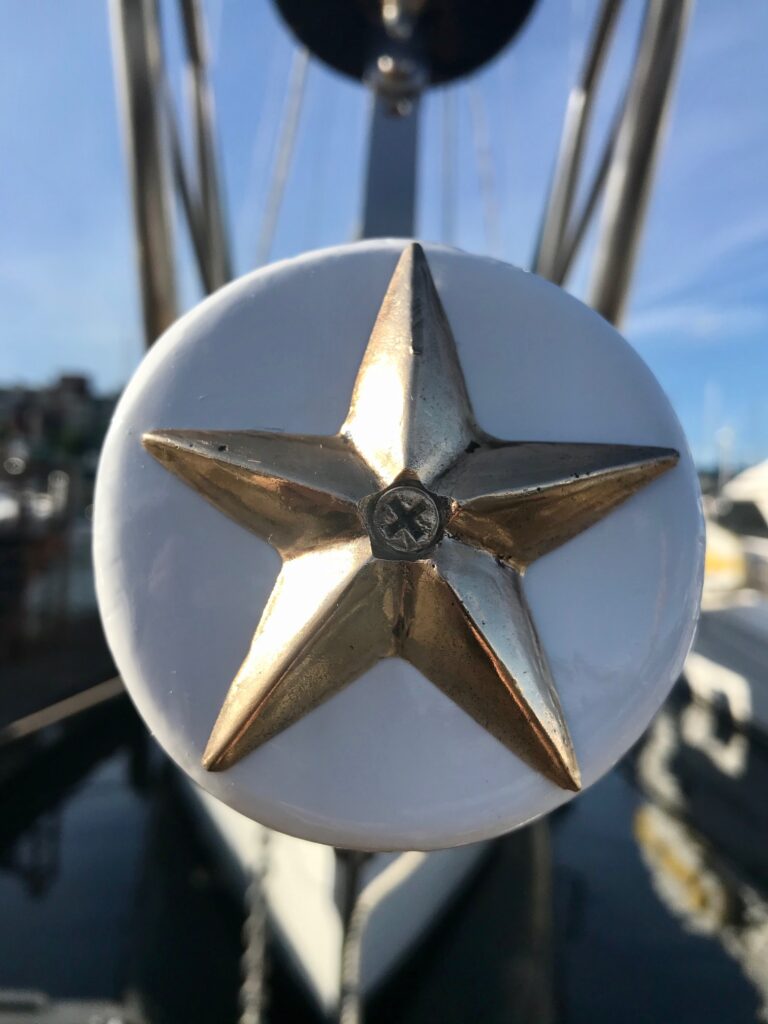
cleaned, polished, and sealed the bronze star at the end of the bowsprit.
cleaned up the stainless steel frame that the bowsprit is attached to.
Refinished BowspritAft end of bowspritTeak Plank after repairBowsprit tip with new collar for code zero furling sailUHMW Protector PadsBronze star on bowsprit end
After owning a boat for a long time (16 years in my case), I find myself repeating certain tasks. A lot of this cannot be avoided (bottom paint, hull polishing, oil changes, etc). But there are some things I do because I like the outcome–like keeping the teak brightwork nice, keeping the bronze ports and pedestal shiny–so I’m always looking for ways to increase the time between when something needs to be re-done. For example, I switched from using varnish to using Awlwood Clear on all the brightwork and can now go 2-3 years between refresher coats.
I discovered another product that helps save time by keeping polished metal from oxidation–ProtectaClear by Everbrite. I mostly use this for interior bronze and brass, but am also experimenting with a few exterior items.
Interior Bronze and Brass
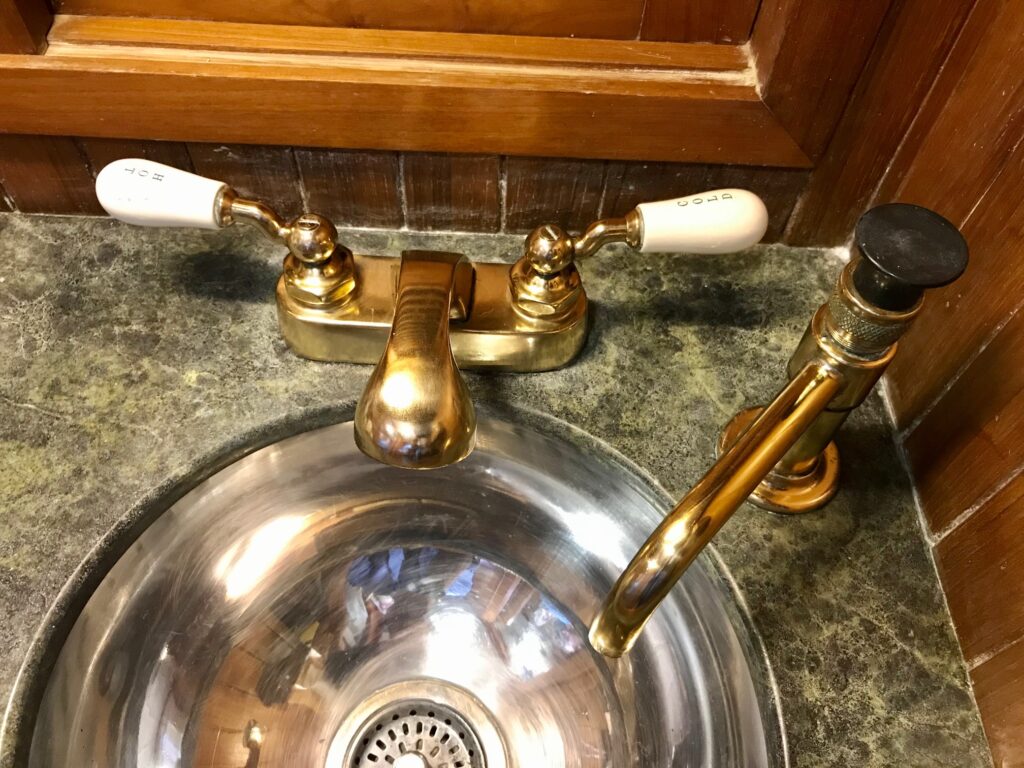
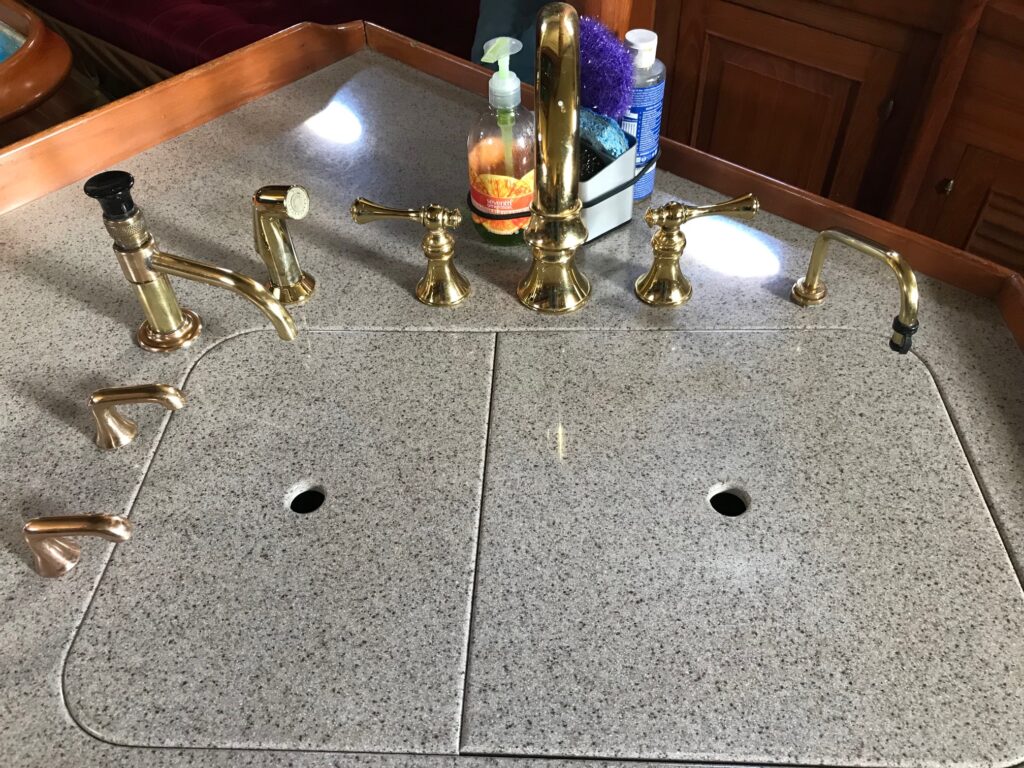
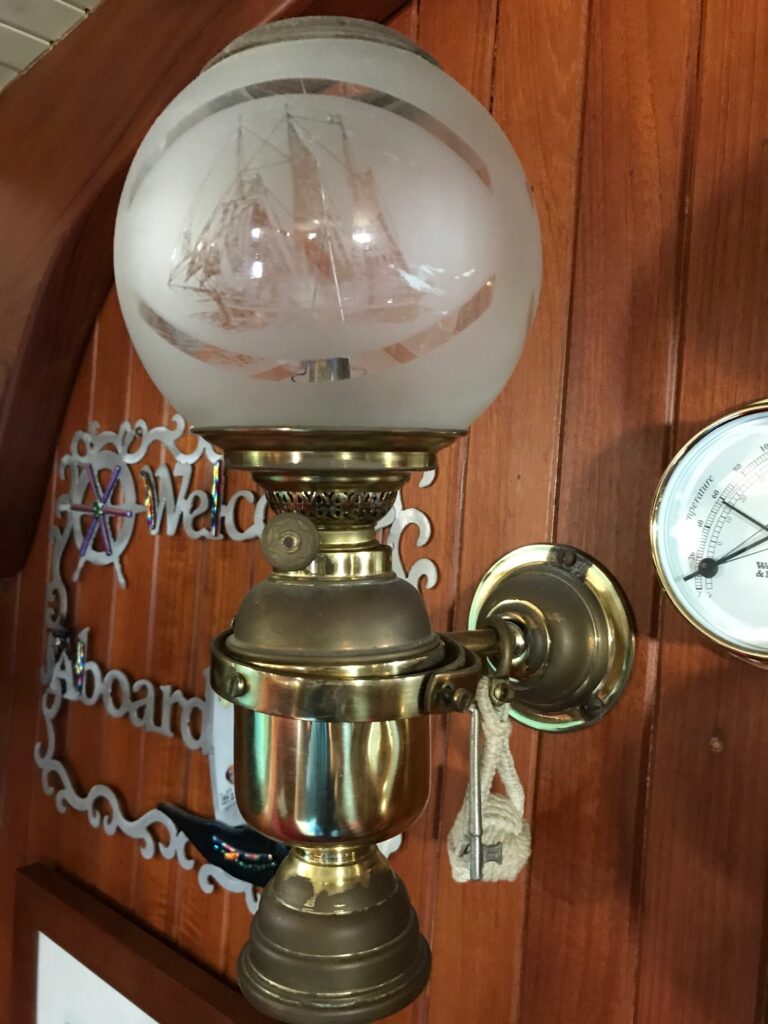
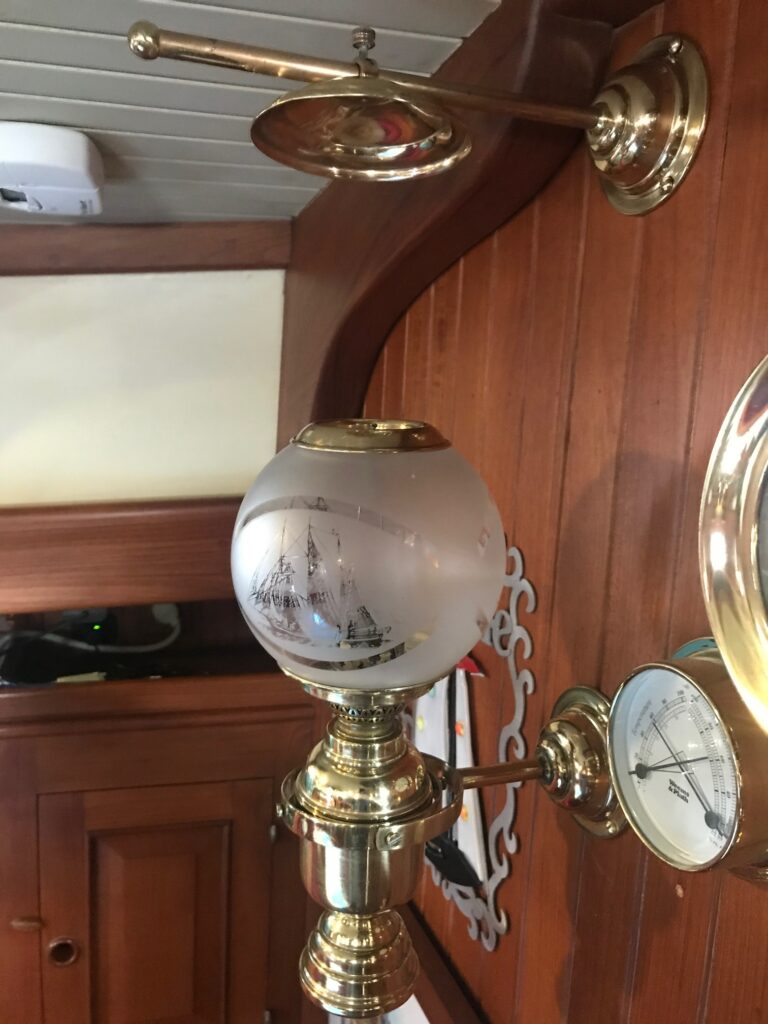
Apropos has a lot of interior bronze and brass. Today when you buy a brass fixture, it usually comes with a coating to protect it from oxidation (it also likely to be only brass coated vs solid brass). When Apropos was built in 1982, all of the bronze/brass was very high quality and didn’t have any protection layer to keep it from oxidizing. The sink faucet and hand pump in the head are the originals, made of heavy bronze. Being in a wet area, they tend to oxidize quickly so I would typically hand polish them once or twice a year to make them shiny again. But this takes an hour and only lasts a few weeks before becoming dull and eventually green again. So I recently gave them an extra good polishing using a dremel tool and polishing compound, then applied 4 layers of ProtectaClear. In the galley, the sink faucet is not original, so it has a protective film (lacquer?) that keeps it shiny, but next to it, the hand pump, water tank vents, and water maker port are all bare bronze, so I polished and coated them as well. I also polished and coated 2 oil brass oil lamps that are gimbal-mounted to bulkheads. I’ll use these items as test cases to see how well they look after a year, then decide if I want to do more interior bronze/brass items. Another nice thing about ProtectaClear is that is bonds to itself and only takes minutes to apply with a foam brush. Re-coats can be done after an hour.
ProtectaClear on Sink Fixtures in HeadProtectaClear on Sink Fixtures in GalleyOil Lamp (before)Oil Lamp (after)
Exterior Bronze and Brass
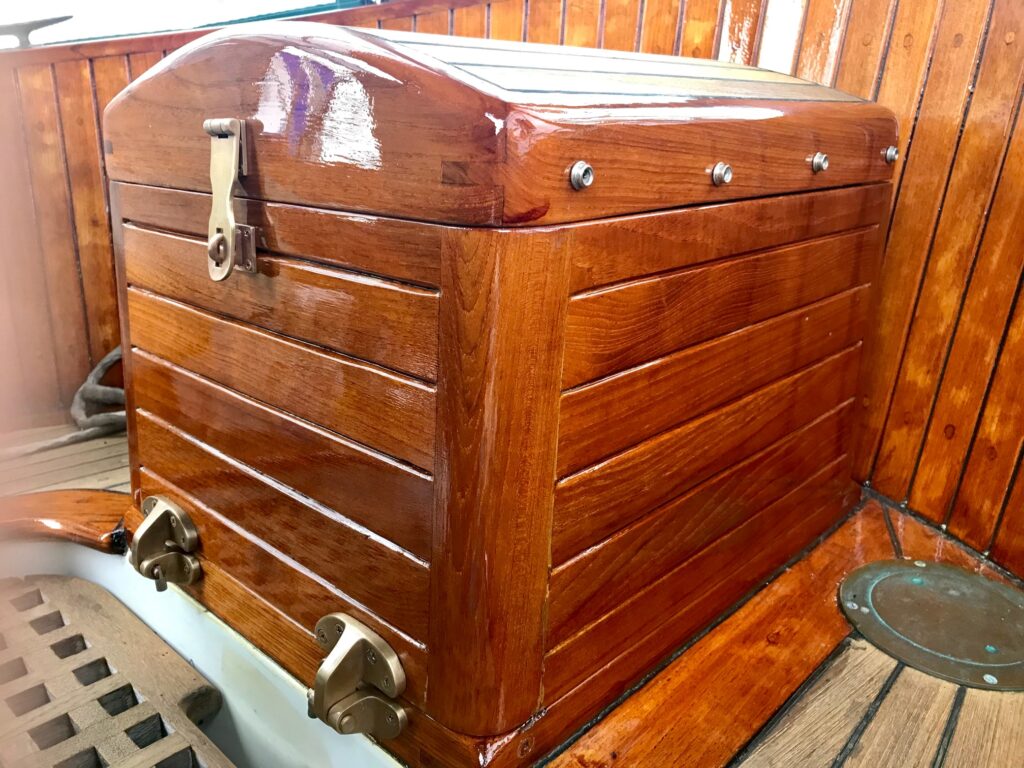
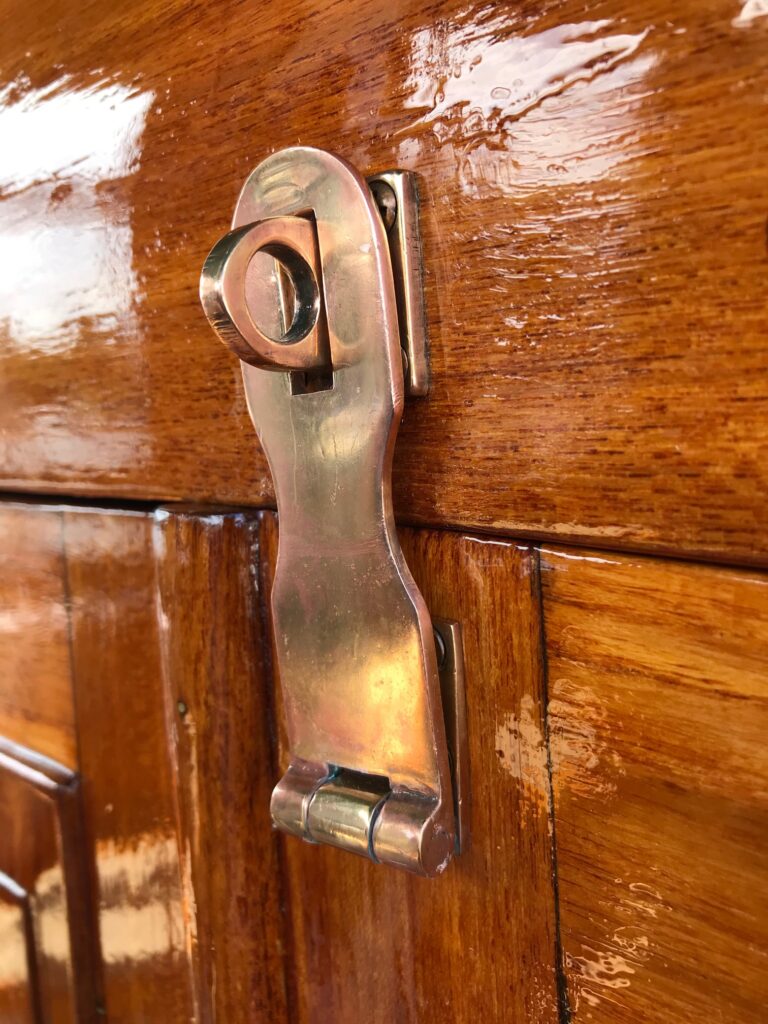
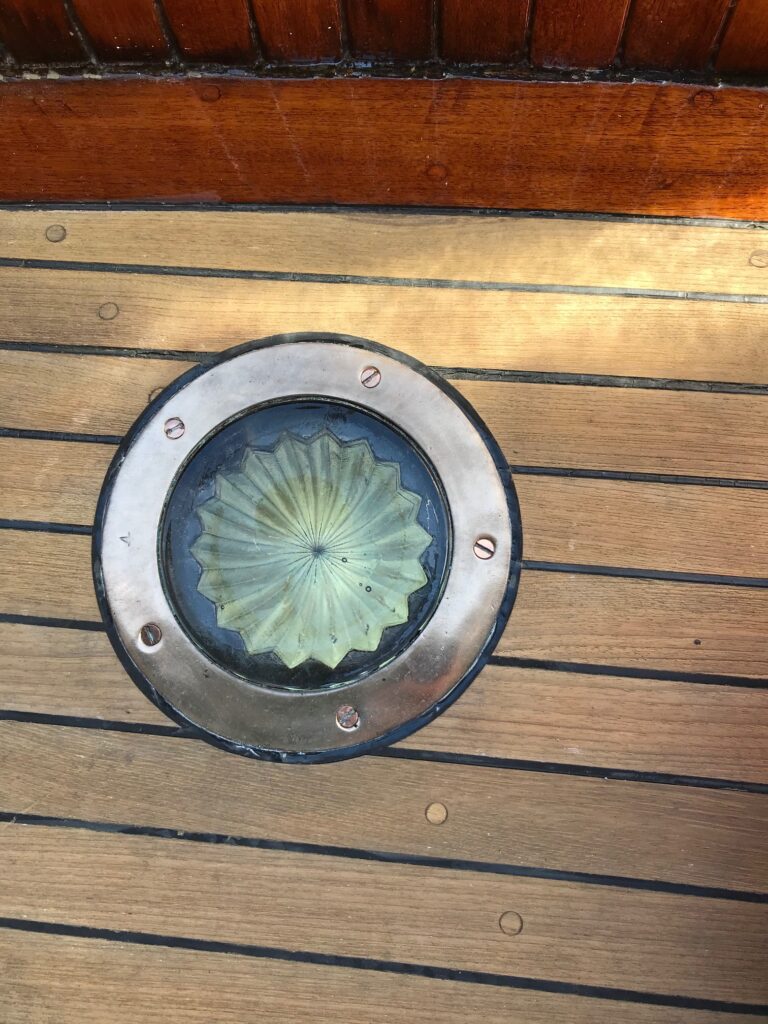
The main exterior items I used the ProtectaClear on are small brass hardware latches and hinges found on all my deck boxes, helm seat, and cabin hatch doors. These are also protected by canvas covers so I think the coating will hold up well. As an experiment, I also polished and coated 3 bronze deck prism rings and the bowsprit star. These are all exposed to the elements (rain, salt water, UV) and the deck prisms are also stepped on. I applied 4 coats and will see how they look after a season.
ProtectaClear on hinges and latch for helm seatProtectaClear on Cabin Door LatchProtectaClear on 1-of-3 Deck Prisms